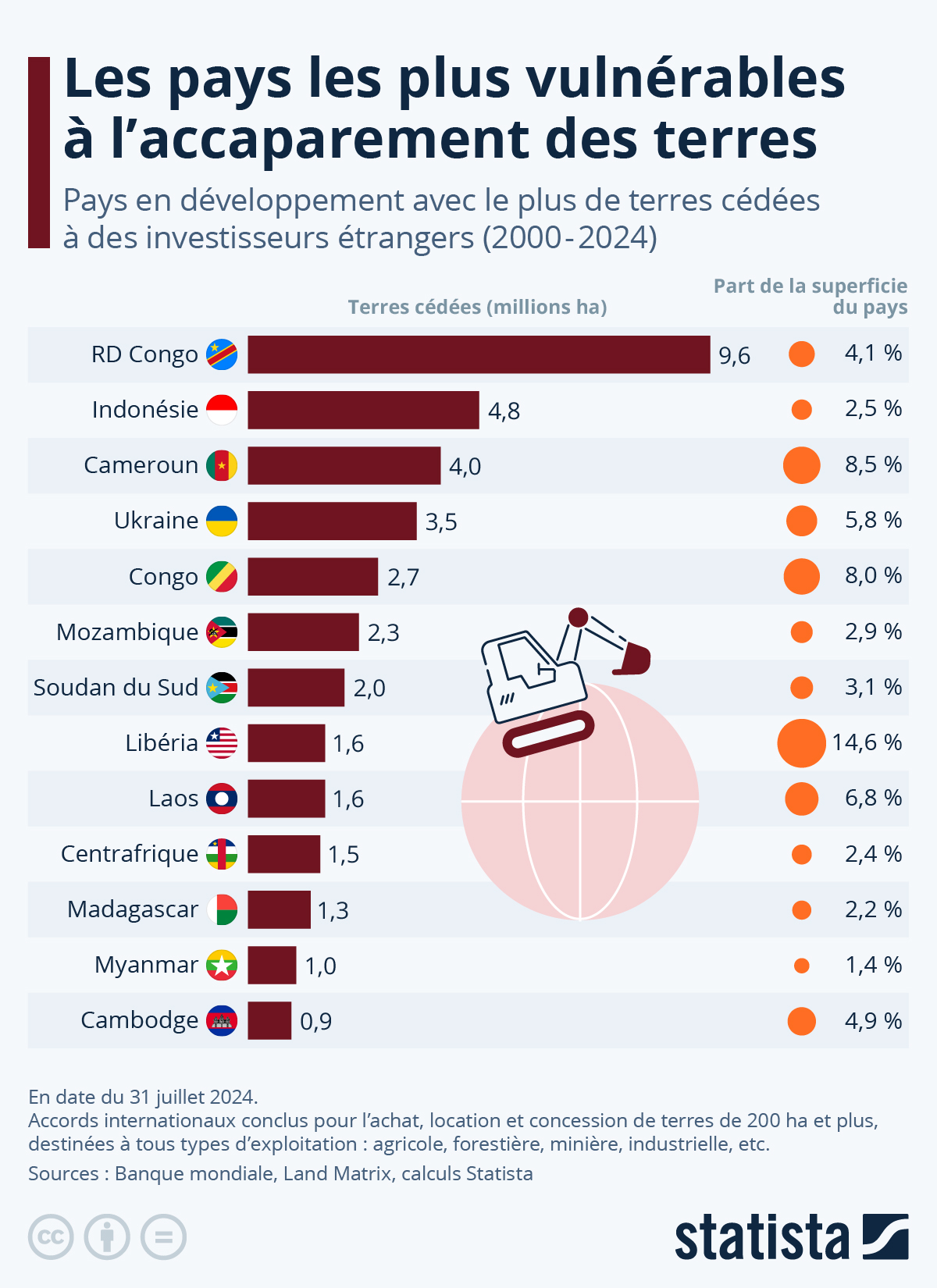
The German platform Statista published a study titled, “Countries Most Vulnerable to Land Grabbing.” Land grabbing refers to a large-scale acquisition of land, often by powerful entities, multinationals, corporations, governments, usually foreigners and frequently involving unethical or exploitative practices. They involve the purchase or lease of massive lands mostly in developing countries. These land-grabs often raise high human issues, such as lack of compensation of the locals, removal of local populations from their lands, and environmental degradation.
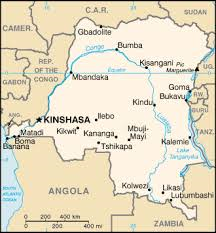
Map of the DRC
From Statista’s study, the countries most at risk of land grabs are, no surprise, in Africa and Asia. Out of the 13 countries on the top list, 8 out of the 13 are African. The Democratic Republic of Congo (DRC) tops the list, followed by Cameroon, the Republic of Congo, Mozambique and South Sudan. Liberia and Cameroon have sold the most: 14.6 % of the country of Liberia is in the hands of foreigners, while 8.5% of Cameroon is, so about 1.6 million hectares and 4 million hectares respectively. For countries like DRC or South Sudan, one could understand as there were wars in the country. But what about Cameroon? To be 3rd on the list, and have 4 million hectares (40,000 km²) of the country in the land of foreigners is crazy… To put it in perspective, 4 million hectares is roughly the size of Netherlands, Switzerland, or Denmark (excluding Greenland). Thus, the government of Cameroon has ceded land the size of the Netherlands to foreign interests between the years 2000 and 2024. This is without counting the ones ceded since independence… This is all done without the populations’ consent, and the countries almost get nothing, if not pennies? In Cameroon, majority of the companies are French, but there are also Chinese, American and more. As we saw in the case of Niger, or Cameroon with Safacam for instance, which has been there 130 years, but the road there is impracticable – they can grab everything, without even giving simple things like roads to the locals!
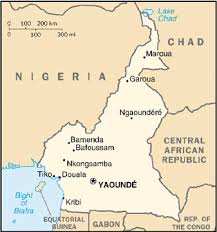
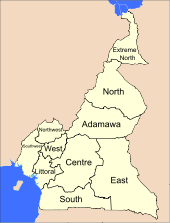
Map of Cameroon, with the capital Yaoundé
The Statisca survey goes on to indicate that the land acquired by foreign investors in Cameroon is primarily used for logging, mining, and industrial agriculture, such as palm oil production.
As the silent genocide in the east of the Democratic Republic of Congo (DRC) continues, under the complicit eyes of the “international” community, last Friday, the town with the one of the biggest coltan reservoirs in the world, Rubaya, … was captured by the M23 rebels. What is coltan? For those who just discover it, coltan is a dull black metal from which niobium and tantalum are extracted. Thus, the name coltan comes from col in columbite (the niobium-dominant mineral) and tan in tantalite(the tantalum-dominant mineral). It is the material at the heart of the mobile phone boom, and is found everywhere in the computer, automotive, and electronics industries. It has been classified by the US Defense department since World War 2 as a material key to the nation’s security.
Democratic Republic of Congo (DRC) mineral map (Source: Atlas du continent africain, Jeune Afrique et editions Jaguar, 2000)
It is no secret that the M23 rebels are backed by neighboring Rwanda, who is in turn supported by … . Why DRC one may ask? As discussed earlier, Congo is a geological scandal, a country rich with some of the most important minerals on earth. When much of eastern Congo came under the control of Rwandan forces in the 1990s, Rwanda suddenly became a major exporter of coltan and many other minerals (a Rwandan I spoke to admitted, minerals Rwanda never thought possible are being “discovered” every day on “their soil”), benefiting from the turmoil and weakness of the Congolese government. According to a UN report, the soaring price and interest in coltan has “brought in as much as $20 million a month to rebel groups” and other factions trading coltan mined in northeastern DRC. Lastly, the government of DRC (The Democratic Republic of Congo Accuses Apple) recently threatened many big companies, including Apple, of illegally obtaining minerals including coltan, and therefore of supporting rebels group. Is it then a surprise that Rubaya was captured last Friday?
A town at the heart of mining coltan, a key ingredient in making mobile phones, has been seized in eastern Democratic Republic of Congo by rebel forces, their spokesman has said.
Rubaya fell into the hands of M23 fighters on Tuesday following heavy clashes with government troops, Willy Ngoma [M23 spokesperson] said.
The government has not yet commented, but a civil society activist confirmed that M23 had captured the strategic town.
It happened on the day France’s President Emmanuel Macron called on neighbouring Rwanda to “halt its support” for the M23 rebel group.
Mr Macron made his comments after holding talks with DR Congo’s President Félix Tshisekedi in France’s capital, Paris.
Rwanda has repeatedly denied backing the rebels, who have captured much territory in the mineral-rich east during fighting over the past 18 months.
DR Congo is the world’s second-biggest producer of coltan, with most of it coming from the mines around Rubaya in the Masisi district.
Coltan is used to make batteries for electric vehicles and mobile phones.
DR Congo’s government accuses Rwanda of backing the rebels to steal its mineral wealth, an allegation the government in Kigali denies.
Early this week, we shared the “Einstein Letter” signed by the Nobel Prize of Physics Albert Einstein and addressed to the President of the United States F. Roosevelt talking about Uranium and its place in the energetic plan of the United States. It also highlighted the important place of the Democratic Republic of Congo (DRC) in this plan, today more than ever, given that the DRC is what many call a “geological scandal”, as first termed by Belgian geologist Jules Cornet in 1892, with all its minerals, some of which can only be found there.
Democratic Republic of Congo (DRC) mineral map (Source: Atlas du continent africain, Jeune Afrique et editions Jaguar, 2000)
Last week, DRC’s president and its government threatened the technology giant Apple with a lawsuit, over “blood” minerals, illegally exploited. There is currently a real genocide in the DRC which has been ongoing for the past 30 years and which has claimed over 10 million lives; however it is a silent genocide given that the “international community” is complicit and has turned a blind eye. As the DRC government sends this out to Apple, where are the other tech giants? Where is Tesla, as we know that Tesla’s batteries cannot work without minerals from the DRC? Where are all the other companies/ multinationals?
… The government of the Democratic Republic of Congo has threatened U.S. tech giant Apple with legal action over what it says are “illegally exploited” minerals from the impoverished nation in its products. U.S. and French lawyers representing the DRC’s government sent a letter to Apple on April 22 warning the company it could face legal action if it continues with the alleged practice.
The letter accuses Apple of purchasing minerals smuggled out of the DRC into Rwanda [we all know that Rwanda has zero minerals… the minerals reported of Rwandan origin are all pillaged from neighboring DRC], where their origin is allegedly obscured so they can find their way into the global technology supply chain. It makes clear that the DRC government intends to address the matter and is looking into legal options to do so.
The letter sent by the lawyers to Apple CEO Tim Cook includes a list of questions laying out the DRC’s concerns over alleged “blood minerals” in Apple’s supply chain, and it demands answers within three weeks. Similar letters, seen by CBS News, were also sent to two of Apple’s subsidiaries in France, demanding answers in the same timeframe.
“Apple has affirmed that it verifies the origins of minerals it uses to manufacture its products,” the letter notes. “It says that the tin, tungsten, tantalum — the 3Ts — and gold that its suppliers purchase are conflict free and do not finance war. But those claims do not appear to be based on concrete, verifiable evidence.”
Amsterdam & Partners, the law firm representing the DRC government, has written a 53-page report outlining the claims against Apple, entitled “Blood Minerals: Everyone sees the massacres in Eastern Congo, but everyone is silent. The laundering of DRC’s 3T Minerals by Rwanda and by private entities.”
In their letter to Apple, the lawyers said that in the process of preparing their report, “it has become clear to us that year after year, Apple has sold technology made with minerals sourced from a region whose population is being devastated by grave violations of human rights. The iPhones, Mac computers and accessories that Apple sells to its customers around the world rely on supply chains that are too opaque, and that are tainted by the blood of the Congolese people.”
Democratic Republic of Congo (DRC) mineral map (Source: Atlas du continent africain, Jeune Afrique et editions Jaguar, 2000)
Last week, a reader asked us why the Democratic Republic of Congo (DRC) is often referred to as a “geological scandal” of nature. For starters, the DRC is one of the world’s richest countries in natural resources, with the richest concentrations of precious metals and minerals on earth, with large deposits of gold, diamonds, uranium, copper, cobalt, tungsten, coltan, bauxite, cassiterite, and much more. According to the United Nations Environment Program (UNEP), it has about 75% of the world’s coltan, the material at the heart of the mobile phone revolution; about 70% of the world’s cobalt reserves, over 30% of diamond, 10% of copper. The uranium used for the bombs that detonated over Hiroshima and Nagasaki came from the DRC. The electrical car battery revolution is all based on Congo’s wealth; there is no way the West can sustain an electrical car industry without Congo and its reserves. Apart from mineral wealth, the DRC is also one of the most biodiverse areas in the world.
Unfortunately, this abundance of internationally valued minerals and natural resources has however failed to bring any kind of prosperity to the country. It began with colonial exploitation of the land and its people by King Leopold II (King Leopold II and The Congolese Genocide), and continued in bloody civil war; the Congolese have harvested nothing from their country’s natural riches but misery and poverty. The world’s bloodiest conflict since World War II is still going on today on Congo soil, and has made over five million deaths…
For more, check out the article by Colette Braeckman, The Looting of the Congo, BBC – DR Congo: Cursed by its natural wealth and the extensive articles written by a fellow blogger at WiPoKuli Schluter. We had found a good documentary a while back about Congo’s resources, but somehow it is no longer available. So I live you instead with The Race for Africa by Gravitas Plus, which actually helps to understand the importance of Africa (and Congo) today, and the race for its resources. Enjoy!
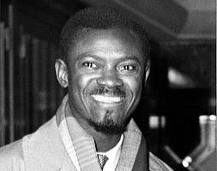
For the celebration on 30 June 1960 of the independence of Congo, we will do a trip down memory lane with this speech Patrice Lumumba addressed to the Congolese youth in August of 1960. In 1960, Patrice Lumumba was elected the first prime minister of the Democratic Republic of the Congo (DRC). Assassinated by Belgian colonialists and the CIA in 1961, Lumumba was a founding member of the Movement National Congolais (MNC), which led Congo to independence. Today, Patrice Lumumba is the symbol of aspirations for an entire continent, and he continues to serve as an inspiration to contemporary Congolese and African politicians. His message here to the Congolese youth is really a message to the African youth. Enjoy! The full speech can be found in Patrice Lumumba: Fighter for Africa’s Freedom, Moscow, Progress Publishers, 1961, p 33-36, by Patrice Lumumba (transcribed by Thomas Schmidt) here.
=======
Map of the DRC
Today I am addressing the youth, the young men and women of the Republic of the Congo.
In speaking to them, I am addressing these words to future generations because the future of our beloved country belongs to them.
We are fighting our enemies in order to prepare a better and happier life for our youth.
If we had been egoists, if we had thought only about ourselves we would not have made the innumerable sacrifices we are making.
I am aware that our country can completely liberate herself from the chains of colonialism politically, economically and spiritually only at the price of a relentless and sometimes dangerous struggle. Together with the youth of the country, we have waged this struggle against foreign rule, against mercantile exploitation, against injustice and pressure.
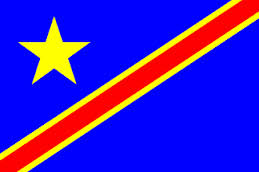
Flag of the Democratic Republic of Congo
Young people who have been inactive and exploited for a long time have now become aware of their role of standard-bearer of the peaceful revolution.
The young people of the Congo have fought on our side in towns, villages and in the bush. Many of our young men have been struck down by the bullets of the colonialists. Many of them left their parents and friends in order to fight heroically for the cause of freedom. The resistance that the young people offered the aggressors in Leopoldville on January 4 and in Stanleyville on October 30, 1959, deserves every praise.
With deep emotion I bow in memory of these courageous patriots, these fighters for African freedom.
The time is not far distant when large numbers of young men and women were driven out of schools by their white teachers and instructors on the suspicion of having nationalist ideas. Many brilliantly gifted young people turned down the opportunity to receive a higher education for the simple reason that they no longer wished to be indoctrinated by the colonialists, who wanted to turn our young men and women into eternal servants of the colonial regime.
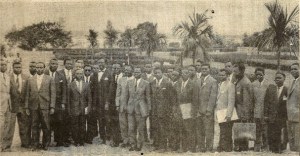
Patrice Lumumba (center left) with his first government after his investiture outside the Palais de la Nation, 23 June 1960
During the heroic struggle of the Congolese nationalists, the young people, even those who were still sitting at school desks, resolutely opposed all new forms of colonialism, whether political, social, spiritual or religious.
Their only dream was national liberation. Their sole aim was immediate independence. Their only resolve was to wage an implacable struggle against the puppets and emissaries of the colonialists.
Thanks to the general mobilisation of all the democratic youth of the Congo, the Congolese nationalists won independence for the nation. We received this independence at the price of a grim struggle, at the price of all sorts of privations, at the price of tears and blood.
After independence was solemnly proclaimed on June 30, 1960, the colonialists and their black emissaries started a barbarous war in the young Republic of the Congo. They began this perfidious aggression because the nationalist Government now in power did not want them to continue exploiting our country as they did prior to June 30, the historic day when the people of our country said Adieu to the Belgian colonialists.
Not having any support whatever, particularly among the working class, who have had their fill of colonial exploitation, the colonialists and their henchmen now want to force certain sections of the youth to serve them in order to be able to propagandise the revival of colonialism. That is why a certain part of the youth, luckily not a very numerous part, have plunged into national defeatism.
Happily, the vast majority of the young people saw through this last attempt of the imperialists, who are turning into account the dissatisfaction of some malcontents, of those who failed in the elections because they did not have the confidence of the people.
This nationalist youth recently held demonstrations in various towns in the Republic to show their absolute and total opposition to imperialist intrigues.
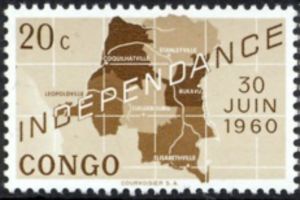
Stamp commemorating the independence of Congo on 30 June 1960
Young people, I salute you, and congratulate you on your civic and patriotic spirit. Young people, specially for you I have created a Ministry for Youth Affairs and Sports under the Central Government. It is your Ministry. It is at your disposal. Many of you, without any discrimination, will be called upon to direct this Ministry, its different services and activities.
Today, in the free and independent Congo we must not have a Bangala, National Unity Party, Association of Bakongo, Mukongo, Batetela or Lokele youth but a united, Congolese, nationalist, democratic youth. This youth will serve the social and economic revolution of our great and beloved country.
You must energetically combat tribalism, which is a poison, a social scourge that is the country’s misfortune today. You must combat all the separatist manoeuvres, which some of the preachers of the policy of division are trying to pass off to young and inexperienced people under the name of federalism, federation or confederation.
In reality, young people, these names are only a new vocabulary brought by the imperialists to divide us in order the better and more conveniently to exploit us. Your entire future will be threatened if you do not oppose these manoeuvres, this new, disguised colonisation.
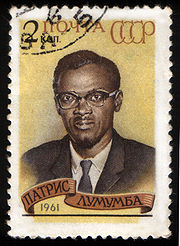
Lumumba on a USSR commemorative stamp in 1961
You must be proud that you belong to a great nation, a great country, a mighty power. This power, which the imperialists envy today, is embodied in national unity. This unity must be the heritage that you, in your turn, shall leave to your children.
The Government will soon send 300 young people to study in the U.S.A., 150 in the Soviet Union and 20 in Guinea, not to mention other countries.
The Congo is no longer a national reservation, a national park, a zoo which we could not leave. Tomorrow you shall go everywhere to study, to learn a speciality, and to get to know the world. Workers, working people will have an equal share in these study missions.
You shall go everywhere, to all the parts of the world. These contacts with the outside world, this direct confrontation with the reality of life will make you experienced people, whom the free and independent Congo needs today.
You will go there not as representatives of Association of Bakongo, National Unity Party, Congo National Movement or African Regroupment Centre youth. You will be Congolese citizens, simply Congolese. And by your behaviour, devotion, intelligence and political maturity you must be a credit to your Congolese motherland.
Official portrait of Patrice Lumumba
Young people, the Congo belongs to you. The national Government, the people’s Government will do everything in its power to prevent the Congo from being torn away from you.
During the last elections held on 30 December 2018 in the Democratic Republic of the Congo (DRC), Félix Tshisekedi was pronounced winner . He defeated another opposition leader, Martin Fayulu, as well as Emmanuel Ramazani Shadary, who was supported by term-limited outgoing president Joseph Kabila. Immediately, the ‘international community (I.C.)’ pounced on Tshisekedi claiming that he could not have won, and that it was but Martin Fayulu the second who had won. There were even threats by the ‘international community’ via the French government through her Ambassador to the Congolese government. Tshisekedi’s victory has since then been upheld by the constitutional court of the DRC, and he was installed as president on 24 January 2019.
Maurice Kamto (Maurice Kamto Facebook page)
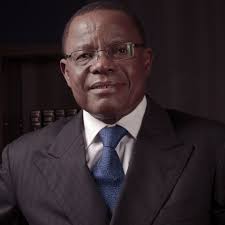
In Cameroon, the story is a fair tale. After the 7 October 2018 presidential elections, opposition candidate Maurice Kamto, from all indications, came out winner of the elections against outgoing president, Paul Biya, who has been in power for the past 37 years… It was total silence by the I.C., in the case of Cameroon, who saw nothing wrong with a man who had been in power 37 years! They clapped and called those elections a standard of democracy! In the western media, there was no mention of Maurice Kamto, and the international community saw nothing wrong with the results of a presidential election being read 2 weeks after polling took place! This is the same international community that was so eager to get the results out in a timely manner in other countries such as the DRC, Madagascar, etc. Yet, Maurice Kamto won the elections and no mention of what happened to him took place. For Kabila in the DRC, the international community, via its medias, spent long time telling the world how Kabila had been in power for 18 years, and how anti-democratic that was. Yet in Cameroon, Paul Biya has been in power for 37 years, and they are clapping and calling the electoral hold-up democratic!
Map of Cameroon with all its regions
Since then, Cameroon has further descended into the abyss that it slipped into 37 years ago. Not only is the Cameroon territorial integrity in question: Boko Haram in the North has cut off the 2 northernmost regions from the rest of the country, the 2 English-speaking regions are cut off from the country ; in the East of the country, armed bands coming from the Central African Republic (CAR) are terrorizing the population, and in the Adamawa Region, armed groups coming from CAR are kidnapping people for ransom including traditional chiefs and stealing cattle; there are refugees both inside and outside the country, and post-electoral violence has ushered in a profound exacerbation of tribalism leading to the politics of divide-and-conquer. It looks like the ultimate objective is dividing Cameroon, like in Sudan, with an exacerbation of ethnic differences with a further push toward chaos for better exploitation of the country’s resources and emptying it of its youths.
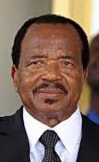
Paul Biya, President of Cameroon
If the I.C. can scream for DRC, and publish articles about Martin Fayulu being the winner in its media the day after publication of results, with the catholic church complaining about results, why does it not show any indignation or some concern for Cameroon? How can a 37-year-old rulein Cameroon be applauded and referred to as being democratic by the I.C., while an 18-year rule in DRC is called a dictatorship? Why is 85-year-old Paul Biya’s 37-year rule being applauded when Mugabe in Zimbabwe was vilified? How can Biya, with nothing to show for his stewardship, not even the integrity of his territory, not even roads, but total chaos and backwardness, be applauded by BBC, RFI, The Guardian, and France 24? How can a president purposely destroy its country including its resources and be applauded by this so-called democratic I.C.? Well, because he serves the interests of the I.C., and has been a good student and puppet in helping the I.C. pillage the resources of his country. Cameroon is so rich in natural resources: oil, cocoa (6th producer), coffee, natural gas, gold, diamond, etc. In the robbery that is so synonymous with France’s predatory behavior in Africa (particularly in its so called “pré-carré”), why should this be a surprise? France’s nature in Africa, and the I.C.’s in general, has been and remain predatory.
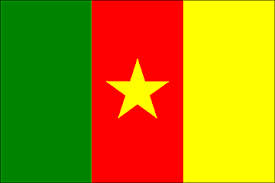
Flag of Cameroon
In Cameroon today, there is a strong dictatorship. The mafia that is synonymous with this regime has been repressing in blood all peaceful demonstrations and marches for the upholding of the genuine electoral results. All protest marches calling for the electoral records to be published are either banned or have seen the winner of the elections Maurice Kamto and his team arrested, including many innocents who have been screaming for a change, for a chance to have better life, roads, jobs, better healthcare, etc. People in the English-speaking provinces have been, hurt, beaten or killed, for simple claims which are basic human rights. A lot of them are currently displaced… people in the north provinces have been displaced, and hurt by Boko Haram… yet BBC, RFI, and the likes of them say nothing! Instead they applaud a government which refuses to negotiate with its own people. We do not ask them to intervene, but if those medias are supposed to be impartial, then they should be impartial, otherwise they should clearly state their agenda: portrayal of Africa as poor and in need of help, pillaging of African resources, promotion of wars on the African continent to help their cronies those western multinationals destroy and get all resources for nothing.
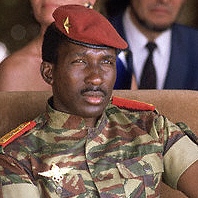
Thomas Sankara a Ouagadougou
We, Africans, should recognize that we are not, and never were independent. We should protest and fight pacifically like this is our last fight.A mother sending her child to school, a father being able to feed his family, university graduates finding jobs in countries where everything is yet to be built, roads, water, electricity, basic human rights to respect, all of that are rights… and it looks like we will have to earn them ourselves. Like Thomas Sankara said, “the slave who is not capable of assuming his rebellion does not deserve that we feel sorry for him. This slave will respond only to his misfortune if he is deluding himself about the suspect condescension of a master who claims to free him. Only struggle liberates…[ …l’esclave qui n’est pas capable d’assumer sa révolte ne mérite pas que l’on s’apitoie sur son sort.Cet esclave répondra seul de son malheur s’il se fait des illusions sur la condescendance suspecte d’un maître qui prétend l’affranchir.Seule la lutte libère …(Discours de Sankara à l’ONU le 4 octobre 1984 (texte intégral) Speech delivered on October 4, 1984 during the UN general Assembly)].” DO NOT trust this condescending I.C., DO NOT trust their media that is very partial, and were all against Laurent Gbagbo, who today has been acquitted from crimes invented by this I.C. and its cronies. We have to fight for our own rights, our own freedom, acknowledge that we are in charge of our own destinies, and never expect some partial Western media to report on the truth!
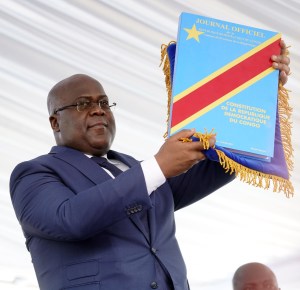
Felix Tshisekedi on investiture day 24 January 2019
On Thursday January 24th 2019, the Democratic Republic of the Congo saw a new day: the investiture of Félix Antoine Tshilombo Tshisekedi marked the first peaceful transfer of power in the history of the DRC in 60 years, since the Belgium granted it independence. This marked a great day not only for the DRC, but for Central Africa, and for Africa as a whole. Felix Tshisekedi won the presidential elections in DRC, which were also entirely funded by the country itself under the leadership of President Joseph Kabila … this is also a first in the nation’s history and the history of many countries on the African continent. So in clear, this was an election of the Congolese people for the Congolese people, entirely funded by the Congolese themselves.
Tshisekedi said, “We want to build a strong Congo in its cultural diversity.” He further declared, “We will promote its development in peace and security. A Congo for each and everyone, where everybody has his or her own place.”
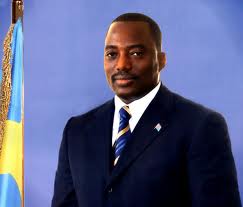
Joseph Kabila, outgoing President of DRC
Felix Tshisekedi is the son of Étienne Tshisekedi, a longtime beloved opposition leader who died in 2017, and has benefitted from the legacy his dad built. Tshisekedi is taking over the presidency from Joseph Kabila, the DRC’s president since 2001.
I take the time here to salute President Joseph Kabila who has allowed, by his selfless resolve to protect the Democratic Republic of the Congo. Joseph Kabila recently outlined some his achievements during his tenure of office, including the organization and total funding of the last democratic elections in 59 years, the construction of new infrastructures, the restoration of peace and the reunification of the country, and the financing of its own elections, and the peaceful passing of the banner to Felix Tshisekedi.
I live you here with Joseph Kabila’s last speech as President, and the passing of the baton, investiture of Felix Tshisekedi.
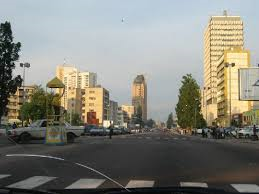
Today I would like to talk about Kinshasa, the capital and largest city of the Democratic Republic of the Congo (DRC). It is located on the Congo River, which happens to be Africa’s largest river, the deepest river in the world, and the third largest in the world by the volume it discharges. Kinshasa is a city of over 9 million inhabitants and directly faces Brazzaville, the capital of the Republic of the Congo: these two sister cities are separated only by the river Congo (the only place in the world where two capitals of two countries face each other). Residents of Kinshasa are known as Kinois.
When did it all start? Well, Kinshasa was founded in 1881 as a trading post by the explorer Henry Morton Stanley who named it Leopoldville in honor of the Belgian king Leopold II, who controled the immense territory of DRC as his private property and not just as a colony. Prior to 1920, all goods arriving by sea in Congo were carried by porters from Matadi (the main port city of Congo), and Leopoldville over 150 km from the coast. From 1886 to 1926, Boma (located on the Congo estuary) was the capital of the Belgian Congo; but after 1926, Leopoldville became the capital.
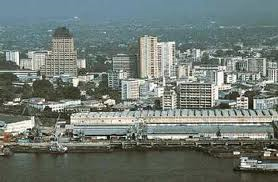
Kinshasa, seen from the Congo river
In 1965, Joseph-Desire Mobutu who had risen to power after coups d’etat against Patrice Lumumba in 1960, and a second one in 1965, renamed the city Kinshasain an effort to africanize the names of the people and places in the country. Kinshassa was the name of a village which used to be near the site of the present city. In Kikongo, Kinshasa means “the salt market“: “nshasa = salt” and locator ‘ki‘.
The region of Pool Malebo, where Kinshasa is located, has been inhabited since at least the first millenium before our era. However, before colonization, different Bantu groups have occupied the area. During the 16th and 17th centuries, the region of Pool Malebo became a major commercial hub between the river basin and the coastal regions. The Bobangis (also called Bangala, or people of the river) managed the major part of the commerce with the equatorial forest by navigating the river up to the Téké villages of Pool. During the 18th and 19th centuries, more villages develop themselves in the area, which became known as the Batéké plateau. The principal Téké villages were Nsasa with almost 5,000 inhabitants, and Ntambo with at least 3,000. By the time Henry Morton Stanley reached the area on 12 March 1878, the region was already home to 66 villages, and a total population of over 30,000 inhabitants. Stanley chose this location as it was the area where the Congo river became navigable.
Map of the DRC
By the time the city changed its name from Leopoldville to Kinshasa in 1966, the city rapidly grew due to rural exodus of people coming from all parts of the country in search of a better life. In 1974, Kinshasa hosted ‘The Rumble in the Jungle‘ boxing match, a historic match between Muhammad Ali and George Foreman, in which Ali defeated Foreman to regain the World Heavyweight title. This has been one of Ali’s most famous matches: if you watch the movie Ali, you can see scenes of Kinshasa there.
Situated in an area belonging to the Batéké and Bahumbu people, the lingua franca of the city is the Lingala, while the administrative language is French. Kinshasa is also a province of DRC (a bit like the district of Columbia in the US), and is the second largest francophone city in the world, after Paris. Its current population is 9 million inhabitants, making it Africa’s second largest cities after Lagos in Nigeria. Please check out the website for the city of Kinshasa, and Kinshasa-Congo travel to learn about the great city of music and art; I also liked the blog kosubaawate which goes through the evolution of Kinshasa then and now (i.e. before independence and now). Enjoy the video below which I enjoyed for its quality, music, and of course its great content.