
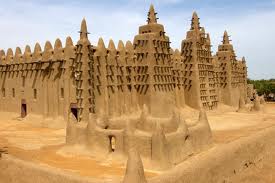
I love the togetherness that is embodied by Malians who live in the city of Djenné, who, every year come together to re-plaster the walls of the Great Mosque of Djenné, the largest mud-brick building in the world. This past Sunday, the whole town, young and old, men and women, poor and rich, worked together to preserve this centuries-old gift from their ancestors that is the Great Mosque of Djenné. This is a tradition passed on from generations to generations for centuries: men and boys are responsible for climbing the mosque and putting the new layer of mud on it, while women and girls are responsible for fetching water from the nearby river to mix with clay to make more of the mud needed for the walls. It is a great exercise in unity and peace for the preservation of an heritage that is dear to all. Since 2016, the Great Mosque of Djenné has been added to the UNESCO’s World Heritage Danger list, because of the jihadists’ attacks in northern Mali that have divided the country (Mali Forces Succeed in Kidal where France and Allies could not!, At the United Nations, Outstanding Speech by Mali PM who Slams France, Praises Russia Ties, Mali, Burkina Faso, and Niger all leave the ECOWAS, “Le Mali en miettes. A qui le tour?” de Chems Eddine Chitour)..
Please read below the article I wrote a few years back about the city of Djenné, and for this past Sunday’s re-plastering event, check out Africanews.
=====
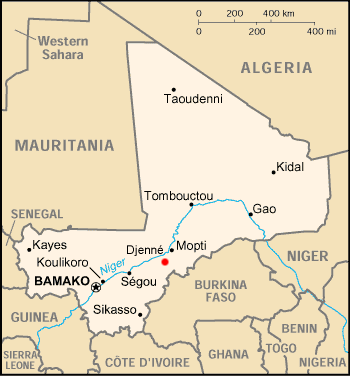
Djenné is a city of Mali whose history is closely linked to that of Timbuktu. It is well-renowned for its mud brick architecture, and today most of the city is considered a UNESCO World Heritage Site. In no place in the world do you have a civilization entirely built on mud! Maybe that is why Malians are so renowned for their work on mudcloth a.k.a. bogolan! The Djennenké say that nowhere in the world would you find people who can build in mud like Djenné’s masons: their work with mud is pure magic, as illustrated by the beautiful Great Mosque of Djenné. The masons’ family lines stretch back half a millenium! They mix the clay from the surrounding plains with the water from the Bani river, and bring to life an architecture purely from Djenné rising with splendor.
…

 African Heritage