Thousands take part in Annual re-plastering of the Great Mosque of Djenné in Mali

Great Mosque of Djenné

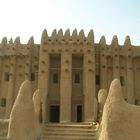
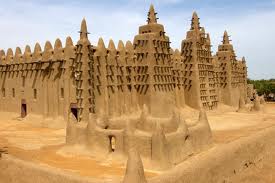
I love the togetherness that is embodied by Malians who live in the city of Djenné, who, every year come together to re-plaster the walls of the Great Mosque of Djenné, the largest mud-brick building in the world. This past Sunday, the whole town, young and old, men and women, poor and rich, worked together to preserve this centuries-old gift from their ancestors that is the Great Mosque of Djenné. This is a tradition passed on from generations to generations for centuries: men and boys are responsible for climbing the mosque and putting the new layer of mud on it, while women and girls are responsible for fetching water from the nearby river to mix with clay to make more of the mud needed for the walls. It is a great exercise in unity and peace for the preservation of an heritage that is dear to all. Since 2016, the Great Mosque of Djenné has been added to the UNESCO’s World Heritage Danger list, because of the jihadists’ attacks in northern Mali that have divided the country (Mali Forces Succeed in Kidal where France and Allies could not!At the United Nations, Outstanding Speech by Mali PM who Slams France, Praises Russia TiesMali, Burkina Faso, and Niger all leave the ECOWAS“Le Mali en miettes. A qui le tour?” de Chems Eddine Chitour)..

Please read below the article I wrote a few years back about the city of Djenné, and for this past Sunday’s re-plastering event, check out Africanews.

=====
Djenné
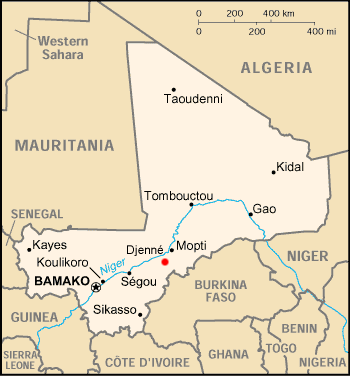
Map of Mali with Djenne in red

Djenné is a city of Mali whose history is closely linked to that of Timbuktu. It is well-renowned for its mud brick architecture, and today most of the city is considered a UNESCO World Heritage Site. In no place in the world do you have a civilization entirely built on mud! Maybe that is why Malians are so renowned for their work on mudcloth a.k.a. bogolan! The Djennenké say that nowhere in the world would you find people who can build in mud like Djenné’s masons: their work with mud is pure magic, as illustrated by the beautiful Great Mosque of Djenné. The masons’ family lines stretch back half a millenium! They mix the clay from the surrounding plains with the water from the Bani river, and bring to life an architecture purely from Djenné rising with splendor.

Djenné: the mud brick (adobe) city

Description of Djenné’s Market in 1825

Timbuktu_René_Caillié
René Caillié

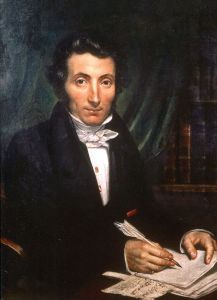
Here is a description of the Market of the city of Djenné, another one of the crown jewels of the Empire of Mali, by the French explorer René Caillié. Bear in mind that René Caillié was the first westerner to return from TimbuktuMali. Also note the description of Suya by a European in 1825!

====

The Kola merchants stand at one end of the market, placed in two lines, each having in front of them a small basket of Kola nuts that they sell in retail,  eight or ten cowries* each : the low price came from the large quantity of these fruits found in the entire country ; but they are normally worth fifteen to twenty cowries.

La grande mosquee de Djenne (Mali - heritage du grand empire du Mali)
La grande mosquee de Djenne (Mali – heritage du grand empire du Mali)

A few Butchers were established in the market; they lay their meat like in Europe: they also put in skewers small pieces of meat that they dry with smoke, and which they sell in retail. There is in this market a lot of fresh fish and dry ; earthen pots, calabashes, mats, and salt which is sold in retail, because that which is sold wholesale stays in shops.

Timbuktu_Rene Caille House 1905-06
René Caillié’s house in Timbuktu

We see an infinite number of merchants in the streets carrying their merchandise and yelling like it is done in Europe : these are fabrics of the country, things homemade, kola nuts, honey, vegetable butter and animal, milk, firewood. This last item is rare here; women bring it from 12 to 15 miles around. Millet stubble is also sold in the market; during my stay in this city,  every night I saw negro women who had bought this fuel for 10 cowries, to cook their supper …

René Caillé, Journal d’un voyage à Tombouctou et à Jenné dans l’Afrique centrale. Tome 2, P. 199 et s. English translation by Dr. Y., Afrolegends.com

*Cowry: small white sea shells used as trade money in Africa up until a recent times.

Djenné: the mud brick (adobe) city

Djenné
Map of Mali with Djenné

Djenné is a city of Mali whose history is closely linked to that of Timbuktu. It is well-renowned for its mud brick architecture, and today most of the city is considered a UNESCO World Heritage Site. In no place in the world do you have a civilization entirely built on mud! Maybe that is why Malians are so renowned for their work on mudcloth a.k.a. bogolan! The Djennenké say that nowhere in the world would you find people who can build in mud like Djenné’s masons: their work with mud is pure magic, as illustrated by the beautiful Great Mosque of Djenné. The masons’ family lines stretch back half a millenium! They mix the clay from the surrounding plains with the water from the Bani river, and bring to life an architecture purely from Djenné rising with splendor.

Great Mosque of Djenné

Djenné has fallen victim of time, erosion, and particularly rain which deteriorates the mud structure. Recently, as part of protecting this UNESCO world heritage, restoration started. For this process, Djenné masons divide up the work according to whose ancestors originally built the houses, the families that inhabit them, and themselves: dirt from old brick is reused only within the dwelling which it came from, since it is believed to carry a blessing which cannot be transferred; this is a practice whose roots date back to 250B.C.. Before the arrival of the French in 1900s, Djenné’s masons built using the technique of Djennefere or the art of building with cylindrical bricks, as opposed to rectangular bricks introduced by the French. Recently, a Malian-American team of archaeologists found in the base of wall fragments, from about A.D. 1400, of a type of bowl Djennenké still place in foundations for protection; another fragments with Arabic inscriptions dating back to A.D.

Great Mosque of Djenné
Entrance

1118. This is important, since before Djenné, there was Jenné-Jeno (before 200 B.C.), the “city without a citadel” which had no royal palace or ruler with an army, but was made up of different tribes or clans with different specialties which formed a sort of democracy where they came together to trade and decide community affairs. After 1100, Jenné-Jeno shrank, and by the 14th century, it felt and a new city, Djenné, grew from the trans-saharan trade in salt and gold. Djenné was later on invaded by Arab traders who introduced islam to the city. Later, Djenné was part of the great Mali Empire, the Songhai empire, the Ségou Kingdom, the Macina Empire, and the Toucouleur Empire. In essence, in Djenné, the old and the new merged, the mud from the earth grew, and the learning was passed on from generations to generations, making Djenné, the city built on mud rising from the splendors and knowledge of the past!

Map of Djenné
Map of Djenné

Both Djenné and Jenné-Jeno are UNESCO World heritage sites. You can learn about them on the UNESCO WHC website, as well as on Wikipedia, Architecture in Mali, and Djenne Patrimoine. Enjoy: