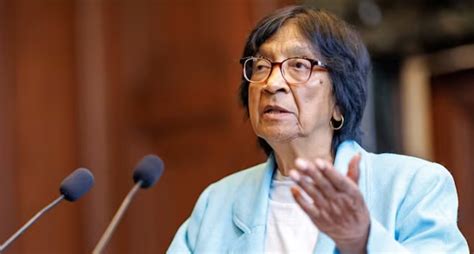
South African Lawyer Navi Pillay is 2026 Nobel Peace Prize Laureate

Navi Pillay (Source: inews.zoombangla.com)

This year, South African lawyer Navi Pillay is the 2026 Nobel Peace Prize laureate. She joins 4 other illustrious countrymen Nobel peace laureates, Albert Luthuli (1960 – first Black person to be win the award), Desmond Tutu (1984), Nelson Mandela (1993) joint with F. W. de Klerk (1993). This makes her the first South African woman to win the prestigious prize. She also joins other continental laureates such as Egyptian Anwar Sadat (1978), Ghanaian Kofi Annan (2001), Kenyan Wangari Maathai, first African Woman Nobel Peace Prize Laureate (2004), Egyptian Mohamed ElBaradei, Liberians Ellen Johnson Sirleaf (2011) and Leymah Gbowee (2011), Congolese Denis Mukwege (2018), and Abiy Ahmed (2019). As you can see she is only the fourth African woman to win the prestigious award. As a food for thought, isn’t it weird that a lot of these awards are given out just before the awardees start wars or something of the sort? … so not sure how much weight we should really put into them as ‘peace’ prizes, but the world still seems to praise these.
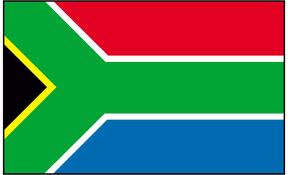
Flag of South Africa

Who is Navi Pillay? She is a South African of Tamil-Indian origin whose grandparents emigrated to South Africa, specifically to Durban at the turn of the 20th century to work on the sugar plantations. Her family established itself there, and she grew up in Durban during the apartheid era, later went on to study law at Harvard University in the United States, and went on to become the first woman of color to open a law firm in South Africa, during the apartheid era. She spent her early career defending activists who risked everything to challenge injustice at a time when injustice and the justice system in South Africa was viciously divided along color lines. Her work carried the same courage and clarity that would later define her global leadership. She built a reputation for judicial rigor and moral courage

She established herself not only at home in South Africa, but also beyond its borders. As a judge at the International Criminal Tribunal for Rwanda, she helped establish that sexual violence can be prosecuted as genocide. At the International Criminal Court at the Hague, she strengthened the foundations of accountability for mass atrocities. Later, as a United Nations High Commissioner for Human Rights, she insisted that human rights must remain central even when political winds shift. Today, she continues her work at the International Court of Justice (that instrument used by the ‘International Community’ to police the rest of the world to its advantage), serving as an ad hoc judge in cases involving genocide and crimes against humanity. Her career spans more than 50 years, consistently focused on holding perpetrators of mass atrocities accountable and expanding the reach of international law.

Pillay received the Nobel Peace Prize award in the historic Nuremberg courtroom; there she dedicated her award to survivors of international crimes. Her words reminded the world that peace is not simply the absence of conflict. Peace is the presence of accountability. Peace is the recognition of truth. Peace is the courage to confront harm and repair it. Peace is staying cool-headed in the face of adversity and discerning the good from the bad!

Navi Pillay’s achievement is a milestone for Africa. As we saw above, she joins a long list of illustrious Africans. Her achievement is also a milestone for women, particularly women in law, and for every person who believes in the power of justice. Her legacy continues to grow, and her work lights a path for future generations of lawyers, activists, and leaders who refuse to accept silence in the face of suffering.

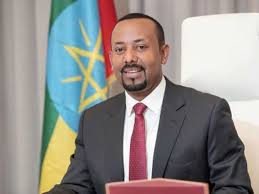
Abiy Ahmed, the Prime Minister of Ethiopia is Awarded the Nobel Peace Prize

Ethiopia_Abiy Ahmed
Prime Minister Abiy Ahmed (Source: sa.breakingnews.co.za)

A year after the Congolese doctor, Denis Mukwege shared the  Nobel Peace Prize 2018, another African has won it again: Abiy Ahmed Ali, Ethiopia’s prime minister was awarded the  Nobel Peace Prize last week for his work in ending the 20-year post-war territorial stalemate between Ethiopia and Eritrea.

Abiy Ahmed became prime minister of Ethiopia at a time of profound strife, and through a serious of deft political gestures, including the release of thousands of political prisoners and overturning highly repressive restrictions on civil society and political groups, he probably averted a civil war. Last year, he was the first Ethiopian leader to meet with his Eritrean counterpart in over 2 decades , and both countries signed a “Joint Declaration of Peace and Friendship.”

Nobel prize
Nobel Prize medal (Wikipedia)

Berit Reiss-Andersen, the chairwoman of the five-member committee that made the decision to award the Nobel Peace Prize, credited Abiy with a peace initiative aimed at ending two decades of conflict between the two east-African neighbors that began over border disputes in 1998 only a few years after Eritrea gained independence.

“When Abiy Ahmed became prime minster in April 2018, he made it clear he wishes to resume pace talks with Eritrea,” she said. “In close cooperation with the president of Eritrea, Abiy Ahmed quickly worked out the principles for a peace agreement to end the long no peace stalemate between the two countries.”

When Abiy took office, he freed political prisoners and managed in the same year to sign a peace deal with the Eritrean leader, Isaias Afwerki — agreeing in the process to cede disputed land to his country’s erstwhile enemy.

“Peace does not arise from the actions of one party alone,” Reiss-Andersen said. “When Prime Minister Abiy reached out his hand, President Afwerki grasped it, and helped to formalize the peace process between the two countries.”

Map of Ethiopia
Map of Ethiopia

“Additionally, Abiy Ahmed has sought to mediate between Kenya and Somalia in their protracted conflict over rights to a disputed marine area. There is now hope for a resolution to this conflict,” she said.

“In Sudan, the military regime and the opposition have returned to the negotiating table. On the 17th of August, they released a joint draft of a new constitution intended to secure a peaceful transition to civil rule in the country. Prime Minister Abiy played a key role in the process that led to the agreement,” Reiss-Andersen added.

Ethiopia Eritrea
Map of Ethiopia and Eritrea, the two sisters

Although it is quite early in his career – after all, it has only been one year since he became prime minister – I think his is more justified than the one given to Obama for his speeches. Ever since I have grown to understand politics, I am always skeptical of these prizes anyway. However, this prize should encourage African and world leaders to work towards peace for their people at all times. We congratulate prime minister Abiy Ahmed, and wish him well in continuing to lead Ethiopia with a steady head.

Who/What did we Celebrate in Africa in 2018

Who or what did we celebrate in 2018 in Africa. Here are 10 people, events and things, which marked the year 2018 (if there are some other you would like to share, please send them in):

Zewde_Ahmed
Sahle-Work Zewde, Ethiopia’s first female president, with the Prime minister Abiy Ahmed, on the day she was elected

1. Abiy Ahmed Ali became prime minister of Ethiopia this year, and brought in a wave of new measures. He is particularly noted for ending decades of border disputes between Eritrea and Ethiopia, bringing in the 2 sisters back together, releasing thousands of political prisoners and for having half of his government made up of women, some in key positions including the ministry of defense.

2. Ethiopia welcomed its first female president in the person of Sahle-Work Zewde. Mrs. Zewde was unanimously elected president by members of the Federal Parliamentary Assembly on 25 October 2018. Sahle-Work’s appointment makes her the first female Ethiopian head of state since Empress Zewditu.

3. Peace between Eritrea and Ethiopia. Peace at last with the end of the border dispute in June and July of this year, marking the end to decades of tension between the 2 sisters.

4. The release from jail of Simone Gbagbo. The former first lady of Côte d’Ivoire was released on 8 August 2018, after 7 years in prison. We are so grateful; it took us 7 years, but Simone is free at last. Free at Last: Simone Gbagbo Liberated.

Mukwege
Denis Mukwege, 2018 Nobel Peace Prize winner

5. First person of Somali descent elected in American congress, Ilhan Omar.On November 6, 2018, Omar became the first Somali American elected to the United States Congress, representing Minnesota’s 5th congressional district

6. The Nobel peace was attributed to the Congolese doctor Denis Mukwege, for saving women victims of war in the Great Lakes region in the Democratic Republic of the Congo.  Mukwege is a Congolese gynecologist and Pentecostal pastor, who founded and works in Panzi Hospital in Bukavu, where he specializes in the treatment of women who have been raped by armed rebels. His work was recognized with the 2018 Nobel Peace Prize.

7.  Jean-Pierre Bemba, Congolese politician who had even won the presidential elections, has been released from jail at the International Criminal Court, after almost 10 years at the Hague. Many believe he was released because he was better contender for the presidency of the Democratic Republic of the Congo against Joseph Kabila or anybody chosen by  Kabila.

8. The new Secretary General of Organisation internationale de la Francophonie (OIF) is a lady from Rwanda,  Louise Mushikiwabo; she comes after the Haitian-Canadian Michaëlle Jean. Mrs. Mushikiwabo becomes the first African woman to serve as president of the francophonie.

MCN_2
Musee des Civilisations Noires (MCN) in Dakar, Senegal

9. Senegal inaugurated its Museum of Black Civilizations (Musée des Civilisations noires (MCN)) in Dakar: Senegal unveils Museum of Black Civilizations, and Sprawling Museum of Black Civilizations Opens in Senegal. Senegal, like many other African countries, would like the restitution of all the looted African arts taken by Europeans and still hosted in European museums.

10. Not sure whether to applaud this or not: Major museums across Europe have agreed to loan important artifacts back to Nigeria for a new museum the country plans to open in 2021 (Europe’s Largest Museums to “Loan” Looted Benin (Nigerian) Artifacts back to Nigeria). How someone can loan you something they stole from you is beyond me! They should just return it!