What are American Troops doing in Nigeria ?

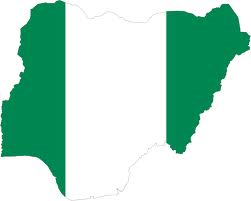
Flag and map of Nigeria

Last week, the Nigerian government announced the presence of US troops on its soil. American troops were deployed for, they say, “intelligence support and training, not combat operations.” Nigerian Defense Minister Christopher Musa addressed the “partnership.” This deployment is said to strengthen counter-terrorism cooperation. The AFRICOM commander, General Dagvin Anderson, claimed that the deployment was made at Nigeria’s request to focus strictly on intelligence assistance! In the background, it is said that this is to protect Christians.

How can they talk about anti-terrorism fight, when they are the ones funding these terrorist organizations? It is no secret that almost all facade terrorists organizations were created by Western secret services. It is no secret, that Bin Ladden was once a CIA operative, and we all know who funded ISIS (the US)! They have thus created chaos in Africa to destabilize the continent, and pillage freely resources.
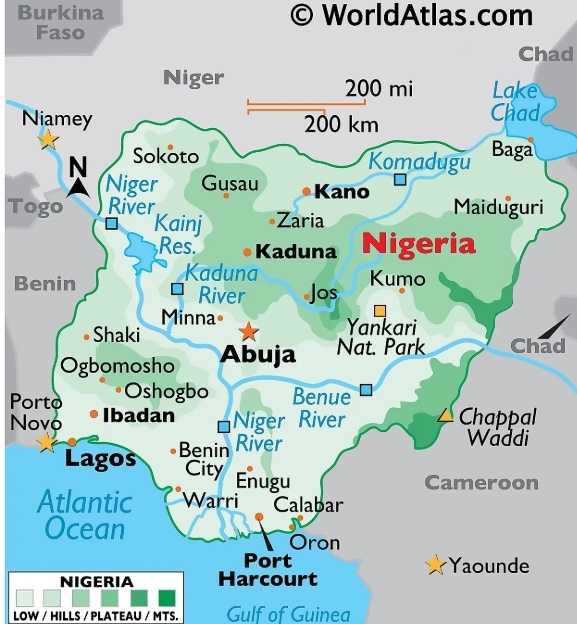
Map of Nigeria (Source: WorldAtlas.com)

How can they talk about the protection of Christians? After watching the video of the Nigerian pastor who called for the Trump administration to intervene in Nigeria, a few things stand out: he says (paraphrasing) “the UN, I know you see me; US senate, I know you are watching me; special council to Trump, Please tell him to save our lives.” Before that event, how many knew this pastor? He has never had popularity like TB Joshua… so how can he have the special ears of the US government? We saw that the December 25 US strikes in Nigeria were not in the area filled with Christians but rather one filled with Muslims in the northwest part, near the border with Niger!

Is it a coincidence that this US deployment occurs just a few days after the failed attempt in Niger? On January 29, gunfire and explosions occurred at the Niamey international airport against President Tchiani of Niger? Is it a coincidence that this happens just a few weeks, barely a month, after the failed attempt against President Ibrahim Traore of Burkina Faso (Another Coup Attempt Against the President of Burkina Faso, Ibrahim Traoré)?

Is it a coincidence that this happens a few days after the Chinese mining giant Zijin bought several gold mines in Mali and other places? It is no secret that the US are trying to stop or level the Chinese, and to a certain extent Russian, expansion in Africa. We have always said that the meteoric global rise in gold prices is coming, in part, from the AES claiming back the control of their mines! We all know, since ancestral times with Emperor Kankan Musa, that Mali is one of the global key players in the gold industry… that’s how France could get their ranking as 4th in the global gold production.
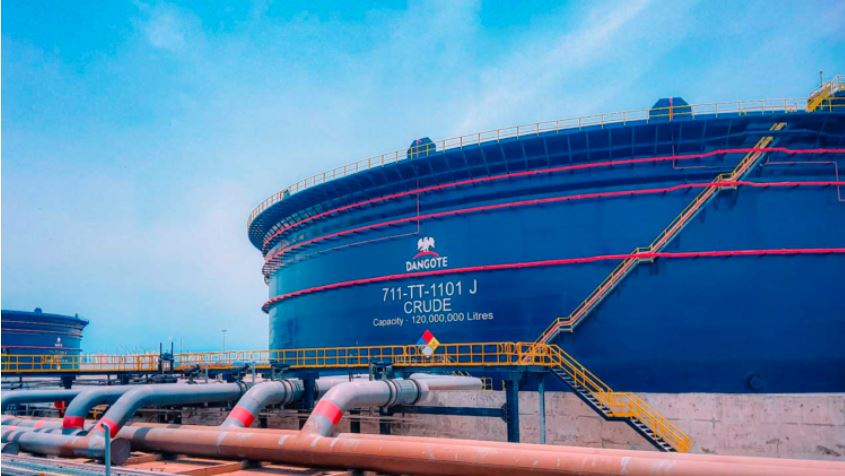
Dangote Refinery (Source: Leadership.ng)

It is also no secret that Aliko Dangote, Africa’s richest man, has built the biggest oil refining complex in Africa which has driven local fuel production and reduced import dependence. Africa’s richest man has built one of the world’s largest oil refineries. Who does not remember the long lines at the pump in Nigeria, when Nigeria is an oil producer? This is a total game changer for Africans, and disrupts the business of these Western companies which were re-selling our oil back to us, as polluted fuel!

Thus, it is clear why American troops were sent to Nigeria: for control! Like I have said for years, there is a new scramble for Africa, and we are watching it happen right now! Remember how the cold war happened between the United States and the Soviet Union in other countries by proxy? Angola is a clear example, where the West and the East (USSR) were fighting or rather supporting both sides. Back then, it was a fight to stop Soviet expansion in the world… Today, it is a fight to stop Chinese expansion and keep Western domination in the world … Nothing has changed!

Nigeria to sell its Fuel in Naira – More Countries are Moving away from the Dollar

Flag and map of Nigeria

This is a new turn in the move away from the dollar. Yes! you heard it right… more countries are moving away from the dollar, and more transactions are being done in local currencies. The dollar’s dominance is slowly going away. When the war in Ukraine started in February 2022, and the West leveled a lot of sanctions against Russia, blocking its funds, I bet the end of dollar was not what they foresaw. Now Russia deals with China in Rubles or Yuan, India with China in Rupees, … not dollars! Now Nigeria, Africa’s largest country, is going to sell its oil in Naira!!! Are more countries going to deal in local currencies? Is this the end of the petrodollar?

Excerpts from the article below is from Business Insider Africa. Enjoy!

=====

The federal government of Nigeria has commenced the sale of its crude oil to Dangote Refinery and other refineries in its local currency, naira, effective October 1, 2024.

The naira-for-crude initiative, which has already commenced, would mean that crude would now be sold to the Dangote refinery and others in naira. In return, the Dangote refinery would supply PMS (petrol) and diesel of equivalent value to the domestic market, also in naira.

The Minister of Finance, Wale Edun, confirmed the commencement of this policy in a signed statement on Saturday, October 5, 2024, saying the initiative is a significant step by the government in stabilizing the economy and enhancing Nigeria’s economic growth and development.

… “The strategic initiative and bold step taken by the President Bola Ahmed Tinubu-led Administration is expected to have a lasting impact on Nigeria’s economy, fostering growth, stability, and self-sufficiency, especially as the country continues to navigate the complexities of global markets, this strategic move positions Nigeria for success in the years to come,” the statement read.

… Economic experts explained that the initiative if implemented successfully, will alleviate pressure on the naira, eliminate unnecessary transaction costs, and enhance the availability of petroleum products nationwide.

Africa’s Richest Man Builds One of the World’s Largest Oil Refineries

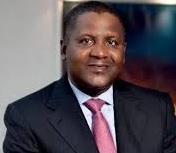
Aliko Dangote (Source: Black Entrepreneur Profiles)

Aliko Dangote, Africa’s richest man, has built one of the world’s largest oil refineries in Nigeria, Africa. The refinery opened its doors last year, and last month shipped out its first boat of refined jet fuel to the Netherlands. It has not been easy with all the challenges and setbacks. This is a dream come true for Africa’s richest man, a dream which has taken several years to materialize. Now, why is this a first? and why are we applauding? 

Although Nigeria is one of Africa’s largest oil producers, the country does not have the capability to refine its own oil, meaning that the country imports fuel! This is the case for all African oil producers, except maybe Libya (if it was not destroyed by the NATO bombs) or Algeria. Picture this! Countries in the whole gulf of Guinea which are rich in oil, and exporting oil to other countries, are also importing oil from abroad… thus the constant oil penury in these countries or the high prices or in some cases the poor quality of gas sent back as in the case of the Swiss firms poisoning oil destined for Africa with levels of sulfur at least 200 times higher than in Europe. 

Dangote Refinery (Source: Leadership.ng)

The plant Dangote built spans nearly 4,000 football fields, is based in the Lekki Free Zone outside of Lagos, Nigeria, and will have the capability to produce 650,000 barrels per day once fully operational. It aims to process enough oil to not only make Nigeria self-sufficient but supply petrol, diesel, and jet fuel to other African countries and beyond. It needs to be said again, this refinery is a true game changer for Nigeria, and for Africa as a whole. In his remarks to the Cable, Dangote said, “The refinery will help boost Nigeria’s economic growth, with the creation of thousands of direct and indirect jobs. During the construction stage, it supported over 150,000 jobs, made up of mostly Nigerians,”… The capacity of the refinery is enough to satisfy domestic demands for refined products. The refinery will export about 50 percent of its production, thereby generating foreign exchange for the country.”

Below are excerpts from an interview Aliko Dangote gave to CNN. In his interview, Dangote mentioned some of the difficulties faced to get crude to refine, relations with other countries, trade policies on the contact, and the ever present visa restrictions for Africans that are still too strong in Africa. Enjoy… for the full interview, go to CNN.

=====

Dangote: “Nobody thought we were going to appear in this industry. So with that, we know there are challenges and that’s the truth, I have to be very open to you, but NNPC, [Nigerian National Petroleum Corporation], they’ve been very helpful. They do their own bit, but some of the IOCs [international oil companies] they’re struggling to give us crude because everybody’s used to exporting and nobody wants to stop exporting, which does not make sense.

CNN: What’s the timeline of Nigeria being completely self-sufficient producing oil, refining oil locally and exporting?

Dangote: Well, if the NNPC put all their refineries to work, Nigeria will be the largest petroleum products export country in the continent. Not only in the continent – it’ll be one of the biggest (worldwide), not as much as India but almost. So let me talk about Dangote Refinery: 40% of our refining products will go outside Nigeria. So that is after meeting the entire demand of Nigeria. We will meet the demand 100%. By June or so, we should be able to fully meet Nigeria’s demand and then because we’re ramping up already, we’re a little bit over 420,000 barrels per day already. So, as we go along, ramping up, I believe by July/August we should be at almost 550,000 barrels per day. Then maybe before end of the year we’ll be at about 650,000.

I’m a big fan of industrialization and Africa can be industrialized, but we, Africans, are the only ones that can industrialize Africa. Nobody is going to come and do it for us. We have to have good policies and the policies have to be consistent, and then we have to make sure that the investment climate is good.