Cameroonian Musical Genius : Ekambi Brillant

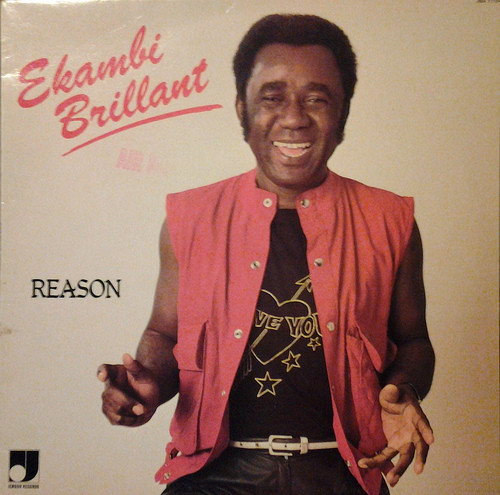
Ekambi Brillant on the cover of his 1987 album Reason (Source: RhythmConnection.Blogspot.com)

Ekambi Brillant was without doubt one of Cameroon’s greatest artists and one of the great African musicians. Originally from Dibombari, a village close to Douala, Brillant spent his youth with his maternal grandparents in Jebale, a suburban island of Douala. Per the words of Cameroonian author Elolongue Epanya Yondo, Jebale is known as the “emerald island, flamboyant jewel” on the Wouri estuary; no wonder, it served as the inspiration to a young Ekambi!  His passion for music was born from ancestral roots and from watching and listening to fishermen singing on their way back home from the sea.

Wouri river and the Djebale island seen on the other side

In 1962, Brillant was admitted to the 6th grade in the prestigious Lycée Général Leclerc (General-Leclerc High School) of Yaoundé. It was there, under the careful attention of Mr. Daniel Zane, his French music teacher, that he learned to play music, particularly the guitar. In 1971, at the age of 23, he stopped his studies and moved to Douala, where he joined the band The Crack’s as a guitarist. He applied for and won the music contest launched by the Office of French Broadcasting Television (ORTF), judged by some of the continent’s great musical personalities such as Manu Dibango and Francis Bebey. Thanks to this prize, he was able to release his first 45 rpm record, Jonguèlè la Ndolo, which sold 20,000 copies.
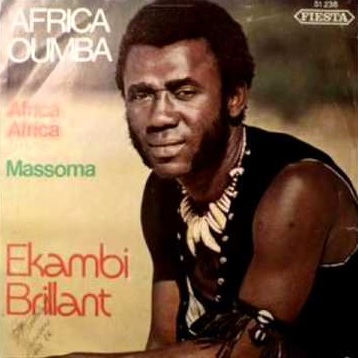
Ekambi Brillant’s album ‘Africa Oumba’

In 1972, he flew to France, where, with the support of Jean Dikoto Mandengue, a Cameroonian bassist, he produced and released his second 45 rpm record with Phonogram. The album was a major success and sold 25,000 copies. As stated before, Ekambi Brillant’s love for his country, his people, and music can be felt in every single note!

In 1975, he ended his deal with Phonogram and began a collaboration with Slim Pezin, with whom he released the album Africa Oumba, which included the major hit song “Elongui.” The song became an incredible source of inspiration for several other artists, both African and European, including the Greek singer Demis Roussos, who sang it as “L.O.V.E. Got a Hold of Me.” Roussos’ version used the exact melody of Ekambi Brillant’s original makossa hit, but he never acknowledged Ekambi Brillant—not even with a tribute. It was only later that African fans (including yours truly) loudly affirmed that this was Brillant’s original work. In the past, African compositions have often been adapted/plagiarized without formal credit, especially when entering European or American markets. Roussos earned millions from Ekambi’s song, without giving him a penny. This is reminiscent of Andre Marie Tala, Cameroon’s Blind Musical Virtuoso, and his song Hot Koki which was plagiarized by  James Brown, or more recently Shakira with “Waka Waka (This Time for Africa)” “adapting” the “Zamina mina (Zangaléwa)” song and claiming in an interview to have gotten inspiration while walking on a beach. The album Africa Oumba reached a record of about 4 million sales (diamond disk). Further collaborations with Slim Pezin as producer yielded titles such as Soul Castel and Musunguédi. In 1976, Ekambi Brillant formed his band known as The Ebis (Ekambi Brillant Show).

Ekambi Brillant ‘Muna Muto’

Over the course of his career, Brillant released nearly 20 albums. Brillant passed away on 12 December 2022 in Douala at the age of 74, after a battle with a long-term illness. Unfortunately, like many in Cameroon, he was a brilliant soul who barely received the recognition his genius deserved. He was from a generation of outstanding Cameroonian artists.

Ekambi Brillant remained an inspiration to generations of artists, propelling several careers and guiding many musicians—both Cameroonian, such as Marthe Zambo, Valery Lobe, and Alhaji Touré, and African, such as Cella Stella and Angelique Kidjo. He was so advanced, brilliant, and inspired … going through his music portfolio is filled with great sounds and a great source of inspiration. Cameroonians should get inspired from his work and celebrate his genius. 

.

Muna Muto (My Love, my Darling) by Ekambi Brillant

Ekambi Brillant on the cover of his 1987 album Reason (Source: RhythmConnection.Blogspot.com)

Today we will celebrate a song, Muna Muto, and particularly a singer who has touched generations of musicians on the African continent, Ekambi Brillant. Brillant is a Cameroonian singer who has contributed to the emergence of outstanding African singers, such as the Beninese-French singer Angelique Kidjo, first African singer to get a Star on the Hollywood walk of fame , Cella Stella, Marthe Zambo, and countless others. To me, just like his name, he is one of the most brilliant Cameroonian singers ever, with a great voice, bass mastery, and a great teacher.

Muna Muto is a love song which focuses on deep affection, longing, and devotion. It is a love so deep that you wonder what life could have been before meeting that special one.

Just with the first note, you can tell that Ekambi is deeply patriotic, and loving of his country. He tells you that he comes from a place of abundant love “O nin mboa su nya bwam wuma ndolo mo nye no.” He further tells you that it is a place where people greet each other with warmth, a place filled with beautiful music, sounds, and dances, where joy and happiness are omnipresent (Wuma mongele mam mese ma nanga no na pi. Na ma senga so bobe mulema mu monya weya. Nyola mabola mongo na londi na isom). That sounds like a description of Africa!

Coeur
Coeur / Heart

He tells his lover that she is his everything, the love they share grows stronger every day. She is his everything and he cannot bear to be without her. “Muna Muto, Na petane nde ndolo po, o bola oa mo … Bo bunya mo bo poï tenge, a makusane mba mo.”

The most touching part is that he has searched far and wide, and found no one like her: he has found his center, his person, his backbone.  “Na si bi ka bo bunya bo mende te nde o po, Na ma nanga nde ndoti, bulu na bulu te … Bwanga to bo bo titi, ye nde welisane” (I have searched far and wide but found no one like you. You are the only one who understands me, heart and soul. … And our love will last forever, as we journey through life together.) So deep! All this on such a deep, dancing tune, and the chorus makes you want to sing “Muna Muto” for the rest of your life!

As you go on to celebrate Valentine’s day, please sing Muna Muto to your special one, that one you have searched far and wide for, the only one, the one who understands your heart and soul, a love that will be immortal. Enjoy Mot’a Muenya love song!

‘Ma vie est une chanson / My Life is a Song’ by Francis Bebey

music_1Below is ‘Ma vie est une chanson‘ or ‘My Life is a Song‘, a love poem by Cameroonian author Francis Bebey, a poem celebrating his love for the African woman, in this case for his lover. As we remember that Francis Bebey was multi-talented as a journalist, writer, sculptor and musician, it is no surprise that the title of his poem is “My Life is a Song”. He even headed the UNESCO music department researching and documenting traditional African music. In the poem, he highlights that he was born from the love of the earth with the sun, thus a birth that was very celebrated and a life full of love. As we read the poem, Bebey’s love for his country is abundantly clear as he dreams of taking his lover there, and not only that, but lets her know that his country is where to find the love between the earth and the sun; it is almost as if he was telling all that he was born on the equator. Moreover, let’s face it, the link between the earth and the sun is undeniable, unbreakable, unavoidable, constant, and forever omnipresent. He is so taken by the love so much so that his life is a song that he will sing everyday to his precious one. Wouldn’t you all like to be loved like that? Enjoy!

The poem Ma vie est une chansonby Francis Bebey, was published in Anthologie africaine: poésie, Jacques Chevrier, Collection Monde Noir Poche, Hatier 1988. Translated to English by Dr. Y. Afrolegends.com.

Ma vie est une chansonOn me demande parfois d’où je viens

Et je reponds “je n’en sais rien

Depuis longtemps je suis sur le chemin

Qui me conduit jusqu’ici

Mais je sais que je suis né de l’amour

De la terre avec le soleil”

Toute ma vie est une chanson

Que je chante pour dire combien je t’aime

Toute ma vie est une chanson

Que je fredonne auprès de toi

Ce soir il a plu, la route est mouillée

Mais je veux rester près de toi

Et t’emmener au pays d’où je viens

Ou j’ai caché mon secret

Et toi aussi tu naîtras de l’amour de la terre avec le soleil

Toute ma vie est une chanson

Que je chante pour dire combien je t’aime

Toute ma vie est une chanson

Que je fredonne auprès de toi.

My Life is a SongI am sometimes asked where I come from

And I answer “I don’t know

For a long time I have been on the way

That leads me here

But I know that I was born from the love

between the land and the sun”

My whole life is a song

That I sing to tell you how much I love you

My whole life is a song

That I hum next to you

Tonight it has rained, the road is wet

But I want to stay close to you

And take you to the land where I come from

Where I hid my secret

And you too will be born from the love of the earth with the sun

My whole life is a song

That I sing to tell you how much I love you

My whole life is a song

That I hum next to you.

“Souffrance d’Amour” / “Love Suffering” by Ben Decca

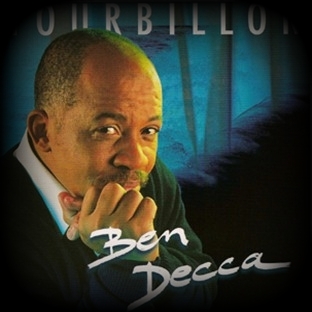
Ben Decca (Source: KamerLyrics.net)

For this year’s Valentine, we will introduce you to “Souffrance d’Amour” by the Cameroonian singer Ben Decca. The song, “Souffrance d’Amour” translated as “Love suffering” tells of a love so deep, so strong between two people, but which does not work. So it is, in the words of Ben Decca himself, “proof that two people can go their separate ways and remain in love despite everything. “Souffrance d’Amour” is a shout-out to people who give themselves entirely to the other with sincerity and loyalty, but unfortunately, in general they receive the opposite of what they put in… sad reality…” [“Souffrance d’Amour” est la preuve que deux personnes peuvent se quitter et demeurer amoureuses l’une de l’autre malgré tout. Souffrance d’Amour” est une dédicace aux personnes qui se donnent à l’autre entièrement avec sincérité et loyauté, hélas en général ils reçoivent l’opposé de ce qu’ils ont misé… triste réalité…]. “To love is to forget oneself and to think only of the one we love” [Aimer c’est s’oublier soi-meme, et ne penser qu’a celui qu’on aime…”]

For those who do not know him, Ben Decca, he is the ultimate crooner of Cameroon… You could think of a Luther Vandross type… His career spans over 40 years of constantly amazing music. He is a pure talent, and hails from a family of musicians, with 3 younger siblings who are also renowned singers  Grâce Decca, Dora Decca, and Isaac Decca, and nephew to the great Cameroonian legend Eboa Lotin, and great grandson to Lobe Lobe Rameau one of the pioneers of Makossa in Cameroon. His work has been the legendary, and he has lightened to lives of so many of us lovers of life, given life to our feelings of joy, pain, grace, hurt,…. Kudos to the great, and only Ben Decca.

‘Je suis venu chercher du travail’ / ‘I Came to Look for Work’ by Francis Bebey

Francis Bebey_1
Francis Bebey

Today, as states and countries are slowly reopening after the shelter-in-place due to the coronavirus pandemic, many have been left jobless, and are looking for a job now or in the near future. I think the poem ‘Je suis venu chercher du travail / I came to look for work‘ by the great Cameroonian writer and musician Francis Bebey is very appropriate. The poem below is the story of many immigrants traveling to a foreign land in search of a job, a better life, leaving all behind: families, friends, and country. This poem is very simple, yet so deep as it details the losses taken today, in hope for a better tomorrow. As you think about the immigrants dying in the Mediterranean sea, or those crossing the Mexico-US border, or all the countless faces in the world, take a moment to imagine families torn apart, lives in peril, and possibly no light at the end of the tunnel.

Francis Bebey_Agatha Moudio Son
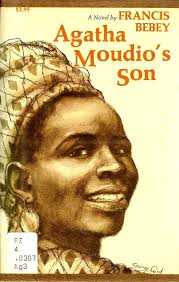
‘Agatha Moudio’s Son’ by Francis Bebey (Amazon)

Francis Bebey was sort of a genius: in his early years, he studied mathematics, before going into broadcasting. He was called to Ghana by President Kwame Nkrumah, where he served as a journalist. He began his literary career as a journalist in the 1950s and worked in Ghana and other African countries for the French radio network, Société de radiodiffusion de la France d’outre-mer (SORAFOM) and Radio France International. Later, he wrote novels, poetry, plays, tales, short stories, nonfiction works, and established himself as a musician, sculptor, and writer.  His first novel, Le Fils d’Agatha Moudio (Agatha Moudio’s Son), was published in 1967 and awarded the Grand prix littéraire d’Afrique noire in 1968; it remains his best-known work to this day. He also headed the music department at the UNESCO‘s office in Paris, where he focused on researching and documenting African traditional music.

Enjoy Je suis venu chercher du travail‘ by Francis Bebey, published in Anthologie africaine: poésie, Jacques Chevrier, Collection Monde Noir Poche, Hatier 1988. Translated to English by Dr. Y. Afrolegends.com.

Je suis venu chercher du travail

Je suis venu chercher du travail

J’espère qu’il y en aura

Je suis venu de mon lointain pays

Pour travailler chez vous

J’ai tout laissé, ma femme, mes amis

Au pays tout là-bas

J’espère les retrouver tous en vie

Le jour de mon retour

Ma pauvre mère était bien désolée

En me voyant partir

Je lui ai dit qu’un jour je reviendrai

Mettre fin à sa misère

J’ai parcouru de longs jours de voyage

Pour venir jusqu’ici

Ne m’a-t-on pas assuré d’un accueil

Qui vaudrait bien cette peine

Regardez-moi, je suis fatigué

D’aller par les chemins

Voici des jours que je n’ai rien mangé

Auriez-vous un peu de pain?

Mon pantalon est tout déchiré

Mais je n’en ai pas d’autre

Ne criez pas, ce n’est pas un scandale

Je suis seulement pauvre

Je suis venu chercher du travail

J’espère qu’il y en aura

Je suis venu de mon lointain pays

Pour travailler chez vous

I came to look for work

I came to look for work

I hope that there will be

I came from my far away country

To work for you

I left everything, my wife, my kids

In my country over there

I hope to find them all alive

On the day of my return

My poor mother was very sorry

To see me go

I told her that I will come back one day

To put an end to her misery

I had long days of travel

To get here

Was I not assured of a welcome

Which will be worth all this trouble

Look at me, I am tired

To go by the ways

It has been days since I ate anything

Do you have some bread?

My trouser is all ripped

But I don’t have another

Do not scream, it is not a scandal

I am just poor

I came to look for work

I hope there will be

I came from my far away country

To work for you

Inédit

Happy Mother’s Day 2018

For this year’s Mother’s Day celebration, I introduce you to another African classic: Elvis Kemayo – Mama. Elvis Kemayo hails from Cameroon, and is particularly well-known for this song, and ‘Cameroun, berceau de mon enfance (Cameroon, craddle of my childhood)’ Enjoy ‘MAMA’, and do remember to cherish your mother!


Andre Marie Tala: Cameroon’s Blind Musical Virtuoso

André Marie Tala
André Marie Tala

Most people have heard of Stevie Wonder, the American blind R&B virtuoso, who was discovered at the tender age of 11. Most people versed in classical music have probably heard of the Italian classical tenor Andrea Bocelli, who was born with poor eyesight, and turned blind by the age of 12. But how many of you have heard of the Cameroonian blind singer André Marie Tala who influenced an entire generation of Cameroonian and African artists? the singer who was even plagiarized by the mighty James Brown

Andre Marie Tala and Sam Fan Thomas (Source: RfI)
Andre Marie Tala and Sam Fan Thomas (Source: Rfi)

To those who visit my blog, you have probably listened to two of his classic songs, which are odes to some of Africa’s beautiful capitals: Yaoundé, and N’Djamena, the capitals of Cameroon and Chad respectively. Only after I wrote about N’Djamena did I realize that André Marie Tala had performed at the Olympia (with Sam Fan Thomas, another giant of Cameroonian music) on May 17th to celebrate his 45 year anniversary in the music industry.

André Marie Tala
André Marie Tala

Unlike all the singers cited earlier, Tala plays the guitar. Born in the mountains of the Western province of Cameroon in 1950, Tala loses his mother at the tender age of 4, and then his father at 16. He totally loses sight at the age of 15, and will be taken in by his grandmother. He builds his very first guitar with threads made out of nylon, and bamboo, and works on reproducing sounds from his favorite musicians. He starts his first group, the Rock Boys, with which he goes on to have immediate success. The Rock Boys later morphed into the Black Tigers in 1967 with his friend, guitar player, Sam Fan Thomas. At the age of 20, he moves to Paris and collaborates with the great Cameroonian saxophone player Manu Dibango; he lands his first big musical contract. Thus were born the titles Sikati, Po tak Si nan (laissez Dieu tranquille ! – leave God in peace), and Namala Ébolo. Big success! Po tak Si nan is a mixture of soul, jazz, and rhythm n’ blues, blend in with a mix of Cameroonian musical styles such as Makossa and Bikutsi. Tala calls his style “Tchamassi”.

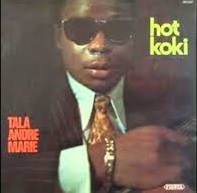
The album "Hot Koki" by André Marie Tala
The album “Hot Koki” by André Marie Tala

In 1973, his album “Hot Koki” knows international success, and his single “Hot Koki” is even plagiarized by the great James Brown under the new title “The Hustle”. In 1978, after 4 years of judiciary struggles, Tala is awarded justice, and James Brown is condemned to pay him back all his rights.

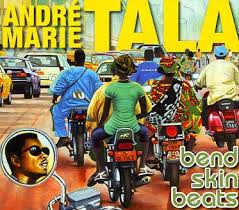
The big themes of Tala’s music are peace, love, and harmony. In the 90s, he brings Bend Skin to the forefront of Cameroonian music, a folkloric fusion of styles from the grasslands of Cameroon. It is often associated with the moto-taxis which are called by the same name Bend-Skin.

Album of André Marie Tala

By choosing the Olympia (the quintessential stage for music in France), for his musical jubilee, André Marie Tala wants to launch a new beginning for the Cameroonian music which has always been rich and influenced millions, but for the past decade has stagnated. Happy 45th-anniversary to Andre Marie Tala, and to many more albums of great music. I live you here with one of my favorite Tala’s song, Nomtema. Do not forget to check out “HOT KOKI” and check out the similitude with James Brown’s “THE HUSTLE“; it is the same, just in English!