‘Ma vie est une chanson / My Life is a Song’ by Francis Bebey

music_1Below is ‘Ma vie est une chanson‘ or ‘My Life is a Song‘, a love poem by Cameroonian author Francis Bebey, a poem celebrating his love for the African woman, in this case for his lover. As we remember that Francis Bebey was multi-talented as a journalist, writer, sculptor and musician, it is no surprise that the title of his poem is “My Life is a Song”. He even headed the UNESCO music department researching and documenting traditional African music. In the poem, he highlights that he was born from the love of the earth with the sun, thus a birth that was very celebrated and a life full of love. As we read the poem, Bebey’s love for his country is abundantly clear as he dreams of taking his lover there, and not only that, but lets her know that his country is where to find the love between the earth and the sun; it is almost as if he was telling all that he was born on the equator. Moreover, let’s face it, the link between the earth and the sun is undeniable, unbreakable, unavoidable, constant, and forever omnipresent. He is so taken by the love so much so that his life is a song that he will sing everyday to his precious one. Wouldn’t you all like to be loved like that? Enjoy!

The poem Ma vie est une chansonby Francis Bebey, was published in Anthologie africaine: poésie, Jacques Chevrier, Collection Monde Noir Poche, Hatier 1988. Translated to English by Dr. Y. Afrolegends.com.

Ma vie est une chansonOn me demande parfois d’où je viens

Et je reponds “je n’en sais rien

Depuis longtemps je suis sur le chemin

Qui me conduit jusqu’ici

Mais je sais que je suis né de l’amour

De la terre avec le soleil”

Toute ma vie est une chanson

Que je chante pour dire combien je t’aime

Toute ma vie est une chanson

Que je fredonne auprès de toi

Ce soir il a plu, la route est mouillée

Mais je veux rester près de toi

Et t’emmener au pays d’où je viens

Ou j’ai caché mon secret

Et toi aussi tu naîtras de l’amour de la terre avec le soleil

Toute ma vie est une chanson

Que je chante pour dire combien je t’aime

Toute ma vie est une chanson

Que je fredonne auprès de toi.

My Life is a SongI am sometimes asked where I come from

And I answer “I don’t know

For a long time I have been on the way

That leads me here

But I know that I was born from the love

between the land and the sun”

My whole life is a song

That I sing to tell you how much I love you

My whole life is a song

That I hum next to you

Tonight it has rained, the road is wet

But I want to stay close to you

And take you to the land where I come from

Where I hid my secret

And you too will be born from the love of the earth with the sun

My whole life is a song

That I sing to tell you how much I love you

My whole life is a song

That I hum next to you.

“Love the African Way” by Esmeralda Yitamben

L’amour / Love

Today, I will share with you a beautiful poem by author Esmeralda Yitamben, “Love, the African Way.” As you remember, I shared the poem ‘African Hair’ by Esmeralda Yitamben which, in my humble opinion, should be published in school books… and which I dearly love. Here is another one, for the lovers out there, and the historians as well. Every part of this poem is rich in history, history of the African continent, of the race, and combines the ancient and the modern faces of Africa : from the scholarly city of Timbuktu, one of the first universities of the world, to the second longest river of Africa, the Congo River and the great Congo Empire, to the libraries of Alexandria, to the sandy beaches of Senegal, from the dunes of The forgotten kingdom of Nubia to the streets of Douala. Imagine climbing the tallest mountain of Africa for someone you love, going to battle like Shaka Zulu, and winning them all like Menelik II (Battle of Adwa)… Imagine a love founded on the rock of the great Egyptian pyramids, and rising like the sphinx, never faltering. No doubt that this is a celebration of victory, of wealth, of the conquest of all battles, and above all… of love. The original poem can be found on Kalaharireview.com. Enjoy!

====

Love, the African Way” by Esmeralda Yitamben

I want to love you in Bambara

And take you to the sacred city of Timbuktu.

Nakupenda Malaika

Is what I will tell you, my angel, in Kiswahili.

Wapi Yo” my dear?

I will speak Lingala and navigate the Congo River looking for you from Kinshasa to Lubumbashi.

On my way, I will stop to contemplate the okapi, whose beauty and grace reminds me so much of yours.

I will climb Mt Kilimandjaro and stand fearlessly like a Maasai warrior.

I will rise on the wings of the sphinx at Thebes,

and revive the rolls of papyri from the burnt libraries of Alexandria,

to read you centuries’ old love poems

And walk the dunes of the ancient kingdom of Nubia at Meroë.

I will celebrate my long lost love on the beach of Dakar, and claim how much I miss you in Wolof “Namm naa la”.

Mase fi mi sile my love, don’t go, is what I will say in Yoruba, so that you never leave me.

You belong to me, natondi wa, I love you, and I will dance to the rhythm of makossa in the streets of Douala.

Like Chaka Zulu, I will be the warrior of your heart, I will fight a thousand battles for you.

And like Menelik II, great emperor of Ethiopia, I will win them all for you, precious one!

Together, we will build an empire as great as the Empire of Mali and our love will be talked about throughout the universe.

And when we finally meet again, I will say M’Bifé, I love you.

Glossary

Wapi Yo = “Where are you?” In Lingala (Congo)

Nakupenda Malaika = “I love you angel” in Kiswahili (Kenya, Tanzania)

Namm naa la = “I miss you,” in Wolof (Senegal, Gambia)

Mase fi mi sile = “don’t leave me” in Yoruba (Nigeria)

Na tondi wa = “I love you” in Douala (Cameroon)

Makossa is a musical style from Cameroon

M’Bifé = “I love you,” in Bambara (Mali)

‘L’Oiseau en Liberté’ / ‘The Free Bird’ de Claude-Joseph M’Bafou-Zetebeg

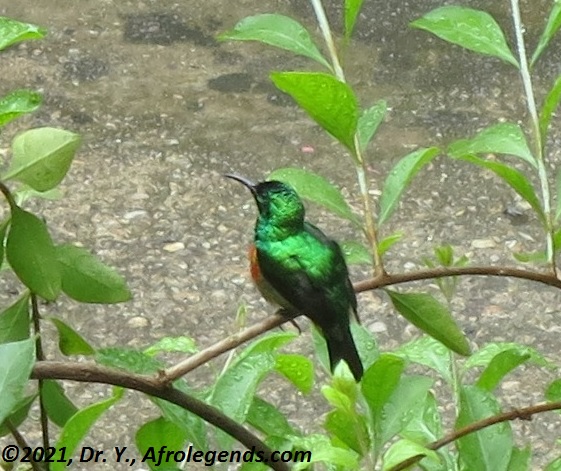
Souimanga bronze / Bronzy sunbird

Wouldn’t it be nice to be a bird? To take off and fly away, carefree? What comes to mind when observing a bird: a great sense of freedom; freedom to come and go, freedom to sing, no worries for tomorrow, and freedom to just be. Beauty also comes to mind, but liberty always prevail as one of the main descriptors. I recently stumbled upon this poem by Cameroonian author Claude-Joseph M’Bafou-Zetebeg, ‘The Free Bird’ which describes so well that sense of freedom which most of us aspire to. The author focuses on a bird, and describes the freedom the bird enjoys, the lightness, which is greater than all fortunes. I present here ‘L’Oiseau en Liberté‘ by Claude-Joseph M’Bafou-Zetebeg, published in Anthologie Africaine: Poésie Vol2, Jacques Chevrier, Collection Monde Noir Poche, 1988, and translated to English by Dr. Y. Afrolegends.com . Enjoy!

L’Oiseau en liberté’ / ‘The Free Bird‘ de Claude-Joseph M’Bafou Zetebeg

L’oiseau qui passe là-bas,

L’oiseau léger

Qui bat des ailes

Et fend l’air là-bas à l’horizon,

N’a rien à lui au monde,

Mais comme il est joli

En liberté !

Et c’est en chantant

Qu’il vit sur la branche,

Le bel oiseau voyageur

Qui rythme les saisons.

Car rien ne vaut la liberté :

C’est la plus digne

De toutes les fortunes,

La liberté dont jouit l’oiseau

Qui vit sur la branche !

La liberté au feu sacré,

La liberté naturelle,

O la sainte liberté

Dont devrait jouir

Tout être

Dans sa facture naïve !

The bird that passes by,

The light bird,

Who flaps its wings

And splits the air over there in the horizon,

Has nothing of its own in the world,

But how pretty it is

In liberty!

And it is by singing

That it lives on the branch,

The beautiful traveling bird

Who punctuates seasons.

‘Cause nothing beats freedom:

It is the most worthy

Of all fortunes

The freedom enjoyed by the bird,

That lives on the branch !

Freedom in the sacred fire,

Natural freedom,

O the holy freedom

That every being should enjoy

In its naive craftsmanship !

Being Complicated is Incurable

tall and short

There were once two friends. One was tall, and the other short.

One day, they decided to go to the market. Since they were going through a narrow path, the tall one left the short one behind.

  • It is because you underestimate me that you leave me behind you, complained the short one.

A bit further, the tall one, trying to satisfy his friend, made him move in front.

  • It is, to better look at me, and laugh at my short height, growled the other.

They reached the market. The place was full of people. The tall one wanting to correct the errors which had been reproached him, brought his friend back to his sides and the two of them walked hand in hand.

  • You put us side by side now to show everyone that you are taller than I, growled the short one.
  • My friend, I think that it is impossible to satisfy a dwarf. You are complicated and it is an incurable disease.

Fables des Montagnes de Patrice Kayo, Collection Les CLES de l’avenir, Editions CLE, Yaounde, p. 38 (1998). Translated to English by Dr. Y., Afrolegends.com

“Chant Funèbre Bangou / Bangou Requiem” by Etienne Noumé

Dry your tears African

There has been so much loss this year that I thought to introduce you to the “Bangou Requiem,” a poem written by the Cameroonian poet and author Etienne Noumé. Bangou (pronounce Ban-gu in English) is a town in the Western province of Cameroon, and is part of the Bamiléké grassfields. Noumé’s description of his loss is so profound, and uses typical Bamileke imagery, “My body is numb… the palms have dried under the moonlight“, “My sun went down“, my joy, my everything, “ blown away by the wind.” It is hard to lose someone dear, especially one’s child. In Bamileke culture, the parent is supposed to bury his child and not the contrary, so you can imagine the heart wrenching pain… that numbs you. “The palms have dried under the moonlight“… think about it for a minute: … can a palm dry under the moonlight?… this is Bamileke imagery for you. “My reddened pot burst” my hope blown away in an instant, without any notice, the impossible has happened. This here is a Bangou Requiem, “Chant Funebre Bangou” by Etienne Noumé, first published in Angoisse quotidienne, Le Flambeau, Yaoundé, re-published in Anthologie Africaine: Poésie Vol2, Jacques Chevrier, Collection Monde Noir Poche, 1988, and translated to English by Dr. Y. Afrolegends.com . Enjoy!

=====

Chant funèbre Bangou


Mon corps est engourdi

et je me meurs de froid;

mon enfant est allé

couper du bois, hélas

et n’est pas revenu

Les palmes

ont séché

à la lueur

de la lune

Sur le foyer ardent

mon pot rougi éclate :

à l’aube au marigot

mon enfant est allé

et n’est pas revenu.

Les palmes

ont séché,

à la lueur

de la lune

Mon soleil s’est couché :

mon enfant est allé

derrière la colline

emporté par le vent

et n’en reviendra jamais plus

Les palmes

ont séché,

à la lueur

de la lune

Bangou Requiem


My body is numb

and I am dying of cold;

my child went

to cut wood, alas

and did not come back

the palms

have dried

under the

moonlight

On the fiery hearth

my reddened pot burst :

at dawn in the backwater

my child went

and did not come back.

The palms

have dried

under the

moonlight

My sun went down :

my child went

behind the hill

blown away by the wind

and will never come back

the palms

have dried

under the

moonlight


When Silence is Strength

Silence

An eminent nobleman found one morning that his house had been broken into and all his belongings stolen.

Instead of sounding alarms, he gathered his wives and children in the courtyard, and without saying anything, took place in their midst, calmly smoking his pipe.

Towards the middle of the morning, two young men arrived. They found the family gathered in silence, and thinking that they were mourning the theft that they had perpetrated the night before, they spread in compassion:

  • We were out of the village for several days, said one to the nobleman. Back this morning, we were informed of what has happened to you, and we could not leave without coming to commiserate with you.

For all answer, he had them arrested and tied, before telling them what he had been victim of. The young men confessed.

It is since this story that there is an adage which says that we catch the animal by the paw and the man by the word.

Fables des Montagnes de Patrice Kayo, Collection Les CLES de l’avenir, Editions CLE, Yaounde, p. 39 (1998). Translated to English by Dr. Y.Afrolegends.com

The Taro and Its Neighbors

Dotted taro leaf

From its large leaves, the taro collected water and without gathering any for itself, or absorbing enough, watered its neighbors who bloomed and produced abundantly. For the benefit of others, generous taro forgot itself.

When the dry season came, it was the first to suffer from the lack of water. Turning to its neighbors who had great reserves, it begged them to share enough to survive until the rainy season. Everyone closed their door to its face and fell back on their complacency.

It is while dying that he understood that forgetting oneself for the benefit of others is a failure and that one must always be satisfied before adding to others.

Fables des Montagnes de Patrice Kayo, Collection Les CLES de l’avenir, Editions CLE, Yaounde, p. 59 (1998). Translated to English by Dr. Y.Afrolegends.com

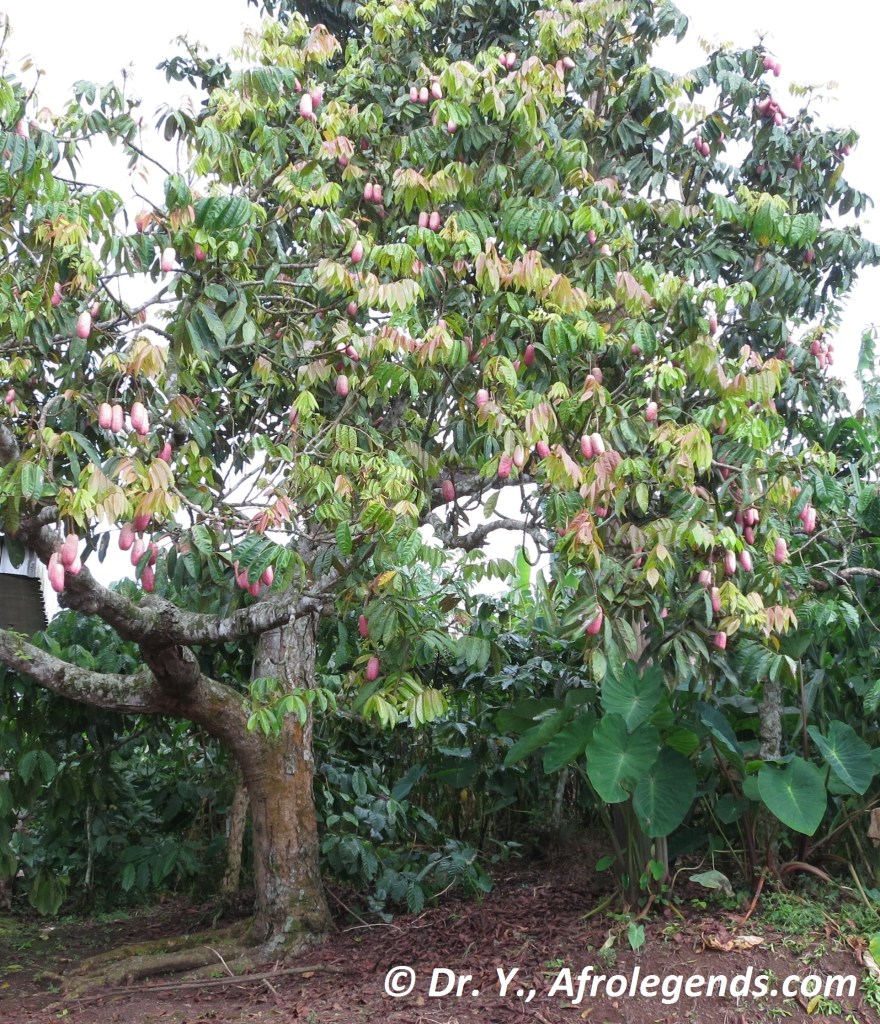
The Safou and Hazel Trees

The storm was doing her frequent incursions in the forest and, like a raptor that rushes on from the sky and only leaves each time with a chick, she uprooted a tree. Each victim was left to his fate. For the survivors, the attack was only the business of the one who had succumbed.  Each closed his door on his blissful quietude.

The safou tree

One morning, the insatiable grim reaper [the storm] stopped in front of the safou tree and started ruffling his hair. Then she [the grim reaper] shook him in all directions to make him understand that his time had come.

The safou tree tried to organize his defense. The storm rushed, retreated to regain strength, came back with more violence, snatched off and dispersed under her breath the hair of the assaulted. Not being able to take it anymore, the safou tree sent out a distress call in the direction of the hazel tree, his neighbor.

  • Here is, he said, the brigand who for many years, depopulates our country. Come help me get out of his claws. I am out of strength.
  • I never get involved in anything that doesn’t concern me, said the hazel tree. I do not deal with either the storm or the wind. Give back to the brigands what you owe them.

This said, the hazel tree closed his door to find the softness and calm of his home.

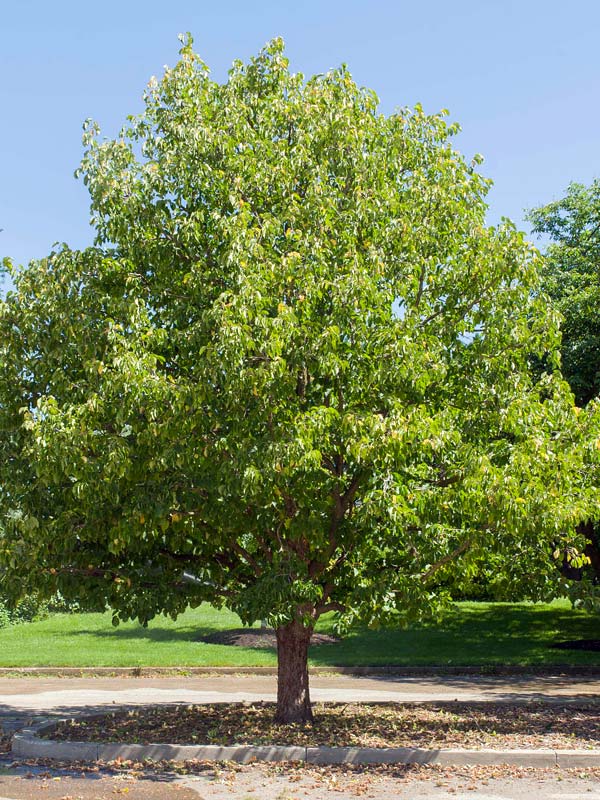
Turkish hazel tree (Source: Chicago Botanic Garden)

Under the storm’s assaults, the safou tree collapsed. In his last breath, he grumbled that what was happening to him will not miss the hazel tree.

And two days later , it was the turn of the hazel tree to pay the storm the ransom of weakness and individualism of the people of the forest.

Fables des Montagnes de Patrice Kayo, Collection Les CLES de l’avenir, Editions CLE, Yaounde, p. 9 (1998). Translated to English by Dr. Y., Afrolegends.com

Francis Bebey introducing us to the Communication System of Pygmy People

Francis Bebey_1
Francis Bebey

As we saw on Monday, Francis Bebey’s poem ‘Je suis venu chercher du travail’ / ‘I Came to Look for Work’ is the story of many immigrants, living their homes, families, friends and countries, to journey to far-away lands in search of a better living.

More than a writer, Francis Bebey was also a musician. Below is a video where Francis Bebey introduces the viewer to the one-note flute, and the communication system invented by the pygmy peoples of Central Africa to converse with each other using that instrument. As I told you earlier, Francis Bebey headed the music department at the UNESCO‘s office in Paris, where he focused on researching and documenting African traditional music. Enjoy a lesson from the maestro!


‘Je suis venu chercher du travail’ / ‘I Came to Look for Work’ by Francis Bebey

Francis Bebey_1
Francis Bebey

Today, as states and countries are slowly reopening after the shelter-in-place due to the coronavirus pandemic, many have been left jobless, and are looking for a job now or in the near future. I think the poem ‘Je suis venu chercher du travail / I came to look for work‘ by the great Cameroonian writer and musician Francis Bebey is very appropriate. The poem below is the story of many immigrants traveling to a foreign land in search of a job, a better life, leaving all behind: families, friends, and country. This poem is very simple, yet so deep as it details the losses taken today, in hope for a better tomorrow. As you think about the immigrants dying in the Mediterranean sea, or those crossing the Mexico-US border, or all the countless faces in the world, take a moment to imagine families torn apart, lives in peril, and possibly no light at the end of the tunnel.

Francis Bebey_Agatha Moudio Son
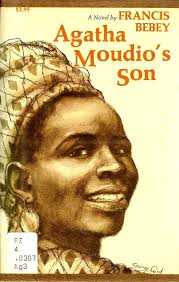
‘Agatha Moudio’s Son’ by Francis Bebey (Amazon)

Francis Bebey was sort of a genius: in his early years, he studied mathematics, before going into broadcasting. He was called to Ghana by President Kwame Nkrumah, where he served as a journalist. He began his literary career as a journalist in the 1950s and worked in Ghana and other African countries for the French radio network, Société de radiodiffusion de la France d’outre-mer (SORAFOM) and Radio France International. Later, he wrote novels, poetry, plays, tales, short stories, nonfiction works, and established himself as a musician, sculptor, and writer.  His first novel, Le Fils d’Agatha Moudio (Agatha Moudio’s Son), was published in 1967 and awarded the Grand prix littéraire d’Afrique noire in 1968; it remains his best-known work to this day. He also headed the music department at the UNESCO‘s office in Paris, where he focused on researching and documenting African traditional music.

Enjoy Je suis venu chercher du travail‘ by Francis Bebey, published in Anthologie africaine: poésie, Jacques Chevrier, Collection Monde Noir Poche, Hatier 1988. Translated to English by Dr. Y. Afrolegends.com.

Je suis venu chercher du travail

Je suis venu chercher du travail

J’espère qu’il y en aura

Je suis venu de mon lointain pays

Pour travailler chez vous

J’ai tout laissé, ma femme, mes amis

Au pays tout là-bas

J’espère les retrouver tous en vie

Le jour de mon retour

Ma pauvre mère était bien désolée

En me voyant partir

Je lui ai dit qu’un jour je reviendrai

Mettre fin à sa misère

J’ai parcouru de longs jours de voyage

Pour venir jusqu’ici

Ne m’a-t-on pas assuré d’un accueil

Qui vaudrait bien cette peine

Regardez-moi, je suis fatigué

D’aller par les chemins

Voici des jours que je n’ai rien mangé

Auriez-vous un peu de pain?

Mon pantalon est tout déchiré

Mais je n’en ai pas d’autre

Ne criez pas, ce n’est pas un scandale

Je suis seulement pauvre

Je suis venu chercher du travail

J’espère qu’il y en aura

Je suis venu de mon lointain pays

Pour travailler chez vous

I came to look for work

I came to look for work

I hope that there will be

I came from my far away country

To work for you

I left everything, my wife, my kids

In my country over there

I hope to find them all alive

On the day of my return

My poor mother was very sorry

To see me go

I told her that I will come back one day

To put an end to her misery

I had long days of travel

To get here

Was I not assured of a welcome

Which will be worth all this trouble

Look at me, I am tired

To go by the ways

It has been days since I ate anything

Do you have some bread?

My trouser is all ripped

But I don’t have another

Do not scream, it is not a scandal

I am just poor

I came to look for work

I hope there will be

I came from my far away country

To work for you

Inédit