ANC’s Historic 30-year Loss and its Alliance with the DA

Flag of South Africa

Today, President Cyril Ramaphosa has been sworn into office for a second term at the helm of South Africa. He remains in office even though his party, the African National Congress (ANC) party of South Africa, the party that brought the end of the apartheid regime, lost its parliamentary majority in a historic election on June 1, that puts South Africa on a new political path for the first time since the end of the apartheid system of white minority rule 30 years ago. The ANC won just over 40% of the votes cast, short of the majority; the Democratic Alliance (DA) won 22% of the votes coming in second; Jacob Zuma’s uMkhonto we Sizwe (MK) party came in third with 15% of the vote, while Julius Malema’s Economic Freedom Fighters (EFF) came in fourth with 9.5%. The ANC’s historic 30-year loss in South Africa and its subsequent unusual, for lack of a better word, coalition with the Democratic Alliance brings us exactly to try to understand its loss, and ask the fundamental question of why such an alliance? The strong performance by Zuma’s MK took many by surprise as it took the third place that many thought would go to Malema’s EFF. There is also speculation that MK took votes directly from the ANC, due in part to the bitter enmity between former president Zuma and current president Ramaphosa. 

At the end of the elections, the leaders of the different parties shared: “The way to rescue South Africa is to break the ANC’s majority and we have done that,” said John Steenhuisen, the leader of the main opposition DA party. Julius Malema, the leader of the EFF opposition party, said that the ANC’s “entitlement of being the sole dominant party” was over.  The MK Party said one of their conditions for any coalition or agreement with ANC was that Ramaphosa is removed as ANC leader and president. The ANC chose to keep Ramaphosa as president, and make an alliance with the DA.
ANC flag
ANC flag

The reasons for the ANC’s loss (among many others): 1) South Africa has widespread poverty and extremely high levels of unemployment, and the ANC has struggled to raise the standard of living for millions ; 2) persistent lopsided economic inequalities, which still affects the black majority ; 3) rampant corruption ; 4) a lack of public service delivery, particularly in poorer areas ; 5) the frequent power cuts, where intermittent outages have been a near-constant for almost 2 years now; which highlights also the poor shape of infrastructures; 6) the soaring crime rate, with 130 murders and 80 rapes documented every single day in the last quarter of 2023. Above all, the fundamental problem of the ANC is that, at the end of the apartheid regime in 1994, when agreements between both sides were signed, the ANC got the political power, but not the economic; however, the economic power funds the politics and real change.
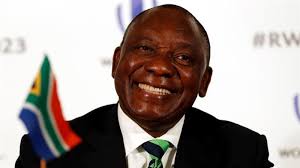
President Cyril Ramaphosa

The ANC has now made an alliance with the DA which is perceived as a mostly white, middle-class party that doesn’t care about the poor which are mostly Black. It will not be an easy pill to swallow for the majority of Black South Africans who remember the suffering under the white-rule apartheid era to welcome the return of white figures to senior political positions (perhaps even the vice presidency?). With this new power-sharing agreement, the two parties would have to get over their past antagonism, particularly the DA’s longstanding and consistent criticism of ANC “corruption”. The free-market DA, is ideologically at odds with the ANC’s social welfare traditions, and seen by many as catering to the interests of the white minority. On paper, the two political opponents have agreed to a common agenda of fixing the country’s infrastructure, providing basic services such as water and power, and creating jobs. Moreover, the DA has been the most critical opposition party for years and doesn’t share the ANC’s pro-Russia and pro-China foreign policy. Next year, South Africa will take over the presidency of the Group of 20 industrialized and emerging-market nations. Will this alliance cause issues for the BRICS (Brazil – Russia – India – China – South Africa)?

To Jacob Zuma and many, this is an “unholy” alliance. Will he be proven wrong or right? To others, this alliance marks the end of the ANC, and the beginning of a very rocky period, which will usher back a system similar to pre-1994 era. What do you think ? To others still, this alliance breaks the monolithic landscape of South African politics, and hopefully ushers a ‘real’ change that will address the issues of South Africans. What will it be? Only time will tell!

Remembrance: 16 June 1976 Soweto Massacre

Soweto3
Soweto uprising: children walking peacefully (Source: Ezakwantu.com)

The Soweto massacre or Soweto uprisings also known as June 16, were some of the biggest massacre of the apartheid regime in South Africa, mostly because it showed police repression against kids.  On June 16, 1976, Black high school children in Soweto protested against the Afrikaans medium decree of 1974 which forced the schools to use Afrikaans as one of the main languages in schools (50-50 with English): Afrikaans was to be used to teach mathematics, arithmetic, etc…  In the 1950s, 60s, and 70s, many people preferred English as the school language, the commerce language, etc, because of the violence attached with Afrikaans which was the language of the oppressor.

Soweto Uprising (Source:kilimedia.com)
Soweto Uprising: children running away (Source: kilimedia.com)

On June 16, 1976, over 20,000 school children took part in protests which left over 700 dead (the official numbers say 176, but we all know that this number could not be further from the truth).  On that bright morning, 10,000 – 20,000 black students walked from their schools to Orlando stadium for a peaceful rally against the use of Afrikaans, the oppressor’s language, in school.  The protest had been carefully planned by the Soweto Students’ Representative Council’s (SSRC) Action Committee, with support from the Black Consciousness Movement, and teachers from Soweto.  The students were marching and they found out that police had barricaded the road along the intended route.  The leader of the SSRC action committee then asked the crowd not to provoke the police, and the march went on on a different route, eventually ending up near Orlando High School.  The students were marching, singing, and waving placards with slogans such as, “Down with Afrikaans“, “Viva Azania“, and “If we must do Afrikaans, Vorster must do Zulu.”

Hector Pieterson being carried away by Mbuyisa Makhubo, with his sister running alongside (Photo by: Sam Nzima)

One officer shot and fired his gun causing panic and chaos.  Students started screaming and running, as more gunshots were being fired, and the police let out their dogs on children who responded by stoning the dogs.  The police then began to shoot directly at the children.  One of the first students to be shot dead was 13-year-old Hector Pieterson, who became the symbol of the Soweto uprisings.  The picture of his dead body being carried away by another student while his sister ran beside them in tears, was captured by news photographer Sam Nzima, and made it worldwide.  The police patrolled the streets throughout the night as the students came under intense attack.  Emergency clinics were swamped with injured and bloody children.  The police requested the hospitals to provide a list of all victims with bullet wounds, but the doctors refused to create the list, and recorded bullet wounds as abscesses.  On the 17th of June, 1,500 heavily armed police officers were deployed to Soweto carrying automatic rifles, stun guns, and carbines.  They were driving in armored vehicles with helicopters, while the South African army was ordered on standby… for repression onto school children.

In the end, the Soweto uprising established the leading role of African National Congress (ANC) against the apartheid regime; it marked the turning point in the opposition to white rule in South Africa.  Formerly, the struggle had been fought outside South Africa, in neighboring countries (Rhodesia – Zimbabwe, South-West Africa – Namibia, and Angola), but from that moment forward, the struggle became internal as well as external.

June 16th is now celebrated in South Africa as a public holiday.  Enjoy this quick collage about the events of June 16th, and please remember to commemorate the lives of innocent children killed on this day in South Africa, children whose future were ended too early.  Don’t forget to check out these articles on BBCLibcom.orgSouth Africa Info, and watch the video on Independent Lens on PBS.

2012: The Joys of Africa – Who/What did we celebrate?

The Africa Cup of Nations/ La Coupe d'Afrique des Nations
The African Cup of Nations/ La Coupe d’Afrique des Nations

2012 was also a year of joy in Africa. Africa celebrated quite a few people and events:

1. The African National Congress (ANC) celebrated its 100 years of existence (January 2012).

2. Zambia won the African Cup of Nations 2012 by defeating the great selection of Côte d’Ivoire in the finals (February 2012).

3. Senegal went through a peaceful, democratic transition, with the election of Macky Sall (March 2012).

4. Africa got its 2nd female president: Mrs Joyce Banda of Malawi (April 2012).

5. President Laurent Gbagbo‘s hearing at the International Criminal Court (ICC) was scheduled for June 18, 2012, but was postponed to August 13, 2012, and now has been postponed indefinitely.  Apparently the ICC cannot find proofs of all their allegations against Laurent Gbagbo, and thus prefer stalling.

The VMK (Source: VMK)

6. Oussama Mellouli, of Tunisia, won Gold in the 10 km marathon open water, to become the first swimmer to ever win olympic medals in both the pool and open water (August 2012).

7. David Rudisha of Kenya, became the first man to break a record at the London Olympics, in the 800m (August 2012).

8. Alaeeldin Abouelkassem of Egypt won silver in fencing, becoming Africa’s first medal in fencing (August 2012).

9. Rwandan writer, Scholastique Mukasonga, won the prestigious French Prix Renaudot for her book “Notre Dame du Nil” (November 2012).

10. Verone Mankou, a Congolese inventor, presented the first tablet and smartphone entirely engineered in Africa (December 2012);

Celebrating 100 years of struggle: the African National Congress

ANC flag
ANC flag

Last week, on January 8th 2012, the African National Congress (ANC) celebrated 100 years of existence. I think a trip down history lane is in order.

———————

After the defeat of Zulu, Xhosa, and other African kingdoms in the late 1800s-1900s in the hands of British colonizers, South Africans had to find a new way to fight off the oppressors. Thus, in 1911, Pixley ka Isaka Seme called on Africans to forget the differences of the past and unite together in one national organisation. He said: We are one people. these divisions, these jealousies, are the cause of all our woes today. That national organization saw light on January 8th 1912, when chiefs, representatives of people’s and church organisations, and other prominent individuals gathered in Bloemfontein and formed the African National Congress. The ANC declared its aim to bring all Africans together as one people to defend their rights and freedoms. Its first elected president was John Dube.

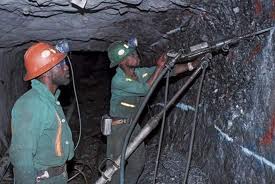
South African miners

The 1920s-1930s were marked by actions such as the 1919 campaign against passes by the Transvaal ANC; the militant strike by African mineworkers in 1920; and the social organization of Black workers…  The ANC went through several stages, first, as a church-based lobbying force, a non-violent nationalist movement, and then, as part of an alliance with Indians, Coloureds, and progressive Whites, including Afrikaners and Communists.

The Sharpeville massacre on 21 March 1960 where a group of 5000-7000 marched to protest against passes and were shot on by police forces showed the international community how ruthless the apartheid system was.  Karen Allen of BBC news recalled the massacre with this chilling description: “Thousands of protesters had gathered in Sharpeville, just south of Johannesburg, to protest at the use of the infamous passbooks, or “dompas”, that every black South African was expected to carry and produce on demand. It governed a person’s movement, was a tool of harassment and was one of the most hated symbols of the apartheid state. Sixty-nine men, women and children were gunned down on that day, killed when police officers opened fire on the crowd. The police station – where they had gathered – is now a memorial to the dead.

Nelson Mandela ca 1955

In 1961, the ANC took up arms against the South African White government. It morphed into a violent struggle of resistance and armed combat with Umkhonto we Sizwe (MK) or Spear of the Nation, when the doors to non-violent change were brutally shut by white nationalists who built on British colonial racism to impose apartheid, a practice of physically relocating communities, regulating labour with passes and violent repression. During those years, not only did MK tried to make the country ungovernable to no avail (as they were no match to the repressive white supremacist government of South Africa), but many of its leaders were arrested like Nelson Mandela, Govan Mbeki, and Walter Sisulu, while others like Oliver Tambo and Joe Slovo went into exile.

Continue reading “Celebrating 100 years of struggle: the African National Congress”