“The Cancer of Betrayal” by Amilcar Cabral

Kwame Nkrumah
Kwame Nkrumah

During Kwame Nkrumah‘s state funerals in Conakry on 13 – 14 May 1972Amilcar Cabral gave this great speech titled: “Le Cancer de la Trahison,” (The Cancer of Betrayal) on May 13, 1972, which I posted earlier in French.  I have now translated his speech to English, and would like all to enjoy.  I will later add the captions to the video on youtube as well.

=========

In his last public speech in Conakry, at the funeral of the former Ghanaian president Nkrumah, Amilcar Cabral had denounced the cancer of betrayal that eats up African movements.  His comments today take a strange resonance in Guinea as in Angola, and Mozambique, where many movements are demanding power which the Portuguese have not yet abandoned.

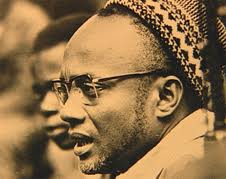
Amilcar Cabral
Amilcar Cabral

… What to say? but we must speak otherwise at this point, if we don’t talk, our hearts may burst.  Our tears should not infiltrate the truth.  We, freedom fighters, we do not mourn the death of a man, even a man who was a comrade and an exemplary revolutionary, because as President Ahmed Sekou Toure often says ‘what is man in front of the infinite being and transgressing of the people and of humanity?’  We do not mourn the people of Ghana scoffed in its most beautiful realisations, in its most legitimate aspirations.   We are not crying for Africa, betrayed.  We are mourning, yes, of hatred towards those who were able to betray NKRUMAH to serve the ignoble imperialism …  Mr President, Africa by requiring through the voice of the people of the Republic of Guinea, as always fairly represented by President Ahmed Sekou Toure, whom NKRUMAH had put in his right place on the Kilimandjaro’s highest summits of the African revolution, Africa rehabilitates itself and through history.  President NKRUMAH, which we honor is primarily the great strategist of the struggle against classic colonialism, he is the one who created what we call African positivism, what he called “positive action”, affirmative action.  We pay tribute to the declared enemy of neocolonialism in Africa and elsewhere, the strategist of economic development in his country.  Mr President, we praise the freedom fighter of the African people who always gave his full support to national liberation movements, and we want to tell you here that we, in Guinea and Cape Verde islands, even though it is true that the most important factor for the development of our struggle outside our country was the independence of the Republic of Guinea, the heroic ‘no’ of the people of Guinea on 28 September 1958.   It is also true that if we went through the struggle regenerated, it was essentially due to the concrete support of Ghana and particularly of President Nkrumah …

Mr. President, we should however in this moment remember that all coins in life have two faces, all realities have positive and negative sides… to all positive action, is opposed a negative action. To what extent is betrayal’s success in Ghana linked to problems of class struggle, from contributions to social structures, from the role of party or other instructions, including armed forces as part of a new independent state.  To what level, we shall ask ourselves, is betrayal’s success in Ghana linked to a correct definition of this historical entity and craftsman of history that is the people and their daily work, in defending its own independence conquests?  Or to what extent is betrayal’s success not linked to the major problem of the choice of men in the revolution?  My idea on this question will allow us to better understand the greatness of Nkrumah’s work, to understand the complexity of problems he had to face so many times alone… problems that will allow us to conclude that, as imperialism exists, an independent state in Africa should be a liberation movement to power or it would not exist.  Let no one tell us that Nkrumah died of a cancer to the throat or some other disease; no, Nkrumah has been killed by the cancer of betrayal that we should uproot… by the cancer of betrayal, that we should root out of Africa if we really want to definitely crush the imperialist domination on this continent.  But, we, Africans, firmly believe that the dead continue living by our sides, we are a society of dead and living.  Nkrumah will resuscitate each dawn in the hearts and in the determinations of freedom fighters, in the action of all true African patriots.  Our liberation movement will not forgive those who betrayed Nkrumah, the people of Ghana will not forgive, Africa will not forgive, progressive mankind will not forgive!”

Translated from French by Dr. Y., afrolegends.com (12 October 2012)

French version here Amilcar Cabral – Le Cancer de la Trahison

Amilcar Cabral and Cape Verdeans in the USA

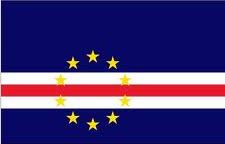
Flag of Cape Verde
Flag of Cape Verde

Over a year ago, I was contacted by Mike Costa, a gentleman who was making a documentary on Cape Verdeans in California, and their history in relation to their homeland.  The gentleman really liked my article on Amilcar Cabral and wanted my contribution.  I was delighted to help in any way possible.  Two months ago, I received an e-mail with a link to the trailer to the documentary which was coming out in the US.  I must admit that this made me extremely proud to have helped (in any way) in his project, and most importantly to see the final product which is truly a praise of Cape Verdeans in the bay area, and Cape Verdeans in general.  Enjoy the trailer… and if you have a chance, leave a comment on his website ProudTobeCapeVerdean.com or under his YouTube video or buy the DVD to show your support of his great work.  This is a non-profit endeavor that shines a well-deserved light on the California Cape Verdean community.  Like he says on his website: ” If we don’t tell our story, who would?”

Amilcar Cabral – Tell no lies, claim no easy victories

Amilcar Cabral
Amilcar Cabral

January 20th marks the anniversary of the death of Amilcar Cabral, the father of the independence of Guinea Bissau and Cape Verde. As such, I just thought about leaving you with some of his most famous quotes. Enjoy!

A people who free themselves from foreign domination will be free culturally only if, without complexes and without underestimating the importance of positive accretions from the oppressor and other cultures, they return to the upward paths of their own culture, which is nourished by the living reality of its environment, and which negates both harmful influences and any kind of subjection to foreign culture. Thus, it may be seen that if imperialist domination has the vital need to practice cultural oppression, national liberation is necessarily an act of culture.”  Amilcar Cabral, “National Liberation and Culture” Lecture delivered on February 20 at Syracuse University as part of the Eduardo Mondlane Memorial Lecture Series. Eduardo Mondlane was the first President of the Mozambique Liberation Front (FRELIMO) who was assassinated by Portuguese agents on Feb. 3, 1960. historyisaweapon.com

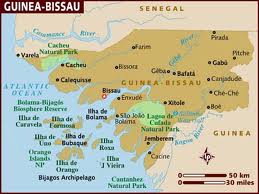
Map of Guinea Bissau

We must practice revolutionary democracy in every aspect of our Party life. Every responsible member must have the courage of his responsibilities, exacting from others a proper respect for his work and properly respecting the work of others. Hide nothing from the masses of our people. Tell no lies. Expose lies whenever they are told. Mask no difficulties, mistakes, failures.  Claim no easy victories…Amilcar Cabral: tell no lies, claim no easy victories

Educate ourselves; educate other people, the population in general, to fight fear and ignorance, to eliminate little by little the subjection to nature and natural forces which our economy has not yet mastered. Convince little by little, in particular the militants of the Party, that we shall end by con­quering the fear of nature, and that man is the strongest force in nature.Amilcar Cabral: Tell no lies, claim no easy victories

Continue reading “Amilcar Cabral – Tell no lies, claim no easy victories”

Agostinho Neto: doctor, poet, president, and father of Angolan independence

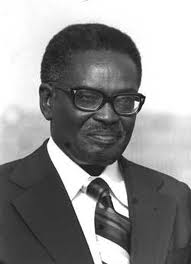
Agostinho Neto
Agostinho Neto

Agostinho Neto was the first president of Angola, and served from 1975 to his death in 1979. He was born in a Methodist family (his father was a Methodist pastor), attended high school in Luanda, and studied medicine in Lisbon (specializing in gynecology).  In Lisbon, he befriended future political leaders such as Amilcar Cabral (Guinea Bissau and Cape Verde) and Marcelino dos Santos (Mozambique). He combined his academic life with covert political activities.

In 1948 he published his first volume of poetry and was arrested for the first time. There followed a series of arrests and detention, which interrupted his studies. He joined the Movimento Popular da Libertação de Angola (MPLA, People’s Movement for the Liberation of Angola) when it formed in 1956. He was released from detention and allowed to complete his studies in 1958, retuning shortly afterwards to Angola (1959), where he set up a private medical practice.

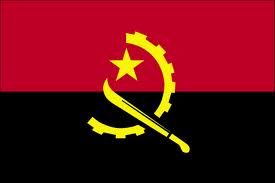
Flag of Angola
Flag of Angola

On 6 June 1960, Agostinho Neto was arrested at his practice as a result of his campaigning against the Portuguese colonial administration of Angola. When patients, friends, and supporters marched in demonstration for his release, the police opened fire and 30 were killed, 200 more injured.  This became known as the Massacre de Icolo e Bengo (his birthplace). Neto was exiled to and held in captivity initially in Cape Verde and then in Portugal, where he wrote his second volume of poetry. After international pressures, the Portuguese government put him under house arrest, where he escaped to Morocco and later to Zaire (Congo).

He became president of the MPLA in 1962, and looked for support in the American government against Portugal, but was turned down. He received the support of Cuba and the Soviet Union for the fight for the freedom of the people of Angola from Portuguese imperialism.

After the Revolução dos Cravos (Carnation Revolution) in 1974 in Portugal, which took down the government by a military coup, Portugal’s foreign policy changed in its African colonies. On 11 November 1975, Angola became independent, and Neto was proclaimed president on that day. The country was effectively held under the rule of three independence movements, with the MPLA holding the central section and the capital.

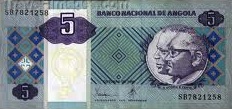
Agostinho Neto & Jose Eduardo dos Santos

Neto’s rule was marked by armed conflict with Holden Roberto’s FNLA (supported by Mobutu of Zaire, and the US) and Jonas Savimbi‘s UNITA which had military support from South Africa. While Neto enjoyed the help and support of the Soviet Union and Cuba, he still encouraged Western investment in the country – especially in oil production. He died of cancer on September 10th, 1979 in Moscow.  After his death, the civil war in Angola lasted for over a quarter of a century opposing Jose Eduardo dos Santos (his successor) and Jonas Savimbi.

Agostinho Neto was not only Angola’s first president, he was also a medical doctor, and a poet; he is actually one of Angola’s most acclaimed writer and poet. Please check out the website of the Fundação António Agostinho Neto, which has done a brilliant work in presenting Neto’s writings, debates, and comments by other leaders on Neto. Now I leave you with his great saying: “A luta Continua … A Vitória é certa!”

“Regresso” or “Mamãi Velha” by Amilcar Cabral

Amilcar Cabral
Amilcar Cabral

Amilcar Cabral was not only an agronomic engineer, or a freedom fighter, or the father of Bissau and Cape-Verde independence, but he was also a poet… like Che Guevarra or Sankara… he was a visionary with a poetic mind.  In the following lines, you will read the poem ‘Regresso‘ also known as ‘Mamãi Velha‘ which was sung by the Cape-Verde singers Cesaria Evora (appeared in album Sao Vicente di Longe (2001)), and Isa Pereira.

Regresso

Old mama, come and let’s listen
To the beat of the rain against the door
It’s a friendly beat
That pounds in my heart

The rain, our friend, old mama
The rain that hasn’t been falling this way
In a long time I heard that Cidade Velha
The entire island becomes a garden
In just a few days

I heard that the country is covered in green
The most beautiful colour
The colour of hope
That now, the soil really looks like Cape Verde
Peace has now replaced the storm

Come old mama, come
Regain your strengths and come to the door
The rain, our friend, sends its salvation
And can beat in my heart

—-

Regresso
Mamãi Velha, venha ouvir comigo
o bater da chuva lá no seu portão.
É um bater de amigo
que vibra dentro do meu coração.

A chuva amiga, Mamãi Velha, a chuva
que há tanto tempo não batia assim…
Ouvi dizer que a Cidade Velha,
– a Ilha toda –
em poucos dias já virou jardim…

Dizem que o campo se cobriu de verde,
da côr mais bela, porque é a côr da esp’rança.
Que a terra, agora, é mesmo Cabo Verde,
– É tempestade que virou bonança…

Venha comigo, Mamãi Velha, venha
recobre a força e chegue-se ao portão.
A chuva amiga já falou mantenha
e bate dentro de meu coração.

Amilcar Cabral: Discours sur le cancer de la trahison

Amilcar Cabral
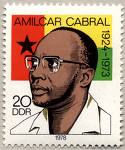
Amilcar Cabral on a stamp

“Le cancer de la trahison” est le titre du discours prononcé par Amilcar Cabral (père de l’indépendance Cap-Verdienne et Bissau-Guinéenne) après l’annonce du decès de Kwame N’krumah, 1er président du Ghana. Dans ce discours, Cabral dénonce la trahison qui ronge les rangs de tous les mouvements indépendantistes africains. Nombreux de ces mouvements ou révolutions africaines ont été rongés par le cancer de la trahison. Triste de savoir que Amilcar Cabral lui-même a été assassiné par un traître!

Suivez son discours!

Amilcar Cabral, Le père de l’indépendance Bissau et Cap-verdienne

Amilcar Cabral
Amilcar Cabral

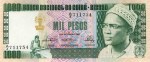
Amilcar Cabral est à mes yeux, tout comme Thomas Sankara, un des rares visionnaires qui ait foulé la terre africaine. Il s’est battu pour l’indépendance et l’union de la Guinée Bissau et du Cap-vert qui, à l’époque, étaient des colonies portugaises. Après des études d’agronomie à Lisbonne au Portugal, Amilcar rentre en Guinée comme fonctionnaire en 1952. Jugé dangereux, il est muté en Angola (il y passera 1 an), et décide à son retour de fonder le “Parti Africain de l’indépendance de la Guinée-Bissau et des îles du Cap-Vert (PAIGC)”. Il oeuvrera si bien que malgré son assassinat le 20 Janvier 1973, la Guinée Bissau obtiendra son indépendance quelques mois plutard. J’ai trouvé une très belle interview qu’ Amilcar avait donné à un journaliste francais où il parle des raisons pour lesquelles la Guinée Bissau et le Cap-vert devraient être indépendants. C’est dommage que son rêve de voir ces 2 pays unis ne se soit pas réalisé, mais la Guinée Bissau et le Cap-Vert lui doivent leur indépendance. (Durant la guerre d’indépendance, il se faisait souvent appellé par son nom de guerre: Abel Djassi). Sa photo est encore aujourd’hui sur les billets de banque du Cap-Vert.

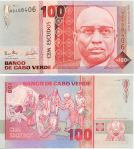
Amilcar Cabral sur un billet de 100 escudos

Amilcar Cabral sur un billet de 1000 pesos

Amilcar Cabral, Fundador da nacionalidade Caboverdeana e Guineense. Nasce em Bafatá, Guiné, 12 de Setembro 1924. 1945: Com uma bolsa de estudo, ingressa no I. S. Agronomia, em Lisboa – 1950: Termina o curso e trabalha na Estação Agronómica de Santarém – 1952: Regressa a Bissau, contratado para os S. Agrícolas e Florestais da Guiné – 1955: O governador impõe a sua saída da colónia; vai trabalhar para Angola; liga-se ao MPLA – 1956: Criação em Bissau do PAIGC –  1970, 22 de Novembro: O governador da Guiné-Bissau decide e Alpoim Calvão chefia a operação de “comando” “Mar Verde” destinada a capturar ou a eliminar os dirigentes do PAIGC sediados em Conacri: fracasso! – 1973, 20 de Janeiro: Amílcar Cabral é assassinado em Conacri.

Le journaliste Alain Foka de RFI a également consacré une de ses emissions à Amilcar Cabral, sur le plateau de “Archives d’Afrique.” For more information, check out wikipedia (http://en.wikipedia.org/wiki/Am%C3%ADlcar_Cabral), http://www.amilcarcabral.org/ and http://www.umassd.edu/specialprograms/caboverde/acaddress.html