Forced Labor and ‘La Marseillaise’ in Congo in 1934

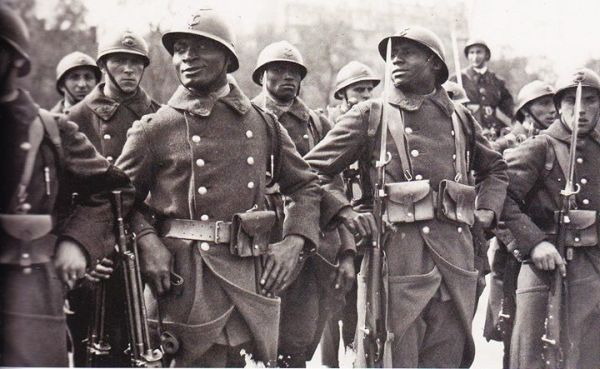
Senegalese Tirailleurs serving in France in 1940

There was a time when Africans of another generation, proudly sang La Marseillaise… That was the generation of the tirailleurs, the generation of those trained in France before and after ‘independence’, the generation who loved the Métropole. There was a time when, like the kids described below by Marcel Homet in Congo Français: Terre de souffrance (Paris 1934), Africans believed that France, the land of Marianne, could want their freedom or at least a ‘fair’ partnership. The current generation, after seeing the sweat and blood of their parents and grandparents in the uranium mines or banana plantations, after suffering, after witnessing the NATO attacks on Libya, Cote d’Ivoire, or the repeated putsches funded by France on their territories, or seeing their economy and savings fall to the exchange factor of their currency FCFA in Francophone Africa, or seeing these French and foreign companies plundering their resources for over a century with no roads no hospitals and barely any taxes paid… this generation has become disillusioned, and can no longer sing La Marseillaise. They have learned that singing La Marseillaise equates with the massacre of Thiaroye, the genocides in Algeria, Cameroon, Madagascar, and so many other places, or more recently the joint attacks of NATO on Libya. Singing La Marseillaise has equated to so much blood so much so that this generation no longer wants anything to do with France or imperialist forces.

Decapitated Heads during the French repression of Cameroonians in Cameroon

As you read the description below from another time, it is interesting to note how the gruesome conditions of from another era do not seem to have changed much with time. We are fighting today, whether in Niger, Mali, Burkina Faso for dignity and for respect owed to any human being. We are fighting for the right to use our resources as we see fit. We are fighting for simple, human dignity. Below are excerpts from Marcel Hormet in Congo Français: Terre de souffrance (Paris 1934) where he describes a time of forced labor in French colonies, in this case Congo which was part of the French Equatorial Africa (Afrique Equatoriale Francaise (AEF)).

====== 

In the village square of Loko, a few children – aged eight to ten – pass by, singing *La Marseillaise* in French. They vanish around the bend in the path.

Slowly, the tricolor flag rises up the mast planted before the chief’s dwelling. Everyone uncovers their heads. That anthem, still echoing in the distance, that song of liberty and hope, which can be so deeply moving, takes on a poignant significance here. Unwittingly, the children who proclaim it, understanding nothing of its meaning, are thereby giving voice to the aspirations of a people looking to France for some alleviation of the colony’s pitiful plight: empty bellies, festering sores, and an undisguised slavery, more rigorous than the trade ever was in the era of “ebony wood.”

In French Equatorial Africa, when exhausted slaves die, the local government replaces them, one for one.

Why, then, bother to hold back?

(Sur la place de Loko, quelques enfants de huit à dix ans, passent en chantant “en français” la Marseillaise. Ils disparaissent au tournant du chemin.

Au mât planté devant la demeure du chef monte lentement le drapeau tricolore. Tout le monde se découvre. Ce chant qui, là-bas, résonne encore, ce chant de liberté et d’espoir qui peut être si émouvant, prend ici une signification poignante. Sans s’en rendre compte, les enfants qui le clament et qui n’y comprennent rien manifestent ainsi les aspirations d’un peuple qui attend de la France un adoucissement au sort pitoyable de la colonie : ventres vides, plaies suppurantes et cet esclavage non déguisé, plus strict que ne l’a jamais été la traite à l’époque « du bois d’ébène ».

En AEF, lorsque les esclaves épuisés sont morts, le gouvernement local les remplace, nombre pour nombre.

Pourquoi alors se gêner ?)

France Admits Murder of Algerians … A Step Forward?

French flag

Last week, France admitted the abduction and murder of Algerians during the war of independence. The events that happened during those times have been described as a genocide committed by France in Algeria. Is Macron’s admission enough to patch the Franco-Algerian relationship? I don’t know why, but it sounds more like France wants to keep Algerian natural gas (largest natural gas producer in the world), and oil flowing while they have closed their economy due to pandemic, to keep getting those free billions from Africa. I know, I am a skeptic, but would you blame me when France conveniently waits for all survivors to die to admit the abduction and murder of Algerians? I acknowledge that it is a step, but does Macron expects us to clap? to hug him for it? I don’t know why these European presidents and kings think that admission of murder means apology [French President Acknowledges French Genocide in Cameroon, Belgian King Expresses ‘Deepest Regrets’ for Colonial Past in Congo, Namibia Rightfully Rejects 10 million Euros Compensation for Genocide]. Like I have said before, it’s like France just woke up and said, “Yes… I killed your fathers, mothers, brothers, sisters, children… I tortured them… I murdered your freedom fighters… Idisplaced your families… it is all true… so what? what would you do about it?” The arrogance! Where is the apology? Where is the compensation for years of trauma? Where is the reparation? Until there is a clear “I am sorry”, until there is a clear “here is what we will do to right the wrongs,” until there is a clear “correction and inclusion in the history textbooks, opening of all classified documents”…. until there is a clear “respect for those killed, and for those living today” until then, there will be no respect for arrogant presidents! Excerpts below are from the BBC. Please also check what was written about the event on RFI.

====

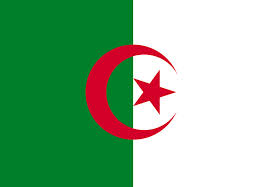
Flag of Algeria

France’s admission about the abduction and murder of Algerians during the war of independence is a big step but it is not enough, according to French historian Fabrice Riceputi.

It is a huge moment for the grandchildren of lawyer Ali Boumendjel, who were received by French President Emmanuel Macron to hear the truth about the assassination of their grandfather.

His widow Malika Boumendjel, who fought for decades for the truth about her husband’s disappearance rejecting the French official account of suicide, passed away last year aged 101 without hearing the acknowledgement she waited for all her life [isn’t it so convenient that France waits for survivors to die to “admit”?].

For Riceputi a rexamination of the French colonial rule in Algeria should not be restricted to “emblematic figures” such as Maurice Audin and Ali Boumendjel.

The French army in Algeria adopted since 1957 the technique of “forced disappearance” as a systematic method to crush the nationalists, according to Mr Riceputi.

It consisted of abducting, murdering and disposing of the body of any Algerian they suspect of having links with the FLN which led the war for independence.

There were tens of thousands in the capital city, Algiers and many more throughout the country, he says.

It was a “system designed to terrify the population” and silence dissidents and supporters of independence, the historian says.

It has also left dozens of thousands of families and generations of their descendants suffering decades of emotional and psychological trauma.

Mr Riceputi believes that the French authorities are avoiding the essence of the truth through these “selected” and “high-profile” admissions. …

The routine torture and murder of Algerian civilians by the French army during the seven-year war that some say claimed 1.5 million Algerian lives has been hushed up for decades.

Indeed, France has never even recognized the existence of a “war” in Algeria. Until 1999 they have always called it the “events” or “troubles” of Algiers. The atrocities committed by their army were described as “operations to maintain order”.