This year, South African lawyer Navi Pillay is the 2026 Nobel Peace Prize laureate. She joins 4 other illustrious countrymen Nobel peace laureates, Albert Luthuli (1960 – first Black person to be win the award), Desmond Tutu (1984), Nelson Mandela (1993) joint with F. W. de Klerk (1993). This makes her the first South African woman to win the prestigious prize. She also joins other continental laureates such as Egyptian Anwar Sadat (1978), Ghanaian Kofi Annan (2001), Kenyan Wangari Maathai, first African Woman Nobel Peace Prize Laureate (2004), Egyptian Mohamed ElBaradei, Liberians Ellen Johnson Sirleaf (2011) and Leymah Gbowee (2011), Congolese Denis Mukwege (2018), and Abiy Ahmed (2019). As you can see she is only the fourth African woman to win the prestigious award. As a food for thought, isn’t it weird that a lot of these awards are given out just before the awardees start wars or something of the sort? … so not sure how much weight we should really put into them as ‘peace’ prizes, but the world still seems to praise these.
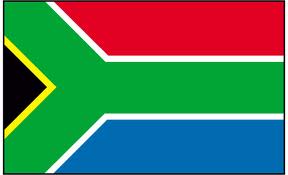
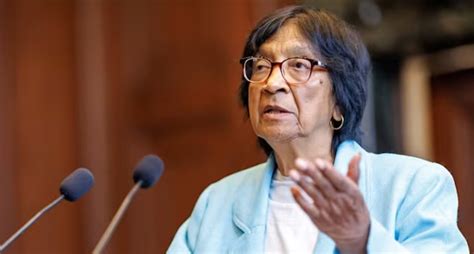
Who is Navi Pillay? She is a South African of Tamil-Indian origin whose grandparents emigrated to South Africa, specifically to Durban at the turn of the 20th century to work on the sugar plantations. Her family established itself there, and she grew up in Durban during the apartheid era, later went on to study law at Harvard University in the United States, and went on to become the first woman of color to open a law firm in South Africa, during the apartheid era. She spent her early career defending activists who risked everything to challenge injustice at a time when injustice and the justice system in South Africa was viciously divided along color lines. Her work carried the same courage and clarity that would later define her global leadership. She built a reputation for judicial rigor and moral courage
She established herself not only at home in South Africa, but also beyond its borders. As a judge at the International Criminal Tribunal for Rwanda, she helped establish that sexual violence can be prosecuted as genocide. At the International Criminal Court at the Hague, she strengthened the foundations of accountability for mass atrocities. Later, as a United Nations High Commissioner for Human Rights, she insisted that human rights must remain central even when political winds shift. Today, she continues her work at the International Court of Justice (that instrument used by the ‘International Community’ to police the rest of the world to its advantage), serving as an ad hoc judge in cases involving genocide and crimes against humanity. Her career spans more than 50 years, consistently focused on holding perpetrators of mass atrocities accountable and expanding the reach of international law.
Pillay received the Nobel Peace Prize award in the historic Nuremberg courtroom; there she dedicated her award to survivors of international crimes. Her words reminded the world that peace is not simply the absence of conflict. Peace is the presence of accountability. Peace is the recognition of truth. Peace is the courage to confront harm and repair it. Peace is staying cool-headed in the face of adversity and discerning the good from the bad!
Navi Pillay’s achievement is a milestone for Africa. As we saw above, she joins a long list of illustrious Africans. Her achievement is also a milestone for women, particularly women in law, and for every person who believes in the power of justice. Her legacy continues to grow, and her work lights a path for future generations of lawyers, activists, and leaders who refuse to accept silence in the face of suffering.