Agostinho Neto: doctor, poet, president, and father of Angolan independence

Agostinho Neto
Agostinho Neto

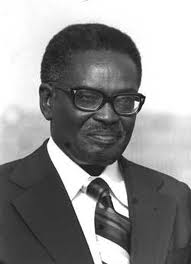
Agostinho Neto was the first president of Angola, and served from 1975 to his death in 1979. He was born in a Methodist family (his father was a Methodist pastor), attended high school in Luanda, and studied medicine in Lisbon (specializing in gynecology).  In Lisbon, he befriended future political leaders such as Amilcar Cabral (Guinea Bissau and Cape Verde) and Marcelino dos Santos (Mozambique). He combined his academic life with covert political activities.

In 1948 he published his first volume of poetry and was arrested for the first time. There followed a series of arrests and detention, which interrupted his studies. He joined the Movimento Popular da Libertação de Angola (MPLA, People’s Movement for the Liberation of Angola) when it formed in 1956. He was released from detention and allowed to complete his studies in 1958, retuning shortly afterwards to Angola (1959), where he set up a private medical practice.
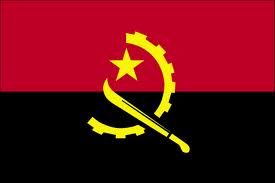
Flag of Angola
Flag of Angola

On 6 June 1960, Agostinho Neto was arrested at his practice as a result of his campaigning against the Portuguese colonial administration of Angola. When patients, friends, and supporters marched in demonstration for his release, the police opened fire and 30 were killed, 200 more injured.  This became known as the Massacre de Icolo e Bengo (his birthplace). Neto was exiled to and held in captivity initially in Cape Verde and then in Portugal, where he wrote his second volume of poetry. After international pressures, the Portuguese government put him under house arrest, where he escaped to Morocco and later to Zaire (Congo).

He became president of the MPLA in 1962, and looked for support in the American government against Portugal, but was turned down. He received the support of Cuba and the Soviet Union for the fight for the freedom of the people of Angola from Portuguese imperialism.

After the Revolução dos Cravos (Carnation Revolution) in 1974 in Portugal, which took down the government by a military coup, Portugal’s foreign policy changed in its African colonies. On 11 November 1975, Angola became independent, and Neto was proclaimed president on that day. The country was effectively held under the rule of three independence movements, with the MPLA holding the central section and the capital.
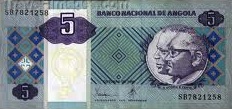
Agostinho Neto & Jose Eduardo dos Santos

Neto’s rule was marked by armed conflict with Holden Roberto’s FNLA (supported by Mobutu of Zaire, and the US) and Jonas Savimbi‘s UNITA which had military support from South Africa. While Neto enjoyed the help and support of the Soviet Union and Cuba, he still encouraged Western investment in the country – especially in oil production. He died of cancer on September 10th, 1979 in Moscow.  After his death, the civil war in Angola lasted for over a quarter of a century opposing Jose Eduardo dos Santos (his successor) and Jonas Savimbi.

Agostinho Neto was not only Angola’s first president, he was also a medical doctor, and a poet; he is actually one of Angola’s most acclaimed writer and poet. Please check out the website of the Fundação António Agostinho Neto, which has done a brilliant work in presenting Neto’s writings, debates, and comments by other leaders on Neto. Now I leave you with his great saying: “A luta Continua … A Vitória é certa!”

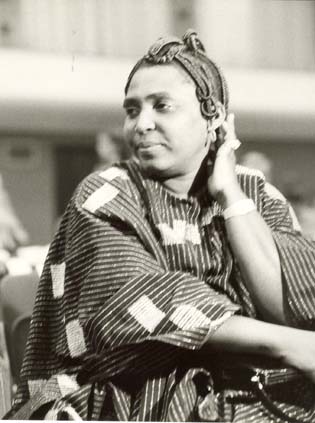
Mariama Bâ: the First African Feminist Writer

Mariama Bâ
Mariama Bâ

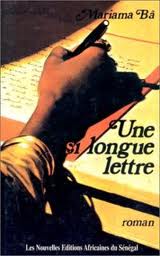
I have wanted to write about Mariama Bâ for the longest time. She is a writer from Senegal… she is the author of “Une Si Longue Lettre” [So Long a Letter], and “Chant Ecarlate[Scarlet Song]. Her book “Une si Longue Lettre” [So Long a Letter] is considered by many as being the first truly African feminist book, as it describes the woman’s condition in an African and Muslim society. It talks about the place of the woman in society, the effect on polygamy on women and society, and the clash between modernism and traditions. It is written as a letter from a widow Ramatoulaye to her best friend Aissatou who left her husband when he decided to marry a second wife. This book really describes the feminine condition in Africa, and was truly the first to address so overtly the woman’s hurdle in African society. Six months after the publication of “Une Si Longue Lettre,” Mariama Ba passed away… and her novel “Chant Ecarlate” was published posthumously.

Une Si Longue lettre

Chant Ecarlate [Scarlet Song] also deals with feminine conditions, but addresses more the clash between two different cultures the European (of the protagonist Mireille), and the African (of Mireille’s husband), and again polygamy. I always felt deeply connected to Bâ’s first book, and always wondered what a great loss African literature suffered when she left. She will always be an inspiration for many: orphan from her mother, raised by her father and grand-parents, mother of nine children, divorcée, professor, highly educated woman, she embodied the strength and determination that can so clearly be seen in African women. Today, “Une Si Longue Lettre” is an African classic, read in all schools across the continent, and translated in numerous languages. We are forever grateful for her work… she opened the door to many bold young African female writers.

Scarlet Song
Scarlet Song

The following is an interview that Mariama Bâ gave to Alioune Toure Dia for the magazine Amina in November 1979: Interview de Mariama Bâ à Amina. Relax and enjoy!

Ferdinand L. Oyono: The Old man and the Medal

Ferdinand Leopold Oyono

Yes… I am actually talking about Ferdinand Leopold Oyono, the Cameroonian writer mostly known for his novels ‘Une Vie de Boy‘ (Houseboy), ‘Le Vieux Nègre et la Medaille‘ (The Old Man and the Medal), and Chemin d’Europe (Road to Europe). I must admit that I have only read the first two. I have decided to focus only on Oyono literary achievement, even though his literary career was quite short, and he also served as ambassador and minister under different presidents of Cameroon for over 40 years.

Une Vie de Boy (Houseboy)

In his novels, Oyono uses satire to denounce the colonial system, the abuse Africans suffer in the hands of the European. Oyono writesUne vie de boy (Houseboy) as a diary, and casts a critical view on the relations between Africans and Europeans during the colonial era. The main actor is a young boy, who leaves his family where he was mistreated, and ends up with the French missionaries, and later on works as a houseboy for the ‘Commandant’; where he quickly becomes the center of querels between the Commandant and his wife, and is frequently beaten because of what he knows.  In his second novel, Le vieux nègre et la medaille (The Old Man and the medal),  Oyono evoked the deep sense of disillusionment felt by those Africans who were committed to the west, yet rejected by their colonial masters. Meka, the main protagonist, receives a medal for his services to the French colonial administration, for donating land to the French missionary church and above all for sending his two sons to the second world war where they are killed.

The Old Man and the Medal

It is interesting that despite his short literary career, Oyono has managed to write two of the most important African novels depicting the relationship between the European colonizer, and the African colonized, a relationship made up of disillusionment, abuse, modernism, education, and cohabitation of two worlds where one is imposed on the other. The British newspaper The Guardian wrote a really good article saluting this great Cameroonian and African writer.

Ngugi wa Thiong’o: world acclaimed Kenyan writer

Ngugi wa Thiong'o
Ngugi wa Thiong'o

Ngugi wa Thiong’o is a world-acclaimed Kenyan writer cut from the same cloth as African veteran Chinua Achebe. Ngugi is the author of several novels, plays, short stories, critical pieces, and children books. Ngugi reached fame writing in English, and then decided to write in Gikuyu, his mother-tongue. Today, his books are written in Gikuyu, and then translated into English. His first books Weep not child (1964) followed by The river between (1965) were on the secondary school syllabus in Cameroon, and a friend of mine used to love  reading The river between.

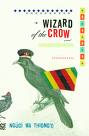
The wizard of crow
The wizard of crow

When Ngugi first started writing in Gikuyu, he was threatened by the Kenyan government, and in the late 70’s, the political overtone of his play I will marry when I want, got him arrested by the then vice-president Daniel Arap Moi (who later became president, and ruled Kenya for 22 years). After his release from jail, Ngugi spent two decades in exile, and tried returning to Kenya in 2004 under the new government, but was viciously attacked in his hotel and his wife was sexually assaulted… after that he returned to the USA where is a professor at New York University. His latest novel, The wizard of crow which is 1000-pages long, and which I own, discusses a dictatorship in an imaginary country in Africa.

Please enjoy an interview with Ngugi wa Thiong’o conducted by Granta magazine. To learn more about one of the greatest African literary geniuses, check out: http://www.ngugiwathiongo.com/, Wikipedia, Penpoints, Gunpoints, and Dreams. If you have never read Ngugi wa Thiong’o’s books, I recommend that you start with The river between, Petals of Blood, A grain of wheat, and Weep not Child.

Dambisa Moyo: Africa and Dead Aid

Dambisa Moyo
Dambisa Moyo

For the start of this new year, 2010, I would like to introduce to you a bright young African writer hailing from Zambia: Dambisa Moyo. Dambisa Moyo, ivy-league educated economist from Harvard and Oxford, was elected one of the world’s 100 most influential people by Time Magazine for the year 2009. Why is she deemed influential? Well, Dambisa Moyo is an economist whose book, Dead Aid: Why Aid Is Not Working and How There Is a Better Way for Africa, was on the New York Times bestseller in 2009. She argues that foreign aid has harmed Africa’s development, and should be phased out.

Dead Aid: Why aid is not working ...

She has been under a lot of fire, because of criticism of foreign aid, Bono, Geldorf, etc… She represents the upcoming young talented African force, which stands up and say “Enough” to aid that fuels corruption, and instead should focus on job creation and support of local entrepreneurship! It is interesting because I always felt that aid was not the answer to the problems of Africa. Like the Chinese proverb says: “Give a man a fish, and feed him for a day. Teach a man to fish, and you feed him for a lifetime.

For more information, check out Ms. Moyo’s website: http://www.dambisamoyo.com/, an interview she gave to the New York Times and the The Huffington Post. Please enjoy this video from Dambisa Moyo’s channel on Youtube.

Ousmane Sembene: the Father of African cinema

Ousmane Sembene
Ousmane Sembene

Ousmane Sembene, was indeed the Father of African cinema. To think that this was a man who had stopped school in 6eme, and written one of the most interesting books in Africa (God’s bits of Wood)! To think that this man became the Father of African cinema is impressive!  This is a man who fought injustice, and fought for equality. He loved Africa with everything he had! After writing books, he realized that most people in his country spoke Wolof, and some of them could not read his books, he switched to cinema! He would tour villages in his country Senegal to show his movies, and other countries in Africa. He apparently came to Cameroon once to show the movie “Le Mandat“,

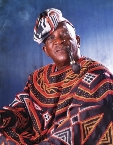
Ousmane Sembene en tenue Bamileke

and a police officer came to him and asked him where he had found the story… and Sembene to tell him, he just thought of it… and the officer to say “It actually happened to me“! That was Sembene, a man who could connect with people, and discuss African issues. He showed that it was possible to make a movie in an African language! His movies and books dealt with immigrants in Europe, colonialism, female genital circumcision, African beggarism, etc… “La Noire de …” was the first feature film produced by a sub-saharan African filmmaker. This man was simply a genius! He went from fisherman, railroad worker, docker in Europe, to writer, and filmmaker. He was one of the founders of the FESPACO, the festival of African cinema in Ouagadougou, Burkina Faso. A statue now stands in Ouaga, in honor of Ousmane Sembene!

God's bits of Wood
God's bits of Wood

Moolaade
Moolaade

The last movie of Ousmane Sembene was “Moolaade“, a gem of African film… it was ranked among the 10 best movies of the year 2004 by the Boston Times. I actually own the movie, and it is simply outstanding! Can you believe that it was ranked among the 10 best movies in the USA, and won an award at the Cannes festival? Wow… I wish Sembene had lived even longer… but I know his legacy lives forever!

The New York Times wrote about him:

http://www.nytimes.com/2007/06/12/movies/12semb.html?_r=2&ref=movies&oref=slogin

http://en.wikipedia.org/wiki/Ousmane_Semb%C3%A8ne

http://www.ousmanesembene.com/

http://www.nytimes.com/2007/06/11/world/africa/11sembene.html

CNN also made a piece on Sembene and 2 other brilliant African filmmakers… check it out: Driven by His Convictions

Check out the videos:

Le Fespaco, plus grand festival du cinéma africain, fête ses 40 ans


Chinua Achebe, a Writer like no other

Chinua Achebe
Chinua Achebe

Things Fall Apart
Things Fall Apart

Chinua Achebe, the great Nigerian writer, has always made me so proud of being African. I have his entire collection at home and I believe that he should be nominated for a Nobel Prize! I mean, isn’t the nobel prize supposed to acknowledge those who have affected the way people think? Isn’t it supposed to recognize those who have influenced generations? Well, then, Chinua Achebe created the “Nigerian novel” genre and not only influenced numerous African writers, but opened the world to an African story like none other (Things Fall Apart). His novel “Things Fall Apart” has been translated in over 22 languages and is currently taught in high schools and universities in the US and around the world… If I was on the Nobel prize committee, I will definitely nominate the great Chinua Achebe: he is long overdue!

For more information, check out Wikipedia on Chinua Achebe (http://en.wikipedia.org/wiki/Chinua_Achebe), and http://chinua-achebe.com/. Click on the link below to see parts of the interview given by Chinua Achebe on CNN.

Don’t forget to check out Part 2 and Part 3 of the interview.