UK Museums “Long-term Loan” looted Asante Gold Artifacts to Ghana

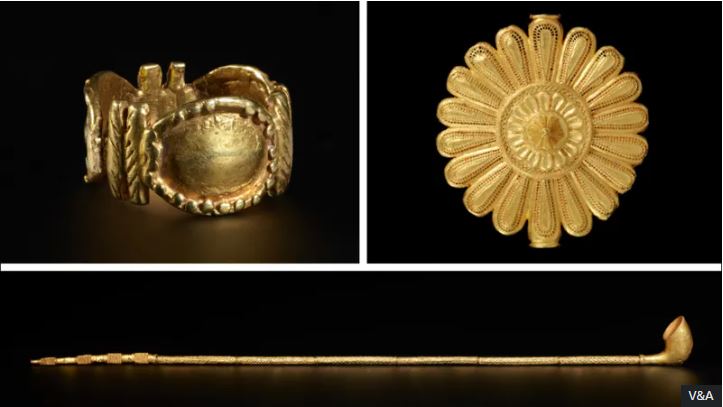
The V&A is lending 17 items including an Asante gold ring (top left), a gold badge worn by the king’s “soul washer” and a ceremonial pipe (Source: V&A / BBC)

Last week, the Victoria & Albert Museum (V&A) and the British Museum “returned” some artifacts looted from the Ashanti Kingdom in modern-day Ghana, after over 150 years. When one reads the headlines in the news, one can only clap, until learning that this is a “long-term loan“! Wait! What? About 32 gold and silver items which had been stolen from the court of the Asantehene (Asante king) in the 19th century, have been sent on a long-term loan back to the Asante court. First, how long is a “long-term loan”? Second, why is it a loan, when these objects were looted from the Asantehene’s court back in the 19th century? They were not gifted, they were not sold, they were STOLEN! And to top it off, there has been a chief negotiator on the Ghanaian side to ensure that the objects will be in safe hands in Ghana! What? So, these objects do not belong to Ghanaians, and if something were to happen to these Ghanaian objects that were stolen by the British but are now hosted in British museums while on Ghanaian soil on long-term loan, then one can only bet that the British would make the Ghanaians pay for something that is theirs! Which world are we living in? Knowing the treacherous nature of these people, who is to say that they will not orchestrate a new theft of these objects so as to further deepen the debts under which Ghanaians are already crumbling? Actually, long-term in this case means 3 years, with the option of renewing for 3 years! This loan is probably not even free! Why, oh why, do we, Africans, agree to such deals?

Read for yourself… excerpts from the BBC

=====

Burning of Kumasi by British troops in 1874

The UK has returned [how can it be called return when it is a loan?] dozens of artefacts looted from what is today Ghana – more than 150 years after they were taken [i.e. stolen].

Some 32 gold and silver items have been sent on long-term loan to the country by the Victoria & Albert Museum (V&A) and the British Museum.

They were stolen from the court of the Asante king, known as the Asantehene, during 19th century conflicts between the British and powerful Asante people.

The objects are expected to be returned [loaned – see how the writer of this piece wants to create confusion in our minds?] to the current king on Friday.

His chief negotiator, Ivor Agyeman-Duah, told the BBC that the objects are currently in “safe hands” in Ghana ahead of them being formally received. They are due to go on display next month at the Manhyia Palace Museum in Kumasi, the capital of the Ashanti region, as part of celebrations to mark the silver jubilee of the current Asante King Otumfuo Osei Tutu II.

British troops ransacking Fomena Palace en route to Kumasi in 1874

Among the returned artefacts are a gold peace pipe, a sword of state and gold badges worn by officials charged with cleansing the soul of the king. The gold artefacts are the ultimate symbol of the Asante royal government and are believed to be invested with the spirits of former Asante kings.

The loan, which was negotiated with the king and not with the Ghanaian government [always the divide-and-conquer scheme – negotiate with smaller entities, so as to exert more bending power over them], will last for three years with the option to extend for a further three years. [and they have the audacity to call it “long-term”! and for what belongs to you!]… The return of the Asante items comes a month ahead of celebrations marking the silver jubilee of the Asantehene.

The Asante people built what was once one of the most powerful and formidable states in west Africa – trading in, among others, gold, textiles and enslaved people. The kingdom was famed for its military might and wealth. 

Who/What do we Celebrate in Africa in 2021 ?

Although 2021 has globally been a tough year, there are still events that lend to celebration. As we turn the page of 2021 and delve into 2022, it is good to note that in 2021, a lot of “firsts” have taken place on the African continent. Below are a few of the events that brought joy. There are many more, of course, but I selected 11. Enjoy, and add in the comments other celebratory events that have marked the continent this year.

  1. Hulda Swai_1
    Professor Hulda Swai

    Tanzanian professor Hulda Swai wins the 2020 prize of the African Union Kwame Nkrumah Continental Awards for Scientific Excellence in February [Professor Hulda Swai of Tanzania Wins Distinguished Science Award: ‘Women are as good as men’]. This is a highly prestigious scientific award in Africa.

  2. In May, a Malian woman gives birth to 9 babies (from natural conception). This marks the first single birth and survival of nonuplets in the world. Halima Cisse, a Malian woman, has given birth to nonuplets, 5 girls and 4 boys, in a hospital in Morocco [World Record: Malian Woman gives Birth to Nine Babies].
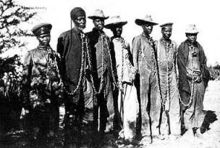
  3. Herero_chained
    Chained Herero men

    Germany agrees to pay Namibia €1.1bn over historical Herero-Nama genocide in May of this year. This is historic, late, and probably not enough compared to the loss in human lives… yet it is important! The money will be paid over 30 years in aid programs…  (probably a way to siphon money back to Germany, while appearing to be giving something), and pales in comparison to the billions worth of Namibian diamonds and cobalt mine that will profit German companies in fine print [Germany in Namibia: the First Genocide of the 20th Century].

  4. Laurent Gbagbo
    Laurent Gbagbo

    In June, after 10 years of imprisonment, and over 20 years of persecution, Laurent Gbagbo, the former president of Cote d’Ivoire finally lands home amidst celebrations from his supporters in the country and abroad [Laurent Gbagbo is Back in Cote d’Ivoire]. Although there have been subsequent disappointing actions on his part, it is nonetheless a victory over the International Court of Justice, and all the persecution Blé Goude (How long shall they kill our prophets…?), him, and countless others have gone through, and remains a major cause for celebration, as it shows that, for a just cause, perseverance and determination always bear fruits.

  5. In June, Petra Diamonds pays Tanzanians for its abuse [Petra Diamonds pays £4.3m to Tanzanians ‘abused’ by its contractors]; this is significant as it shows that it is not impossible to demand reparations from these giant companies that pollute our lands and abuse us. It sets a precedent.
  6. Tokyo2020
    Tokyo 2020 Olympics logo (Olympics.com)

    Late July marks the start of the Tokyo 2020 Olympics after one year of postponement, and Africa wins new victories. Tunisian Ahmed Hafnaoui offers the African continent its first medal of the games, by winning gold in the 400m freestyle swimming; Hugues Zango of Burkina Faso gives his country its first ever medal at the Olympics by winning the bronze medal in the men’s triple jump; while Eliud Kipchoge successfully defends his Olympic title at the marathon becoming the 3rd person in the history of the games to win successive marathons [African Wins at the Tokyo 2020 Olympics].

  7. In October, Tanzanian writer Abdulrazak Gurnah is awarded the Nobel Prize of Literature, making him the fifth African to win the illustrious prize [Tanzanian Abdulrazak Gurnah awarded Nobel Prize of Literature]. As you can see, the African literary scene is flourishing.
  8. Somalia_The Gravedigger Wife
    “The Gravedigger’s Wife” by Khadar Ahmed

    A Somali love story, the Gravediggers’ Wife is this year’s FESPACO winner [Somali Love Story, The Gravedigger’s Wife, is this year’s FESPACO winner]. The FESPACO, which is one of Africa’s biggest film festival, took place this year after the pandemic and lockdowns, and an 8-months delay because of security reasons [FESPACO 2021: One of Africa’s Biggest Film Festival is back!].

  9. 100 years after René Maran, an African wins the prestigious French Prix Goncourt. The award was given to Senegalese writer Mohamed Mbougar Sarr. This is the first time that a Sub-saharan African person wins the prize, and the third time for a Black person in the almost 120-years history of the title [100 years after René Maran, An African wins the Prestigious Prix Goncourt], even though people of African descent make up so much of the French population over the past century.
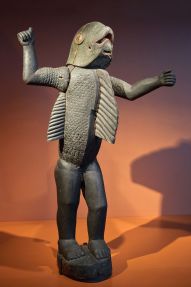
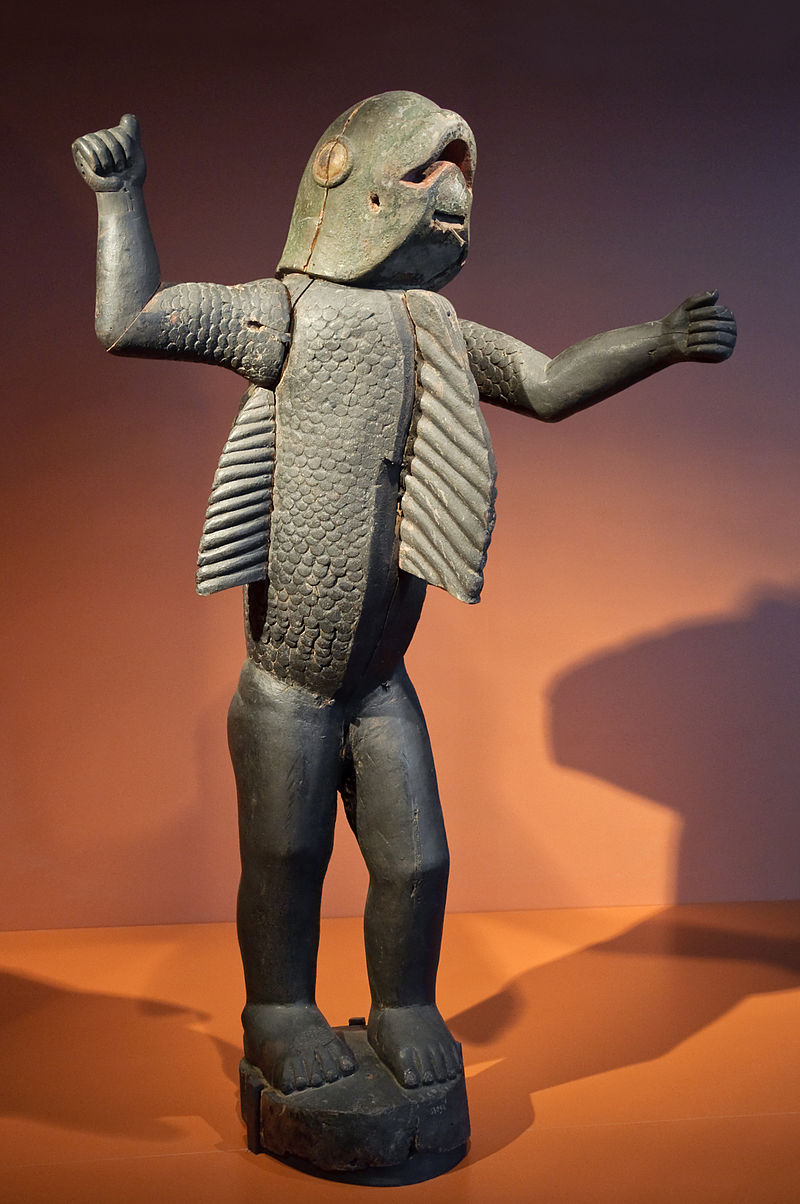
  10. Benin_Fon statue symbolizing Behanzin Man shark
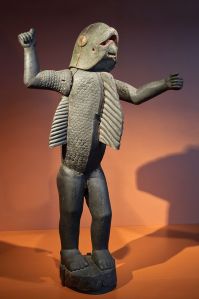
    Benin Fon statue symbolizing Behanzin man shark (Musee du quai Branly – Jacques Chirac)

    In November, France returns some artifacts of the kingdom of Dahomey to the present-day country of Benin; these were looted when the French burnt down the capital of King Behanzin at Abomey over 120 years ago [France returns 26 Artifacts from Behanzin’s Era to Benin]. Similarly, the Benin Bronze cockerel held at the University of Cambridge from the famed Benin Kingdom [Benin City: the Majestic City the British burnt to the ground] has been returned to Nigeria. This is still little, as they should all be returned to their rightful owners; it should not even be up to negotiation.

  11. Congolese Rumba has been recognized as a UNESCO Intangible World Heritage. Congratulations to both Congos, the Republic of Congo and the Democratic Republic of the Congo (DRC) for working together. We do hope that this is just the first step in a collaboration that will extend to other domains including economic success and beyond [Congolese Rumba Wins UNESCO Protected Status].

Now, there are a lot more such as David Diop winning the International Booker prize for his book “At Night All Blood is Black” which focuses on Tirailleurs Senegalais; or the Senegalese influencer Khaby Lame being ranked number 2 on Tik Tok for his wordless humor which transcends language barriers and cultures (he is the fastest growing Tik Tok influencer with 120 million followers); or even Madagascar’s secretary of police, Serge Gelle, swimming for about 12 hours to reach shore after his helicopter crashed in the Indian Ocean off the northeast coast of the country. When rescued, Gelle said “My turn to die has not yet come, thank God.” So let us all be grateful for this year, and for the people and events who have brought joy to our lives, and let us move forward to a new year. 

France returns 26 Artifacts from Behanzin’s Era to Benin

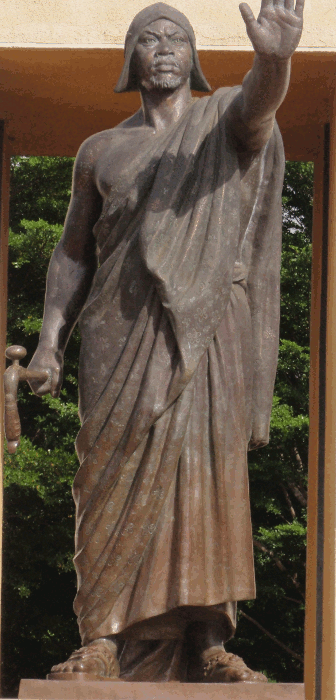
Behanzin, king of Dahomey

Last Wednesday, on November 11, 2021, artefacts that had been looted by France 130 years ago were finally returned to Benin. As you recall, on November 17, 1892, the colonel Alfred-Amédée Dodds led a French expedition into the Kingdom of Dahomey. The colonizing troops broke into the palace of King Behanzin at Abomey, and looted a huge number of royal objects, ancient statues, royal thrones, sacred altars, and much more. Upon the troops’ return home, Colonel Dodds donated the stolen objects to the Musée d’Ethnographie du Trocadero in Paris; they have been housed at the Musée du quai Branly – Jacques Chirac since the 2000s. It took 130 years for them to be returned to the homeland. So you can imagine the joy of the people and celebrations that followed. The collection – known as the Abomey Treasures – will remain in a room at the Benin presidency while the museum is in construction. As a slight note, only 26 colonial-era artefacts have been returned at this point, as you can imagine these represent only a fraction of the 90,000 artefacts from Sub-Saharan Africa still held in French museums. 

Benin_Fon statue symbolizing Behanzin Man shark
Benin Fon statue symbolizing Behanzin man shark (Musee du quai Branly – Jacques Chirac)

This is nonetheless a step forward, albeit small, and Benin President, Patrice Talon, said, “The stars have been aligning for Benin for some time now. The symbolism of the return to Benin is about our soul, our identity – to use a word that is easier to put on it to understand. This return is testimony of what we’ve been. The testimony of how we existed before.”

For more information, check out the articles on Euronews, and ABC. Enjoy!


France urged to change heritage law and return looted art to Africa

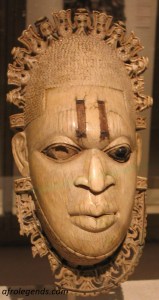
Pendant Ivory mask representing Queen Idia, Iyoba of Benin City (16th Century)
Pendant Ivory mask representing Queen Idia, Iyoba of Benin City (16th Century) – exposed at the MET

France, like so many European countries, is being urged to return looted art to Africa. Below is the article. For the full article, go to the Guardian.

=====

A report commissioned by Emmanuel Macron will call for thousands of African artworks in French museums taken without consent during the colonial period to be returned to the continent.

Unless it could be proven that objects were obtained legitimately, they should be returned to Africa permanently, not on long-term loan, said the authors of the report, the Senegalese writer and economist Felwine Sarr and the French historian Bénédicte Savoy.

They have recommended changing French law to allow the restitution of cultural works to Africa, after Macron announced that he wanted it to begin within five years.

… “I cannot accept that a large part of the cultural heritage of several African countries is in France,” the French president said last year in Ouagadougou, the capital of Burkina Faso. “There are historical explanations for this but there is no valid, lasting and unconditional justification. African heritage cannot be only in private collections and European museums – it must be showcased in Paris but also in Dakar, Lagos and Cotonou. This will be one of my priorities.” [Politicians always make promises, but never deliver. Let’s wait and see if Macron can do anything. In 2015, Francois Hollande, then French President Acknowledged French Genocide in Cameroon while in visit in Cameroon, without ever apologizing!]

Benin_Fon statue symbolizing Behanzin Man shark
Fon statue symbolizing King Behanzin, the Man-Shark by Sossa Dede (c. 1890) – currently exposed at the Musee du quai Branly in Paris

The extent to which France, Britain and Germany looted Africa of its artefacts during colonialism is not known, but according to the report, which will be released this Friday, about 90% of Africa’s cultural heritage currently lies outside the continent.

The report’s authors travelled to Mali, Senegal, Cameroon and Benin and looked through the works held by the Musée du quai Branly, a museum focused on non-European cultures in Paris, and found that about 46,000 of its 90,000 African works were “acquired” between 1885 and 1960 and may have to be returned.

… To start with, they [the researchers] have recommended that palace doors, thrones and statues stolen from Abomey be returned – something the modern-day country of Benin has long requested [especially given that Béhanzin, the King of Dahomey, was one of the last African Resistant to French Colonization, and had been deported to Martinique and then Algeria – Deportation of African Heads of States]….