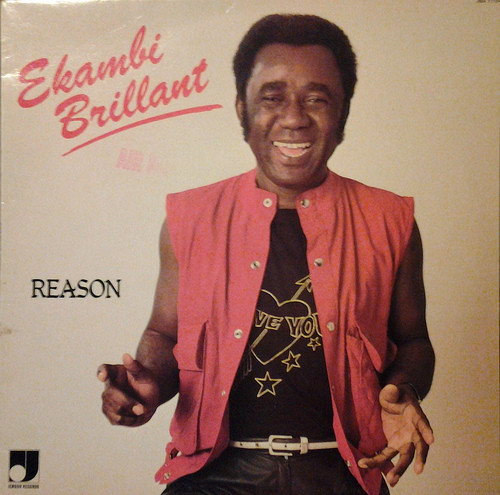
Muna Muto (My Love, my Darling) by Ekambi Brillant

Ekambi Brillant on the cover of his 1987 album Reason (Source: RhythmConnection.Blogspot.com)

Today we will celebrate a song, Muna Muto, and particularly a singer who has touched generations of musicians on the African continent, Ekambi Brillant. Brillant is a Cameroonian singer who has contributed to the emergence of outstanding African singers, such as the Beninese-French singer Angelique Kidjo, first African singer to get a Star on the Hollywood walk of fame , Cella Stella, Marthe Zambo, and countless others. To me, just like his name, he is one of the most brilliant Cameroonian singers ever, with a great voice, bass mastery, and a great teacher.

Muna Muto is a love song which focuses on deep affection, longing, and devotion. It is a love so deep that you wonder what life could have been before meeting that special one.

Just with the first note, you can tell that Ekambi is deeply patriotic, and loving of his country. He tells you that he comes from a place of abundant love “O nin mboa su nya bwam wuma ndolo mo nye no.” He further tells you that it is a place where people greet each other with warmth, a place filled with beautiful music, sounds, and dances, where joy and happiness are omnipresent (Wuma mongele mam mese ma nanga no na pi. Na ma senga so bobe mulema mu monya weya. Nyola mabola mongo na londi na isom). That sounds like a description of Africa!

Coeur
Coeur / Heart

He tells his lover that she is his everything, the love they share grows stronger every day. She is his everything and he cannot bear to be without her. “Muna Muto, Na petane nde ndolo po, o bola oa mo … Bo bunya mo bo poï tenge, a makusane mba mo.”

The most touching part is that he has searched far and wide, and found no one like her: he has found his center, his person, his backbone.  “Na si bi ka bo bunya bo mende te nde o po, Na ma nanga nde ndoti, bulu na bulu te … Bwanga to bo bo titi, ye nde welisane” (I have searched far and wide but found no one like you. You are the only one who understands me, heart and soul. … And our love will last forever, as we journey through life together.) So deep! All this on such a deep, dancing tune, and the chorus makes you want to sing “Muna Muto” for the rest of your life!

As you go on to celebrate Valentine’s day, please sing Muna Muto to your special one, that one you have searched far and wide for, the only one, the one who understands your heart and soul, a love that will be immortal. Enjoy Mot’a Muenya love song!

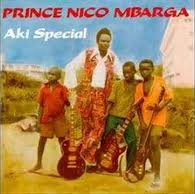
“Sweet Mother” by Prince Nico Mbarga

Prince Nico Mbarga2To celebrate Mother’s day this Sunday, I just wanted to bring back “Sweet Mother” by Prince Nico Mbarga. “Sweet Mother” is one of the most popular songs on the African continent, ahead of Miriam Makeba‘s “Malaika“, Franco‘s “Mario“, and Fela Kuti‘s “Lady“. What is so special about this song, is that it is an ode to all our precious mothers, it is often called Africa’s anthem sung by a child to his mother. It is a highlife song sung by Prince Nico Mbarga and his group Rocafil Jazz International, a Cameroonian-Nigerian artist, and the song has rocked many on the continent; Sung in Pidgin English, “Sweet Mother” became one of the top sellers in the history of Nigerian music.  It was voted as Africa’s favorite song by BBC in 2004, and many other programs. So, to all the mothers out there, Happy Mother’s Day and enjoy “Sweet Mother“!!!


Sweet Mother by Prince Nico Mbarga

Sweet Mother
Sweet mother I no go forget you
for the suffer wey you suffer for me.

Sweet mother I no go forget you
for the suffer wey you suffer for me.

When I dey cry, my mother go carry me she go say,
my pikin, wetin you dey cry ye, ye,
stop stop, stop stop make you no cry again oh.

When I won sleep, my mother go pet me,
she go lie me well well for bed,
she cover me cloth, sing me to sleep,
sleep sleep my pikin oh.

When I dey hungry, my mother go run up and down.
she go find me something when I go chop oh.

Sweet mother I no go forget you for the suffer wey you suffer for me

When I dey sick, my mother go cry, cry, cry,
she go say instead when I go die make she die.

O, she go beg God,
God help me, God help, my pikin oh.

If I no sleep, my mother no go sleep,
if I no chop, my mother no go chop, she no dey tire oh.

Sweet mother I no go forget you,
for the suffer wey you suffer for me.

You fit get another wife, you fit get another husband,
but you fit get another mother? No!

And if I forget you, therefore I forget my life and the air I breathe.

And then on to you men, forget, verily, forget your mother,
for if you forget your mother you’ve lost your life.

Mama Africa

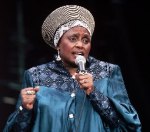
Miriam Makeba during a concert

Dear all, today we will be talking about a great true African legend: Miriam Makeba! Well… where should I start? Zenzile Miriam Makeba, affectionately named Mama Africa was a singer who truly showed that music had no boundaries, and that music could be used as a platform to launch a revolution; above all, if you are passionate and excel in something, you can always do great things! Miriam Makeba started as a singer in South Africa, and was even married to the great South African trumpetist Hugh Masekela at one point. This woman sang about her love for her country, her people, and the struggle of her people. Like she said herself: “I was never politically involved. People always think that I’m political or that I sing politics, but I’m not. I just speak the truth. When I say we’re oppressed, I’m not lying. I’m glad I’ve been vindicated, in a way. I could have been in parliament, but I’m not a politician, I’m a singer. I love to sing, that’s what makes me happy” Miriam was a true warrior dedicated to the liberation of African people.

Miriam Makeba on the cover of her album Pata Pata

Miriam Makeba was never allowed the right to return home for 30 years by the apartheid government (from 1960-1990). She was not able to go to her mother’s funeral. Her song Welela is about a child yearning for her mother. In 1961, she sang at President Kennedy’s birthday, as she puts it: “I was the only foreign artist among the big giants of America paying tribute to him.” She spoke at the United Nations in New York, where she said: “I ask all the leaders of the world: would you act differently, would you keep silent and do nothing if you were in our place, would you not resist if you were allowed no right in your own country because the color of your skin was different from the color of the rulers?” Her records were subsequently banned in South Africa. She used her fame to let the world know about the suffering of Black South Africans. Her most popular songs include Pata Pata, the Click Song, and her beautiful rendition of Malaika! She later sang about the Soweto uprising (1976) in her title “Soweto Blues” written for her by Hugh Masekela.

When Miriam married the Black Panther leader Stokely Carmichael, her shows were canceled in the USA, as the FBI was after him. She picked up her bags with her husband and went to Guinea, where president Sekou Toure allowed them in. She even had a Guinean passport and was a United Nations ambassador for Guinea!

True African Beauty
True African Beauty

She was finally allowed to return to South Africa after Nelson Mandela got out of jail. He actually asked her to come back… So 30 years later, this great woman of power return to her country after losing her mother, and only daughter Bongi Makeba. I have attached this beautiful documentary. Please watch and celebrate a strong African Woman… a legend, a woman who loved her people so much that she sang about it, and spoke about it at the United Nations. In later years, she has also been an FAO ambassador (to fight hunger), United Nations Goodwill ambassador, and opened a girls’ school in South Africa for orphans, girls who have been raped, etc…

In a way, even though Miriam Makeba lost her only child, she was a mother to all of us, and fought for all South African, and African children. Thank you Beautiful Mama Africa. God loves you! We have to continue your legacy of strong African women, and legends!

Makeba: My Story
Makeba: My Story

Check out Wikipedia page on Miriam Makeba, and add more if you have more information on Miriam’s life (We, Africans, have to put our people on these pages, nobody will do it for us!). Check out Miriam Makeba’s website www.miriammakeba.co.za, and the article by the Guardian: Miriam Makeba. Don’t forget to check out her books: Makeba: The Miriam Makeba Story, Makeba: My Story, and Myriam Makeba une Voix pour l\’Afrique.