There was a lot to celebrate in Africa this year. Below are just a few:
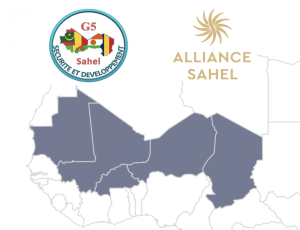
Alliance des Etats du Sahel (AES) (Source: Alliance-sahel.org)
In January, Mali, Burkina Faso, and Niger left the ECOWAS creating a major seismic shift in the organization. Mali, Burkina Faso, and Niger all leave the ECOWAS. This came as no surprise given that the coup to topple puppet governments in their respective countries, the ECOWAS had suffocated these countries by suspending all three countries and imposing heavy sanctions on Mali and Niger that exacerbated the populations’ sentiments that it is a puppet organization serving foreign interests. Niger even tried to amend the situations by inviting ECOWAS representatives to the country, but only the member from Togo showed up. Why should anybody remain in an organization that punishes its member populations?
In January, Ghanaian artifacts were returned home for the first time in 150 years, on a “loan”. Ghana Artefacts “Return” Home 150 years later … on Loan. It is a disappointment that African governments can only get “loans” for what is dutifully theirs from those institutions which have amassed millions over the year from the exhibition of stolen African artefacts.
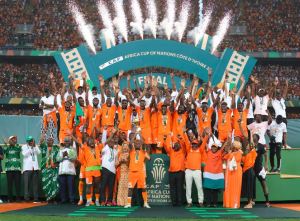
The Elephants are winners of the Africa Cup of Nations 2023 (Source: CAFonline.com)
In February, the Elephants of Cote d’Ivoire gave us a thrill from being redeemed in the knockout stage with 2 defeats (among which a 4-0 loss against Equatorial Guinea) that left them open to elimination, and a redemption that came from being one of the four best 3rd-placed team, a coach sacking, and a coach change, to lift the trophy of the Africa Cup of Nations. It was a real “Coup du Marteau” (Tam Sir, we are talking about your special song!) The Ivorians added to their previous Nations Cup wins of 1992 and 2015 (Côte d’Ivoire wins the 2015 Africa Cup of Nations) and became the first tournament hosts to triumph since Egypt lifted the trophy in 2006. CAN 2023: the Elephants of Côte d’Ivoire are the New Champions
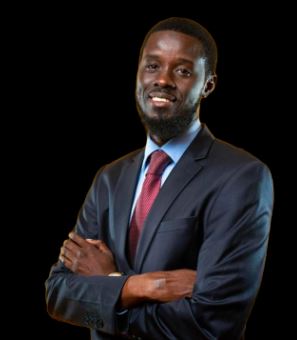
Bassirou Diomaye Faye (Source: Seneweb.net)
In March, Bassirou Diomaye Faye was elected president of Senegal, making him the youngest African president at 44. This was a joyous moment for the Senegalese people who stood to have their democratic system and constitution upheld. Faye is very unconventional, as the youngest with no political background (he was previously a tax officer), he is also the first Senegalese president to openly have two wives. With his friend and Prime Minister Ousmane Sonko, we hope for better governance for Senegal. Senegal Presidential Elections: Bassirou Diomaye Faye is set to be the next president. Either way, the Senegalese have demonstrated once again, that although their democracy is young, it is not to be messed with!
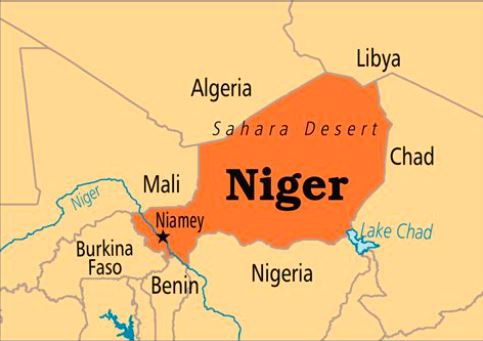
Map of Niger
In mid-March, Niger suspended military “cooperation” with the USA, with immediate effect. Operating from years of condescending treatments of those deemed inferior, particularly of Africans, the Americans had decided to dictate their will, like the French before, to Niger people and deny their sovereign rights to choose their own partnerships in their fight against terrorism. The spokesman of Niger’s government, Colonel Amadou Abdramane, exposed the fact that the military “cooperation” with the US was not even a real one, i.e. the US had installed their largest drone base in Africa, and possibly in the world, in Niger via a verbal agreement only, and the Niger people had to pay for the American base in their country, while the Americans never raised a hand to help Niger fight against terrorist attacks that were maiming their citizens [Bye Bye to French Troops in Niger, France set to Withdraw Troops and Ambassador from Niger]. Niger suspends military “cooperation” with the US, effective immediately.
Alliance des Etats du Sahel (source: linfodusahel.com)
Mali, Niger, and Burkina Faso’s leaders met on July 6, 2024 in Niamey, Niger, as part of the first summit of the Alliance des Etats du Sahel (AES – Alliance of the Sahel States). During the summit, the three leaders signed a confederation treaty aimed at strengthening the links between the three nations in terms of defence, and other aspects such as the economy, infrastructures, and more. They reinforced their mutual defence pact.
Right before the Paris Olympics, brother Biniam Girmay of Eritrea made history by becoming the first African to win a stage at the Tour de France, and two more stage victories which helped him capture the green jersey for the highest points scorer – a first for anyone from the continent.
Faith Kipyegon winning historic 3rd gold medal at the Paris 2024 Olympics (source: Kelly Ayodi for Olympics Kenya – EastleighVoice.co.ke)
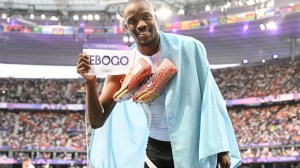
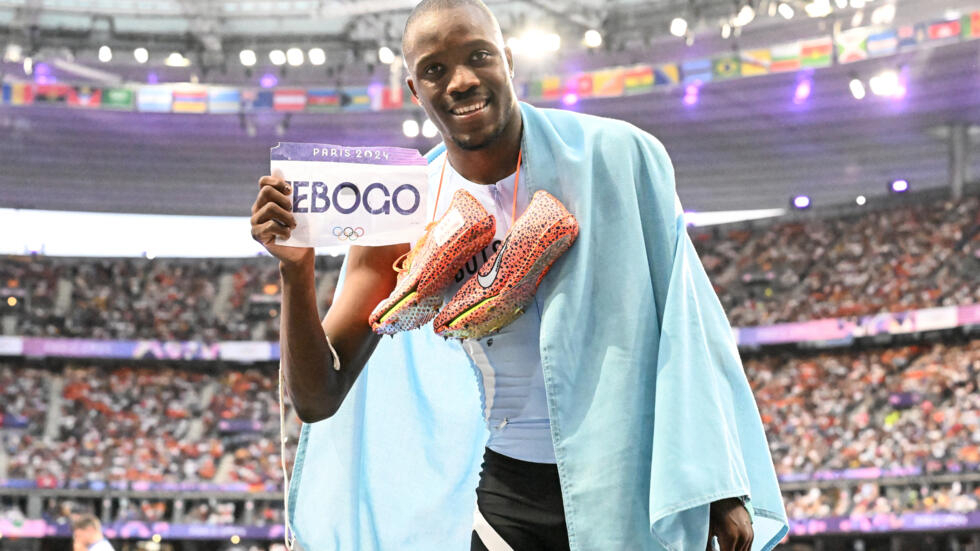
The Paris 2024 Olympics ended with a strong show from African athletes who shined in various disciplines, and represented many countries including outside of Africa. They made us proud and served us joy, endurance, and passion. We will list just a few. We had a lot of firsts, like our Kenyan sister Faith Kipyegon who won her 3rd successive Olympic gold in the women’s1500 m, making her the first African athlete to ever win gold in the same event 3 times in a row. Our brother Letsile Tebogo of Botswana earned the top most place in the Men’s 200 m thus giving Botswana and Africa as a whole its first ever olympic gold medal in the 200 m; Tebogo also led the Botswana’s team to a silver medal in the
Letsile Tebogo after winning gold in 200m (Source: Onuaonline)Men’s 4x400m relay, again a first for any African country ever. Ugandan brother JoshuaCheptegei delivered on his promise for his last Olympics to be memorable by winning gold in the Men’s 10,000 m, and landing Uganda its first gold at the games. Tatjana Smith of South Africa made her country proud by winning gold and silver medals in the Women’s 200m and 100m breaststroke events. Akani Simbine and South African track team delivered us silver in the Men’s 4 x 100 m relay, again a first for South Africa, and for Africa as a whole. Kaylia Nemour gave Algeria and Africa its very first victory ever in gymnastics with a gold in the Women’s Uneven bars in artistic gymnastics. Tamirat Tola, who was just added to the Ethiopian Olympics’s team 2 weeks prior, took home the gold medal in the Men’s Marathon. AhmedElgendy won the first gold medal for Egypt at any Olympics, becoming the first African and person to win in the new discipline of Men’s Modern Pentathlon. Cabo Verde got its very first medal at the Olympic games through David de Pina who won bronze in the Men’s 51 kg Boxing. Zambian Muzala Samukonga won the bronze medal in the Men’s 400m, giving his country its very first Olympic medal.
Aliko Dangote, Africa’s richest man, has built one of the world’s largest oil refineries in Nigeria, Africa. The refinery opened its doors last year, and in May shipped out its first boat of refined jet fuel to the Netherlands. Since then, the refinery has gotten into agreements with the Nigerian governments and neighboring ones as well.
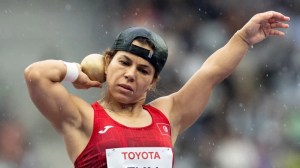
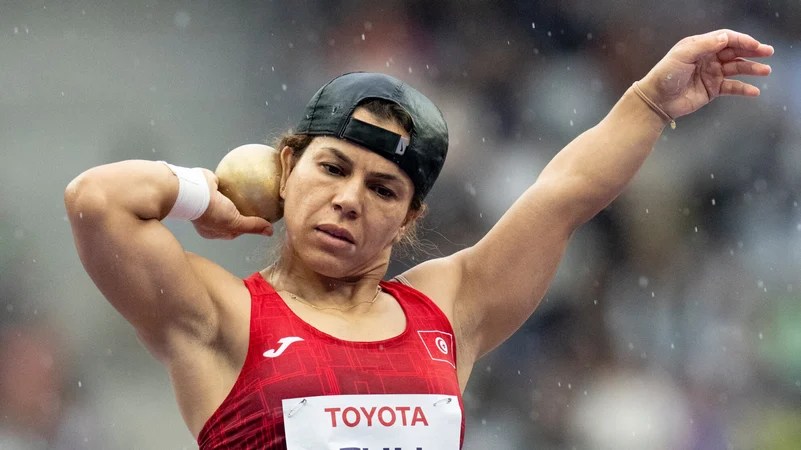
Paris Paralympics 2024 (Source: https://www.paralympic.org/paris-2024)Africa shone at the Paralympics, winning 64 medals, with Morocco getting the most medals with 15 medals, but Algeria topped the continent’s medal table thanks to its 6 gold medals vs. 3 gold for Morocco. Most medals were won in para-athletics and para-powerlifting disciplines. Veteran RaouaTlili of Tunisia cemented her place as a legend in the F41 discus throw and shot put, winning 2 gold medals this year, giving her a total of 8 gold medals for her country, having competed in each Olympics since
Raoua Tlili (Source: Outlook India)
Beijing 2008. Nigeria’s Mariam Eniola Bolaji became the first African to win an Olympic or Paralympic medal in Badminton. Yovanni Philippe gave Mauritius its first medal ever by securing a bronze medal in the men’s T20 400m; while Annaba native, Brahim Guendouz won gold in para-canoeing’s KL3 class over 200m, giving Algeria its first ever medal in a discipline outside of para-athletics, para-judo, and para-powerlifting.
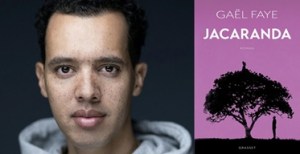
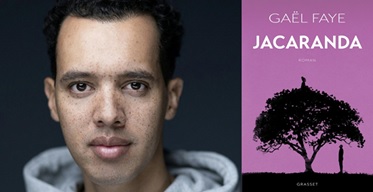
Gael Faye and his book Jacaranda
African authors made great wins and firsts: they won the most important literary awards in French literature: the Goncourt prize, which was awarded to Kamel Daoud for his third novel titled «Houris», and the Renaudot prize awarded to Gaël Faye for «Jacaranda». Daoud’s novel is currently in a controversy. Africans win the Goncourt and Renaudot 2024 Literary Prizes.
AndakiaA Senegalese startup, Andakia, has just introduced the very first African AI: AWA. AWA is a Wolof-speaking artificial intelligence system; it is the brainchild of Alioune Badara Mbengue. In an interview to TRT Afrika, Mbengue said, “AWA is the first AI that understands and speaks perfect Wolof. Our vision is to extend AWA to other African languages, enabling Africa to become a leader in digital innovation and ensure technological sovereignty tailored to its needs.” Users need to simply engage in a spoken exchange with the AI interface in Wolof, seeking general information or asking it to perform tasks such as ordering a taxi, ordering a meal, or carrying out financial and other transactions. This is revolutionary as it addresses the needs of the population. We applaud the amazing work of our brother and his team, and truly the sky is the limit.
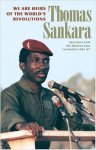
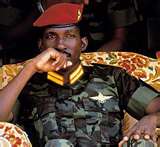
Every October 15, we talk about Thomas Sankara, the father of the Burkinabe revolution. Today, we will bring back some of his words, from “We are Heirs of the World’s Revolutions, Speeches from the Burkina Faso Revolution 1983-87” by Thomas Sankara, Pathfinder Press (2007) p. 46 – 48. You will see that President Ibrahim Traoré in particular, and the leaders of the AES as a whole (Mali, Burkina Faso, and Niger Sign a Mutual Defence Pact), are following in Thomas Sankara’s footsteps in the defense of their homeland against foreign forces which have used terrorism to balkanize the region and terrorize the people for over a decade now. “Each citizen should work to revolutionize his sector of activity. … a conscious people cannot leave their homeland’s defense to one group of men, however competent they may be. Conscious people take charge themselves of their homeland’s defense.” Tomorrow, we will talk about points (2) and (3).
=====
Thomas Sankara
The August revolution does not aim to establish one more regime in Upper Volta [Burkina Faso]. It represents a break with all previously known regimes. Its ultimate goal is to build a new Voltaic [now Burkinabe] society, within which the [Burkinabe], driven by revolutionary consciousness, will be architect of his own happiness, a happiness equal to the efforts he will have made.
To do this, the revolution – whether the conservative and backward forces like it or not – will be a deep and total upheaval that will spare no domain, no sector of economic, social, and cultural activity.
Revolutionizing all domains and all sectors of activity is the slogan of the day. Strengthened by the guiding principles laid out here, each citizen should work to revolutionize his sector of activity, whether he finds himself.
The philosophy of revolutionary transformations is already affecting the following sectors: (1) the national army; (2) policies concerning women; and (3) economic development.
(1) The national army: its place in the democratic and popular revolution
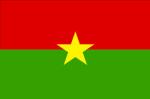
Flag of Burkina Faso
According to the defense doctrine of the revolutionary Upper Volta, a conscious people cannot leave their homeland’s defense to one group of men, however competent they may be. Conscious people take charge themselves of their homeland’s defense. To this end, our armed forces constitute simply a detachment that is more specialized than the rest of the population for Upper Volta’s internal and external security requirements. …
The revolution imposes three missions on the national armed forces:
To be capable of combating all internal and external enemies and to participate in the military training of the rest of the people. This presupposes an increased operational capacity, making each soldier a competent fighter, unlike the old army, which was merely a mass of employees.
To participate in national production. Indeed, the new soldier must live and suffer among the people to which he belongs. The days of the free-spending army are over. From now on, besides handling arms, the army will work in the fields and raise cattle, sheep, and poultry. It will build schools and health clinics and ensure their functioning. It will maintain roads …
To train each soldier as a revolutionary militant. Gone are the days when the army was declared to be neutral and apolitical, while in fact serving as the bastion of reaction and the guardian of imperialist interests. Gone are the days when our national army conducted itself like a corps of foreign mercenaries in conquered territory. Those days are gone forever. Armed with political and ideological training, our soldiers, … will instead become conscious revolutionaries, at home among the people like a fish in water.
As an army at the service of the revolution, the National Popular Army will have no place for any soldier who looks down on, scorns, or brutalizes his people. An army of the people at the service of the people – such is the new army we are building in place of the neocolonial army, which was utilized to rule over the people as a veritable instrument of oppression and repression in the hands of the reactionary bourgeosie. …
We have been reflecting on a word which has been used around the world to destabilize countries: the word “democracy.” This word has been used to impose treacherous regimes and sanctions upon “weaker” countries. By “weaker,” we basically mean those that used to be called “third-world” countries. The “global” world we are getting marched towards does not apply to all; there still needs to be some uniqueness which applies to local issues, needs, cultures, and people.
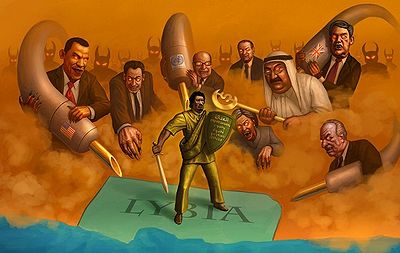
Libya, the Prey of the West
Over a decade ago, we wrote the article “Africans and the Trap of Democracy,” when NATO forces were bombing Libya. Reading it, almost every single word is still relevant today and can be applied to situations in so many countries on the African continent and beyond. Back then, we were shocked that so many Africans were applauding the actions of NATO using the word “democracy” … we hope that they can see what the destabilization of Libya has done to the rest of Africa, and that in reality the word “democracy” is used to fool Africans into hating those who actually work for Africa’s survival and its real independence. Libya under Khadafi was a prosperous country; Singapore, in Asia, under Lee Kuan Yew became one of the most successful economies in the world. There are so many dictatorships in Africa disguised under the name democracies where there are elections every few years and which are praised by the West because they serve their interests in Africa. Let us NOT fall into this trap called “democracy” in Mali, Niger, or Burkina Faso. Instead let us support our brothers of the Alliance of the Sahel (AES), and acknowledge that the continent with the first constitution in the world born in the Empire of Mali, the Kourougan Fouga, cannot learn about ways to govern itself from foreigners. The answer is within!
With the bombing of the presidential residence in Cote d’Ivoire by French forces for over a week, followed by the arrest of president Laurent Gbagbo, with the current intense bombing of Libya by NATO for the past 6 months, I cannot help but try to answer some of the same justifications used by Africans to approve the bombings by foreign troops on their neighbors’ countries, and ultimately on African soil. Any African who claimed and accepted that Cote d’Ivoire should be bombed by the French, shame on you! Any African who thought that the bombing of Libya was correct… shame on you! Any African who uses the same stupid phrase used by the West to abuse us: “… well Gbagbo had his day, he was in power for 10 years!… or Kadhafi was there 42 years!” Well my friend… Shame on you! Should democracy be imposed using bombs? Should democracy be imposed using warplanes, and Apache helicopters? Is it democracy to bomb the people you plan to help? Is it democracy to deliberately bomb civilian targets, hospitals, state televisions, homes, etc… to, like NATO said “protect civilians”? Was there not a peaceful solution? Was it so hard to re-count the votes in Cote d’Ivoire? Was it so hard to organize elections as Kadhafi asked? Why bomb? Why bomb? Why bomb?…
… I have not seen anywhere that the definition of democracy was “government imposed by external forces, for external forces, to crush the people of a country!” I am tired of this stupid debate the media-lies (CNN, BBC, France24, etc) always bring and which Africans always fall to: “this one is a democrat, and the other one is a dictator.” Please stop bothering people with the same rhetoric, and stop bothering people with your pseudo-democracies where nobody has the right to say anything. Frankly every other year when elections come around, don’t you ever wonder how come with all the bright politicians coming out of top schools, how come we always end up with only 2 (and somehow the worst of all)?
Today, we will introduce a new word: “Vulturing”! It is a word we thought of after the events of recent months, and let’s face it because of the New Scramble for Africa. The vultures are at it again, and honestly never stopped. About a month ago, on April 14 2024, a former Chief of Staff of the French army, General Francois Lecointre, announced in an interview to Le Figaro, that France and Europe, for their survival would have to proceed in an armed recolonization of Africa in the upcoming 10 years. To paraphrase, he said, “we cannot let these poor Africans live in chaos just on our doorstep… within a few years, Africans will have a population boom like no other continent [why do Africans having babies, bother them so much?] … Europe should act as a political entity that defends its own interests, including through military commitment… We must return and help these African countries [nobody asked for your help].”
The New Scramble for Africa (Source: Source: Dr Jack & Curtis for City Press, National Institute African Studies (NIAS))
Would we not call it “vulturing”? Why can’t the predator leave the prey? Do you know that France is 4th producer of gold, even though there are no gold mines in France, and the gold comes from Mali? Do you know that because of Niger’s coup, now France cannot have easy access to free uranium as in the past? Now that the AES, Mali – Burkina Faso – Niger, is no longer a part of the French zone of influence (Mali, Burkina Faso, and Niger all leave the ECOWAS, Mali, Burkina Faso, and Niger Sign a Mutual Defence Pact), there has been a lot of shortfall that can be felt in France. For the French military bases that have been removed from Mali, Burkina Faso, and Niger… where would those French troops go? If they go back to France, there might be a government topple, then why not send them to another place at war, in Eastern Europe for instance, or try wars in Africa? It is no secret, that since Niger has asked for the Americans to remove their drone base (one of the world’s largest drone bases) from its soil, the Americans have been making deals to move troops and bases to neighboring countriessurrounding the AES.
This is a WAKE UP call to Africans to unite and fight! It is not just for French speaking countries in Africa, but to all of Africa. Africa is the key to the world! There will be blood for Africa’s resources, and Africans have to be at the forefront of the battle for their own resources and take hold of what is theirs. Africans better wake up, the vultures are flying over!