Cameroon – Where Self-Hate is used to Keep a Country in Bondage

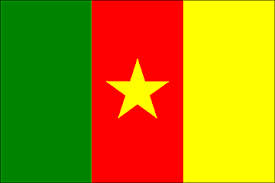
Flag of Cameroon

It is no secret that the political climate in Cameroon is like an open wound for sore eyes. The Cameroonian regime which has been in place for the past 43 years, and since independence given that the current leader Paul Biya had been in positions of power 20 years prior, is known for being addicted to magic tricks and forgery! The regime’s latest magic trick has been to eliminate the best candidate, Maurice Kamto, by a wave of a wand, or rather a pen, a virtual pen. Over the past two weeks, we have seen a high minister of the nation erase the strongest candidate’s name on the election website, and produce a candidate out of nowhere, and then cement the whole with the stamp of the regime’s judicial arm that is the Constitutional Court this past Monday; all of this crowned by the silence of that double-sided international community (IC) which is always partisan in the face of Cameroonian pain (Cameroon and the Double Standard of the ‘International Community’). What is shocking in Cameroon is not really that a system is trying to maintain itself, but that the population has turned on its highest fighter and defender in bouts of apathy, and hate, hate of itself! I hear people spew insults and hate against those who ask the populations to fight for their freedom, and for their strongest defender of the hour, Maurice Kamto. Yes, Cameroon is a repressive dictatorship, which the IC still calls a democracy, but it is not a crime to dream and wish for a better country! It is actually a divine right!

I have been trying to find words… but Jean-Pierre Bekolo described this weird Cameroonian behavior better in Actu Cameroun. Excerpts below are from Actu Cameroun. Enjoy!

======
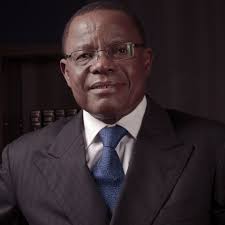
Maurice Kamto

For Jean-Pierre Bekolo, “Kamto is disturbing because at a time when everyone was accepting the established order, he spoke where we were silent, dreamed where we survived, proposed where we suffered. He is the slap of reality for those who had become accustomed to looking the other way. So we hate him. Not for what he did, but for what he awakens. Because in a dictatorship, the worst enemy is not the one who destroys, but the one who reminds us that everything could be different.”

… Kamto didn’t steal. Kamto didn’t kill. Kamto didn’t insult. Kamto didn’t call for war. He just wanted to be president. And for that, Maurice Kamto was imprisoned, insulted, demonized, humiliated, and censored. Why would many of his own fellow citizens rejoice in his suffering?

… This is a more serious, more deeply rooted phenomenon: a toxic, collective hatred against anyone who dares to stand up in a country where you are taught from childhood to walk bent over.

In a normal society, one can debate, oppose, and propose. In a normal society, wanting to lead one’s country is a civic act. But in some dictatorships, like the one that still haunts Cameroon under the spectral shadow of Paul Biya, wanting to be president is seen as a crime of lèse-majesté, madness, an insult to the order of things.

… Kamto is certainly not perfect; he even has many flaws, but no more than Paul Biya’s regime.

The most worrying thing is that this hatred against Kamto is a symptom of the regime’s success. It no longer rules solely through the police, the army, or fear. It rules from within people. It has colonized their minds. It has succeeded in making the people themselves insult the one who speaks in their name. It has turned society against its own sentinels. The system has entered our bodies.

It’s no longer just the government that represses—it’s society that self-censors, that self-punishes, that self-expels its own hopes. And this mechanism is much more sustainable than brute repression.

Tonight, Kamto may or may not be rejected by the Constitutional Council [he has been rejected], but the hatred against him, which is in fact hatred against ourselves, will remain, and that’s what must be stopped. Dreaming is not provocation.

Kamto is not hated for having acted badly if we compare his actions to those of the current system; we want him neutralized for having dared to imagine another outcome, another policy, another ethic, another way of being Cameroonian. He dared to disagree without fleeing, to protest without violence, to oppose without hatred. And this is what makes him unbearable in the eyes of a system that only knows how to operate in the shadows, contempt, and fear.

In all this, it is not Kamto who is to be pitied. It is Cameroon. A Cameroon that celebrates the punishment of those who want to love it differently. A Cameroon that rejoices when those who dare to hope are repressed. A Cameroon that laughs at the suffering of those who refuse to remain silent

….

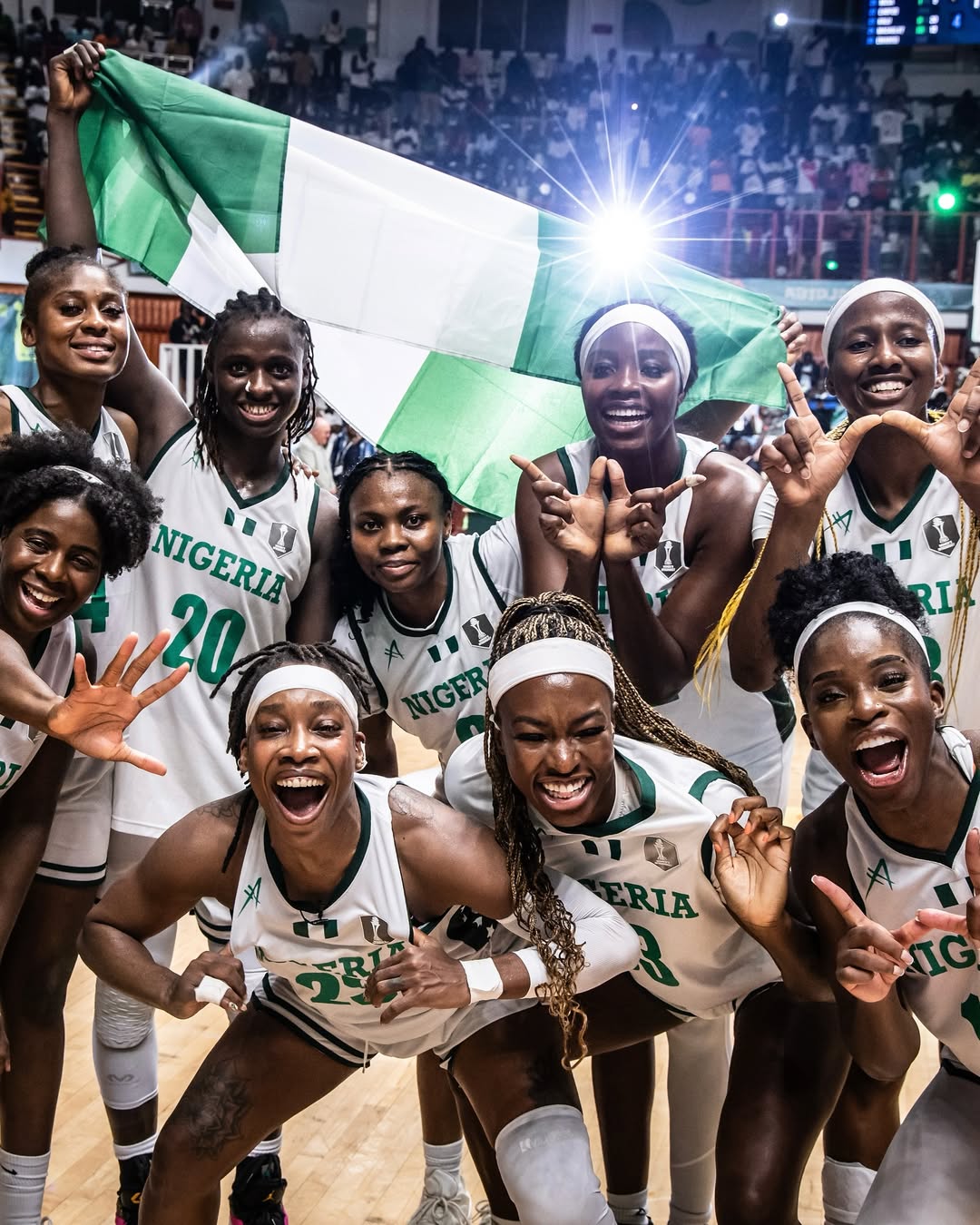
Nigerian Women’s Basketball Team Wins 7th African Cup

The Nigerian D’Tigress after winning their 7th cup (Source: BellaNaija / FIBA Women’s AfroBasket/Instagram)

Nigeria is at it again, this time in Basketball. The Nigerian Women’s Basketball team, D’Tigress, won the FIBA Women’s AfroBasket Championship in Cote d’Ivoire this past weekend. They defeated the Malian team 78-64 to win their 7th AfroBasket title; this secures their spot in next year’s FIBA Women’s World Cup. Just like for the Super Falcons who won their 10th WAFCON title, the Nigerian government has promised $100,000 to each player; will it actually happen? With all this, it is about time for the D’Tigress, like the Super Falcons to become dominant at the international stage, not just the African stage: they have what it takes, now it’s time to win!

Find below excerpts from BellaNaija.

=====

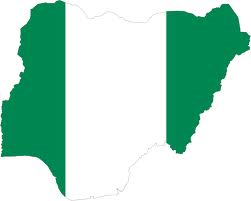
Flag and map of Nigeria

They achieve! Yesterday, our phenomenal D’Tigress did it again, beating Mali 78-64 in Abidjan to clinch their fifth straight Women’s AfroBasket title. A record no other country on the continent has ever achieved.

It was a rematch of the 2021 final, and while Mali came in hungry, even leading at the end of the first quarter, Nigeria showed up with that signature grit and class we’ve come to love. By the third quarter, D’Tigress had taken the lead and never looked back.

… This historic win also sealed Nigeria’s spot at the 2026 FIBA Women’s Basketball World Cup in Berlin. Before then, the team will compete in the World Cup Qualifying Tournament next March, so get ready to keep cheering them on.

… South Sudan also made history with a bronze win on their debut appearance, an extraordinary feat.

Nigeria Super Falcons win WAFCON for the 10th time

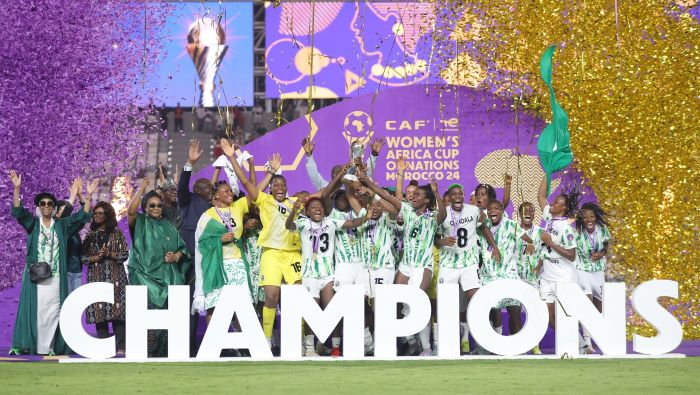
Super Falcons defeat the Atlas Lionesses to win 10th title and become WAFCON 2024 winner (Source: BusinessDay.ng)

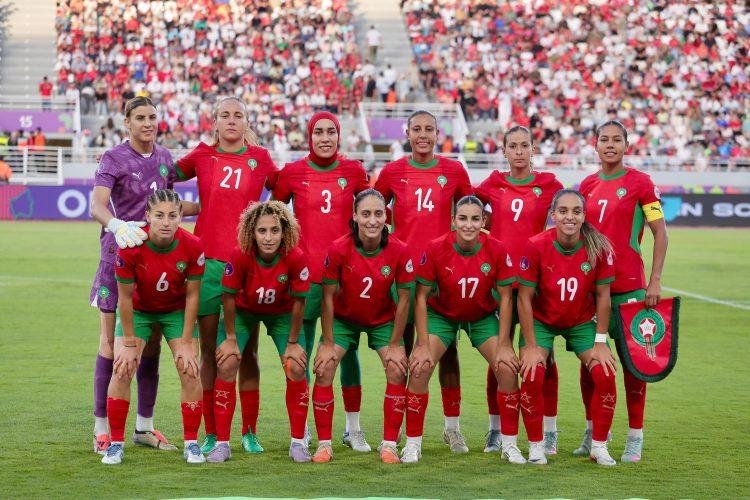
The Super Falcons of Nigeria defeated The Atlas Lionesses of Morocco to win the 2024 Women’s Africa Cup of Nations (WAFCON) last Saturday, thus getting their 10th trophy. The game was beautiful and worthy of a final. The Super Falcons delivered a performance worthy of football annals. At the end of the first half, they were trailing 2 – 0 with goals from Atlas Lionesses Ghizlane Chebbak and Sanaa Mssoudy; the game seemed sealed off. Then they fought back to secure a stunning 3 – 2 comeback victory against Morocco in the capital Rabat, with goals from Esther Okoronkwo, Folashade Ijamilusi, and Jennifer Echegini. Everyone was stunned, except the Nigerians who believed in themselves until the last minute. This was also a sweet revenge for the Super Falcons since Morocco had eliminated Nigeria on penalties in the semi-finals of the 2022 edition, also hosted in Morocco. Captain Rasheedat Ajibade was named Player of the Tournament, while Chiamaka Nnadozie, Africa’s best goalkeeper for the past two years, was named Goalkeeper of the Tournament.

The Atlas Lionesses of Morocco (Source: soccernet.ng)

By this victory, they have sealed their place as the dominant and best team in Africa in Women’s soccer, the queens of African football… They have clinched the $1 million prize money. We now need our Super Falcons to represent us proudly on the international stage at the FIFA Women’s Cup by winning it… they are capable of it!

Women’s Africa Cup of Nations (WAFCON) logo

The Nigerian president Bola Tinubu said, “The Super Falcons’ spectacular performance tonight in Rabat, coming from behind to beat a spirited Moroccan side playing in front of a passionate home crowd, exemplifies the determination that defines the Nigerian spirit. … With hard work, dedication, and tenacity, you have achieved the mission the nation dreamed of and prayed for. The nation looks forward to welcoming our champions. Congratulations! Nigeria celebrates you,” he added. The president has promised to pay each player $100,000 plus a three-bedroom apartment. We all hope this will be real!

Les défauts – laissez-les à la maison /Human Flaws – Leave them at home!

Les défauts ne partent pas en voyage, on les laisse chez soi (Proverbe Rwandais – Rwanda).

Flaws don’t go on a trip, you leave them at home (Rwandan proverb – Rwanda).

VivaTech 2025, AI and Africa

Artificial Intelligence (Source: IBTimes.co.uk)

Over the past few months, we have witnessed AI growth all around, whether with the arrival of DeepSeek or the unveiling of Grok 4. The progress is huge, and has taken the world by storm. It is only befitting that we talk about a few things happening or being highlighted when it comes to AI in Africa.

The VivaTech 2025 which took place in Paris last month gave a stage to some 45 African startups. Excerpts below are from Africanews. Enjoy!

=====

The 9th edition of VivaTech, Europe’s premier tech and innovation event, spotlighted Africa’s growing influence in the global tech ecosystem. Held in Paris, this year’s event highlighted artificial intelligence (AI) as the dominant trend, offering a unique opportunity for African nations to leapfrog into the digital future.

François Bitouzet, VivaTech’s Managing Director, emphasized the potential for a level playing field in this new technological era. “If you didn’t have the cloud like France, blockchain like Africa, or massive data storage, it doesn’t matter. Everyone can start from scratch. And he said that with Africa’s digital talent and ability to surprise the world with innovation, AI is a powerful new frontier for them,” he said.

Among the most prominent African delegations at VivaTech was Côte d’Ivoire, whose tech scene is rapidly becoming a continental powerhouse. Startups from the West African nation are leading the charge, especially in the fields of culture and digital innovation.

Philippe Yacé, founder and CEO of Sellarts, showcased his platform that bridges African artists with global buyers. “We’re creating a marketplace where artists can gain visibility and connect with international collectors. Digital tools are allowing African creativity to shine worldwide,” he said.

Senegal also made a strong showing, with 15 startups participating in the search for strategic investment. Aïssatou Mbodji, Minister Delegate for Rapid Entrepreneurship of Women and Youth in Senegal, noted the mutual interest: “We’re looking for investors for our startups—but at the same time, investors are actively seeking out high-potential ventures in Africa’s emerging sectors.”

With 45 African startups participating in the competition, the message was clear: Africa is not just catching up but helping shape the future of global tech.

D’un étranger ne rien attendre / Nothing to Expect from a Stranger

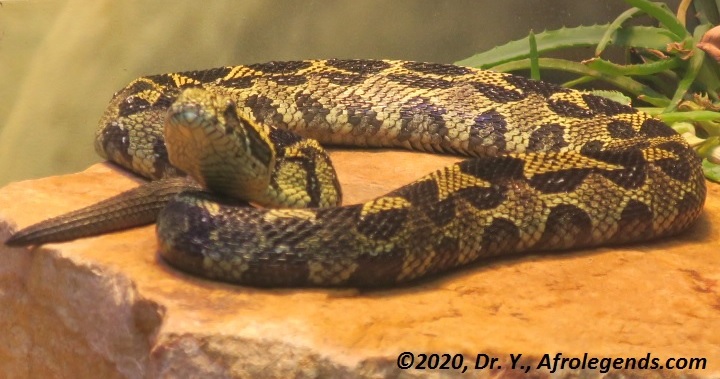
Python

Quand la vipère est morte, le python ne peut prendre ses dents (Proverbe Douala – Cameroun). –  D’un étranger on ne peut rien attendre.

When the viper is dead, the python cannot take its teeth (Duala proverb – Cameroon). – You can’t expect anything from a stranger.

Women Africa Cup of Nations (WAFCON) 2024 in Morocco

Women’s Africa Cup of Nations (WAFCON) logo

The semi-finals for the 2024 Women’s Africa Cup of Nations (WAFCON) is taking place today, Tuesday July 22 in Morocco. By the way, as a parenthesis, why are we still calling stuff a year behind because of the 2020 pandemic? At what point are we going to go back to the normal schedule? Tokyo 2020 took place in 2021, AFCON 2023 in 2024, etc; just change the naming already! As I was saying, the semi-finals will see the hosts, the Atlas Lionesses of Morocco take on the Black Queens of Ghana, while the Super Falcons of Nigeria, record nine-time champions, will meet the Banyana Banyana of South Africa. The Confederation of African Football has doubled the prize money for the cup winners who will get $1 million for their performance.

Flag and map of Nigeria

The tournament has highlighted the competitiveness of the women football on the continent. This is the 13th edition of the biggest women’s footballing event in Africa. So far, we have seen beautiful football, and been impressed by quite a few amazing players. The highly anticipated Zambian duo, Barbra Banda, 2024 BBC Women’s footballer of the year and 2nd most expensive women signing, and Racheal Kundananji, the 2023 Goal50 Women’s Footballer of the year and 2023 Best Goal Trophy from Mundo Deportivo, did not shine, and the Copper queens were obliterated by the Super Falcons 5-0. At this point, the Nigerians look like the favorite to win the title, as they have not conceded a goal so far. Will this be the year of a 10th trophy?

Flag of Morocco

Ghizlane Chebbak of Morocco has shone throughout, saving her team with a hat-trick to defeat Mali 3-1. Thus far, she is tying the place for the tournament’s top scorer with Senegal Nguenar Ndiaye with 4 goals. The competition is still ongoing, and she might very well win the top scorer title. Last time, when Morocco hosted the cup 3 years ago, they reached the finals. They are led by Jorge Vilda, Spain’s Women’s coach who guided Spain to the world cup win in 2023. With the home court advantage, will they be this year’s winners?

Map and Flag of Ghana

Goalkeeper Cynthia Konlan of the Black Queens of Ghana has also shone throughout the tournament. This is the first time Ghana returns to the WAFCON semi-finals since 2016. At this point, they defeated Algeria by penalty shoot out to make it to the semi-finals. Can they defeat Morocco to make it to the finals?

Flag of South Africa

South Africa is the current cup holder, but had to squeeze past Senegal in 4-1 penalty shoot out, after a 0-0 draw (South Africa is this year’s Women African Cup of Nations Champion). Goalkeeper Andile Dlamini has produced good saves which has kept her team in the competition. Will the defending champions, the Banyana Banyana, repeat the exploit?

The finals will take place on Saturday, July 26. May the best team win, and may it be a celebration of the best football!

‘So Long a Letter’ by Mariama Bâ is now on the Big Screen!

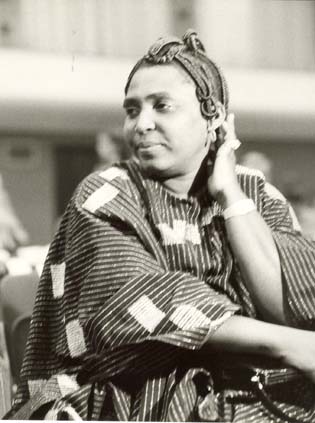
Mariama Bâ
Mariama Bâ

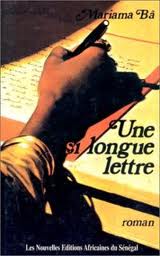
A few years back, we talked about the Senegalese author Mariama Bâ, the African female pioneer who is considered to have written the first African feminist novel.  Her literary career, although short as she passed away few months after the publication of her first book, advocates for women’s rights. Une Si Longue Lettre [So Long a Letter] has been one of my favorite books in my library. It was written by a woman in 1979; it talks about the condition of the woman in the Senegalese society, conditions that are very similar in many African countries. It sheds a light on the place of the woman in the society, the effect of polygamy on women and society, and the clash between modernism and traditions. Her book became an African classic, and has been read in schools across the continent and translated in many languages. Her story still resonates today.

Une Si Longue lettre
Une Si Longue lettre / So Long a Letter

It is important to note that Bâ’s feminism is deeply rooted on an African identity, humanity, and experience, which is different from the Western feminist frameworks.

The Senegalese screenwriter and producer Angele Diabang has decided to adapt this masterpiece for the big screen, and debuted the feature film at the Brooklyn Arts Music (BAM) FilmAfrica Festival (BAM | FilmAfrica 2025) in May 2025. Enjoy, and I hope all of you will get a chance to watch it.


Proverbe Mandingue sur l’éducation / Mandinka Proverb on Education

Fer / iron (Chemistrylearner.com)

Le fer seul peut scier le fer (Proverbe Mandingue – Mali, Gambie, Sénégal, Guinée, Guinée-Bissau, Sierra Leone, Côte d’Ivoire, Liberia). – Les parents seuls peuvent extirper les défauts des enfants.

Only iron can saw iron (Mandinka proverb -Mali, Gambia, Senegal, Guinea, Guinea-Bissau, Sierra Leone, Ivory Coast, Liberia). Only parents can eradicate the defects of children.

Bamako! By Agostinho Neto

Map of Mali with its capital Bamako

In 1954, Agostinho Neto, Angola’s first president (before he became president) wrote a chez d’oeuvre titled Bamako, after the capital of the country of Mali. The poem appeared in his collection Sagrada Esperança (Sacred Hope), in 1974. The poem is an ode to African unity, resilience, and rebirth, all based on the rich history of the great Empire of Mali, and the continent as a whole. Neto refers to Africa’s tallest mountain, Mt Kilimanjaro. In his poem, he weaves in the great rivers of the continent, Niger and Congo, particularly focusing on the soil’s fertility from the abundant flow of the river Niger, and the tantalizing immensity of the river Congo. Above all, he highlights the warmth of its people, their friendship, their resilience (‘strong roots’), and their kindness. He builds on the pain of slavery and centuries of hurt to offer hope, the living fruit of Africa’s future; in Bamako, he says, we will conquer death! Why Bamako, one may ask? Bamako is special as it was part of the great Empire of Mali, where the oldest constitution in the world saw the light (Kouroukan Fouga, la Constitution de l’Empire du Mali – la plus vieille constitution republicaine au monde?), and is also known as the crossroad of West Africa, where germinated centuries’ old history of great West African kingdoms in Mali, and its rich traditions.

Below is Bamako! by Agostinho Neto, published in Sagrada Esperança, in 1974. You can find it on AgostinhoNeto.org

======

Bamako by Agostinho Neto

Bamako!

ali onde a verdade gotejante sobre o brilho da folha

se une à frescura dos homens

como as raízes fortes sob a tépida superfície do solo

e onde crescem amor e futuro

fertilizados na generosidade do Níger

sombreados na imensidão do Congo

ao sabor da aragem africana dos corações


Bamako!

ali nasce a vida e cresce

e desenvolve em nós fogueiras impacientes de bondade


Bamako!

ali estão os nossos braços

ali soam as nossas vozes

ali o brilho esperança dos nossos olhos

se transforma imenso numa força irrepreensível da amizade


secas as lágrimas choradas nos séculos

na África escrava de outros dias

vivificado o sumo nutritivo do fruto

o aroma da terra

em que o sol desencanta kilimanjaros gigantes

sob o céu azul da paz.


Bamako!

fruto vivo da África de futuro

germinado nas artérias vivas de África


Ali a esperança se tornou árvore

e rio

e fera

e terra


ali a esperança se vitoria amizade

na elegância da palmeira

e na pele negra dos homens


Bamako!

ali vencemos a morte

e o fruto cresce – cresce em nós

na força irresistível do natural e da vida

connosco viva em Bamako.


Bamako!

There, where the dripping truth on the leaf’s shine

unites with the freshness of men

like strong roots beneath the warm surface of the soil

and where love and future grow

fertilized in the generosity of the Niger

shaded in the immensity of the Congo

to the taste of the African breeze of hearts


Bamako!

there life is born and grows

and develops within us impatient fires of kindness


Bamako!

There are our arms

There our voices sound

There the hopeful glow of our eyes

Immensely transforms into an irrepressible force of friendship


dry the tears cried for centuries

in the enslaved Africa of other days

vivified the nutritious juice of the fruit

the aroma of the earth

where the sun disenchants giant Kilimanjaros

under the blue sky of peace.


Bamako!

living fruit of Africa’s future

germinated in the living arteries of Africa


There hope became tree

and river

and beast

and earth


There hope triumphs over friendship

in the elegance of the palm tree

and in the black skin of men


Bamako!

There we conquer death

and the fruit grows – it grows within us

in the irresistible force of nature and life

living with us in Bamako.