
Je vous ai montré les étoiles et la lune, mais vous n’avez vu que le bout de mon doigt! (proverbe Tanzanien – Tanzanie)
I pointed out the stars and moon to you, but all you saw was the tip of my finger! (Tanzanian proverb – Tanzania)

Je vous ai montré les étoiles et la lune, mais vous n’avez vu que le bout de mon doigt! (proverbe Tanzanien – Tanzanie)
I pointed out the stars and moon to you, but all you saw was the tip of my finger! (Tanzanian proverb – Tanzania)
 Did you know about the 999-year land lease granted to Europeans in Kenya? Did you even know that there was such a thing as a 999-year lease (a.k.a. 1000-year lease)? It’s like “Hello? who will remember such a thing by the time a millenium has gone by? who will be there to fight for the land?” I knew about the 99-year lease of Macau and Hong Kong (by the British) which were returned to China (thanks to the hard work of the Chinese to recover what was rightfully theirs)… but the treachery of this 999-year lease is particularly outrageous! Well, the 999-year lease was granted in the Rift valley region of Kenya by the British colonial administration to their fellow brothers, ‘early’ British settlers in Kenya. This paved the way for the violent seizure of thousands of acres of land from the local communities whose anger and discontent led to the armed struggle (The British Government apologizes for Mau Mau atrocities) which later led to the independence of Kenya from Great Britain. There are probably other countries like that across the continent with such outrageous leases; I am sure that there are such things in Francophone Africa, but with the well-known perfidy of the French government (FCFA), such contracts are probably hidden from the masses (If you uncover any, please share with us).
Luckily, the Kenyan government has recently, in 2010, re-written its constitution to cut down these leases from 999 years to 99 years, retroactive from those dates in 2010. That retroactive date is a pity in my opinion… for it will mean that some lands would have been leased for almost 200 years by the time the date runs up! However, it is a step forward, reducing 1000-year lease down to 200-year! (Question for readers: couldn’t these have been annulled all-together?)
To learn more, I have compiled excerpts from different articles. As you read these, you will remember that Robert Mugabe did indeed say that most of the lands where the Safaris happen in Zimbabwe (probably the same in South Africa, and as you will read below in Kenya as well), do not belong to Africans. Enjoy!
=====
“Cutting 999-year Lease Terms” – Daily Nation (14 Nov 2009)
 One of the most contentious clauses in the new land policy is a proposal to scrap 999-year leases. The draft proposes to cap leasehold terms at 99 years.
This proposal has drawn protests from landowners, mostly of them of European origin, who hold titles to large farms under leases of 999 years granted in 1915 after sustained pressure from white settlers on the British colonial administration.
The seizure of thousands of acres of land from local communities created discontent among the African population. This anger would later boil over into the armed struggle for independence.
Early settlers, who were initially granted 99-year leases beginning 1902, applied pressure on the British government to extend the leasehold terms to 999 years.
The move succeeded, and the Britain allowed the passage of the Crown Lands Ordinance of 1915, which extended the leases. If the draft policy is adopted, all the existing 999-year leases will be shortened to 99-year holdings.
“New Law on Land a Double-Edged Sword” – Business Daily Africa (7 Sept 2010)
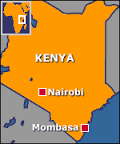 In Kenya, those with registered private land hold either freehold or leasehold interests. A freehold interest is for an unlimited period and is the kind held by Kenyans in most rural areas. They are easily managed and inherited.
A leasehold interest is held for a defined period after which the land reverts to the person who granted the lease. Most leasehold interests are found in urban areas. But many leases were granted by the colonial government to promote Kenya’s agriculture and for religious purposes in various counties. Many of these have since been passed on to local people and companies.
Leases in Kenya have been routinely issued for 33, 66, 99, 999 and 9,999 years. All leases of terms greater than 99 years held by non-citizens were, however, automatically converted to 99 years on the promulgation of the 2010 Constitution.
“Are leases in Laikipia about to start expiring?” – The Star Reporter of Kenya (27 Nov 2017)

Draft land regulations from the Ministry of Lands state that the effective starting date for the new 99 year leases is 27 August 2010. Therefore freehold titles formerly held by foreigners and now converted to leasehold titles will not expire until 2109.
Most of the ranches in Northern Kenya are owned by Kenyan citizens, including those of European extraction, and they are therefore unaffected by the 2010 Land Registration Act. If they hold Freehold title deeds or 999 year leases, those were both preserved by the Constitution. Therefore no freehold title or lease will expire on most of the ranches in Laikipia or northern Kenya in the foreseeable future..
The conservancies in Laikipia formerly held 999 year leases but these are now being reduced to 99 year leases, if they are not Kenyan owned, and they will expire in 2109.
There is another small batch of 99-year leases issues by the colonial government in the 1950s called Temporary Occupation Licences (TOLS), a government system that applied in remote parts of Kenya. These 99 year leases will only expire after 2050. If Kenyans own those leases, they will be automatically renewed by government.
“The Land Laws of Kenya” – A Summary of the changes compiled by Mona Doshi (Oct 2012)
THE NEW LAND ACTS
Pursuant to the Constitution of Kenya, three Acts of Parliament have been enacted and came into
force on 2nd May, 2012:
Land Act, 2012
Land Registration Act, 2012
National Land Commission Act, 2012
THE REPEALED ACTS
The following Acts have been repealed:
The Indian Transfer of Property Act, 1882
The Government Lands Act
The Registration of Titles Act
The Land Titles Act
The Registered Land Act
The Wayleaves Act; and
The Land Acquisition Act
OWNERSHIP OF LAND BY NON-KENYAN CITIZENS
A significant change under the new laws is that:
freehold land cannot be owned by a non-Kenyan citizen; and
a leasehold interest of over 99 years cannot be held by a non-Kenyan citizen.
Therefore any freehold land owned by a non-Kenyan citizen is deemed to have been converted into a 99 year leasehold interest commencing from 27/8/2010 and any leasehold interest with an unexpired term of over 99 years is deemed to be converted into a 99 year leasehold interest commencing from 27/8/2010.
As yet there is no procedure in place for conversion of freehold title to leasehold so, for example, if prior to the coming into effect of the new Constitution a non-Kenyan citizen owned freehold land and you conduct a land registry search today the result will still show the non-Kenyan citizen as owning the land on freehold tenure.
The Constitution states that a body corporate/company is deemed to be a Kenyan citizen only if it is 100% owned by Kenyan citizens. Therefore a company with even one shareholder who is a non-Kenyan citizen would only be entitled to own a leasehold interest of 99 years or less.
It is unclear whether a freehold title or title with an unexpired term of over 99 years that is owned jointly by a Kenyan citizen and a non-Kenyan citizen would be converted to a lease of 99 years or whether the tenure would remain intact.

Dear readers, wishing you all an AMAZING HAPPY new year. May the year 2020 mark the beginning of a decade of joy, the fulfillment of old and new dreams that will last a lifetime, and the completion of past endeavors. We, at Afrolegends, would like to express our profound gratitude for your constant support, as your readership has carried us forward. Thank you to all those who visited the blog, reblogged articles, commented, and to all future visitors. 2019 was a full year: Afrolegends.com had lots of views, subscribers, and many articles reblogged on multiple sites. In August, we celebrated 2 Million Views and 10-years Anniversary on the African Heritage Blog !!! We most importantly celebrated your continued presence on our blog, and as always African achievements.

The top 6 posts of 2019 are listed below. For this new year, 2020, we will bring you even more amazing, fun, enlightening, and rich articles. We will also take you on a journey to new places. Keep trusting, reading, sharing, reblogging, and liking. We wish you a beautiful, full, and amazing new year, rich in blessings, and rich in greatness. May 2020 be the year of greatness! Keep your heads up, and may your year be as beautiful as the petals of this flower! As you can see, everything about this flower marks the beginning of something beautiful: a new start, a new life, and a new joy! As always, like Agostinho Neto said, “A luta continua … a vitória é certa!”
1. The 11 Components of the French Colonial Tax in Africa
2. Bride Price Practices in Africa
3. Adinkra Symbols and the Rich Akan Culture
4. Scarification: an ‘Ancient’ African Tattoo Culture
5. Sarah Baartman: The Black Venus
6. Samori Touré: African Leader and Resistant to French Imperialism!
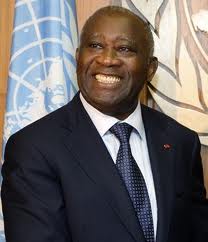
1. The liberation of President Laurent Gbagbo and Charles Blé Goudé (How long shall they kill our prophets…?) from the Hague after 8 years unjustly accused of crimes against humanity. All charges were dropped, Laurent Gbagbo, Former President of Cote d’Ivoire, was acquitted of War Crimes, yet Blé Goudé and him are still persecuted by the prosecutor, and Blé Goudé is still stuck in the Hague unjustly, while Gbagbo is in Belgium; both are unable to return home to Côte d’Ivoire. This is another case of Deportation of African Heads of States. Our prayers have been answered, and we will continue until they can both return home, and until Côte d’Ivoire is rid of all the nonsense brought by France there. As Agostinho Neto Neto said: “La luta continua e la victoria e certa!”
2. Democratic Republic of the Congo (DRC)‘s first democratically elected president, Felix Tshisekedi, was invested on 24 January which marked a historic day in the life of the DRC. Félix Antoine Tshilombo Tshisekedi marked the first peaceful transfer of power in the history of the DRC in 60 years, since the Belgium granted it independence.
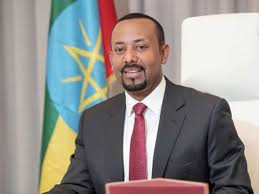
3. Abiy Ahmed, the Prime Minister of Ethiopia was awarded the Nobel Peace Prize this year. We celebrate it, but it has become quite controversial as he was awarded the Nobel for his work in ending the 20-year post-war territorial stalemate between Ethiopia and Eritrea…. the question remains as to why wasn’t his Eritrean counterpart recognized as well … doesn’t it take two to tango? Remember how F. de Klerk and Mandela were both awarded the Nobel peace prize for the end of apartheid? Both sides were recognized… so why not in the case of Ethiopia and Eritrea?
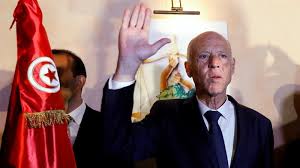
4. Tunisia celebrated the election of Kais Saied aka ‘The Robot’: The Political Outsider Who Won the Tunisian Presidential Election. Saied, a political outsider and retired law professor, won the presidential election with a landslide victory. We cheered with the Tunisian people for a good election and hopefully a good choice.
5. Cameroon’s opposition leader Maurice Kamto was freed after almost 10 months of unjust arrest. This has helped us all uncover yet another scandal: Cameroon and the Double Standard of the ‘International Community’. Kamto had been locked up with over 200 of his supporters at the capital’s maximum security prison for a peaceful march. He has now been freed, and all charges dropped, while the situation in Cameroon keeps disintegrating under the leadership of France’s puppet Paul Biya and his croonies.
6. Rwanda announced the opening of the first mobile phone manufacturing plant in Africa. The mobile phones will be entirely made in Rwanda… for Rwandans. Rwanda opens first entirely homemade smartphone factory. The Mara Group, a pan-African business headquartered in Dubai, says the factory will deliver “high quality smartphones at an affordable price.” Volkswagen will also open its first ever car assembly factory in Africa in Rwanda.
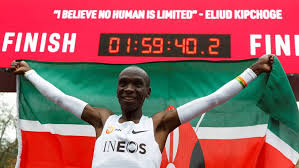
7. Eliud Kipchoge of Kenya ran a sub-2 hour marathon to become the first person in recorded history to run a marathon in such times.
7. Kenya’s Brigid Kosgei set a jaw-dropping new women’s world record at the Chicago marathon with a time of 2:14:04, breaking the record set by British runner Paula Radcliffe in 2003, 16 years ago.

8. The Fennecs of Algeria won the African Cup of Nations 2019 in Cairo, Egypt. The Fennecs of Algeria defeated the Lions of the Teranga of Senegal 1-0 to become Africa’s new champions. This was their second title since 1990. They were clearly the tournament’s best team. The revelation of CAN 2019 tournament was the Barea of Madagascar which for their first participation ever to the African Cup of Nations, performed extremely well, and went as far as the quarter finals.

9. This year also saw several fans attempt the journey from Cape to Cairo: Trekking 10,000 km for the African Cup of Nations. One of them finished: Alvin Zhakata, of Zimbabwe, trekked 10,000 km to cheer for the Zimbabwean warriors at the 2019 Africa Cup of Nations in Cairo. Even though he arrived late, after his team had been eliminated, he was offered a VIP ticket to the final. What Zhakata did was no easy feat: he traveled from Cape Town to Cairo by foot enduring visa delays, internet blackouts and revolutionary protests all for the love of football. This was also a bold political statement to all African leaders: we need roads to connect each other; we need better visa system for Africans, safer travel, and increased trade among each other: we need a united Africa. Zhakata’s statement is one of Unity, … African Unity
10. To end the year in fanfare, Ethiopia celebrated the launch of its first satellite. This is an outstanding feat and we are happy to celebrate with Ethiopian scientists and all Ethiopians.
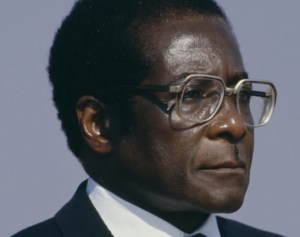
1. President Robert Mugabe, Freedom Fighter and First President of Zimbabwe left us this year… This was a man who tirelessly fought for his country’s liberation, and for the Black race as a whole. Some have called him an icon of liberation, and indeed he was! Julius Malema of South Africa said, “We must not allow our enemies to tell us how to remember him; we know our heroes.” Joseph Kabila, former president of the Democratic Republic of Congo (DRC) said, “We will forever remember the worthy son of Africa, who came to our rescue when our country was victim of a foreign aggressor. The continent has lost one of its pan-African leaders, a hero of independence.” Let us keep his legacy up!
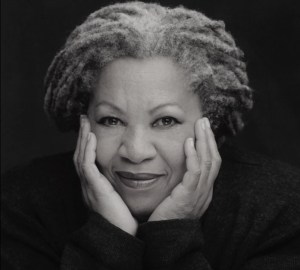
2. Toni Morrison, the First Black Woman to Win a Nobel Prize in Literature moved to another plane this year. Luckily, we can still read her thoughts in her profound, heartbreaking, and conscience shakers books.
3. This year, in Algeria, we said ‘basta!’ to the handicapped Abdelaziz Bouteflika who was trying to run for another presidential term. Thousands of Algerians staged sit-ins every Friday for months until they led to his demise! Even though they are now fighting to remove one of his cronies from power… that was a first step toward freedom.
4. We sent our Farewell to Beji Caïd Essebsi, Tunisia’s First Democratically Elected President. This seasoned politician, unity builder, passed away on the anniversary of the republic which reminded people of the role he played in nation-building since independence.
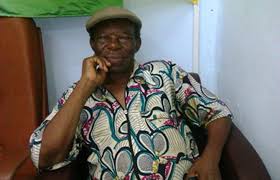
5. The Cameroonian journalist Jean-Baptiste Sipa also changed dimension this year. He was known as a tireless seeker of the truth, and kept the Cameroonian government on its toes. An outstanding journalist, colleague of the late Pius Njawe, and head of Njawe’s Le Messager after his [Njawe] demise. I am one of the few privileged ones to have learnt a few things about journalism from him. Cameroon’s journalism has lost a giant.
6. Cameroon shamelessly loss the organization of the African Cup of Nations 2019, which was taken from them because of exacerbated corruption and of course its shameless government which is applauded by the French.
7. The great Zimbabwean singer Oliver Mtukudzi, one of Zimbabwe’s most renowned musicians, joined his ancestors. Interviewed on Eyewitness, Tuku said that, “My music is about touching the hearts… never mind how old. If a baby is born today, she/he must be able to relate to my music.” Indeed, we are still relating and dancing to Tuku’s music.
8. This year, Bujumbura lost its title as the capital of Burundi. After almost 60 years of reign, plus the 40 years during colonial times as Usumbura, Bujumbura has now been relegated to economic capital, in favor of Gitega. Gitega was chosen to become the siege of power because of its central location, as opposed to Bujumbura which is located on the northeastern shores of Lake Tanganyika, almost on the border with the Democratic Republic of the Congo.
9. This year, Omar al-Bashir was ousted by the people of Sudan, after a 30-year reign. The people had had enough of his government which had been marked by corruption, human rights abuses, and which also led to the division of the largest country in Africa into two: Sudan and now South Sudan. There are of course foreign interests that played a major role in this, especially with all the oil fields in South Sudan. Al-Bashir was removed from power on 11 April 2019 by the Sudanese forces after months of civil unrest.
10. Algeria observed several days of mourning right around Christmas for the passing of General Ahmed Gaid Salah. This man was dearly loved, and perceived as the de facto ruler after the power vacuum left by Bouteflika. May his soul rest in peace.

Celui qui a trouvé un champignon ne manque pas de regarder tout autour pour decouvrir d’autres (Bamiléké). – Qui a bu, boira.
Whoever has found a mushroom does not fail to look around to find others (Bamileke proverb – Cameroon). Who drank, will drink.
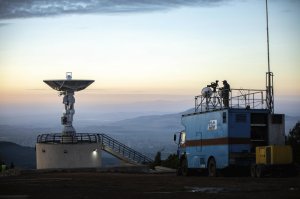
Ethiopia has launched its first satellite this past Friday December 20, 2019. This is an outstanding feat and we are happy to celebrate with Ethiopian scientists and all Ethiopians. Funny how all western media titled “First Ethiopian satellite launched with the help of China,” as if it was wrong to do collaborations… aren’t most of the scientists at the International Space Station from all over the world and mainly Europe and the United States? Well we celebrate Ethiopia’s achievement. Below are excerpts from the article found on PhysOrg .
=====
Ethiopia’s first satellite was sent into space on Friday, a landmark achievement for the ambitious country that also caps a banner year for Africa’s involvement in space.
Scores of Ethiopian and Chinese officials and scientists gathered at the Entoto Observatory and Research Centre outside the capital, Addis Ababa, early Friday to watch a live broadcast.
The 70-kilogramme (154-pound) satellite was developed by the Chinese Academy of Space Technology with the help of 21 Ethiopian scientists, according to the specialist website africanews.space .

It [the satellite] will send back data of the environment and weather patterns in the Horn of Africa—a boon for a country dependent on agriculture and forestry and vulnerable to flood, drought and other climate perils.
“This will be a foundation for our historic journey to prosperity,” Deputy Prime Minister Demeke Mekonnen said in a speech.
It is the eighth launch of an African satellite this year, topping the previous record of seven in 2017, according to Temidayo Oniosun, managing director of Space in Africa, a Nigeria-based firm that tracks African space programmes.
“We can say that 2019 is pretty much the best year in the history of the African space industry,” Oniosun told AFP.
The launch makes Ethiopia the eleventh African country to have a satellite into space. Egypt was the first in 1998.
All told, 41 African satellites have now been launched—38 from individual countries and three more that were multilateral efforts, Oniosun said.
None of those launches has taken place from African soil.
China covered most of the satellite’s $8 million (7.2-million-euro) cost, according to an official involved in Ethiopia’s space programme who spoke on condition of anonymity because he was not authorised to disclose details of the project.
…
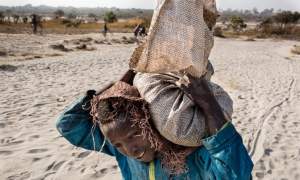
This is a first, and hopefully not the last: Apple, Google, Microsoft, Tesla, and Dell have all been named in a US lawsuit over Congolese child labor and death in cobalt mines. These companies all have specific policies prohibiting child labor in their supply chains, yet they turn a blind eye to the abuse happening in cobalt mines. As you all know, cobalt is one of the miracle minerals charging the entire handheld device boom observed in the past decade; it is essential to the lithium batteries which charge the smartphones in our pockets, the personal computers without which most of us cannot function, and the electric vehicles which claim to be better against pollution (and yet there is cobalt, and more, and Congo is polluted…). Enjoy excerpts from the article on CNN.
=====
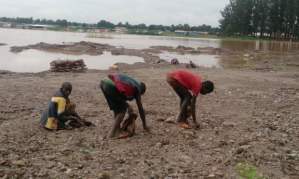
An international advocacy group has accused Apple, Google, Microsoft, Dell and Tesla of “knowingly benefiting from” the use of young children to mine cobalt in the Democratic Republic of Congo.
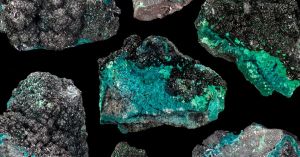
Cobalt is a major component of lithium-ion batteries found in virtually every rechargeable electronic gadget. Two-thirds of the world’s cobalt comes from Congo.
 Le passé appartient aux ancêtres, l’avenir appartient à Dieu, seul le présent t’appartient (proverbe malgache – Madagascar).
The past belongs to the ancestors, the future belongs to God, only the present belongs to you (Malagasy proverb – Madagascar).

The treaty below with the Queen of Madagascar marked the full possession of Madagascar by France. It also marked the end of the Kingdom of Madagascar, or Merina Kingdom, officially known as Kingdom of Imerina. In essence, Ranavalona III, the last monarch of the Kingdom of Madagascar, tried to stave off the French colonization of her land by strengthening trade and diplomatic relations with the United States and Great Britain throughout her reign; however, French attacks on coastal port towns and an assault on the capital city of Antananarivo ultimately led to the capture of the royal palace in 1895, ending the sovereignty and political autonomy of the century-old kingdom. France officially annexed Madagascar on January 1, 1896.
As you read the treaty below, you could see the beginning of the schemes for the FCFA and the 11 Components of the French Colonial Tax in Africa we talked about a while back. Note that Madagascar was banned from dealing directly economically with foreign powers: everything had to go through France… isn’t this a predecessor to the FCFA?
=====

H.E. the Queen of Madagascar, after reading the declaration of possession of the Island of Madagascar by the government of the French Republic, declares to accept the following conditions below:
Article I
The government of the French Republic will be represented to the Queen of Madagascar by a Resident General.
Article II
The government of the French Republic will represent Madagascar in all external relations.
The resident general will be in charge of relations with the agents from foreign powers. Matters of interest to foreigners pertaining to Madagascar will be dealt with by through him.
The diplomatic and consular agents of France in foreign countries will be in charge of the protection of Malagasy subjects and interests.
Article III
The government of the French Republic reserves the right to maintain in Madagascar the military forces necessary for its authority.
Article IV

The Resident General will control the internal administration of the Island.
H.E. the Queen of Madagascar commits herself to proceed to the reforms that the French government will judge useful for the economic development and the progress of civilization.
Article V
The government of H.E. the Queen of Madagascar is prohibited from contracting any loan without the authorization of the government of the French Republic.
Antananarivo, January 19, 1896
Hoy Ranavalomanjaka III
Mpanjakany Madagascar


 African Heritage