Mory Kante : So long to an Electrifying Griot

Mory Kante_2
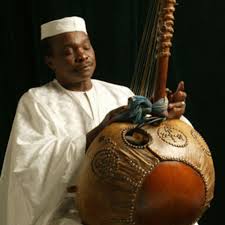
Mory Kante with his kora (Source: RadioKing.com)

I remember dancing to the tunes of “Yé ké yé ké” as a child… I also have fond memories of seeing Mory Kante play his kora, and being amazed by his dexterity, finesse, and charisma. Every note transported me to different horizons. It did not matter that I did not understand his language, I could feel the emotions he conveyed with his voice and kora… it was like magic: one could travel all the way to Guinea and back within the confines of one’s room.

On May 22, 2020, an honorable member of the Griot (Djeli) family, Mory Kante, moved to the land of his ancestors. In reality, he just changed dimensions, and left us with the electricity of his music. Born in 1950 in a small town near Kissidougou in Guinea, Mory Kante came from a long family tradition of griots (Djeli). Both of his parents were griots, his father was from Guinea and his mother from Mali  Mory absorbed the singing of his parents and as a child learned to play the balafon. As a child, his family sent him to Mali to study the kora and other griot traditions. 
Mory Kante_3
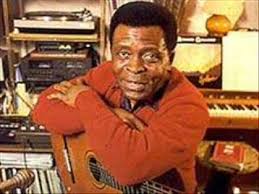
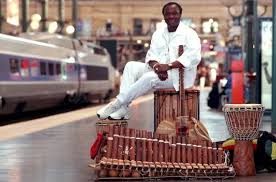
Mory Kante with some of the instruments he played including the balafon, kora, and djembe (Source: Express.co.uk)

Mory Kante is often known as the “electronic griot” because he modernized local traditional instruments such as his kora which he electrified, and fused African music with styles and instruments from Western pop. Kante’s 1987 single “Ye Ke Ye Ke” was a hit, first in Africa and then across Europe. It became the first African single to sell more than a million copies and has been licensed frequently for commercials and film soundtracks. It has even been reworked by other musicians into German techno, Bollywood film music and Chinese Cantopop.

If you ever come across a kora, or listen to Ye Ke Ye Ke remember this great man who modernized the ancient ways to share with us his love of the music of his forefathers. His music has inspired countless singers from the new generation. The New York Times , BBC, and Guardian have written articles about this great man.


Proverbe Douala sur la prudence / Duala Proverb on Prudence

Bird_1
Oiseau / Bird

Quand l’oiseau ne connait pas l’arbre, il ne va pas s’y reposer (proverbe Douala – Cameroun). – Ne visitez que les bons voisins.

When the bird does not know the tree, it does not rest there (Duala proverb – Cameroon). – Only visit good neighbors.

Francis Bebey introducing us to the Communication System of Pygmy People

Francis Bebey_1
Francis Bebey

As we saw on Monday, Francis Bebey’s poem ‘Je suis venu chercher du travail’ / ‘I Came to Look for Work’ is the story of many immigrants, living their homes, families, friends and countries, to journey to far-away lands in search of a better living.

More than a writer, Francis Bebey was also a musician. Below is a video where Francis Bebey introduces the viewer to the one-note flute, and the communication system invented by the pygmy peoples of Central Africa to converse with each other using that instrument. As I told you earlier, Francis Bebey headed the music department at the UNESCO‘s office in Paris, where he focused on researching and documenting African traditional music. Enjoy a lesson from the maestro!


‘Je suis venu chercher du travail’ / ‘I Came to Look for Work’ by Francis Bebey

Francis Bebey_1
Francis Bebey

Today, as states and countries are slowly reopening after the shelter-in-place due to the coronavirus pandemic, many have been left jobless, and are looking for a job now or in the near future. I think the poem ‘Je suis venu chercher du travail / I came to look for work‘ by the great Cameroonian writer and musician Francis Bebey is very appropriate. The poem below is the story of many immigrants traveling to a foreign land in search of a job, a better life, leaving all behind: families, friends, and country. This poem is very simple, yet so deep as it details the losses taken today, in hope for a better tomorrow. As you think about the immigrants dying in the Mediterranean sea, or those crossing the Mexico-US border, or all the countless faces in the world, take a moment to imagine families torn apart, lives in peril, and possibly no light at the end of the tunnel.

Francis Bebey_Agatha Moudio Son
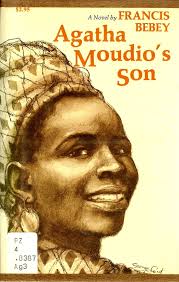
‘Agatha Moudio’s Son’ by Francis Bebey (Amazon)

Francis Bebey was sort of a genius: in his early years, he studied mathematics, before going into broadcasting. He was called to Ghana by President Kwame Nkrumah, where he served as a journalist. He began his literary career as a journalist in the 1950s and worked in Ghana and other African countries for the French radio network, Société de radiodiffusion de la France d’outre-mer (SORAFOM) and Radio France International. Later, he wrote novels, poetry, plays, tales, short stories, nonfiction works, and established himself as a musician, sculptor, and writer.  His first novel, Le Fils d’Agatha Moudio (Agatha Moudio’s Son), was published in 1967 and awarded the Grand prix littéraire d’Afrique noire in 1968; it remains his best-known work to this day. He also headed the music department at the UNESCO‘s office in Paris, where he focused on researching and documenting African traditional music.

Enjoy Je suis venu chercher du travail‘ by Francis Bebey, published in Anthologie africaine: poésie, Jacques Chevrier, Collection Monde Noir Poche, Hatier 1988. Translated to English by Dr. Y. Afrolegends.com.

Je suis venu chercher du travail

Je suis venu chercher du travail

J’espère qu’il y en aura

Je suis venu de mon lointain pays

Pour travailler chez vous

J’ai tout laissé, ma femme, mes amis

Au pays tout là-bas

J’espère les retrouver tous en vie

Le jour de mon retour

Ma pauvre mère était bien désolée

En me voyant partir

Je lui ai dit qu’un jour je reviendrai

Mettre fin à sa misère

J’ai parcouru de longs jours de voyage

Pour venir jusqu’ici

Ne m’a-t-on pas assuré d’un accueil

Qui vaudrait bien cette peine

Regardez-moi, je suis fatigué

D’aller par les chemins

Voici des jours que je n’ai rien mangé

Auriez-vous un peu de pain?

Mon pantalon est tout déchiré

Mais je n’en ai pas d’autre

Ne criez pas, ce n’est pas un scandale

Je suis seulement pauvre

Je suis venu chercher du travail

J’espère qu’il y en aura

Je suis venu de mon lointain pays

Pour travailler chez vous

I came to look for work

I came to look for work

I hope that there will be

I came from my far away country

To work for you

I left everything, my wife, my kids

In my country over there

I hope to find them all alive

On the day of my return

My poor mother was very sorry

To see me go

I told her that I will come back one day

To put an end to her misery

I had long days of travel

To get here

Was I not assured of a welcome

Which will be worth all this trouble

Look at me, I am tired

To go by the ways

It has been days since I ate anything

Do you have some bread?

My trouser is all ripped

But I don’t have another

Do not scream, it is not a scandal

I am just poor

I came to look for work

I hope there will be

I came from my far away country

To work for you

Inédit

Vincent Ehindero Blogger Award, Thank you Dear Kitty!

Thanks to my blogging friend petrel41, of The Dear Kitty. Some Blog blog, for the Vincent Ehindero Blogger Award! It is a new award for me.  I ‘d like to say “a big thank you” for the consideration and kindness. Please check out The Dear Kitty. Some Blog for amazing images and videos of wildlife and more…

Vincent Ehendero Blogger Award

The RULES of this award are:

  • Thank the blogger who nominated you and provide a link to their blog.
  • Post the award logo.
  • Post the rules.
  • Nominate up to 20-30 other bloggers and notify them.
  • Notify Vincent of your nomination, via comment.
  • After notifying Vincent, he’ll check out your blog, follow and give you your unique award for the good work on your blog.
  • Like Kim said in her original post, we’re not sure if we are supposed to add a list of questions the nominees are supposed to answer, but I guess I’ll do it.

Here are petrel41’s questions and my answers:

1. Do you have long or short hair? At the moment, short.

2. Fantasy or Historic Fiction? fantasy.

3. What book do you like a lot, but you dislike the author, because of background, etc.

Not sure…

4. Have you ever watched a movie that was better than the story that it was based on?

No.

5. If you could visit one place in the world right now where would it be?

Greenland – I don’t understand how a country which is covered in ice half of the year can be called ‘green land’. Apart from that, I would love to visit each of the countries of my many blogging friends.

My questions to my nominees are the same as petrel41’s questions.

My nominees are: I have so many bloggers’ friends and I am sure I might have left out some… but below are some of the few, and there is no particular order… ultimately, I would like to nominate all my friends here on WordPress. So I’ll welcome any blogger who wants to participate on this Award. Please answer the same questions above.

  1. Tish Farrell
  2. Cee’s Photo Challenges
  3. Michigan in Pictures
  4. Common Sense and Whiskey
  5. The International Rhino Foundation Blog
  6. SWO8
  7. Grandeur Noire
  8. Ospreyshire’s Realm
  9. Portraits of Wildflowers
  10. THE OLD GUV LEGENDS
  11. African Eye Report
  12. Random Thoughts
  13. Grounded African
  14. Herman van Bon Photography
  15. & Arablit
  16. Black Women Of Brazil
  17. aquacompass 7
  18. Repeating Islands
  19. 365 Days
  20. Rebus Photography

Proverbe malgache / Malagasy Proverb

Soleil_2980_m
Couché du soleil / Sunset

Les morts ne sont vraiment morts que lorsque les vivants les ont oubliés (proverbe malgache – Madagascar).

The dead are only dead when the living have forgotten about them (Malagasy proverb – Madagascar).

The Lost Libraries of Timbuktu

Mali_Timbuktu from a terrace by Heinrich Barth 1858
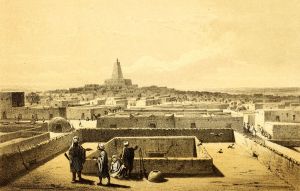
View of Timbuktu in 1858 by explorer Heinrich Barth 

As you all know Timbuktu was a great center of knowledge in search for  for many centuries starting at least in the 12th century. It was visited by people from around the world, in search of knowledge.

Timbuktu was one of the world’s first and oldest thriving universities! Students came from all over the world to study at Timbuktu. Imagine that, students from the middle east, and Europe coming to study in Africa! There are over 700,000 manuscripts at the great Sankore University in Timbuktu, and many more at other libraries including the  Ahmed Baba Institute, Al-Wangari Library, and others.

Enjoy this documentary about the lost libraries of Timbuktu commented by the Scottish/Sierra Leonean writer Aminatta Forna. Enjoy, and discover with me the treasures of Africa.

John Amanam: Making Super Realistic Prostheses in Africa for Africans

Meet John Amanam, the Nigerian artist/engineer building super-realistic prostheses for Africans in Africa. I really liked his work: this is a self-thought man who used to work in the Nollywood industry, with no real training in prostheses, but a love of sculpture and most importantly of his fellow human being. After noticing family members who had lost limbs, he set out to make realistic-looking and affordable limbs with ebony, or mahogany shades, the shades of his fellow brothers and sisters. In essence, he is giving back confidence to those who have lost limbs. Enjoy!

Ancient Egyptian Wisdom on Experience

child3adultNot the greatest Master can go even one step for his disciple; in himself he must experience each stage of developing consciousness. Therefore he will know nothing for which he is not ripe (Ancient Egyptian proverb).