Who/What did we say goodbye to in Africa in 2020?

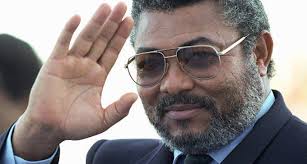
President Jerry Rawlings of Ghana (Source: thecable.ng)

Well, 2020 has been quite a year… when 2020 started, nobody could have told me that there would be a “global pandemic” and I would have believed it, that there will be a confinement and I would have believed, that people will be having “virtual parties” and I would have believed, or that people would have been walking around faceless i.e. masked and I would have believed. What a year! For sure, 2020 is going out, and there will be no other 2020. So let us remember 2020 in Africa, and remember the people, situations, and more that we said goodbye to.
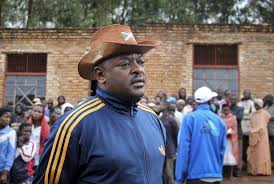
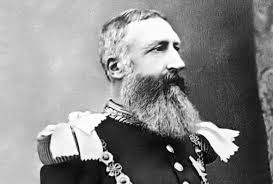
Pierre Nkurunziza during a community event (Source: PressHerald.com)
  1. President J.J. Rawlings, former President of Ghana joined his ancestors this past November. The Ghanaian president J.J. Rawlings has a strong place in history as an influential, courageous, tough-talking, bold, impactful leader and charismatic Statesman who left deep impressions on the political landscapes of his country and, indeed, Africa. Just like the Ghana of today owes a lot to Kwame Nkrumah the father of its independence, the Ghana of today owes a lot to J.J. Rawlings, the father of its economic stability and face-lift. There were a lot of tributes, and I found so much similarities between the words of Rawlings and some that I have echoed here on his blog, J.J. Rawlings in His Own Words: African Identity, Betrayal, and More.
  2. President Pierre Nkurunziza of Burundi left us this past June: Pierre Nkurunziza: So Long to the President who said ‘NO’ to the ICC, UN, WHO, BBC, and VOA. This president, Pierre Nkurunziza, was not a “traditional” president in his white marble castle, but was seen rather as a simple man, a man of the people, a man like the people he served, very religious and patriotic. Pierre Nkurunziza: Some of His Achievements for Burundi.
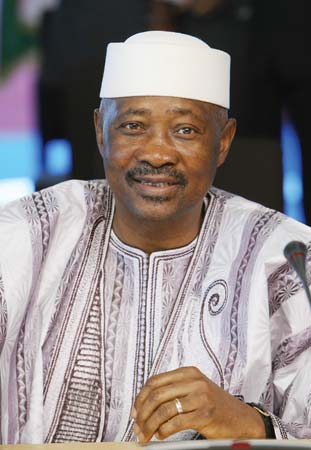
  3. Amadou Toumani Toure – ATT (Souce: Blackfacts.com
    The soldier of democracy, the former president of Mali, Amadou Toumani Toure (ATT), also changed plane this year: GoodBye to Amadou Toumani Touré (ATT) -Former President of Mali. As I said earlier, this was a man of integrity! Some may call him a realist. When then president Traoré asked the army to keep firing at the Malian people, he stood up and said ‘NO’. He took power, and steered the country towards its first democratic elections. Then he stepped down. Later, he won the presidential election with a coalition, and served 2 terms. When in 2012 there was a coup against him, he resigned, and left the office. Others in Africa should copy a page from ATT’s book.
  4. We said goodbye to the world-renowned Cameroonian/French saxophonist Manu Dibango. So Long Manu Dibango: Your Saxophone will Enlighten our Lives. His saxophone, big voice, and laughter brought joy, and influenced world-renowned musicians such as  Michael Jackson, Kool and the Gang, and more. As for me, I remember “Bienvenu, Welcome to Cameroon” and his collaboration with Fela Kuti as my favorites.
  5. This year we said goodbye to Mory Kante : the Electrifying Griot from Guinea. Often known as the “electronic griot” because he modernized local traditional instruments such as his kora which he electrified, and fused African music with styles and instruments from Western pop. His 1987 hit “Ye Ke Ye Ke” is a hit I still dance to. If you ever come across a kora, or listen to Ye Ke Ye Ke remember the electrifying griot Mory Kante and the great musical century-long traditions dating back to the Ghana Empire, Ancient Kingdom of Africa.
  6. Zindzi Mandela (Source: Timeslive.co.za)
    In July, Zindzi Mandela: the daughter of Nelson and Winnie Mandela passed away. As well, as being remembered by her family and loved ones, the world remembers her as the young woman who read Nelson Mandela‘s letter of rejection in 1985. Reading that letter required a lot of courage, determination and strength to defy the apartheid regime and stand in front of a full stadium thirsty for words of encouragement, and hope from their leaders to keep facing the injustices of an inhumane regime.
  7. This past November as well, Mamadou Tandja, the former President of Niger changed his plane of existence. Did you know that France’s nuclear power is funded by the uranium of Niger? and that Niger gets nothing for it? Tandja was the president who asked that the French nuclear company Areva start to pay something to Niger. During his terms, the relationship with Areva, which had enjoyed a de facto four decade monopoly in the country, worsened as he sought to curb the power of French influence by striking a deal with Sino-U in 2007 to develop a uranium mine, resulting in competition for Areva. As you can guess, he was deposed in a coup. Remember The 11 Components of the French Colonial Tax in Africa which gives France monopole over riches, mines, in a country? So long brother!
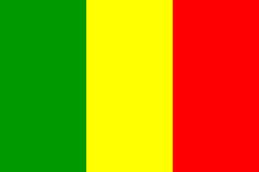
  8. Flag of Mali
    Flag of Mali
    In August, Ibrahim Boubacar Keita (IBK), president of Mali, was booted out of office: Bye Bye IBK: Mali Coup. This was a coup d’etat in Mali, and the Malian people rejoiced… but then as always France and its croonies ADO forced the Malian military leaders to promise to reinstate a civilian government and hold elections within a relatively short time frame. As always, France is there to bring back Africans into slavery… no wonder they can stay confined when they get 500 billions for free from African countries [The 11 Components of the French Colonial Tax in AfricaFCFA: France’s Colonial Tax on Africa, Africa is funding Europe!]. Is France Trying to (re) Colonize Africa?
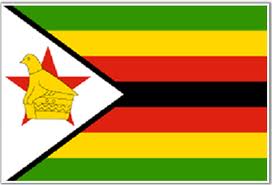
  9. Flag of Zimbabwe
    Flag of Zimbabwe
    In September, common sense left the government of Zimbabwe, when it decided to compensate white farmers the hefty sum of 3.5 billion dollars… within 12 months, when the country is currently on life support and there is no money in its coffers [Is Zimbabwe the New Haiti?]! This is outrageous! When the economy is in shambles, how can the government agree to this? Did these white farmers ever compensate the Africans after independence in 1980 for using their lands for a century, for abusing them off their lands? And for all the years of economic embargo forced on the country? Then in September, Zimbabwe agreed to return seized land to foreigners. What is funny is that the government has been doing this in hopes of having the embargo removed, but the country is still under serious economic embargoes. Don’t they learn from history? Zimbabwe is indeed the new Haiti!
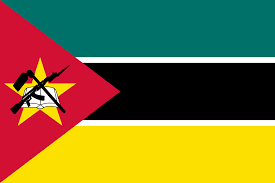
  10. Flag of Mozambique
    Peace in northern Mozambique seems to have become evasive, ever since that 15 billion dollars contract with the French firm Total for the oil in Cabo Delgado, and the discovery of one of the largest oil, diamonds, rubies in the world there. Tell me it is not connected? Now they want us to believe that there is islamist insurgency in Mozambique of all places!… And now Pope Francis has money to help the people and children of Mozambique who have been displaced by conflict! … Why did the Vatican not help the government of Samora Machel back then? why the people of Mozambique? Those diamonds and riches are really Africa’s downfall! Just a look at the banks financing the project reminds you of the Berlin conference of 1884 [Selection from the 1885 Berlin Conference Final Act]: 19 commercial bank facilities among which UK Export Finance (UKEF), the Export Import Bank of the United States, Italy’s SACE, the Netherlands’ Atradius, the Export Credit Insurance Corporation of South Africa, Japan Bank for International Cooperation, Nippon Export and Investment Insurance, and the Export-Import Bank of Thailand [Reuters].

L’Abondance infinie est à toi aussi! / Endless Abundance is Yours Too!

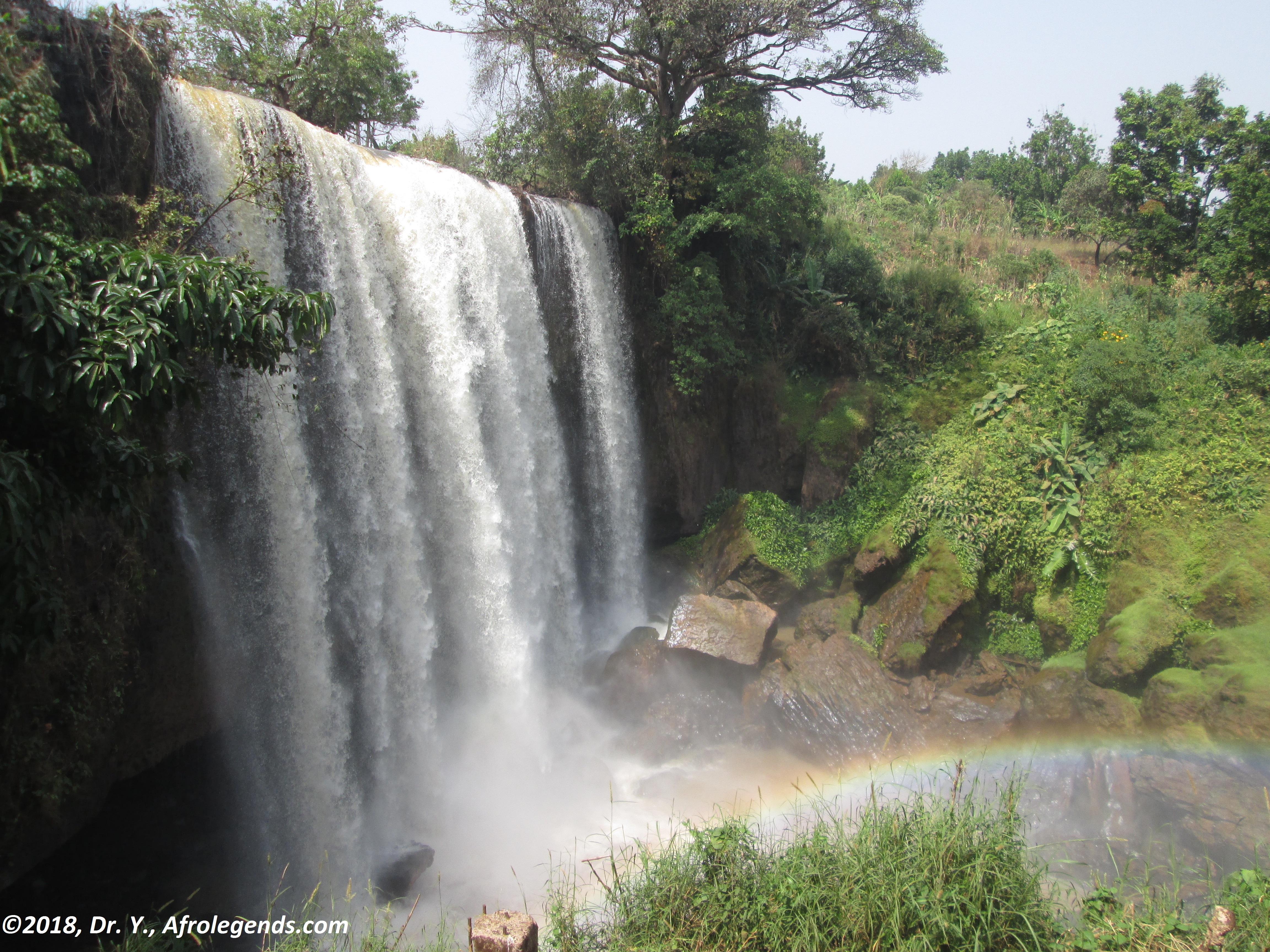
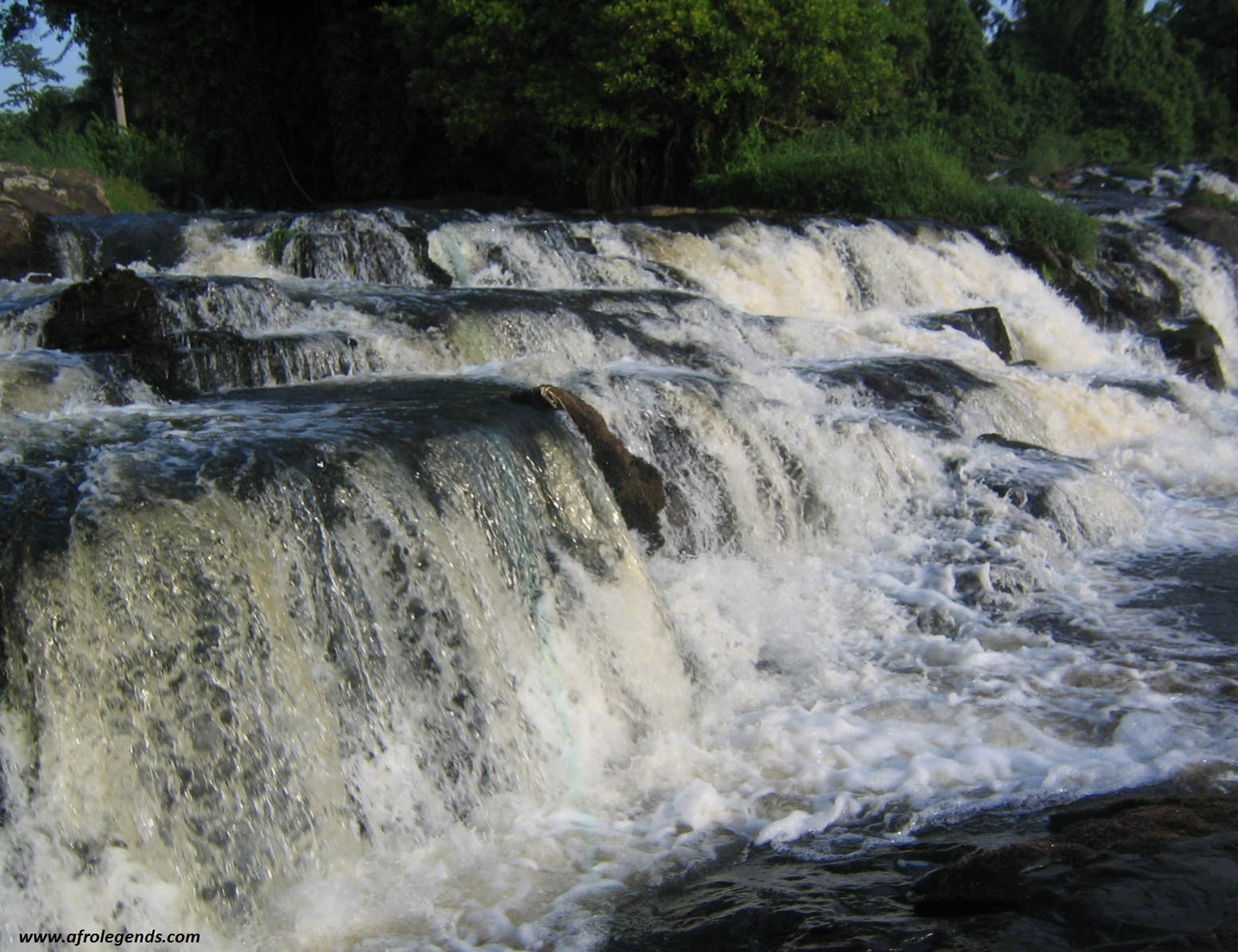
Chutes de la Lobe (Cameroun) / Lobe Falls (Cameroon) – afrolegends.com

Quand les autres ont reçu, tu pourras encore recevoir, car Imana (Dieu) est encore là (Proverbe Burundais – Burundi, Rwanda).

When others have received, you will still receive, because Imana (God) is still there (Burundi proverb – Burundi, Rwanda).

J.J. Rawlings in His Own Words: African Identity, Betrayal, and More

President Jerry Rawlings of Ghana (Source: thecable.ng)

In the video below, you will hear J.J. Rawlings talk about the issues I always talk about on this blog: the loss of the African soul to westernization, the danger of traitors within our ranks, and more importantly the dangers of globalization. I think people should really pay attention to all he has to say about betrayal, African identity, and also about the manipulations of the people by the triumvirate that is the multinationals, the media, and the intelligence.

Kwame Nkrumah
Kwame Nkrumah, First President of Ghana

On betrayal, Jerry Rawlings said, “Something that is worse than an enemy is a traitor.” This is very reminiscent of the speech Amilcar Cabral gave at the funeral of Ghana’s first president Kwame Nkrumah on May 13, 1972, which I translated to English here on Afrolegends, “The Cancer of Betrayal” by Amilcar Cabral. J.J. adds, “As bad as an enemy can be, … something worse than an enemy is a traitor.”

On African identity, Rawlings affirmed, “In the process of trying to modernize, we [Africans] have ended up being westernized. … When I wanted to even name my children African names, heroic names, … the catholic church said no… they will have to be catholic names … [which] are European names.“… “I have a right to my identity, don’t take away my identity!

Christianize me if you may, but don’t westernize me!” He talks about the issues of African identity, which is powerfully shown in the poem ‘My Name’ by Magoleng wa Selepe.

On globalization, “The world is manipulated by the multinational corporations, the media, and the intelligence apparatus, … they work as a triumvirate and they are neatly sandwiched… in between the governed people and the governors… the sooner we begin to return, restore, some sense of morality in business ethics, in politics, in the media, intelligence apparatus, …” apply the same morality to all, especially when talking about globalization, applying the same moral standards to all.

Proverbe sur l’incompatibilité / Proverb on Incompatibility

Oeufs / Eggs

On ne met pas des oeufs et du fer dans le meme sac (proverbe Ehwe – Togo, Ghana).

You don’t put eggs and an iron rod in the same bag (Ewe proverbe – Togo, Ghana).

When Benin City was Compared to Amsterdam, and much Bigger …

Benin City in 1897
Benin City in 1897

In the 15th century, a Dutch traveler visited the great Benin City, in West Africa, located in modern-day Nigeria, in Edo State. This man was visibly stunned by the beauty and the discipline of the people he met. The city he talks about, Benin City, was so much bigger than Amsterdam, the Dutch capital… and so much cleaner… As you read, please note the wealth of the Benin Kingdom, the well-ordered hierarchy, and lastly note the pride and discipline of the people of Benin City. Also note the mention of the great renowned Benin bronzed sculpting on the pillars. No wonder the British could not help but loot the city [Benin City: the Majestic City the British burnt to the ground] because greed and jealousy had the better of them. Below is his account:

=====

The town seems to be very great. When you enter into it, you go into a great broad street, not paved, which seems to be seven or eight times broader than the Warmoes street in Amsterdam….

Benin City around 1600

The king’s palace is a collection of buildings which occupy as much space as the town of Harlem, and which is enclosed with walls. There are numerous apartments for the Prince’s ministers and fine galleries, most of which are as big as those on the Exchange at Amsterdam. They are supported by wooden pillars encased with copper, where their victories are depicted, and which are carefully kept very clean.

The town is composed of thirty main streets, very straight and 120 feet wide, apart from an infinity of small intersecting streets. The houses are close to one another, arranged in good order. These people are in no way inferior to the Dutch as regards cleanliness; they wash and scrub their houses so well that they are polished and shining like a looking-glass.”

Source: “How Europe under-developed Africa,” by Walter Rodney, Howard Univ. Press, 1981, p. 69


Proverbe sur la fausse amitié / Proverb on Fake Friendship

Mixing oil and water

L’amitié de l’huile et de l’eau; l’eau en bas, l’huile en haut (proverbe Ekonda – République Démocratique du Congo (RDC)). – Vivre unis apparemment, mais au fond on ne s’aime pas.

The Friendship between oil and water: water at the bottom, oil at the top (Ekonda proverb – Democratic Republic of Congo (DRC)). – Living together apparently, but deep down we do not like each other.

“Jébalè / Jebale” by Elolongue Epanya Yondo

Douala_Wouri River_2_Djebale
Wouri river and the Djebale island seen on the other side

I share here a poem by the Cameroonian poet Elolongue Epanya Yondo about his beautiful native island of Jebale, Cameroon. Note that Elolongue Epanya is the uncle of another great Senegalese-Cameroonian poet David M. Diop known for his amazing poem “Afrique / Africa“. Jebale (Jébalè or Djebale) is an island on the Wouri River, in Douala, Cameroon. It is also one of the places whose kings signed on 15 July 1884, a treaty of protectorate with German merchants from the firm Jantzen & Thormählen, thereby agreeing to the infamous Germano – Duala Treaty signed 3 days earlier on 12 July 1884 by King Bell and others. In 1884, Jebale was then known as Jibarret.

Douala_Wouri River
View of Jebale and the Wouri river, Douala, Cameroon

As you read Yondo’s words, you can imagine the beauty of his homeland, this island, Jebale, on the Wouri river. Jebale is known as the “emerald island, flamboyant jewel” on the Wouri estuary, on the coast of Cameroon. The author cites well-known coastal rivers of Cameroon, the Bimbia creek, the Sanaga River, the  Dibamba river, the Kwa-Kwa river, and also notes other islands of the Littoral, Malimba and Suellaba. In this poem, the author anchors his words in the rich tradition of the coastal Sawa people as he cites the Miengu and the Mbeatoe, those big shrimps known as Camarões which led to the name of the country Cameroun via the Wouri RiverRio dos Camarões. For those who have visited Jebale, it is indeed an emerald island, mostly known as a small fishing village; however in the eye of Elolongue Epanya Yondo, it is his love, the one he cannot wait to come back to, from exile. Enjoy!

This poem was published in Paris on February 25th 1972, in revue Présence Africaine, numéro 84 (4e trimestre 1972), re-published in Anthologie Africaine: Poésie Vol2, Jacques Chevrier, Collection Monde Noir Poche, 1988, and translated to English by Dr. Y. Afrolegends.com .

====

Jebale by Elolongue Epanya Yondo

Jébalè’

A mon neveu David Morsamba Diop.

Jébalè mon île d’émeraude

Joyau flamboyant au confluent

De la gorge altière du Wouri

Je me souviens

De tes nattes verdoyantes

Fouettant en cascade

L’haleine salée du littoral

Jébalè mon île d’émeraude

Terre dont le souffle

Des Miengu et des Mamy-Wata

Féconde le cycle des Mbéatoè

Enigmatiques hommes d’eau

Qui sèment l’abondance

Jébalè mon île d’émeraude

Je cherche dans les fissures du temps

Dans la gueule écumante

de la baie du Biafra

tous les replis d’eau

qui mangèrent goutte à goutte

un chapelet d’îles

jaillies des entrailles de l’océan

comme des gerbes de nénuphars

Jébalè mon île d’émeraude

Je cherche dans l’écume poreuse

Les cônes bleu-gris

Dont la beauté effervescente

Arrachait des soupirs

          De lame de fond a l’océan

          Tombé en pâmoison

Jébalè mon île d’émeraude

Je cherche le chemin du retour

Du maquis de mon long exil

A travers l’île des buffles

Que fixait hier

La pointe multicolore de Suellaba

Je cherche sur tes flancs

Le point de repère de l’estuaire subjugué

Lançant à l’assaut de l’esprit gardien

De la crique du Bimbia

A l’île Malimba

Du Wouri coiffé de palétuviers

A la Dibamba des grandes profondeurs

De la Sanaga hydre immense

A la bouche silencieuse de la Kwa-Kwa…

Des gueules d’eau déchaînées

Et des bras de mers insaisissables

Pour pénétrer ton mystère

Consacrant ta légende des légendes

Jébalè mon île d’émeraude

Terre première de mon enfance

Dont le sel fermente ma mémoire

Je grave ton image impérissable

Sur la grève qui se moire

Au miroir d’un ballet lumineux

Du flux et du reflux

Qui propagent ton nom

Par la voix claire des clapotis.

Jebale’ 

To my nephew David Morsamba Diop.

Jebale my emerald island

Flamboyant jewel at the confluence

Of the haughty Wouri gorge

I remember

Your green braids

Whipping in cascade

The salted breath of the coast

Jebale my emerald island

Land whose breath

Of the Miengu and the Mamy-Wata

Fertilizes the cycle of the Mbeatoe

Enigmatic men of water

Who sow abundance

Jebale my emerald island

I search through the cracks of time

In the foaming mouth

Of the Biafra bay

All the folds of water

Which ate drop by drop

A rosary of islands

Sprung from the bowels of the ocean

Like sheaves of water lilies

Jebale my emerald island

I search in the porous foam

The gray-blue cones

Whose effervescent beauty

Drew out sighs

          Of groundswell from the ocean

          Fallen into a swoon

Jebale my emerald island

I am looking for the way back

From the maquis of my long exile

Through the buffalo island

That set yesterday

The multicolored tip of Suellaba point

I am looking on your sides

For the landmark of the subjugated estuary

Launching the assault of the guardian spirit

From the Bimbia creek

To the Malimba island

Of the Wouri dressed with mangroves

To the great depths of the Dibamba

To the Sanaga immense hydra

To the silent mouth of the Kwa-Kwa…

Ramps of water

And the elusive arms of the sea

To penetrate your mystery

Consecrating your legend of legends

Jebale my emerald island

First land of my childhood

Whose salt ferments my memory

I engrave your imperishable image

On the shore which shines

In the mirror of a luminous ballet

Of ebb and flow

Which spread your name

By the clear voice of the ripples.

Innovation in the Face of Adversity: Using Tech to Prevent Car Theft… with no Internet

Flag of Cameroon

Have you ever had your car stolen? Have you had to file a police report about it? or just spent days looking everywhere for it, scanning every car in the streets in hope of finding your car? Talk of sleepless nights, and endless talks with the insurance company? Now, imagine having the opportunity to track your car, and immobilize it while the thief is driving it away? Wouldn’t that be great? No more need to deal with busy police, or endless talk with insurance… Hooray to peace of mind!

Well, Zuo Bruno, a Cameroonian entrepreneur has created a car security solution just for you: his mobile application, Zoomed, enables people to track their vehicles and immobilize them if they are stolen, with or without internet. Remember that in many places in Africa, internet is a luxury, or is sketchy, … or like in the case of Zuo, the government had shutdown the internet to his province for over 90 days. His application also enables to track the car’s fuel consumption, which is very helpful if you are the owner of a fleet of vehicles, such as taxis. Enjoy this quick video, and salute the ingenuity of a brother!

Diego Maradona, The Golden One, and Africa

Diego Armando Maradona with the World Cup in 1986

As a kid growing up on the African continent, football is everything… For many it is almost a religion! Which kid has not felt or touched a football? Which one has not been in awe of a football game? My two best football players of all times are Pelé and Maradona. Now Maradona has changed dimensions. I loved Maradona because he was just pure genius, and he had insane dribbling skills. He entered the annals of history for his impressive talent and charisma, for the famous “La Mano de Dios” in 1986, and more importantly for his dribbling from the 60 m line past 5 players to score the goal which was voted “Goal of the Century” by FIFA.com voters in 2002. He possessed an amazing ability, dexterity, and passion for the game on the field. I have viewed countless footings of him as he raised the cup in 1986, just as I watched as he cried for the second place in 1990. Learning to play football meant that you had to watch the maestro, the great Maradona. I have loved every play of this man. The man was a pure genius, an explosion of talent, a force of nature… no wonder that he was nicknamed “El Pibe de Oro” (the golden boy) as a young boy. Maradona was truly a golden boyHe has inspired so many. We all loved to wear the number 10 of Maradona, but very few have been found worthy of it. Just the other day, I found a small statue effigy of Maradona on my colleague’s table… yes So long El Pibe, you have touched all our hearts forever.

Below I share the words of a few famous African players; I have added words by my other all-time player, Pelé, at the end. Cameroon played against Argentina in 1990 and defeated Maradona’s Albiceleste in the opening game, and then went on to be the first African team to advance all the way to the quaterfinals in FIFA World Cup history, so this is special.

Didier Drogba of Ivory Coast said, “RIP Diego Armando Maradona, my first ever football shirt, the man behind my love for football.”

Roger Milla, the great Cameroonian player, a contemporary of Maradona, said, “My great friend Diego Maradona … Rest In Peace LEGEND.

Diego Maradona lifting the World Cup for Argentina, 1986

We have lost a legend and an icon,” former Liberia international and 1995 Ballon d’Or winner and now president of Liberia, George Weah tweeted. He added, “… His extraordinary story as a kid who unshackled himself from the yoke of poverty and used his mastery of football to bring joy, inspired millions. May his soul rest in perpetual peace.”

Samuel Eto’o of Cameroon, who like Maradona starred for Barcelona, also reserved special praise for the football icon. “Maradona will always be with us. He was the idol for a whole generation, and for future generations, for what he did in football. He was from another planet. Diego, you’re god, you’ll always be alive in our hearts,” the former Cameroon international said as quoted by AS.

The other legend, the Brazilian Pelé, had this to say, “I’ve lost a great friend and the world has lost a legend. One day, I hope we can play ball together in the sky.

GoodBye to Amadou Toumani Touré (ATT) -Former President of Mali

Amadou Toumani Toure (Source: NY Times)

It is sadness that I learned of the passing of Amadou Toumani Touré, one of the former presidents of Mali. Affectionately known by his initials, A.T.T. has been deemed the “soldier of democracy” when after taking power, he handed over the power to the elected president Alpha Oumar Konaré.

ATT was born in 1948 in Mopti, a city which lies west of the Dogon Plateau and northwest of the famous Bandiagara region and north-northeast of the legendary Djenné. He later went to Bamako, and joined the Parachute Corps in the army, where he rose to be the commander of the parachute commandos in 1984. ATT was head of President Moussa Traoré‘s personal guard (and parachute regiment). In March 1991, after the violent suppression of anti-government demonstrations, Conférence Nationale Souveraine movements that shook multiple countries in Africa, turned into a popular revolution, the armed forces refused to fire any longer on the Malian people and Touré arrested President Moussa Traoré. He presided over a year-long military-civilian transition process that led to a new Constitution and multiparty elections, and then handed the power over to Mali’s first democratically-elected president, Alpha Oumar Konaré, on 6 June 1992. Konaré promoted Touré to the rank of General. It is after this that people started affectionately calling him the “soldier of the democracy.”

Map of Mali with its capital Bamako

Ten years later, after an early retirement from the army, Touré entered politics as a civilian and won the 2002 presidential election with a broad coalition of support. He was easily re-elected in 2007 to a second and final term. His presidency was non-conventional as he belonged to no political party, and his government always included people from all parties. On 22 March 2012, shortly before the end of his mandate, disgruntled soldiers initiated a coup d’état that forced him into hiding. These soldiers were mad about the government’s inability to stop the fighting in the north of the country by jihadists (2012 insurgency in northern Mali). As part of the agreement to restore constitutional order to Mali, Touré resigned from the presidency on 8 April 2012 and eleven days later he went into exile.

Amadou Toumani Toure – ATT (Souce: Blackfacts.com)

As you can see, this was a man of integrity! When then president Traoré asked the army to keep firing at the Malian people, he stood up and said ‘NO’. He took power, and steered the country towards its first democratic elections. Then he stepped down. Later, he won the presidential election with a coalition, and served 2 mandates. When in 2012 there was a coup against him, he resigned, and left the office. It will be good if the leaders in some of our banana republics (PB, SN, FG, ID, ADO, AC, AB, …) could do this; and more importantly if France could just leave these places!!! But like Thomas Sankara said, «… l’esclave qui n’est pas capable d’assumer sa révolte ne mérite pas que l’on s’apitoie sur son sort. Cet esclave répondra seul de son malheur s’il se fait des illusions sur la condescendance suspecte d’un maître qui prétend l’affranchir. Seule la lutte libère… » [“… the slave who is not capable of assuming his rebellion does not deserve that we feel sorry for himself. This slave will respond only to his misfortune if he is deluding himself about the suspect condescension of a master who claims to free him. Only struggle liberates … “]