Archaeologists Uncover Oldest Human Burial in Africa

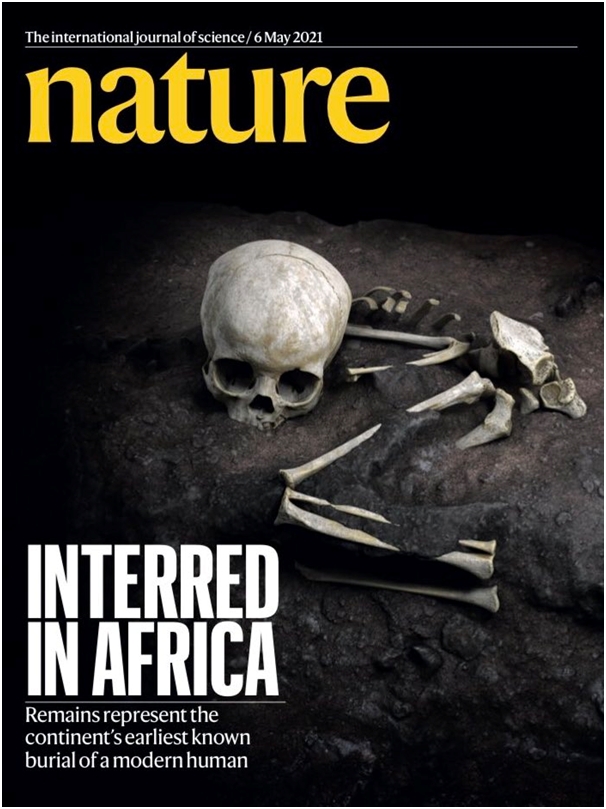
Oldest burial found in Africa of a 3-year-old boy (Source: Nature)

Archaeologists have uncovered the oldest human burial in Africa. It is the body of a 3-year-old boy who was buried 80,000 years ago. As always, it is good to note that even though Africa is the cradle of the human species, very little research has been conducted on the continent showing a real bias in research, but also highlighting the need for Africans to do their own studies: there is so much to find! There is so much wealth (in every field)! Excerpts below is from an article on the Guardian. Please check out the original article in Nature, and also the press release on the New York Times website.

=====

‘Quite spectacular’ discovery shows three-year-old child was carefully laid to rest nearly 80,000 years ago

Archaeologists have identified the oldest known human burial in Africa during field work that uncovered the remains of a child laid carefully to rest in a grave nearly 80,000 years ago.

The arrangement of the bones shows the three-year-old – named Mtoto after the Swahili word for child – was placed with legs tucked to chest, and perhaps wrapped in a shroud with their head on a pillow, before being gently covered in soil.

Researchers discovered the delicate and degraded bones while excavating the floor beneath a sheltered overhang at the mouth of the Panga ya Saidi cave in the tropical uplands of Kenya’s coastal plain about 10 miles from the shore.

This is quite spectacular,” said Michael Petraglia, a professor of human evolution and prehistory at the Max Planck Institute for the Science of Human History in Jena, Germany. “It is the oldest human burial in Africa. It tells us something about our cognition, our sociality and our behaviours and they are all very familiar to us today.”
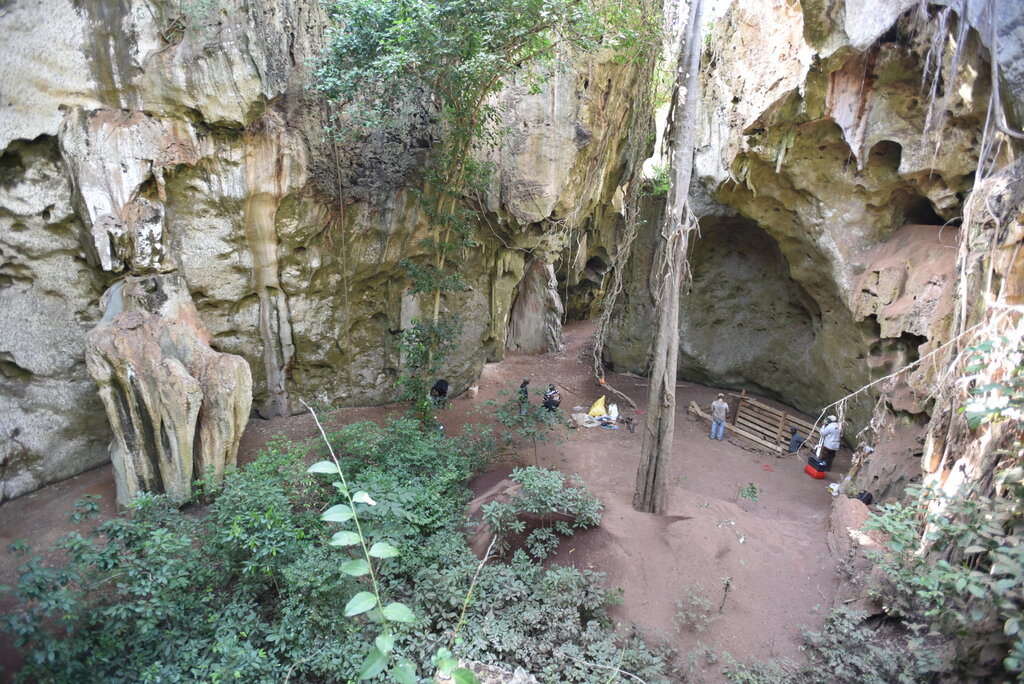
Overview of the cave of Panga ya Saidi. The boarded excavation on the right marks the locality where the burial was recovered. (photo by Mohammad Javad Shoaee).

… The team unearthed the edge of the grave and the first pieces of bone in 2013, but the fragments were so fragile they turned to dust when the scientists tried to remove them. Over the next four years, the researchers excavated the grave from above, revealing yet more bone, but even after applying resins to the material, it was still too weak to recover.

The researchers decided to dig around the circular pit, roughly 40 cm wide and 13 cm deep, and encase the whole grave in plaster so it could safely be lifted from the ground. The block was taken to the National Museum in Nairobi and on to a specialist lab in Spain where the material was excavated further and then imaged with 3D X-ray equipment.

Two small teeth found in the grave matched those of Homo sapiens and put the age of the child at two and a half to three years old. Further teeth were still embedded in the child’s lower jaw, discovered with the spine, ribs and other bones from the shoulder and limbs. Stone tools for scraping, boring and engraving were found in and around the grave, alongside stone points that may have been hafted on to wooden shafts to make spears.

The images show that the child was laid on their right side with knees tucked up towards the chest, while the position of the skull suggests that it lay on a headrest or pillow. The articulated bones, such as the spine, had not fallen apart in the grave, leading the researchers to suspect the body was wrapped tightly in a shroud before burial. Dating found the bones to be about 78,000 years old, according to the study published in Nature.

… “Early African burials are especially rare despite the fact that Africa is the birthplace of our species,” said Boivin. “This almost certainly reflects biases in where research has been done – the regions where earlier burials have been found have been much more extensively researched than Africa.

‘Catastrophic’: Sierra Leone Sells Protected Rainforest for Chinese Harbor

Flag of Sierra Leone

Hundred years after the “signing” of all these lands in Africa to Europeans (we all know it was not a consensual signing as there were threats of war, aggression from other tribes, sometimes bombings, etc), the scramble for Africa, colonization, and more, a new scramble has started again, with lands yet again being “signed” off to foreigners to the detriment of the locals. Below is the recent signing of hundreds of acres of protected land in Whale Bay, in Sierra Leone to Chinese companies. This is a catastrophic story, especially as it will cause an ecological disaster. This is not the only area where it is happening, it is not just in Sierra Leone, and it is not just Chinese companies, but many more … reminiscent of the 999 year land treaty in Kenya [Did You Know about the 999-year Lease granted to Europeans in Kenya ?]… We, Africans, need better laws, better governance, love of our own selves, patriotism, and less corruption. True, we need development, but it cannot be at the expense of ourselves. There are also several questions: is this a land sell, a lease, or what? Can it be overturned? Excerpts below are from The Guardian

====

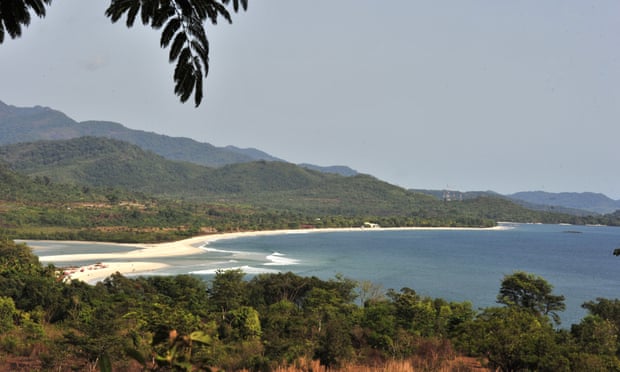
A $55m (£39m) deal struck by the government of Sierra Leone with China to build an industrial fishing harbour on 100 hectares (250 acres) of beach and protected rainforest has been criticised as “a catastrophic human and ecological disaster” by conservationists, landowners and rights groups.

The gold and black sands of Black Johnson beach fringe the African nation’s Western Area Peninsula national park, home to endangered species including the duiker antelope and pangolins. The waters are rich in sardines, barracuda and grouper, caught by local fishermen who produce 70% of the fish for the domestic market.

After reports of a Chinese-backed fishmeal plant began circulating on social media, A statement that appeared to be from the Sierra Leonean fisheries ministry confirmed the deal, but denied the planned construction was a “fish mill”. The facility would be a harbour for tuna and “other bigger fishing” vessels exporting to international markets, it said. It would include a “waste-management component” to “recycle marine and other wastes into useful products”.

The beach earmarked for development fringes the Western Area Peninsula national park, home to endangered species including pangolins. (Source The Guardian: Issouf Sanogo/AFP/Getty)

The government said the beach, one of many along the nation’s 250-mile (400km) coastline, was the “most suitable place” for construction, and revealed the finance ministry had set aside a compensation package of 13.76bn leone (£950,000) for affected landowners. But the statement leaves more questions than answers, say those objecting to the plan.

… “Under the constitution, the government can sequester land if it is in the public interest,” Tonner said. “Even if this just a deep-water harbour, it is not in the public interest because it’s not a suitable site. There are fish breeding sites in the lagoon. It will wipe out the local fish people live on.”

… James Tonner, who owns land at Black Johnson with his mother, Jane Aspden Gbandewa, has written an open letter to the president, Julius Maada Bio, calling for him to intervene and stop the construction, which Tonner said would be “disastrous for the country and the planet”.

It would destroy pristine rainforest, plunder fish stocks and pollute fish breeding grounds and several ecosystems, Tonner said. The beach is on Whale Bay, so-named because whales and dolphins are seen there.

… “Under the constitution, the government can sequester land if it is in the public interest,” Tonner said. “Even if this just a deep-water harbour, it is not in the public interest because it’s not a suitable site. There are fish breeding sites in the lagoon. It will wipe out the local fish people live on.”

… “Our own fishermen won’t have a place to fish. Everything will be spoiled. Tourism will be finished.”

Dr Sama Banya, president emeritus of the Conservation Society of Sierra Leone, echoed Gbandewa’s comments, saying the proposed development would have a “disastrous” impact on tourism and “the very fish industry that it’s supposed to support”. …

Silence Chez Autrui /Silence in Unknown Places

Silence

En visite chez autrui, ouvrez les yeux, pas la bouche (Proverbe Bahaya – Tanzanie).

While visiting others, open your eyes, not your mouth (Bahaya proverb – Tanzania).

Germany agrees to pay Namibia €1.1bn over historical Herero-Nama genocide

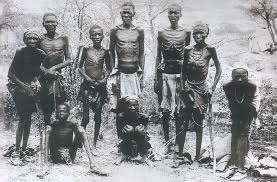
Survivors of the Herero genocide (Wikimedia)

This is historic, late and probably not enough compared to the loss in human lives… yet it is historic nonetheless! Germany has agreed to pay 1.1 billion Euros over the Herero-Nama genocide [Germany in Namibia: the First Genocide of the 20th Century]. This will be paid in existing aid programs over 30 years. I am always skeptical of these aid programs, because countries and companies usually get their money back that way…; plus there are probably billions worth of Namibian diamonds or cobalt mines that will profit German companies in the fine prints. Anyways, for the first time, Germany called the atrocities ‘genocide‘, but fell short of calling the arrangement ‘reparations’ and ‘compensation’ [Have Germans finally acknowledged the Namibian Genocide?]. It is a step forward, we acknowledge it, and recognize the progress. Enjoy! Excerpts below are from the Guardian.

=====

Germany calls atrocities ‘genocide’ but omits the words ‘reparations’ or ‘compensation’ from a joint statement.

Germany has agreed to pay Namibia €1.1bn (£940m) as it officially recognised the Herero-Nama genocide at the start of the 20th century, in what Angela Merkel’s government says amounts to a gesture of reconciliation but not legally binding reparations.

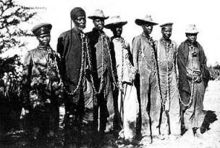
Tens of thousands of men, women and children were shot, tortured or driven into the Kalahari desert to starve by German troops between 1904 and 1908 after the Herero and  Nama tribes rebelled against colonial rule in what was then named German South-West Africa and is now Namibia.

Chained Herero men

Since 2015Germany has negotiated with the Namibian government over what it calls an attempt to “heal the wounds” of historic violence.

Our aim was and is to find a joint path to genuine reconciliation in remembrance of the victims,” the German foreign minister, Heiko Maas, said in a statement. “That includes our naming the events of the German colonial era in today’s Namibia, and particularly the atrocities between 1904 and 1908, unsparingly and without euphemisms.

We will now officially call these events what they were from today’s perspective: a genocide.

On Thursday, official circles in Berlin confirmed reports in Namibian media that after nine rounds of negotiations the two sides had settled on the text of a joint declaration and a sum of €1.1bn, which will be paid separately to existing aid programmes over 30 years.

Of the overall sum, more than a billion euros will go towards projects relating to land reform, rural infrastructure, water supply and professional training. Communities of Herero and Nama descendants, which form ethnic minorities in all of the seven affected regions, are meant to be involved in the development of the specific projects.

Flag of Namibia

… The text of the joint declaration calls the atrocities committed by German troops a “genocide” but omits the words “reparations” or “compensation” – a move borne out of fear that such language could set a legal precedent for similar claims from other nations.

A spokesman for the Namibian president, Hage Geingob, described German’s acknowledgment of genocide “as the first step” in the right direction. “It is the basis for the second step, which is an apology, to be followed by reparations,” the spokesman said.

Some of the numerous groups that make up the descendants of the genocide’s survivors have been critical of the framing of the negotiations from the outset and have declined to back the Namibian government’s stance. ….

World Record: Malian Woman gives Birth to Nine Babies

Flag of Mali
Flag of Mali

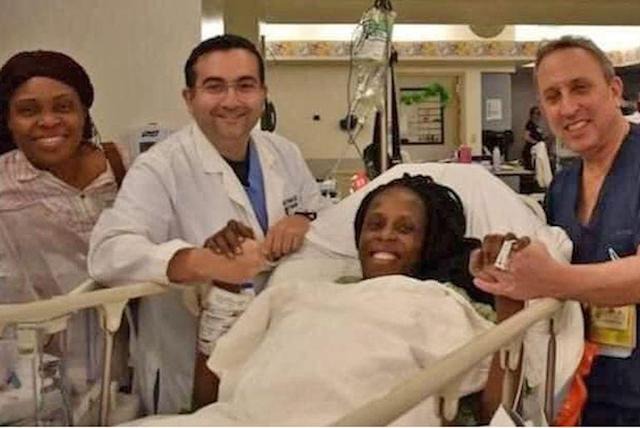
This is a first in the world: it is the first single birth and survival of nonuplets in the world. Halima Cisse, a Malian woman, has given birth to nonuplets, 5 girls and 4 boys, in a hospital in Morocco. They were conceived naturally. Initially, the medical teams both in Mali and then later in Morocco thought she was expecting septuplets, and so they were all surprised to find 9 babies in the end. I salute the wisdom of the country’s leader who saw fit to have her transferred to Morocco for more advanced specialist care… this shows great empathy. Excerpts below are from an article on the Guardian. Congratulations to the proud parents… it is indeed a grace!

====

Halima Cisse’s nonuplets all ‘doing well so far’ after delivery by caesarean section at Moroccan hospital.

A Malian woman has given birth to nine babies – all “doing well so far” – in what is thought to be a world record for the most children in a single birth to survive.

Halima Cisse had been expected to give birth to seven babies, but ultrasounds conducted in Morocco and Mali had missed two of the siblings. The nonuplets – five girls and four boys – were all were delivered by caesarean section.

The 25-year-old’s pregnancy has fascinated the west African nation and attracted the attention of its leaders. When doctors said in March that Cisse needed specialist care, the country’s transitional leader, Bah Ndaw, ordered that she be sent to Morocco.

Halima Cisse, mother of nonuplets and the medical team and a family member in Morocco (Source: Africafreedomnetwork.com)

The mother and babies are doing well so far,” Mali’s health minister, Fanta Siby, told Agence France-Presse, adding that she had been kept informed by the Malian doctor who accompanied Cisse to Morocco.

They are due to return home in several weeks’ time, she added.

… Doctors had been concerned about Cisse’s health and her babies’ chances of survival, according to local press reports. Nonuplets are extremely rare and medical complications in multiple births of this kind often mean that some of the babies do not survive.

In pictures widely shared on social media, Cisse could be seen smiling, celebrating with her doctors near her nine children, held in a row of incubators at the hospital.

Cisse’s husband, Adjudant Kader Arby, still in Mali with the couple’s older daughter, told BBC Afrique he had been in constant touch with his wife and he was not worried about the future.

“God gave us these children,” he said. “He is the one to decide what will happen to them. I’m not worried about that. When the almighty does something, he knows why.”

Germany rules out financial reparations for Namibia genocide

Survivors of the Herero genocide (Wikimedia)

It is no secret that the first genocide of the 20th century was committed by Germany in Namibia [Germany in Namibia: the First Genocide of the 20th Century]… yet to this day Namibians have never gotten reparations, nor an apology. This terrible page of history is usually absent from history books, and all people know is the genocide against the Jews who were compensated. So to hear now that Germany is planning to “offer aid and an apology” is outrageous! Germany says it does not want to set a precedent… yet for Auschwitz there was no question of setting precedents right? They are probably afraid that more genocides will be uncovered, not just for them, but for all those European countries which took part in the scramble for Africa, and they will all be forced to pay… so now they want to give aid… no one wants their aid! After 400 years of slavery, and almost 100-200 years of colonization and neo-colonization, there is a reason why Africa is on its knees… so we do not want “AID,” plus usually this “aid” always comes as “poisoned cakes” with so many clauses and more debts to be repaid… Remember how Germany wanted to pay the Namibian government 10 million Euros [Namibia Rightfully Rejects 10 million Euros Compensation for Genocide]? while Greece is asking for 289 billion Euros? Excerpts from the article below is from the Guardian.

=====

Flag of Namibia

Germany has categorically ruled out financial reparations forming part of a planned formal apology to Namibia for colonial atrocities at the start of the 20th century, amid fears such payments could set a legal precedent for further claims.

… The talks are nearing completion, with broadcaster Deutschlandfunk reporting this week on plans for the president, Frank-Walter Steinmeier, to ask for forgiveness for the genocide in front of the Namibian parliament.

As part of the reconciliation agreement, which has been submitted to both governments, Germany is also to make additional aid payments towards infrastructure, healthcare and job-training programmes in areas of Namibia populated by the descendants of the Herero and Nama tribes.

… “Reparations or individual compensations are not subject of the negotiations,” the report says. “After 100 years they would be unprecedented. The definition of injustice set up by the 1948 convention on the prevention and punishment of genocide does not apply retrospectively and cannot be the basis for financial claims.”

… Yet countries such as Greece and Poland, which were not part of the 1990 agreement, have since repeatedly reiterated their demands to be compensated for economic and human losses sustained at the hands of German forces in the first half of the 20th century.

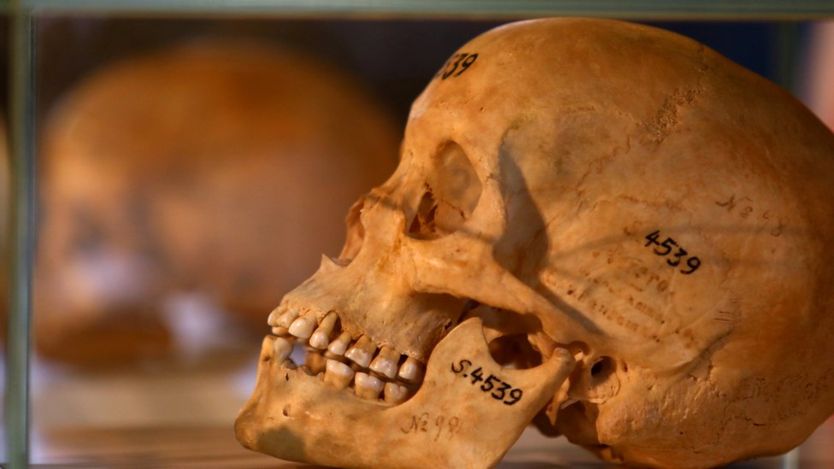
Namibian skulls (Reuters)

The Greek government of the conservative prime minister, Kyriakos Mitsotakis, most recently repeated its wish for negotiations relating to damages worth €289bn on the 80th anniversary of Nazi Germany’s invasion of Greece this April.

Many of the descendants of the Herero and Nama victims continue to reject structural aid and demand direct reparations from Germany. In a joint statement issued this week, the Ovaherero Traditional Authorities and Nama Traditional Leaders Association called the reconciliation agreement a “public relations coup by Germany and an act of betrayal by the Namibian government”.

British Colonial Treaties in Africa: The Case of Banjul

Map and Flag of The Gambia

As we saw last week, the capital of The Gambia, Banjul, was first a colony of the Duchy of Courland which was then part of the Polish-Lithuanian Commonwealth or modern-day Latvia, then became a British colony. Below is a treaty signing over the island of Banjul, at the time of the British.

====

Combo. St. Mary Island [Banjul]. (The map of Africa by Treaty, Vol 1, P.370 – 371)

On the 4th June, 1827,* a Treaty was signed between the Governor of the British Possessions on the West Coast of Africa, and the King of Gumbo, confirming the Cession to Great Britain of the Island of St. Mary’s and adjoining territory, from which the following are extracts :—~

Banjola and St. Mary Island.

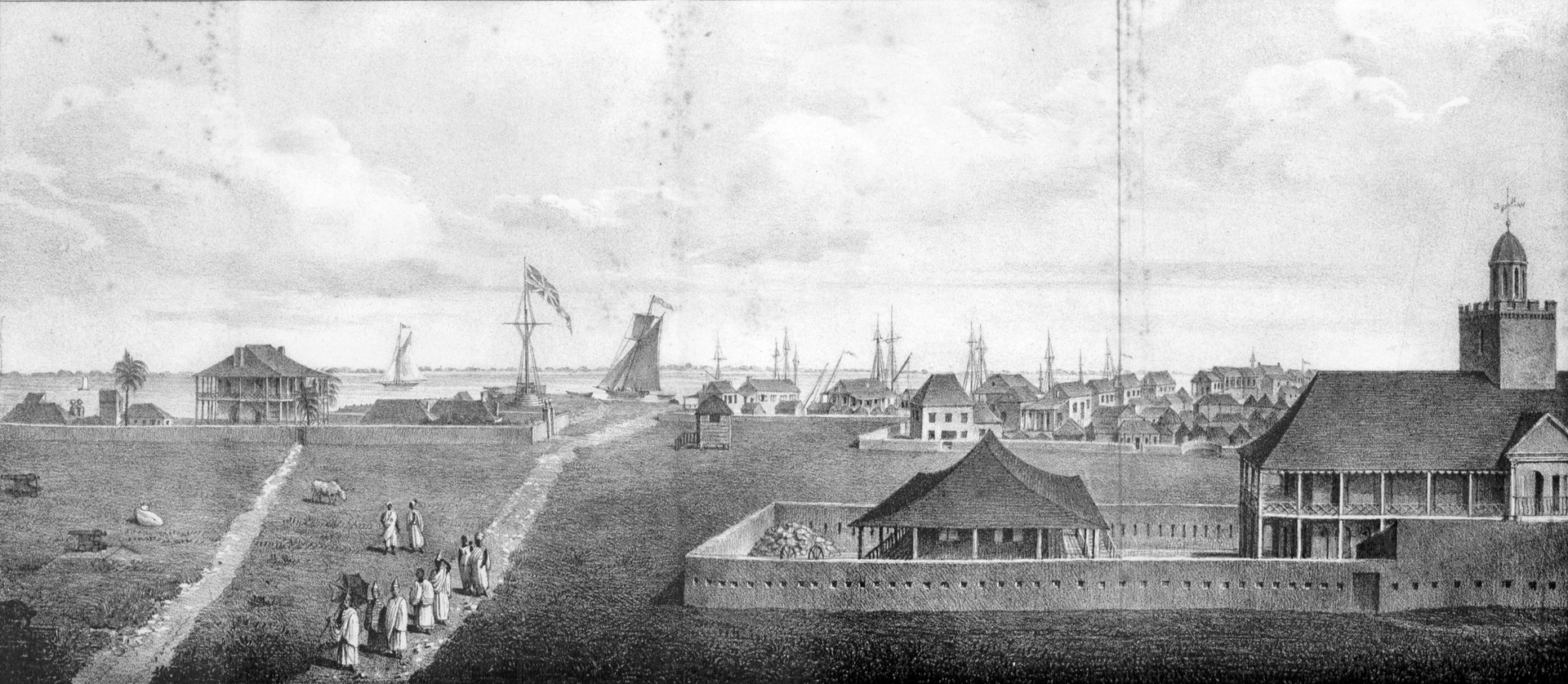
Bathurst (modern-day Banjul) in 1824

“ The Treaty in which the Island of St. Mary’s was formerly given up to the British Government not being forthcoming, it is hereby agreed :—

“ I. Abolition of Slave Trading.

“ II. That the Island of St. Mary’s, the Cape, and the boundary bordering on other States to the southward and east ward of Coomba shall be open for every branch of commerce between the subjects of His Majesty, the King of Great Britain, and the natives of Cumba or any other kingdoms.

“III. That the Island of Banjola, now called St. Mary’s, and the adjoining territory, may be possessed by the Government and subjects of Great Britain for building and making farms in such places as are not actually possessed by any other person at the time, arranging the boundaries with the Alcaide of Baccow.

“IV. Annual Presents to be made to the King of Combo.

* H.T., vol. xii, p. 11.

How to Sign over a River? : British Colonial Treaties in Africa – The Case of the Gambia River

Map and Flag of The Gambia

As I read more colonial treaties signed on the continent, it is hard for a modern mind to understand the concept of ceding over rivers. How do you know where the river ends? Is the river part of just one kingdom? What do you do when it is split among several kingdoms? Did the Europeans take that into consideration, if they only had the signature from one king, and not others? Or did they just cause war to get the remainder of the river? What do you think?

Below is the example of the Gambia River.

On the 3rd September, 1783, a Treaty was concluded between Great Britain and France, by Article X of which the King of the French guaranteed to the King of Great Britain the possession of Fort James (Albreda) [located on modern-day Kunta Kinteh Island] and of the River Gambia.

====

Cession of the River Gambia to Great Britain. (The map of Africa by Treaty, Vol 1, P.367 – 368)

On the 15th June, 1826,+ a Convention was signed between the Acting Governor of Sierra Leone and the King of Barra and of the River Gambia, with his Chiefs and headmen, for the cession of the Gambia to Great Britain.

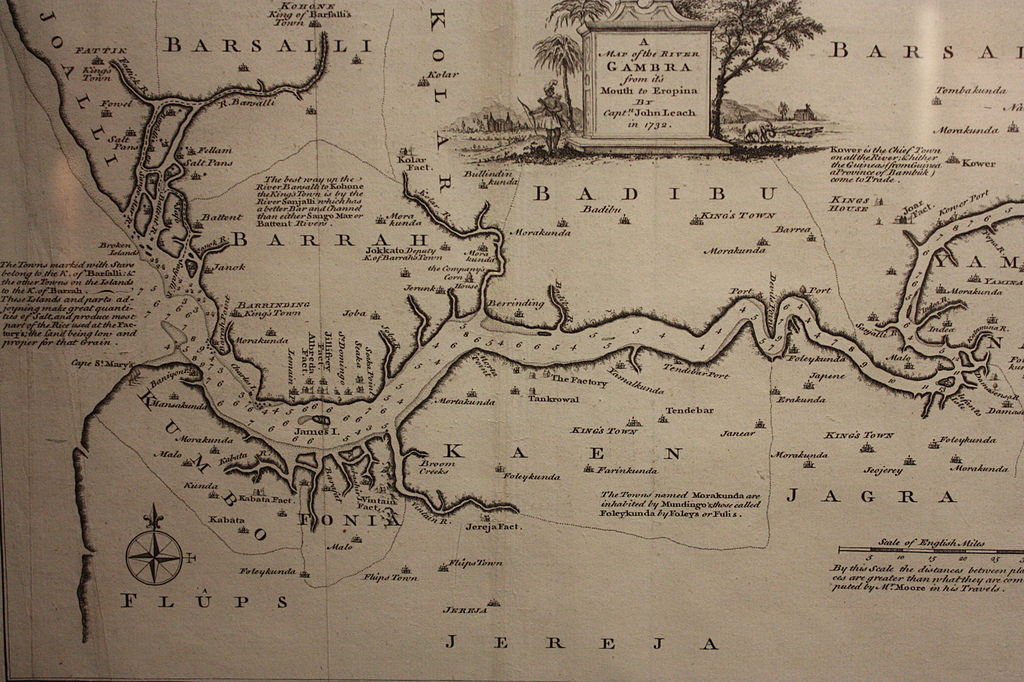
Map of the River Gambra (now Gambia) in 1732

It contained the following stipulations:

* * *

“ 2nd. The said Brunay, King of Barra, by and with the advice and consent of his Chiefs and headmen before named, cedes, transfers, and makes over to his Honour Kenneth Macaulay, Acting Governor of  Sierra Leone, and his successors, Governors of Sierra Leone for the time being, on the part and behalf of His Majesty the King of the United Kingdoms of Great Britain and Ireland, his heirs, and successors forever, the full, entire, free, and unlimited right, title, sovereignty; and possession of the River Gambia, with all the branches, creeks, inlets, and waters of the same, as they have been held and possessed by the Kings of Barra from time immemorial ; and the said Brunay, King of Barra, with the advice and consent of his said Chiefs and headmen as aforesaid, does further cede and forever relinquish all and every right, claim, or demand for customs or duties of any description on British or other vessels entering or navigating the River Gambia, or any of the waters thereof (as have been formerly demanded and taken).

+ S.P., vol. xlviii, p. 882; H.T., vol. xii, p. 5. See also Treaties, 6th January, 1832, p. 824, and 18th November, 1850, p. 326.

Proverbe Mandingue / Mandinka Proverb

Sac vide / Empty bag

Un sac vide ne se tient pas debout (Proverbe Mandingue – Mali, Guinée, Senegal, Gambie, Cote d’Ivoire)

An empty bag cannot stand (Mandinka/Malinke proverb – Mali, Guinea, Senegal, The Gambia, Ivory Coast)

Why the Name : Banjul ?

Map and Flag of The Gambia

Have you ever wondered what the name of the capital of The Gambia, Banjul, could mean? To me, the name sounds like it has some strength into it… try it: “BANGJUL.” Well, it turns out that Banjul takes its name from the Mandé people who gathered specific fibers on the island, which were used in the making of ropes. Bang julo is the Mandinka (Mande) word for rope fiber. The mispronunciation of this word led to the name Banjul.

Bathurst (modern-day Banjul) in 1824

As we learned earlier in the week (A Polish-Lithuanian or Latvian Colony in Africa?), the King of Kombo leased the area encompassing modern-day Banjul to the Duke of Courland in 1651. One could say that Banjul was a vassal possession of the Polish-Lithuanian Commonwealth or Latvian colony in Africa. Prior to 1816, Portuguese referred to the area as Banjulo, while the British called it Banjola. In 1816, the then king (Mansa) of Kombo, Tomani Bojang, ceded the area to Alexander Grant, a British commander, who turned it into a trading post and base to control the entrance to the Gambia estuary, enforce the Slavery Abolition Act, and protect British commercial interests in the region. The British first named the area St Mary’s Island (then known as Banjulo by the Portuguese), and later renamed it Bathurst after the 3rd Earl of Bathurst, Secretary of State for War and the colonies. It became the center of British activity in the Gambia Colony and Protectorate. The town kept the name Bathurst, until independence when it was changed to Banjul in 1973.

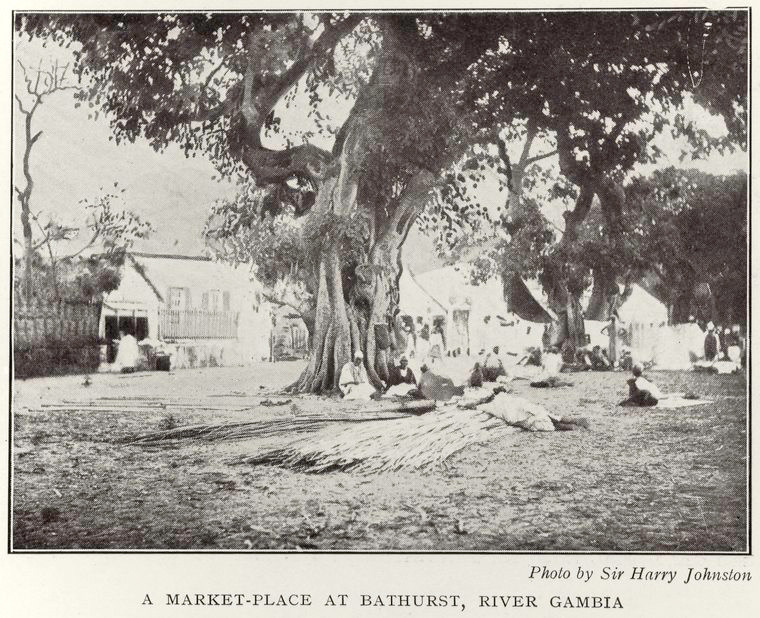
A marketplace in Bathurst in 1910

As you look at the painting of Bathurst in 1824, you can clearly see that Gambians were fully dressed, thus once again destroying the idea repeated by Europeans that Africans were roaming naked (Description of African Dressing in 1400s) throughout the continent, or that they did not have a textile industry (History of African Fabrics and Textiles).

Banjul is the capital and fourth largest city of The Gambia. It is located on St Mary’s Island (Banjul Island) where the Gambia River enters into the Atlantic Ocean. It is The Gambia’s largest and most densely populated metropolitan area. It is a vibrant city, with great hospitality. So, as you visit Banjul, remember to look for the fiber that gave its name, and most importantly look to the spirit of the people which is strong, warm, and welcoming. Enjoy!