Every September 12, we like to celebrate the life of Amilcar Cabral, the father of Cape Verdean and Guinea Bissau’s independence. As you all know, Cabral fought for the independence of his land, of his people, from the imperial Portuguese domination. He also talked a lot about understanding the link between national liberation and culture. The extract below is part of a speech originally delivered on February 20, 1970, as part of the Eduardo Mondlane Memorial Lecture Series at Syracuse University, Syracuse, New York, under the auspices of The Program of Eastern African Studies. It was translated from the French by Maureen Webster. Enjoy!
====
A people who free themselves from foreign domination will be free culturally only if, without complexes and without underestimating the importance of positive accretions from the oppressor and other cultures, they return to the upward paths of their own culture, which is nourished by the living reality of its environment, and which negates both harmful influences and any kind of subjection to foreign culture. Thus, it may be seen that if imperialist domination has the vital need to practice cultural oppression, national liberation is necessarily an act of culture.
On the basis of what has just been said, we may consider the national liberation movement as the organized political expression of the culture of the people who are undertaking the struggle. For this reason, those who lead the movement must have a clear idea of the value of the culture in the framework of the struggle and must have a thorough knowledge of the people’s culture, whatever may be their level of economic development.
… The experience of colonial domination shows that, in the effort to perpetuate exploitation, the colonizers not only creates a system to repress the cultural life of the colonized people; he also provokes and develops the cultural alienation of a part of the population, either by so-called assimilation of indigenous people, or by creating a social gap between the indigenous elites and the popular masses. As a result of this process of dividing or of deepening the divisions in the society, it happens that a considerable part of the population, notably the urban or peasant petite bourgeoisie, assimilates the colonizer’s mentality, considers itself culturally superior to its own people and ignores or looks down upon their cultural values. This situation, characteristic of the majority of colonized intellectuals, is consolidated by increases in the social privileges of the assimilated or alienated group with direct implications for the behaviour of individuals in this group in relation to the liberation movement. A reconversion of minds–of mental set–is thus indispensable to the true integration of people into the liberation movement.Such reconversion–re-Africanization, in our case–may take place before the struggle, but it is completed only during the course of the struggle, through daily contact with the popularmasses in the communion of sacrifice required by the struggle.
As we continue to learn more about Lucy, and the origin of mankind, I thought of sharing the video below. It is a short interview of Donald Johanson who found Lucy in 1974 in the Afar Triangle in Ethiopia. It is “In Conversation with Donald Johanson, a film by Pierangelo Pirak” on the BBC Earth. It is just a snippets, but it helps to perceive the change that occurred with the discovery of Lucy in our understanding of the human evolution and origin. There are definitely other documentaries, much longer that will give more information, but this is to wet your appetite. Since the discovery of Lucy, more Australopithecus afarensis have been found, and even older remains like those of the Kenyantropus platyops (3.5 million years) or the Ardipithecus (dated 4.4 million years). Enjoy!
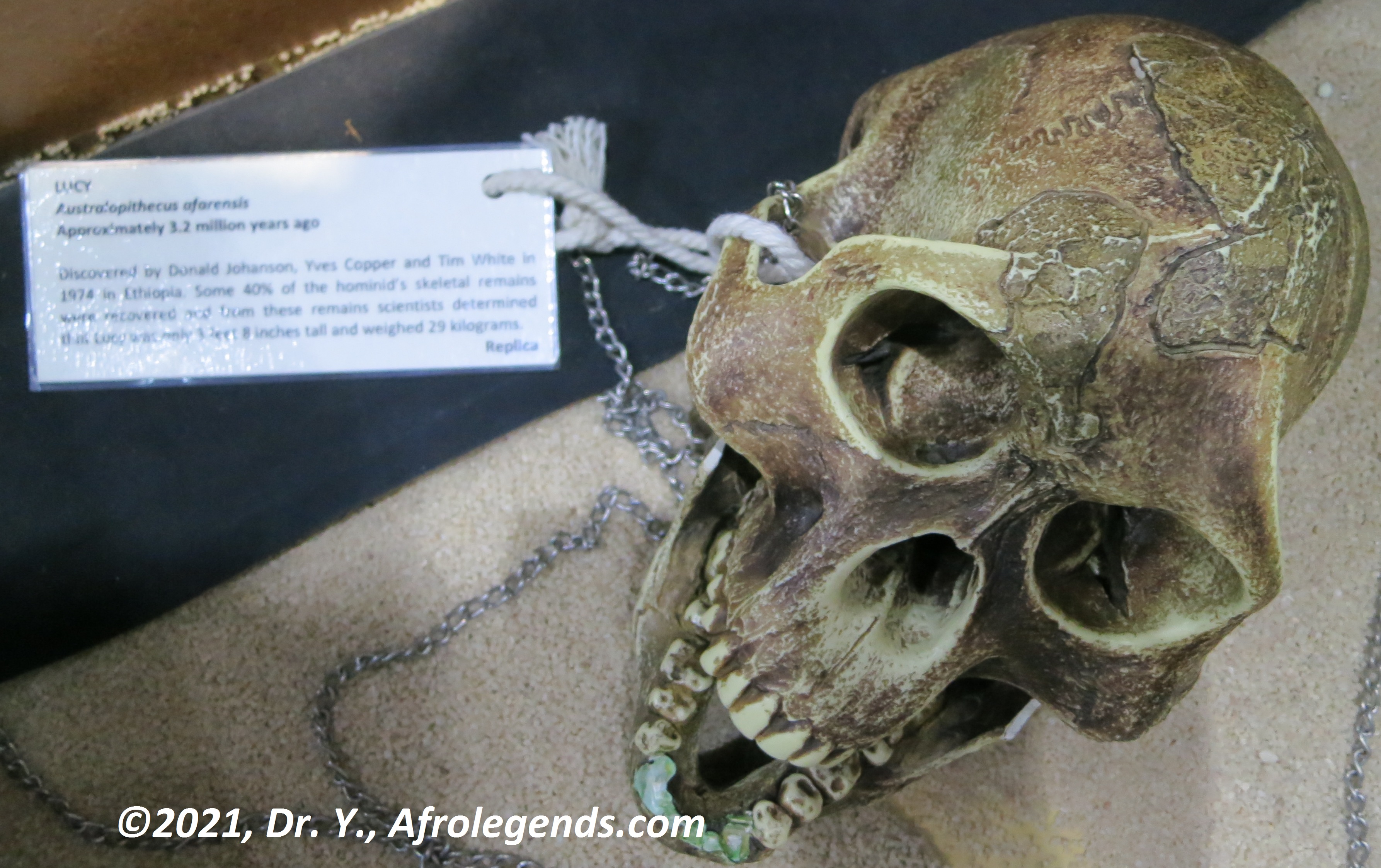
Lucy (Australopithecus Afarensis), approximately 3.2 million years ago (Replica of her skull at the Origins Museum)
How many of you have pondered upon the origin of humanity? Or who could have been the oldest ancestor to mankind? Or how we are all related to that ancestor?
I know some will say Adam and Eve… but what if it was Lucy and someone else instead? What if it was not somewhere in the Middle East but rather on the African continent?
Well, today, we will be talking about Lucy, the first human ancestor discovered in Ethiopia, in Africa, the cradle of humanity.
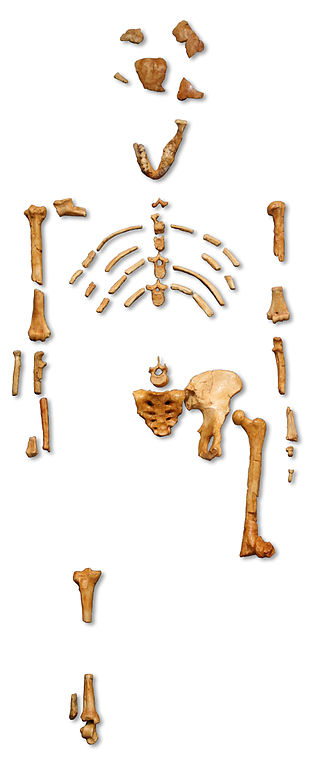
Lucy was discovered in 1974 in Africa, at Hadar, a site in the Awash Valley of the Afar Triangle in Ethiopia, by paleoanthropologistDonald Johanson of the Cleveland Museum of Natural History . In Ethiopia she is known as Dinkinesh, meaning the marvelous one in Amharic. The Lucy specimen is an early australopithecine and is dated to about 3.2 million years ago. At the time of the findings, it was the most ancient early human – or hominin – ever found. It was also the most complete: 40% of the skeleton had been preserved.
Reconstruction of Lucy’s skeleton, cast from Musee national d’histoire naturelle, Paris (Source: Wikipedia)
Now, you might ask, why is she called Lucy? Well, because the Beatles’ song “Lucy in the Sky withDiamonds” was playing on the radio when the archaeologists found her remains. Thus the name Lucy. Lucy belongs to the species of Australopithecus afarensis; afarensisfor the Afar region of Ethiopia where she was found. She is one of the most important fossils ever discovered. Her discovery helped solidify the idea that Africa was the cradle of humanity, and a crucial hub for human evolution. Before Lucy, the skeleton of the Taung child dated to about 2.8 million years old had been found in South Africa in 1924, but European archaeologists and scientists refused to admit (as always) that Africa could be important in the study of human evolution. As always, they thought that Europe and Asia were the centers. Aren’t we tired of this Eurocentric view of the world which pretends to give meaning to everything it does not understand? Oh Mama Africa, your beauty and splendor is truly too much for these people that they have to keep denying your place and importance in the world!
Lucy was an upright walker, i.e. she walked standing up, thus dating the bipedalism observed in humans to at least 3.2 million years. She was only about 1 meter tall (3.5 feet). Lucy was a full-grown adult, because she had wisdom teeth and her bones had fused. Unlike modern humans, it would seem that she had grown to full size very quickly, and was about 12 years old when she died. From a 2006 study, the findings of a 3-year-oldAustralopithecus afarensis suggested that their brains reached their full size much earlier than modern human’s does. Lucy was ape-like in appearance and brain size, but could walk upright like more advanced hominins that lived later like the Taung child (2.8 million years) or the Australopitecus sediba (2.2 million years old). She had powerful arms and long curved toes that paleontologists think allowed her to climb trees as well as walk upright.
Lucy’s finding marked a turning point in our understanding of humanity, and the human lineage. She is a treasure, and although older skeletons have since then been found like the Kenyantropus platyops (3.5 million years) or the Ardipithecus (dated 4.4 million years), she remains a treasure. No wonder, Ethiopians call her Dinkineshor “you are marvelous” or “marvelous one“, for Lucy truly is marvelous as she has allowed to place Africa back at the center as the cradle of humanity (Africa was always at the center, but some Eurocentric views would not let her shine). If you are ever in Addis Ababa, please do not forget to visit her (her cast) at the National Museum of Ethiopia . Enjoy!
For more, please check out the Institute of Human History at the Arizona State University (founded by Donald Johanson), the Smithsonian, and this very good article on The BBC website.
This is a bit of old news, but it sheds more light on the participation of European nations in slavery… it is about the Dutch part in the slave trade. This may be a hard read for some. Excerpts below are from the article on the Guardian website. For the full article, go to the Guardian.
====
The aim of a first exhibition on the Dutch slave trade to be shown at the Rijksmuseum, launched on Tuesday by King Willem-Alexander, is not to be “woke” but to be a “blockbuster” telling a truer story of the Golden Age, the director general of the national institution has said.
…The Slavery exhibition, showcasing 140 objects, ranging from two Rembrandt portraits of married and lavishly wealthy owners of enslaved people to a display of ankle chains, examines 10 lives caught up in the Dutch slave trade between the early 17th century and 1863, when the practice was finally made illegal in Suriname and the Antilles.
An audio guide for the exhibition includes the voice and thoughts of a Ma Chichi, a woman born into slavery in 1853, who in turn tells how her grandmother, enslaved in 18th-century Curaçao, urged her to always remember that she was equal to anyone. “She never did what the lords wanted,” Chichi says in the recording dating from 1958, when she was 105 years old.
Valika Smeulders, a curator of the exhibition and the Rijksmuseum’s head of history, said it had been vital to unearth oral history due to the lack of property and written evidence of enslaved people. “[Chichi] talks about her grandmother telling her you are equal to everybody else, you are equal to the children of the master of the house,” she said. “It gives you a female perspective, which is pretty rare, and it gives you the perspective of the people who were so aware of their humanity even though they lived in a system that took all that humanity away from them.”
Documents on show also detail the horrific fate of many of those who resisted. One, Wally, who worked on a sugar plantation called Palmeneribo, Suriname, in 1707 was sentenced to be slowly burned to death, with the stipulation added by the magistrate Cornelis de Huijbert that he was to have his flesh torn off with red hot pincers in the process in order for his death to be “the most painful and protracted possible”.
Dutch traders shipped over 600,000 Africans [as we now know, this number is mosy likely higher] to north and South America and between 660,000 and 1.1 million people around the Indian ocean. Last year King Willem-Alexander apologised for the “excessive violence” of the Dutch colonialists in Indonesia. There remains a live debate in the Netherlands about the treatment of empire and slavery in schools and public places through street names and statues, as there has been in the UK.
… One of the confronting revelations of the exhibition, Smeulders said, was that a richly decorated brass collar donated to the Rijksmuseum in 1881 and engraved with the family crests of the Nassau, Vianden and Dietz families, dated 1689, was likely not to have been a dog collar, as originally thought, but one worn by black enslaved people brought back to the Netherlands as servants. “For the longest time people have not wanted to come to terms with the meaning of those collars,” she said. “They were always described as being dog collars but if you look at the paintings, the ones wearing those collars are never the dogs, they are the men.”
As I read the account of Dr. Robert W. Felkin of a successful C-section in the Bunyoro kingdom, I could not help but realize that in Africa, and particularly in this instance in the Bunyoro kingdomthere was superior anesthetics, antiseptics, and advanced medicine which allowed them, at a time when in Europe this was considered a desperate measure performed only on dying mothers, to successfully deliver both mother and child.
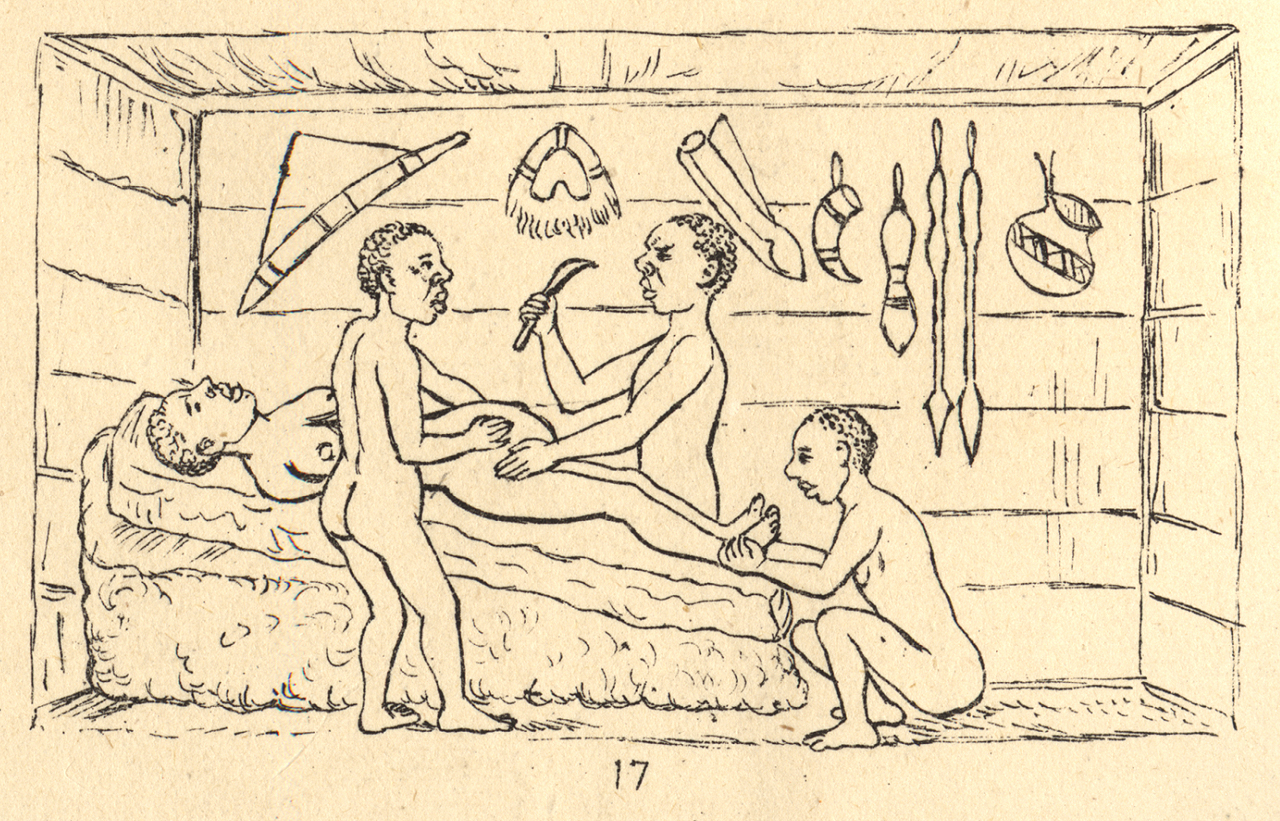
Caesarean delivery in Uganda, 1879 (Felkin RW. Notes on labour in Central Africa. Edin Med J
1884;29:922-30.)
One important oddity in Felkin’s account is the illustration of the native doctor and his assistants and the pregnant mother. Note that in his written account, Felkin said of the woman that, “she was perfectly naked. A band of mbugu or bark cloth fastened her thorax to the bed, another band of cloth fastened down her thighs…” The oddity is in the drawing: why would Felkin draw the native doctor and the assistants all naked, when he stated that the woman was naked? If the native doctor and assistants were all naked, wouldn’t he have stated that also? If he stated that she was naked, that means that, that was already something that stood out, i.e. that in normal days, the woman would be dressed, and for this operation only was she naked. This also implies that the native doctor and assistants were clothed, and only the patient was naked! Lastly, this may mean that either it was not Felkin who drew the image, or that Felikin was so astonished by the superiority of the Bunyoro doctor and assistant, and Bunyoro superior medicine, that he felt the need to present them in some ways as inferior people, savage men. What better way than by drawing them as primitive people all naked?
See… this is another case of falsifying history, denigrating a people, and debasing them. How low! Remember how I told you about the rich history of African Fabrics and Textiles and the falsification performed by The New York Times, and also about the account by Cadamosto in the 1400s of very well dressed Africans (Description of African Dressing in 1400s) he met on the coast of most likely modern-day Gambia!
Sketch of Caesarean delivery in Uganda in 1879, by Felkin in Edin. Med. J. 1884
Did you know that long ago, when Cesarean sections (C-sections) were deemed dangerous in Europe, Africans were safely performing them on the continent? Did you know that there was an extremely high success rate? Both mother and child lived!And no fancy “modern” equipment was used!
Historically, in Europe, when a c-section was performed upon a living woman, it usually resulted in the death of the mother. It was considered an extreme measure, performed only when the mother was already dead or considered to be beyond help. It was a last resort.
Well, imagine Robert W. Felkin’s surprise when he found out that in the great kingdom of Bunyoro-Kitara in modern-day Uganda, C-sections were considered routine! Imagine his surprise when the “backwards” people he met successfully delivered both mother and child, and had a very sophisticated surgical technique dating back a long time.
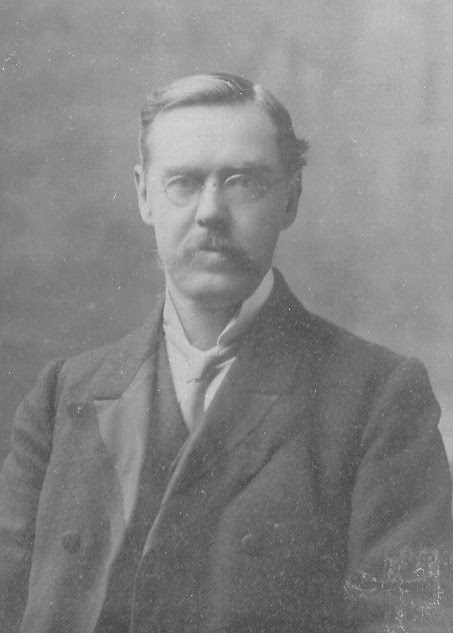
Dr. R. W. Felkin
In 1879, the British medical student R W. Felkin who had embarked on a mission led by the Church Missionary Society to Central Africa (probably hoping to rescue the souls of the savage natives) witnessed a C-section in the kingdom of Bunyoro-Kitara. He found out that in the Bunyoro kingdom, this was a routine procedure with extremely high success rates. There, the native healer used banana wine to cleanse his hands and the woman’s abdomen before the surgery. The healer used a midline incision and applied cautery to minimize hemorrhaging. He then massaged the uterus to make it contract, but did not suture it; the abdominal wound was pinned with iron needles (remember that Africans have been masters at iron smelting for centuries) and dressed with a paste prepared from roots. The woman was fully awake during the entire procedure, and recovered well. Felkin recognized that the degree of perfection and precision of the technique implied that it had been in use for a very long time.
His account was received in Europe with shock and skepticism, because after all, if they, Europeans couldn’t do it, how could the ‘backwards’ Africans do it? The account can be found in “The Development of Scientific Medicine in the African Kingdom of Bunyoro-Kitara” by J.N.P. Davies, Med. Hist. 1959, Jan 3 (1) 45 – 47. Felkin gave a lecture to the Edinburgh Obstetrical Society on January 9th 1884 entitled “Notes on Labour in Central Africa” (Felkin, R.W., Edin. Med. J., 1884, XXIX, 922); it is from this lecture that the following account on c-section delivery in Bunyoro kingdom is taken:
“The patient was a fine healthy-looking young woman of about twenty years of age… The woman lay upon an inclined bed, … She was liberally supplied with banana wine, and was in a state of semi-intoxication. She was perfectly naked. A band of mbugu or bark cloth fastened her thorax to the bed, another band of cloth fastened down her thighs, and a man held her ankles. Another man, standing on her right side, steadied her abdomen.
The knife used for the c-section operation in 1879 (Wellcome Historical Medical Museum – “The Development of Scientific Medicine in the African Kingdom of Bunyoro-Kitara” by J.N.P. Davies)
The operator stood, as I entered the hut, on her left side, holding his knife aloft with his right hand, and muttering an incantation. This being done, he washed his hands and the patient’s abdomen, first with banana wine and then with water.
Then, having uttered a shrill cry, which was taken up by a small crowd assembled outside the hut, he proceeded to make a rapid cut in the middle line, commencing a little above the pubes, and ending just below the umbilicus. The whole abdominal wall and part of the uterine wall were severed by this incision, and the liquor amnii escaped; a few bleeding-points in the abdominal wall were touched with a red-hot iron by an assistant. The operator next rapidly finished the incision in the uterine wall; his assistant held the abdominal walls apart with both hands, and as soon as the uterine wall was divided he hooked it up also with two fingers.
The child was next rapidly removed, and given to another assistant after the cord had been cut, and then the operator, dropping his knife, seized the contracting uterus with both hands and gave it a squeeze or two. He next put his right hand into the uterine cavity through the incision, and with two or three fingers dilated the cervix uteri from within outwards. He then cleared the uterus of clots and the placenta, which had by this time become detached, removing it through the abdominal wound. His assistant endeavoured, but not very successfully, to prevent the escape of the intestines through the wound. The red-hot iron was next used to check some further hemorrhage from the abdominal wound, but I noticed that it was very sparingly applied. All this time the chief “surgeon” was keeping up firm pressure on the uterus, which he continued to do till it was firmly contracted. No sutures were put into the uterine wall.
The assistant who had held the abdominal walls now slipped his hands to each extremity of the wound, and a porous grass mat was placed over the wound and secured there. The bands which fastened the woman down were cut, and she was gently turned to the edge of the bed, and then over into the arms of assistants, so that the fluid in the abdominal cavity could drain away on to the floor. She was then replaced in her former position, and the mat having been removed, the edges of the wound, i.e. the peritoneum, were brought into close apposition, seven thin iron spikes, well-polished, like acupressure needles, being used for the purpose, and fastened by string made from bark cloth. A paste prepared by chewing two different roots and spitting the pulp into a bowl was then thickly plastered over the wound, a banana leaf warmed over the fire being placed on the top of that, and, finally, a firm bandage of mbugu cloth completed the operation.
A caesarean section performed by indigenous healers in Kahura, Uganda. As observed by medical missionary Robert William Felkin in 1879
Until the pins were placed in position the patient had uttered no cry, and an hour after the operation she appeared to be quite comfortable. … The child was placed to the breast two hours after the operation, … The wound was dressed on the third morning, and one pin was then removed. Three more were removed on the fifth day, and the rest on the sixth. At each dressing fresh pulp was applied, and a little pus which had formed was removed by a sponge formed of pulp. A firm bandage was applied after each dressing. Eleven days after the operation the wound was entirely healed, and the woman seemed quite comfortable. …”
So as you think again of medicine in Africa, think of successful c-sections performed in the Bunyorokingdom in the 1800s (and probably long before then), and the long traditions and advanced medical training that allowed for such degree of sophistication and precision. This marked the turning point for modern (European) medicine in c-section, and led to the increased success rates we see today. It is however conveniently left out of history books!
While flirting with a girl he met, Tom caresses her thigh.
Bible
The girl tells him, “Handsome, remember psalm 1, verse 29”
Tom apologizes, but 20 min later, he starts again. The girl repeats again “psalm 1, verse 29.”
That night, when he gets home, he opens his bible to find psalm 1, verse 29.
Here is what the psalm says: “Go further in your search and you will find glory.”
Tom, astounded says, “Damn! I am so unlucky!”
P.S.: I had you … right? If you open your Bible, you will see that the first psalm in the Book of Psalms does not have 29 verses but only 6. Smile for the day is bright!
The original in French is found on Nouchi.com . Adapted and Translated to English by Dr. Y. Afrolegends.com












 African Heritage