The 2 Congos Seek to have the Rumba Recognized as a World Treasure

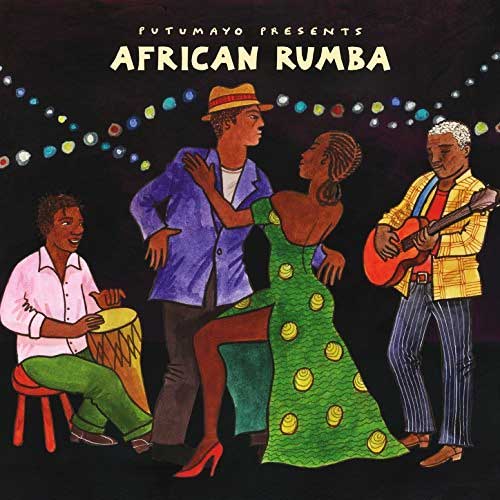
Putumayo cover of African Rumba disc (Source: Putumayo)

There is no doubt that the Rumba has gone global, or that it has influenced other musical types throughout the world. To those who do not know, Rumba is a music style that originates from Kongo … and here I mean the whole area that is encompassed by both Congos, the Republic of the Congo and the Democratic Republic of the Congo (DRC), and in the olden days it was even bigger including areas of Angola, Central African Republic and Gabon. The rumba was born in Cuba from the enslaved Africans who had been taken there from the Kongo.
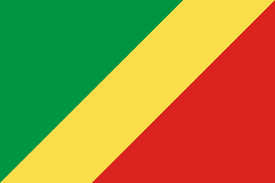
Flag of the Republic of Congo

Today, authorities in both Kinshasa and Brazzaville, the capitals of the DRC and the Republic of Congo, have submitted a joint bid to add Congolese Rumba to the UNESCO list of Intangible Cultural Heritage. Don’t you wish both countries could join together more often on other topics as well?
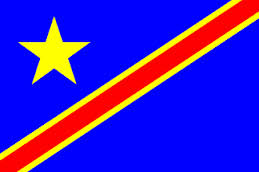
Flag of the Democratic Republic of Congo

The submission will help showcase the diversity of the heritage and raise awareness about its importance. If Congolese rumba were to be added, it would join the Budima dance of Zambia, hawker food of Singapore, sauna culture of Finland, handmade weaving in Upper Egypt, traditional pomegranate festivity and culture of Azerbaidjan, Traditional Thai massage, and traditional irrigation systems in the United Arab Emirates, among countless other customs on the list.
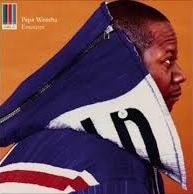
Papa Wemba, the king of Congolese Rumba, on his cover of Emotion

The word Rumba derives from “nkumba,” meaning belly button in the local Kikongo language, a dance originating in the ancient kingdom of Kongo.

The music style was born of the melting pot of 19th century Cuba, from the enslaved Africans, combining their drumming and dancing with their melodies and those of the Spanish colonizers. The African slaves who were taken to the Americas created the rumba as a way to stay connected to their inner beings, their histories, cultures, and probably also as a way to escape the daily grind of slavery, the inhumane practice that ripped them of their dignity of human beings.

It was re-exported to Africa in the early 20th century on vinyl, where it found a ready audience in the two Congos who recognized the rhythms as their own.

Catherine Kathungu Furaha, the DRC’s minister of art and culture, said, “when our ancestors who were taken abroad wanted to remember their history, their origin, their memory, they danced the navel dance.”… “We want rumba to be recognized as ours. It is our identity.”

Cuban rumba has been inscribed in the UNESCO list of Intangible Cultural Heritage since 2016. It only makes sense that its counterpart, the mother-source, the origin, the Congolese Rumba be inscribed in the list as well. We will know in November when the committee will decide.


Oldest Fossil of Ankylosaur in the World found on the African Continent

T-Rex skeleton at the Chicago Field Museum

There was a major finding in the dinosaur world in Africa recently. As a parenthesis, I have always wondered why there are always several dinosaur sites around the globe, but very few on the African continent… as if dinosaurs somehow preferred to live on other continents but Africa. Given that Africa is the cradle of humanity, shouldn’t there be big findings on the continent as well? It most likely has to do with funding and interests of the people looking (who are mostly westerners), or could it be a deliberate need not to shed any lights on dinosaurs in Africa? Well, recently paleontologists have found the skeleton of the oldest ankylosaur so far in the world. Excerpts below are from an article on the Guardian.

====

Extraordinary ankylosaur remains dating back 168m years a first for Africa

Fossil hunters have unearthed remnants of the oldest – and probably weirdest – ankylosaur known so far from a site in the Middle Atlas mountains in Morocco.

The remains of the heavily armoured animal are extraordinary in being the first to have defensive spikes that are fused to the skeleton, a feature researchers say is unprecedented in the animal kingdom.

… Dr Susannah Maidment, a palaeontologist at the Natural History Museum in London, [said], “Normally when we see armour in stegosaurus and ankylosaurs, the dermal armour is embedded in the skin, not attached to the skeleton. In this case, it’s not only in contact with the skeleton, it’s fused to the ribs.”

Researchers at the museum obtained the fossil from a private collector for an undisclosed sum. They originally suspected the bones might belong to a new species of stegosaur they identified from the same region in 2019, but microscopic analysis of thin sections of the fossil revealed distinctive patterns of fibres unique to ankylosaurs.

The discovery was so unusual that scientists wondered whether the fossil might be a fake, but further inspection using a CT scanner found no signs that it had been constructed or tampered with.

The fossil dates to the middle Jurassic, about 168m years ago, suggesting the animal was one of the earlier ankylosaurs to roam the Earth. Beyond ranking as the oldest ankylosaur fossil known so far, it is also the first to be found in Africa.

… Details are published in Nature Ecology and Evolution.

Disputed Land Issues: The Case of the Khoi and San People and Amazon’s Headquarters

Normal 0 false false false EN-US X-NONE X-NONE
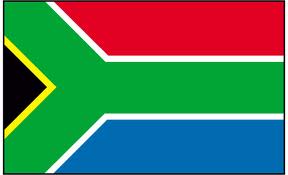
Flag of South Africa

The recent struggle faced by the Khoi and San people of South Africa over their land being used to build Amazon’s African headquarters brings back to light never ending issues: the appropriation of indigenous land by mega corporation, with the cooperation of local governments. While sometimes these local governments are powerless in the face of seemingly great deals that will “foster the local economy”, very often the governments are led by corrupt or ignorant individuals who seek immediate personal gains at the expense of the well-being of their communities (recent events in Sierra Leone). Lastly, why is it that it is always on “significant” indigenous lands that this occurs? Why not elsewhere? Of all places to build headquarters, couldn’t Amazon with its money find another piece of land in Cape Town? I am not against “development” or providing jobs to communities, but I wonder why these disputes are always recurrent. The excerpt below is from the BBC.

=====

Campaigners in the South African city of Cape Town are trying to halt the building of the African headquarters for Amazon. It’s a battle that pits cultural concerns against economic interests, as the BBC’s Vumani Mkhize writes.

San (Basarwa/Bushmen) hunters

It is an overcast day in Cape Town and the scenic Table Mountain is shrouded in a ghostly cloud that silently cascades down the rocky green slopes. At the foot of this historic landscape, a small group of activists from the Khoi and San communities have gathered near the entrance of a huge building site known as the River Club. The communities are seen as some of the earliest inhabitants of southern Africa.

… Across the road from where the activists have gathered, construction is already under way. …

The first phase of the nearly $300m (£215m) development, which will include the Amazon offices, is set to be completed in two years. However the Khoi and the San are determined to stop it.

Tauriq Jenkins, of the Goringhaicona Khoena Council, a Khoi traditional group, says the land has profound historical and cultural value to his people. “This place for us is sacred because it’s on a confluence of Liesbeek and Black Rivers. These embankments are known as the birthplace of the Khoena [Khoi] people,”
he tells the BBC.

It is also where the European colonisers had their first battle with South Africa’s indigenous people, which is marked with a blue plaque.

The 150,000 sqm development will include residential properties and shops as well as offices.

The Amazon site, which is seen as key to pulling in other companies, is set to take up nearly half the space, from where it will run its bourgeoning operations across Africa.

… Jody Aufrichtig, who heads the project, says the development will provide a massive boost to Cape Town’s tourism-reliant economy, hit hard by the coronavirus pandemic. He said it would create 6,000 jobs during construction and about 13,000 indirect jobs. “It’s so desperately needed, especially post-Covid and some of the riots and troubles we’ve had in South Africa. It will give the people of Cape Town and South Africa hope and economic development.” [yeah right… so unless it is built on this specific site, there will be no jobs for South Africans? Of all the places to build, it had to be that one? Will elsewhere in Cape Town still not provide jobs to South Africans?]The tussle between the developer and the indigenous people of Cape Town comes amid the biggest unemployment crisis South Africa has ever faced.

… The site of the development is where the first conflict between the indigenous people and the Dutch colonisers took place in 1659.

This very place is where land was stolen for the first time in South Africa,” Mr Jenkins says. The dispossession of Khoi and San land set in motion centuries of land seizures across the rest of the country. The issue of land ownership, or the lack of it, remains a thorny issue.

… Mr Jenkins and members of the Khoi and San communities remain unmoved by the argument that the new development will bring much-needed jobs. “The reason why this development is so expensive is because it’s on a floodplain. If Amazon and the developer could take its money and build the same scale development off this flood plain, you’d find the size of the development three to four times bigger, which means you’d be able to employ exponentially more people.” [So Amazon is building on floodplains, and it costs more to build there?… so why is the government allowing it? Are there not better sites in Cape Town that will be cost-efficient to the parties involved? Or is there something missing in this information? … doesn’t this scream of corruption?]

Comment résoudre de grandes palabres / How To Resolve Big Disputes

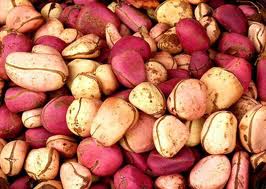
Kola nut
Kola nut

Pour la solution de grandes palabres, on ne vient pas avec des noix de kola (Proverbe Ngbandi – République Démocratique du Congo (RDC), République Centrafricaine (RCA)).

To resolve big disputes, do not show up with kola nuts (Ngbandi proverb – Democratic Republic of Congo (DRC), Central African Republic (CAR))

The Ethiopian Festival of the True Cross or Meskel

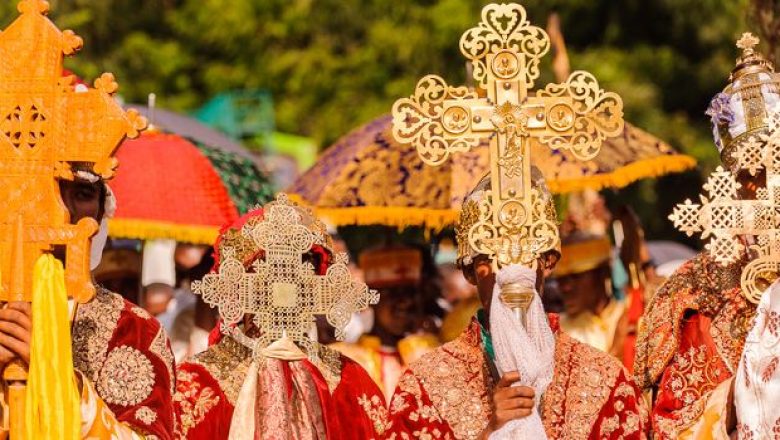
Ethiopian religious leaders carrying crosses during the Meskel celebration (Ethiopiaonlinevisa.com)

September 27th this year marks another big Ethiopian celebration. An even bigger festival than Enkutatash the Ethiopian New Year, is the Meskel “True Cross” Celebration which takes place on September 27th or 28th in leap year. Meskel 2021 is on September 27th . The festival commemorates the discovery of the “True Cross” on which Jesus was crucified, and is held annually in Meskel Square in Addis Ababa.

The word “meskel” is from the Ge’ez language which translates to “cross.” The festival is basically a celebration of the finding of the cross. The festival is held at the iconic Meskel square in Addis Ababa and draws out a large number of religious and civil leaders as well as public figures and Christian faithful. Meskel has been celebrated in Ethiopia for more than 1,600 years as an outdoor religious festival and has been registered at UNESCO since December 2013 as an Intangible World Heritage.

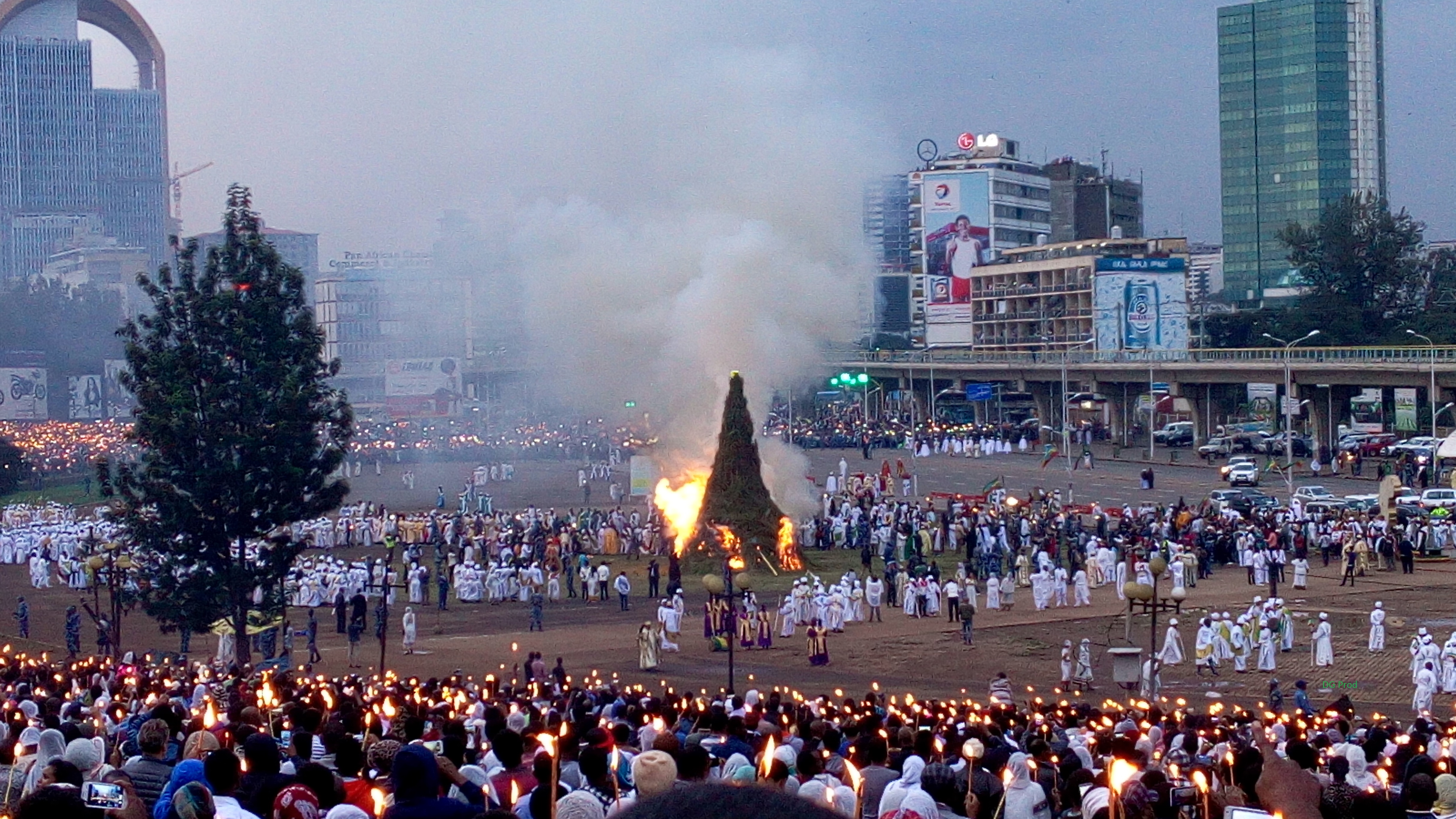
Meskel celebration in Addis Ababa (Source: Wikipedia)

The legend goes that in 4BC, the Roman Empress Helena (Queen Eleni) was able to locate the important artifact in Jerusalem by using the smoke from a huge fire. The celebration is especially important to Ethiopians as it is alleged that a piece of the cross Helena discovered was brought to Ethiopia, and hidden away somewhere in the mountains of  Amba Geshen, which itself has a cross-shaped plan.

Ethiopians commemorate the find by building their own massive bonfire, the Meskel, which they decorate with yellow flowers known as Adey Abeba before burning. Ethiopia’s religious leaders lead colorful processions and prayer around the fire, and attendees intently watch to see which way the bonfire will collapse, as it is believed to predict the future.

As you can see, the month of September is a month of cultural and religious celebrations in Ethiopia.

The Ethiopian Calendar

Flag of Ethiopia

As we talked about the Enkutatash or the Ethiopian New year, I thought that it will be awesome to talk more about the Ethiopian calendar. After all, we are in 2014 in the Ethiopian calendar while we are in 2021 in the Gregorian calendar. Where does this come from? Do months have 30 and 31 days in the Ethiopian calendar like in the current calendar used by most people?

Well, the Ethiopian calendar is derived from the Egyptian solar calendar but adds a leap day every 4 years without exception. Like the Egyptian Coptic calendar, the Amharic calendar comprises 12 months of 30 days each, with an additional month of just 5 or 6 days, depending on the year, i.e. in the Ethiopian calendar, there are 13 months, with 12 months which all have 30 days, and one month with only 5 or 6 days; no need for a song to keep track of which month has 30 or 31 days or even 28 days (February, I am looking at you). Ethiopian calendar months begin on the same days as Coptic calendar months but are instead named in Ge’ez, the ancient language of northern Ethiopia and southern Eritrea. Also a 6th day is added every four years to the 13th month, without exception, to indicate the leap year; this is placed 6 months before the corresponding Gregorian day.

The Ge’ez calendar is the principal calendar used in both Ethiopia and Eritrea.

Map of Ethiopia and Eritrea

The beginning of the calendar is based on the birth of Jesus. Ethiopians use the Incarnation Era to indicate the year, which places the Annunciation of the birth of Jesus on March 25, AD 9 in the Julian calendar. On the other hand, Europeans adopted a different calculation for the Annunciation which placed it eight years earlier, meaning that there exists a gap of 8 years between the start of the Ethiopian calendar and the Gregorian. Most of the major celebrated holidays such as Christmas occur on completely different days, so instead of December 25th, it is celebrated on January 7th which is considered by the Ethiopian orthodox church as Jesus birth day.

Lastly, the time of the day is such that the day starts at sunrise, and sunset is the end of the day: the sun and the moon that are used to count time each have 12 hours before setting… so 6:00AM in the morning in other places of the world will be 12:00AM, midday is 6:00AM, and when the sun goes down it is 12:00PM in Ethiopia. I just wonder how you would tell time if you lived in a different country, and were trying to call a friend in Ethiopia, how would you know when to call?

Wouldn’t it be difficult for a foreigner to tell the time and the year in Ethiopia? I must admit that the Ethiopian calendar does seem a lot simpler than what we have though!

Proverbe Ethiopien sur la paix / Ethiopian Proverb on Peace

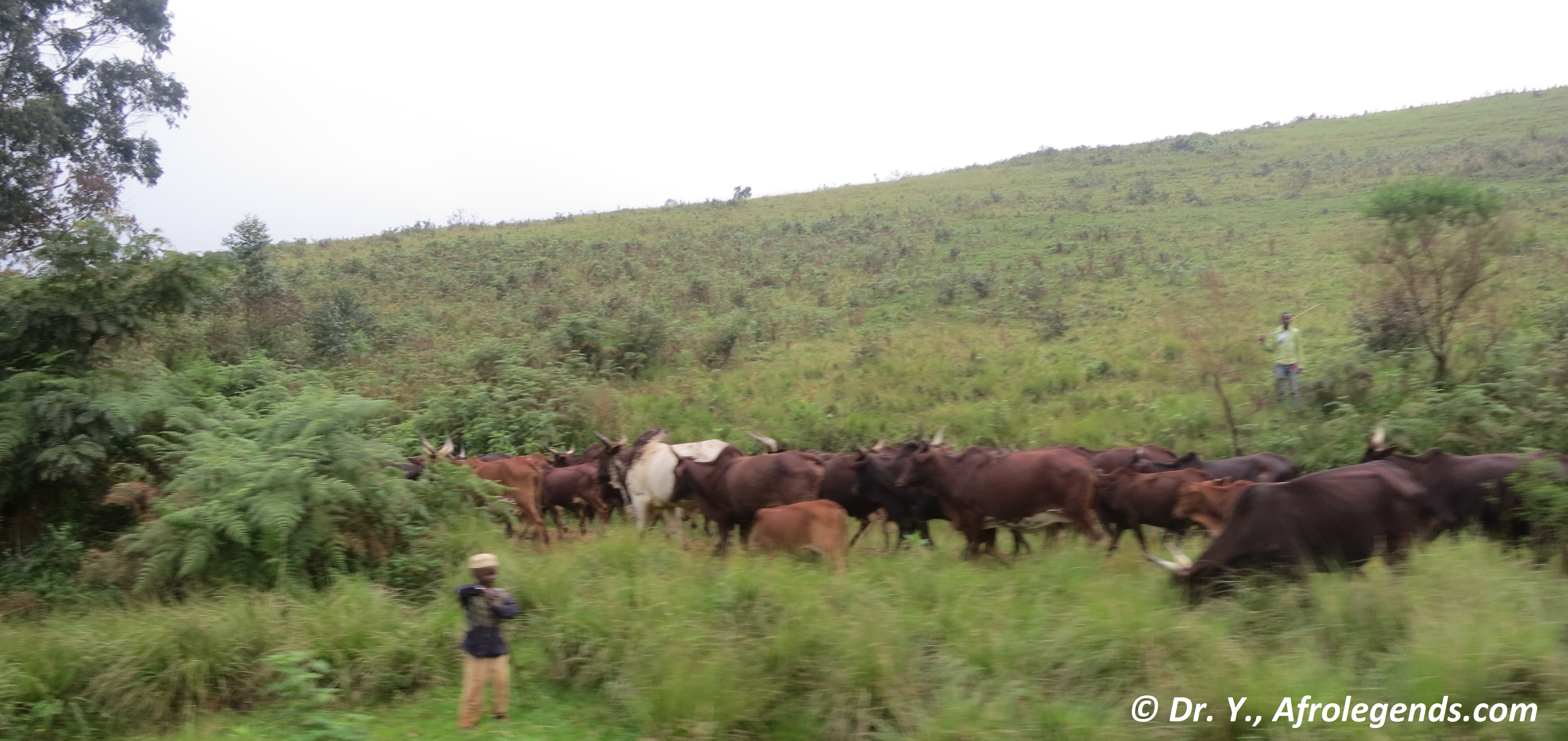
Shepherd boy with his flock

Quand le berger rentre à la maison en paix, le lait est sucré . — proverbe Ethiopien.

When the shepherd comes home in peace, the milk is sweet. — Ethiopian proverb.

Ethiopian New Year… A Look at the Ethiopian Calendar

Flag of Ethiopia

A few days back, yours truly was invited to the celebration of the Ethiopian New year. Yes… this year Enkutatash, or the Ethiopian New year, was celebrated on September 11th, and my friend went on to tell me more about it. Did you know that we are currently in the year 2014 in the Ethiopian calendar?

The Ethiopian calendar is a solar calendar based on the ancient Egyptian calendar. The first month of the year is September, called Meskerem in Amharic, the local language. One of the reasons given is that during the month of September, the number of daylight hours and nighttime hours happen to be exactly equal in every part of the globe. Moreover, during this time of the year, the sun and the moon that are used to count time each have 12 hours before setting. Another reason often given is that it could be derived from the Bible, where the creation of the Heavens and Earth are said to have taken place in September. Lastly as in many world calendars, harvests must have been key in the setting up of the calendar.

Adey Abeba flower (Source: WikiCommons)

Enkutatash is the name for the Ethiopian New Year and means “gift of jewels” in Amharic. The story goes back almost 3,000 years to the Queen of Sheba of ancient Ethiopia who was returning from her visit to King Solomon of Israel, as mentioned in the Bible in I Kings 10 and II Chronicles 9. She had gifted King Solomon with 120 talents of gold (4.5 tons) as well as a large amount of unique spices and jewels. When the Queen returned to Ethiopia, her chiefs welcomed her with enku or jewels to replenish her treasury. The name Enku may also refer to the countryside, which is covered by bright yellow flowers known as Adey Abeba as this time of the year also marks the end of the raining season. The appearance of the bright yellow flowers also indicates the impending harvest which is to be celebrated (see… harvest).

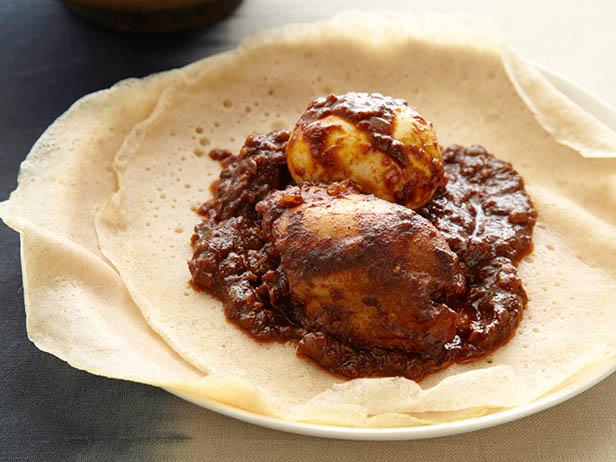
Doro wot on Injera (Source: cookingchanneltv.com)

The celebration is both religious and secular. The day begins with big church services, followed by the family meal. Young children will receive small gifts of money or bread after the girls gather flowers and sing, and boys paint pictures of saints. Families eat the famed national flat bread injera with the national dish doro wot (chicken stew), which takes at least half a day to prepare, and is rarely missed during these celebrations; families visit friends, and adults drink Tej, the national Ethiopian wine made out of honey… reminds me so much of King Lalibela (bees)… is this where the tradition comes from?

This year in particular, the hope is for peace and harmony… to a happy new year. Enkuan Aderesachihu!

Ruben Um Nyobe and Liberation

Ruben Um Nyobé
Ruben Um Nyobé

A while back, I asked a serious question: “How do We Continue the Fight when the Head has been Cut Off?” The struggle is big, and we cannot afford to live it in the hands of one person.

Ruben Um Nyobé said it so well, “The colonial peoples can neither do the policy of a party, nor that of a state, nor a fortiori that of a man. Colonial peoples make their own policy which is the policy of liberation from the colonial yoke and in their struggle for this so noble objective, the colonial peoples observe and judge. They observe the government, the parties, the persons, the media, not on their ideology or their program, but only and only on their attitude towards the demands of the people of our countries.

This is the position of the U.P.C. [Union des Populations du Cameroon (Cameroon People’s Union] at the service of the people of Cameroon.”

(« Les peuples coloniaux ne peuvent faire ni la politique d’un parti, ni celle d’un Etat ni à plus forte raison celle d’un homme. Les peuples coloniaux font leur propre politique qui est la politique de libération du joug colonial et dans leur lutte pour cet objectif si noble, les peuples coloniaux observent et jugent. Ils observent les gouvernements, les partis, les  personnages, les organes de presse, non sur leur idéologie our leur programme, mais seulement et seulement sur leur attitude à l’égard des revendications des populations de nos pays.

Voilà la position de l’U.P.C. au service du peuple camerounais. »)

Ruben Um NyobéCe que veut le people camerounais p. 103

As you can see, his answer does not just apply to Cameroon, or Africa, but to the entire world. The real government should be of the people by the people, for the people, and no person should stand against the will of the people or muffle its will, or sit on top of the people.

Celebrating Amilcar Cabral – National Liberation and Culture

Amilcar Cabral
Amilcar Cabral

Every September 12, we like to celebrate the life of Amilcar Cabral, the father of Cape Verdean and Guinea Bissau’s independence. As you all know, Cabral fought for the independence of his land, of his people, from the imperial Portuguese domination. He also talked a lot about understanding the link between national liberation and culture. The extract below is part of a speech originally delivered on February 20, 1970, as part of the Eduardo Mondlane Memorial Lecture Series at Syracuse University, Syracuse, New York, under the auspices of The Program of Eastern African Studies. It was translated from the French by Maureen Webster. Enjoy!

====

A people who free themselves from foreign domination will be free culturally only if, without complexes and without underestimating the importance of positive accretions from the oppressor and other cultures, they return to the upward paths of their own culture, which is nourished by the living reality of its environment, and which negates both harmful influences and any kind of subjection to foreign culture. Thus, it may be seen that if imperialist domination has the vital need to practice cultural oppression, national liberation is necessarily an act of culture.

On the basis of what has just been said, we may consider the national liberation movement as the organized political expression of the culture of the people who are undertaking the struggle. For this reason, those who lead the movement must have a clear idea of the value of the culture in the framework of the struggle and must have a thorough knowledge of the people’s culture, whatever may be their level of economic development.

… The experience of colonial domination shows that, in the effort to perpetuate exploitation, the colonizers not only creates a system to repress the cultural life of the colonized people; he also provokes and develops the cultural alienation of a part of the population, either by so-called assimilation of indigenous people, or by creating a social gap between the indigenous elites and the popular masses. As a result of this process of dividing or of deepening the divisions in the society, it happens that a considerable part of the population, notably the urban or peasant petite bourgeoisie, assimilates the colonizer’s mentality, considers itself culturally superior to its own people and ignores or looks down upon their cultural values. This situation, characteristic of the majority of colonized intellectuals, is consolidated by increases in the social privileges of the assimilated or alienated group with direct implications for the behaviour of individuals in this group in relation to the liberation movement. A reconversion of minds–of mental set–is thus indispensable to the true integration of people into the liberation movement. Such reconversion–re-Africanization, in our case–may take place before the struggle, but it is completed only during the course of the struggle, through daily contact with the popular masses in the communion of sacrifice required by the struggle.