
Le zèbre ne se défait pas de ses zèbrures (proverbe Maasaï – Kenya, Tanzanie).
The zebra does not get rid of its stripes (Maasai proverb – Kenya, Tanzania).

Le zèbre ne se défait pas de ses zèbrures (proverbe Maasaï – Kenya, Tanzanie).
The zebra does not get rid of its stripes (Maasai proverb – Kenya, Tanzania).
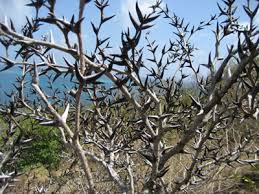
L’épine dans la chair de l’autre est facile à enlever (proverbe Burundais – Burundi). – La peine de l’autre est facile à supporter.
The thorn in another’s flesh is easy to remove (Kirundi proverb – Burundi). – Someone’s pain is easy to bear.

A while back, I introduced you to the Kantanka: a 4×4 AWD Made in Ghana by Ghanaians for Ghanaians which was the brainchild of Dr. Kwadwo Safo, and whose work had been featured on the BBC, Forbes, and Al-Jazeera. Today, I would like to introduce you to a young Togolese inventor in Togo who made his own homemade 4×4 AWD with all recycled materials, all by himself in a year. We salute his creativity, and wish for more great inventions and sponsoring of the youth by our governments and private sectors. Africa needs her sons and daughters to partake in her development, and creativity should be supported. Excerpts below are from AfricaNews. Enjoy!
====
A young Togolese inventor is making waves with his self-made 4X4 car, constructed using mostly recycled materials.
Sourou-Edjareyo Malazouwe, 25, is a self-taught engineer with a passion for sports cars. But as he could not afford to buy one himself, he decided his only option was to build one himself.
‘I finished secondary school in 2016 and after that, I started my own business, selling and repairing mobile phones and computers. It’s because of that that I could afford to build this car,’ he said.
Work got underway about a year ago in his workshop in the Forever district of the capital, Lomé, and the first model has been out on the road for some time now. The young inventor has named the car the ‘RAF-X Raptor’, a play on his own nickname, Raouf.
‘I used a lot of recycled parts. I paid for a few new ones. In this box you can see parts from Titan buses, from motorcycles, from cars, it depends. I get the parts from everywhere which is how I manage,’ he says.
Malazouwe says there are plenty of people who are impressed by the car and he has received several orders for one, …
In the meantime, he is the pride of Togo. In May, he met with the country’s Prime Minister, Victoire Tomégah-Dogbé Dogbé, who later tweeted that she was amazed and charmed by his genius.
‘I told him how proud we were and reiterated the government’s commitment to support him,’ she said, adding that her government was proud to help develop the enormous potential of Togo’s youth.

La noix de palme ne reste pas noire, elle mûrit (proverbe Basengele – République Démocratique du Congo).
The palm nut does not stay black, it ripens (Basengele proverb – Democratic Republic of Congo).
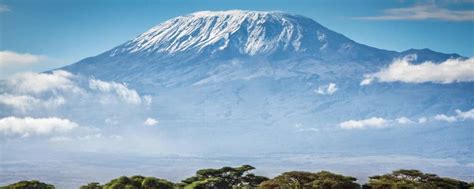
Have you ever dreamed of climbing Africa’s tallest mountain, Mt. Kilimanjaro? Of watching its snow-capped peaks under the tropics, near the equator? Mount Kilimanjaro rises to an elevation of 5,895 m above sea level and about 4,900 m above its plateau base in Tanzania; it is the largest and tallest free-standing mountain rise in the world, meaning that it is not part of a mountain range. The majestic Mount Kilimanjaro is an inactive snow-capped stratovolcano that extends for about 80 km from east-west and is made up of three principal volcanic cones namely Mawenzi, Kibo, and Shira. The highest summit of Kilimanjaro is located on the crater rim of Kibo volcano and has been named the Uhuru Peak, where ‘Uhuru’ means ‘freedom’ in the native Swahili language. Scientists estimate the glaciers may be completely gone in 50 years. Mount Kilimanjaro is often referred to as the “Roof of Africa”. Thus one can imagine what poet B. Tejani, and anyone who reaches the 4th tallest peak in the world, must have felt after ascending the mountain… on top of Africa, which is the title of Tejani’s poem about the joy of ascending Mt Kilimanjaro. Bahadur Tejani is a Kenyan author and poet, born of Gujarati parents in Kenya. He studied at the Makerere University in Uganda, Cambridge University, and the University of Nairobi. He later taught at the University of Nairobi in Kenya, as well as the University of Sokoto in Nigeria. As you read the poem, you are really transported to the slopes of the majestic mountain. As you watch the snow, ‘an ageless majesty‘ fills you. As you reach the summit, there is definitely at that moment ‘no great triumph in the soul‘, after the ‘agonied 20,000 steps upwards and onwards‘. Truly, only when the ordeal is finished ‘I shall remember the dogged voice of conscience self-pity warring with will‘. This poem is part of Poems from East Africa, ed. by D. Cook and D. Rubadiri (1971), p. 176. Enjoy!,
====
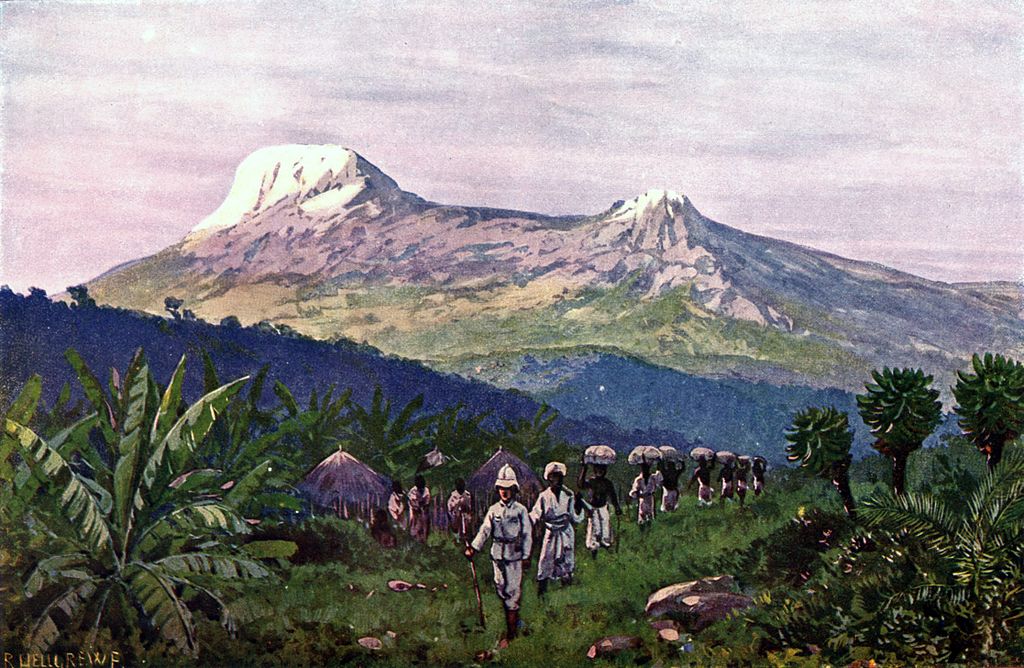
‘On Top of Africa‘ by B. Tejani
Nothing but the stillness
of the snow
and an ageless majesty
matched
by those enduring horizons that bridge the heights of you and me.
The phosphorescent sun gliding from the dark cloud under us
shone a brief once while we lay
retching in the rarefied air.
No great triumph in the soul of those
twenty thousand agonied steps upwards, always onward.
Only anguish of an ending -the vacuumed intestines shivering at
another onslaught of mountain sickness.
An ice-axe prod in the back and with it the terrible thought of the
awful retreat down the cold slopes of possible deaths; dumb eyes and
feet
lit by a single tireless search for slumber
which is as far away from us as we from the plains.
Only when the nightmare is over I shall remember the dogged voice of
conscience
self-pity warring with will
of the brown body
to keep up
with the black flesh
forging ahead
on the way
to Kilimanjaro.

Yam is a staple food in many countries of Africa, particularly in West Africa. So it comes with a bit of surprise to those not versed in agriculture, that there will is work to protect yam. Why would yam need protection? and from what? Ivorian researcher Adjata Kamara is one of this year’s 20 L’Oreal Foundation laureates from sub-Saharan Africa; she won for her project on the development of post-harvest biopesticides for the protection of yam crops. At the Biopesticides unit of the University of Bingerville where she is a doctoral student, her research has determined that “soil-depleting” chemical pesticides and the harvesting methods of farmers who “injure the yam”, favored the rapid appearance of fungi that rot the plant and eventually make it unfit for consumption. Thus the urgency of developing natural pesticides. Kamara will receive 10,000 Euros for her work. Excerpts below are from AfricaNews. Enjoy!
====
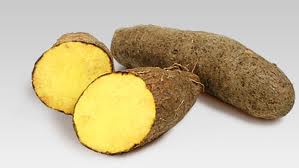
Adjata Kamara is one of the 20 winners of the For women in science initiative of the L’Oréal Foundation and UNESCO, which aims to give visibility to women researchers worldwide.
The 25-year-old Ivorian was chosen for her work on biopesticides to protect yam crops, a root that is highly prized in sub-Saharan Africa.
Her passion for research stems from her childhood when her father’s mango crops were ravaged by fungi.
“It allows me to show my research to other women, to other countries and it puts a little pressure on me because I tell myself that now, I have to be a role model for young girls in science,” said Adjata.
Adjata explains that her goal is to develop “biopesticides based on plant extracts, fungi and beneficial bacteria,” in order to treat without chemicals this anomaly that disrupts the production of a plant that is the basis of staple food in several regions of Africa.
“I work on the development of biopesticides based on plant extracts, bacteria and also fungi. But these bacteria and fungi are said to be beneficial and so I’m trying to find methods to control the fungi that attack post-harvest yams,” …
… “From an early age, my father had a mango plantation. And this plantation was attacked by mushrooms, but at that time we did not know it. And as the years passed, there was a drop in production. And from then on, I wanted to know why these mangoes were being attacked (by fungi), and why production was falling. And it’s since then that I devoted myself to it and that I loved science,” said Adjata.

Le cœur du méchant n’est jamais pur (proverbe Bamiléké – Cameroun)
The heart of the wicked is never pure (Bamileke proverb – Cameroon).
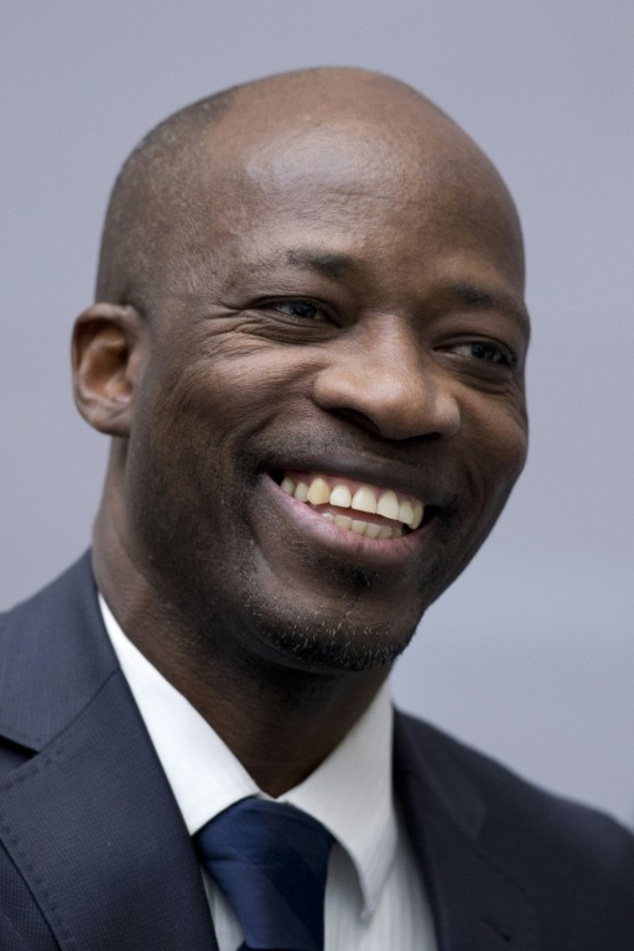
Joy fills my heart… Charles Blé Goudé is home at last! How long has it been? How long has it taken? The battle has been long, but Truth has prevailed! As a reminder, Charles Blé Goudé, Youth minister under Laurent Gbagbo, had been captured in 2013 in Ghana after the foreign attacks on Cote d’Ivoire by France that forced him to find refuge there [How long shall they kill our prophets…?]. He has spent almost a decade in captivity at the Hague at the International Criminal Court justice with Laurent Gbagbo, like many of our leaders who were deported for standing for their people [Deportation of African Heads of States]. They were both acquitted in January 2019, but the prosecution stalled, keeping them in Europe, trying to find ways to overturn the decision, and blocking all their movements. Two years later in 2021, Laurent Gbagbo and Charles Ble Goude were totally acquitted and free at Last, however, only Laurent Gbagbo was allowed to return home which he did in June of last year [Laurent Gbagbo is Back in Cote d’Ivoire]. Blé Goudé has had to beg for many years to get an Ivorian passport from the Ivorian government (Unbelievable right?).
Did the ICC apologize for all the years of hurt? the tarnished image? the ruined life? And of course mainstream media, which yesterday eagerly published those images of Gbagbo and his wife Simone in their room surrounded by rebels, or Blé Goudé now publish one line if anything at all! Unbelievable! They should be sued for playing such major roles in destroying countries, obliterating people’s images, and causing wars! I live you here with excerpts from an article from the BBC. Note, the love the people have for him has caused the government to ask for the population not to show up at his arrival. All these tough years of claiming his innocence, all these years of constant support, and people’s prayers, dedication, love, and determination have born fruits. Truth always wins! It may take years… but it prevails!
====
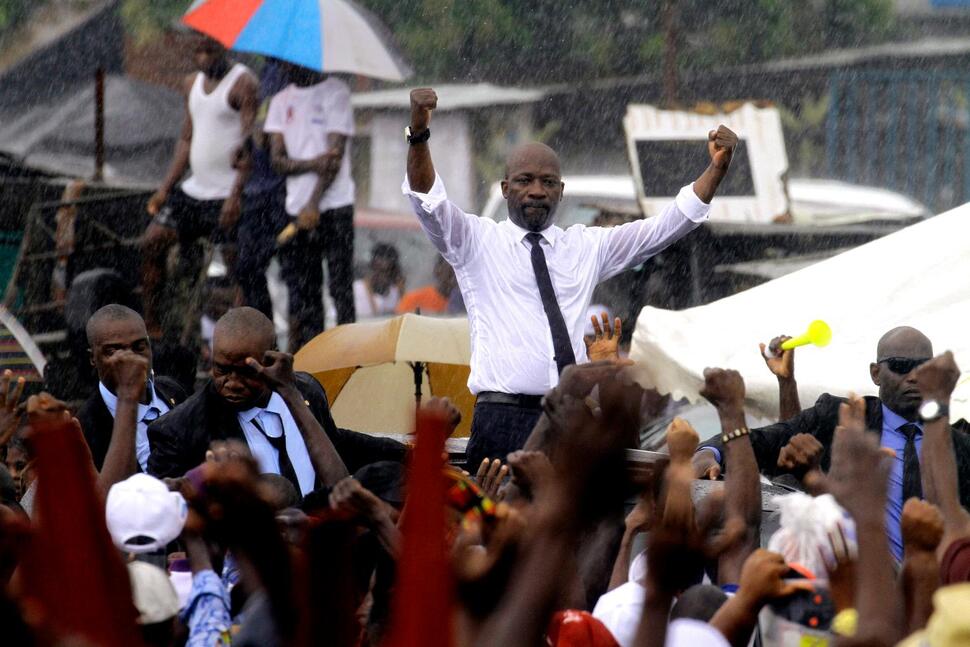
Ivory Coast politician Charles Blé Goudé, once seen as a divisive figure, has flown home after being acquitted by the International Criminal Court.
His charisma and fiery rhetoric led to his nickname “street general”.
… Mr Blé Goudé, 50, arrived in Ivory Coast’s main city, Abidjan, on a commercial flight from neighbouring Ghana on Saturday afternoon [Charles Blé Goudé was actually met at the airport by former First Lady, Simone Gbagbo, accompanied by around a dozen people – these foreign media are always trying to remove Simone from history, but they will not succeed].
There was heavy security at the airport and his supporters were advised not to go there to show respect for all the victims of the 2010 conflict.
But thousands of them gathered in the suburb of Youpougon – a former stronghold of Mr Blé Goudé’s – where he was expected to make a statement, according to his entourage.
….
Mr Blé Goudé fled Ivory Coast the day before Mr Gbagbo’s capture, going to Ghana by road where he lived in hiding for almost two years.
He was then arrested and transferred to the ICC where he first appeared in 2014 charged with committing crimes against humanity, including accusations that he led a militia.
But both Mr Gbagbo and Mr Blé Goudé were acquitted in 2019 after the judges said that the prosecution had failed to prove its case. The decision was confirmed by the ICC’s Appeals Chamber last year.
The former president returned to Ivory Coast in June 2021, where he has since tried to play the role of a peacemaker urging reconciliation.
Mr Blé Goudé obtained a passport from the Ivorian authorities in May and shortly after got the green light to go home.

Once upon a time, there was a young man who was going to visit his fiancée. She received him with all honors and installed him in her hut in the middle of her bed. She hastened to present him with a calabash full of curdled milk. But custom dictates that one holds back when one is at one’s parents-in-law, and the stranger apologized for not being able to drink this good milk.
Despite his beloved’s insistence, he refused to take a single drop. The calabash was thus stored on the shelf and the conversation resumed even more vigorously.
A moment later, the girl went out for a few moments. Then, the stranger, who was tormented by the desire to taste this good milk, got up to take advantage of the absence of his beloved. But, in his haste, he knocks over the calabash, and the milk floods his boubou.
Stunned and crestfallen, he awaits his fiancée’s return. Fortunately, she does not return, but sends her little brother to bring back the calabash of milk stored on the shelf. The child enters the room and, seeing the confused man huddled in a corner, he understands what has happened. Heaving a sigh, he exclaimed:
– Ouch, I took the calabash, but it slipped from my hands and it fell over on the guest’s boubou!
The sister runs inside and burst into tears while apologizing to her guest for the clumsiness of her little brother.
Thus, the man was able to leave the village, not without keeping an excellent memory of the child who saved him from disgrace.
Contes Wolof du Baol, J. Copans and P. Couty, Ed. Karthala, 1988, p. 62. Translated to English by Dr. Y., Afrolegends.com
 Today, education in Africa is Eurocentric, meaning that African history is rarely well-taught in African schools. In Francophone Africa, the school manuals are written by Frenchmen on the continent, or in France, so there is barely any emphasis on Africa. We learn about Europe, China, Japan, Napoleon, all the French dynasties, wars, etc, but very little about OUR history. Thus, most Africans grow up without knowing anything about the Ishango bone, the Blombos Cave, Lucy, the Lebombo bone, or the fact that Pythagoras or Thales theorems were actually written in Egypt by the scribe Ahmose over 1000 years before Pythagoras visited Africa; or even that C-sections were a normal part of African medicine for centuries while in Europe, women were still dying during pregnancies, or even that ancient Egyptians were black! There are countless examples showing that the falsification of African history has been ongoing for centuries, and that there is so much missing in African school manuals.
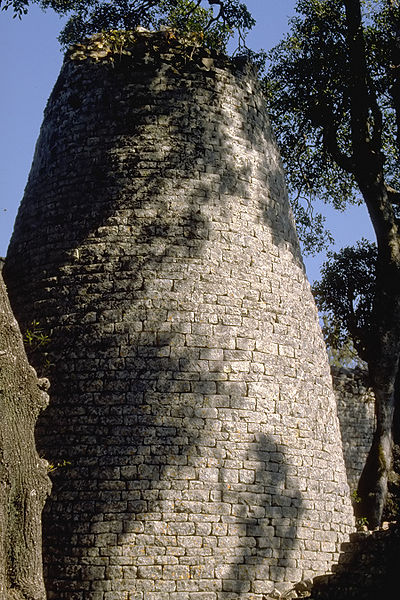
Why is Nioussérê Kalala Omotunde’s work important for Africans? NKO’s work is fundamental because he, like some other illustrious Africans, worked tirelessly to restore Africa’s place in the world. However, his work was not just telling us Africans that we were once great, but more importantly focused on shaking the consciences of many: if my ancestor was great, if my ancestors built the great pyramids of Egypt, how can I, African today, believe that I am meant to live in tin shacks? If my ancestors were the great architects and metallurgists of Great Zimbabwe, why should I keep adopting the European materials for building when ours have lasted over centuries? how can I wait for foreign aid, when I have been blessed with fertile lands? How can I be eating wheat from Ukraine, when I could go back to ancient grains such as fonio, sorghum, millet which have always been a part of my diet for centuries (How Africa Copes with The War in Ukraine: Alternatives to Wheat – Ancient Grains?)? How can I import paper, when my ancestors developed the first support medium for writing (paper comes from papyrus)? How can I act like I do not know mathematics, when my ancestors where the amazing Egyptian mathematicians? How can I feel so lost in medicine or just focus on European medicine, when in Bunyoro kingdom, we had master gynecologists who could perform c-sections centuries before Europe? How can I be stuck with the FCFA when my ancestors invented currencies using silver? How can I, an African child, feel so small? How can I, an African child, focus only on misery, as opposed to what nature has given me? I need to raise my head, and see, and take the grain God has given me, and turn it into a tree!
I invite you to read some of his books, which can be found at: Anyjart.


 African Heritage