Ce que tu donnes, tu l’obtiens dix fois plus (Proverbe Yoruba – Nigeria, Benin)
What you give you get, ten times over (Yoruba proverb – Nigeria, Benin)

Ce que tu donnes, tu l’obtiens dix fois plus (Proverbe Yoruba – Nigeria, Benin)
What you give you get, ten times over (Yoruba proverb – Nigeria, Benin)
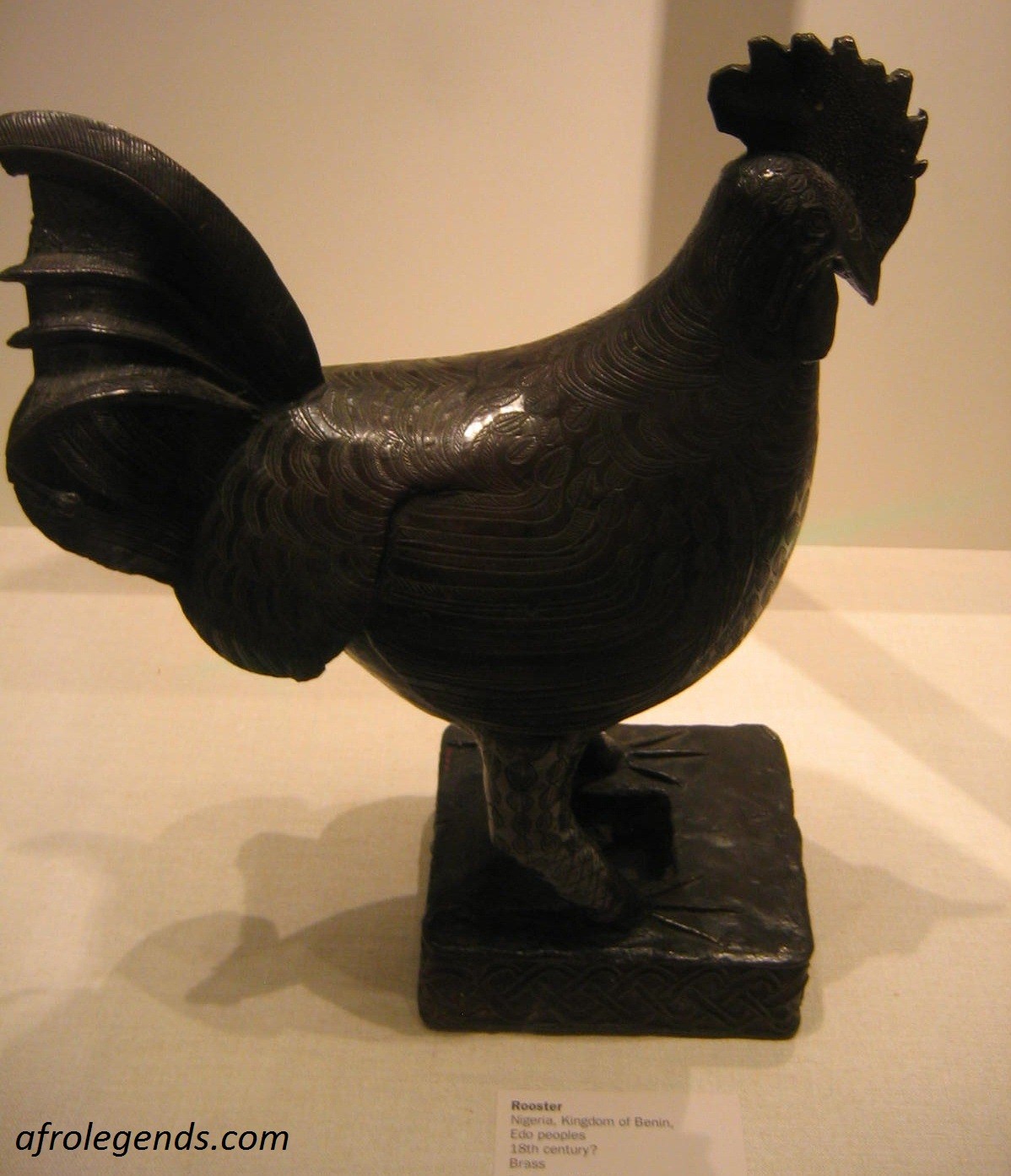
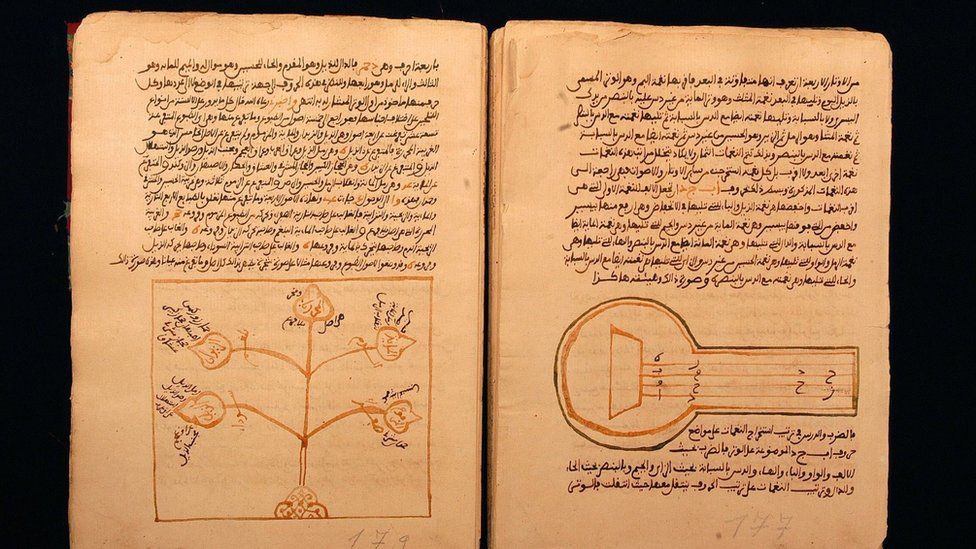
A thief comes to your house, steals from you, and then years later when you try to recover what is yours, he gives you conditions for the return of what he looted from your house. Does it not sound unbelievable? This is what is currently going on with the restitution of African artifacts: everyday new conditions are given for the return of African art. Conditions such as “the works be well kept and exhibited after their return,” make no sense given that these objects in African cultures were mostly not used for art-sake but rather held functional values. It is sad, but hey, if you have no power, it is hard for others to return what they have stolen from you. Just because one artifact is returned here and there, it does not account for all of them. As stated countless times before, united we stand, divided we fall. As African nations ask for the return of what is rightfully theirs, each country should not go on its own to ask for the return of its national treasures, we should all be united. A couple of years back, Madagascar paid for the return of the belongings of Queen Ranavalona III. Similarly, this past April, Algeria recently got the return of a 17th-century manuscript written by the venerated leader of Algerian fight against colonialism Abd el Kader, which had been confiscated by French authorities in 1842; Algerian diaspora mobilized to combine money and resources to recover this Islamic manuscript. Being united will also help in countering conditions like “the object must not be claimed by another nation and the request cannot be accompanied by a request for monetary reparations,” especially since the current boundaries of African countries were formed after independence, thus there are bound to be common artifacts between countries.
Below are excerpts from The Art Newspaper. To learn more, also read new French laws on restitution of looted art on RFI, and Hyperallergic… simply appalling.
====

France is finally releasing its long-awaited policy on the charged issue of the restitution of cultural property… The report was commissioned by President Emmanuel Macron [to ex-Director of the Louvre Museum Jean-Luc Martinez, who has since then been charged with complicity in fraud and concealing the artworks’ origins] and the government has already implemented some of its recommendations, most notably a bill on art looted by the Nazis, which will be discussed by the Senate on 23 May.
And a further two laws will be passed in coming months, … One could apply to items from the former colonies of Western empires, which the report defines in global terms, rather than just Africa and its former French dominions. The other pertains to human remains.
… Martinez tells the Art Newspaper that his report recommends studying the requests for restitutions by eight African countries to establish a “criteria of returnability”. Rather than basing this on an ideological or moral standpoint, he says he wishes to take a “pragmatic approach in order to define a framework policy of restitutions“.
He has come up with two main criteria as the basis for restitutions: “illegality and illegitimacy“. For example, according to French law at the time of France’s colonial invasion of Algeria in the early 19th century, weapons can be legally seized from an enemy but cultural goods had to be returned after battle. So the books and clothes of the rebel leader Abdelkader ibn Muhieddine (commonly known as Abdelkader) should have been given back to him when he surrendered, making their status in France “illegitimate“.
Likewise, if an officer handed looted goods to a French museum, as was the case for many objects looted from the Kingdom of Benin, the donation should be considered “illegal because such personal war booty is not allowed.” A key recommendation of the report is that requests for restitution be studied by a bilateral scientific commission which will publicly provide an opinion before the final decision of French courts [more bureaucracy].
… This report comes nearly six years after Macron publicly called for the “return of African heritage” during a state visit to Burkina Faso. And it has been four-and-a-half years since the academics Bénédicte Savoy and Felwine Sarr made the case for systematic restitutions to African countries. Since then, the issue has been somewhat downplayed, but it remains a sensitive subject.
Si nous nous tenons debout, c’est parce que nous nous tenons sur le dos de ceux qui nous ont précédés (proverbe Yoruba – Nigeria, Benin).
If we stand tall it is because we stand on the backs of those who came before us (Yoruba proverb – Nigeria, Benin).

Several African nations are launching satellites. Just last month, Kenya launched its first operational satellite to space onboard a Space X rocket, developed by nine Kenyan engineers, with the goal of collecting agricultural and environmental data, including on floods, drought and wildfires, that authorities plan to use for disaster management and to combat food insecurity.

At the beginning of the year, Djibouti announced the construction of the first African spaceport. Djibouti’s President Ismail Omar Guelleh signed a technological cooperation agreement with the Chinese company Hong Kong Aerospace Technology to build a $1bn satellite and rocket launch site. Given Djibouti’s location near the equator, it is an attractive destination for the satellite launching while taking advantage of the Earth’s rotational speed. As Temidayo Oniosun, managing director at the consultancy Space In Africa, says, “none of the 54 satellites launched by African countries were launched from Africa,” …“Hopefully, this move will enable the launch of the first Africa-made satellite from African soil. This project, if successful, will also positively affect the industry across several countries and segments, lead to the establishment of new enterprises and new spinoffs, and would ultimately play a vital role in implementing a continentally driven space program.”
In January, Angolan President João Lourenço inaugurated the country’s first satellite control center. Its main task is to monitor the activity of the satellite “ANGOSAT 2“, launched in October with the help of Russia. The inauguration took place at Funda area within Luanda, the capital city of Angola and fully equipped with technical and technological means.
The same month, the African Union inaugurated the African Space Agency based in Cairo to highlight the importance of the space industry among all the goals for development of the continent.

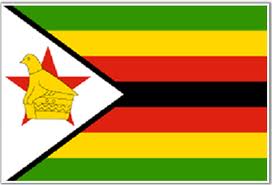
Uganda and Zimbabwe launched their satellites last November. The satellites named PearlAfricaSat-1 for Uganda, and ZimSat-1 for Zimbabwe, were launched aboard a Northrop Grumman Cygnus resupply spacecraft, which lifted off from NASA’s Wallops Flight Facility in Virginia.
Africa has long been considered a latecomer in the space area. There are enormous needs across the continent, particularly in communication, education, agriculture, and science, thus reinforcing the need for Africa to quickly develop its space industry. The African space industry is expected to top $22 billion by 2026. In 2022, countries allocated a total of $539 million to their respective space programs.
The report says satellites could address agricultural challenges by measuring crop health, improve water management by monitoring drought, and track tree cover for more sustainable forest management. In a continent where less than a third of the population has access to broadband, more communication satellites could help people connect to the internet.
We applaud the amazing work, however how will the little countries in Africa benefit from these bursts from the neighboring countries? Is this a joint effort or just individual countries? We, as Africans, should unite! The enemies are too numerous for one to do it by itself. Will this not bankrupt some, and lead the projects to fail? All this brings to mind all the efforts Kadhafi had put in place to have a continental spaceport, space program and satellites to benefit the entire continent. Africa is ready: united we stand, divided we fall, and we need to unite for our efforts to have real impact the way Kwame Nkrumah and Muammar Gaddafi (Kadhafi) envisioned.
.

To celebrate all the mothers out there in the world, I thought of sharing this beautiful song by the Burundian singer Khadja Nin, “Mama,” from her widely acclaimed 1996 album Sambolera. Her song Mama is sung in both Kiswahili and Kirundi (for the chorus). It is very soulful, and deep. The song starts with Pygmees’ calls, which reminds us so much of the great Gabonese singer Pierre Akendengué, with whom Nin collaborated on the album. As she sings the chorus, one can imagine being transported on wings of birds, or taken off by the wind on a beach. Such a great reminder that in Africa, language can never be a barrier to stop Beautiful African Music. I dedicate it to all the mothers out there, and future mothers. Enjoy!
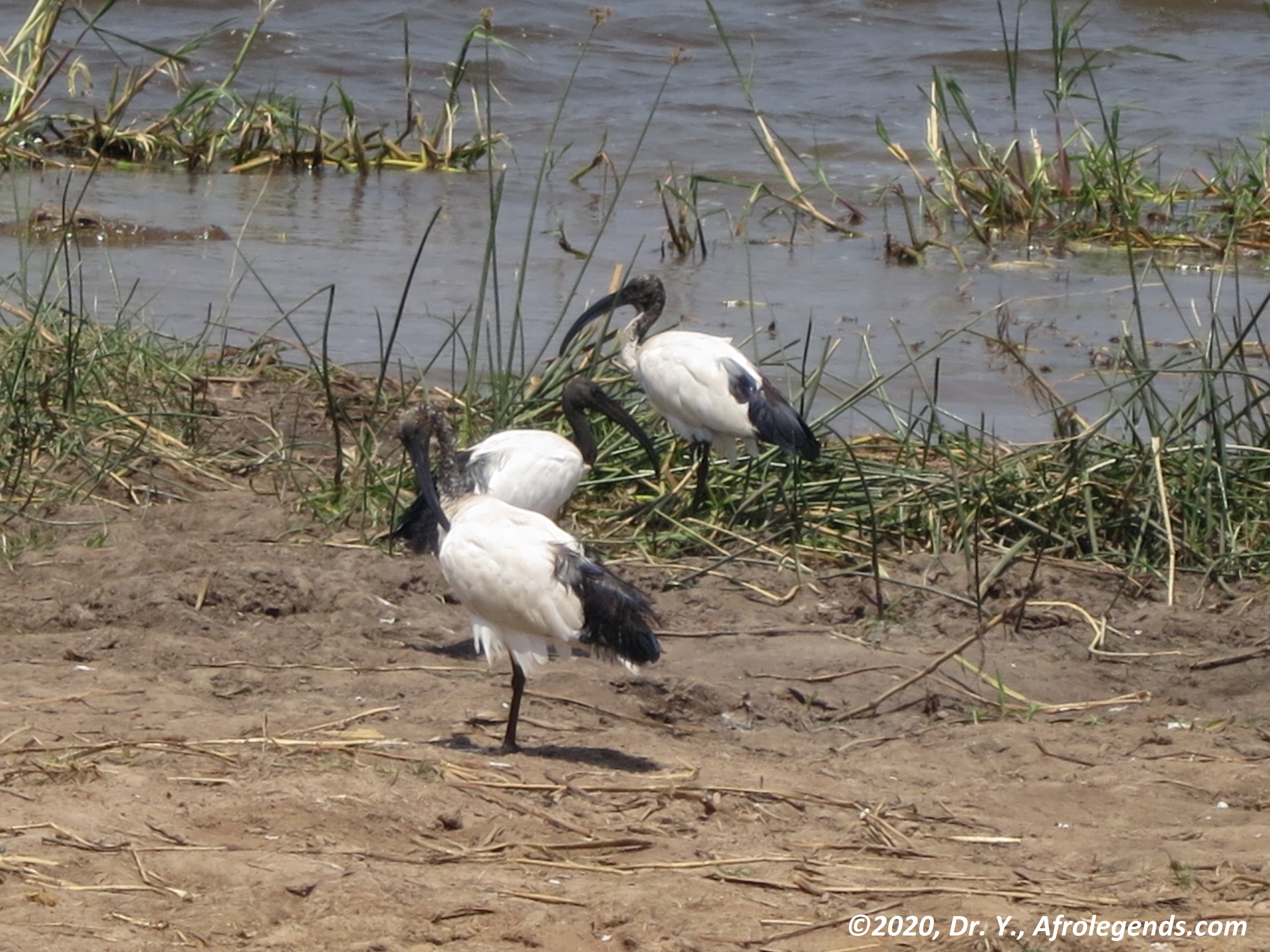
It is no secret that the ibis was highly regarded in Ancient Egypt. It was seen as a sacred bird, and the embodiment of Djehuty or Thoth, the god of wisdom, the scribe of the gods and inventor of writing and Egyptian hieroglyphs; he was depicted with the head of an ibis. The bird has been painted on murals, and often been found mummified in tombs. However, the Sacred Ibis has been extinct in Egypt for over a hundred years and can now be found throughout the Ethiopian region, in marshes, swamps, pasture lands, and more (Experts crack mystery of ancient Egypt’s sacred bird mummies). Apart from Thoth being a scribe to the gods in Egyptian mythology, he was also represented as a baboon, Aani, the god of equilibrium, in

the underworld, Duat, who reported when the scales weighing the deceased’s heart against the feather, representing the principle of Maat, was exactly even. As Thoth, he is credited with making the calculations for the establishment of the heavens, stars, Earth, and everything in them. For ancient Egyptians, he is attributed as the author of all works of science, religion, philosophy, and magic; while ancient Greeks further credited him as the author of every work of every branch of knowledge, human and divine. The Sacred Ibis, from its scientific name Threskiornis aethiopica has white plumage and dark feathers on its lower back; at 30 inches long, it is a striking bird found near marshes, swamps, pasture land, and flood plains in the Ethiopian region.

The Hadada Ibis, also known by its scientific name as Bostrychia hagedash is common in East Africa where it can be found in marshes, swamps, edges of lakes, and pasture land. They are often seen in villages and towns, and the bird is quite tamed. Often heard at daybreak and sunset, its entire plumage is olive-brown, with pale underparts, while the head and neck often have a metallic green sheen. It is a sociable bird, but unlike other ibises, it is a solitary nester.
There are many more species of ibises around the world, but today the focus is on the African species, and particularly the Sacred Ibis. Just to think of how much that bird was venerated in Ancient Egypt makes us wonder about its magnificence. It would not be a surprise if the hotel brand Ibis was inspired by this magnificent bird and all it encompassed in the Ancient world of Egyptians.

Nous désirons léguer deux choses à nos enfants; la première est des racines, la seconde des ailes (proverbe soudanais – Soudan).
We desire to bequeath two things to our children; the first one is roots, the other one is wings (Sudanese proverb – Sudan).
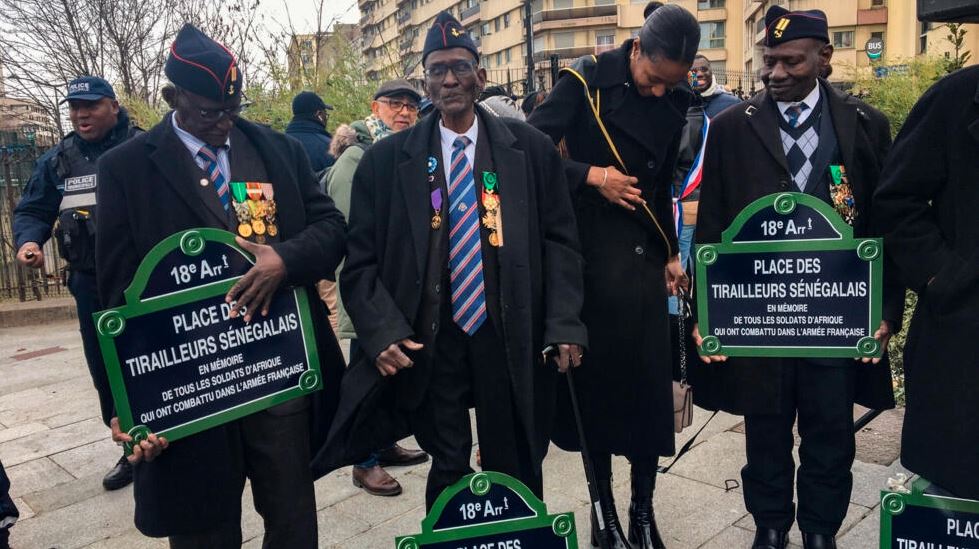
Nine Senegalese tirailleurs, men who served for France for its liberation during the wars, have now won the right to receive their pension while living in Senegal. These men, aged 85 to 96 years, have served in the French army during the wars of Indochina and Algeria, and were forced to live in France at least 6 months per year to get their retirement pension! This meant that in essence, most of them just stayed in France, unable to afford the trips back home to Senegal. For those who do not know, the term “tirailleur” was the name given by the French Army to indigenous infantry recruited in the various French colonies of Africa. They were not all Senegalese, even though the name always said “tirailleur sénégalais,” but rather came from all over Africa. They served France in a number of wars, including World War I, World War II, Indochina, Algeria, and several others. The name “Tirailleur” is a link of two words “tir ailleurs” to laugh and denigrate the African troops by saying that the soldiers were not capable to shoot on target, more to mean “shoot off target”; it could be translated as skirmisher. Although these soldiers fought to help free France, most of them were never recognized, and instead were insulted, laughed at, and sometimes even abused or more. Find here an article on The Conversation, and more importantly on the video of the Massacre of Thiaroye [Thiaroye: A French Massacre in Senegal, ‘Thiaroye Massacre’ by Ousmane Sembene] showing the poor treatment and sometimes massacre of these tirailleurs by the French, when they returned home after serving France.
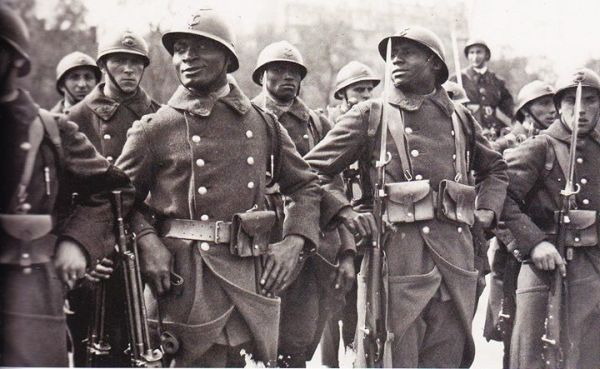
So, after most of them have died, these remaining 9 Senegalese tirailleurs had to reside in France for at least 6 months every year to receive their due pension!!! Unbelievable! Who knows the atrocities they witnessed in the name of France? Who knows the blood, sweat, and trauma they lived through? Now that only 9 are remaining, France cannot even pay them their pension of 950 Euros per month! 950 Euros per month for 9 people? How difficult can it be for France who gets 500 billion Euros every year from Africa [The 11 Components of the French Colonial Tax in Africa, Africa is funding Europe!, FCFA: France’s Colonial Tax on Africa, Is France Trying to (re) Colonize Africa?]? And these men, tirailleurs Senegalais in their advanced age, had to live in France to even see a money that is due them? And people actually had to fight, and write petitions for the French government to finally agree to pay them in Senegal. See… they always wait for everybody to die, before even acknowledging them [The British Government apologizes for Mau Mau atrocities].
Enjoy the articles on RFI, France24, and AfricaNews. Excerpts below are from AfricaNews.
====
It is a trip they almost stopped dreaming of. Nine Senegalese veterans, aged 85 to 96, who fought for France during the XXth century, will join their families in Senegal.
After years and sometimes decades of living thousands of miles from their relatives so they could claim their French army pension, the soldiers were moved on their way to the airport Friday (Apr.28).
A few days before the journey home, AFP met with Yoro Diao [head medic during the war in Indochina, Vietnam, in charge of the stretcher bearers, carrying the wounded under enemy fire], a veteran aged 95….
“It’s a victory,” the decorated veteran said on Wednesday (Apr.26) as he prepared his flight.
“I’m going to live and eat well. I’ll walk around the village. It’s paradise over there,” he added, a smile lighting up his thin face.
Hundreds of thousands of African soldiers fought for their colonial master France in the two world wars and against independence movements in Indochina and Algeria. But until this year, surviving veterans among the so-called “Senegalese Infantrymen” had to live in France for half the year or lose their pension. In January, the French state dropped the condition, saying they could return home for good and continue receiving their monthly allowance of 950 euros ($1,000). It would also pay for the flight and move of any veterans wishing to leave.
… Their pensions were increased to adjust for inflation for the first time in almost five decades in 2006.
“I was shocked that all these old men who had contributed to our freedom couldn’t even become French,” said [Aissata Seck, Head of the Association for the Memory and History of Senegalese Infantrymen].
… Diao said the French government’s waiver has been a long time coming — too late for some veterans who are now too frail to make the journey home. But for those who still can, “it’s better late than never,” he said.

Amidst the news of chaos in Sudan, it is easy to forget other news happening at the same time across the continent. When it comes to Africa, the Western media have a chic to make us focus only on the worst things on the continent, and rarely the good. After all, if anybody watches the news, they would not think that there is joy and happiness, prosperity, and abundance in Africa; not everything is as portrayed in the news. This week, Japan’s Prime Minister, Fumio Kishida, is touring Africa. The tour started last Sunday in Egypt, followed by Ghana, then Kenya, and Mozambique (Japanese banks are among the international banks financing the multi-billion dollar deal involving the French firm Total in Mozambique (Who/What did we say goodbye to in Africa in 2020?)). In this tour, Japan has vowed to give 500 million dollars in financial support to Africa over the next three years to promote stability and peace on the continent. The New Scramble for Africa is on… are Africans awake? Excerpts below are from AfricaNews.
====

Japan’s Prime minister is on an African tour. He arrived Monday (May. 1st) in Ghana, the day before he was in Egypt. He is set to visit Kenya and Mozambique.
The Prime Minister of Japan arrived at the Kotoka International Airport in Accra, Ghana and is expected to hold a bilateral discussion with President Nana Akufo-Addo.
Egypt’s president Abdel Fatthah al-Sissi welcomed Sunday (Apr. 30), Fumio Kishida.
After a meeting with the Secretary-General of the Arab League at the institution’s headquarters in Cairo, Kishida held talks with Egypt ‘s leader.

Al Sissi detailed the topics per the agenda during a press conference.
“We reviewed the challenges the international arena is witnessing today, in particular the massive economic repercussions left by the Ukrainian crisis on developing countries that exceeded what the coronavirus pandemic caused in terms of a rise in inflation rates, energy and food prices, and expectations of a decline in the growth rate.”
The discussions came as Japan is to host the G7 Summit scheduled on 19-25 May.
“We discussed many regional issues of common concern, especially the Palestinian issue and the situation in Libya. Developments in Sudan occupied an important aspect of the talks“.
….

A few weeks ago, we talked about The New Scramble for Africa. Our hearts go out to our brothers and sisters in Sudan as unrest rises in the country. Those who think that this is a “simple” feud between two generals, or two “brothers” as portrayed in the news, must look deeper. Why are US troops getting deployed there? In the early 2000s, people around the globe were bombarded non-stop with information about the genocide in Darfur and “slavery” in Sudan; we were all told that Northern Sudanese were “white” who treated poorly their Southern Sudanese brothers who were “Black” which is a very simplistic and exaggerated way of looking at Sudan (remember Libya and Slavery: Sheep without a Shepherd in recent years?). Hollywood stars such as George Clooney came out in numbers claiming to care about the plight of the Black man, and saying that the Black people of Darfur Sudan were enslaved by their lighter skinned Sudanese brothers.To all who know the tactic of divide-and-conquer, and know social conflicts in Africa, we are always manipulated into thinking that every conflict in Africa is about this tribe vs. that tribe, this group vs. group; thus neighbors become enemies, when in reality, it is a diamond mine or oil field coveted by external forces which is at the core of the issue (Northern Mozambique today). The conflict in Sudan led to the split of Sudan, which was then Africa’s largest country, into Sudan with capital in Khartoum, and South Sudan with capital in Juba. Many forget that the southern part of then-Sudan was rich in oil fields, and that this split diminished Sudan’s oil output to the detriment of the newly created South Sudan (in passing, wasn’t the Pope in South Sudan in February? The Pope Visits the Democratic Republic of Congo and South Sudan), thus putting a big dint on Sudan’s partnerships with China (Sudan was providing more than 10% of China’s oil needs and a Chinese presence on the horn of Africa). After the split, the world’s attention which was on Darfur moved on, Darfur which was supposedly the goal of Western interventions was never resolved, but South Sudan with the oil fields was detached from Sudan.

The cold war between the West and the East took place mostly in other countries like Angola, Mozambique, Congo, Afghanistan, Nicaragua in Africa, Asia, Latin America with many coups d’état and conflicts around the globe. Similarly today, the new kind of war has started yet again, but this time, it is on African soil with The New Scramble for Africa as the world moves toward energy-“conscious” policies.
How do we, Africans, stop from having our lands be a theater for others’ wars? How can we independently make learned decisions for our people without being dragged in others’ conflict?


 African Heritage