Last October, Ethiopian prime minister Abiy Ahmed declared that having sea access was an existential issue for Ethiopia, which is the largest most populous landlocked country in the world with over 100 million inhabitants. Everyone started fearing, because since Abiy’s arrival, Ethiopia has been in conflict internally in Tigray and Oromia. Everyone started fearing for a renewed conflict with Eritrea, after the peace treaty signed between both nations on 9 July 2018 which formally ended the Eritrean–Ethiopian border conflict. The worries stemmed from the fact that Ethiopia lost its sea access when Eritrea seceded in 1993. The conflict between Ethiopia and Eritrea is like the conflict between China and Taiwan… except it takes on an existential nature in the case of Ethiopia which is landlocked because of it. So when Prime Minister Abiy made his announcement in October, everyone on the horn of Africa started sweating. Ethiopia begged its coastal neighbors, but Djibouti, Eritrea, and Somalia all rejected its pleas for direct access to a port on the Red Sea.
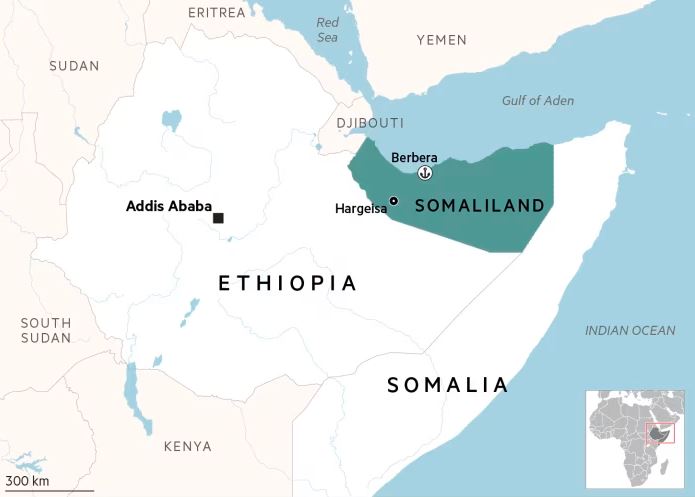
Map of the sub-region with Somaliland and its port of Berbera highlighted (Source: Financial Times)
On January 1, 2024, Ethiopia announced an agreement signed with Somaliland to lease the port of Berbera on the Red Sea, and a 20-km stretch of Red Sea coastline for 20 years, in exchange Somaliland will receive shares in its neighbor’s flagship carrier, Ethiopian Airlines, Africa’s most successful airline – and eventual recognition as an independent state. Prime Minister Abiy’s office said the agreement would “pave the way to realize the aspiration of Ethiopia to secure access to the sea.” Somaliland’s foreign ministry said in a statement that the “historic agreement ensures Ethiopia’s access to the sea for their naval forces, reciprocated by formal recognition of the Republic of Somaliland, marking this as a significant diplomatic milestone for our country.” This agreement paves the way for Ethiopia to establish a commercial and military presence on the coast. I breathed a sigh of relief… which I had to take back the following day when Somalia’s President Hassan Sheikh Mohamud called the Ethiopia-Somaliland agreement an act of agression! He sees it as such, because the agreement would seem to imply that Ethiopia will recognize Somaliland as an independent state. Somaliland seceded from Somalia more than 30 years ago, but is not recognized by the African Union (AU) or the UN as an independent state. Quickly, both the US and the African Union have backed the territorial integrity of Somalia and urged all parties to cool tensions.
Flag of Somalia
Ethiopia and Somalia are two states with a lengthy history of military conflict and animosity. Now, the president of Somalia is campaigning up and down the horn of Africa and has gotten the support of Egypt (remember that Egypt is mad at Ethiopia for building the Grand Ethiopian Renaissance Dam on the Nile and getting its proper share of the Nile’s waters – story for another day), Turkey, the puppet organization that is the AU, the European Union (EU), and the US. He stepped up the rhetoric by saying: “We will defend our country, we will defend it by all means necessary and seek the support of any ally willing to help us.” and called on youths “to prepare for the defense of our country“.
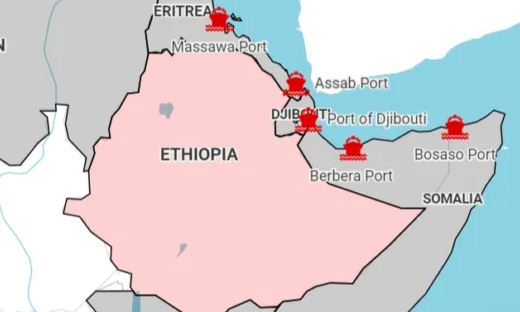
Map of the region with the different countries involved and ports (Source: Medium.com)
In my simple views, given Ethiopia’s large population, economic weight, and regional cloud (Ethiopia is now a member of the BRICS), any neighboring coastal state would benefit from working with it and developing agreements that will allow the use of its ports; it should be a win-win situation! Thus, it would seem careless for Somalia to want to start war, when all that could be done is get an agreement from Ethiopia to pay Somalia instead or split the proceeds from Somaliland… Ethiopia is definitely not getting access to the port of Berbera for free! Why is Somalia seeing a war threat from Ethiopia and not Somaliland… their issue is with Somaliland, why not deal with that? Neighboring Sudan has been at war since the middle of last year. Conflict would further destabilize the entire region, which is so close to the strategic Gulf of Aden on the Red Sea, one of the world’s largest shipping routes. Could this be a way for the Somalian president to justify his poor internal politics, by diverting his people’s attention towards war? These African countries are always ready and eager to lease their lands, ports, airports, for a specific duration to European or Chinese or even South African companies, why is it so hard to do the same for fellow African neighbors?
To learn more, read this article from the Conversation, Medium, or Modern Diplomacy. Dear reader, do you think this is the beginning of yet another conflict in the Horn of Africa? Do you think this will further play into the New Scramble for Africa?
The 2023 Africa Cup of Nations (AFCON) or Coupe d’Afrique des Nations (CAN) is upon us! For one month the best football teams of the African continent will face each other in Côte d’Ivoire. This is the second time in the country’s history to host the tournament. Abidjan est doux deh! (Abidjan is sweet!). The cup will start tomorrow, Saturday January 13, 2024 at the new Alassane Ouattara stadium of Abidjan, one of the six arenas for this year’s African Cup of Nations. The Africa Cup of Nations will kick off with a game between the host nation Côte d’Ivoire and Guinee Bissau.
This year promises to be hot! Will Senegal, the last CAN winners, renew the feat, thus winning back-to back cups? Will Morocco, the first African team to ever get to the semi-final of the World Cup, win this year’s CAN? Will the country with the most cups, seven-time champions Egypt, take this one home? Will the usual heavy contenders like Côte d’Ivoire, Nigeria, Cameroon, or Ghana take it home? Or will a newcomer upset the balance? It will be hot. A record 7 million dollars will go to the winners of this year’s cup; it is a 40% increase from the last tournament won by Senegal in 2022. The runners-up will pocket 4 million dollars.
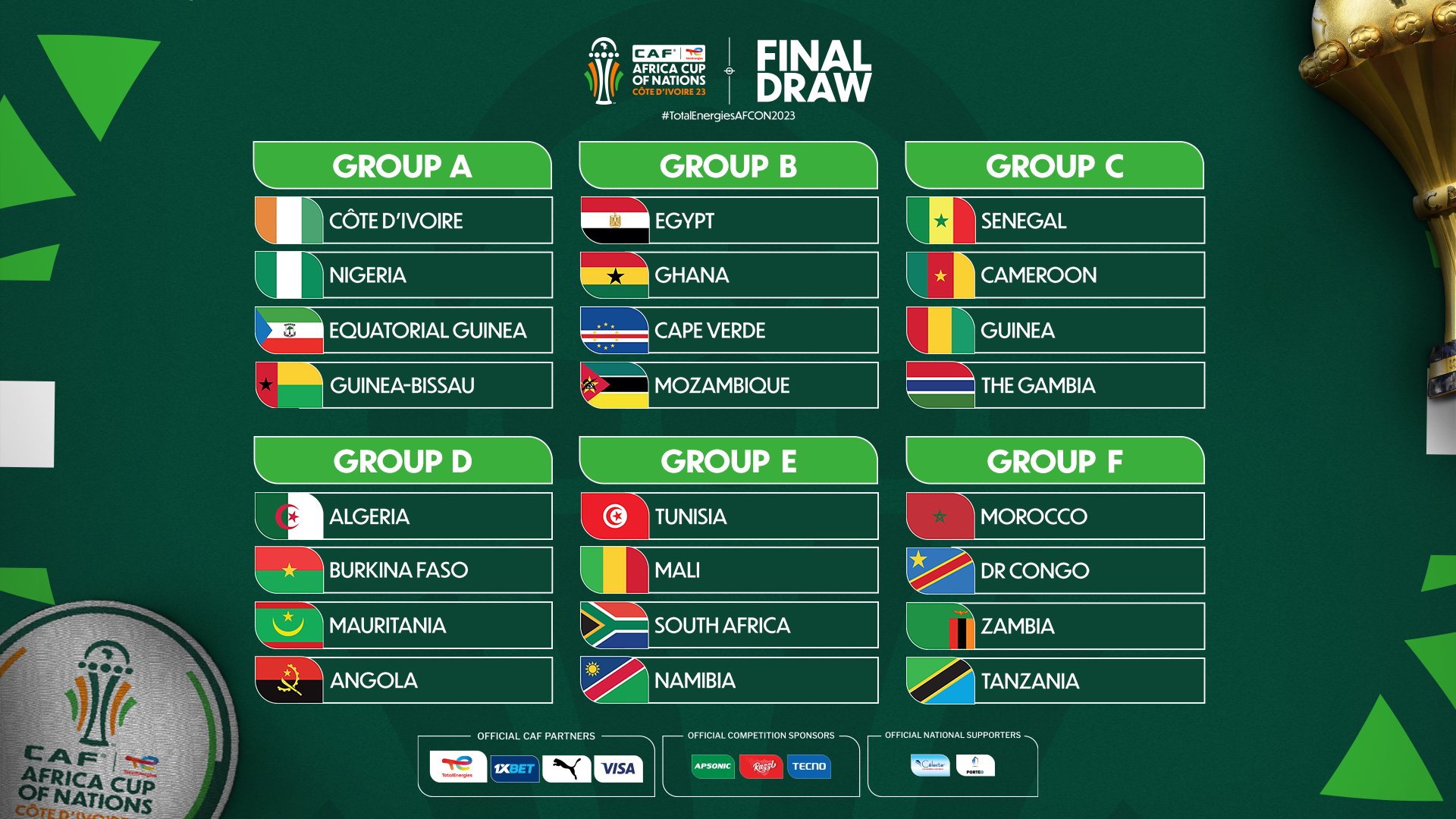
Final Draw of CAN 2023 (Source: CAF online)
The 24 teams have been split into six groups of four teams, with the hosts in Group A alongside three-time champions Nigeria, Equatorial Guinea and Guinea-Bissau. The teams will face each other in 5 cities: Abidjan, Yamoussoukro, San Pedro, Bouake, and Korhogo. The tournament was scheduled to be held in June-July 2023, but it has been moved (back to the original timeframe) to avoid a clash with the West African rainy season – it used to always take place during even-numbered years from January-February, until the European clubs asked for it to be moved to June-July to favor their off-season given that a lot of African players play in European leagues, but that time frame has always been detrimental to most countries in Africa, as it is either the rainy season or winter; our elders were wise enough to place the tournament at a time that suited most African nations! I prefer to call it CAN 2024 or AFCON2024; it makes more sense, and it is taking place in 2024!
Akwaba, the elephant welcomes you to Cote d’Ivoire (Source: COCAN2023.ci)
Already, several teams have arrived in Côte d’Ivoire opening up with players displaying an assembly of colors and traditions, proudly showcasing their nations’ cultural diversity. We cannot wait to see their football prowess on the field. As expected, this year’s mascot is an elephant which is Cote d’Ivoire’s animal symbol named “Akwaba“, which means “Welcome” in Baoulé language. So everyone is Akwaba in Côte d’Ivoire and may the best team win! Who do you think will win?
Let’s open the year with this quote from Steve Biko, the leader of the Black Consciousness movement which guided the movement of student discontent into a political force unprecedented in the history of South Africa, culminating in the Soweto uprising of 1976, which helped in toppling the apartheid regime. His quote below applies to all societal problems, it is the issue of the haves and the have-nots, racism, classism, exploitation, and is of great actuality.
“The greatest weapon in the hand of the oppressor is the mind of the oppressed.” Speech in Cape Town, 1971
Friends, 2024 is here! Let’s make the best of it! 2023 was a difficult year for some, a happy one for others, a painful one here, or a prosperous one there, a healthy one sometimes, or a harmonious one… it was another year, and now it is time to close that chapter and start the brand new chapter that is 2024. Fellow readers, we wish you all an AMAZING new year. May 2024 mark the beginning of new chapters, the fulfillment of some, and also the closure of old ones. May this new year bring you a lot of joy, success, prosperity, love, harmony, and peace; may your dreams be fulfilled, and last a lifetime.
Dr. Y, Afrolegends.com
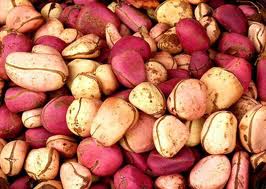
The top 5 posts of the year 2023 are listed below with three old-time favorites, “Love Poem for my Country” by Sandile Dikeni took first place as the most read post of the year, while another favorite poem “My Name” by Magoleng wa Selepe took third place, and the “History of African Fabrics and Textiles” took fifth place. The surprise of the year was the post “The Charter of Imperialism,” which totally makes sense given the earthquake that took over Africa with the total rupture of French relations in several West African countries. We wish you a full and amazing new year, rich in blessings and greatness. We promise you, here, at Afrolegends.com, a total new approach for this new year and lots of new surprises… stay tuned! Keep your heads up, and may your year bring in new fruits, bright fruits, that stem from unity as beautiful as the fruits in the picture! I love this picture because not only does it symbolize unity, it only symbolizes growth, and beauty! As always, like Agostinho Neto said, “A luta continua … a vitória é certa!”
There was a lot to celebrate in Africa in 2023. Below are just a few in the sea of celebrations.
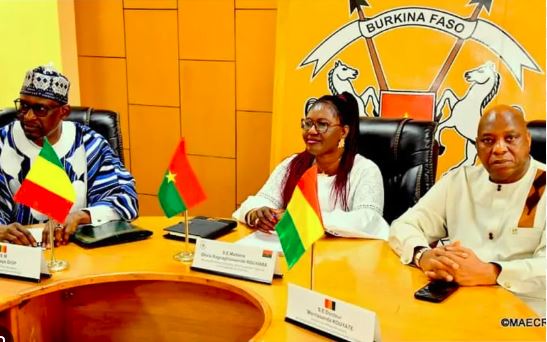
The different ministers of Mali, Guinea and Burkina Faso met to sign the agreement (Source: https://thenews-chronicle.com)
1. In January, Mali, Guinea, and Burkina Faso, three West African countries , all of whom have recently undergone military takeovers amid rising public national anger against France, have agreed to a Bamako-Conakry -Ouagadougou axis, with enhanced cooperation on matters ranging from trade to the fight against insecurity.
FESPACO 2023
2. The biennial African film festival, FESPACO, took place this year from 25 February to March 4. On March4, the winner, Tunisian Youssef Chebbi won the Golden Stallion of Yennenga (Etalon d’or de Yennenga) for his film ‘Ashkal‘ which centres on the investigation into the killing of a caretaker on a construction site in Carthage on the outskirts of his hometown. This year, women directors were celebrated and took home the second and third prizes, with Burkinabe filmwriter Apolline Traore, who picked up the Silver Stallion of Yennenga for the film ‘Sira‘, while the Bronze Stallion was awarded to Kenya’s Angela Wamai for ‘Shimoni.‘ FESPACO 2023: Tunisian Film ‘Ashkal’ Wins the Golden Stallion of Yennenga, and Women Filmmakers are Recognized
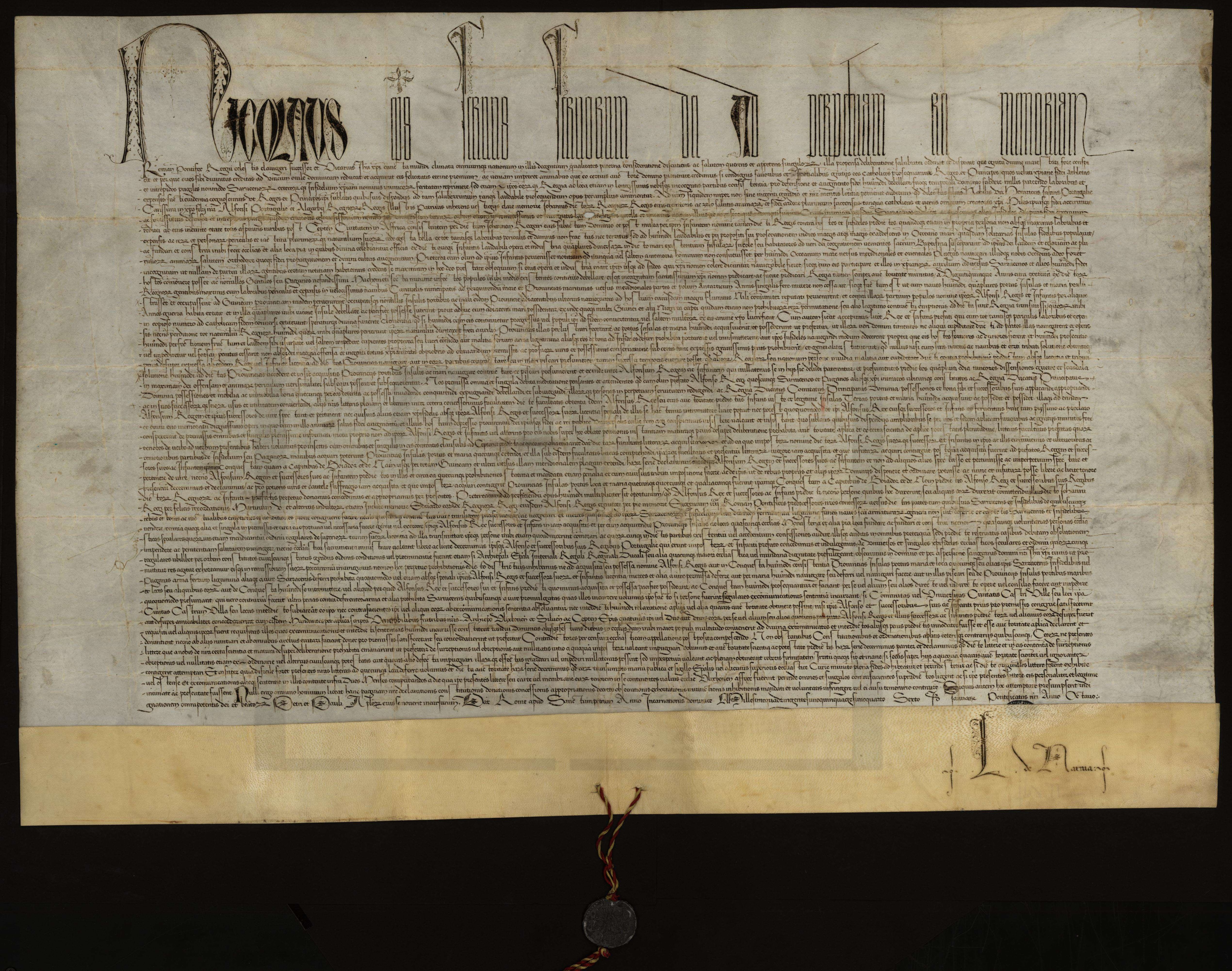
3. In March, the Vatican rejected the ‘Doctrine of Discovery’ used to Justify Colonial Quest and Theft of Land. A Vatican statement said the papal bulls, or decrees, “did not adequately reflect the equal dignity and rights of Indigenous peoples” and “therefore [the Vatican] repudiates those concepts that fail to recognize the inherent human rights of Indigenous peoples, including what has become known as the legal and political ‘doctrine of discovery.’” This is the first official acknowledgment of the Catholic Church for his first place participation in the enslavement of people around the globe, and particularly of Africans. We had published here Dum Diversas or The Vatican’s Authorization of Slavery, which highlighted the major role played by the Vatican in the slave trade of Africans over the centuries.
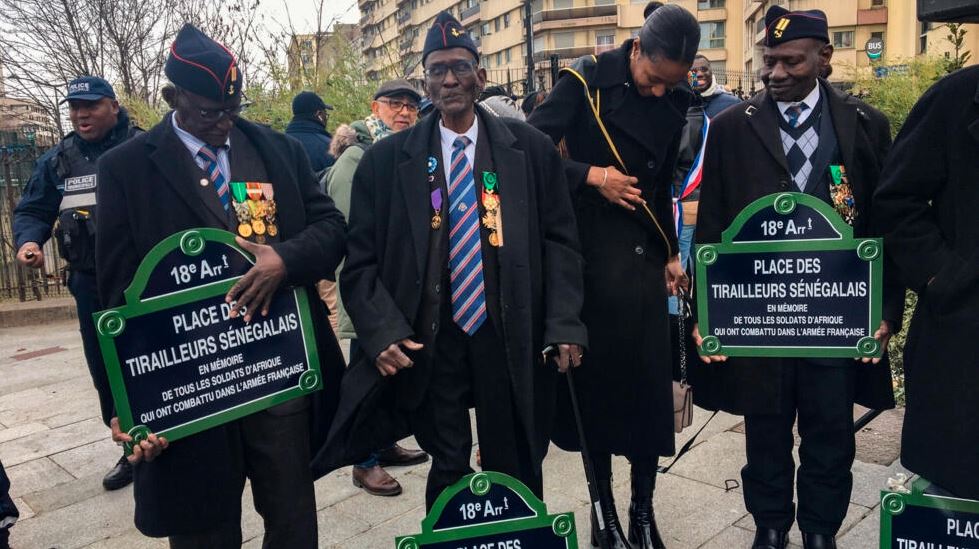
Inauguration of the Place des Tirailleurs-Sénégalais with Tirailleurs aged over 90-years-old on 10 March 2023 (Source: Sylvie Koffi, RFI)
4. Nine Senegalese tirailleurs, men who served for France for its liberation during the wars, have now won the right to receive their pension while living in Senegal. These men, aged 85 to 96 years, have served in the French army during the wars of Indochina and Algeria, and were forced to live in France at least 6 months per year to get their retirement pension! Can you imagine serving for a country that does not even want to pay you a dime for your services (remember Thiaroye?)? As a result, most of them never returned home. This year, they were able to finally go home. At Last: Senegalese Tirailleurs now allowed to receive their pension while living in Senegal
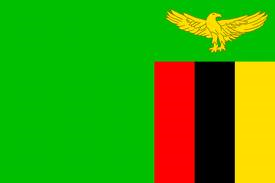
Zambian flag
5. Following months of talks, Zambia successfully agreed new repayment terms with its state creditors on up to $6.3bn (£5bn) debt, including over $4bn owed to China. … Although the details of the deal have not yet been released [as always, populations are kept in the dark, while their future is being signed over], it appears that Zambia will be granted an extended repayment time of over 20 years, including a three-year grace period with interest-only payments. In recent years, the economic debt of Zambia has been making the locals apprehensive; this is a positive step. Zambia breathes a Sigh of Relief after $6bn Debt Deal.
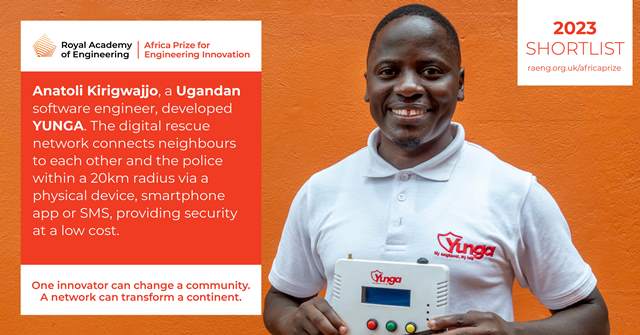
Anatoli Kirigwajjo (Source: 256businessnews.com)
6. Anatoli Kirigwajjo from Uganda, the founder and CEO of Yunga, a local digital security network that enhances neighbor-to-neighbor safety, was awarded “The Africa Prize for Engineering Innovation” dedicated to developing African innovators, an award, founded by the Royal Academy of Engineering in the UK. In a modern world where drums are no longer used to alert communities, it is imperative to find a solution that will be used to alert all neighbors within a community of some impending issue. His innovation is based on the ancestral drum tradition, and the “10,000 household model” – a traditional practice where people use drums to alert their community in case of an emergency. Ugandan Engineer takes Africa’s Top Innovation Award for His Safety Invention.
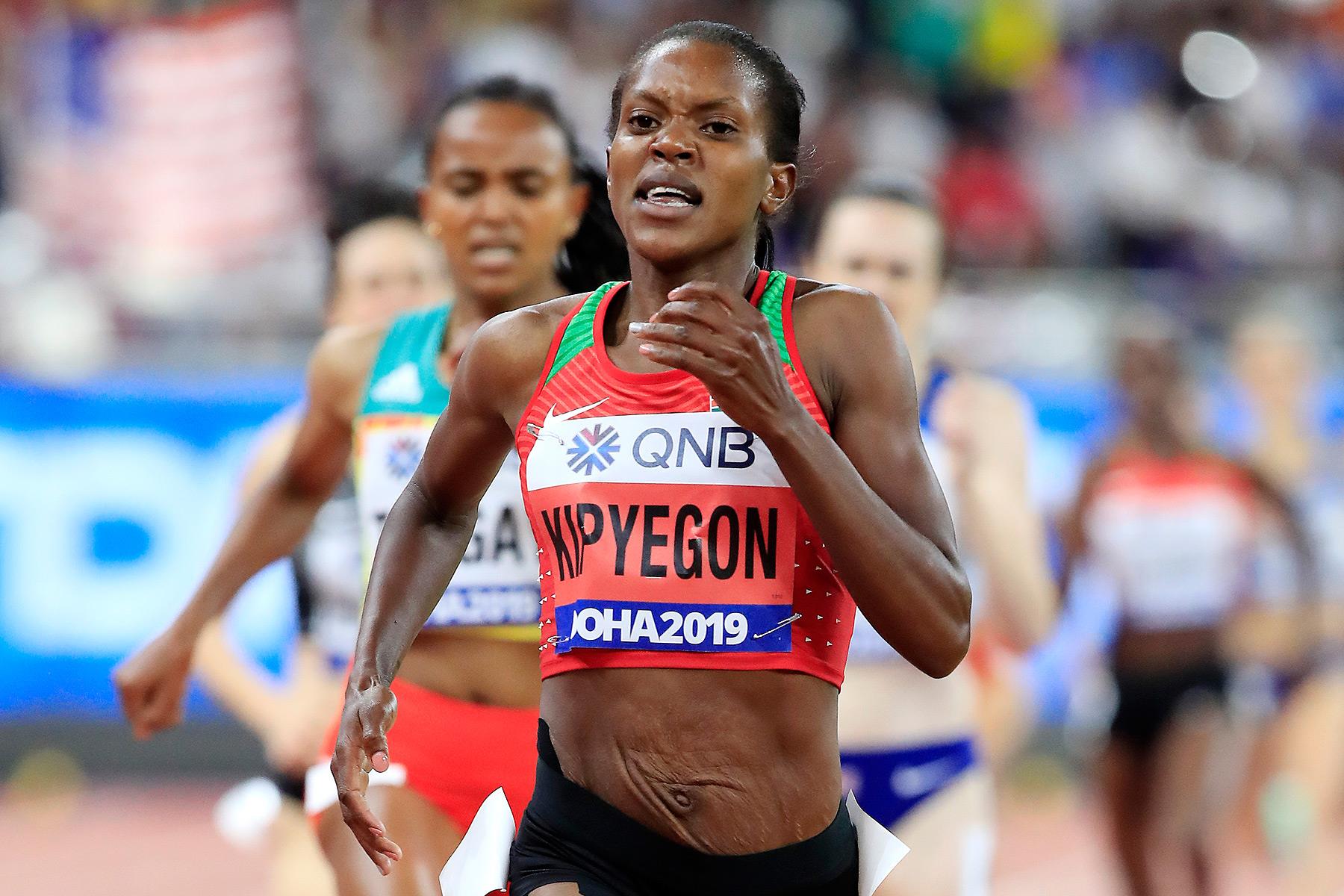
Faith Kipyegon (Source: WorldAthletics.org)
7. Africans made us Proud at the 2023 World Athletics Championships in Budapest, Hungary. There were so many outstanding contributions, and amazing firsts. Hugues Fabrice Zango of Burkina Faso who took home the gold medal in the men’s triple jump, thereby offering his country its first gold at the World Championships. Letsile Tebogo of Botswana made us proud by becoming the first African to win a silver medal at the World Championships ever in the men’s 100 m, and a bronze medal in the 200 m. Faith Kipyegonof Kenya delivered! There isn’t another athlete as consistently dominant over such a range as Kipyegon, and she was rightfully selected among the best African athlete of the year; at the world championships, she won gold medals in the women’s 1,500 m and 5,000 m in Budapest. Ladies Gudaf Tsegay, Letesenbet Gidey, and Ejgayehu Taye of Ethiopia dominated their events to give us a trio winning gold, silver, and bronze medals respectively in the women’s 10,000 m. Please check out the exhaustive list of winners.
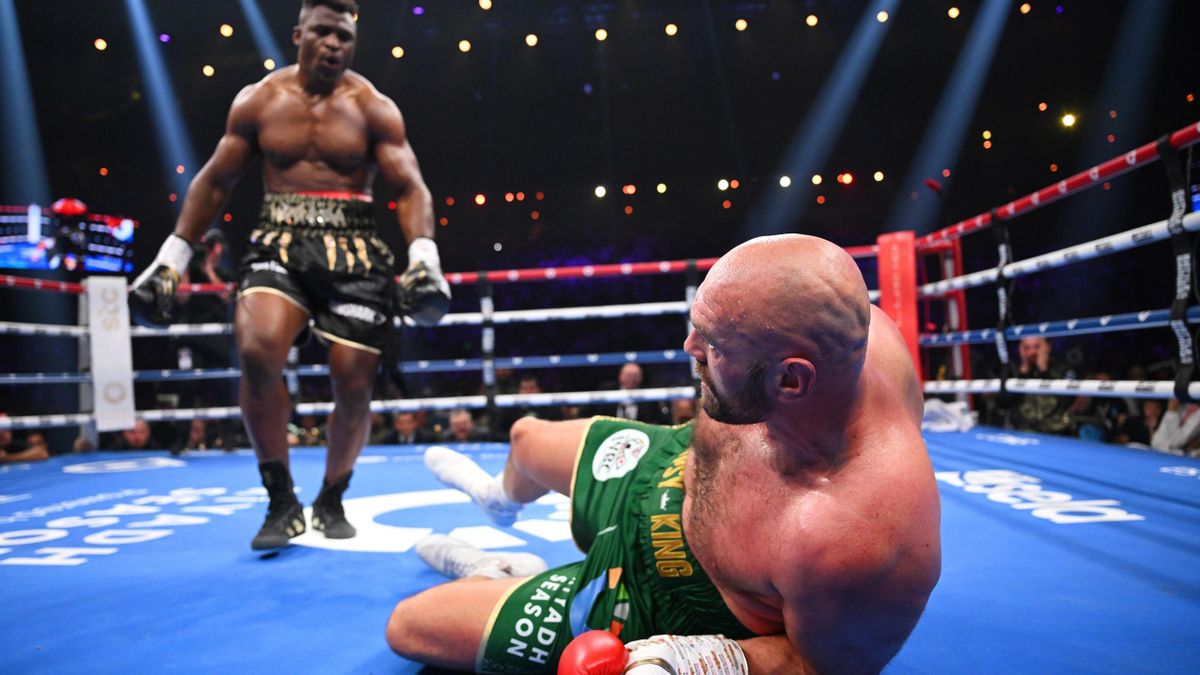
Francis Ngannou knocking down Tyson Fury in the 3rd round (Source: Eurosport)
8. Francis Ngannou, professional mixed martial artist and professional boxer, of Cameroon made us proud in the “Battle of the Baddest” against the undefeated world heavyweight champion Tyson Fury, which place on October 28, 2023, in Riyadh, Saudi Arabia. Ngannou was able to knock down Fury in the third round, taking the fight all the way to the scorecards, in which the judges awarded Fury the victory in a controversial split decision. To many, not just Africans, the real winner was Ngannou.
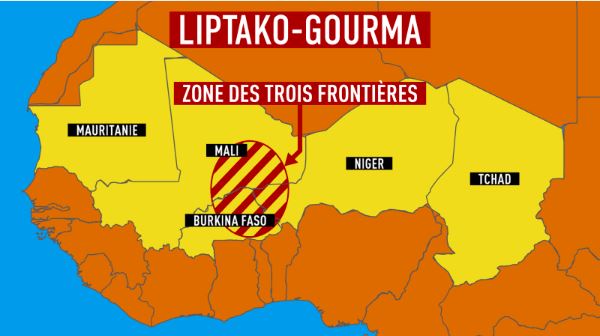
Map of Liptako-Gourma region (Source: aha-international.org)
9. Mali, Burkina Faso, and Niger signed a Mutual Defence Pact called the Liptako-Gourma Charter, to protect their countries, and fight effectively against terrorists which have been occupying the northern parts of their territories. The Liptako-Gourma Charter establishes the Alliance of Sahel States (AES), which aims to “establish an architecture of collective defence and mutual assistance for the benefit of our populations“, Colonel and leader of Mali, Assimi Goïta wrote on X. These countries have shown that we, Africans, can take care of ourselves, without the need of puppet organizations such as ECOWAS.
Ibrahim Traore, President of the Transition, raises the new plate renaming the boulevard after President Thomas Sankara (Source: LeFaso.net)
11. On the 36th anniversary of Thomas Sankara’s assassination, Burkina Faso renamed Boulevard in Honor of Thomas Sankara; the boulevard, one of the main streets of the capital Ouagadougou, was previously known as General Charles de Gaulle Boulevard. Thus, Burkina Faso has replaced the country’s former colonial ruler with its very own leader and inspiration to the nation, Thomas Sankara. We applaud Burkinabes for doing this, and hope to see many African countries follow in their tracks, as many streets and cities still wear the names of European men who wiped out entire peoples (Brazzaville, Port-Gentil, etc).
Woppa Diallo and Mame Bougouma Diene (Source: The Caine Prize/Guardian)
12. Senegalese couple, Mame Bougouma Diene and Woppa Diallo, has made history this week by winning the Caine Prize for African Writing [Senegalese Couple Makes History by Winning Literary Caine Prize for African Writing]. It is the first time in the history of the prize that it is awarded to a couple. Diallo is a lawyer and activist while French-Senegalese American Diene is a humanitarian and a short-story writer. There were also lots of African writers who published acclaimed work this year.
Map of Mali with its capital Bamako
13. Mali military forces succeeded in Kidal where France and Allies could not! The forces were able to liberate the city of Kidal from terrorist groups where France and its allies and the MINUSMA could not. They succeeded in a few days, where it took years for France and co. On November 14 2023, president Assimi Goïta of Mali announced the liberation of Kidal, stronghold of terrorist groups for the past few years. The news was so stunning that even the BBC who has been calling the Mali government, ‘the junta’ and all sorts of names, and always showing ugly pictures of Assimi Goïta, had to, begrudgingly write the article and for once showed him in a decent image :).
We said goodbye to a lot of people and things in Africa in 2023. Below are 11 of them:
1. We said goodbye to MINUSMA, a UN peacekeeping mission in Mali, which was found to be complicit to the destabilization of the country. The organization had been in Mali for a decade, with no results except a clear collusion with the terrorists (funded by external forces) who have divided the country. On their way out, weeks before they were set to leave at the request of the Malian government, MINUSMA breached their agreements with the government for a safe handout, and left abruptly leaving all sorts of heavy artillery for the rebel groups to take over the city, but the Mali governmental forces were able to defeat the terrorists and free the city of Kidal, a rebel stronghold. Mali Forces Succeed in Kidal where France and Allies could not!
Flag of Burkina Faso
2. In February, France agreed to withdraw its troops from agreed to a request from Burkina Faso’s military leaders to withdraw all its troops from the country within a month. France to Withdraw Troops from Burkina Faso. There were other defense agreements signed in 2018; this is a rescinding on the 2018 agreements. It is the third African country from which France is forced to move out its troops: Central African Republic, Mali, and now Burkina Faso.
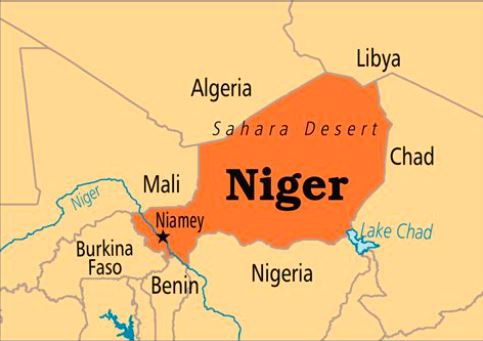
Map of Niger
3. On July 26, 2023, President Mohamed Bazoum of Niger was ousted by a military coup d’etat that saw the arrival of president Abdourahamane Tchiani at the helm of the country. France and the international community have been totally against the new government. This has let to a successive rupture of French relations in Niger, starting with a Niger – France Diplomatic Arm Wrestling, where the French ambassador refused to leave the country after the country told him to, which came to an end a few days ago with French troops leaving the country. Since the coup, Niger has been one of the fastest growing economies of the continent, now that the uranium revenues are actually entering the country’s coffers vs. France. All Eyes on Niger, Why is Niger so Poor and Why the Anti-French Sentiment?, Bye Bye to French Troops in Niger.
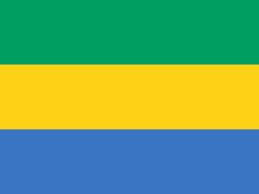
Flag of Gabon
4. On August 30, 2023, we all woke up to a military coup d’etat in Gabon by the army which ended 56 years of the Bongo dynasty by putting out Ali Bongo. We all thought we were getting someone new, but we got General Brice Clotaire Oligui Nguema, who is a cousin of Bongo and used to be the bodyguard of Bongo’s father, the late President Omar Bongo. He was also head of the secret service in 2019 before becoming head of the republican guard. Unlike the coup in Niger, the coup in Gabon was applauded by France and the rest of the international community. Is the Wind of Change blowing in Gabon too?
Map of Morocco
5. In September, Never Before Seen Catastrophes hit Morocco and Libya Few Days apart: Morocco was hit by a magnitude 6.8 earthquake, the deadliest in the country in over a century, said to have claimed over 3,000 lives. Libya was hit by unbelievable floods a few days later on September 10; these floods, the deadliest ever on the continent, and said to have claimed between 5,000 – 10,000 lives, and displaced at least 30,000 people. Our hearts go out to our Moroccan and Libyan brothers and sisters. Africa stands with you.
Ruben Um Nyobé
6. Marie Um Nyobe (born Marie Ngo Ndjock Yebga), the widow of one of Cameroon’s greatest opposition fighters and freedom fighters, the real Father of Cameroonian independence, Ruben Um Nyobé, passed away on the exact same day that her husband was murdered 65 years ago, on 13 September 1958, on the 65th Commemoration of Ruben Um Nyobe’s Murder. This came just as Cameroon and the Union des Populations du Cameroon (UPC) was commemorating the 65th year of his murder by the French forces in Cameroon.
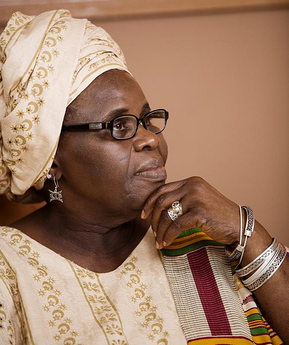
Ama Ata Aidoo (Source: W4.org)
7. This year, we said goodbye to Ama Ata Aidoo, the first published female African dramatist with her play The Dilemma of a Ghost published in 1965. She was a Ghanaian author, poet, playwright, who served in the government of Jerry Rawlings as Secretary for Education from 1982 to 1983. So Long to Ghanaian Writer Trailblazer Ama Ata Aidoo. She belongs to the generation of African women writers who dared to speak up loud and clear about African women issues at a time when it was not common. In a 2014 interview with Zeinab Badawi of BBC, she said “People sometimes question me, for instance, why are your women so strong? And I say, that is the only woman I know.”
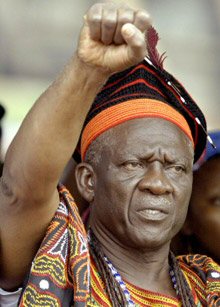
Ni John Fru Ndi (Source: Bonaberi.com)
8. Ni John Fru Ndi, the major political opponent to the current president of Cameroon for almost 3 decades passed away this year. Affectionately called “The Chairman,” John Fru Ndi came up at the twilight of the National Conference in Cameroon with the creation of the Social Democratic Front (SDF) in 1990. Over the years, his party came to symbolize hope in a place where there had been no ‘real’ leadership change in over 30 years. His party was seen as the main opposition party to the government for over 2 decades. GoodBye to a Courageous Leader : Ni John Fru Ndi and Ushering the Multi-Party Era in Cameroon. He has left a major imprint in Cameroon’s politics.
9. At the beginning of this month, Mali and Niger ended Long-Standing Tax Treaties with France, putting an end to a 50 years old tax treaty that mostly benefited French companies in these African countries. This will help Mali and Niger to finally be able to tax these companies that make billions in their countries, to get the funds necessary to fund their own economies.
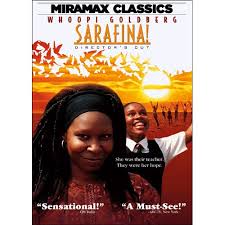
Poster of Sarafina
10. In mid-December, we were stunned by the passing of the South African singer Bulelwa Mkutukana, also known by her stage name as Zahara, a self-taught guitarist who gained recognition with her debut album, Loliwe, in 2011. She enchanted us all with Loliwe. The album was a commercial hit and won the Album of the Year at the South African Music Awards, and loved throughout Africa. Her style fell in the Afro-Soul register with her strong beautiful voice. So long blooming flower, we will keep singing to honor you.
At the beginning of the month, Mali and Niger jointly put an end to two long-standing tax treaties with France. We know that French companies in Mali or Niger (and in other of the zone Franc countries) do not pay taxes in the African countries, but rather back in France, even though the generated revenues come 100% from the host African country. Imagine the economic losses for these countries? In most of these countries, the French companies will extract, say in the case of mining, the resources, without as much as building a single road or hospital for the local populations. One can thus understand the logic behind Mali and Niger governments’ actions. Some news media (mostly western ones) claim that now Malians or Nigeriens leaving in France will be subject to double taxation… but how many billion-euros generating Malian or Nigerien companies are there in France? The answer is ZERO! There goes that pointless argument about a few (granted there are a few) Malian citizens in France having to pay taxes, while Orano (old Areva) makes billions in Niger without paying taxes to the Niger government! Such an unfair treaty really needed to go!!!
In a significant shift in fiscal and diplomatic relations, Mali and Niger have taken a stand against France by revoking two long-standing tax cooperation treaties. Dating back to 1972, these agreements were initially crafted to circumvent double taxation, fostering mutual assistance in tax matters.
The decision, outlined in a joint statement from the governments of Mali and Niger, hinged on France’s ‘persistent hostile attitude’ towards both nations and the ‘unbalanced character’ of the agreements. These treaties, according to the statement, have led to substantial financial deficits for both West African countries.
This move signals a potential reconfiguration of the international tax landscape and geopolitical alignments in the region, particularly between these nations and France. The revocation of these treaties also depicts a wider discontent with France’s influence in West African affairs.
Niger’s junta has also scrapped two key military agreements with the European Union aimed at combating violence in Africa’s Sahel region. Moreover, Mali, Burkina Faso, and Niger have withdrawn from the G5 anti-jihadist force, further intensifying the region’s security concerns.
At the end of 2021, we celebrated the win of Senegalese author Mohamed Mbougar Sarr, the first man from sub-Saharan Africa to win the prestigious literary Prix Goncourt, 100 years after René Maran who was the first person of African descent to win the prize for his controversial novel Batouala. Mbougar Sarr’s winning novel, La plus secrète mémoire des hommes (The Most Secret Memory of Men), tells the story of a young Senegalese writer living in Paris who stumbles by chance across a novel published in 1938 by a fictional African author named TC Elimane, nicknamed “the Black Rimbaud” by an ecstatic Paris media. The story, described as a reflection on the links between fiction and reality, follows the life of a cursed African writer echoing the real-life experience of the Malian writer Yambo Ouologuem who in 1968 was the first African winner of the prix Renaudot, but was later accused of plagiarism, and had to flee France back to his natal Mali, to live a reclusive life, and die in utter misery.
Malian writer Yambo Ouologuem in France in November 1968. Photograph: Yves Le Roux/Gamma-Rapho/Getty Images/The Guardian
Now thanks to Mbougar Sarr’s work, the publishing house Penguin Modern Classics is re-publishing the Yambo Ouologuem’s book over 50 years after his work was pulled out and banned. Le devoir de violence (published in English as Bound to Violence) was first published in 1968 by Editions du Seuil. After winning the Prix Renaudot that very year, Ouologuem became a celebrity equated to the likes of Leopold Sedar Senghor. “Ouologuem’s novel is harshly critical of African nationalism, and in fact reserves its greatest hostility for the violence Africans committed against other Africans” (Richard Posner on Plagiarism, the case of Yambo Ouologuem). For many critics, Africans in particular, Ouologuem’s book is a validation of the twisted views of the West on Africa who exonerate themselves of the violence they committed on Africans throughout centuries.
In 1968 the books pages of the French newspaper Le Monde excitedly praised an uncompromising new novel, Bound to Violence, going on to salute its author as one of “the rare intellectuals of international stature presented to the world by Black Africa”.
The newspaper’s words, written in tribute to the young Malian writer Yambo Ouologuem, sound condescending today. Back then, however, the intended compliment was genuine and many European critics soon agreed: the publication of Ouologuem’s strange novel really did mark the arrival of a major new talent.
But the literary world can be brutal, and particularly so for a young African novelist living in Paris who was attempting a fresh twist on conventional storytelling.
Fellow African writers began to express shock at Ouologuem’s harsh parody of his own culture. Three years later damaging accusations of plagiarism had also emerged, including a public skirmish with Graham Greene, which ended Ouologuem’s short career. He retreated into the life of a recluse, returned to Mali and died in 2017, having never published again.
Now, 50 years after this scandal, Penguin Classics is to bring out a new English edition of Bound to Violence in a bid to rehabilitate the gifted author and introduce him to new readers.
Winners of the L’Oréal-UNESCO Young Talent Prize for Women in Science Hadidjatou Daïrou (L) and Sabine Adeline Fanta Yadang (R), pose for a photograph at the Institute of Medical Research and Medicinal Plant Studies in Yaounde on November 23, 2023 (Source: AFP / VOA)
Two Cameroonian women, Sabine Adeline Fanta Yadang, a doctor of neuroscience, and Hadidjatou Daïrou, a doctor of cellular physiology, have won the prestigious L’Oréal-Unesco Young Talent Award for Women in Science for their work on the power of medicinal plants. They were chosen among 30 scientists in sub-Saharan Africa to win the award on November 8 at a ceremony held in Botswana.
Their work focuses on the use of traditional medicinal plants in Cameroon for treating cardiovascular disease and alzheimer. Daïrou’s work centers around the use of kola nut (Garcinia Kola) to improve cardiovascular health, while Yadang’s focuses on tigernut milk which is extracted from a plant with centuries-old medicinal virtues to slow alzheimer. Both scientists work together in the laboratory of the Institute for Medical Research and the Study of Medicinal Plants (IMPM) in Yaoundé, the capital. They also hail from the rural north of Cameroon where education for women, and particularly a career in science is rare.
In Cameroon’s rural north, very few girls go on to enjoy careers in science. But Sabine Adeline Fanta Yadang, a neuroscience doctor, and Hadidjatou Dairou, PhD student of cellular physiology, have smashed through the glass ceiling.
They have been recognized for the quality of their research, along with 28 others from sub-Saharan Africa, by the L’Oreal-UNESCO for Women in Science Young Talents program.
UNESCO says the program supports “young women researchers around the world to pursue scientific careers at home or abroad.”
Both women were distinguished for their research into the potential of Cameroon’s traditional herbal medicines in the treatment of heart disease and Alzheimer’s.
Kola nut
They work in a laboratory at Yaounde’s Institute for Medical Research and Medicinal Plant Studies, IMPM.
… Dairou’s interest in herbal medicine goes back to her years as a pharmacology student at the public University of Ngaoundere, in the country’s north. “I’ve seen what a plant extract does to the human body and how that can help people I know,” she says. The UNESCO program picked out her research into the “potential of the indigenous Garcinia Kola plant for treatment of cardiovascular disease.”
Fanta Yadang … likes to be known as a Moundang, a community from Cameroon’s Far North region, where her grand-parents took herbal cures. “I wanted to become a doctor, but I didn’t get good enough marks. I wanted to help my fellow people so I became interested in medicinal plants,” she says.
… For Dairou, the bark of the bitter Garcinia Kola — a grain that looks like a nut eaten across Africa to ease all kinds of problems — may improve cardiovascular health.
“In particular atherosclerosis, one of the major causes of heart attacks,” she explained.




















 African Heritage