Un faux pas de celui qui précède avertit ceux qui sont derrière(Proverbe Bayombe – Angola, République Démocratique du Congo (RDC), République du Congo, Zambie). – Un homme avertit en vaut deux.
A misstep by the one in front warns those behind(Bayombe proverb – Angola, Democratic Republic of Congo (DRC), Republic of Congo, Zambia). – Forewarned is forearmed.
A few years ago, after the horrors of the electoral crisis in Cote d’Ivoire and the bombing of its presidential palace with the capture of President Laurent Gbagbo and First Lady Simone Gbagbo, I watched a video interview of the Franco-Cameroonian journalist Charles Onana who was talking about his book “Côte d’Ivoire : le coup d’État, Duboiris, 2011 (with a preface by Thabo Mbeki).” At the end of the interview, Onana stated, “… Quand vous avez un pays riche qui est convoité par des multinationales, par des groupes mafieux, par des états, etc, vous devez décupler votre intelligence pour défendre votre pays. … En face vous avez des équipes de think-tanks qui sont là pour penser comment destabiliser le pays, donc les Africains ne peuvent pas faire l’économie d’un travail acharné, d’un travail surhumain pour s’en sortir … Pendant que la crise se calme ou s’apaise, les autres continuent de travailler pour vous destabiliser, ils refléchissent à d’autres stratégies, mais il faut que [les Africains] apprennent à refléchir à differentes stratégies de manière à ce que le Président de la République ne se retrouve pas toujours seul à penser à tout, seul à reflechir à tout, …” [When you are a rich country that is coveted by multinationals, by mafia groups, by states, etc, you must increase your intelligence tenfold to defend your country. … On the other side, you have think-tank teams that are thinking ways to destabilize the country, so Africans cannot avoid hard work, superhuman work to be free … When the crisis calms down or subsides, others continue to work to destabilize you, they think other strategies, but Africans too need to think different strategies so that the President of the Republic does not always find himself thinking not the only one think all by himself, …]
The New Scramble for Africa (Source: Source: Dr Jack & Curtis for City Press, National Institute African Studies (NIAS))
With the New Scramble for Africa, African countries should have think-tanks, the enemy has think-tanks strategizing over decades, how come we, Africans, do not? Even in times of peace, we should be strategizing… as we heard the French general, it is clear that they are already planning the defeat of Africa, and the return of Africans into their fold in 10 years… how come? When Sekou Toure said NO to the General De Gaulle and Guinea gained independence, not only were the French busy destabilizing his regime politically, militarily, arming his local opponents, but they even flooded his economy with fake currency to destroy his own free Guinean Franc (as he had said NO to the slave currency that is FCFA); the attacks were non stop for several decades, and honestly, are still going on. Thus, Africans, we need to gain our independence, and for our independence to be complete, we need to have strategies for the immediate day-to-day events, but also long-term, over 20-50 or even 100 years. It took China 100 years to get back Hong-Kong and Macau from Great Britain and Portugal… that happened because of a clear vision and strategy of defense against the enemy and reclaiming of lands.
On Friday, it was announced that the French Army has now created an African Command center to deal with current issues on the continent; it is believed to be in response to them being chased out of Mali, Burkina Faso, and Niger. This new creation would be similar to the American AFRICOM. Although, it appears to be new, in reality, it is just like an iceberg which is now showing out its visible side for all to see. There have always been French forces on African soil, there has always been a cell meant to deal with Africa (militarily) in the French government; that is how the Francafrique happened! Now, in view of the loss of uranium from Niger, gold from Mali, many other resources from Burkina Faso, France is starting to lose its place among the top nations of this world, and quickly needs to try to regain the upper hand in its former colonies. Of course, the big reason (lie) given for this is, to help partner countries in the fight against terrorism (terrorism brought to us by them).
The French army has established a Command for Africa, similar to what the American armys have already done for a long time [AFRICOM], at a pivotal moment in the French military presence, in sharp decline on the continent, according to the Official Journal (JO).
… This unprecedented creation in France of an Africa Command comes as Paris plans to reduce its military presence in West and Central Africa to a few hundred men [reduce? Maybe transform the official army and soldiers into mercenaries as it was done with Bob Denard and co?], within the framework of “renovated” and more discreet partnerships [renovated, discreet? sounds more like the Bob Denard style or Elf?].
So is the redeployment of French forces in West and Central Africa at the origin of this creation? This is indeed the primary reason, because until now the French elements in Chad, Senegal, Ivory Coast and Gabon each had a combined regional arms staff.
However, this permanent military presence is no longer in keeping with the times. The French contingent in Africa must, in the near future, be reduced to the bare minimum. …
… The concern for discretion is indeed the first desired effect. Informational attacks have made the French army radioactive [this foreign army works for foreign interests and thus has always been radioactive for African countries]. To change the situation, the army general staff wants to “reduce visibility and footprint”: very logically, this Africa Command will therefore be based in Paris.
But the objectives remain unchanged. This Command will be intended to organize support for partner countries in the fight against terrorism and the expansion of trafficking, the training of regional armies, and the access strategy. … the French military personnel will evolve according to needs and missions, but always in close collaboration with the host countries.
As always, ahead of June 30, the ‘independence’ day of the Democratic Republic of Congo (DRC), we write about Patrice Emery Lumumba, the first Prime Minister of Congo. This time, we will take a trip down memory lane with the great article by the prominent anti-colonial thinker, activist and writer, Frantz Fanon, which was published earlier here on Afrolegends in French in 2011. (You will find the original here). In view of all the events occurring in Africa (The New Scramble for Africa, Creation of the AES and destabilization attempts) with the United Nations (UN) approval, I thought that this article, published in 1964, was so important that I had translated it into English for all to read! In the article, Fanon talks about the kind of Africans who betray their people, and the uselessness (to us, Africans) of the UN which only serves Western interests. The scenario is the same and has not changed over the past 6 decades: wherever the UN lands in a country, all of sudden there are troubles, tensions, massacres, (ONUCI, MINUSMA, MONUSCO, …), etc. Enjoy… For the full article, check out: Lumumba’s death: Could we (Africans) have acted differently?
—————————————————
Frantz Fanon
The great success of the enemies of Africa is to have corrupted the Africans themselves. It is true that these Africans had vested interest in the murder of Lumumba. Heads of puppet governments, in a fake independence, faced everyday by massive opposition from their peoples, it did not take long to convince themselves that the real independence of the Congo would put them personally at risk. And there were other Africans, a little less puppet, but who get frightened when it comes to disengaging Africa from the West. It seems as if these African Heads of State are still afraid to face Africa. These, also, though less actively, but consciously, contributed to the deterioration of the situation in Congo. Little by little, we were reaching the agreement in the West that there was a need to intervene in Congo, we could not let things evolve at this pace.
Gradually, the idea of a UN intervention was taking shape. So we can say today that two simultaneous errors were committed by Africans.
Patrice Lumumba
And first by Lumumba when he sought the intervention of the UN. He should have never called on the United Nations.The UN has never been able to properly solve problems brought to man’s consciousness by colonialism, and whenever it has intervened, it was to actually come to the aid of the colonial power to the oppressed country. Look at Cameroon. What kind of peace do the subjects of Mr. Ahidjo kept in check by a French expeditionary force, which most of the time, made its debut in Algeria, enjoy? The UN, however, controlled the autodetermination of Cameroon and the French government has set up a “Provisional Executive” there.
Look at Viet-Nam. Look at Laos.
It is not true to say that the UN fail because the causes are too difficult.
Map of the Democratic Republic of Congo
In reality the UN is the legal card used by imperialist interests when brute force has failed. The sharing, the mixed controlled joint committees, under guardianship are international means of torture to break the will of the people, cultivating anarchy, banditry and misery.
… Lumumba’s fault was then initially to believe in the impartiality of the UN. He forgot that the UN, particularly in the current state, is only a reserve assembly established by the Greats to continue, between two armed conflicts, the “peaceful struggle” for the balkanization of the world. …
Africans should remember this lesson. If outside help is necessary to us, let us call on our friends. Only they can truly and fully help us achieve our goals precisely because the friendship between us is a friendship of struggles.
… Our mistake, as Africans, is to have forgotten that the enemy never backs down sincerely. He never understands. He surrenders, but is not converted.
Our mistake is to have believed that the enemy had lost its militancy and its harmfulness. If Lumumba disturbs, Lumumba should disappear.
Hesitation in commiting murder has never been a feature of imperialism.
“Quand l’Africain était l’or noir de l’Europe” de Bwemba Bong
I came across another gem in the book of Professor Bwemba Bong, “Quand l’Africain était l’or noir de l’Europe. L’Afrique: Actrice ou Victime de la Traite des Noirs? – Démontage des mensonges et de la falsification de l’histoire de l’hydre des razzias négrières transatlantiques” (When the African was the black gold of Europe. Africa: Actress or Victim of the Slave Trade ? – Dismantling the lies and falsification of the hydra history of the transatlantic Slave Raids).” After the textile industry, this time, it is about the fertility of the Kongo soil, its agriculture, and the different cultures in the 16th century. In the text, it is good to note the ancient grains used in Central Africa at the time: a grain called luco (could it be the finger millet?) from which a white flour similar to wheat, corn (introduced by Portuguese in Kongo, and which had no real value except to feed pigs, just like rice), nuts like palm nuts (from the description of its usage, one can see the beginning of the multi-million dollar palm oil industry), kola nuts, date nuts, and banana tree. As we read, we note the use of some of those grains to feed but also to heal. I wonder if some these native grains are still used today?
African fields
In his book, Pr. Bong shows that traditional African agriculture was good, and fed correctly its populations from rich and fertile plateaus, until the arrival of the Europeans who collapsed their agriculture so as to turn the economy entirely toward the trade of humans which was the only commodity of interest to them. This led to cycles of famine on a continent full of arable lands and strong agricultural knowledge. The cycle has not changed today on the African continent, with the cash crops cultures destined for consumption in the West and now East, once again leaving streaks of famine on its wake; thus the constant news about famine in Africa in countries rich with arable lands, but which are cultivating say, coffee or cocoa or others for western consumption.
Filippo Pigafetta et Duarte Lopes, Le royaume de Congo et les contrees environnantes (1591), Chandeigne/Unesco, 2002, p. 133-136 (trad. Willy Bal, présentation et notes Willy Bal); Bwemba Bong, Quand l’Africain était l’or noir de l’Europe. L’Afrique: Actrice ou Victime de la Traite des Noirs?, MedouNeter 2022, p. 175-177 (translated to English by Dr. Y, Afrolegends.com). Enjoy!
=====
The entire plateau is fertile and cultivated. It has grassy meadows and the trees are always green. It produces grains of various kinds; the main and best one is called luco. It resembles mustard see, although a little larger. It is crushed with hand mills; a while flour comes out from which we make a white bread, healthy, pleasant to the taste and which is in no way inferior to wheat bread, except that with it we celebrate mass. Such grains are found in abundance throughout the kingdom of Congo where they have been growing for a short time; the seed comes from the banks of the Nile, in the region where this river fills the second lake.
There is also white millet called mazza di Congo, that is to say “Congo grain,” and corn, which is the least esteemed and which is fed to pigs; rice doesn’t have much value either. Corn is called mazzaManputo, that is to say “grain of Portugal,” Portugal in fact bearing the name Manputo. [could this be another origin ofthe name Maputo in Mozambique?].
A plantain bunch
There are also various species of trees which produce an enormous amount of fruits, to the point that most inhabitants feed on the fruits of the country, such as citrons, limes, and particularly oranges, which are very tasty, neither sweet nor bitter and which do not in any way inconvenience those who eat them. Mister Duarte recounted (to show the fertility of the country) that he had seen a citron seed, preserved in the pulp and in the citron itself, germinate in four days.
Other fruits are those called banana. We think that they are musa from Egypt and Syria, with the difference that in Congo the banana tree reaches the size of a tree; it is pruned every year so as to produce better. The banana is a very fragrant and very nourishing fruit.
Different species of palm trees also grow on these plateaus : one of them is the date palm, the other is the one which bears Indian nuts called coccos, because inside there is a head that resembles a monkey. Hence the custom in Spain of shouting “coccola” to frighten children.
Tapper harvesting palm wine
There is another species of palm tree, similar to the previous ones and from which oil, wine, vinegar, fruits and bread are obtained. The oil is made from fruit pulp; its color and consistency are those of butter, although it is more greenish; it has the same uses as olive oil and butter; it bursts into flames; it can be used to anoint the body; it is excellent for cooking; we get it from the fruit, as we get oil from olives; we cook it to preserve it. Bread is made with the stone of the fruit, which resembles an almond, although harder; inside, we find a marrow that is good to eat, healthy, nourishing. All this fruit is green, including the pulp and is eaten raw and roasted. Wine is obtained by perforating the top of the tree : a liquor oozes out, similar to milk ; sweet the first days, it becomes sour and over time turns into vinegar, which is used in salad. But the wine is drunk chilled, it is diuretic, to the point that in this country no one offers from grit or stones in the bladder; it intoxicates the one who drinks it in excess; it is very nourishing.
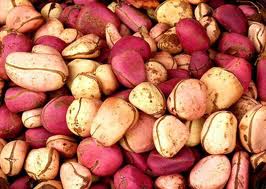
Kola nut
Other trees produce fruits called kola, the size of a pine cone and inside of which are other chestnut-shaped fruits, themselves containing four separate pulps, red and crimson in color. These fruits are kept in the mouth, chewed and eaten to quench thirst and add flavor to the water; they preserve and restore the stomach and are especially effective in liver ailments. Lopes said that a liver of a chicken or other bird, already in putrefaction, sprinkled with the juice of these fruits, became fresh again and almost resumed its previous state. Everyone uses this food commonly, in very large quantities; also it is a good commodity.
We find other wild species of palm trees which bear various edible fruits and whose leaves are used to make mats, to cover houses, to weave baskets, baskets and other objects of the same kind, which we need each day.
Other trees are called ogheghe, the fruits they bear resemble yellow plums, they are excellent to eat and fragrant. We cut branches from these trees, they are planted so closely that they touch each other; they take root and, growing and growing, form palisades and walls around the houses. By then laying mats, we create a fence, a courtyard and these kinds of trellises also serve to provide shade and protect from the heat of the sun.
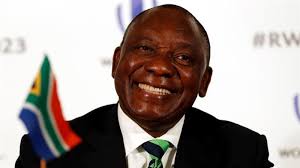
Today, President Cyril Ramaphosa has been sworn into office for a second term at the helm of South Africa. He remains in office even though his party, the African National Congress (ANC) party of South Africa, the party that brought the end of the apartheid regime, lost its parliamentary majority in a historic election on June 1, that puts South Africa on a new political path for the first time since the end of the apartheid system of white minority rule 30 years ago. The ANC won just over 40% of the votes cast, short of the majority; the Democratic Alliance (DA) won 22% of the votes coming in second; Jacob Zuma’s uMkhonto we Sizwe (MK) party came in third with 15% of the vote, while Julius Malema’s Economic Freedom Fighters (EFF) came in fourth with 9.5%. The ANC’s historic 30-year loss in South Africa and its subsequent unusual, for lack of a better word, coalition with the Democratic Alliance brings us exactly to try to understand its loss, and ask the fundamental question of why such an alliance? The strong performance by Zuma’s MK took many by surprise as it took the third place that many thought would go to Malema’s EFF. There is also speculation that MK took votes directly from the ANC, due in part to the bitter enmity between former president Zuma and current president Ramaphosa.
At the end of the elections, the leaders of the different parties shared: “The way to rescue South Africa is to break the ANC’s majority and we have done that,” said John Steenhuisen, the leader of the main opposition DA party. Julius Malema, the leader of the EFF opposition party, said that the ANC’s “entitlement of being the sole dominant party” was over. The MK Party said one of their conditions for any coalition or agreement with ANC was that Ramaphosa is removed as ANC leader and president. The ANC chose to keep Ramaphosa as president, and make an alliance with the DA.
ANC flag
The reasons for the ANC’s loss (among many others): 1) South Africa has widespread poverty and extremely high levels of unemployment, and the ANC has struggled to raise the standard of living for millions ; 2) persistent lopsided economic inequalities, which still affects the black majority ; 3) rampant corruption ; 4) a lack of public service delivery, particularly in poorer areas ; 5) the frequent power cuts, where intermittent outages have been a near-constant for almost 2 years now; which highlights also the poor shape of infrastructures; 6) thesoaring crime rate, with 130 murders and 80 rapes documented every single day in the last quarter of 2023. Above all, the fundamental problem of the ANC is that, at the end of the apartheid regime in 1994, when agreements between both sides were signed, the ANC got the political power, but not the economic; however, the economic power funds the politics and real change.
President Cyril Ramaphosa
The ANC has now made an alliance with the DA which is perceived as a mostly white, middle-class party that doesn’t care about the poor which are mostly Black. It will not be an easy pill to swallow for the majority of Black South Africans who remember the suffering under the white-rule apartheid era to welcome the return of white figures to senior political positions (perhaps even the vice presidency?). With this new power-sharing agreement, the two parties would have to get over their past antagonism, particularly the DA’s longstanding and consistent criticism of ANC “corruption”. The free-market DA, is ideologically at odds with the ANC’s social welfare traditions, and seen by many as catering to the interests of the white minority. On paper, the two political opponents have agreed to a common agenda of fixing the country’s infrastructure, providing basic services such as water and power, and creating jobs. Moreover, the DA has been the most critical opposition party for years and doesn’t share the ANC’s pro-Russia and pro-China foreign policy. Next year, South Africa will take over the presidency of the Group of 20 industrialized and emerging-market nations. Will this alliance cause issues for the BRICS (Brazil – Russia – India – China – South Africa)?
To Jacob Zuma and many, this is an “unholy” alliance. Will he be proven wrong or right? To others, this alliance marks the end of the ANC, and the beginning of a very rocky period, which will usher back a system similar to pre-1994 era. What do you think ? To others still, this alliance breaks the monolithic landscape of South African politics, and hopefully ushers a ‘real’ change that will address the issues of South Africans. What will it be? Only time will tell!
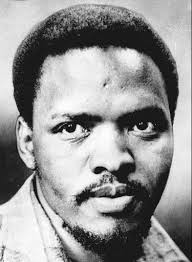
Steve Biko (Source: Britannica / Everett Collection)
The acclaimed South African poet Dennis Brutus wrote a poem in honor of Steve Biko; it was written on the anniversary of the Soweto Massacre a year later on June 16, 1978. Brutus said, “This poem written in tribute to Steve Biko reflects a long interest, including my founding of the Steve Biko Memorial Committee during exile in Chicago. Descriptions of the towns (including King Williamstown) were recalled from an earlier hitchhiking trip, from Port Elizabeth to East London. Twenty years later, Biko’s own fatal interrogation, in September 1977, occurred in the same building in Port Elizabeth in which I had been interrogated years earlier.” Steve Biko is known to many as the outspoken leader of the Black Consciousness (BC) movement. As the movement’s most prominent leader, he guided the movement of student discontent into a political force unprecedented in the history of South Africa that led to the end of apartheid in South Africa. He is known to Afro descendants around the world for his famous phrase “Black is Beautiful“, which was an inspiration to the civil rights movement in the USA, and to many other movements across the globe. Biko believed in the unity of the oppressed.
Tribute to Steve Biko
Poem composed for Steve Biko Day, San Antonio, June 16, 1978
The dusty roads from Peddie to King the yellow river choking with silt draining to i’Monti the dust-filmed bluegums poised and dreaming in the arid air the parching dust harsh in the throat and hurtful on the eyes the crude teutonic towns Hamburg, Berlin, Hanover with their ominous echoes — all these he knew their roads he traversed: they fired him with resolve and smoldering anger their racial hate seethed round him like the surge of shimmering heatwaves and laid a thousand lashes on his taut flesh: here he planned, dreamed, waged his struggle and hardened his will to confront the butchers to challenge their terror —even if they robbed him of his life.
Dennis Brutus 16/6/78

 Un faux pas de celui qui précède avertit ceux qui sont derrière (Proverbe Bayombe – Angola, République Démocratique du Congo (RDC), République du Congo, Zambie). – Un homme avertit en vaut deux.










 African Heritage