Lalibela, Ethiopian churches carved in the stone

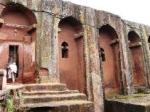
The Church of St George
Lalibela, Church of Saint George

When I was younger, there was a cartoon on television in which they always mentioned the churches of Lalibela, and somehow I used to think that it was not actually real,… you know like these made-up places in cartoons!  Isn’t it interesting that the name Lalibela always made me think of honey bees (abeille in french)… Imagine my surprise when I found out that it is said that at birth a swarm of bees descended on the baby king’s head, and his Mother named him Lalibela, meaning “the bees have recognized him as king!

Lalibela, Bete Medhane Alem church
Lalibela, Bet Gebriel Rafael church

Carved straight from red volcanic stone, and actually from a single stone, Lalibela is the place of pilgrimage of thousands of christians every year, and is one of Ethiopia’s holiest places. It was intended to be the New Jerusalem, in response to the capture of Jerusalem by Muslims. The architecture of Lalibela was revealed to King Gebrel Mesqel Lalibela one night in his dreams (he is said to have seen Jerusalem in his dreams) by God; he was instructed to build churches never seen before. Lalibela is actually made up of 11 medieval churches rock-hewn. Many of its names come from Jerusalem, like the Yordannos (Jordan) river, the church of Mary, etc.  The most well-known is the Church of Saint George (or Bet Giyorgis in Amharic) which was probably the last one built around the 13th century and has the shape of a cross and has been referred by some as the 8th wonder of the world. It is about 30 m deep, and is simply stunningly beautiful! Talk about a church built on stone!

Lalibela, Bet Medhane Alem

Lalibela is now regarded as one of the greatest Ethiopian architectural wonders and is ranked the eighth most incredible historical site in the world by UNESCO. It entered the UNESCO world heritage in 1978. Ethiopians themselves love to tour their own country and treasures, and about 1/3 of the tourists at popular Ethiopian sites are Ethiopians.

Check it out on the UNESCO website (http://whc.unesco.org/en/list/18/), Ethiopia Travel (http://www.ethiopiatravel.com/Lalibela_eng.htm), and http://www.selamta.net/lalibela.htm

Also check out youtube=http://www.youtube.com/watch?v=qAYaEbdriwc

Bogolan: The art of making mudcloth

A piece of Bogolan cloth

Allright, in the category “Great Art”, I would like to introduce you to Bògòlanfini commonly known as bogolan which is a traditional Malian fabric dyed with fermented mud, particularly associated with the Bamana people of Mali. The name is a Bamana word meaning “earthcloth” (Bogo = earth, lan = the way to obtain a result from the earth). Bogolan became mainstream when the genius stylist Chris Seydou (who worked with stylists such as Yves Saint Laurent) modernized its use in society, incorporating it in western coats, and dresses. Today, as you walk down the streets of New York City, you would definitely encounter these beautiful African American ladies wearing Bogolan coats in the midst of winter. The Bamana people have used Bogolanfini in all parts of their lives for centuries, and the art of making it is centuries old, and is passed from generations to generations.

Couvre-Lit en Bogolan

The Smithsonian made a beautiful page about the Bogolan and some of its artists, including the great Chris Seydou. One of the artists, Nakunte Diarra says that in the Bamana creation, “Since God created the world,… Bogolan was there.” What a beautiful to emphasize the importance of Bogolan in the Bamana society, and today in Malian life.

Please check out the website by the Smithsonian, and get a chance to make your own bogolan: http://www.mnh.si.edu/africanvoices/mudcloth/index_flash.html

The video below was chosen particularly because the artist, Issiaka Dembele, gives a historical background to the art of making Bogolan. You will find shorter videos on how Bogolan is made , but this one was the most profound!

You can also check out: http://www.dailymotion.com/relevance/search/bogolan/video/x44khp_05-formation-a-la-confection-de-bog_travel

I have only posted Part 1, dont’ forget to check out part 2 (http://www.youtube.com/watch?v=nrIL9oS9vq4).


A renowned African stylist: Pathe’O

Pathe'O, the "princes' stylist"
Pathe’O, the “princes’ stylist”

Pathe’O is a renowned African Stylist.  Nicknamed “the princes’ stylist,” Pathé Ouedraogo is from Burkina Faso and established himself in Côte d’Ivoire in the 70’s. He is an outstanding stylist, just like the late Malian stylist Chris Seydou who revolutionized the use of Bogolan.  Pathe’O is a baobab of African couture.  He even made ‘Madiba‘ (Nelson Mandela)’s clothes. Yup… that’s right! Pathe’O designed clothes for Madiba! Do you remember when Madiba opened the African Cup of Nations in South Africa in 1996? Guess who designed that beautiful

Nelson Mandela clothed in a Pathe'O shirt
Nelson Mandela clothed in a Pathe’O shirt

shirt Madiba wore (Mao/African style)?…Pathe’O! From then on, many African leaders have switched from 3-piece suits to Pathe’O!

Well, then… you can read more about an African genius on his own website: http://patheomode.com/index.htm

I also found a nice article: http://www.abidjan.net/qui/profil.asp?id=31 Newsweek also had an article on it: http://www.newsweek.com/id/64537

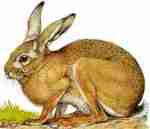
Le lièvre et le baobab

Le Lievre
Le Lievre

Un roi avait une fille plus belle que toutes les femmes du pays. Et les demandes en mariage lui arrivaient chaque matin, de plus en plus nombreuses. Un jour, il fit dire dans tout le royaume:
– Je marierai ma fille à celui qui traversera d’un seul coup de flèche le gros baobab qui se dresse sur la place du village. Une fête sera donnée. Tous ceux qui veulent gagner ma fille viendront avec leur arc et leur fleche: ils essaieront leur force et leur adresse.
Le roi pensait ainsi garder toujours sa fille, car le baobab du village était plus gros qu’une case, et personne, semblait-il, ne serait assez fort pour le traverser d’un seul coup de flèche.
Mais… le lièvre avait entendu, et le lièvre aurait bien voulu épouser la riche et jolie fille du roi. Or, qui donc est plus malin que le lièvre?
Notre animal s’en alla trouver un perce-bois (insecte qui attaque le bois) de ses amis et lui dit:
– Perce-bois, mon ami, je t’ai rendu bien des services. A ton tour de m’aider. Tu vas percer de part en part le gros baobab qui se dresse sur la place du village.
L’insecte partit et se mit à l’ouvrage aussitôt. Il gratta, il rongea, il travailla avec tant d’ardeur qu’en trois jours la besogne fut terminée.
Le lièvre fabriqua une flèche assez petite pour passer par le trou; puis il ferma avec de la toile d’araignée les deux ouvertures. Tout cela fut fait si rapidement et si habilement que personne ne se douta de rien.

Le lievre et le baobab

Le jour de la fête arriva. Ce furent les gros animaux qui commencèrent: l’éléphant, le lion, le buffle; mais les plus forts arrivèrent tout juste à enfoncer dans l’arbre le fer de leur flèche. Furieux, ils vinrent se rasseoir à leur place.
Le tour du lièvre était le dernier. Notre animal, vêtu d’un large pantalon bleu, d’un veston vert à boutons dorés, coiffé d’une chéchia rouge, se leva lentement d’un air fier et important.
Tout le monde éclata de rire:
– Comment, disaient les spectateurs, voila le lièvre qui veut se montrer plus fort que le lion, le buffle et l’éléphant!
Le lièvre, dedaignant les moqueries, salua humblement le roi; il salua galamment la fille; il salua dignement les grands chefs et les notables. Puis, il s’en alla à la place réservée au tireur.
Il mit un genou en terre, visa longuement et – han! – il lâcha la flèche.
La flèche partit en sifflant; elle arriva juste sur la toile d’araignée, traversa le baobab et souleva la poussière par derrière.
Un cri d’admiration s’éleva de la foule: “Le lièvre a gagné! le lievre a gagné!”
La jeune fille lui fut donnée à l’instant et il partit, la tenant par la main, tandis que sur son passage la foule s’écartait respectueusement et poussait des cris d’enthousiasme.

D’après un conte de l’Afrique noire, tiré de Contes de la Brousse et de la Forêt, de A. Davesne et al. (2eme illustration tiree du meme livre).

Chinua Achebe, a Writer like no other

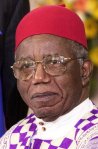
Chinua Achebe
Chinua Achebe
Things Fall Apart
Things Fall Apart

Chinua Achebe, the great Nigerian writer, has always made me so proud of being African. I have his entire collection at home and I believe that he should be nominated for a Nobel Prize! I mean, isn’t the nobel prize supposed to acknowledge those who have affected the way people think? Isn’t it supposed to recognize those who have influenced generations? Well, then, Chinua Achebe created the “Nigerian novel” genre and not only influenced numerous African writers, but opened the world to an African story like none other (Things Fall Apart). His novel “Things Fall Apart” has been translated in over 22 languages and is currently taught in high schools and universities in the US and around the world… If I was on the Nobel prize committee, I will definitely nominate the great Chinua Achebe: he is long overdue!

For more information, check out Wikipedia on Chinua Achebe (http://en.wikipedia.org/wiki/Chinua_Achebe), and http://chinua-achebe.com/. Click on the link below to see parts of the interview given by Chinua Achebe on CNN.

Don’t forget to check out Part 2 and Part 3 of the interview.

Amilcar Cabral, Le père de l’indépendance Bissau et Cap-verdienne

Amilcar Cabral
Amilcar Cabral

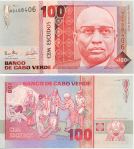
Amilcar Cabral est à mes yeux, tout comme Thomas Sankara, un des rares visionnaires qui ait foulé la terre africaine. Il s’est battu pour l’indépendance et l’union de la Guinée Bissau et du Cap-vert qui, à l’époque, étaient des colonies portugaises. Après des études d’agronomie à Lisbonne au Portugal, Amilcar rentre en Guinée comme fonctionnaire en 1952. Jugé dangereux, il est muté en Angola (il y passera 1 an), et décide à son retour de fonder le “Parti Africain de l’indépendance de la Guinée-Bissau et des îles du Cap-Vert (PAIGC)”. Il oeuvrera si bien que malgré son assassinat le 20 Janvier 1973, la Guinée Bissau obtiendra son indépendance quelques mois plutard. J’ai trouvé une très belle interview qu’ Amilcar avait donné à un journaliste francais où il parle des raisons pour lesquelles la Guinée Bissau et le Cap-vert devraient être indépendants. C’est dommage que son rêve de voir ces 2 pays unis ne se soit pas réalisé, mais la Guinée Bissau et le Cap-Vert lui doivent leur indépendance. (Durant la guerre d’indépendance, il se faisait souvent appellé par son nom de guerre: Abel Djassi). Sa photo est encore aujourd’hui sur les billets de banque du Cap-Vert.

Amilcar Cabral sur un billet de 100 escudos
Amilcar Cabral sur un billet de 1000 pesos

Amilcar Cabral, Fundador da nacionalidade Caboverdeana e Guineense. Nasce em Bafatá, Guiné, 12 de Setembro 1924. 1945: Com uma bolsa de estudo, ingressa no I. S. Agronomia, em Lisboa – 1950: Termina o curso e trabalha na Estação Agronómica de Santarém – 1952: Regressa a Bissau, contratado para os S. Agrícolas e Florestais da Guiné – 1955: O governador impõe a sua saída da colónia; vai trabalhar para Angola; liga-se ao MPLA – 1956: Criação em Bissau do PAIGC –  1970, 22 de Novembro: O governador da Guiné-Bissau decide e Alpoim Calvão chefia a operação de “comando” “Mar Verde” destinada a capturar ou a eliminar os dirigentes do PAIGC sediados em Conacri: fracasso! – 1973, 20 de Janeiro: Amílcar Cabral é assassinado em Conacri.

Le journaliste Alain Foka de RFI a également consacré une de ses emissions à Amilcar Cabral, sur le plateau de “Archives d’Afrique.” For more information, check out wikipedia (http://en.wikipedia.org/wiki/Am%C3%ADlcar_Cabral), http://www.amilcarcabral.org/ and http://www.umassd.edu/specialprograms/caboverde/acaddress.html

Timbuktu, one of the world’s first and oldest university

Timbuktu
Timbuktu

Oh wow… I always knew Timbuktu (Tombouctou in Mali) because of the story of the great emperor of the kingdom of Mali, Mansa Kankan Musa. I knew it was the center of his empire, but it is only lately that I realized that it was one of the world’s first and oldest thriving university! Students came from all over the world to study at Timbuktu. Imagine that, students from the middle east, and Europe coming to Africa to study! oooohhhh … Goodness Gracious, that sight only would make me proud! Well, to those who say Africa only has an oral tradition, go and check out the 700,000 manuscripts at the great Sankore University in Timbuktu, and tell me what you think! Oh la la…

In one documentary, the speaker mentions that they translated one of the manuscript on Algebra from Arabic to

Sankore University in Timbuktu

French, and sent it to France to be evaluated educationally; well, that manuscript revealed that the mathematics it contained was currently studied in 2nd year of university in France, and the speaker then says “and that was taught at universities in Timbuktu before the 16th century“!  Wow… my Goodness!

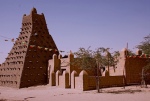
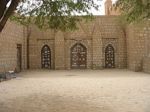
Timbuktu also houses some of the world’s oldest mud mosques, and every year the people of the city unite to re-do the walls of the mosque. It was added to the UNESCO world’s heritage list in 1988  (http://whc.unesco.org/en/list/119/).

Read about it on Wikipedia: http://en.wikipedia.org/wiki/Timbuktu

Great Zimbabwe, a civilization of stone

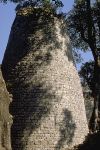
A Conical tower
A Conical tower

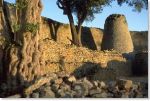
Have you ever felt tired of people telling you that there was no great Black civilization? that there was nothing in “sub-saharan” Africa? Well,… I have heard of a great African kingdom in the southernmost part of Africa: Great Zimbabwe which stands for “great house of stone” in the Shona language! Houses upon houses made of stone, and today some of them still stand tall in Zimbabwe. When a German geologist ‘stumbled’ (you know what I mean… like christopher Columbus discovered America at a time when it was already full of people) upon it, he was convinced that it could not be the work of Africans! Well, then… let me present to you Great Zimbabwe, a kingdom located between the Zambezi and Limpopo rivers! It is a civilization which flourished from the 11-15th centuries. Just like the Maya, Aztec, incas, we also have our own!

UNESCO made it a world site heritage in 1986. (http://whc.unesco.org/en/list/364/)

Check out http://www.metmuseum.org/toah/hd/zimb/hd_zimb.htm

Great Zimbabwe ruins

There are great documentaries about Great Zimbabwe, but I decided to choose a short doc made by school children (please don’t be distracted by the masks shown in these video which are not from southern Africa but from West and Central Africa), since all the others mostly focused on the European researchers rather than Great Zimbabwe itself. If you are curious, feel free to go check all the other documentaries on youtube or dailymotion (such as Zimbabwe’s Ancient Ruins Part 1-3, http://www.youtube.com/watch?v=8Kdhyj2kc6c).

Thomas Sankara, The African Che

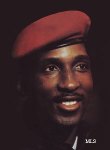
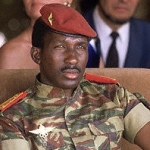
Captain Thomas Sankara

Thomas Isidore Sankara was a great visionary African leader, the kind which comes around once every 50 years or century. He had an unlimited and undying love for his country, his fellow countrymen, and his continent. He had a vision for a true independent African country, and continent. He strongly believed in justice, and worked extremely hard. He was a man of great integrity and discipline. At a time when women were relegated to the kitchen, Thomas spoke out loudly for women’s rights, and admitted women in the military, and in key positions within his government (the minister of Budget was a woman). What kind of man names his country “the land of upright people” (le pays des hommes integres)? What kind of man, by his passion and vision, reorganizes an entire country in just 4 years! no wait… actually just 3 (since the last year, Sankara’s government was crippled by internal division with Compaore’s factions). Well… let me tell you who that is: the great, and only, splendid Thomas Sankara, who made me proud of being an African child, who made me raise my chin up and walk upright!

Thomas Sankara in Ouagadougou

At the time Sankara was assassinated, he was only 38 years old, a year younger than Ernesto Che Guevara… but just like Che, he left an indelible mark in the history of the world! Please join me in celebrating Captain Thomas Sankara!

(If you would like to learn more about him, please check out the website: – http://www.thomassankara.net/?lang=fr which does a good job of keeping Thomas Sankara’s memory alive and  http://en.wikipedia.org/wiki/Thomas_Sankara which I contributed to).

Click on the link below and watch the video!

Thomas Sankara, le Che Africain


Hello World!

Dear All,

This is going to be a blog about African legends, African problems, African diaspora, African history, and history of other countries and continents. For this blog, I will mostly use pictures, videos-documentaries, and audios. I have created this blog because I am curious, I love history, and particularly history of the African continent. I have found that many of my African friends, young or old, are like me and are not well-acquainted with their history… since most of it is not written. I have learned a lot these days, and would like to share with others what I have found.

I do not claim to know the absolute truth or that these videos say the absolute truth, but I would like you to think… and ask yourselves questions, and be curious… History is history, sometimes good and great, and other times ugly and bitter… You cannot erase the bad, you can only learn from it. History is like a compass: it gives a sense of direction to future generations. Like the journalist Alain Foka from RFI always says: “A people without history is a world without soul! (Un peuple sans histoire est un monde sans ame!)” Some of these videos will be in French, others in English, Spanish, and even Portuguese. As you know, French, English, Spanish, and Portuguese are official languages in many countries of Africa.

I would like to inform those who don’t know, and would like to be informed as well. Feel free to comment if you find good information that could be shared with others. I will try to post as many as I can find… and would create interesting topics that could be discussed.