Nigeria to sell its Fuel in Naira – More Countries are Moving away from the Dollar

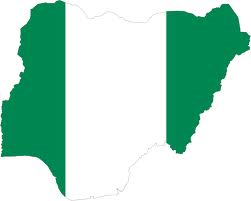
Flag and map of Nigeria

This is a new turn in the move away from the dollar. Yes! you heard it right… more countries are moving away from the dollar, and more transactions are being done in local currencies. The dollar’s dominance is slowly going away. When the war in Ukraine started in February 2022, and the West leveled a lot of sanctions against Russia, blocking its funds, I bet the end of dollar was not what they foresaw. Now Russia deals with China in Rubles or Yuan, India with China in Rupees, … not dollars! Now Nigeria, Africa’s largest country, is going to sell its oil in Naira!!! Are more countries going to deal in local currencies? Is this the end of the petrodollar?

Excerpts from the article below is from Business Insider Africa. Enjoy!

=====

The federal government of Nigeria has commenced the sale of its crude oil to Dangote Refinery and other refineries in its local currency, naira, effective October 1, 2024.

The naira-for-crude initiative, which has already commenced, would mean that crude would now be sold to the Dangote refinery and others in naira. In return, the Dangote refinery would supply PMS (petrol) and diesel of equivalent value to the domestic market, also in naira.

The Minister of Finance, Wale Edun, confirmed the commencement of this policy in a signed statement on Saturday, October 5, 2024, saying the initiative is a significant step by the government in stabilizing the economy and enhancing Nigeria’s economic growth and development.

… “The strategic initiative and bold step taken by the President Bola Ahmed Tinubu-led Administration is expected to have a lasting impact on Nigeria’s economy, fostering growth, stability, and self-sufficiency, especially as the country continues to navigate the complexities of global markets, this strategic move positions Nigeria for success in the years to come,” the statement read.

… Economic experts explained that the initiative if implemented successfully, will alleviate pressure on the naira, eliminate unnecessary transaction costs, and enhance the availability of petroleum products nationwide.

L’Impartialité / Impartiality

Pluie / Rain

La pluie ne se gêne pas, elle mouille même une belle-mère (Proverbe Ntomba – République Démocratique du Congo (RDC)) . – Le juge doit être impartial.

The rain does not hold back, it wets even the mother-in-law (Ntomba proverb – Democratic Republic of Congo (DRC)). – The judge should be impartial.

All Support to Charles Onana as Trial against Him begins

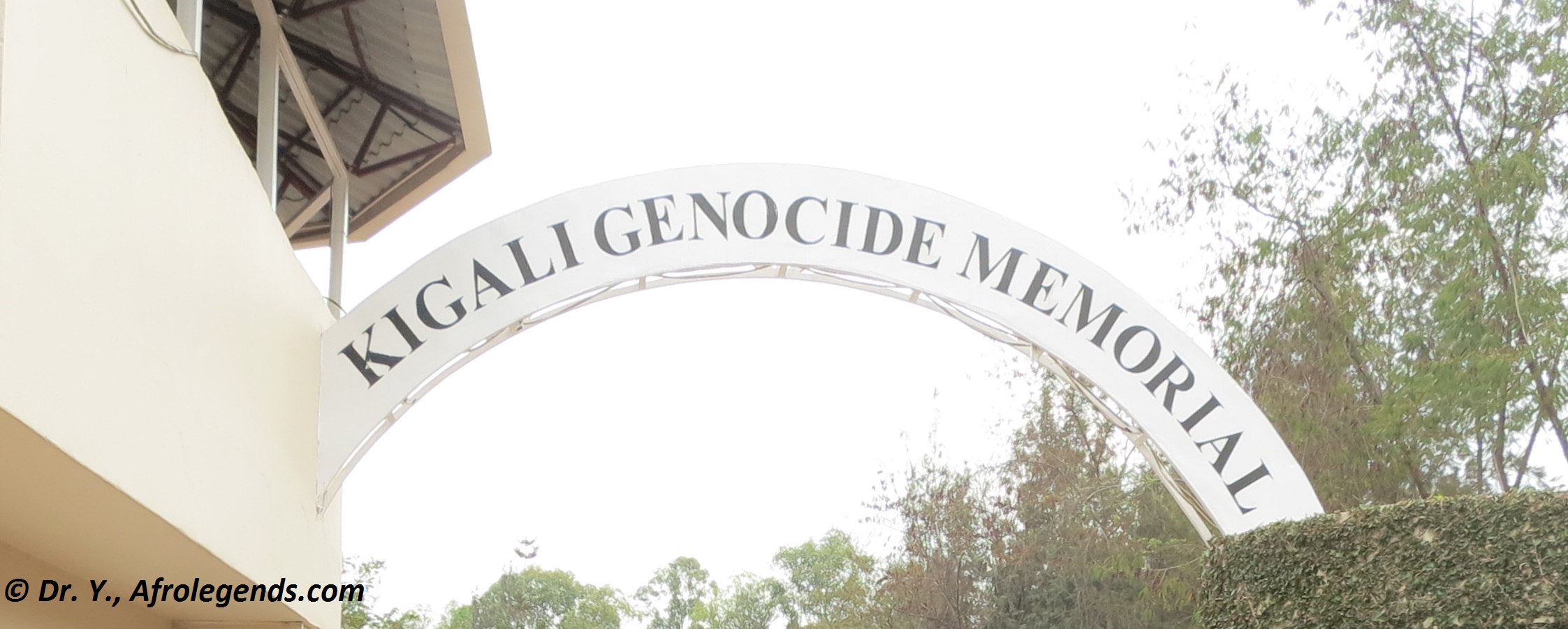
Kigali Genocide Memorial, Kigali, Rwanda

The trial against Charles Onana opened up yesterday, Oct. 7th, in Paris, France, and he is being accused of complicity in contesting the 1994 Rwandan genocide. Under French law, it is an offence to deny or “minimize” the fact of any genocide that is officially recognized by France. Mr Onana’s trial will be “historic, since there is not yet any case law strictly speaking related to Rwanda” on questions of Holocaust denial, as Camille Lesaffre, campaign manager for NGO Survie, one of the organizations which brought the case forward, told AFP.

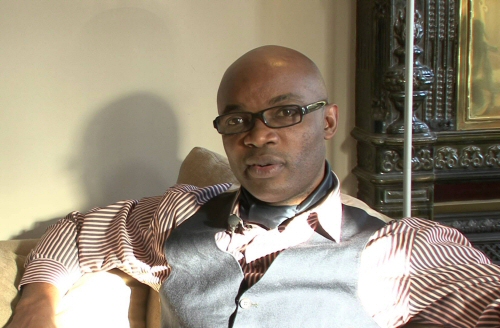
Charles Onana

Friends, please rise in support of the Franco-Cameroonian author and journalist Charles Onana. Onana has been among those who have questioned the narrative of the Rwandan genocide of 1994 (NOT whether it happened or not) and by extension the Congolese genocide which has been ongoing for almost 3 decades and been swept under the rug. Thanks to his constant hammering, and his books, many now know that there is an ongoing genocide in the East of the Democratic Republic of Congo (DRC), and more importantly that, these massacres have been going on for the past 30 years, and above all that Congo’s destabilization is coming from Rwanda, which serves as a pawn for foreign powers who want a part in the enormous resources of the DRC.

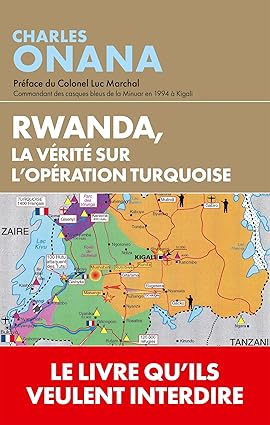
“Rwanda, la Verite sur l’Operation Turquoise” de Charles Onana

I have listened to Onana on several occasions and have read several of his books: nowhere does he question the Rwanda genocide or its happening; he is not a negationist. As his lawyer, Emmanuel Pire, told the AFP news agency, his book published 5 years ago, was the work of a political scientist based on 10 years of research to understand the mechanisms of the genocide before, during and after”. Over the past 25 years, Onana has meticulously documented and questioned first the narrative about the place of France in the Rwandan genocide via its Operation Turquoise (Rwanda, la vérité sur l’opération Turquoise : Quand les archives parlent enfin). On April 6, 1994, the airplane transporting 2 sitting presidents, presidents Juvénal Habyarimana of Rwanda and Cyprien Ntaryamira of Burundi was shot in mid-air; to date, it has not brought an uproar as to how or why the plane of 2 presidents had been shot down. This is what really triggered Onana’s interest in the region: if it were anywhere in the world, this would have produced an uproar and multitudes of investigations, but somehow, in the case of Africa, it has been total silence. In 2006a French investigation concluded that Paul Kagame, president of Rwanda, was responsible for the killing, to which Kagame responded that the French were only trying to cover up their part in the genocide. We know that since Sarkozy, France has been playing the kissing game with Rwanda.

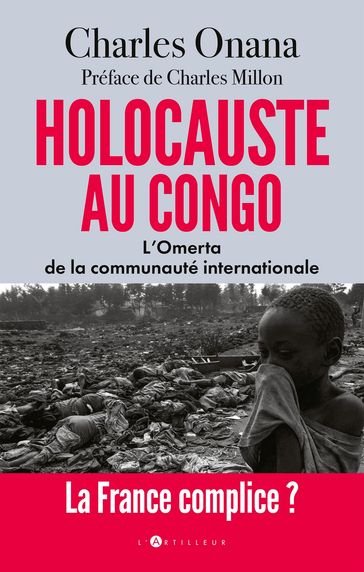
“Holocauste au Congo, L’Omerta de la Communaute Internationale” by Charles Onana

In his works, Charles Onana simply demonstrates that since 1994, the world has been witnessing the masked invasion of Congo by militias and troops of Paul Kagame, sponsored by the West. His latest book, “Holocaust in Congo, the International Community’s Omerta” is a true gem. Onana has even brought a case, on October 4, against the president of Rwanda, after receiving death threats.

Over the years, Onana has detailed and stood for the Congolese, and now, thanks to his work, and those of others, people now know that there is a silent genocide in the east of Congo which has been going on for almost 3 decades and whose victims approximate over 10 millions deaths, 500,000 raped women, and yet the world has been silent, even though some like Dr. Denis Mukwege, Nobel Peace Laureate, are being recognized for their work helping the victims of those attacks.

The questions should be: why is there a silence on the genocide of the Congolese people? Why is there a silence on the aggression of troops supported by Rwanda on Congo? How can there be a systematic killing of millions of people in a country, and total silence? Who benefits from this? Then people will talk of the international community as a group which represents the world… NO… the international community only serves the interests of the few who benefit from Congo, the geological scandal that it is, being brought to its knees. Let’s all come out in support of Charles Onana.

Comment les chefs résolvent les disputes / How Kings Solve Disputes

Behanzin wearing Kanvo, in 1895

Les chefs n’arrangent pas leurs palabres devant l’assemblée (proverbe Libinza – République Démocratique du Congo(RDC)). – Les parents ne s’injurient pas devant les enfants.

The leaders do not arrange conflicts in front of the assembly (Libinza proverb – Democratic Republic of Congo (DRC)). – Parents do not insult each other in front of the other.

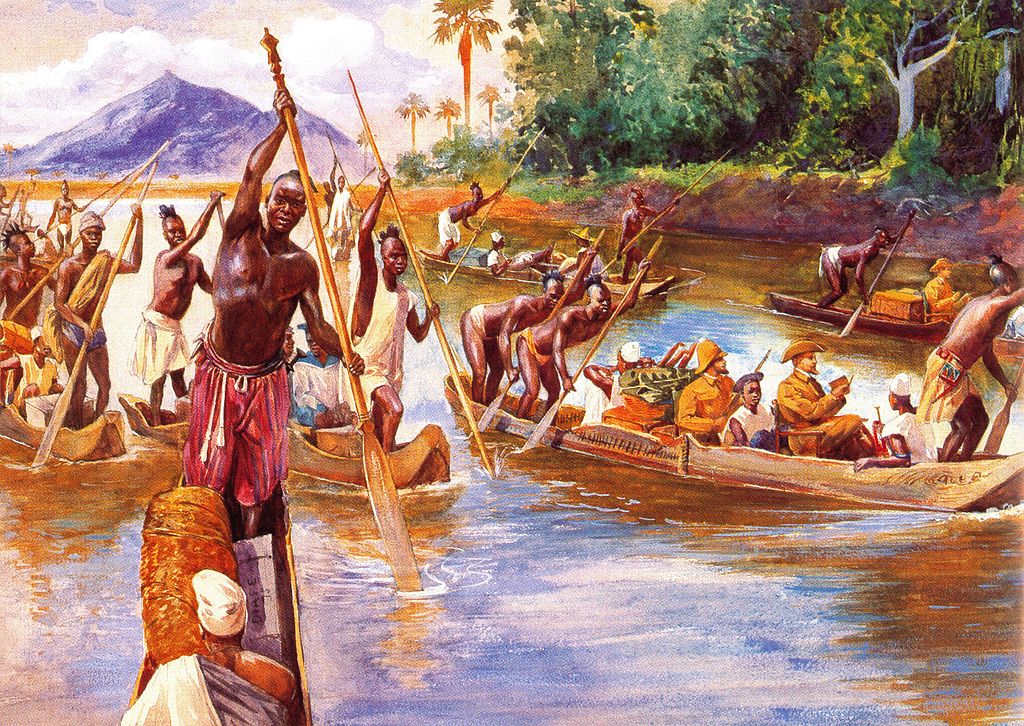
Description of the Kasaï in Congo in the 1900s

Royal Kuba Masqueraders in Nsheng, Kasai, Congo, ca 1909 (Source: RandAfricanArt.com)

Below is a description of an African city by a well-known European explorer. In 1904, German ethnologist and archaeologist Leo Frobenius, entered the Kasai district in Congo, formulating the African Atlantis theory during his travels. Frobenius entered the heart of Africa, and described the cities as beautiful, and the local art work as comparable to European style. He described the intricate craftsmanship in the work of iron, copper, and the quality of the art found on cutlery, cups, pipes, and more. He was astounded by the graceful manners and moral cannon of the locals of all ages and classes, and depicted it as far superior to those of Europeans. Frobenius stated that he knewof no people who could compare in terms of unity of civilization.” This was at the turn of the past century, and the place was still unpolluted by European influence. Later, as he described, the full arrival of Europeans corrupted the place.

As the east of the Democratic Republic of Congo(DRC) has been going through so pain, war and genocide over the past decades, let us unite the way Frobenius saw it. Enjoy! This is from Leo Frobenius, La Civilisation africaine, Le Rocher, Paris, “Civilisation et Traditions”, Jean-Paul Bertrand Editeur (1984), p. 17-18 (translated to English by Dr. Y, Afrolegends.com).

=====

Leo Frobenius in Africa in 1910 (watercolor painting by Carl Arriens)

In 1906, when I entered the territory of Kassaï-Sankuru, I still found villages whose main streets were lined on each side, over several distances, with four rows of palm trees, and whose [houses], each charmingly decorated, were works of art. There was no man who did not carry sumptuous weapons of iron or copper, with inlaid blades and handles covered with snake skin. Velvet and silk fabrics everywhere. Every cup, every pipe, every spoon was an object of art perfectly worthy of comparison with the creations of the European Romanesque style. But all this was only the particularly tender and shimmering down which adorns a wonderful and ripe fruit; the gestures and manners, the moral canon of the entire people, from the small child to the old man, although they remained within absolutely natural limits, were marked by dignity and grace, in the families of princes and the rich as in those of vassals and slaves. I know of no people in the North who can compare with these primitives in terms of unity of civilization.

Alas, the last “Islands of the Blessed” were also submerged by the tidal wave of European civilization. And the peaceful beauty was swept away by the waves.

Proverbe de l’Egypte Antique sur l’experience / Ancient Egypt Proverb on Experience

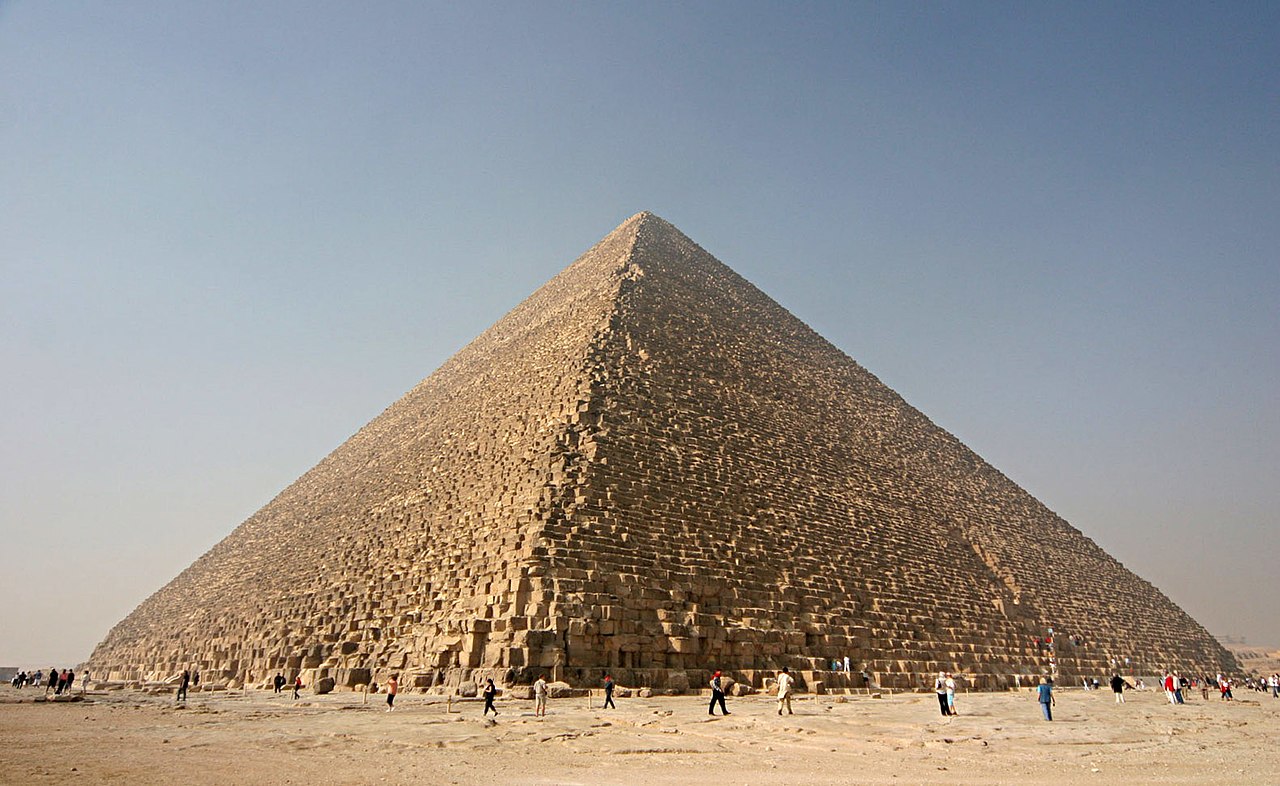
Egypt’s Great Pyramid (Source: Nina A. Thune / Wikipedia)

L’experience vous montrera, un maître ne peut que vous montrer la voie (Proverbe de l’Egypte Ancienne).

Experience will show you, a Master can only point the way (Proverb from Ancient Egypt).

Pharaoh Thutmose III’s 3,500-Year-Old Egyptian Royal Retreat Unearthed in the Sinai Desert

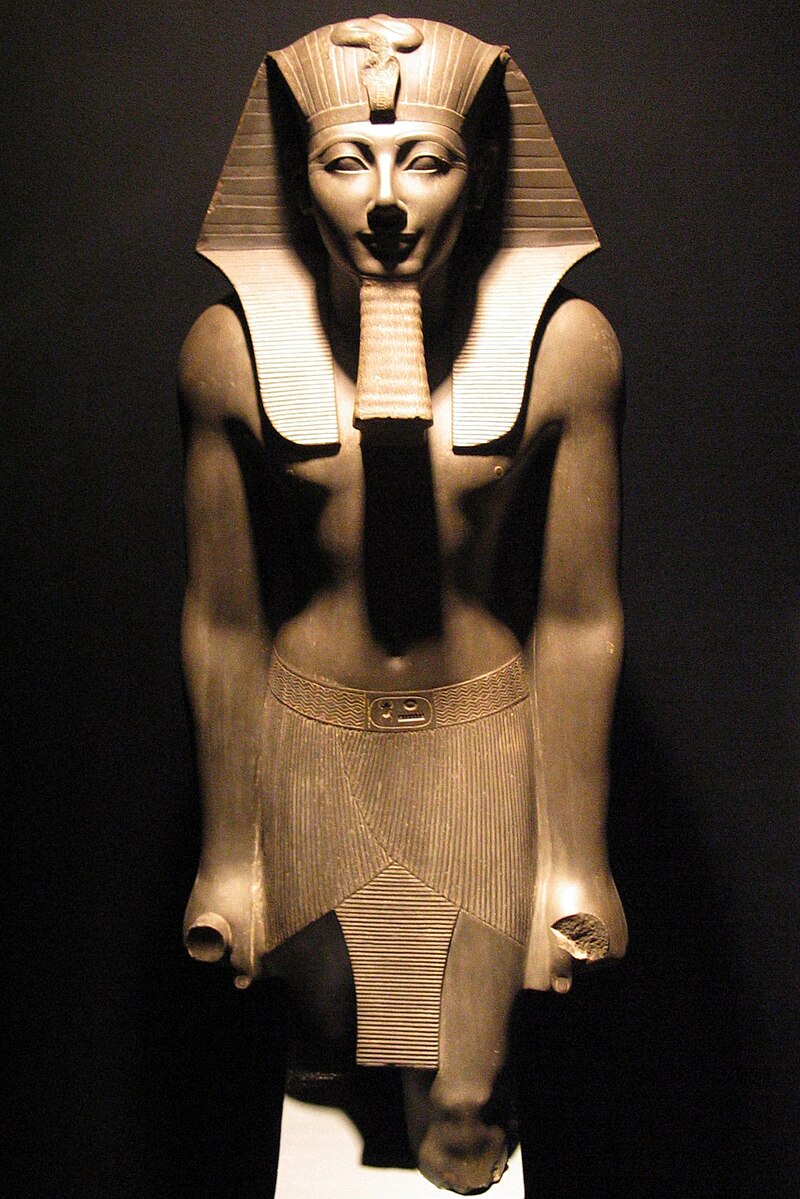
Pharaoh Thutmosis III statue at the Luxor Museum

Last May, an Egyptian mission unearthed the remains of a 3,500-year-old fortified royal retreat at Tel Habwa archaelogical site in the Northern Sinai Archaelogical Area. This ancient fortified area is believed to have belonged to Pharaoh Thutmose III (Thutmosis III) and to be one of his vacation homes or rest palaces. The structure dates back to the reign of Pharaoh Thutmose III, the sixth pharaoh of ancient Egypt’s 18th dynasty in the New Kingdom period. Thutmose III is thought to have ruled Egypt from 1479 to 1425 B.C.. He is regarded as one of the greatest military commanders in history, leading successive victorious campaigns that expanded Egypt’s empire to its greatest extent. This is the pharaoh’s whose Lateran obelisk still stands today in Rome. Everyday more treasures of Ancient Egypt are getting unearthed.

The Egyptian Ministry of Tourism and Antiquities (MTA) announced that the building is made of mud-brick and the site includes the presence of a royal palace to house the king. The building consists of two consecutive rectangular halls, accompanied by a number of rooms. It appears to have been fortified with a perimeter wall. The royal rest home features a grand main hall with three limestone columns, a secondary hall, and several adjoining rooms, all adorned with prominent pillars.

Researchers found the building’s remains at Tel Habwa, an archaeological site northeast of Cairo (Source: The Egyptian Ministry of Tourism and Antiquities)

It is likely that this building had been used as a royal respite due to the architectural planning of the building and the scarcity of pottery fractures [broken pottery] inside,” the Egyptian Ministry of Tourism and Antiquities said in a translated statement shared on their Facebook page. The Egyptian Archaeological Mission, operating at the Tel Habwa (Tharo) Archaeological Site, made this discovery during excavations as part of the Sinai Development Project.

This discovery is pivotal as it illuminates crucial aspects of Egypt’s military history, particularly in the Sinai region, during the New Kingdom era,” said Mohamed Ismail Khaled, Secretary-General of the Supreme Council of Antiquities, as reported by Ahram Online.

To learn more, check out the ancienthistory, smithsonianmag, and popularmechanics.

Proverbe Yoruba sur l’experience/ Yoruba Proverb on Elderly Experience

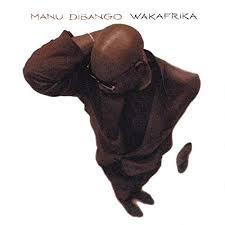
Manu Dibango on the cover of his album Wakafrica

Foriti foriti lomu ki ori Agba pa (Owe Yoruba – Nigeria).

La tête d’un vieillard est chauve parce qu’il a pris beaucoup de problèmes sur sa tête tout au long de sa vie (proverbe Yoruba – Nigeria) – L’endurance prolongée est ce qui donne la maturité des personnes âgées.

The head of an old man is bald because he has taken on so much trouble on his head in his lifetime (Yoruba proverb – Nigeria) – prolonged endurance is what yields elderly maturity.

Attention! A Call to Action for Africans by Nathanael Minoungou

Flag of Burkina Faso

Africa is a very rich continent, and one of its most important wealth is its youth… Africa is young, and the West, as seen by many of its generals and politicians, trembles. As Africans, it is our duty to free our continent. We can no longer stay behind while others get fat over our resources. As young Africans, it is our destiny to rise and conquer our freedom; we can no longer live it to others, or think future generations will do it for us… the future is now, if we cannot impact today, we will never change tomorrow.

I saw this speech by Nathanael Minoungou, alias Nael Melerd, a Burkinabe who shared a call to action to all Burkinabe and to all Africans. Time is of the essence. Africa, Rise! Enjoy! I have translated a few lines… For the whole speech, watch his video!

Burkina Faso
Burkina Faso

The biggest scam of time, the biggest scam of the century, is not to rob a country, but to make a young person believe that he has time ahead of him. A young person does not have time, time is for the old … I hear, “Enjoy your youth because we only live once,” lies and scams, we only die once, we live every day.

Africa is invincible because of its youth, as long as this youth remains awake and takes its responsibilities … if we cannot defeat you, we must by all means make you waste time, time that you do not even have …

How do you manage to have time, while people call your country poor?

How do you manage to have time while your land is exploited, while Africa is assisted at almost all levels?

How do you manage to have time in the midst of reconquering food sovereignty while the fields are idle in the village due to a lack of able-bodied workers?

How do you manage to have time in the midst of the fight against terrorism when even the elderly are enlisting to defend the homeland?

How do you manage to have time when people work during the day, and at night become watchmen that are called wayiha? … how do you manage to have time?

How do you manage to have time in the middle of rebuilding while you have “made in China” on your t-shirt and underwear?

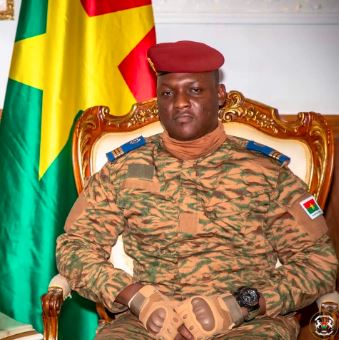
Capitaine President Ibrahim Traore (Source: sig.gov.bf)

… African youth has not suffered from poverty, … illiteracy, … African youth has rather suffered from a lack of reference points and worthy leaders … until today when these youth can finally turn to you, Comrade President Captain Ibrahim Traore … From now on, everything has changed, because everything has become urgent, because everything has happened quickly, and because Africa is proud!

That is why, if you are the Captain, know that from now on, all the young people in this room, in uniform or not, are now soldiers engaged at the front for the sovereignty of Africa! … If you accept the sacrifice, stand on your feet ! ATTENTION!

“Fashion the Revolution with the People” by Sekou Toure

Sekou Toure, Cover Time Magazine, Feb. 16, 1959

Every September we celebrate the lives of some of Africa’s great leaders who were either born or assassinated during that month, Ruben Um NyobeAgostinho Neto, Amilcar CabralKwame NkrumahGamal Abdel Nasser, and Steve Biko. I found this quote in Steve Biko’s book I Write What I Like p.32, by Sekou Touré, the Guinean leader who said NO to the France of General De Gaulle (Guinea: the country who dared say ‘NO’ to France). This quote by Sekou Touré is so on point, as it matches the revolutionary spirit that should be found in each African who fights to free his land. Each one of us is needed for the revolution, but we cannot just be bystanders, but need to add our hands to the fight. African leaders need to fashion the revolution with the people, if they want to free their lands.

To take part in the African revolution, it is not enough to write a revolutionary song; you must fashion the revolution with the people. And if you fashion it with the people, the songs will come by themselves and of themselves.

In order to achieve real action you must yourself be a living part of Africa and of her thought; you must be an element of that popular energy which is entirely called forth for the freeing, the progress and the happiness of Africa. There is no place outside that fight for the artist or for the intellectual who is not himself concerned with, and completely at one with the people in the great battle of Africa and of suffering humanity.”