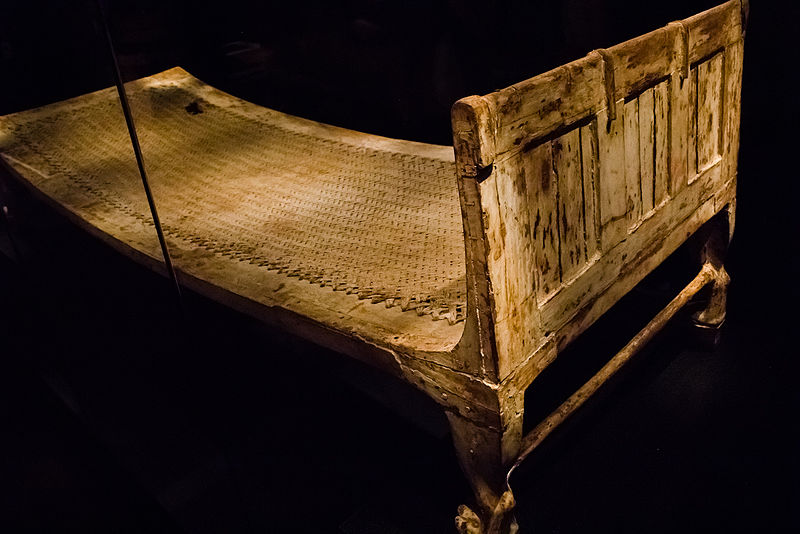
Bed found in Tutankhamun’s tomb in Egypt (Source: Wikimedia)
Mai-gado ya so kwana mai-tabarma sai shi nade.
Le propriétaire du lit veut dormir, l’homme avec la natte doit la plier (proverbe Haoussa – Afrique de l’Ouest et quelques parties de l’Afrique Centrale). Le propriétaire est de retour!
The owner of the bed wants to sleep, the man with the mat must roll it up (Hausa proverb – West and parts of Central Africa). The owner is back!
Official portrait of President Donald J. Trump, Friday, October 6, 2017. (Official White House photo by Shealah Craighead)
This past Tuesday, November 5 2024, Donald Trump made an amazing and spectacular comeback to the highest office of the American nation, winning both the electoral and popular votes by a landslide, with the Republican party taking both the House and the Senate. In essence, he was given a mandate by the people. His victory, unlike what mainstream media had promised, was a real red tsunami (MMs should be sued for blatantly lying and taking sides in elections). Overall, many Africans rejoice because as it is well-recorded, Trump is the only American president in recent years who has not started a war. In the warmongering climate in which the world currently is, with fears of a third world war, this position offers a great appeal to many Africans. Relationships between countries are not love affairs, but business deals, and Africans need to remember what they stand for and seek benefits for themselves. Congratulations to the new president of the United States, and best wishes. Africans need to take advantage of the upcoming 4 years of a new establishment to enable policies that will strengthen them economically, politically, and socially.
There is no doubt that Donald Trump’s victory will have great impacts on Africa. There are many areas that will be affected by this change; but we will focus on two key ones. 1) The economy: what will happen to the African Growth and Opportunity Act (AGOA), and is it any good? What will happen to the significant American deals in Africa such as the Lobito Railway construction meant to go through Angola, Zambia and the Democratic Republic of Congo (DRC), contract which had been won initially by China? or other deals across the continent?; 2) Geopolitical dynamics: what will be Trump’s take on Africa this time around, particularly as it pertains to the slap taken in recent years by France in the Sahel or the closure of the American base in Niger and the countries of the AES federation, or the wars in Sudan and DRC, or Russia’s growth in Africa, or China’s deals on the continent? Will America continue its expansionist vision? Only time will tell.
Messages have come from all corners of Africa, congratulating Donald Trump for his victory. Excerpts below are from The Africa Report.
=====
Flag of Egypt
… Egypt’s Abdel Fattah el-Sisi, … was quick to congratulate Trump… “Egypt and the US have always presented a model of cooperation and succeeded together in achieving the common interests of the two friendly countries, which we look forward to continuing in these critical circumstances that the world is going through,” said Sisi in a statement early Wednesday.
… The South African president [Cyril Ramaphosa] looks forward to “continuing the close and mutually beneficial partnership between our two nations across all domains of our cooperation.” In the global arena, said: “South Africa looks forward to our presidency of the G20 in 2025, where we will work closely with the US who will succeed us in the G20 presidency in 2026.”
Flag of South Africa
… Earlier, Clayson Monyela, South Africa’s head of public diplomacy, took to X to respond to a user’s assertion that Kamala Harris would be better for South Africa than Trump. “Historically relations between South Africa and the US thrive under a Republican White House,” he wrote, adding that during Trump’s first term, he appointed a woman born in South Africa as the US Ambassador to South Africa. “She was brilliant and helped to enhance the strong and mutually beneficial ties between our two nations.”
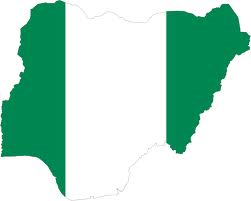
Flag and map of Nigeria
… Nigerian President Bola Tinubu in a statement expressed “heartfelt” congratulations to the US president-elect, seeking to strengthen the ties between the two countries “amid the complex challenges and opportunities of the contemporary world”. Tinubu said: “Together, we can foster economic cooperation, promote peace and address global challenges that affect our citizens.” … “Given his experience as the 45th president of the US from 2017 to 2021, his return to the White House as the 47th president will usher in an era of earnest, beneficial and reciprocal economic and development partnerships between Africa and the US.”
Flag of Kenya
Kenya’s William Ruto has been slower to congratulate Trump than his impeached deputy Rigathi Gachagua, who congratulated the American leader for “one of the greatest political come-backs of our generation”. He wrote on X: “Your victory is clear proof that resilience and a never-say-die attitude will always TRUMP obstacles on the path to your destiny.” … President Ruto has since congratulated in a statement, celebrating the “longstanding partnership with the United States spanning over 60 years, grounded in our shared values of democracy, development and mutual respect”.
Flag of Ethiopia
… it was no surprise to see Ethiopian Prime Minister Abiy Ahmed among the first African leaders to congratulate Trump on his victory.
… Zimbabwe’s President Emmerson Mnangagwa congratulated Trump, saying, “The world needs more leaders who speak for the people”.
The DRC’s Félix Tshisekedi, whose controversial first-term victory was waved through by the first Trump administration, congratulated Trump, “in the name of the Congolese people, for his great victory”, saying he was ready to work together.
Kome nisan dare, gari ya waye (Karin Magana Hausa).
Quelque soit la durée de la nuit, le matin viendra (proverbe Haoussa – Afrique de l’Ouest et quelques parties de l’Afrique Centrale). – Les épreuves ne durent pas à jamais.
However long the night is, the morning will come(Hausa proverb – West and parts of Central Africa). Trials don’t last forever.
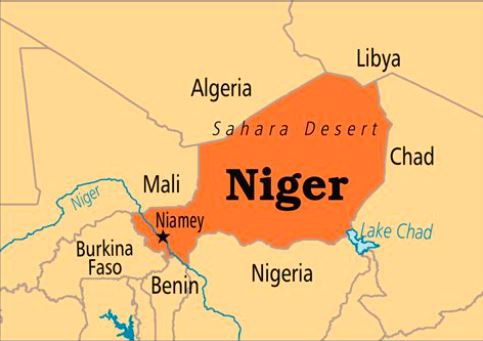
Today, we will talk about the capital of the great country of Niger, Niamey. Growing up, I often pondered on the name of the capital of Niger: was it a name that had something to do with Niger? Did it have to do with the fact the city is located on the banks of the Niger River, the third longest river of Africa, which has its source in Guinea near the Sierra Leone border, and runs in a crescent shape through Mali, Burkina Faso, Niger, Benin, and Nigeria? What is the origin of the name Niamey?
Niamey in 1930 – in the center is the house of the French governor (Source: Photo by Walter Mittelholzer – Dec 1930)
The region of Niamey has been inhabited by local populations for as long as forever; the Songhay , Gurma, Hausa are some of its inhabitants. Niamey is said to have been founded by the Maouri, a subgroup of the Hausa people, who came from Matankari (the historic capital of the Arewa) towards the end of the 19th century. From local folklore, they first settled on the island called Neni Goungou (pronounce Neni Gungu) which faces the actual city of Niamey, before settling on the left bank of the Niger river, near a tree. This gave rise to the name Niame, from Niathe name of the tree, and mein the Zarma language which means ‘shore where water is drawn from.’ There is another legend, less likely in my opinion, which claims that the chief of a Kalle (subgroup of the Zarma people) clan would have exclaimed, talking to his slaves: Wa niammané, meaning “take this country.” The first version seems more likely.
Aerial view of Niamey in 2021 (Source: Adrien Barbier / AFP / Getty Images)
Niamey started expanding from a village to a city in the year 1900 in a place which was previously a crossroad between several villages Foulani Koira, Gaweye, Kalley, Maourey, Zongo, Gamkalé, and Saga. The city grew on the left bank of the river as it meanders from west to east. European explorers arrived in the area quite late. Thus, European explorers who traveled through West Africa, such as Heinrich Barth and Charles Monteil never made it to the area. It is only in 1898 that the name of Niamey appears in the reports of the Hourst expedition, named after the French officer Émile Auguste Léon Hourst who was directing a hydrographic expedition. Thus, in 1901, Niamey was a village numbering 600 inhabitants at the arrival of the French mission Lenfant. Niamey replaced Zinder as the capital of Niger on 28 December1926, because of its strategic position closer to major cities of French colonies, Upper Volta/Burkina Faso and Dahomey/Benin, contrary to Zinder which was closer to Nigeria a British colony. During the colonial period, Niamey also served as an important connection point in overland trade of agricultural goods. Niger is still a major provider of agricultural goods to neighboring countries, uranium, and more recently with oil discovery.
Niamey in 2020 (Source: NigerHeritage.org)
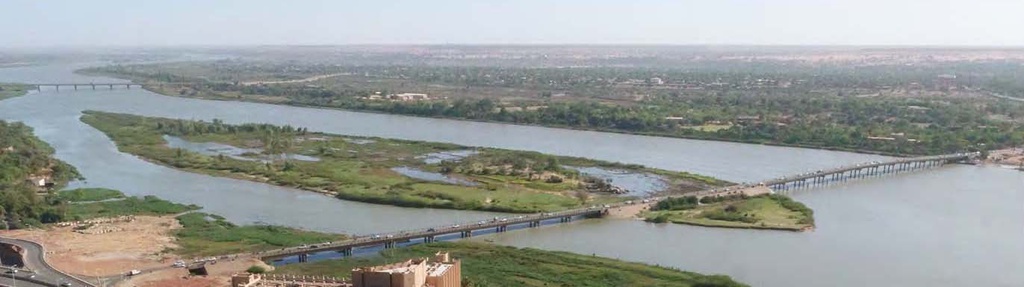
Today in Niamey, the vast majority of the population and government and commercial buildings are located on the eastern bank of the Niger river. The city center contains a number of wide boulevards linking roundabouts. Two bridges connect the two sides of the city – the Kennedy Bridge and the Friendship Bridge. The western bank area consists mainly of residential areas such as Gaweye, Saguia, Lamorde, Saga, and Karadje, as well as Abdou Moumouni University. This year, the government renamed major streets of the city after local heroes, as it should normally be. Over the years, the population has grown significantly and today Niamey counts almost 1 million inhabitants.
View of the Isle of Gaweye and the Kennedy Bridge (Source: NigerHeritage.org)
If you ever visit Niamey, do not forget to visit the Niger National Museum, which incorporates a zoo, a museum of vernacular architecture, a craft center and exhibits including dinosaurskeletons and the Tree of Ténéré, which was until 1973, one of the few remaining trees in the Sahara Desert and one of the most isolated trees on earth used as a landmark by caravans through the Ténéré region of northeast Niger. Other places of interest include the seven major market centers, the most popular being the large Niamey Grand Market, a traditional wrestling arena, the Great Mosque, and a horse racing track. Most of the colorful pottery sold in Niamey is hand made in the nearby village of Boubon. As you walk through the city, try to see if you can find that tree at the origin of the name Niamey, and enjoy the well-renowned Nigerien’s hospitality.
In November 2023, while on his first visit to Kenya as a monarch, King Charles gave one of those empty speeches in which he acknowledged the past atrocities committed by Great Britain and its colonial legacy. He said there were ‘no excuses‘ for it, yet did not apologize! He told guests that “the wrongdoings of the past are a cause of the greatest sorrow and the deepest regret.” (No Apology from King Charles III in Kenya). This year, at the Commonwealth Summit which took place last week in in Samoa, the leaders of the Commonwealth somehow expected an apology from the King of Great Britain about slavery, the part that Great Britain played in the slave trade, and possible reparations. Has anything changed in a year? It would seem that these Commonwealth leaders had not paid attention to the King’s visit to Kenya, or maybe they thought it was going to be different? If King Charles III had not apologized for the atrocities committed by the British during the colonial era in Kenya, what made them think that he was going to apologize for slavery? or that they could now talk about reparations?
The back of a slave
This year, the King of the British made another empty speech at the Commonwealth Summit, telling everyone how the “most painful aspects of our past continue to resonate“, as if we did not know, for our ancestors were on the receiving end, their pains still resonate with us. He added, “None of us can change the past. But we can commit, with all our hearts, to learning its lessons and to finding creative ways to right inequalities that endure.” What does this even mean? What is Britain going to commit to, with all its heart? Learning its lessons? Which lessons? What lessons can one learn when one’s coffers have been filled to the brim from others’ pain? What lessons can one learn when because of the slave trade, one has become one of the richest empires in the world? Those lessons are definitely different from the ones the enslaved and the victims have learned. From this, it is clear that the British monarch is truly mocking us!
Below is an excerpt from the BBC telling us, why King Charles III cannot quite apologize for slavery!
=====
The “most painful aspects of our past continue to resonate“, King Charles III said this week to Commonwealth leaders in Samoa, as arguments about reparations and apologies over the slave trade rumbled once again.
That’s become an occupational hazard for the Royal Family, as it can’t shake off questions about the long shadow of historic links to slavery.
It’s even more pointed in a forum such as the Commonwealth summit, with leaders representing some of the countries most affected by the legacy of colonialism and slavery.
But even if the King had a personal belief that there should be a symbolic apology or a commitment to reparations, he wouldn’t have been able to deliver it [as if he could think otherwise, when his family and entire kingdom has benefited from it]. Monarchs speak on the advice of ministers – and on a question of such political sensitivity, his speeches will have to stay within the boundaries of government policy. In other words, he has to stick to the script.
… “None of us can change the past,” the King said diplomatically, neatly aligning with Prime Minister Keir Starmer’s line that we “can’t change our history”.
… As head of state, the King is the symbolic focus of calls for such redress, whether that’s financial reparations or some other ways addressing of historic wrongs. That’s not going to go away.
That’s awkward but he’ll take that in his stride, as it’s a political decision that he can’t change and reparations for the past seem unlikely when current UK budgets are under intense stress. [their coffers were filled from your pain, now that you ask for something, their budgets are under stress].
But there’s also the more complicated question of how much the monarchy, as both a family and an institution, might have a closer responsibility.
For example, the Royal African Company, founded in the 17th Century under royal patronage, has been claimed as transporting more enslaved people from Africa across the Atlantic than any other company.
But history, like people, can be full of contradictions. When it came to Britain’s pioneering efforts to abolish slavery, in the early 19th Century, research by historian Prof Suzanne Schwarz found the Royal Family itself was divided. The nephew of George III, the Duke of Gloucester, was one of the most important campaigners to abolish slavery – a tireless opponent of the cruel trade and a supporter of the Royal Navy’s efforts to intercept slave ships. But before the royals feel the clouds lifting, George III’s son, the future William IV, was one of the most enthusiastic defenders of slavery.
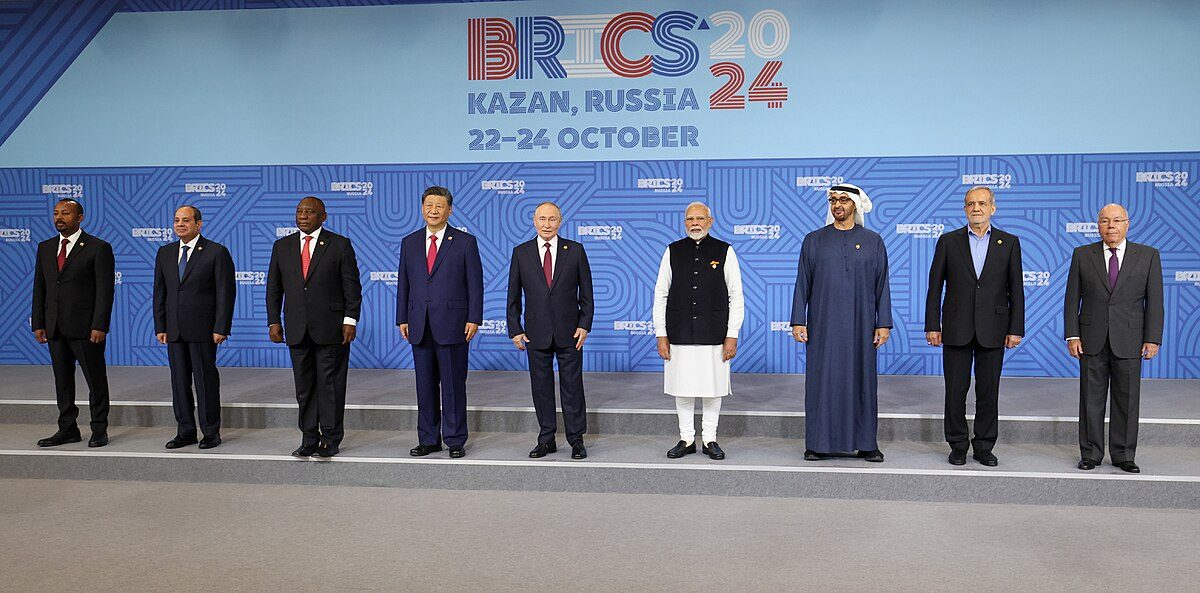
Last week, Vladimir Putin of Russia hosted the 16th edition of the annual BRICS summit which took place from October 22-24 in the city of Kazan in Russia. This was the largest gathering of world leaders in Russia in decades. The aim of the alliance is to foster a more equitable and inclusive global order, challenging the economic and political monopoly of the West.
BRICS stands for Brazil, Russia, India, China and South Africa. The group started in 2006, and Brazil, Russia, India and China convened for the first BRIC summit in 2009. South Africa joined a year later, in 2010.
BRICS (Source: RussiasPivotToAsia.com)
In 2023, BRICS extended invitations to include Egypt, Ethiopia, Iran, Saudi Arabia and the United Arab Emirates after these countries applied for membership. Saudi Arabia has yet to formally join, but the others have.
Presidents of many countries in the world were present at the meeting, and even the UN Secretary General Antonio Guterres was in attendance. BRICS’ evolution from an economic concept to a geopolitical force has been remarkable. The expanded members now collectively represent 44.3 % of the world’s population, 29.5 % of the land mass, and 30.8 % of the global gross domestic product (GDP) (49.7 % of global GDP in purchasing power parity, or PPP, terms).
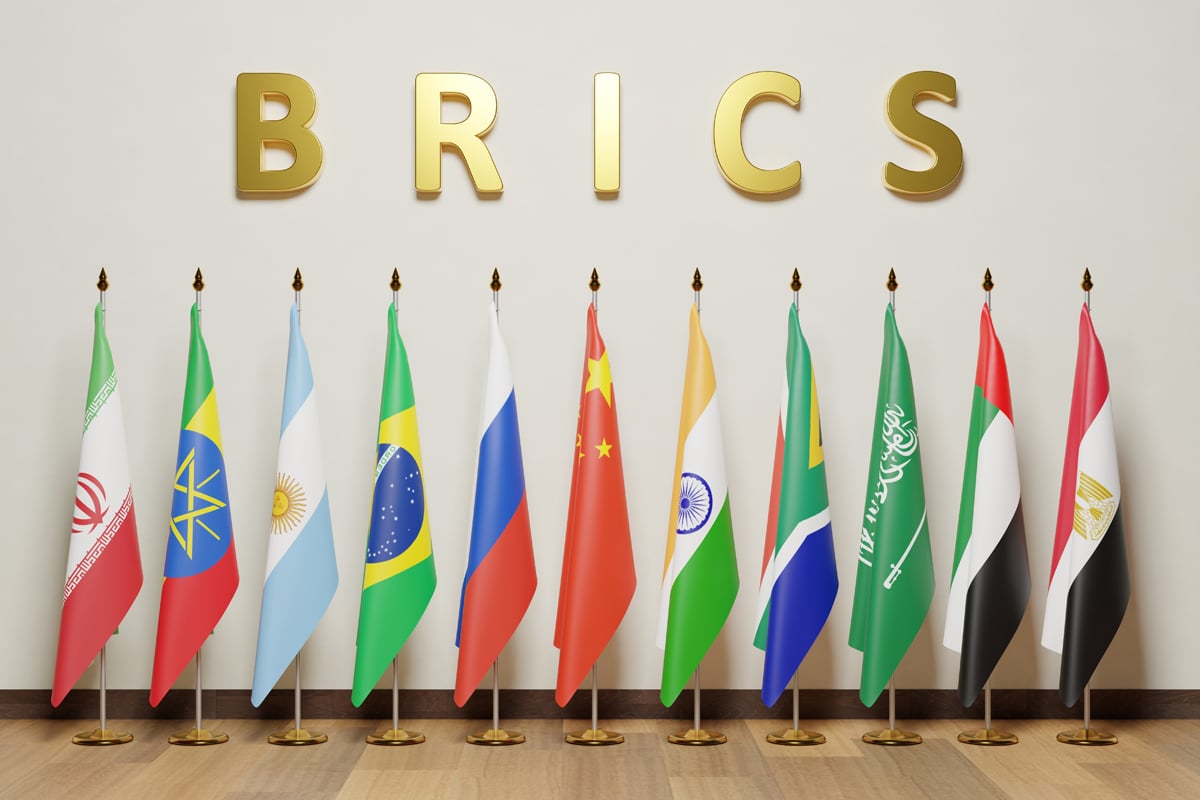
BRICS flags
We will highlight below the key takeaways of the BRICS summit for Africa. There were a lot of takeaways in general, but our focus will be on Africa. Our wish is that African representatives could, when attending these summits, join as ‘ONE’ and not several. At the recent China-Africa meeting which took place in September 4 – 6, 2024, some African countries asked for more debt, like Kenya, while others asked for balanced trade, technology transfer, investment in manufacturing to boost job creation, like South Africa. This will create imbalanced partnerships which will be a disadvantage for neighboring African countries and then affect Africa as a whole later (this will be a subject for another day).
Key Takeaways for Africa
As pointed out above, Egypt and Ethiopia joined as new BRICS members, while Nigeria and Algeria participated as partner countries.
De-dollarization: this is a global shift which has occurred mildly before, but more significantly since the start of the Ukraine conflict which saw Europe and the US impose sanctions on Russia in hope of asphyxiating Russia, but which instead forced Russia to deal in local currencies and other leaders such as China and India to do likewise. This shift is more important for African countries, particularly the ones which are still part of the FCFA (that slave currency) block.
Energy and Technology partnerships between Russia, China and African countries to enhance energy projects and digital infrastructure.
Economic collaboration with the New Development Bank (NDB) which aims to fund infrastructure projects across Africa, offering an alternative to the shark Western financial institutions.
Balanced diplomacy: for too long, Africans have had only one way of thinking with the Western world. Now with the BRICS, Africans hope for a more balanced relationships to benefit and ensure sustainable development for our nations.
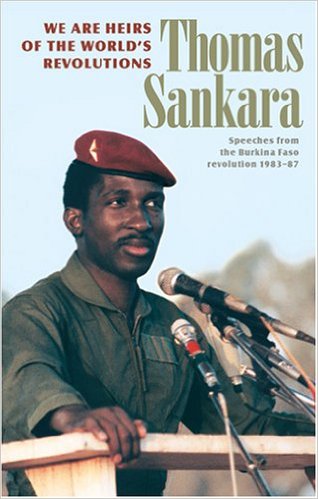
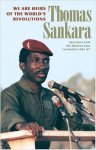
“We are heirs of the revolution” by Thomas Sankara
Today, we will end with the third point cited by President Thomas Sankara, last point for revolutionizing all sectors of Burkinabe society. Excerpts below are from “We are Heirs of the World’s Revolutions, Speeches from the Burkina Faso Revolution 1983-87” by Thomas Sankara, Pathfinder Press (2007) p. 50 – 53. Again, as you read, you can see that this is exactly what our leaders of the AES, and Ibrahim Traore of Burkina Faso in particular are applying. The main difference today is that the AES also faces terrorism and the repeated attacks of hordes fabricated by Western powers; so security is one of the major priorities.
=====
… The National Council of the Revolution is therefore aware that the construction of an independent, self-sufficient, and planned national economy requires the radical transformation of present society, a transformation that itself requires the following major reforms:
Thomas SankaraAgrarian reform
Administrative reform
Educational reform
Reform of the structures of production and distribution in the modern sector
The agrarian reform will aim to:
Increase labor productivity through better organization of the peasants and the introduction of modern agricultural techniques in the countryside.
Develop a diversified agriculture, together with regional specialization.
Abolish all the fetters that are part of the traditional socioeconomic structures that oppress the peasants.
Finally, make agriculture the basis for the development of industry.
Burkina Faso
All this is possible by giving real meaning to the slogan of food self-sufficiency, a slogan that now seems dated for having been proclaimed so often without conviction. First, this will be a bitter struggle against nature, which, by the way, is no more thankless for us than for other peoples who have conquered it magnificently on the agricultural level. … To the contrary, numerous small accomplishments in the agricultural system will allow us to transform our territory into one vast field, an endless series of farms.
Second, this will be a struggle against those who starve the people, the agricultural speculators and capitalists of all types. Finally, it will mean protecting our agriculture against domination by imperialism — with regard to its orientation, the plunder of our resources, and unfair competition from imports against our local products, imports whose only advantage is their packaging aimed at bourgeois afflicted with snobbishness. As for the peasants, sufficiently high prices and industrial food-processing facilities will guarantee them markets for their produce in any season.
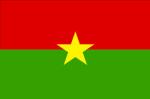
Flag of Burkina Faso
… The reform should result in a less costly, more effective, and more flexible administration.
The educational reform aims to promote a new orientation for education and culture. It should result in transforming the schools into instruments at the service of the revolution. Graduates of the system should not serve their own interests and the exploiting classes, but rather the popular masses. The revolutionary education that will be taught in the new schools must imbue everyone with a [Burkinabe] ideology, a [Burkinabe] personality that rids the individual of blind mimicry. …
Burkina Faso
Culture in a democratic and popular society, should have a three-fold character: national, revolutionary, and popular. Everything that is antinational, antirevolutionary, and antipopular must be banished. To the contrary, our culture extols dignity, courage, nationalism, and the great human virtues.
… Our artists … should seize the opportunity before them to raise our culture to a world level. … Let musicians sing not only of our people’s glorious past, but also of their radiant and promising future.
The revolution expects our artists to be able to describe reality, portray it in living images, and express them in melodious tunes while showing our people the true way forward to a better future. It expects them to place their creative genius at the service of a national, revolutionary, and popular [Burkinabe] culture.
“We are heirs of the revolution” by Thomas Sankara
I love what Thomas Sankara, former president of Burkina Faso, said about women. I had previously published it here, Thomas Sankara in His Words. Did you know that Sankara had placed women at the center of his politics? He appointed females to high governmental positions, encouraged them to work, recruited them into the military, and granted pregnancy leave during education. During his time, he outlawed female genital mutilation, forced marriages and polygamy in support of Women’s rights. Excerpts below are from “We are Heirs of the World’s Revolutions, Speeches from the Burkina Faso Revolution 1983-87” by Thomas Sankara, Pathfinder Press (2007) p. 49 – 50.
=====
The weight of age-old traditions in our society has relegated women to the rank of beasts of burden. Women suffer doubly from all the scourges of neocolonial society. First, they experience the same suffering as men. Second, they are subjected to additional suffering by men.
African Woman
Our revolution is in the interests of all the oppressed and all those who are exploited in today’s society. It is therefore in the interests of women, since the basis of their domination by men lies in the system through which society’s political and economic life is organized. By changing the social order that oppresses women, the revolution creates the conditions for their genuine emancipation.
The women and men of our society are all victims of imperialist oppression and domination. … they wage the same battle. The revolution and women’s liberation go together. We do not talk of women’s emancipation as an act of charity or out of a surge of human compassion. It is a basic necessity for the revolution to triumph. Women hold up the other half of the sky.
… Until now, women have been excluded from the realm of decision making. The revolution, by entrusting women with responsibilities, is creating the conditions for unleashing women’s fighting initiative. … They will be involved in all the battles we will have to wage against the various shackles of neocolonial society in order to build a new society. … The final goal of this great undertaking is to build a free and prosperous society in which women will be equal to men in all spheres.
Burkina Faso
However, we must have a correct understanding of the question of women’s emancipation. It is not a mechanical equality between men and women, acquiring habits recognized as male – drinking, smoking, and wearing pants. That’s not the emancipation of women. Nor will acquiring diplomas make women equal to men or more emancipated. A diploma is not a free pass to emancipation.
The genuine emancipation of women is one that entrusts responsibilities to women, that involves them in productive activity and in the different fights the people face. The genuine emancipation of women is one that compels men to give their respect and consideration. Emancipation, like freedom, is not granted, it is conquered. It is for women themselves to put forward their demands and mobilize to win them.
Every October 15, we talk about Thomas Sankara, the father of the Burkinabe revolution. Today, we will bring back some of his words, from “We are Heirs of the World’s Revolutions, Speeches from the Burkina Faso Revolution 1983-87” by Thomas Sankara, Pathfinder Press (2007) p. 46 – 48. You will see that President Ibrahim Traoré in particular, and the leaders of the AES as a whole (Mali, Burkina Faso, and Niger Sign a Mutual Defence Pact), are following in Thomas Sankara’s footsteps in the defense of their homeland against foreign forces which have used terrorism to balkanize the region and terrorize the people for over a decade now. “Each citizen should work to revolutionize his sector of activity. … a conscious people cannot leave their homeland’s defense to one group of men, however competent they may be. Conscious people take charge themselves of their homeland’s defense.” Tomorrow, we will talk about points (2) and (3).
=====
Thomas Sankara
The August revolution does not aim to establish one more regime in Upper Volta [Burkina Faso]. It represents a break with all previously known regimes. Its ultimate goal is to build a new Voltaic [now Burkinabe] society, within which the [Burkinabe], driven by revolutionary consciousness, will be architect of his own happiness, a happiness equal to the efforts he will have made.
To do this, the revolution – whether the conservative and backward forces like it or not – will be a deep and total upheaval that will spare no domain, no sector of economic, social, and cultural activity.
Revolutionizing all domains and all sectors of activity is the slogan of the day. Strengthened by the guiding principles laid out here, each citizen should work to revolutionize his sector of activity, whether he finds himself.
The philosophy of revolutionary transformations is already affecting the following sectors: (1) the national army; (2) policies concerning women; and (3) economic development.
(1) The national army: its place in the democratic and popular revolution
Flag of Burkina Faso
According to the defense doctrine of the revolutionary Upper Volta, a conscious people cannot leave their homeland’s defense to one group of men, however competent they may be. Conscious people take charge themselves of their homeland’s defense. To this end, our armed forces constitute simply a detachment that is more specialized than the rest of the population for Upper Volta’s internal and external security requirements. …
The revolution imposes three missions on the national armed forces:
To be capable of combating all internal and external enemies and to participate in the military training of the rest of the people. This presupposes an increased operational capacity, making each soldier a competent fighter, unlike the old army, which was merely a mass of employees.
To participate in national production. Indeed, the new soldier must live and suffer among the people to which he belongs. The days of the free-spending army are over. From now on, besides handling arms, the army will work in the fields and raise cattle, sheep, and poultry. It will build schools and health clinics and ensure their functioning. It will maintain roads …
To train each soldier as a revolutionary militant. Gone are the days when the army was declared to be neutral and apolitical, while in fact serving as the bastion of reaction and the guardian of imperialist interests. Gone are the days when our national army conducted itself like a corps of foreign mercenaries in conquered territory. Those days are gone forever. Armed with political and ideological training, our soldiers, … will instead become conscious revolutionaries, at home among the people like a fish in water.
As an army at the service of the revolution, the National Popular Army will have no place for any soldier who looks down on, scorns, or brutalizes his people. An army of the people at the service of the people – such is the new army we are building in place of the neocolonial army, which was utilized to rule over the people as a veritable instrument of oppression and repression in the hands of the reactionary bourgeosie. …




















 African Heritage