Queen Nzingha: Great Queen of Angola

Queen Nzingha of Angola

Today, I will be talking about another great queen of Africa: the Queen Nzingha of Angola, who defended her kingdom against the Portuguese for 40 years and defeated them.  Yes! DEFEATED THE PORTUGUESE IN THE 1600s!  See… another gap in our textbooks: anybody heard of this great queen and of her military and diplomatic genius?

Well, the great Queen Nzingha was born in Angola at the end of the 1500s, just over 100 years after the Portuguese started slavery ports across Africa.  She was born to Ndambi Kiluanji, Ngola (king) of the Mbundu and Ndongo people and his second wife Kangela, in 1582.  At her birth, a wise woman predicted that she will one day become queen, which was unheard of since there were no women rulers in those days.

In her youth, Nzingha was strongly favored by her father, who allowed her to witness as he governed his kingdom, and who carried her with him to war.  She participated in all the intense training for warriors. Nzingha grew up in a world normally suited for males.  She was educated in the fields of hunting and archery, and in diplomay and trade.  Nzingha was a true politician, and showed true military and intellectual genius.  She also had two sisters Kifunji and Mukambu, and a brother Mbandi.

Queen Nzingha sitting on the back of her servant
Queen Nzingha sitting on the back of her servant, during her audience with the Portuguese governor

Nzingha was special in the sense that she was well-educated and spoke and wrote fluent Portuguese.  As the Portuguese were setting a slave port in Luanda (present-day capital of Angola), and capturing the people for slavery, Ngola Kiluanji tried to work diplomatically with the Portuguese to keep the Mbundu people safe, but many were captured and taken into slavery.  At the death of her father in 1617, Nzingha’s brother, Mbandi, took over the throne as required by tradition.  In 1622, Nzingha went to Luanda working for Mbandi as a special emissary to negociate peace treaties with the Portuguese.  When she met with the Portuguese governor of Luanda, João Correia de Sousa, she was refused a seat.  As a mark of power, she sat on the back of one of her male servants and made him a human bench, to show the governor that she would not negociate with him from an inferior footing.  This was a woman ahead of her time, and who would not be made inferior!  There she succeeded in negociating a peace treatment.

After her return to Kabasa (the capital of the Mbundu kingdom), Mbandi committed suicide.  The Portuguese profited from this moment of weakness to attack Kabasa and burnt it to the ground.  Nzingha fleed with her people, and moved her people to the mountains where she formed an army to fight against the Portuguese.  She was named Ngola of the Mbundu people in 1624, with two of her war leaders and closest advisors being her sisters Kifunji and Mukambu.  In 1626, after the Portuguese betrayed yet another treaty, she was led to move her people further west and establish a kingdom in Matamba.  There, she organized several alliances with neighboring people such as the Imbangala people, and developed a new form of military organization known as kilombo, in which youths moved away from their families, and were raised communally in militias.  Nzingha also made alliances with the Dutch to fight the Portuguese, but to realize later that they were all the same as the Portuguese: treacherous, and only there to enslave the Mbundu people.  From 1630 to her death in 1663, Nzingha, Queen General of Matamba, launched a formidable opposition to the Portuguese regime from the rocky slopes of Matamba.  The Portuguese came to respect her for her strength, dignity, pride, shrewdness, and her intransigence.  She was their strongest enemy in Angola.  Nzingha ruled for almost 40 years in both Ndongo and Matamba.

Nzingha's Kingdom
Nzingha’s Kingdom

Nzingha died in 1663, at the age of 82. She was succeeded on the throne by her sister Mukambu (also known as Barbara).  Mukambu gave Nzingha a burial befitting of the greatest Ngolas: Nzingha was laid to rest in her leopard skins and with her bow over her shoulder and arrows in her hand.  This was the first time in history that the Mbundu people had been led by a woman, and everyone remembered Nzingha as an outstanding, impressive, female warrior, ruler and field commander.  For the Mbundu people, she is remembered for her love of her people, her strength, charisma, and her fight for their sovereignty and freedom.  No wonder, her influence was felt centuries later, when African slaves in Brazil organized themselves in Quilombo to fight their white masters and retain their freedom.

Pedras Negras mountains of Pungo Andongo
Pedras Negras mountains of Pungo Andongo (once the capital of Ndongo kingdom)

It took me 3 christmas and new year holidays to finally realize this video of Queen Nzingha de Mbande of Angola.  It took me this long not only because I only worked on it a few days of the year, but also because the time and references had to be right.  I am so glad to be able to present to you this great video which talks about another great queen of Africa, one who defended, and defeated the Portuguese for over 40 years.  See… another thing that is not written in African history books; we tend to think that our leaders were all weaklings, but we had real kings and real leaders like Samori Toure, Behanzin, Ranavalona I, Amanishakheto, Beatrice of Congo, and Nzingha who fought the foreign invaders for the freedom of their people.  Enjoy learning about Queen Nzingha of Angola. You can also read Nzingha: Warrior Queen of Matamba, Angola by Patricia McKissack, as well as Black Women of Antiquity by Ivan van Sertima; don’t forget to check out this piece on Metropolitan Museum‘s website.

Did you know about Nzingha? How do you feel, now that you know that there was a great queen like her?

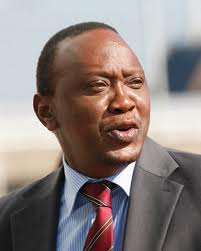
Elections in Kenya: a Great Win for Democracy on the Continent

Uhuru Kenyatta, Kenya's fourth president
Uhuru Kenyatta, Kenya’s new president

I had to talk about the recent elections (last week) in Kenya.  They were peaceful, classy, and above all democratic (i.e. the choice was made by the people, for the people).  In only one round, Uhuru Kenyatta defeated the ‘machine’-chosen guy, i.e. Raila Odinga (Obama’s cousin).  It was such an important victory for Kenya.  Kenyans actually worked very hard not to have a repeat of 2007-2008 violence, and succeeded.  It was a true example of perseverance on the part of Kenyans who realized that they were making their choice, not the west… and it did not matter that their chosen candidate had been summoned to the International Criminal Court (ICC) in the Hague, because they had chosen him.  I am proud of the Kenyans for showing such class in the election of Kenyatta.  As usual, the poor loser Odinga wants to take Kenya to brink of demolition (as in 2007-2008, by making it about tribes) by filing at the Supreme court, but it would not matter, because the people have spoken! Long live Kenya!

He said “Today, we celebrate the triumph of democracy, the triumph of peace, the triumph of nationhood. Despite the misgivings of many in the world, we demonstrated a level of political maturity that surpassed expectations.”

Check out the Daily Nation, Standard Media, The Star on the victory of Uhuru Kenyatta and the road ahead.

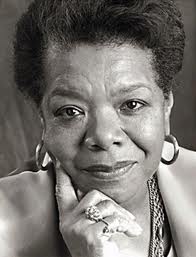
“Phenomenal Woman” by Maya Angelou

Maya Angelou
Maya Angelou

In celebration of the Women International Day on March 8th, I decided to post this poem by the great African American poet, Maya Angelou.  It is dedicated to all the women of the world, the gorgeous, natural, and phenomenal women who make up our lives.  Enjoy Phenomenal Woman.

Pretty women wonder where my secret lies.
I’m not cute or built to suit a fashion model’s size
But when I start to tell them,
They think I’m telling lies.
I say,
It’s in the reach of my arms
The span of my hips,
The stride of my step,
The curl of my lips.
I’m a woman
Phenomenally.
Phenomenal woman,
That’s me.

I walk into a room
Just as cool as you please,
And to a man,
The fellows stand or
Fall down on their knees.
Then they swarm around me,
A hive of honey bees.
I say,
It’s the fire in my eyes,
And the flash of my teeth,
The swing in my waist,
And the joy in my feet.
I’m a woman
Phenomenally.
Phenomenal woman,
That’s me.

Men themselves have wondered
What they see in me.
They try so much
But they can’t touch
My inner mystery.
When I try to show them
They say they still can’t see.
I say,
It’s in the arch of my back,
The sun of my smile,
The ride of my breasts,
The grace of my style.
I’m a woman

Phenomenally.
Phenomenal woman,
That’s me.

Now you understand
Just why my head’s not bowed.
I don’t shout or jump about
Or have to talk real loud.
When you see me passing
It ought to make you proud.
I say,
It’s in the click of my heels,
The bend of my hair,
the palm of my hand,
The need of my care,
‘Cause I’m a woman
Phenomenally.
Phenomenal woman,
That’s me.

Maya Angelou

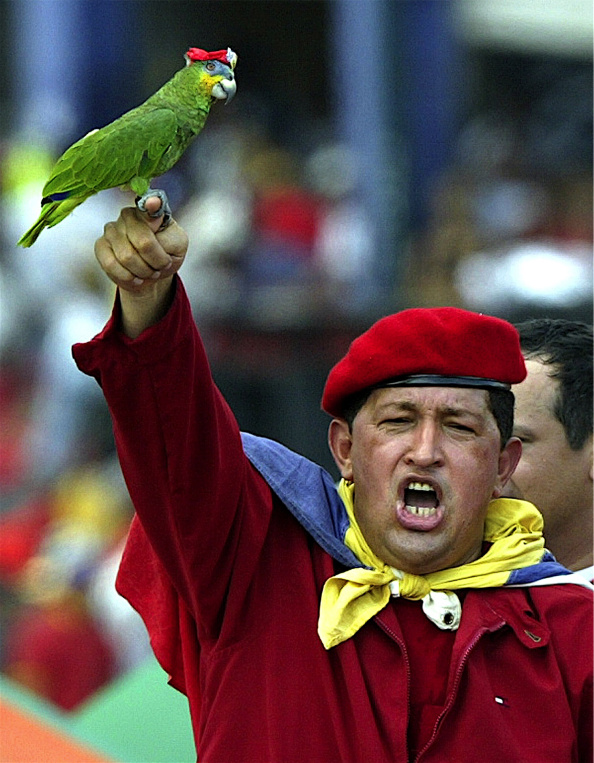
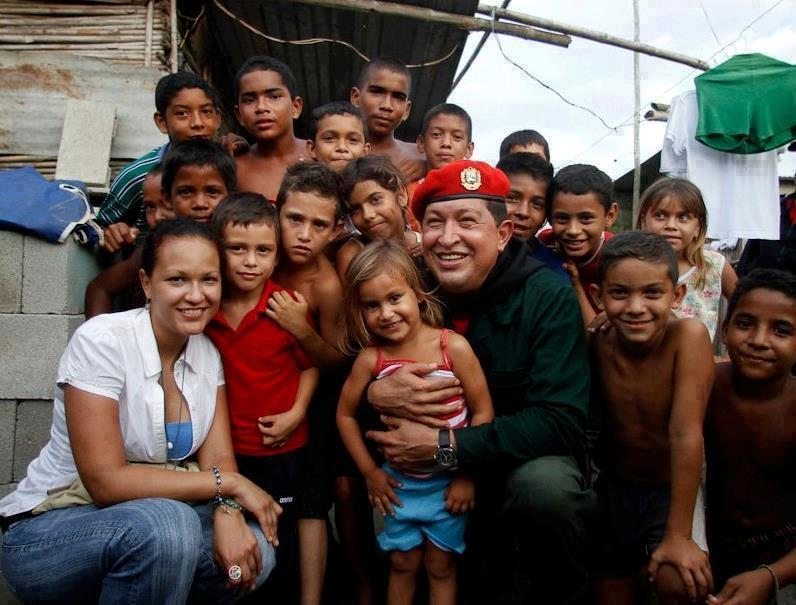
Love for Hugo Chavez’ legacy

Hugo Chavez
Hugo Chavez
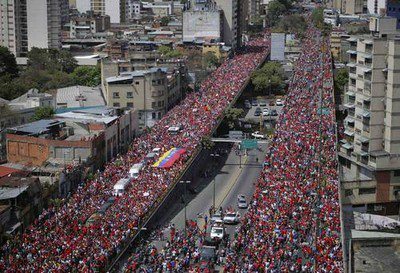
Venezuelans accompanying Chavez' procession in Caracas
Venezuelans accompanying Chavez’ procession through the streets of Caracas

I was immensely touched by the outpouring of love for Chavez coming from all corners of the world.  Tell me: how many leaders of this world, have had this great show of love?  How many can boast the millions of Venezuelans who have been mourning for Chavez?  How many can boast popular support in their respective countries like Chavez did?  Remember, he won a third term in office.

Over 55 foreign delegations with 32 head of states were present in Caracas (the capital of Venezuela) to give a last hommage to the great Comandante.  Even Spain sent in the crown prince.  An immense crowd was there to salute Hugo Rafael Chávez Frías.  Chavez’ passing has shown to the world what a true leader is.  Besides his Venezuelan funerals, 55 countries across the globe have declared a national day of mourning.  Argentina declared 5 days of national mourning, Brazil 2, Bolivia 5, Nigeria and Benin 7, and so on and so forth.  Imagine that: 55 countries declaring national days of mourning for the president of another country!  Who can boast better? Can you believe it? Praise be given to the great Comandante, the man who gave us hope, love, courage, and resilience.  Find below videos showing Hugo Chavez’s great work… and love, applaud, and be proud to have lived in a time when a great man gave love and freedom to his people, and the world.

Hugo Chavez: ‘Love is the Combustible of Revolution’

Hugo Chavez
Hugo Chavez

Words cannot express my extreme sadness at the loss of yet another one of our revolutionaries.  ‘El Comandante‘, Hugo Chavez, has left us yesterday to join the land of his ancestors.  I am extremely saddened at his passing, but I am also grateful to have lived in a time when I could see Hugo Chavez at work for his country, at a time when I could see what it meant for a leader of a poor country to have love and vision for his country.  Few leaders in the world have fought against western imperialism as Hugo Chavez did.  He led the bolivarian revolution against the US influence in Venezuela, and Latin America.  He gave back hope to his people, emancipated millions of Venezuelans, regained control of the economy of Venezuela, and worked for world peace by openly opposing the US and its colonial wars.  Millions of Venezuelans regained sight, were taught how to read, or just visited the doctor for the first time, because of Chavez’ laws.  Those will remember him forever.  Hugo Chavez was a bright star who gave hope to millions across the globe.  He gave us the strength to believe that we, the oppressed of the world, could one day be free.  He was often depicted in the Western media as a dictator (but then again, which progressist or revolutionary has ever been depicted otherwise in the western press?) because of his frankness and clear fight for the interest of the Venezuelan people. Chavez was a true sincere politician and loyal to his people.

El Comandante de la Revolucion, Hugo Chavez

El Comandante used to say: “Let the dogs of the empire bark, that’s their job. Our job is to fight to achieve the true liberation of our people.” You (Chavez) gone, who will fight again for us? who will voice our opinions? who will lead us? We have to keep true to your ideals, and keep our head up.  Thank you Commandante, for showing us the way, for showing us beauty and hope in this world.

Hugo Chavez also said: “Love is the combustible of a revolution.” El Comandante gave us just that: love, hope, dignity, and peace. So long, brother. Like Franklin Boukaka said “your work is that of humanity“… you have now joined the greats of this world: Che Guevara, Patrice Lumumba, Thomas Sankara, Kwame Nkrumah, Mouammar Kadhafi, Amilcar Cabral, … Long live to your ideals!

Please enjoy this video “The revolution will not be televised” which shows the coup fomented by the US against Hugo Chavez in 2002 where Chavez was removed from power by American military; and for the first time in world history, a president was brought back to power by his people who refused to give into American threats. The people defeated the machine! This documentary was made possible because of the presence of some European journalists from Arte who were in the country at the moment of the coup.

FESPACO: An African Film Tradition

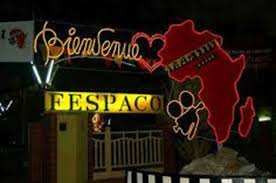
FESPACO 2013
FESPACO 2013

With the upcoming closing ceremony of the FESPACO this Saturday, I thought it important to talk about Africa’s film tradition. For starters, the FESPACO (Festival Panafricain du cinema et de la television de Ouagadougou) is the Panafrican Film and Television Festival of Ouagadougou, the largest African film festival, held biennally in Ouagadougou, the capital of Burkina Faso. First established in 1969, and boasting some of the Africa’s greatest writers and filmmakers (like Ousmane Sembene), the FESPACO offers a chance to African filmmakers and professional to showcase their work, exchange ideas, and meet other filmmakers, and sponsors. Filmmakers from around the continent all come together in Ouagadougou which is transformed into the Hollywood or the Cannes of the continent for this special occasion. This year’s FESPACO is presided by legendary director Euzhan Palcy (who made: Rue Cases Negres, A Dry White Season, Ruby Bridges).

Golden Stallion of Yennenga
The Golden Stallion of Yennenga

This year, 755 movies are competing in different categories. 20 feature films will be competing for the Golden Stallion of Yennenga (Etalon d’Or de Yennenga) which will be awarded Saturday March 2nd. The select 20 features in the ‘long metrage’ section address various subjects such as clandestine immigration (‘La Pirogue’ from Senegalese Moussa Traore, which was a big hit at last year’s Cannes festival), journalism and censorship (‘Les Chevaux de Dieu’ by Moroccan Nabil Ayouch, also featured at Cannes 2012), love (‘Love in the Medina’, by Moroccan filmmaker Abdelhai Laraki), war (‘La genese de la bataille d’Alger’, by Algerian filmmaker Said Ould Khelifa), theft in society (How to steal 2 million, from South African Charlie Vundla), ‘La republique des Enfants’ (Children’s republic) by Bissau-Guinean filmmaker Flora Gomes– a country abandoned by adults where children organize themselves into a prosperous country, or revolution and prostitutes in a war camp (‘Virgem Margarida’ directed by Mozambican Licinio Azevedo – which premiered at the Toronto International Film Festival last year).

Enjoy this photojournal by Nic Bothma on the the Guardian’s website. You can read some movies’ sypnosis on Gabonews. Enjoy the generic of this year’s festival, which tells the story of the famous princess Yennenga, and the festival.

The Lost Message

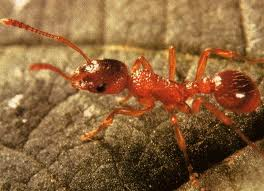
Red ant
Red ant

THE ant has had from time immemorial many enemies, and because he is small and destructive, there have been a great many slaughters among them.  Not only were most of the birds their enemies, but Anteater lived almost wholly from them, and Centipede beset them every time and at all places when he had the chance.  So now there were a few among them who thought it would be well to hold council together and see if they could not come to some arrangement whereby they could retreat to some place of safety when attacked by robber birds and aninials.  But at the gathering their opinions were most discordant, and they could come to no decision.

There was Red-ant, Rice-ant, Black-ant, Wagtail-ant, Gray-ant, Shining-ant, and many other varieties.  The discussion was a true babel of diversity, which continued for a long time and came to nothing.  A part desired that they should all go into a small hole in the ground, and live there; another part wanted to have a large and strong dwelling built on the ground, where nobody could enter but an ant; still another wanted to dwell in trees, so as to get rid of Anteater, forgetting entirely that there they would be the prey of birds; another part seemed inclined to have wings and fly.  And, as has already been said, this deliberation amounted to nothing, and each party resolved to go to work in its own way, and on its own responsibility.

Black ant
Black ant

Greater unity than that which existed in each separate faction could be seen nowhere in the world; each had his appointed task, each did his work regularly and well.  And all worked together in the same way.  From among them they chose a king-that is to say some of the groups did-and they divided the labor so that all went as smoothly as it possibly could.  But each group did it in its own way, and not one of them thought of protecting themselves against the onslaught of birds or Anteater.

The Red-ants built their house on the ground and lived under it, but Anteater leveled to the ground in a minute what had cost them many days of precious labor.  The Rice-ants lived under the ground, and with them it went no better.  For whenever they came out, Anteater visited them and took them out sack and pack.  The Wagtail-ants fled to the trees, but there on many occasions sat Centipede waiting for them, or the birds gobbled them up.  The Gray-ants had intended to save themselves from extermination by taking to flight, but this also availed them nothing, because the Lizard, the Hunting-spider, and the birds went a great deal faster than they.

When the Insect-king heard that they could come to no agreement he sent them the secret of unity, and the message of Work-together. But unfortunately he chose for his messenger the Beetle, and he has never yet arrived at the Ants, so that they are still to-day the embodiment of discord and consequently the prey of enemies.

South African Folk Tales, by James A. Honey, 1910, Baker & Taylor Company.

Why the name: Maputo?

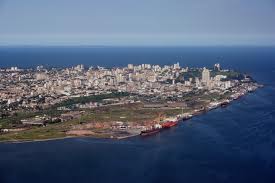
Modern day Maputo
Modern day Maputo

I was always intrigued by the name Maputo.  Maputo is the capital of Mozambique.  It used to be known as Lourenço Marques.  I once had a Mozambican friend who would refer to Maputo as Lourenço Marques and I always wondered why the name change and what it meant?

Maputo is known as the City of Acacias (because many of its streets are bordered by acacias) or the Pearl of the Indian Ocean; it is located 77 km from the South African border.  The city was built on the northern bank of the Esturio do Esprito Santo, an estuary which leads to the Maputo Bay on the West.  Prior to the arrival of the Europeans in the area in the 1500s, the area was known as an exchange place between Arabs and Africans, and was known as Catembe, on the southern bank of the estuary.  In 1502, the Portuguese Antonio de Campos was the first European to get to Maputo Bay, but it was the navigator Lourenço Marques who explored it truly for the first time in 1544.  Initially, the bay was known as Delagoa bay, as it was the first maritime transit from Goa.  It was a village whose main economy was based on the Ivory trade.  It is only in 1876, that the city became known as Lourenço Marques, after the navigator.  A commission was sent by the Portuguese government in 1876 to drain the marshy land near the settlement, to plant the blue gum tree, and to build a hospital and a church.  A city since 1887, it superseded the Island of Mozambique as the capital of Mozambique in 1898.  In 1895, the construction of a railroad to Pretoria in South Africa, caused the city’s population to grow.

Lourenco Marque (Maputo) ca 1905
Lourenco Marques (Maputo) ca 1905

In February of 1976, after briefly claiming back its pre-colonial name of Cam Phumo (1975-1976), named after a Shangaan chief who lived in the area before the arrival of Lourenço Marques), Lourenço Marques was renamed Maputo, with its origin in the Maputo river which flows into the Esturio do Esprito Santo, also renamed Maputo bay.  During the liberation war of FRELIMO against Portugal (1964 – 1974), the Maputo river, which marks the southern border of Mozambique with South Africa, became symbolic with the slogan Viva Moambique unido do Rovuma ao Maputo, i.e. Long-live the united Mozambique from Rovuma to Maputo, the Ruvuma river being the northern border of Mozambique with Tanzania.  All symbols of colonial times were erased: the names of streets which carried the names of Portuguese heroes or important days, and Portuguese history, etc, were replaced to reflect Mozambican history, African revolutionary figures, and Mozambican choices.

 Today, Maputo is a melting pot of several cultures dominated by the Bantu and Portuguese, but also influenced by Arab, Indian, and Chinese cultures (brought in from Goa and Macao).  It is also very well-known for its beautiful style colonial architecture.

National Youth Day: What does it mean?

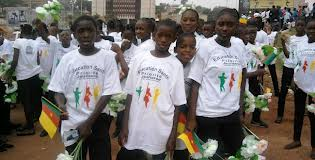
Youths during the parade celebrating Cameroon's National Youth Day
Youths during the parade celebrating Cameroon’s National Youth Day

February 11th marked the celebration of the Cameroonian Youth Day.  Growing up, I always wondered what it really meant, apart from the day-off from school, the school parades, and the presidential speech, what does it really mean? What is the purpose of a youth day?

For starters, Cameroon’s National Youth Day is a national holiday, meant to mark the importance of the youth, and youth rights in the country.  On that day, several parades occur throughout the country led by different schools.  It was a priviledge to be chosen to attend these parades.  For a child, it is one of those few events where one can stand proudly, and march for the country (that is, if you were part of the parade).  The true essence of a national youth day, and the reason why it was created, is to empower the youth, and give them a greater sense of their country, and what it meant to be part of that great country.  It is also a way for the government to let the youths or the young-at-heart know that they are valued as the future of the nation, and an essential segment of the population.  Sadly today, the government does not care about inspiring the youth, or protecting the youth; sadly today, few youths are proud of being Cameroonian, many run abroad looking for better tomorrows, when yesterday all dreamt of returning home.

I thought of introducing a song celebrating the youth, ‘ma revolution’ by Didier Awadi dedicated to all revolutionaries, all the youths, all the patriots, and all those who want to affect real good change in Africa.  Most importantly, this song leans on all the great Africans who have inspired the youths and the people of their countries or kingdoms.  Enjoy!

Do you celebrate youth day in your country? And what does it mean to you? How do we influence the youth towards a true awakening of the society?

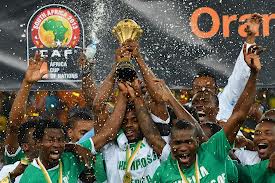
Nigeria wins the African Cup of Nations 2013

Super Eagles lifting the trophy

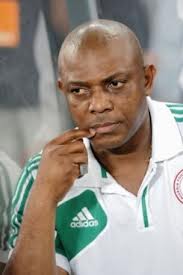
I watched Nigeria’s victory yesterday with great delight. I must admit that after they defeated Cote dIvoire in quarter-finals. I already felt that Nigeria would be the winners and honestly, the Stallions of Burkina Faso were no match to the Super Eagles of Nigeria.  I am also delighted because this was Nigerias first victory since 1994 (19 years), and Stephen Keshi has become the first man to win the African Cup of Nations both as a player and as a coach. Truly the victory should be dedicated to him, and his hard work. He started coaching Togo and qualified them to the world cup  in 2010, and once the Togolese were qualified they sacked him to hire a European coach. Keshi went on to coach Mali, and now his beloved country Nigeria. At first the Nigerian federation did not want to give him the job, but it is hard to deny Keshi’s greatness. They finally gave him the job, and then did not pay him for 2 months prior to the cup (the Nigerian federation would have never dared doing that to a European coach).

Stephen Keshi, Nigeria's coach
Stephen Keshi, Nigeria’s coach

I am truly happy for Keshi, who, this week again, mentioned the fact that Africans coaches were just as good as European coaches, and could manage African teams and lead them to greatness. He did just that to a team which had known no real success since 1994 he redeemed Nigerias super eagles, and showed to everyone that Africans could and should trust African coaches just like the Egyptians used to trust Hassan Shehata who led them to three successive African Nationss cup (2006, 2008, and 2010). Truly, I dedicate this victory to Stephen Keshi, and to all the African coaches who love their country and only dream of being given the chance to take their countries to greatest heights.

Just for fun, somebody said on BBC, that “whenever Cameroon is not at the cup, Nigeria wins“… I didn’t know that we were the “bête noire” of Nigeria. I guess everyone knows their strongest opponents… even footballers!