The first UK’s Royal Academy of Engineering ‘AfricaPrizefor EngineeringInnovation‘ was awarded to Tanzanian chemical engineer Askwar Hilonga for his water filter. His filter uses nanotechnology and sand to clean water; it adsorbs anything from copper and fluoride to bacteria, viruses and pesticides.
Hilonga’s invention should help the 70% of households in Tanzania that do not have clean drinking water. This is a very important invention in a world where clean water is becoming rare, whether in developed countries where their water is spoiled by major pollution from oil or heavy elements such as uranium or radium, or in developing countries where water may have been soiled by big oil, or simply not clean. Moreover, his invention will provide a low-cost alternative to water filtering.
The prize is worth £25,000 ($38,348). Congratulations to Dr. Askwar Hilonga, and don’t forget to read the article on BBC.
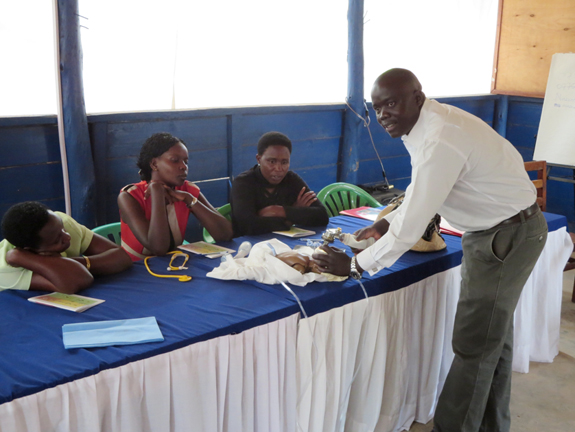
Dr. Santorino Data demonstrating the device in Uganda (AIR Project)
What is the wish of any mother who has just given birth to a baby, after lengthy hours of labor? To hear that child cry while taking his/her first breath of air. Any parent, and medical staff present, anxiously awaits for that child’s first cry, and sometimes the child needs help with that. It is said that 10 million babies per year do not breathe immediately, while 6 million babies require basic neonatal resuscitation, and 3 million do not survive past their first day of life, and at least 1 million die each year due to breathing issues. Well, a doctor in Uganda, Dr. Santorino Data, has created the Augmented Infant Resuscitator (AIR), an inexpensive add-on device used to improve emergency ventilation, to help newborn babies who are having difficulty taking their first breath. The device monitors manual ventilation to provide real-time feedback on ventilation technique/quality and common errors such as leakage between the face and mask, airway blockage and incorrect pace or volume. This will give instant feedback to the health workers who are helping the child breathe, and will allow them to correct any mistakes instantly.
The Augmented Infant Resuscitator (AIR) – (AIR Project/ MIT D-Lab)
Well, check out this article on BBC which highlights Dr. Data’s work, and his partnership with a team of medical doctors at Massachusetts General Hospital to improve the chances for more newborns around the globe to take their first breath of fresh AIR.
Today, we will be talking about the Papyrus Ebers or Ebers Papyrus, which is among the oldest and mostimportantmedicalpapyri of Ancient Egypt and of the world. This papyrus is a medical papyrus of herbal knowledge, and dates back to c.1550 BC. It is believed to have been copied from earlier texts. It is 110-page scroll, and is about 20 m long. It is among the world’s oldest preserved medical documents.
From c. 33rd century BC until Persian invasion in 525 BC, Egyptian medicine remained one of the world’s most advanced, and was used in some non-invasive surgery, setting of bones, and an extensive set of pharmacopeia. Even Homer of the Odyssey recognized this when he said, “In Egypt, the men are more skilled in medicine than any of human kind” and “the Egyptians were skilled in medicine more than any other art“.
Georg Ebers
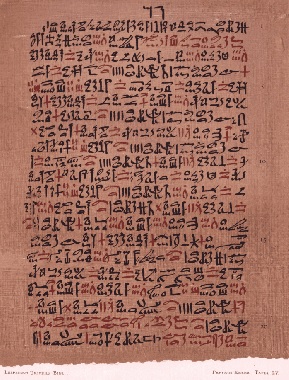
The Papyrus Ebers is one of the oldest medical papyri still well-preserved. It was given the name Ebers, after the man who purchased it in Luxor (Thebes) in the winter of 1873-74, Georg Ebers, a German Egyptologist and novelist. It is written in hieratic Egyptian writing and preserves the most voluminous record of ancient Egyptian medicine known. It contains about 700 magical formulas and remedies, for things such as asthma, evacuation of belly, bowels, birth control, guinea worms (this remedy is still the standard practice today, over 3500 years later), and even cancer. There is also a chapter titled Book of Hearts, which deals with mental disorders such as depression and dementia.
Ebers Papyrus – remedy for asthma
One of the most common remedies described in the papyrus is ochre, or medicinal clay, which was prescribed for intestinal and eye complaints. Yellow ochre was prescribed as a remedy for urological complaints.
The Papyrus Ebers is currently kept at the Leipzig University‘s library (Ebers was chair of the Egyptology department there) in Germany. If you are in Leipzig, go visit. Please check out the Ancient Egyptian Medicine website, which talks in details not only about the Ebers Papyrus, but also about other famous Papyri such as the Edwin Smith Papyrus (c. 1600 BC), the Kahun Gynecological Papyrus (c. 1800 BC), and herbal remedies, and nutrition of Ancient Egypt.
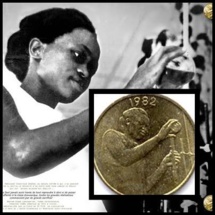
Mme Dicoh Mariam Konan, 1ere femme chimiste de Cote d’Ivoire, sur la piece de monnaie avec ses burettes
Je suis sûre que si vous êtes de l’Afrique de l’Ouest, et de la zone CFA, vous êtes certainement tombée sur cette pièce de 25FCFA sur laquelle une femme est representée. Eh bien cette femme-là est la toute première femme chimiste de la Côte d’Ivoire, Mme Konan née Dicoh Mariam. Elle est gravée sur la pièce de 25f CFA avec une burette de chimiste.
On utilise cette pièce sans même se demander qui est cette personne qui se trouve dessus… ou même ce qu’elle fait, ou ce qu’elle tient en main.
Mme Konan, une brillante chimiste qui a su manier plein de formules chimiques est le genre de personnes dont on doit parler; elle mérite bien plus qu’un prix d’excellence. C’est un exemple pour toutes les filles de l’Afrique, et du monde entier, parce qu’elle a su briller par son ambition et sa motivation. Chapeau à elle et à toutes les autres femmes en Afrique qu’on ne nomme pas, car elle est une femme très battante et remarquable. Un modèle de femme dont on doit se souvenir dans le futur de génération en génération. Waou… premiere femme chimiste de tout un pays… quel merveilleux exemple de détermination!
Aujourd’hui, Mme Konan est propriétaire de l’espace gastronomique ” La Gorge d’Or,” à Abidjan. Elle est une fierté pour toute l’Afrique. Longue vie à cette femme intelligente et nous espèrons en apprendre plus sur toutes les femmes brillantes du continent.
=======
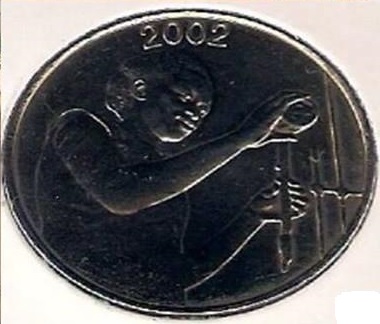
25FCFA coin
If you are from West Africa, and from the CFA economic zone, you have probably come across the 25 FCFA coin on which a woman is engraved. That woman happens to be the first woman chemist of Côte d’Ivoire, Mrs Konan Dicoh Mariam. She is engraved on the 25 FCFA coin with a burette.
People use this coin without wondering who is on it, or even what she is doing, or even what she is holding.
Mariam Dicoh Konan
Mrs Konan, a bright chemist who was able to handle a lot of chemistry formulas, is the kind of people we should be talking about; she deserves an excellence prize. She is an example for all the girls and women of Africa, and the world, because she was able to shine by her ambition and motivation. I raise my hat to her and all other women who remain unnamed, because she is a strong and remarkable woman. She is a model who should be remembered in the future by all generations. Wow… first female chemist of an entire country… such a marvelous example of determination!
Today, Mrs Konan is the owner of a gastronomical space ‘La Gorge d’Or‘ in Abidjan. She makes all Africans proud. Long life to this intelligent woman, and we hope to learn more about all the other bright women of the continent.
Map of the Democratic Republic of CongoFlag of the Democratic Republic of Congo
I would like to introduce you to the African version of Robocop, or rather the Congolese version of Robocop. This is a traffic cop invented by two women engineers from the Democratic Republic of Congo, one of them is Thérèse Inza. This cop regulates the traffic, and even gives tickets to the cab drivers, and those who do not want to follow the code of the road. The robot is 100% Congolese, and financed by the Women Technology association, the association of Congolese women engineers. Its name is “Robot Roulage” in reference to the name given to traffic cops (policier roulage); it is 2.5 m tall, and is fully autonomous, functioning with solar energy. It was first installed at the Boulevard Lumumba in Kinshasa. I just loved its Congolese accent… it was just music to my ears. Enjoy the Congolese RoboCop!
Today I would like to talk about the man who invented the process of pollination of vanilla when he was only 12 years of age: the Reunionese Edmond Albius. His technique allowed for the pollinating of the vanilla orchids quickly and profitably. Albius’s technique revolutionized the cultivation of vanilla and made it possible to profitably grow vanilla beans away from their native Mexico.
Vanilla flowers
Edmond Albius, at the time of his discovery was a slave, who was born in Sainte-Suzanne in 1829, on the island of Bourbon (modern-day Réunion). He was orphaned from birth, as he lost his mother and never knew his father. Later, his master sent him to work with Fereol Bellier-Beaumont who initiated him into horticulture, and then botany. Albius spent most of his time following Beaumont around the estate as tended to his plants. Beaumont later wrote about Albius, that “this young black boy became my constant companion, a favorite child always at my feet.”
Bottle of Vanilla
French colonists brought vanilla beans to Réunion in the 1820s with the hope of starting production there. However, the vines were sterile because no insect would pollinate them. In the 1830s, Charles Morren, a professor of botany at the University of Liège in Belgium, developed a method of hand-pollinating vanilla, but his technique was slow and required too much effort to make cultivating vanilla a money-making proposition. Albius discovered in 1841 the practical process for the pollination of vanilla, a process which has revolutionized the culture of this almost ubiquitous spice. He discovered how to quickly pollinate the vanilla orchid with a thin stick or blade of grass and a simple thumb gesture. With the stick or grass blade, field hands lift the rostellum, the flap that separates the male anther from the female stigma, and then, with their thumbs, smear the sticky pollen from the anther over the stigma. Albius’s manual pollination method is still used today, as nearly all vanilla is pollinated by hand. His discovery thereby allowed the Island of Reunion to become for a while, the largest world supplier of vanilla, and the cradle for the diffusion of his process.
Vanilla
Since this discovery was made by a child, who was black, and a slave, the invention was quickly contested by all the jealous people. The unscrupulous botanist Jean-Michel-Claude Richard would pretend to have taught the technique to the slave Albius three or four years earlier. The lie will reach its paroxysm when at the beginning of the 20th century, the French press will go as far as claiming that Edmond Albius was white. Albius eventually gained his freedom with the abolition of slavery in 1848, but will not get any financial benefit from his invention which made the fortune of planters and of the French economy. He died in misery in 1880.
As you enjoy vanilla aromas in cakes, perfumes, and all those delicacies, don’t forget to celebrate the genius of Edmond Albius as well, and read Voices to learn more.
Today, I would like to talk about the Ishango bone, or rather the first evidence of a calculator in the world. Named after the place where it was found in the Democratic Republic of Congo (DRC), the Ishango bone is what is called a bone tool or the craddle of mathematics. Dating as far back as 22000 years ago, in the Upper Paleolitic era, the Ishango bone is a dark brown bone which happens to be the fibula of a baboon, with a sharp piece of quartz affixed to one end for engraving. It is the oldest attestation of the practice of arithmetic in human history.
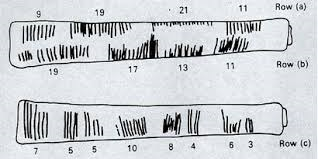
The Belgian geologist Jean de Heinzelin de Braucourt uncovered the bone buried in layers of volcanic ashes on the shores of Lake Edward in the Ishango region in DRC, near the border with Uganda. The Ishango bones are actually two (2) bones of baboon, 10 to 14 cm long, with several incisions on each faces. The smallest of the two bones was the first to be exposed at the Royal Belgian Institute of Natural Sciences in Brussels; it carries several incisions organized in groups of threecolumns.
The location of Ishango
The left columncan be divided in 4 groups, with each group possessing 19, 17, 13, and 11 notches. The sum of these being 60. Those are the 4 successive prime numbers between 10 and 20. This constitutes a quad of prime numbers.
The central columnis divided in groups of 8. By an approximate count, one can find (in the parenthesis, is the maximum number): 7 (8), 5 (7), 5 (9), 10, 8 (14), 4 (6), 6, 3. The minimal sum is 48, while the maximal sum is 63.
The right columnis divided into 4 groups, where each group has 9, 19, 21, and 11 notches. The sum of these 4 numbers is 60.
The second bone has not been well-studied. However, we know that it is composed of 6 groups of 20, 6, 18, 6, 20, and 8 notches.
The Ishango bones with their notches and the numbers
The first bone has been subject to a lot of interpretation. At first, it was thought to be just a tally stick with a series of tally marks, but scientists have demonstrated that the groupings of notches on the bone are indicative of a mathematical understanding which goes beyond simple counting. In fact, many believe that the notches follow a mathematical succession. The notches have been interpreted as a prehistoric calculator, or a lunar calendar, or a prehistoric barcode.
Jean de Heinzellin was the first to consider the bone as a vestige of interest in the history of mathematics. For instance, he noted that the numbers in the left column were compatible with a numeration system based on 10, since he saw that: 21 = 20 + 1, 19 = 20 – 1, 11 = 10 +1, and 9 = 10 -1. These numbers are also prime numbers between 10 and 20: 11, 13, 17, 19.
The Ishango bones with the notches
Some other scientists such as the Belgian physical engineer proposed that the bones were probably a slide rule. While Alexander Marshack has indicated that the bones could refer to the oldest lunar calendar on earth. Claudia Zaslavsky thinks that the author of the Ishango bone must have been a woman following the lunar phases to calculate her menstrual cycle. However, the second bone completely rules out the lunar calendar theory, and favors more the numeration system.
All said, it is amazing to realize that there were mathematicians 20,000 years ago on the African continent. It is so great to realize that my ancestors, on the shores of Lake Edouard, were actually brilliant scientists playing with prime numbers. Whether it was a woman calculating her menstrual cycle, or some brilliant tribe astronomer, it feels so good to know that the paleo-mathematicians of Ishango already knew prime numbers. They were a great civilization long before the pharaohs of Egypt. Thus, in reality, the Ishango bone is the oldest table of prime numbers in the world. To read more, check out Mathematicians of the African Diaspora,, the Prime Glossary, and Wolfram Mathworld.
Ibrahima Sambégou Diallo may have become the first African mathematician of the contemporary era to have elaborated a theorem. This Guinean journalist who recently reconverted himself into mathematics has found the solution to the Goldbach’s conjecture, which is one of the oldest best unsolved mathematics problems of all times. The Goldbach’s conjecture was elaborated 270 years ago by Christian Goldbach, tutor of the tsar Peter II, and employee in the Russian Foreign affairs’s ministry. In 1742, Goldbach sent a letter to Euler, stating the Goldbach’s conjecture: “Every even integer greater than 2 can be expressed as the sum of two primes.” For instance, 6 = 3 + 3; 8 = 3 + 5; 10 = 3 + 7 = 5 + 5; 30 = 11 + 19 = 13 + 17; 100 = 17 + 83 … This mathematical problem was so hard to solve that it took 270 years, and hundreds of mathematicians around the globe working on it.
It took Ibrahima 14 years of hard work to finally come up with the answer; this projects him in the court of the great mathematicians of this world. He had been in contest with some well-known and well-supported American researchers. Ibrahima Sambégou Diallo has been knocking at all doors to validate his work. Finding no support in his own country, Guinea, Ibrahima has decided to go to Dakar to validate his results at the mathematics institute there. He hopes to find support so as to become the first contemporary African to have elaborated a theorem. For the full article, go to diasporas-noires.com.
Very often, we, Africans, have been misinformed about our true place in advancing humanity. Very often, we have been told that we were a dark continent, an ignorant race, or rather a non-scientific class? Well… I have news for those nay-sayers. Ancient Africans, Ancient Egyptians used electricity: ancient pyramids were lighted via electricity… yes… you heard me well… not only did they show some of the greatest scientific fits by designing pyramids, but they also had electricity (thousands of years before Nikola Tesla or Alessandro Volta). Just like the great Library of Alexandria, or the University of Timbuktu … we, Africa, also had electricity. Enjoy… and Applaud … and above all be proud of the ingenuity of our ancestors.
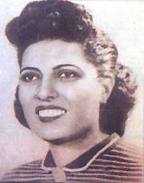
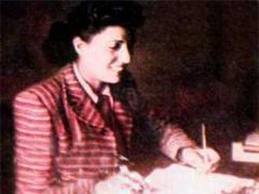
There are so few female scientists in the world, and particularly in Africa, that I had to talk about Sameera Moussa, the world-renowned Egyptian nuclear scientist. Sameera Moussa held a doctorate in atomic radiation, specializing on making the medical use of nuclear technology affordable to all. She organized the Atomic Energy for Peace Conference and sponsored a call for setting an international conference under the banner “Atom for Peace,” where many prominent scientists were invited. The conference made a number of recommendations for setting up a committee to protect against nuclear hazards, for which she strongly advocated.
Sameera was born in the Gharbia Governorate in Egypt in 1917. After she lost her mother to cancer, she vowed to study how to better medicine through science. She went on the join the faculty of Sciences at the University of Cairo, where she earned a BSc in Radiology in 1939, with first class honors. She became a remarkable faculty, and the first woman to hold a university post. Being the first to obtain a Ph.D. degree in atomic radiation, she earnestly sought to make nuclear treatment to everyone. She used to say: “I’ll make nuclear treatment as available and as cheap as aspirin.” She worked hard for this purpose and throughout her intensive research, she came up with a historic equation that would help break the atoms of cheap metals such as copper, ultimately paving the way for a cheap nuclear bomb. Sameera also volunteered to help treat cancer patients at various hospitals especially since her mother went through a fierce battle against this disease.
Sameera Moussa at the University of Cairo
Later on, Sameera received a Fullbright scholarship to study at modern research facilities at the California University. In recognition for her pioneering nuclear research, she was given permission to visit the secret US atomic facilities. The visit raised vehement debate in the United States Academic and Scientific circles since Sameera was the first “alien” to have access to such facilities.
She turned down several offers that required her to live in the United States and be granted American citizenship, saying “Egypt, my dear homeland, is waiting for me.” On August 5th, 1952 after her first visit to America she intended to return home, but was invited on another trip. On the way, the car rushed down from a height of 40 feet, which killed her immediately. The mystery surrounding her accident, since the invitation to California, made people suspicious and many believe that it was a planned assassination.
Today, Sameera has been awarded several prizes (the 1953 honor by the Egyptian Army, and the 1981 Order of Science and Arts by , but most importantly she has paved the way for Egyptian and African women scientists. It feels so great to know that back in the 1930s, and 1950s, when there were people likeEnrico Fermi, Albert Einstein, Maria Goeppert-Mayer, there was alsoSameera Moussa, an outstanding Egyptian Female scientist who thought of ‘Atoms for Peace’ and wanted cheap treatments for all.

 The first UK’s Royal Academy of Engineering ‘Africa Prize for Engineering Innovation‘ was awarded to Tanzanian chemical engineer Askwar Hilonga for his water filter. His filter uses nanotechnology and sand to clean water; it adsorbs anything from copper and fluoride to bacteria, viruses and pesticides.















 African Heritage