Ghanaian inventor, Asidu Abudu, fabricates things to make every day chores easier and faster. Imagine helping women who just finished a whole day in the fields, and who have to come back and pound eba to feed the entire family? Now you have a machine which pounds it for you, and gives you a break, all compliments of this brilliant inventor!
Introducing to you Choco-Togo, a brand of chocolate made in Togo by Togolese students. This is an organic brand of chocolate made in Togo, by Togolese, with Togolese as the main consumers! Their chocolates are without additives, and chemical products; they are 80% cocoa with natural ingredients. Check out their website, Choco-Togo.
1300 years before Thalès was born, Ancient Egyptians solved the famous theorem which now bears his name, Theorème de Thales in French, or Intercept theorem in English. Back then, it was called problem Number 53, and was part of the Rhind Papyrus. The value for π was already approximated as 3.16 (a 0.6% margin error, extremely good even by modern standards), 4000 years before that value was fixed at 3.14. So why are these theorems called after Pythagoras or Thales, when they had already existed thousands of years prior to their living?
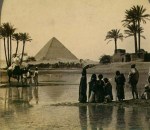
A scribe in Ancient Egypt
The Rhind Papyrus is a famous papyrus written by the scribe Ahmes(Ahmose) around 1650 BC. It was copied from a now lost text from the reign of kingAmenemhat III (12th dynasty) 1500 years prior to Ahmose’s birth. His papyrus is one of the best known examples of advanced Egyptian mathematics; mathematician-priests of the Nile valley knew no peers. It was found during illegal excavations in or near the Ramesseum. It has been housed in the British Museum since 1865 along with the Egyptian Mathematical Leather Roll. Originally, this papyrus was 5 m long and 33 cm high. This is the most famous mathematical papyrus to have survived from Ancient Egypt.
Pyramid of Giza in the 19th century
This papyrus shows that Ancient Egyptians were very advanced mathematicians and were familiar with both roots and square roots. They could plot an arch by using offsets that were measured at regular intervals from a base line, and they could also find out areas. To find the area of a circle, the Egyptians used an area of a square on an 8/9 of the diameter, or (7/8) squared. They could also figure out the area of a triangle. They knew that the volume of a frustum of a square pyramid equaled (1/3) h (a2 + ab + b2) – modern mathematicians, 4000 years later, have still not found a better approximation. They also knew that to make right angled triangles, they had to use the ratio of 3:4:5. The Great Pyramid of Khufu, Great Pyramid of Giza, from the 4th Dynasty is a mathematical wonder: It is laid out with geometric precision – a near-perfect square base, with sides of 230 m that differ from each other by less than 20 cm, and faces that sloped upwards at an angle of 51 to reach an apex nearly 150 m above the desert floor. Khufu’s pyramid was built long before the Ahmose papyrus was written, indicating the beginning of this mathematical theory was about 1,000 years old by the year 1650 B.C.E.
The Rhind Papyrus is divided in 3 books. Book 1 includes problems 1 – 40, and is about algebra and arithmetics. Book 2 focuses on Geometry and spans problems 41 – 59, while Book 3 focuses on miscellaneous problems from number 60 – 87.
The first part of the Rhind papyrus, book 1, consists of reference tables and a collection of 21 arithmetic and 20 algebraic problems. The first part of the papyrus is taken up by the 2/n table. The fractions 2/n for odd nranging from 3 to 101 are expressed as sums of unit fractions.
Problems 41 – 46 show how to find the volume of both cylindrical and rectangular granaries. In problem 41, Ahmose computes the volume of a cylindrical granary. In modern mathematical notation (and using d = 2r) this gives V = (8/9)2 d2h = (256/81)r2h. The fractional term 256/81 approximates the value of π as being 3.1605.
Problem 47 is a table with fractional equalities which represent the ten situations where the physical volume quantity of “100 quadruple heqats” is divided by each of the multiples of ten, from ten through one hundred. The quotients are expressed in terms of Horus eye fractions, sometimes also using a much smaller unit of volume known as a “quadruple ro”. Egyptian numerals were based on 10, a precursor to our decimal system.
Egyptian numerals
Problems 48–55 show how to compute an assortment of areas. Problem 48 is notable in that it succinctly computes the area of a circle by approximating π. Specifically, problem 48 explicitly reinforces the convention (used throughout the geometry section) that “a circle’s area stands to that of its circumscribing square in the ratio 64/81.” Problem number 53 is the famous Thales’s theorem, 1300 years before he was born!
Other problems show how to find the area of rectangles, triangles and trapezoids. The final six problems are related to the slopes of pyramids.
The third part of the Rhind papyrus consists of the remainder of the 91 problems, being 61, 61B, 62-82, 82B, 83-84, and “numbers” 85-87, which are items that are not mathematical in nature. This final section contains more complicated tables of data, several pefsu problems which are algebraic problems concerning food preparation, and even an amusing problem (number 79) which is suggestive of geometric progressions, geometric series, and certain later problems and riddles in history.
Thales theorem or problem number 53
So, it is truly no surprise that over several thousand years later, modern-day architects still cannot reproduce the great pyramids of Egypt… well, simply because these were quite advanced mathematicians and scientists. In all ancient Egyptian mathematics, there is not a single mathematical error, not in trigonometry, algebra, geometry, arithmetic, or mechanics. No wonder we still are in awe at the Egyptian Pharaonic era. It is a pity that some of their work was “stolen” by the likes of Thales and Pythagoras and renamed after them. It is a pity that so many of us have lived in ignorance of such great science on our continent. It is sad that most African kids have been taught in their classrooms the Thales theorem or Pythagorean one or Archimede (problem 10 of the Moscow Papyrus solves Archimede’s at least 1700 years earlier) without ever being told about their famous intelligent ancestors who had the answers to all these over 3000 years earlier. So today, after looking at the Rhind Papyrus and at problem number 53, I no longer call this the Theorem of Thales or Intercept Theorem, but rather the Egyptian theorem, and Pythagorastriangle,the Egyptian triangle.
For more information, check out the works of Cheikh Anta Diop (Apport de l’Afrique à la Civilisation Universelle, 1985 – published in Presence Africaine 1987), Beatrice Lumpkin (African and African-American contributions to mathematics, PPS Geocultural Essaysbseries, 1987), Ivan van Sertima, and Elikia M’Bokolo.
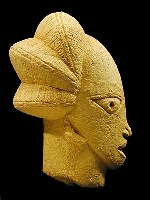
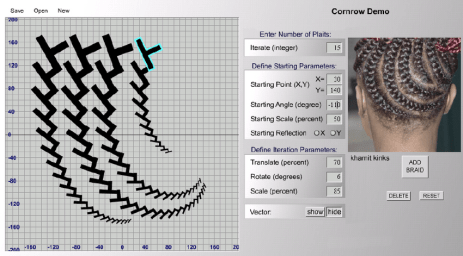
Today, we will be talking about hair, African hair, and hairstyles. One of the very common hairstyles used for Afro hair is cornrows. These were worn by women and men of centuries past as seen on Nok sculptures dating back 3rd century AD, Mende masks, Benin Kingdom masks, and are still worn today with great pride. Kings and queens adorned those like crowns. The great Emperor Tewodros II of Ethiopia wore them proudly! Imagine my surprise when I found a website where they had computed the way cornrows are made. Cornrows use about 4 geometrical concepts: translation, rotation, reflection and dilation. The styles are numerous ranging from simple linear compositions to complex curves and spirals. Check out this website and learn about the mathematics behind cornrows! Enjoy!
Congratulations to Kiara Nirghin, a 16-year-old South African girl who won the grand prize at the Google’s science fair, beating competitors from around the world, with a product made to address droughts via soil retention of water. Kudos to her!!! This is a good encouragement to other girls who love sciences; they too can contribute to make a better world. Watch the video below about her product.
The excerpt below is from the BBC. For the full article go here.
=======
A 16-year-old South African schoolgirl has won the grand prize at Google’s science fair for using orange peel to develop a cheap super-absorbent material to help soil retain water.
Kiara Nirghin beat students from around the world for a $50,000 (£38,000) scholarship with her “fighting drought with fruit” submission. Her work was in response to the recent drought that has hit South Africa . The drought, the worst since 1982, led to crop failures and animals dying.
K. Nirghin (mrmondialisation.org)
Ms Nirghin, a student at the Anglican Church-founded St Martin’s High School in the main city Johannesburg, said three experiments over 45 days resulted in her coming up with the “orange peel mixture” as an alternative to expensive and non-biodegradable super-absorbent polymers (SAPs). […]
It was made out of waste products from the juice-manufacturing industry, she said.
These included molecules found in orange peels and naturally occurring oils in avocado skins.
“The product is fully biodegradable, low-cost and has better water retaining properties than commercial SAPs. The only resources involved in the creation of the ‘orange peel mixture’ were electricity and time, no special equipment nor materials were required,” Ms Nirghin added in her online submission.
This is a continuation to the previous post, Technology helping students in Malawi, where the technology used to teach children in Malawi, is helping children in the United Kingdom (UK). Educators found out that the apps used to teach primary school children in Malawi was helpful to improve the education of children in the UK. Talk about globalization!
I really like the way technology is revolutionizing lives across the globe. Today, we will talk about education in Malawi. Actually, this could be any school in many African countries, where teachers very often have 60-80 students in their classrooms. So it is hard to control the students, and let’s face it, it is hard for the teacher to assess their students’ learning and to grade homework. The video below shows how technology is helping teachers in Malawi ensure proper learning of English, mathematics, and Chichewa. Enjoy!
A reconstruction of Homo naledi’s face by paleoartist John Gurche (Source: National Geographic)
I know this is old news, but I had to go back to the discovery of the Homo naledi a few months ago. For starters, the word naledimeans “star” in the Sotho language, and comes from the name of the Dinaledi chamber (chamber of stars) of the Rising Star cave system where the fossils were found. South African researchers unveiled Homo naledi last September after discovering the remains of 15 individuals in the Rising Star Cave near Johannesburg. The bones have yet to be dated, making it hard to evaluate where the Homo naledi would fit within the history of the human kind. However, a few information have been gathered.
Homo naledi skeletal specimen (Source: Wikipedia)
Homo nalediwas small and slender with a tiny brain compared to modern humans, but with a human-like skull. The adult males stood at about 150 cm (5 ft) tall, with the females a little shorter. The physical characteristics of H. naledi are described as having traits similar to the genus Australopithecus, mixed with traits more characteristic of the genus Homo, and traits not known in other hominin species. From the first excavations, the hand and feet bones looked unusual, bearing the hallmarks of a creature that made and used stone tools, was an accomplished climber, and stood upright. Studies on the wrist and thumb show that Homo naledi had a powerful grasp.
Until further dating, many questions arise: where does the homo naledi fit in the human evolution? How long ago did the species emerge, and did it live in parallel with other species, in isolation? How related is it to the Homo erectus? Could the Homo naledi and the Home erectus ever have lived in the same era? With these findings in South Africa, it seems that we, humans, are just scratching the surface of so much mystery and know so little! There is so much to learn, and so much to uncover! (Just a parenthesis: as a scientist, I am just stupefied that the people in the video below would touch these fossils with bare hands… and wear no gloves… come’ on this is a million years old specimen!)
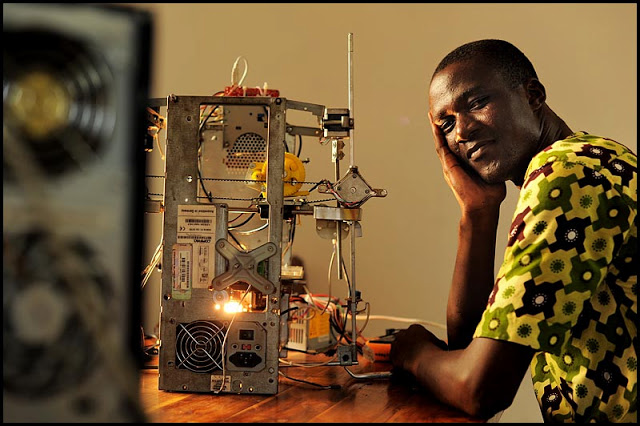
Afate Gnikou and his 3D printer (Source: WoeLab.com)
Just as almost everywhere else in the world, 3D printing offers the possibility of revolutionizing entire industries. In Africa, the 3D printer could bring a new industrial revolution, allowing goods to be made with less dependence on imported commodities, at a cheaper rate, and creating jobs locally. For the past three years, in Lomé, the capital of Togo, members of a small and innovative community have been building 3D printers. The machines are now part of an ambitious education program.
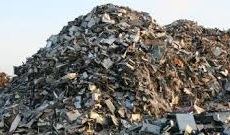
e-waste
In Lomé, piles of discarded computers, printers and scanners from industrialized countries accumulate in trash dumps. Afate Gnikou, a system’s developer, has found a place to work on his invention in a group of like-minded computer-lovers. It is called WoeLab; enjoy. BBC also did a video about it.
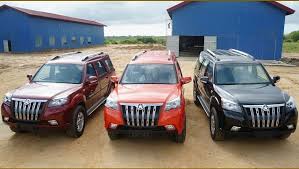
I came across a video of the Kantanka, a 4×4 All-Wheel Drive made in Ghana by Ghanaians for Ghanaians, on BBC. The car is the brainchild of Dr. Kwadwo Safo, a Ghanaian who always dreamt of making cars and planes in Ghana. He wanted to address the local needs, and demonstrate that it was possible for Africans to design and engineer their own cars for their own roads. Move over Toyota, Honda, Ford, Mercedes, and meet the Kantanka. We do hope that these cars will be solicited by Ghanaians themselves, that they will meet the safety standard, and be a breath of fresh air adapted to their roads and needs. The car is engineless and “green”. The founder’s son, Kwadwo Safo Jr., said, “the non-engine vehicle does not rely on a combustion engine to move, but an electric motor powered by rechargeable batteries. The batteries can be recharged with solar energy or electricity. As you drive the car on the road, it converts the energy from the sun into mechanical energy which powers the car.”
Apart from the lights and tires, everything is done and assembled by local people. The police just bought a few vehicles. The big question will be: does it meet international safety standards? Will Ghanaians be sold by it? Read the article on Forbes and Al-Jazeera, and watch the video on BBC. Enjoy Ghana’s first car, made in Ghana by Ghanaians for Ghanaians!


 Problems 41 – 46 show how to find the volume of both cylindrical and rectangular granaries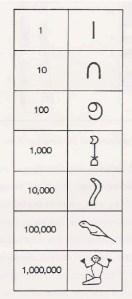









 African Heritage