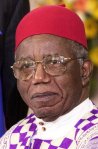
Chinua Achebe, a Writer like no other

Chinua Achebe
Chinua Achebe
Things Fall Apart
Things Fall Apart

Chinua Achebe, the great Nigerian writer, has always made me so proud of being African. I have his entire collection at home and I believe that he should be nominated for a Nobel Prize! I mean, isn’t the nobel prize supposed to acknowledge those who have affected the way people think? Isn’t it supposed to recognize those who have influenced generations? Well, then, Chinua Achebe created the “Nigerian novel” genre and not only influenced numerous African writers, but opened the world to an African story like none other (Things Fall Apart). His novel “Things Fall Apart” has been translated in over 22 languages and is currently taught in high schools and universities in the US and around the world… If I was on the Nobel prize committee, I will definitely nominate the great Chinua Achebe: he is long overdue!

For more information, check out Wikipedia on Chinua Achebe (http://en.wikipedia.org/wiki/Chinua_Achebe), and http://chinua-achebe.com/. Click on the link below to see parts of the interview given by Chinua Achebe on CNN.

Don’t forget to check out Part 2 and Part 3 of the interview.

Amilcar Cabral, Le père de l’indépendance Bissau et Cap-verdienne

Amilcar Cabral
Amilcar Cabral

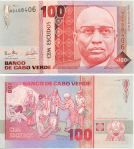
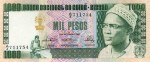
Amilcar Cabral est à mes yeux, tout comme Thomas Sankara, un des rares visionnaires qui ait foulé la terre africaine. Il s’est battu pour l’indépendance et l’union de la Guinée Bissau et du Cap-vert qui, à l’époque, étaient des colonies portugaises. Après des études d’agronomie à Lisbonne au Portugal, Amilcar rentre en Guinée comme fonctionnaire en 1952. Jugé dangereux, il est muté en Angola (il y passera 1 an), et décide à son retour de fonder le “Parti Africain de l’indépendance de la Guinée-Bissau et des îles du Cap-Vert (PAIGC)”. Il oeuvrera si bien que malgré son assassinat le 20 Janvier 1973, la Guinée Bissau obtiendra son indépendance quelques mois plutard. J’ai trouvé une très belle interview qu’ Amilcar avait donné à un journaliste francais où il parle des raisons pour lesquelles la Guinée Bissau et le Cap-vert devraient être indépendants. C’est dommage que son rêve de voir ces 2 pays unis ne se soit pas réalisé, mais la Guinée Bissau et le Cap-Vert lui doivent leur indépendance. (Durant la guerre d’indépendance, il se faisait souvent appellé par son nom de guerre: Abel Djassi). Sa photo est encore aujourd’hui sur les billets de banque du Cap-Vert.

Amilcar Cabral sur un billet de 100 escudos
Amilcar Cabral sur un billet de 1000 pesos

Amilcar Cabral, Fundador da nacionalidade Caboverdeana e Guineense. Nasce em Bafatá, Guiné, 12 de Setembro 1924. 1945: Com uma bolsa de estudo, ingressa no I. S. Agronomia, em Lisboa – 1950: Termina o curso e trabalha na Estação Agronómica de Santarém – 1952: Regressa a Bissau, contratado para os S. Agrícolas e Florestais da Guiné – 1955: O governador impõe a sua saída da colónia; vai trabalhar para Angola; liga-se ao MPLA – 1956: Criação em Bissau do PAIGC –  1970, 22 de Novembro: O governador da Guiné-Bissau decide e Alpoim Calvão chefia a operação de “comando” “Mar Verde” destinada a capturar ou a eliminar os dirigentes do PAIGC sediados em Conacri: fracasso! – 1973, 20 de Janeiro: Amílcar Cabral é assassinado em Conacri.

Le journaliste Alain Foka de RFI a également consacré une de ses emissions à Amilcar Cabral, sur le plateau de “Archives d’Afrique.” For more information, check out wikipedia (http://en.wikipedia.org/wiki/Am%C3%ADlcar_Cabral), http://www.amilcarcabral.org/ and http://www.umassd.edu/specialprograms/caboverde/acaddress.html

Thomas Sankara, The African Che

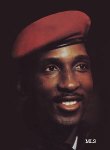
Captain Thomas Sankara

Thomas Isidore Sankara was a great visionary African leader, the kind which comes around once every 50 years or century. He had an unlimited and undying love for his country, his fellow countrymen, and his continent. He had a vision for a true independent African country, and continent. He strongly believed in justice, and worked extremely hard. He was a man of great integrity and discipline. At a time when women were relegated to the kitchen, Thomas spoke out loudly for women’s rights, and admitted women in the military, and in key positions within his government (the minister of Budget was a woman). What kind of man names his country “the land of upright people” (le pays des hommes integres)? What kind of man, by his passion and vision, reorganizes an entire country in just 4 years! no wait… actually just 3 (since the last year, Sankara’s government was crippled by internal division with Compaore’s factions). Well… let me tell you who that is: the great, and only, splendid Thomas Sankara, who made me proud of being an African child, who made me raise my chin up and walk upright!

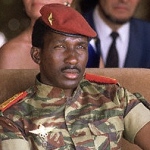
Thomas Sankara in Ouagadougou

At the time Sankara was assassinated, he was only 38 years old, a year younger than Ernesto Che Guevara… but just like Che, he left an indelible mark in the history of the world! Please join me in celebrating Captain Thomas Sankara!

(If you would like to learn more about him, please check out the website: – http://www.thomassankara.net/?lang=fr which does a good job of keeping Thomas Sankara’s memory alive and  http://en.wikipedia.org/wiki/Thomas_Sankara which I contributed to).

Click on the link below and watch the video!

Thomas Sankara, le Che Africain