Few countries in the world, apart from European and American (as if writing was only part of the western world) countries, can claim several Nobel prizes in literature. South Africa is one of those countries: with Nadine Gordimer and J.M. Coetzee.
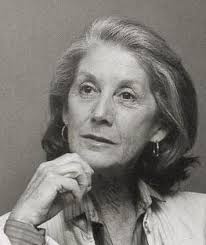
The South African Nobel-prize-winning author Nadine Gordimer, one of the literary world’s most powerful voices against apartheid, died today at the age of 90. She passed away peacefully at her home in Johannesburg. She was the first winner of this prize for South Africa.
Nadine Gordimer
Born in Gauteng, South Africa, in 1923 to immigrant European parents, Gordimer was awarded the Nobel prize for literature in 1991 for novels and short stories that reflected the drama of human life and emotion in a society warped by decades of white-minority rule.
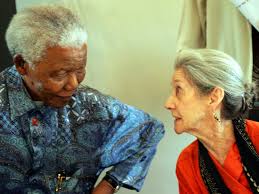
Many of her stories dealt with the themes of love, hate and friendship under the pressures of the racially segregated system that ended in 1994, when Nelson Mandela became South Africa’s first black president. She became active in the then banned African National Congress (ANC) after the arrest of her best friend Bettie du Toit in 1960, and the Sharpeville Massacre on 21 March 1960. Thereafter, she was a close friends with Mandela’s defense attorneys (Bram Fischer and George Bizos) during his 1962 trial; she actually helped Mandela edit his famous speech I am prepared to die. She was one of the first people president Mandela asked to see after his release from prison in 1990.
Nadine Gordimer and President Nelson Mandela
She was called one of the great “guerrillas of the imagination” by the poet Seamus Heaney, and a “magnificent epic writer” by the Nobel committee. Her intense, intimate prose helped expose apartheid to a global readership and continued to illuminate the brutality and beauty of her country long after the demise of the racist government. “She makes visible the extremely complicated and utterly inhuman living conditions in the world of racial segregation,” Sture Allen, permanent secretary of the Swedish Academy, said while awarding Ms. Gordimer the Nobel Prize for literature in 1991. “In this way, artistry and morality fuse.”
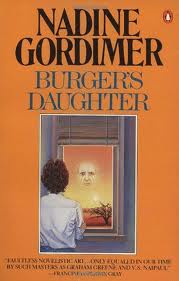
“Burger’s Daughter” by Nadine Gordimer
She had three books banned under the apartheid regime’s censorship laws, along with an anthology of poetry by black South African writers that she collected and had published. The first book to be banned was ‘A World of Strangers,’ the story of an apolitical Briton drifting into friendships with black South Africans in segregated Johannesburg in the 1950s. In 1979 Burger’s Daughter was banished from the shelves for its portrayal of a woman’s attempt to establish her own identity after her father’s death in jail makes him a political hero.
I never read any of her work, and now plan to start. Thank you to Nadine Gordimer for her brightness, and for her endless fight for freedom through her works.
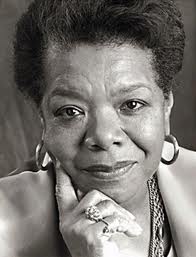
Yesterday, the world lost one of its greatest poets: Dr. Maya Angelou. The first poem of Maya Angelou I came across was “Phenomenal Woman,” which really resonated with me. It was read at a bridal shower I attended in Harlem, and I just loved every single word of it. Before that, I had read Maya Angelou’s first book I Know Why The Caged Bird Sings and also watched the movie. Maya Angelou’s life was not easy: she was raped at age 7, a teenage mother at age 17, a restaurant cook, a prostitute, and a pimp. She turned her life around, was a professional dancer, singer, actress, and a journalist in Egypt and Ghana. She won several Grammy awards. She walked with the greats of this world: Malcolm X whom she met while in Ghana and was going to work with before his assassination, Dr. Martin Luther King Jr., James Baldwin, Billie Holiday, Oprah Winfrey, and so many others. President Bill Clinton asked her to read a poem at his inauguration ceremony in 1993, making her the second poet in American history to do so. Her reading of that poem, “On the Pulse of Morning” won a Grammy award. President Obama presented her with the presidential medal of freedom in 2011. She was a professor at Wake Forest University.
Maya Angelou
To think that this woman never went to college, never had a PhD, and yet she was a bestselling author, and a professor at a major university. Billie Holiday once told Maya Angelou that she would be known in this world, but not for her music. Indeed, Maya Angelou was known throughout the world, definitely not for her music, but for her writings, and particularly for her poetry. Her life is a testament to truth, and passion: live your passion, do what you are most passionate about, and it does not matter where you come from, or how many degrees you have, you will excel and touch countless lives. Here is one of my favorite of Maya Angelou’s poems: “Still I Rise.”
Still I Rise
You may write me down in history With your bitter, twisted lies, You may tread me in the very dirt But still, like dust, I’ll rise.
Does my sassiness upset you? Why are you beset with gloom? ‘Cause I walk like I’ve got oil wells Pumping in my living room.
Just like moons and like suns, With the certainty of tides, Just like hopes springing high, Still I’ll rise.
Did you want to see me broken? Bowed head and lowered eyes? Shoulders falling down like teardrops. Weakened by my soulful cries.
Does my haughtiness offend you? Don’t you take it awful hard ‘Cause I laugh like I’ve got gold mines Diggin’ in my own back yard.
You may shoot me with your words, You may cut me with your eyes, You may kill me with your hatefulness, But still, like air, I’ll rise.
Does my sexiness upset you? Does it come as a surprise That I dance like I’ve got diamonds At the meeting of my thighs?
Out of the huts of history’s shame I rise Up from a past that’s rooted in pain I rise I’m a black ocean, leaping and wide, Welling and swelling I bear in the tide. Leaving behind nights of terror and fear I rise Into a daybreak that’s wondrously clear I rise Bringing the gifts that my ancestors gave, I am the dream and the hope of the slave. I rise I rise I rise.
So many of our revolutionary leaders have written books, poems, and essays. The great Thomas Sankara, our African Che and president of Burkina Faso, wrote about empowering women, people, getting away from debt, and the Burkinabé revolution. Amilcar Cabral not only wrote poems, but also revolutionary essays. Agostinho Neto, the first president of Angola, also wrote poetry, just as Senegal’s first president Leopold Sedar Senghor. So it seems quite natural to find out that Sekou Touré, the grandson of Samori Touré, the only African president to say ‘NO‘ to France and de Gaulle, also wrote poetry. So here, I leave you with a poem by Sekou Touré, on Women of Africa, and their rightful place in the revolution.
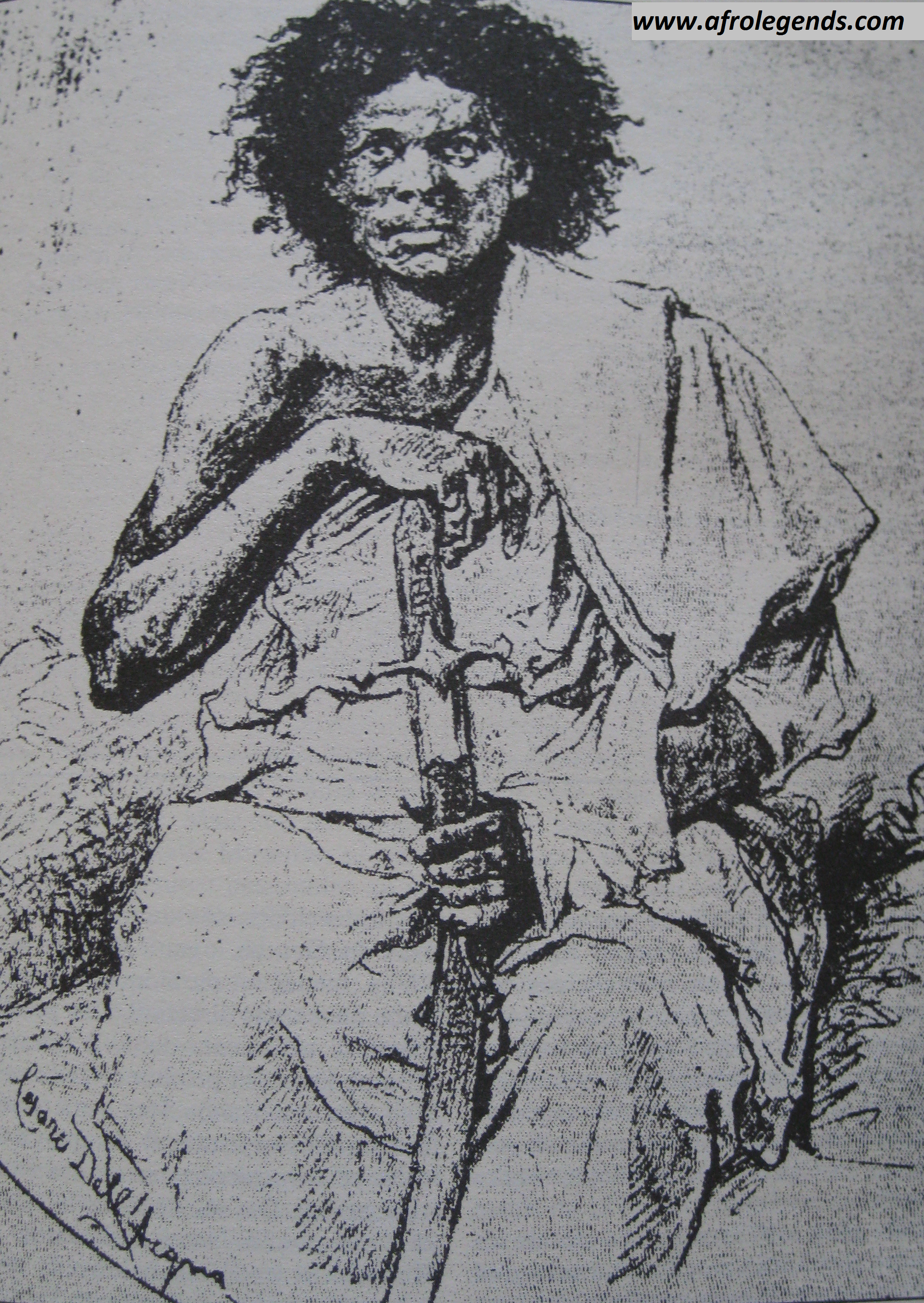
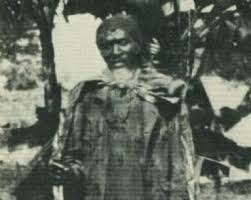
Mirambo, the Black Napoleon (Source: Les Africain, C.-A. Julien, Ed. J.A., Vol, 6, P. 137 (1977))Mirambo’s empire, Urambo (source: Les Africains, C.-A. Julien, Ed. J.A., Vol.6, P. 135 (1977))
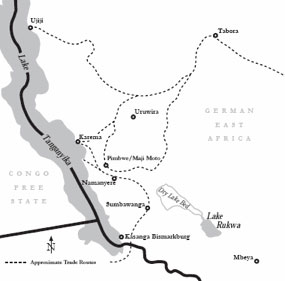
Following up on the article on Mirambo, the Black Napoleon or the Black Bonaparte, I propose here a map of his zone of influence after conquest of different regions. I found a map of Mirambo‘s kingdom, the Nyamwezi empire, Urambo, in ‘Les Africains, C.-A. Julien, Editions J.A., Vol. 6, P. 135 (1977).’ You will find his capitals: Iseramagazi and Ikonongo, Tabora, Ujiji, Lake Victoria and Lake Tanganyika the northern and western borders respectively. Enjoy!
Today, I will talk about Mirambo, the man the explorer Henry Morton Stanley first referred to as a bandit, and later on as the Napoleon of Africa for his military prowess. Who was Mirambo?
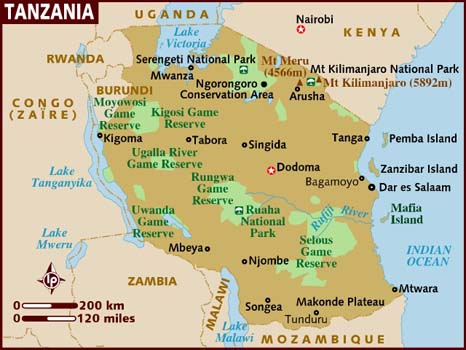
Map of Tanzania
Born Mbula Mtelya, Mirambo is the man who revolutionized nineteenth century Tanzania, and made it hard for the Germans to conquer the region: he united the numerous Nyamwezi tribes, and gained control over Swahili-Arab trade routes. Mirambo was the leader of the Nyamwezi people on a 200,000 km2 territory south of Lake Nyanza (Lake Victoria), and east of Lake Tanganyika. He was not a vulgar chief of brigands as the Arab traders made Stanley believe in 1871, but his links to different families of Ntemi(kings) were a little bit blurred as many historians had mixed up dynastic and genealogical lineages, different in a matrilineal system such as that of the Nyamwezis. In 1858, Mirambo managed to inherit the chiefdom of Uyowa from his father, Kasanda, who was a renowned warrior; he was only 18 years old. In 1860, he joined two chiefdoms located 100 km west of Tabora, in the kingdom of Unyanyembe. He learned the Ngoni language (Ngoni people trace their origin to the Zulu people of KwaZulu Natal), as well as their military techniques. Later in 1860, he conquered the neighboring territory of Ulyankuru.
Map of Mirambo’s kingdom
He then moved his capital to Iseramagazi where he built a Boma, a fortified residence, with walls made up of dry bricks, retrenchments and hedges of euphorbia flowers. From his father and mother, he was a descendent of Mshimba (lion), the last ruler of the legendary kingdom of Usagali, and Mirambo was thus recreating the old empire. Thus in 1860, he created a new Nyamwezi state, the Urambo, from the name he had adopted for himself, ‘corpses‘ in kinyamwezi, Mirambo. From 1860 to 1870, he strengthened his authority along the banks of the river Gombe, i.e. on the road to Ujiji, thereby threatening to block the Arab commerce in the area. In 1871, he defeated the Arab traders at Tabora. The Sultan of Zanzibar, Barghash bin Said, retaliated by sending 3000 soldiers (2000 Swahili, and 1000 Balutchi). Mirambo’s resistance was one of the most fierce: Nyamwezi’s fighters would go as far as melting their copper bracelets to make bullets for their guns. A compromise was made to keep commerce flowing with the coast: caravans could pass after paying a tax (hongo) to Mirambo.
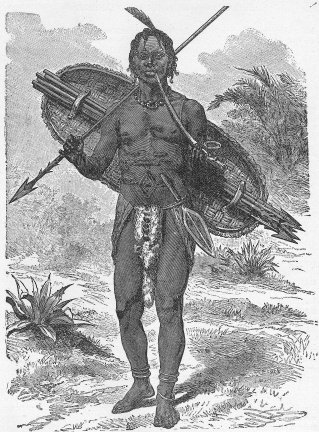
Illustration of the Ntemi of Urambo, Mirambo (from James William Buels Heroes of the Dark Continent (1890))
Every year, during the dry season, Mirambo would dispatch his ruga-ruga in all directions to continue the expansion of his territory. From 1876 to 1878, the territory was expanded to the north, up to the southern banks of Lake Victoria. From 1879 to 1881, expansion to the west toward Uvinza, for the control of Lake Tanganyika. The Muhambwe of King Ruhaga fell under Nyamwezi domination, and the Ruguru of King Ntare had to seek protection from Mirambo and agree to the presence of a ruga-ruga post on the eastern border of his kingdom. In 1879, there was also the expansion towards Burundi. His alliance with the Ngoni fell apart in the early 1880s. He was greatly hated by the Arabs who used to dominate the commerce in the region, and other neighboring kings who feared him, and the Europeans who saw in him as a powerful adversary. After 1881, the Arabs managed to convince the International African Association (AIA – Association Internationale Africaine), a European power created under King Leopold II’s initiative to inflict an embargo on arms and munitions on Mirambo (yup… European unions already inflicted embargo on arms back then). The goal of the AIA was to “open up central Africa to civilization.” At first Mirambo’s army succeeded in entering Burundi by surprise using a feud between the local king and his brother, but in 1884, his army was defeated by Burundi warriors (aided by Ngoni warriors). After his defeat in Burundi, and another defeat against the alliance of the Arabs and the Ntemiof Bukune, Mirambo’s troops were led by Mpandashalo as he was increasingly sick. Mirambo died on 2 December 1884.
Flag of Tanzania
Mirambo was a strong and ambitious leader. He expanded his authority and influence over a number of Nyamwezi chiefs. One of his challenges was to devise a political system that would allow him to consolidate his power, while ever expanding his territory. For that, he made sure not to change the structure of the Nyamwezi’s society: once in power, he would usually choose a successor from the same family. As long as the new chiefs pledged allegiance to him, they would be left to go about their political duties. The conquered chiefs had to provide troops at all times. His greatest strength was military. He used surprise as a tactical ploy. His capital was both a military and economic center. He had two residences: Iseramagazi from 1879, and Ikonongo from 1881.
Mirambo was actually a simple man, deeply rooted in his culture and traditions, but also very curious of the world. He was a man of order and progress, who will set the price of commodities in the capital’s markets, and regulated the consumption of alcohol in his kingdoms (he thought that alcohol weakened societies – just like Gungunyane), and meditated on the decadence of Africa in the 19th century. He was nostalgic of the magnificent ancient African capitals, and kingdoms. In essence, Mirambo had 4 faces: the traditional king, the warrior leader, the state builder, and the modernizer. To learn more, go to: ThinkAfricaPress.com, BlackPast.org, and Les Africains, Vol. 6, editions J.A, C.-A. Julien, P. 127-157, (1977).
I was admirably surprised to see this article on BBC on Capt Mbaye Diagne, the forgotten angel of Rwanda. Remember that I wrote an article about Capt Mbaye Diagne’s bravery, courage, and strength in the face of horrors in Rwanda, back in 2009. I am grateful for this recognition from the BBC, even though it has taken this long. I want you to go back and read the great article I wrote a few years ago on this African hero, the forgotten angel of Rwandahere. Don’t forget to check out the BBC article as well.
Ahead of the 2014 FIFA World Cup in Brazil, I have decided to talk about Brazilians of African descent who have influenced their country in some way or fashion. I know this is rare, in a country where the plight of the Blacks is still very dire. Today, we will talk about Marina Silva.
Marina Silva (Jornalopcao.com)
If you were watching the Brazilian elections, you probably saw that it saw the election of the first woman president of Brazil Dilma Rousseff. Most importantly, the 2010 Brazilian presidential election not only saw a woman winning the election, but also a woman deciding the turn of the elections. I am talking about Marina Silva, a Black Brazilian from humble beginnings, who came from a family of rubber tappers, and only learned to read and write at the age of 16, and later became a senator, and then a minister in Brazil under President Lula. Hers is a story like none other! A beautiful story! A story of hardship and overcoming those hardships. Imagine that: a Black woman (in a country where Blacks almost have no say) who was once a maid, and lived by tapping rubber on plantations could become a senator, then a minister under president Lula, and then a presidential candidate, and more the balance maker of the 2010 Brazilian elections! Wow! Wow! Wow! Who said women had no voice? Who said Blacks had no say?
A Marina Silva’s campaign poster for the 2010 presidential election (marinasilvapresidente.ning.com)
Marina Silva grew up in Rio Branco the western province of Acre in Brazil in the Amazon rainforest. Silva helped create Acre’s first workers’ union, and led demonstrations with Chico Mendes to warn against deforestation and the outplacement of forest communities from their traditional locations. She has become an activist, a senator and a minister, entirely dedicated to securing the largest and richest ecosystem on earth: the Amazon rainforest. Her efforts, courage, and achievements are without comparison.
Hers was the defining moment of the 2010 Brazilian elections! Enjoy Marina Silva TEDX’s speech titled “Everyone can do it!” and feel the need to rise and unleash your inner genius!
I decided to make a compilation of some of Lapiro de Mbanga’s words in his interviews. The full interview to Daniel Brown from Freemuse can be found here; for the interview Lapiro gave to Le Messager, click here; and lastly the interview to Phoenix Gauthier can be found on RFI. The video below shows Lapiro de Mbanga’s proudly expressing himself at the Oslo Freedom Forum in 2013. Enjoy!!!
============
About life in prison: … There is no hygiene here and we must share our most intimate moments with the other cellmates. … I should have been taken to hospital for a consultation but my status as a political prisoner has meant I have not been allowed to go once in these two years. I somehow survived the typhoid attack in December by taking the antibiotics my wife Louisette brought me. It’s fortunate she comes every few days. It’s a five-hour round trip from Mbanga, it’s taking a toll on her, too. … I wake at 7 to 8 every morning …. I keep informed about the outside world thanks to TV5 [France’s international station] or Radio France International. I eat, chat with the others in the cell, play Ludo, scrabble, draughts. It’s impossible to compose in such an atmosphere. I need calm, serenity. Here, I cannot concentrate and write the thoughtful songs people expect of me.
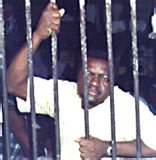
Pius Njawe, a Cameroonian journalist and martyr in jail
We have penal rations twice a day. At 1pm we are given boiled corn and at 5pm there’s rice in some warm water. It’s the same every day. It’s way below minimum requirements. My wife brings me food every two days, I couldn’t survive otherwise.I’ve seen people die of hunger.It happens every day in Cameroonian prisons.
Normally, I should have no contact with the outside world. Telephones are illegal here. I’m speaking to you because we have to scheme like common crooks. In prison there are all kinds of trafficking going on, including this one. You pay guards to turn a blind eye. You know, in Cameroon you can buy everything. This country has been world champion in terms of corruption. It’s everywhere and filters down to here. (Source: Daniel Brown, Freemuse)
On being scared for his life because of his outspokenness:It’s all part of my struggle. If I was the scared type I would never have started singing in 1985. I’m not going to start getting scared after all these years. My struggle has always been to denounce inequalities and danger is part of that mission. The only thing that has changed for me since 1985 is I’m at the head of a family with six children. I can guarantee my own security, but not theirs. I’m scared for them. But I have no choice. If you start such a struggle, somebody must pay. Still, my family is unhappy with such risk taking. That’s why I think if I don’t go into exile after this prison term, I won’t survive very long out there – they’ll kill me. Because it’s obvious people in charge don’t want to be confronted with somebody who stops them from just getting on with things. (Source: Daniel Brown, Freemuse)
On going to exile: For starters, I am not in exile; I am political refugee in the USA. I needed a social security and an insurance for the future of my children; I refuse to manufacture unemployed people full of diplomas who will retire without ever having worked. [Pour commencer, je ne suis pas en exil; je suis réfugié politique aux USA. J’avais besoin d’une sécurité sociale et d’une assurance pour le futur de mes enfants; je refuse de fabriquer des chômeurs bardés de diplômes qui vont aller à la retraite sans avoir jamais travaillé.] (Source: Le Messager 04 April 2013)
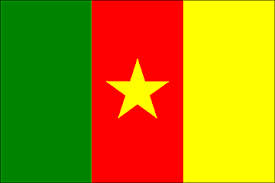
Flag of Cameroon
About the way he spends his days now in the US: I dedicate myself to my children’s education. I have, during 3 decades, focused my life on my struggle, the fight against social inequalities, forgetting that I was first a head of family. Despite what the Um [Nyobé], Ouandié, Moumié, and all the known and unknown freedom fighters have done, nobody knows what has become of their offspring. For me, it is very serious. It is as if they had fought for nothing. [Je me consacre à l’éducation de mes enfants qui sont ici avec moi. J’ai pendant 3 décennies focalisé ma vie sur mon combat, à savoir la lutte contre les inégalités sociales oubliant que j’étais d’abord un chef de famille. Malgré tout ce que les Um, Ouandié, Moumié et tous les autres combattants connus et inconnus ont fait, personne aujourd’hui ne sait ce que sont devenues leurs progénitures, Pour moi, c’est très grave. C’est comme s’ils ont combattu pour rien …]. (Source: Le Messager 04 April 2013)
About his rupture with Biya and Fru Ndi: Paul Biya, even if he listens to my songs, does not count on my very short list of friends. So no need to break up with him even though I never voted neither for him, nor for Ahidjo’s party which he hijacked in Bamenda in 1985. Fru Ndi, whom I now call “CHIENMAN” and not Chairman, has ceased to be worthy of my respect, given his multiple reversals and changes. … I cannot be in good terms with an individual who plots against the people, it is as simple as that. [Paul Biya même s’il écoute mes chansons, ne compte pas sur la liste très restreinte de mes amis. Donc pas besoin de rompre avec lui encore que je n’ai jamais voté ni pour lui-même, ni pour le parti de Ahidjo qu’il a détourné à Bamenda en 1985. Fru Ndi que j’appelle désormais “CHIENMAN” et non Chairman, a cessé depuis bien longtemps d’être une personne ayant droit à mon respect, compte tenu de ses multiples virements, revirements et retournements de veste. … Je ne peux pas être en bon terme avec un individu qui complote contre le peuple, c’est aussi simple que cela]. (Source: Le Messager 04 April 2013)
On his dream for Cameroon? I dream of a Cameroon where the power will belong to the people. Where the wealthy will not use the misery of the poor by giving them some rice, fish, beer and 1000 FCFA to stay in power and plunder the country’s resources. [Je rêve d’un Cameroun dont le pouvoir appartiendra au peuple. Où les riches ne vont pas se servir de la misère des pauvres en donnant aux démunis du riz, du poisson, de la bière et 1000f pour aller au pouvoir piller les ressources du pays.] (Source: Le Messager 04 April 2013)
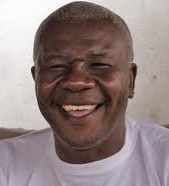
Lapiro de Mbanga
On his struggle: The fight continues. I got out of jail only three months ago. And I need to continue the fight at a greater level. … You have seen my environment. Here in Mbanga, it is 7:30PM and it is already dark everywhere. Without electricity, you can be attacked. Yet, there are people who fight at work all day. And at the end of the day, there is no light, no health, the children cannot go to school.There is no escape. That is my fight, my struggle. It is for that Cameroon that I am fighting. And I want the Americans and Europeans to understand. I come to tell them: thank you for fighting for Lapiro de Mbanga [release] , but there are 20 millions of Lapiro de Mbanga in Cameroon who experience the martyr daily. Wake up and do something. [Le combat continue. Je suis sorti de prison il y a seulement trois mois. Et je dois continuer le combat au niveau des grandes instances. … Vous avez vu mon environnement. Ici à Mbanga il est 19h30 et partout il fait noir. Sans électricité vous pouvez être agressé ici. Pourtant, il y a des gens qui se battent au travail toute la journée. Et, à la fin, il n’y a pas de lumière, ni de santé, les enfants ne peuvent pas aller à l’école. Il n’y a pas d’issue. C’est ça mon combat. C’est pour ce Cameroun-là que je me bats. Et je veux que les Américains et les Européens comprennent. Je viens leur dire par ma voix : merci d’avoir combattu pour Lapiro de Mbanga, mais il y a 20 millions de Lapiro de Mbanga au Cameroun qui subissent le martyr au quotidien. Réveillez-vous et faites quelque chose.] (Source: RFI, P. Gauthier, 12/07/2011)
The current news of Lapiro de Mbanga’s death really took me by surprise. It really saddened me. In the past few months, Cameroon has lost some of its most valiant fighters: Abel Eyinga, Charles Ateba Eyene, and now Lapiro de Mbanga. Lambo Sandjo Pierre Roger, also known as Lapiro de Mbanga, was a freedom fighter for those without voice; he was an outspoken critic of the government ofPaul Biya, and made himself the spoken voice of thousands of Cameroonian who could not speak and whose rights were bent. Ndinga Man, or the guitar man, used music to say what others were afraid to say.
Flag of Cameroon
Born in the village of Mbanga, just north west of Douala, Pierre Roger Lambo Sandjo started his career under the name of Pastor Sandjo Lapiro in the late 70s when his disks were made in Nigeria. He later adopted the stage name of LAPIRO, part of his name LAmbo PIerre ROger, of Mbanga his birthplace. In 1986, he collaborated with his fellow countryman Toto Guillaume (from Kassav), and came out with Pas argent No Love, and then No Make Erreur. He chose to sing in Pidgin, mixed in with some English, French, and Douala, for all his countrymen to understand, and to articulate all the daily injustices he witnessed. The Jamaican Jimmy Cliff praised Lapiro’s qualities on the album’s back cover, and hoped to see him go international. Lapiro’s strong stance, without any deference against the authorities, gained him an immense popularity just like the Nigerian artist Fela.
Lapiro de Mbanga – Na You
His songs echoed the struggle for democracy in Cameroon. For the past 25 years, Lapiro’s songs – No Make Erreur, Pas argent no love, Kop Nie, Mimba We, Na You, Ndinga Man contre-attaque : na wou go pay ? – often flirted with censorship and provoked the ire of officials. Like he said of the president who did not want to leave power, Day di go mandat di bole… But it was his 2008 composition Constitution Constipée which really brought Lapiro face to face with the country’s repressive justice system, and landed him three years in the country’s jails. This protest song denounced the amendment of the constitutional clause, which limited presidential mandates to two non-renewable seven year terms. As usual his lyrics mixed in humour and anger in calling for Biya to step down, since the pacho (old man) is daya (tired) and has outlived his usefulness. The song was banned from airwaves; but since “impossible n’est pas camerounais” it was leaked out, and became the anthem for the youths and workers’ protests against the steep rise of the cost of living in the February 2008 riots. Lapiro was arrested and thrown to jail for inciting violence and arson. He spent the next three years ‘rotting’ in jails in Douala as a political prisoner in the worst conditions ever: sleeping on the floor in the rain, sharing the cell with 50 or more others, eating one meal a day, not having access to proper health care, etc. It is believed that he was only granted his freedom in 2011 because he was on the verge of death. In 2012, he sought and was granted political asylum in the USA. He arrived with his family in September of 2012. Lapiro joined his ancestors last night…
Lapiro de Mbanga – Our ambassador
All said and done, Lapiro was really the idol of the downtrodden and forgotten people, the sauvetteurs and the bayam selams; he was the voice of the voiceless. Many believe the opposition leader John Fru Ndi would have never had the “aura” he had in the 90s without Lapiro. Truly Lapiro sang for the people, talked about the youth’s shattered dreams, the division, the tribalism, the corruption, the decadence, and the ills of the country. Cameroon has once again lost one of his great sons. This makes me want to ask Bob Marley’s question: How long shall they kill our prophets while we stand aside and look? It really hurts, but we should remember Lapiro, our ambassador, as the outspoken critics, the voice of those without voice, and the “complice of the contre man” as he said himself. Ndinga Man, rest in peace! Enjoy No Make Erreur!!!
Over 50 years after the Civil Rights movements, and almost 20 years after the avenue of “democracy” in South Africa, people around the world are still fighting for ‘equal rights‘. The Black people of Brazil are screaming for equal rights, women in many countries of the world are still fighting for equal rights, people of lower social classes in the society are crying for equal rights, people of different castes in India are demanding equal rights… many African countries and governments just want equal rights to be treated and dealt with like proper economic partners to the G8 and G20 countries. One of my favorite Reggae singers, the Jamaican Peter Tosh sang it so well over 20 years ago… and I just want to reiterate that it is a basic human need to be treated equally with respect no matter who we are, what the color of our skin is, what our gender is, what our social background is, what our religious affiliations are, etc.: we are first human beings and we deserve equal rights!











 African Heritage