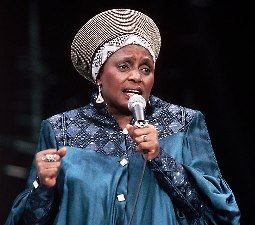
“In the West the past is like a dead animal. It is a carcass picked at by the flies that call themselves historians and biographers. But in my culture the past lives. My people feel this way in part because death does not separate us from our ancestors.” Miriam Makeba
A Ugandan author based in Great Britain whose debut novel was initially rejected by British publishers for being ‘too African‘, has won one of the world’s richest literary prizes.
She will receive $165,000 (£119,000). The prize money is more than double the amount that the Booker Prize winner gets, and organizers say it’s the richest award dedicated to literature after the Nobel Prize. Makumbi’s debut novel Kintu was first published in Kenya four years ago after British publishers rejected it for being “too African”. It was finally released in the UK this January. In Ugandan culture, Kintu is a mythological figure who appears in a legend of the Baganda of Uganda as a creation myth. According to this legend, Kintu was the first person on earth, the father of all people. Although her book is not about this Kintu, it follows a family who believes that there is a curse on them which has followed them over several generations, spanning more than 250 years.
I loved Makumbi’s Commonwealth short story, and lived through the pain of her main character. Now I cannot wait to read her first book and regal in Ugandan history and culture.
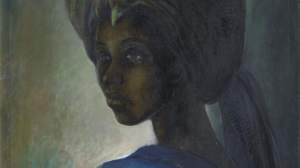
Tutu is what people have recently termed the African Mona Lisa. It is the portrait of a Yoruba princess made by the renowned Nigerian painter Ben Enwonwu. The brainchild of Enwonu, who created it during the aftermath of Nigeria’s bloody civil war, “Tutu” is the painting of an Ile Ife princess Adetutu Ademiluyi (“Tutu”); it is said that he met her as he was driving . It had disappeared right after being painted in 1974, and resurfaced over 40 years later in a flat in London. On March 1st 2018, it fetched $1.6M in auction and has been celebrated by Nigerians around the world. The London auction house initially predicted a price tag of between £200,000 and £300,000 ($275,000 to $413,000), less than a quarter of the final bid. It sold for $1.6 million (£1,205,000), and has been dubbed the “African Mona Lisa.” So good to know that the princess whose painting it is, is still alive in Nigeria today, so maybe Mona Lisa may not be the appropriate name after all.
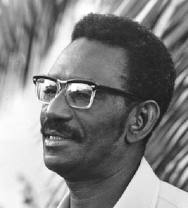
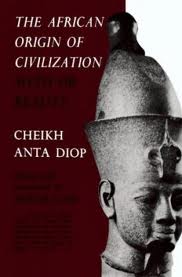
A few weeks ago, we woke up to the face of Cheddar man, the ancestor of the modern-day Briton: he was a Black man with curly hair, and blue eyes! If this was a shock to many, to us who had long espoused the ideas of Cheikh Anta Diop with the African Origin of Civilization, this came as no surprise. Africa is the cradle of humanity, so it is only normal that the ancestors of anybody out there should be black, and that in reality, the idea of race as we know it today should be abolished, since in reality we are all brothers and sisters, with the same blood flowing through our veins, and now (officially) the same ancestors.
‘The African Origin of Civilization’ by Cheikh Anta Diop
O Cheikh Anta Diop, you, so despised by Western researchers who hated your work, because you said that Africa was the cradle of humanity; that everything started in Africa, and that Egypt and modern day Africans descended from the same ancestors, in other words, were the same people, you have now been vindicated many many years after!
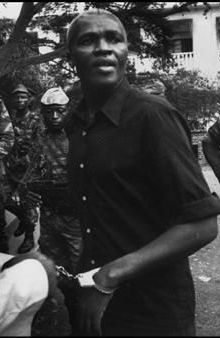
“When you have chosen the struggle, the path of struggle, for a true independence, you must necessarily expect to receive anytime the hard knocks that the imperialists will give you. But we are used to say that it is because the imperialists are beating us so much that we have become and are becoming stronger in our daily struggle.” [“Lorsque vous avez choisi la lutte, la voix de la lutte, pour une indépendance véritable, vous devez nécessairement vous attendre à tout moment aux coups durs que vous portent les impérialistes. Mais nous avons l’habitude de dire que c’est parce que les impérialistes nous portent beaucoup de coups que nous sommes devenus et nous devenons chaque jour un peu plus aguerris pour la lutte.”] Ernest Ouandié.
The president of Ghana has recently announced that Ghana will be getting off from the IMF. Based on the progress of the Ghanaian economy, Ghana expects to be able to pay all its loan, and get off from the 3-year IMF financial aid program. This is very good, as any country in this world, when they are well, need not be on financial aid forever, but should aspire to become more independent. I raise my hat to them, and hope that other African countries will aspire to work on being more financially independent! Now, let’s pray for President Nana Akufo Addo’s well-being, and pray for his vision to be completed.
The president of Ghana, Nana Akufo-Addo, has delivered yet another good speech on Africa’s independence or rather on Africa taking its own future in hands. This is the second speech he delivers, in front of Emmanuel Macron, the French president, where he clearly states that Africa does not need his charity, but rather him [France] leaving Africa to its own hands [and its own money]. The first speech he delivered was in Accra, Ghana, during Macron’s visit to Ghana last December. There he had asked Africans to take their future in their own hands, and had almost humiliated the French president in public! So, enjoy!
To wish you all a happy Valentine’s day, I decided to share with you a classic love song by two outstanding African singers: the late Cesaria Evora: the Barefoot Diva– the Love of Cape Verde, and the great Malian singer Salif Keita. It was shared with me this morning. I love you mi Amore… too much! Enjoy! and do share with those special ones, even if it is not love the Valentine way, share it with the precious ones in your life.
I really enjoyed Godfrey Nzamujo‘s TEDx talk. Nzamujo is the founder of the Songhai Center in Benin and has been implementing, for over 30 years now, sustainable agriculture to address Africa’s food problems, and also to fight against rural exodus which forces youths to leave their villages to go to the city. One of his center’s aim is promotes entrepreneurship in agriculture aimed at making the poor producers, actors and managers of their own future. His main goal is to erect green rural towns where nothing is wasted. His approach is fully 100% re-use, recycle agriculture, zero-waste emission! Watch, listen, share, and enjoy!
Imagine an organic farm where nothing is wasted: from the crops, the chicken, everything is generated in house, even the energy for the farm is generated with the bio-gas from the animal waste. I recently came across the Songhai Center, and loved the idea that Godfrey Nzamujo has implemented in Porto-Novo, Benin. Created in 1985 by Godfrey Nzamujo, a Dominican priest with doctorate degrees in electronics, development science and microbiology, the Songhai Center is an NGO which promotes entrepreneurship in agriculture aimed at making the poor producers, actors and managers of their own future. His main goal is to erect green rural towns where nothing is wasted. Have rural people be proud of staying and enriching their villages / towns. Songhai has found recognition beyond Benin. The UNDP (2008) regards its approach as successful in the promotion of agricultural entrepreneurship and the creation of decent jobs in rural areas.
A farm
His farm is centered around agriculture, animal husbandry, and core production. The waste from one sector becomes an input in another sector. The waste from the animal production is used to produce maggots that feed the fish, and the wastewater from fish ponds is used to irrigate the crops where vegetables and grains are produced, and the waste from the crops are used for bio-gas or to feed the animals (grains for the animals), and the droppings from the animals are used for compost. And the products, meat, eggs, fruits, etc, are eaten by men. Everything is bio: fertilizers are from compost, no chemicals are used! Natural fertilizers are used. No pesticides are used: pest management is implemented using plants themselves via inter-cropping or integrated pest management. The pure clean water used for drinking comes from a deep well; the water from the rain is also harvested, and water from sewage is purified using plants and various organisms to be used in the agriculture and plants. Part of the electricity comes from the bio-gas, some from the diesel, and some from the national grid. Even the plastic bottles containers for the juices produced in-house are made from plastic waste used at the center, while the machinery for the farm is built in-house as well! Watch, Enjoy, and get Inspired!