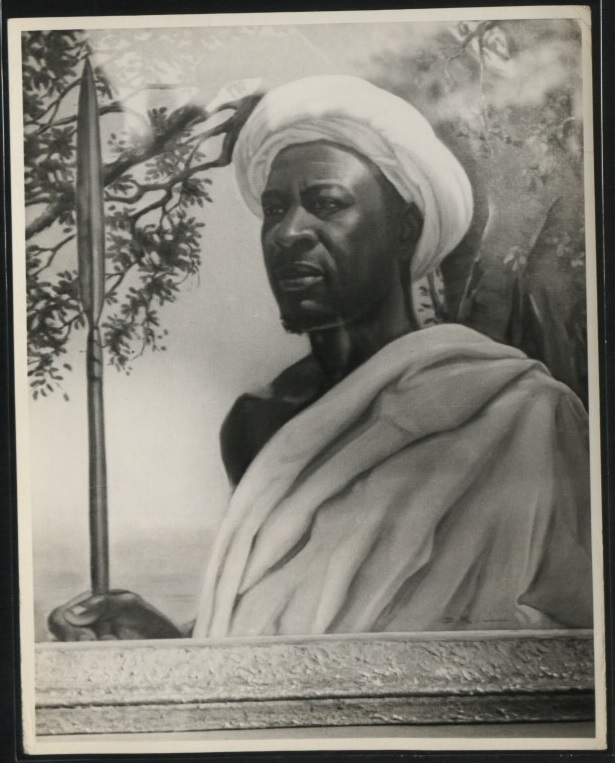
More on King Mkwawa and The Return of His Skull to Tanzania

King Mkwawa

I still don’t understand how a people can hold onto another people’s ancestors’ skulls, refuse to return it, and talk of partnership, friendship, among the people. Isn’t it ludicrous? Many of our ancestors’ skulls are still in museums in Europe, and to this date, Europeans refuse to return them, yet they talk of partnership. The information below shows all the obstacles met to find King Mkwawa’s skull, a skull which was included in the Treaty of Versailles, and return it, … As you read about all the hurdles, you wonder how hard it will be for the regular commoners. The excerpts below are from the article written by Dr. J. Desplat at the National Archives. For the full article, please go to the The National Archives, and see some of the correspondence quoted here, as well as the ones mentioning that the skull was said to have magical powers..

As a reminder, King Mkwawa’s skull’s return (King Mkwawa and the First German Colonial Forces’ Defeat in Africa) was stipulated in the 1919 Treaty of Versailles:

ARTICLE 246. Within six months from the coming into force of the present Treaty, … Germany will hand over to His Britannic Majesty’s Government the skull of the Sultan Mkwawa which was removed from the Protectorate of German East Africa and taken to Germany.

====

King Mkwawa was the king of the Uhehe tribe in German East Africa (modern-day Tanzania), and was opposed to German rule. In 1895, he declared that ‘rather than submit to German rule he would fight them to the utmost limit, and rather than surrender he would die by his own gun’.
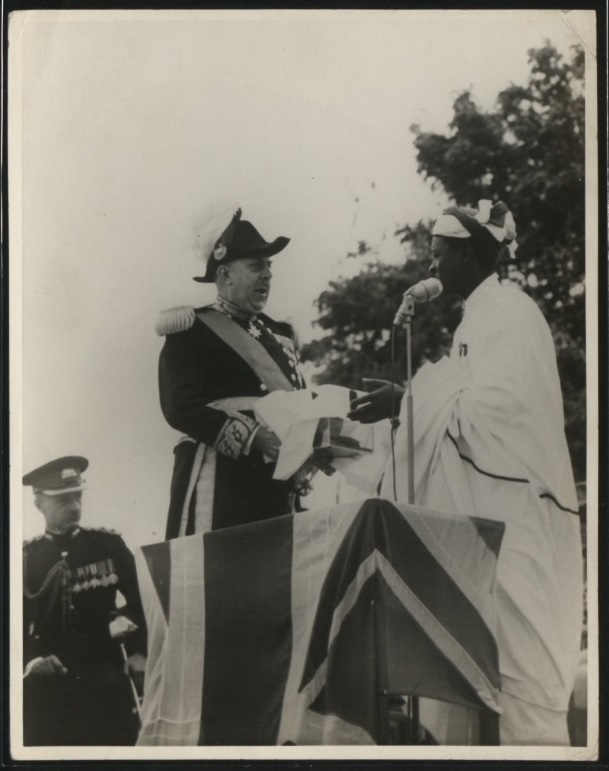
Sir Edward Twining returning King Mkwawa’s skull

In 1898, a bounty was placed on his head, which led to a manhunt. On 19 July, Sergeant Major Merkl and his party closed in on Mkwawa. Merkl reported that they heard a shot and hurried towards the camp, where they found ‘two natives lying down by the camp fire’. One of them was identified as Mkwawa himself. Merkl wrote: ‘I thought they were asleep, halted at about thirty yards and then fired. The bodies did not move. On reaching the spot, we found both men dead and cold (…). I ordered my askari to cut off Mkwawa’s head to take along to camp.’ (CO 822/770) …

[It took almost 40 years after the Treaty of Versailles to find the skull] … The [British] government of Tanganyika wasn’t too bothered. ‘This government does not now attach much importance to the question of Mkwawa’s skull’, they wrote, … The head mentioned was highly unlikely to be the right one as, by all accounts, it had been skeletonised rather than embalmed, but the German Foreign Ministry was asked to investigate again… The British embassy in Berlin commented: ‘it is of course possible that the German Government have made no very serious effort either to find out what truth there is in the story or to trace the skull.’ (CO 691/124/2)

… In January 1953, however, the German Foreign Ministry suddenly announced the skull might be among the large collection of the Museum für Völkerkunde in Bremen. As several skulls seemed to fit the description, they asked whether the skull had any marks by which it could be identified.

Twining [the Governor of TanganyikaSir Edward Twining] reported from Tanganyika that ‘nobody could be found still alive who remembered the Sultan’ (and if people had still been alive, they might have found it difficult to identify Mkwawa by simply looking at his skull anyway!) but Mkwawa’s cephalic index could be compared to that of his grandson Chief Adam Sapi, an apparently unusual 71%.

In June, Twining himself travelled to Bremen to identify the skull. Accompanied by the consul and the vice-consul, he went to the Museum.
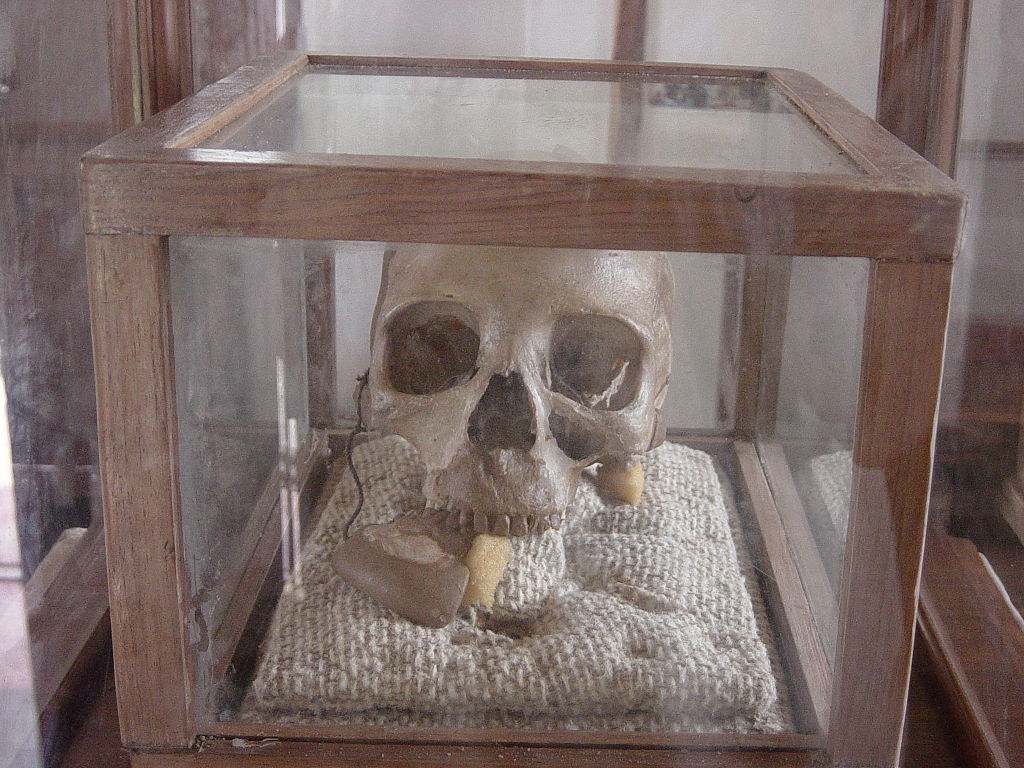
Skull on display at the Mkwawa Memorial Museum

They went to a storeroom where there was a large cupboard full of skulls, and it was arranged for those which had originated in German East Africa to be put together on a table and for their cephalic indexes to be measured. There were two in the 71 group which were selected, and one of these had a hole where a bullet had entered towards the back of the head and come out in front.’ (CO 822/566)

Twining had this skull examined by a German police surgeon who confirmed the hole was consistent with a 25mm rifle of the typed used by German troops in East Africa. Besides, Twining explained, ‘the skull was bleached, which probably happened when they boiled the meat off it’ – someone at the Colonial Office noted in the margin: ‘Ugh!’

[On the return trip], Twining’s irritation might actually have been due to the skull itself which ‘continued to behave very badly’[it was reportedly said to have magical powers]. He reported: We had a series of mishaps which cannot otherwise be accounted for. Our poor old Bandmaster, Gulab Singh, died on the train. My A.D.C. collected a sinus and had to go to hospital. The head boy had a soda water bottle burst in his face, and the cook was struck in the face by a flying saucer. We all got hay fever and we all got very irritable!(CO 822/770)

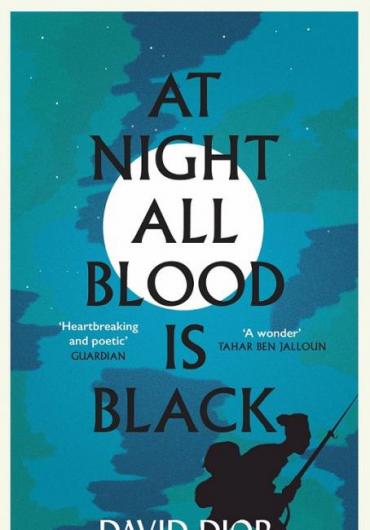
David Diop Wins International Booker Prize for “At Night All Blood Is Black”, Book on Tirailleurs Senegalais

“At Night All Blood is Black” by David Diop

It is hard to keep up with the news, but this is one that we should celebrate. The Franco-Senegalese author David Diop won the International Booker Prize 2021 for his book, “At Night All Blood is Black“. I know, it is hard to keep up with all the different prizes, Man Booker Prize, International Booker Prize, and countless others. This one is nonetheless important because first of all, David Diop is the first African to win the prestigious prize, but also because his book “At Night All Blood is Black” talks about all those African soldiers who helped to free France, and yet were never recognized, and instead were insulted, laughed at and more. The book, originally published in French in 2018 under the title “Frères d’âme” or Soul Brothers, weaves the history of World War I with the history of colonialism. The novel describes the experiences of Senegalese Tirailleurs fighting for France in the trenches. The main character, Alfa Ndiaye, descends into madness following the death of his childhood friend Mademba Diop who had also been recruited as a tirailleur, and inflicts extreme brutality upon his German enemies. Diop was inspired to write the book by his French great-grandfather’s service during the war. Diop stated “He never said anything to his wife, or to my mother, about his experience. That is why I was always very interested by all the tales and accounts which gave one access to a form of intimacy with that particular war.”

As a side note, “tirailleur” was the name given by the French Army to indigenous infantry recruited in the various French colonies. They were not all Senegalese, even though the name always said “tirailleur senegalais,” but rather came from all over Africa. They served for France in a number of wars, including World War I, World War II, and several others. The name “Tirailleur” is a link of two words “tir ailleurs” to laugh and denigrate the indigenous troops by saying that the soldiers were not capable to shoot on target, more like to mean “shoot off target”; it could be translated as skirmisher.

It is also good to note that there is no family link between the great Senegalo-Cameroonian poet David Mandessi Diop [Afrique de David M. Diop / Africa by David M. Diop] and this David Diop… We applaud the success of both namesakes. So good to have such a an illustrious namesake and walk in his path.

I live you here with the link to the article on The Conversation., and more importantly on the video of the Massacre of Thiaroye [Thiaroye: A French Massacre in Senegal, ‘Thiaroye Massacre’ by Ousmane Sembene] showing the poor treatment and sometimes massacre of these tirailleurs by the French, when they returned home after serving France.

So Long to Kenneth Kaunda: Zambia’s First President

Kenneth Kaunda
Kenneth Kaunda

Last Thursday, the first president of Zambia, Kenneth Kaunda, changed dimensional plane to join his ancestors. At 97 years old, he was one of Africa’s last surviving liberation leaders. To a generation of Africans, and to many of us, Kenneth Kaunda epitomized the African struggle for independence.

Born into a family of 8 children in Lubwa in the north of then Northern Rhodesia (now Zambia), Kaunda was the last born of parents who immigrated from Nyasaland (Malawi). He trained as a teacher, then became involved in politics, first as secretary of the local young men’s farming association and later as a founding member of the Northern Rhodesian African National Congress in 1949. In 1955, both him and Harry Nkumbula, party president were imprisoned for 2 months. Later Kaunda broke away from the ANC, to found his own party, the Zambian African National Congress (ZANC) in October 1958 which was short-lived. In March 1959, the ZANC was banned and Kaunda was sentenced to 9 months‘ imprisonment, which he spent first in Lusaka, then in Salisbury When he was freed from prison in 1960, he joined the principal nationalist party, the United National Independence Party (UNIP), which campaigned and fought against British colonial rule. He was influenced by Martin Luther King Jr. and Kwame Nkrumah, both of whom he met on different occasions. On 24 October 1964 he became the first president of an independent Zambia.

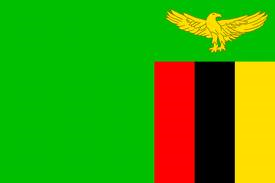
Zambian flag
Zambian flag

Kaunda started with the great advantage of leading an African state with a stronger economic base than any of its neighbors but there was a shortage of native Zambians who had the skills and training to run the country [similar to so many African colonies… the Europeans were there to pillage and exploit the resources of the countries, and not build their local forces!]. The policy of sanctions imposed by the British government on the breakaway country proved at least as damaging to the Zambian economy (similar to what they did to Zimbabwe under MugabeIs Zimbabwe the New Haiti?) over the years, probably as punishment for his support for the liberation of his neighbors.

Affectionately known as KK, or Mzee, Kaunda worked tirelessly towards to the freedom of the whole of Southern Africa from white rule; he supported the fight of other countries against repressive, racist regimes in South Africa, Namibia, Angola, Mozambique and Southern Rhodesia (Why the name: Zimbabwe?). It took several years, but his support never faltered.

He remained a staunch defender of the Zimbabwean President Robert Mugabe [Robert Mugabe, Freedom Fighter and First President of Zimbabwe Lives On], and said, “I’ve been saying it all along, please do not demonise Robert Mugabe. I’m not saying the methods he’s using are correct, but he was put under great pressure.”

As a testimony, President Hage Geingob of Namibia said in a statement “Africa lost“a giant of a man. …Kenneth Kaunda was a generous, affable, and a resolute leader who freed our region from colonialism.”

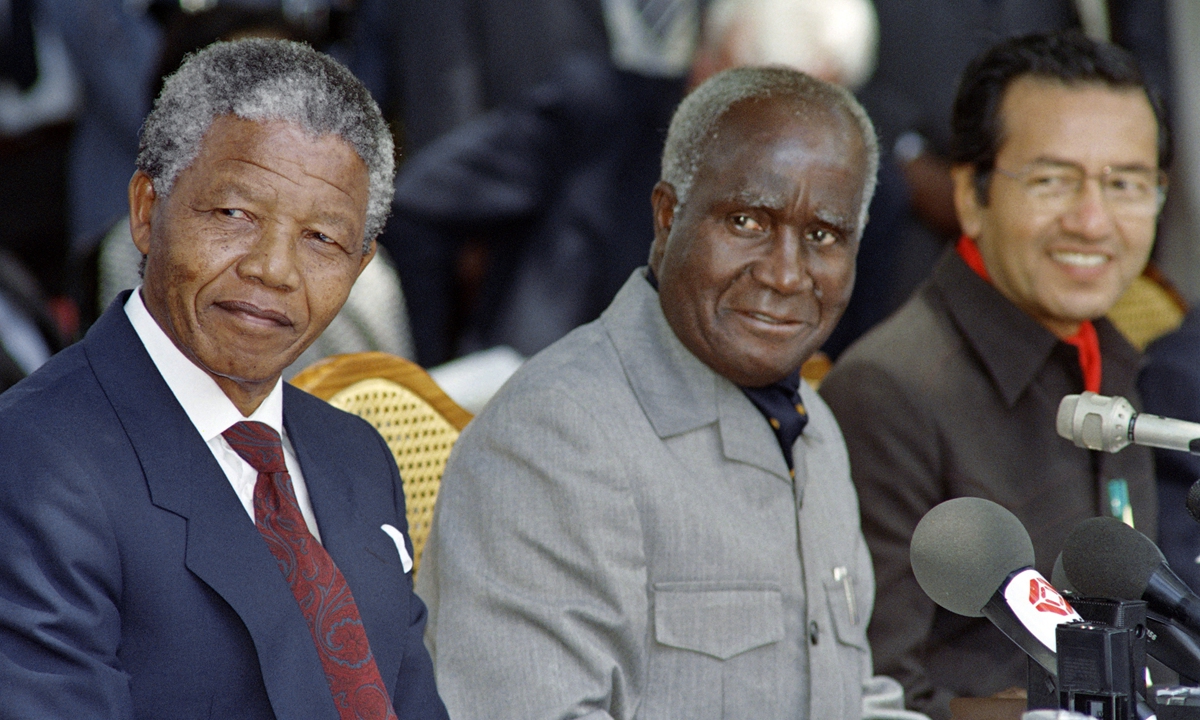
Photo taken on February 28, 1990 showing Zambia’s president Kenneth Kaunda (Center) and South Africa’s African National Congress (ANC) leader Nelson Mandela (L) attending a press conference at the Presidential House in Lusaka. (Source: AFP)

South Africa’s President Cyril Ramaphosa described Kaunda as a “rightfully revered father of African independence and unity… Under his leadership, Zambia provided refuge, care and support to liberation fighters who had been forced to flee the countries of their birth.” “He stood alongside the people of South Africa at the time of our greatest need and was unwavering in his desire for the achievement of our freedom. We will never be able to repay the debt of gratitude,” Ramaphosa added.

For our founding father, it was not enough for his country Zambia to be liberated when the region and the African continent remained bonded in the shackles of colonialism and apartheid,” current Zambian President Edgar Lungu told mourners at Kaunda’s house in Lusaka … “[Kaunda] soldiered on to seek freedom for humanity.”

Please enjoy articles on the Al-Jazeera and the very good article by the Global Times [With love and respect, Chinese people cherish memory of Zambia’s Kaunda, ‘an old and good friend’]. Please watch the video I posted a few years ago on the great Kenneth Kaunda, Zambia’s first president.

Laurent Gbagbo is Back in Cote d’Ivoire

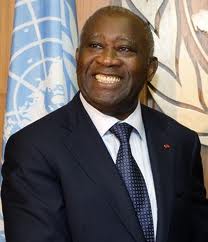
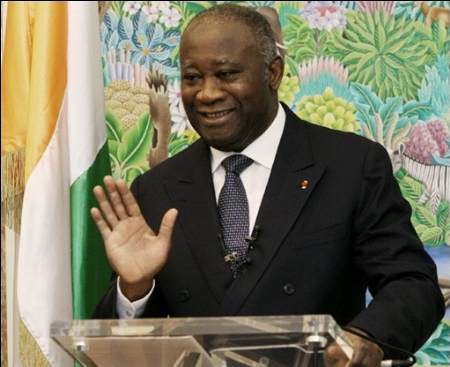
Laurent Gbagbo

Joy and tears were mixed in my heart yesterday as I saw our president, Laurent Gbagbo, the blessed child of Gagnoa, the former president of Cote d’Ivoire, land back in his homeland. 10 years of imprisonment, over 20 years of persecution, acquitted by the International Court of Justice at the Hague [Laurent Gbagbo and Charles Ble Goude: Totally Acquitted and Free at Last, Laurent Gbagbo, Former President of Cote d’Ivoire, Acquitted of War Crimes], and finally allowed to go home to the land of his ancestors. Gbagbo’s only crime has been to love his country and his people too much, and want dignity for them! Laurent Gbagbo is really like those of our kings, heads of state, leaders, who have been deported by the oppressors, the French colonizer, in this case via its puppet Ouattara [Deportation of African Heads of States]. We have fought, cried, and tirelessly worked for his freedom. Africa is proud of her son, Laurent Gbagbo. Just look at how many people took to the streets to welcome him home! Then Ouattara sent his troops to beat the people who came to welcome their president home, in the name of trying to prevent troubles. Such a coward! Our president is back! It does not matter what the future holds, today we are happy… we have made progress… Africa’s son is back… tomorrow will take care of itself. 10 years ago, when I watched as the presidential palace was being bombed by French troops, when I watched our president and wife being paraded on TV all over the world [Laurent Gbagbo: No to a complicit silence!], I could not have imagined today! I knew we needed to work hard, but today I will savor this victory. Why don’t these international media who yesterday felt no shame to show our president or his wife being paraded by the rebels on broad TV, why are they not showing his triumphal return today? why are they not placarding it the way they did when he was dragged out? Because it would show that they lost! Shame on the Mainstream Media, shame on them… shame on France… today we stand tall as our son is back. Today, we stand!

So Long to T.B. Joshua: the Fiery Pastor

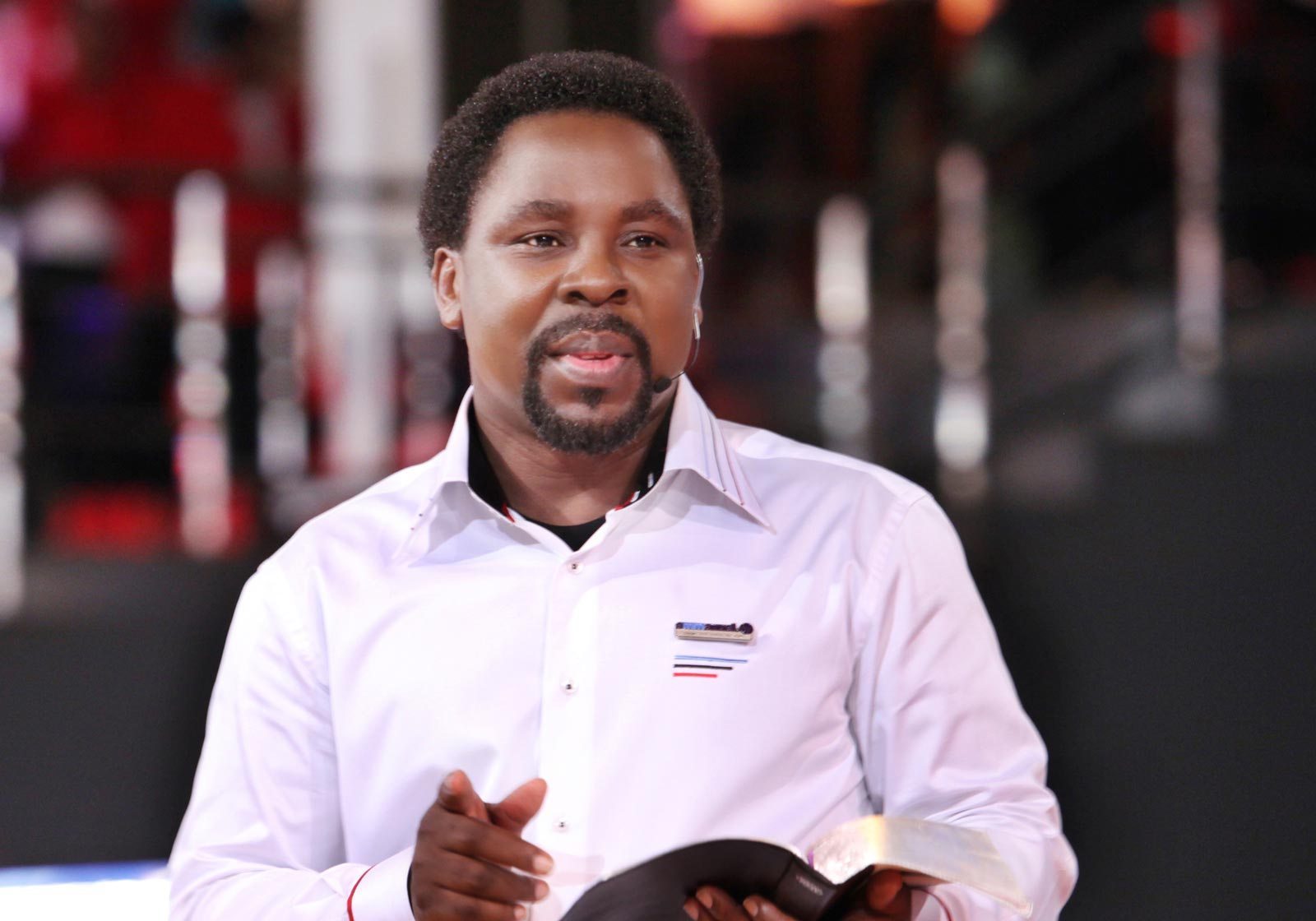
Pastor T.B, Joshua (Source: Daily Post Nigeria)

It is with sadness that we have learned of the passing of the megachurch pastor T.B. Joshua, the legendary charismatic Nigerian pastor who was visited by presidents, and people from around the world. Just as an example, his YouTube account had over 600 millions views and 1 million subscribers until YouTube suspended it in April. Whether you liked him or not, T.B. Joshua had the attention of millions, and was an amazing televangelist who revolutionized Nigerian megachurches. He created The Synagogue, Church Of All Nations (SCOAN) and would host thousands of national and international visitors. People traveled from around the world to witness and receive from the mighty work that God was doing in the life of Prophet T.B. Joshua. According to SCOAN, over 15,000 members attend its weekly Sunday service. Even the Guardian reported that SCOAN attracted more weekly attendees than the combined number of visitors to Buckingham Palace and the Tower of London.

Pastor Temitope Balogun (T.B.) Joshua owned one of Nigeria’s largest Christian broadcast stations, Emmanuel TV, and reigned for several decades as a fiery preacher who was passionate about saving souls for Christ. He passed away on Saturday at the age of 57.

Joshua was known for his prophetic visions. He commanded respect from different parts of the world due to his revelations. His church in the Ejigbo area of Lagos State was a religious destination to people suffering from one affliction or the other. His miraculous wonders were the main attractions. His church was said to be Nigeria’s biggest tourist attraction. He was also a big philanthropist, and Forbes magazine reported that Joshua spent over $20 million on “education, healthcare and rehabilitation programs for former Niger Delta militants”; he also had a rehabilitation program for repentant armed robbers, and sex workers. His work was not without controversies, particularly with the collapse of one of the church’s guesthouses which killed over 100 pilgrims in 2014, and his flying in private jets.

From the SCOAN website, “[Pastor T.B. Joshua] was born on June 12th 1963 in Ondo State, Nigeria, [His] journey is a humbling story of how God raised a young man from a poverty-stricken home to lead an international ministry that would attract thousands worldwide to witness the reality of God’s power today. From dropping out of secondary school in his first year and working in a poultry farm; from teaching little children while attending evening classes and washing people’s legs on the muddy streets of Lagos to embarking on a 40-day fast before receiving the divine call and starting a ministry with a mere eight members – the life of T.B. Joshua is a story of amazing grace and unwavering focus. Today, he is a mentor to presidents yet a friend to the widows and less privileged, a role model to his generation yet a humble and hardworking man, toiling tirelessly for the advancement of God’s kingdom. His story is an encouragement that there is hope for the weak.” He was an inspiration to many.

Below is a video of his last preaching. So long Prophet T.B. Joshua. Enjoy!

World Record: Malian Woman gives Birth to Nine Babies

Flag of Mali
Flag of Mali

This is a first in the world: it is the first single birth and survival of nonuplets in the world. Halima Cisse, a Malian woman, has given birth to nonuplets, 5 girls and 4 boys, in a hospital in Morocco. They were conceived naturally. Initially, the medical teams both in Mali and then later in Morocco thought she was expecting septuplets, and so they were all surprised to find 9 babies in the end. I salute the wisdom of the country’s leader who saw fit to have her transferred to Morocco for more advanced specialist care… this shows great empathy. Excerpts below are from an article on the Guardian. Congratulations to the proud parents… it is indeed a grace!

====

Halima Cisse’s nonuplets all ‘doing well so far’ after delivery by caesarean section at Moroccan hospital.

A Malian woman has given birth to nine babies – all “doing well so far” – in what is thought to be a world record for the most children in a single birth to survive.

Halima Cisse had been expected to give birth to seven babies, but ultrasounds conducted in Morocco and Mali had missed two of the siblings. The nonuplets – five girls and four boys – were all were delivered by caesarean section.

The 25-year-old’s pregnancy has fascinated the west African nation and attracted the attention of its leaders. When doctors said in March that Cisse needed specialist care, the country’s transitional leader, Bah Ndaw, ordered that she be sent to Morocco.

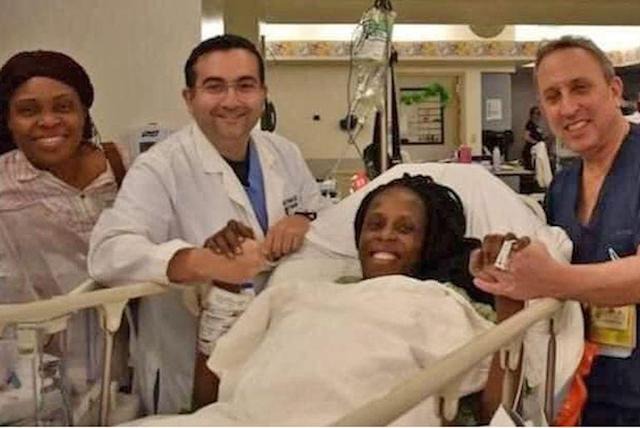
Halima Cisse, mother of nonuplets and the medical team and a family member in Morocco (Source: Africafreedomnetwork.com)

The mother and babies are doing well so far,” Mali’s health minister, Fanta Siby, told Agence France-Presse, adding that she had been kept informed by the Malian doctor who accompanied Cisse to Morocco.

They are due to return home in several weeks’ time, she added.

… Doctors had been concerned about Cisse’s health and her babies’ chances of survival, according to local press reports. Nonuplets are extremely rare and medical complications in multiple births of this kind often mean that some of the babies do not survive.

In pictures widely shared on social media, Cisse could be seen smiling, celebrating with her doctors near her nine children, held in a row of incubators at the hospital.

Cisse’s husband, Adjudant Kader Arby, still in Mali with the couple’s older daughter, told BBC Afrique he had been in constant touch with his wife and he was not worried about the future.

“God gave us these children,” he said. “He is the one to decide what will happen to them. I’m not worried about that. When the almighty does something, he knows why.”

Happy Mother’s Day 2021

Papa Wemba
Papa Wemba

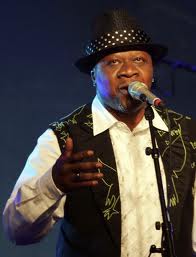
To celebrate all the mothers out there… I thought of sharing this beautiful song by the legendary Papa Wemba “Mama,” from his album Nouvelle Ecriture 1997 dedicated to his mother. I dedicate it to all the mothers out there, and future mothers. Papa Wemba was the King of Rumba and King of La SAPE, and an African Planetary Star. Of his mother who was a professional ‘wailing woman,’ he said: “My mother was my first teacher and my first public. … I grew up with my mother’s melancholic singing. … When I will sing, she will say “my son, block here, and now project your voice“… when I did well, she will clap for me“(source: Tv5 – Africanité). For his mother, he composed Mama and Maria Valencia. Enjoy! Happy Mothers’s Day.

Burkina Faso ex-president Compaoré to face trial over Thomas Sankara murder

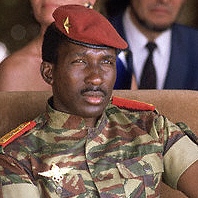
Thomas Sankara
Thomas Sankara a Ouagadougou

I know this is like 10 days+ old news… but it is news: the ex-president of Burkina Faso Blaise Compaoré has been indicted for the murder of Thomas Sankara by a military court in the country. We cannot reiterate enough that France through her minion Blaise Compaoré (with the implication/blessing of Felix Houphouet-Boigny) killed Thomas Sankara. When Compaoré was booted out of office in 2014, he sought refuge in neighboring Cote d’Ivoire which is controlled by another one of France’s minions imposed on Ivorians via France’s bombs, Alassane Ouattara (ADO). Not only did he run to Cote d’Ivoire with his tail between his legs, but he even renounced his Burkinabe citizenship for the Ivorian one so as not be extradited. Everything about the man Compaoré screams cowardice: can you imagine a president of a country for 27 years who changes his citizenship? Such a coward! Now, a Burkina Faso military court has indicted Blaise Compaoré for the murder of Thomas Sankara. What power does this court really have? How to implement its findings? Is it just symbolic? Moreover, this is in absentia, given that Compaoré is hiding in Cote d’Ivoire. Excerpts below are from an article on the Al-Jazeera‘s website.

====

Ouagadougou, Burkina Faso – A military court in Burkina Faso’s capital has indicted former President Blaise Compaore in connection to the 1987 murder of his charismatic predecessor, Thomas Sankara.

Flag of Burkina Faso

A statement issued by the court on Tuesday cited “complicity in assassination” and an “attack on state security” by Compaore, who ruled the country until 2014, when he was forced to resign in the face of mass demonstrations against an attempt to extend his 27-year rule.

Thirteen others – including Gilbert Diendere, Compaore’s right hand man, and Hyacinthe Kafando, his security chief – were also indicted on charges ranging from “assassination” to “concealment of corpses”.

Benewende Stanislas Sankara, a lawyer representing the relatives of the slain former president, described the indictment as “a victory and a step in the right direction”.

It’s with a sigh of relief the family can now go ahead with all the guarantees that surround Burkinabe justice,” he told Al Jazeera. “We can now calmly go to trial.”

… Following his re-election last year, President Roch Kabore appointed a minister for national reconciliation, Zephirin Diabre, who pledged to address the issue of justice for Sankara.

In 2015, Burkinabe courts had issued an international arrest for Compaore, but Ivorian President Alassane Ouattara has prevented his extradition back to Burkina Faso despite an extradition treaty between the two countries. …

… “The warrant can be executed at any time if Cote d’Ivoire and Burkina Faso implement the existing agreements between the two states properly,” Benewende Sankara said. “I must specify that it can happen very quickly.”…

Dry Your Tears African! – Words from Bernard Dadié

Dry your tears African

I love this poem by  Bernard Dadié which I have posted earlier “Seche tes pleurs, Afrique / Dry Your Tears, Afrika“. The imagery is so clear and the words so deep: O Africa, “our senses are now opened to the splendor of your beauty, the smell of your forests, … your charms…” Africa is so rich,… and it is about time that her sons and daughters stand up to reclaim their inheritance, and feel her beauty, and enjoy her bounty-ness… Yes there is so much adversity, but dry your tears African… and rise up!


Sèche tes pleurs, Afrique
Ayant bu
À toutes les fontaines
d’infortune
et de gloire,
Nos sens se sont ouverts
à la splendeur de ta beauté
à la senteur de tes forêts,
à l’enchantement de tes eaux
à la limpidité de ton ciel
à la caresse de ton soleil
Et au charme de ta verdure emperlée de rosée.

Dry your tears, Africa!
We have drunk
From all the springs
of ill fortune
and of glory,
Our senses are now opened
To the splendor of your beauty
To the smell of your forests,
To the charm of your waters
To the clearness of your skies
To the cares of your sun
And to the charm of your foliage pearled by the dew.


The poem below is titled “Dry your Tears Afrika” or “Sèche Tes Pleurs,” published in 1967, by Bernard Binlin Dadié (So long to an African Literary Genius: Bernard Dadié).


Laurent Gbagbo and Charles Ble Goude: Totally Acquitted and Free at Last

Laurent Gbagbo
Laurent Gbagbo

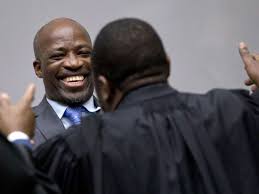
Last week, on March 31st, the International Criminal Court justice court appeals judges finally upheld the acquittal of former Ivory Coast president  Laurent Gbagbo and his minister Charles Blé Goudé  (How long shall they kill our prophets…?). They were acquitted 2 years ago in January 2019, but the prosecution stalled, keeping them in Europe, trying to find ways to overturn the decision, and blocking all their movements. Now the ICC judges upheld their acquittal, and technically Gbagbo and Blé Goudé should be free to go home to Ivory Coast! After this witch hunt which has lasted over 10 years, and his arrest and detention in the Hague, Laurent Gbagbo is now free to go home! Can you imagine? Did the ICC apologize for all the years of hurt? the tarnished image? And of course mainstream media, which yesterday published those images of Gbagbo and his wife Simone in their room surrounded by the rebels, now publish one line if at all anything! Unbelievable! They should be sued for playing such major roles in destroying countries, obliterating people’s images, and causing wars! I live you here with excerpts from an article from the BBC. All these tough years of claiming their innocence, all these years of constant support, and people’s prayers, dedication, love, and determination have born fruits. Truth always wins! It may take years… but it prevails! Now it is said that the government of Ouattara, the one installed with French war chars and cannons will try to have Gbagbo go through another trial once he lands in Cote d’Ivoire… Oh, he does not know that even then, like Thomas Sankara said, “La Patrie ou la mort, nous vaincrons!” We will keep fighting to the last drop! As Agostinho Neto said: “La luta continua e la victoria e certa!”

====

The International Criminal Court (ICC) has upheld the acquittal of Ivory Coast’s ex-President Laurent Gbagbo on charges of crimes against humanity.

Charles Blé Goudé celebrating with his legal team on 01/15/2019 (SkyNews)

It paves the way for his return to Ivory Coast, where he remains an influential figure.

… The former president was in court alongside ally and former youth leader Charles Blé Goudé, who was accused of leading a militia backing him.

They were both acquitted in 2019, but the prosecution had appealed what was seen as the shock decision to clear them. It argued that there were procedural errors in how the original verdict was delivered and insisted that thousands of documents and 96 witnesses presented during the trial had proved their guilt beyond reasonable doubt.

But presiding Judge Chile Eboe-Osuji said: “The appeals chamber, by majority, has found no error that could have materially affected the decision of the trial chamber.

The appeals chamber hereby revokes all remaining conditions on the release of Mr Gbagbo and Mr Blé Goudé as a result of this judgement.”

… Whenever a case collapses at the ICC, it damages the perception of the court as a credible tool of international justice, our reporter says.

The appeals judges agreed that the evidence in this case was extremely weak, raising questions about how this trial went as far as it did, she says. It is not the first case that has collapsed at the ICC.