In celebration of Valentine’s day which is going to be this Sunday, the song ‘IyawoMi‘ by Nigerian singer Timi Dakolo seems appropriate. The song is about a promise of love to that precious one… it is a ‘forever and for always‘ promise. It is a beautiful song which can be played at weddings as well. And the beat is simply amazing; it is a classic. The chorus: “Iyawo mi, Ololufe mi, Ore mi, Alayo mi, I will love you forever.” In Yorùbá, Iyawo mi= my wife, Ololufe mi= mylover, Ore mi= my friend, Alayo mi= my joy (one who brings mejoy). It could be sung to a man as well, by substituting the words oko mi (myhusband) to iyawomi(mywife). Enjoy and happy Valentine’s day to all… and in reality, one day is not enough to tell that loved one about your love, everyday should be an occasion to declare your love, in some way, shape, or form; because in reality, all we have is today, the present (a gift)… make the best out of it!
Most people have heard of Stevie Wonder, the American blind R&B virtuoso, who was discovered at the tender age of 11. Most people versed in classical music have probably heard of the Italian classical tenor Andrea Bocelli, who was born with poor eyesight, and turned blind by the age of 12. But how many of you have heard of the Cameroonian blind singer André Marie Tala who influenced an entire generation of Cameroonian and African artists? the singer who was even plagiarized by the mighty James Brown?
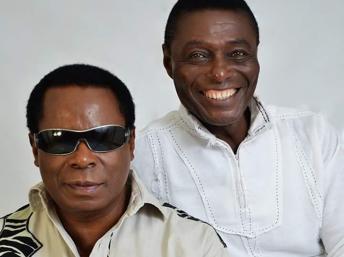
Andre Marie Tala and Sam Fan Thomas (Source: Rfi)
To those who visit my blog, you have probably listened to two of his classic songs, which are odes to some of Africa’s beautiful capitals: Yaoundé, and N’Djamena, the capitals of Cameroon and Chad respectively. Only after I wrote about N’Djamena did I realize that André Marie Tala had performed at the Olympia (with Sam Fan Thomas, another giant of Cameroonian music) on May 17th to celebrate his 45year anniversary in the music industry.
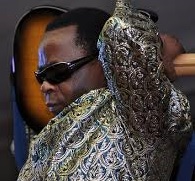
André Marie Tala
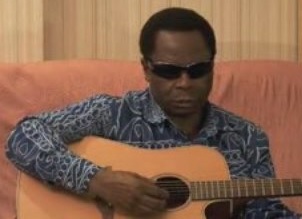
Unlike all the singers cited earlier, Tala plays the guitar. Born in the mountains of the Western province of Cameroon in 1950, Tala loses his mother at the tender age of 4, and then his father at 16. He totally loses sight at the age of 15, and will be taken in by his grandmother. He builds his very first guitar with threads made out of nylon, and bamboo, and works on reproducing sounds from his favorite musicians. He starts his first group, the Rock Boys, with which he goes on to have immediate success. The Rock Boys later morphed into the Black Tigers in 1967 with his friend, guitar player, Sam Fan Thomas. At the age of 20, he moves to Paris and collaborates with the great Cameroonian saxophone player Manu Dibango; he lands his first big musical contract. Thus were born the titles Sikati, Po tak Si nan(laissez Dieu tranquille ! – leaveGod in peace), and Namala Ébolo. Big success! Po tak Si nanis a mixture of soul, jazz, and rhythm n’ blues, blend in with a mix of Cameroonian musical styles such as Makossa and Bikutsi. Tala calls his style “Tchamassi”.
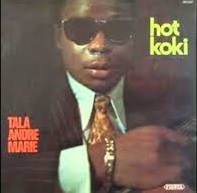
The album “Hot Koki” by André Marie Tala
In 1973, his album “Hot Koki” knows international success, and his single “Hot Koki” is even plagiarized by the great James Brown under the new title “The Hustle”. In 1978, after 4 years of judiciary struggles, Tala is awarded justice, and James Brown is condemned to pay him back all his rights.
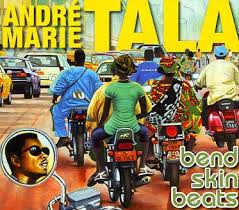
The big themes of Tala’s music are peace, love, and harmony. In the 90s, he brings Bend Skinto the forefront of Cameroonian music, a folkloric fusion of styles from the grasslands of Cameroon. It is often associated with the moto-taxis which are called by the same name Bend-Skin.
Album of André Marie Tala
By choosing the Olympia (the quintessential stage for music in France), for his musical jubilee, André Marie Tala wants to launch a new beginning for the Cameroonian music which has always been rich and influenced millions, but for the past decade has stagnated. Happy 45th-anniversary to Andre Marie Tala, and to many more albums of great music. I live you here with one of my favorite Tala’s song, Nomtema. Do not forget to check out “HOT KOKI” and check out the similitude with James Brown’s “THE HUSTLE“; it is the same, just in English!
I was first introduced to B.B. King‘s music by my father. As a child, what impressed me was not just my father’s love for good music, but his love for Blues, and in particular for B.B. King’s music. I mean, when you listened to the way the king played that guitar of his, you were instantly projected to another dimension. His voice touched your soul. He created a unique genre mixing country blues to big-city rhythms, recognizable by millions across the globe, and when he touched that stinging guitar of his with a shimmering vibrato, notes just leapt out. His biggest hit, “The Thrill is Gone” was a magnificent poem of love, pain, and perseverance written after his second divorce; and that is true of most of his other hits. His songs deeply connected with human emotions at their core. He influenced some of the world best guitarists: Eric Clapton, Jimi Hendrix, and U2, to name just a few. The NY Times and BBC had a good article about B.B. King, the maestro… don’t forget to check out his Official website. I always dreamed of seeing him on stage… never had the chance. Enjoy “The Thrill is Gone” by B.B. King, the King of Blues.
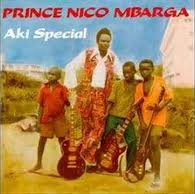
To celebrate Mother’s day this Sunday, I just wanted to bring back “Sweet Mother” by Prince Nico Mbarga. “SweetMother” is one of the most popular songs on the African continent, ahead of Miriam Makeba‘s “Malaika“, Franco‘s “Mario“, and Fela Kuti‘s “Lady“. What is so special about this song, is that it is an ode to all our precious mothers, it is often called Africa’s anthem sung by a child to his mother. It is a highlife song sung by Prince Nico Mbarga and his group Rocafil Jazz International, a Cameroonian-Nigerian artist, and the song has rocked many on the continent; Sung in Pidgin English, “Sweet Mother” became one of the top sellers in the history of Nigerian music. It was voted as Africa’s favorite song by BBC in 2004, and many other programs. So, to all the mothers out there, Happy Mother’s Day and enjoy “Sweet Mother“!!!
“Sweet Mother“ by Prince Nico Mbarga
Sweet Mother Sweet mother I no go forget you for the suffer wey you suffer for me.
Sweet mother I no go forget you for the suffer wey you suffer for me.
When I dey cry, my mother go carry me she go say, my pikin, wetin you dey cry ye, ye, stop stop, stop stop make you no cry again oh.
When I won sleep, my mother go pet me, she go lie me well well for bed, she cover me cloth, sing me to sleep, sleep sleep my pikin oh.
When I dey hungry, my mother go run up and down. she go find me something when I go chop oh.
Sweet mother I no go forget you for the suffer wey you suffer for me
When I dey sick, my mother go cry, cry, cry, she go say instead when I go die make she die.
O, she go beg God, God help me, God help, my pikin oh.
If I no sleep, my mother no go sleep, if I no chop, my mother no go chop, she no dey tire oh.
Sweet mother I no go forget you, for the suffer wey you suffer for me.
You fit get another wife, you fit get another husband, but you fit get another mother? No!
And if I forget you, therefore I forget my life and the air I breathe.
And then on to you men, forget, verily, forget your mother, for if you forget your mother you’ve lost your life.
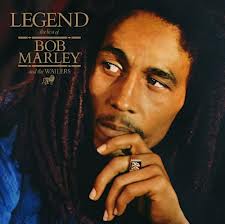
On February 6th, the world celebrated Sir Bob Marley‘s 70th birthday or earth day. People around the world gathered to commemorate the life of the great Reggae legend. There were lots of live performances and exhibitions in Jamaica, and around the world. From February 1-6, there were five-day celebrations featuring international reggae acts, tribute shows, art and food. All these festivities take us back to Bob Marley’s strong message of unity, oneness, and universality, or ONE LOVE: love for all mankind, love for our fellow brothers, love for ourselves, love for our planet, and above all love for our Creator. Someone said that if we were busy loving, there will be no war, and that is truly Sir Marley’s message: “One Love, One Heart.Let’s get together and feel all right.”
In celebration of Valentine’s Day, I would like to talk about one of Africa’s great love songs, ‘AMI O‘. Many songs have made the entire continent shake, but few have had the dimensions of ‘AMI O‘ of Ebanda Manfred. ‘AMI O‘ is to Cameroonian and African music what ‘Guantanamera‘ is to Cuban and Latin music: a world classic. But ‘AMI O‘, ‘AMIO‘, ‘AMIE OH’, or ‘AMI OH’, or ‘AMIYO‘ is first and foremost a love song. It is a declaration of love, a love anthem. It has been reprised by over 20 world class artists among which, Bébé Manga, Papa Wemba, Francis Bebey, Angelique Kidjo, Manu Dibango, Monique Séka, Bisso Na Bisso, Nayanka Bell, Jacky Biho, Naima, Henri Salvador, AndréAstasié, and so many more.
Ebanda Manfred
Where did it all start? In 1960, 24-years old Ebanda Manfred fell head over heels in love with a teenage single mother from Yaoundé, Cameroon. The girl, Amié Essomba Brigitte, had to quit school to take care of her child. Madly in love, Ebanda Manfred told her of his feelings, but she told him that she could not start a love relationship until her child was weaned. Finding the wait too long, especially since he had to return to Douala the following year, Ebanda Manfred sang his despair and asked: “Amié, njika bunya so mo, oa mo o ma dubè no, na mba na tondi oa?”. Translation: “Amié, when will you finally believe in my love?” Thus the song “Amié ” was born. It became an instant hit when it came out in 1962. A year later, it was reprised by Francis Bebey. In 1980, the great Bébé Manga made an adaptation which brought her to the international stage, as she won the “Golden Maracas.” The song will be reprised by artists around the world, from the Carribbean to Latin America, and Europe.
Bebe Manga
In celebration of Valentine’s day, I live you with this great African love song. In Bébé Manga’s English version, the song clearly states “Amie (friend) oh, you are all I ever hoped for, everything I ever dreamt of,…” So tomorrow, don’t forget to sing AMI O to that special one, that one you longed for, and dreamt of, that special one in your life.
To all my precious queens out there, I had to share this dear song. The lyrics are simply out of this world, and the ladies in the video just too beautiful. I raise my hat to 2Face Idibia for capturing the African beauty so well. I have included parts of the lyrics below; for the full version, go here: Enjoy!
‘African Queen’ by 2Face Idibia
Just like the sun, lights up the earth, you light up my life The only one, I’ve ever seen with a smile so bright And just yesterday, you came around my way
And changed my whole scenery with your astonishing beauty
Ah, you gonna make a brother sing, You ordinary thing, a supernatural being,
I know you are just brighter than the moon Brighter than the star, I love you just the way you are.
And you are my African Queen, the girl of my dreams. You take me where I’ve never been You make my heart go ting-a-ling-a-ling, oh ahh You are my African Queen, the girl of my dreams And you remind me of a thing And that is the African beauty yahhh
… Out of a million you stand as one The outstanding one I look into your eyes, girl what I see is paradise,
…
So black so beautiful
… I love you, ooohhh yeah, my African Queen, I Love you, I love you
I decided to make a compilation of some of Lapiro de Mbanga’s words in his interviews. The full interview to Daniel Brown from Freemuse can be found here; for the interview Lapiro gave to Le Messager, click here; and lastly the interview to Phoenix Gauthier can be found on RFI. The video below shows Lapiro de Mbanga’s proudly expressing himself at the Oslo Freedom Forum in 2013. Enjoy!!!
============
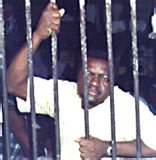
About life in prison: … There is no hygiene here and we must share our most intimate moments with the other cellmates. … I should have been taken to hospital for a consultation but my status as a political prisoner has meant I have not been allowed to go once in these two years. I somehow survived the typhoid attack in December by taking the antibiotics my wife Louisette brought me. It’s fortunate she comes every few days. It’s a five-hour round trip from Mbanga, it’s taking a toll on her, too. … I wake at 7 to 8 every morning …. I keep informed about the outside world thanks to TV5 [France’s international station] or Radio France International. I eat, chat with the others in the cell, play Ludo, scrabble, draughts. It’s impossible to compose in such an atmosphere. I need calm, serenity. Here, I cannot concentrate and write the thoughtful songs people expect of me.
Pius Njawe, a Cameroonian journalist and martyr in jail
We have penal rations twice a day. At 1pm we are given boiled corn and at 5pm there’s rice in some warm water. It’s the same every day. It’s way below minimum requirements. My wife brings me food every two days, I couldn’t survive otherwise.I’ve seen people die of hunger.It happens every day in Cameroonian prisons.
Normally, I should have no contact with the outside world. Telephones are illegal here. I’m speaking to you because we have to scheme like common crooks. In prison there are all kinds of trafficking going on, including this one. You pay guards to turn a blind eye. You know, in Cameroon you can buy everything. This country has been world champion in terms of corruption. It’s everywhere and filters down to here. (Source: Daniel Brown, Freemuse)
On being scared for his life because of his outspokenness:It’s all part of my struggle. If I was the scared type I would never have started singing in 1985. I’m not going to start getting scared after all these years. My struggle has always been to denounce inequalities and danger is part of that mission. The only thing that has changed for me since 1985 is I’m at the head of a family with six children. I can guarantee my own security, but not theirs. I’m scared for them. But I have no choice. If you start such a struggle, somebody must pay. Still, my family is unhappy with such risk taking. That’s why I think if I don’t go into exile after this prison term, I won’t survive very long out there – they’ll kill me. Because it’s obvious people in charge don’t want to be confronted with somebody who stops them from just getting on with things. (Source: Daniel Brown, Freemuse)
On going to exile: For starters, I am not in exile; I am political refugee in the USA. I needed a social security and an insurance for the future of my children; I refuse to manufacture unemployed people full of diplomas who will retire without ever having worked. [Pour commencer, je ne suis pas en exil; je suis réfugié politique aux USA. J’avais besoin d’une sécurité sociale et d’une assurance pour le futur de mes enfants; je refuse de fabriquer des chômeurs bardés de diplômes qui vont aller à la retraite sans avoir jamais travaillé.] (Source: Le Messager 04 April 2013)
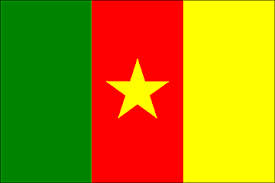
Flag of Cameroon
About the way he spends his days now in the US: I dedicate myself to my children’s education. I have, during 3 decades, focused my life on my struggle, the fight against social inequalities, forgetting that I was first a head of family. Despite what the Um [Nyobé], Ouandié, Moumié, and all the known and unknown freedom fighters have done, nobody knows what has become of their offspring. For me, it is very serious. It is as if they had fought for nothing. [Je me consacre à l’éducation de mes enfants qui sont ici avec moi. J’ai pendant 3 décennies focalisé ma vie sur mon combat, à savoir la lutte contre les inégalités sociales oubliant que j’étais d’abord un chef de famille. Malgré tout ce que les Um, Ouandié, Moumié et tous les autres combattants connus et inconnus ont fait, personne aujourd’hui ne sait ce que sont devenues leurs progénitures, Pour moi, c’est très grave. C’est comme s’ils ont combattu pour rien …]. (Source: Le Messager 04 April 2013)
About his rupture with Biya and Fru Ndi: Paul Biya, even if he listens to my songs, does not count on my very short list of friends. So no need to break up with him even though I never voted neither for him, nor for Ahidjo’s party which he hijacked in Bamenda in 1985. Fru Ndi, whom I now call “CHIENMAN” and not Chairman, has ceased to be worthy of my respect, given his multiple reversals and changes. … I cannot be in good terms with an individual who plots against the people, it is as simple as that. [Paul Biya même s’il écoute mes chansons, ne compte pas sur la liste très restreinte de mes amis. Donc pas besoin de rompre avec lui encore que je n’ai jamais voté ni pour lui-même, ni pour le parti de Ahidjo qu’il a détourné à Bamenda en 1985. Fru Ndi que j’appelle désormais “CHIENMAN” et non Chairman, a cessé depuis bien longtemps d’être une personne ayant droit à mon respect, compte tenu de ses multiples virements, revirements et retournements de veste. … Je ne peux pas être en bon terme avec un individu qui complote contre le peuple, c’est aussi simple que cela]. (Source: Le Messager 04 April 2013)
On his dream for Cameroon? I dream of a Cameroon where the power will belong to the people. Where the wealthy will not use the misery of the poor by giving them some rice, fish, beer and 1000 FCFA to stay in power and plunder the country’s resources. [Je rêve d’un Cameroun dont le pouvoir appartiendra au peuple. Où les riches ne vont pas se servir de la misère des pauvres en donnant aux démunis du riz, du poisson, de la bière et 1000f pour aller au pouvoir piller les ressources du pays.] (Source: Le Messager 04 April 2013)
Lapiro de Mbanga
On his struggle: The fight continues. I got out of jail only three months ago. And I need to continue the fight at a greater level. … You have seen my environment. Here in Mbanga, it is 7:30PM and it is already dark everywhere. Without electricity, you can be attacked. Yet, there are people who fight at work all day. And at the end of the day, there is no light, no health, the children cannot go to school.There is no escape. That is my fight, my struggle. It is for that Cameroon that I am fighting. And I want the Americans and Europeans to understand. I come to tell them: thank you for fighting for Lapiro de Mbanga [release] , but there are 20 millions of Lapiro de Mbanga in Cameroon who experience the martyr daily. Wake up and do something. [Le combat continue. Je suis sorti de prison il y a seulement trois mois. Et je dois continuer le combat au niveau des grandes instances. … Vous avez vu mon environnement. Ici à Mbanga il est 19h30 et partout il fait noir. Sans électricité vous pouvez être agressé ici. Pourtant, il y a des gens qui se battent au travail toute la journée. Et, à la fin, il n’y a pas de lumière, ni de santé, les enfants ne peuvent pas aller à l’école. Il n’y a pas d’issue. C’est ça mon combat. C’est pour ce Cameroun-là que je me bats. Et je veux que les Américains et les Européens comprennent. Je viens leur dire par ma voix : merci d’avoir combattu pour Lapiro de Mbanga, mais il y a 20 millions de Lapiro de Mbanga au Cameroun qui subissent le martyr au quotidien. Réveillez-vous et faites quelque chose.] (Source: RFI, P. Gauthier, 12/07/2011)
The current news of Lapiro de Mbanga’s death really took me by surprise. It really saddened me. In the past few months, Cameroon has lost some of its most valiant fighters: Abel Eyinga, Charles Ateba Eyene, and now Lapiro de Mbanga. Lambo Sandjo Pierre Roger, also known as Lapiro de Mbanga, was a freedom fighter for those without voice; he was an outspoken critic of the government ofPaul Biya, and made himself the spoken voice of thousands of Cameroonian who could not speak and whose rights were bent. Ndinga Man, or the guitar man, used music to say what others were afraid to say.
Flag of Cameroon
Born in the village of Mbanga, just north west of Douala, Pierre Roger Lambo Sandjo started his career under the name of Pastor Sandjo Lapiro in the late 70s when his disks were made in Nigeria. He later adopted the stage name of LAPIRO, part of his name LAmbo PIerre ROger, of Mbanga his birthplace. In 1986, he collaborated with his fellow countryman Toto Guillaume (from Kassav), and came out with Pas argent No Love, and then No Make Erreur. He chose to sing in Pidgin, mixed in with some English, French, and Douala, for all his countrymen to understand, and to articulate all the daily injustices he witnessed. The Jamaican Jimmy Cliff praised Lapiro’s qualities on the album’s back cover, and hoped to see him go international. Lapiro’s strong stance, without any deference against the authorities, gained him an immense popularity just like the Nigerian artist Fela.
Lapiro de Mbanga – Na You
His songs echoed the struggle for democracy in Cameroon. For the past 25 years, Lapiro’s songs – No Make Erreur, Pas argent no love, Kop Nie, Mimba We, Na You, Ndinga Man contre-attaque : na wou go pay ? – often flirted with censorship and provoked the ire of officials. Like he said of the president who did not want to leave power, Day di go mandat di bole… But it was his 2008 composition Constitution Constipée which really brought Lapiro face to face with the country’s repressive justice system, and landed him three years in the country’s jails. This protest song denounced the amendment of the constitutional clause, which limited presidential mandates to two non-renewable seven year terms. As usual his lyrics mixed in humour and anger in calling for Biya to step down, since the pacho (old man) is daya (tired) and has outlived his usefulness. The song was banned from airwaves; but since “impossible n’est pas camerounais” it was leaked out, and became the anthem for the youths and workers’ protests against the steep rise of the cost of living in the February 2008 riots. Lapiro was arrested and thrown to jail for inciting violence and arson. He spent the next three years ‘rotting’ in jails in Douala as a political prisoner in the worst conditions ever: sleeping on the floor in the rain, sharing the cell with 50 or more others, eating one meal a day, not having access to proper health care, etc. It is believed that he was only granted his freedom in 2011 because he was on the verge of death. In 2012, he sought and was granted political asylum in the USA. He arrived with his family in September of 2012. Lapiro joined his ancestors last night…
Lapiro de Mbanga – Our ambassador
All said and done, Lapiro was really the idol of the downtrodden and forgotten people, the sauvetteurs and the bayam selams; he was the voice of the voiceless. Many believe the opposition leader John Fru Ndi would have never had the “aura” he had in the 90s without Lapiro. Truly Lapiro sang for the people, talked about the youth’s shattered dreams, the division, the tribalism, the corruption, the decadence, and the ills of the country. Cameroon has once again lost one of his great sons. This makes me want to ask Bob Marley’s question: How long shall they kill our prophets while we stand aside and look? It really hurts, but we should remember Lapiro, our ambassador, as the outspoken critics, the voice of those without voice, and the “complice of the contre man” as he said himself. Ndinga Man, rest in peace! Enjoy No Make Erreur!!!
Over 50 years after the Civil Rights movements, and almost 20 years after the avenue of “democracy” in South Africa, people around the world are still fighting for ‘equal rights‘. The Black people of Brazil are screaming for equal rights, women in many countries of the world are still fighting for equal rights, people of lower social classes in the society are crying for equal rights, people of different castes in India are demanding equal rights… many African countries and governments just want equal rights to be treated and dealt with like proper economic partners to the G8 and G20 countries. One of my favorite Reggae singers, the Jamaican Peter Tosh sang it so well over 20 years ago… and I just want to reiterate that it is a basic human need to be treated equally with respect no matter who we are, what the color of our skin is, what our gender is, what our social background is, what our religious affiliations are, etc.: we are first human beings and we deserve equal rights!












 African Heritage