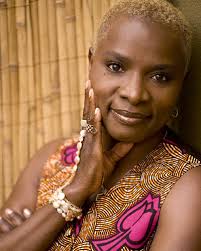
“It doesn’t matter what challenge you face, the most important thing is, when you fall, how you rise and how high you want to go, where you want to go from that, rise on.” Angélique Kidjo

A Heritage of militant Music of the African continent
“It doesn’t matter what challenge you face, the most important thing is, when you fall, how you rise and how high you want to go, where you want to go from that, rise on.” Angélique Kidjo
“Don’t let anyone define you from what you live through and everything that they think you stand for. Just be proud of who you are.” Angélique Kidjo
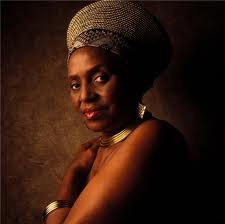
“I look at an ant and I see myself: a native South African, endowed by nature with a strength much greater than my size so I might cope with the weight of a racism that crushes my spirit.” Miriam Makeba


It’s been a while since I saw this movie, but I had to share the South African rendition of the Lord’s prayer from the 1992 movie Sarafina!. The movie centered on the Soweto Uprisings of 1976, in opposition to the implementation of Afrikaans as the language of instruction in schools. I loved it then, and I still love it today! Enjoy!
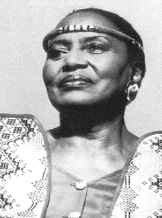
“The conqueror writes history; they came, they conquered, and they write. You don’t expect people who come to invade us to write the truth about us…” Miriam Makeba
“Le vainqueur écrit l’histoire, ils sont venus, ils ont vaincu et ils ont écrit. On ne peut pas attendre de ceux qui nous ont envahi qu’ils écrivent la vérité sur nous…” Miriam Makeba
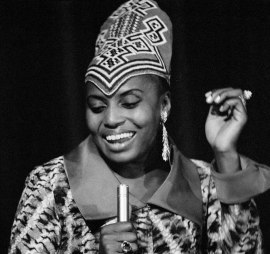
“I ask you and all the leaders of the world: Would you act differently, would you keep silent and do nothing if you were in our place? Would you not resist if you were allowed no rights in your own country because the color of your skin is different to that of the rulers, and if you were punished for even asking for equality? I appeal to you, and through you to all the countries of the world, to do everything you can to stop the coming tragedy. I appeal to you to save the lives of our leaders, to empty the prisons of all those who should never have been there.” Miriam Makeba

Who has not heard of the famous African love song ‘Malaika?’ The best known version of this song is the one sung by Mama Africa, Miriam Makeba. It is a Swahili song written by Tanzanian Adam Salim in 1945, who composed “Malaika” for his very beautiful girlfriend Halima Ramadhani Maruwa. Their parents disapproved of their relationship, and Halima was forced by her parents to marry an Asian tajir (wealthy man). The song is sung by a poor young man who wishes to marry his beloved ″Angel″ or ″Little bird″ but is defeated by the bride price.
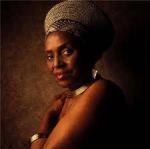
This song is the most famous of all Swahili love songs in Tanzania, Kenya and the entire East Africa, as well as being one of the most widely known of all Swahili songs in the world; again, it was made popular around the globe by Miriam Makeba. Malaika means “angel” in Swahili, and this word has always been used by the Swahili speakers to refer to a beautiful girl. So this is to all the angels out there for this Valentine day.
| Malaika
Malaika, nakupenda Malaika Malaika, nakupenda Malaika Nami nifanyeje, kijana mwenzio Nashindwa na mali sina, we, Ningekuoa Malaika Nashindwa na mali sina, we, Kidege, hukuwaza kidege Kidege, hukuwaza kidege Nami nifanyeje, kijana mwenzio Nashindwa na mali sina, we, Ningekuoa Malaika Nashindwa na mali sina, we, Pesa zasumbua roho yangu Pesa zasumbua roho yangu Nami nifanyeje, kijana mwenzio Ningekuoa Malaika Nashindwa na mali sina, we, |
Angel
Angel, I love you angel Angel, I love you angel and I, what should I do, your young friend I am defeated by the bride price that I don’t have I would marry you, angel I am defeated by the bride price that I don’t have Little bird, I think of you little bird Little bird, I think of you little bird and I, what should I do, your young friend I am defeated by the bride price that I don’t have I would marry you, angel The money (which I do not have) depresses my soul I would marry you, angel I am defeated by the bride price that I don’t have |
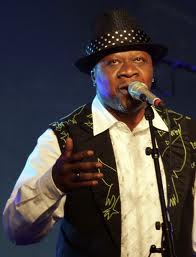
Papa Wemba was not only a star, a musician, and artist, but he was also a father, a husband, and a son. He had been married to his wife, Marie-Rose ‘Amazone’ Luzolo, for almost 50 years; they had met when he was 20, and she was 14. They had 6 children. In this world, very few celebrities have been married to only one person for almost 50 years.
Here are a few words of Papa Wemba, le rossignol (the nightingale), the King of Rumba and SAPE.
About his mother who was a professional ‘wailing woman’: “My mother was my first teacher and my first public. … I grew up with my mother’s melancholic singing. … When I will sing, she will say “my son, block here, and now project your voice“… when I did well, she will clap for me“(source: Tv5 – Africanité). For his mother, he composed Mama and Maria Valencia.
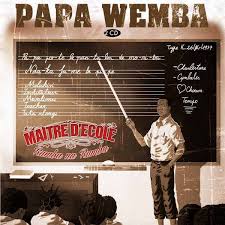
His daughter, Victoire, said that after Papa Wemba was convicted by the Belgian justice, “Dad prayed a lot. Dad was a champion, and he was victorious“(source: TV5 – Africanité).
About his wife, he said: “For my first trip to Japan, I said I will never go alone… my first long trip,… 13h long…, I brought my tender spouse and one of my children to experience it with me” (source: RFI- Dernière interview avec Claudy Siar). For his wife, he sang 4 min 29 secondes d’adoration, Phrase, and Ma Rosa.
He was a compassionate being: during one of his concert, he asked the audience for one minute of silence for one of his band members, Patrick Bebey, who had lost his father the week before (source: TV5- Edition spéciale – Hommage Papa Wemba).

He was a generous soul: a neighbor in Matonge said: « Je me souviens qu’une fois, je l’ai juste salué en passant. Il m’a rétorqué. Albert pourquoi tu fais le pied. Je lui ai expliqué que mon véhicule était tombé en panne. Il m’a donné à l’instant même l’argent que j’avais besoin pour réparer ma voiture. » “I remember that one time, I just greeted him [Papa Wemba] in passing. He asked me. Albert, why are you walking. I told him that my car was broken. Instantly, he gave me to money to fix my car.” (source: Radio Okapi).
Papa Wemba was known for his legendary humility: « A l’annonce d’un cas de décès à Matonge et surtout dans notre avenue ici Kandakanda, il s’arrangeait toujours pour envoyer sa contribution lorsqu’il n’était pas au pays. Dans les cas où le décès intervenait et qu’il se trouvait sur place à Kinshasa, il venait personnellement conduire la quête pour soutenir la famille éprouvée. Bien sûr, sa contribution était toujours largement au-dessus par rapport à ce que nous autres pouvions bien volontiers donner » témoigne Francine, une voisine de Papa Wemba à Matonge. “At the announce of a death in Matonge, and particularly on our avenue here in Kandakanda, he always made sure to send in his contribution when he was outside the country. When the announcement happened and he was in Kinshasa, he personally came to lead the quest for people’s contribution to support the bereaved family. Of course, his contribution was way bigger than anything we could gladly contribute” (source: Radio Okapi).
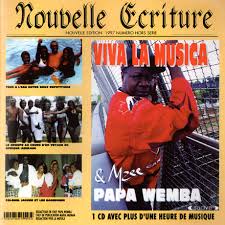 “I was lucky to cross all the oceans with my voice.” … “I was lucky to belong to a country with a musical genre such as Rumba.”
Papa Wemba defined Rumba as “the maternity of the African music” (source: TV5 – Africanité).
He said: “I am Rumba, it is thanks to Rumba that I have made a name for myself in the world” (source: TV5 – Africanité, RFI- Dernière interview avec Claudy Siar).
About la SAPE and his influence around the world: “Today even great politicians sapent (are dandy)… Before Mr. Obama steps out, he first takes a look in his mirror to make sure that he looks good… La SAPE is international“(source: TV5 – Africanité).
About SAPE: “La vie est trop courte pour s’habiller triste. [Life is too short to dress sadly]” (source: Oeil d’Afrique).
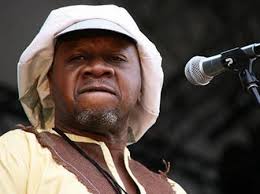 About leading: “Il ne faut pas tenir la queue, il faut être devant le peloton.” [Don’t be at the back of the queue, You must lead the pack.] (source: RFI- Dernière interview avec Claudy Siar).
About retirement: “Moi, Papa Wemba, N-O-N, jamais je ne parlerais de retraite. A moins que le Bon Dieu lui-même ne me dise ‘ta voix n’y est plus’… Tant que je serais un homme debout, tant j’aurais toujours ma belle voix, je serais toujours sur scène.” [I, Papa Wemba, N-O, I will never talk of retirement. Unless God says ‘your voice is no longer there’… as long as I will still stand, as long as I still have my beautiful voice, I will always be on stage.](source: RFI- Dernière interview avec Claudy Siar).
And lastly about his gift, his voice, and God: “My voice is my gift. … I have the grace of God, God loves me very much, and He always puts His hand on me” (source: RFI- Dernière interview avec Claudy Siar).
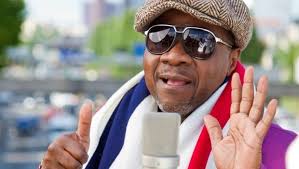 Very few in this world have had a chance to ‘depart’ while doing something they loved, while in the midst of doing something they’ve always been passionate about. Papa Wemba’s departure was sudden, but it was in the midst of doing what he loved. This man had been at the forefront of African music for over 40 years. He was truly an African global star. He loved Rumba and introduced the world to the Rumba Rock. Japanese fans created bands and sang in Lingala in Japan, thanks to Papa Wemba’s touring the country. Papa Wemba toured the United States with artists such as Peter Gabriel. People in Colombia and in other countries across the world danced to the rhythm of Papa Wemba. He was truly a global star, and Africa just lost a legend.
In high school, while on our way to school, my father would play Papa Wemba‘s album in the car: Emotion. Rightfully titled ‘Emotion‘, Wemba’s album featured a whole range of emotions which added to his unique ‘Rooster-like‘ voice to make me, as a teenager, feel those emotions, and go to school happy. Try it… listen to the up-beat Yolele, or Fafafa-fa, Sala Keba, or Awa Y’ Okeyi, … and tell me how you feel, truly, because Papa Wemba rocked my childhood.
So when I learnt that this great man, Papa Wemba, the one who had accompanied me with his voice to school every day, this man who had made me so proud of music, Congolese music, African music, this flamboyant stylish man who had introduced the world to SAPE, the King of Congolese Rumba, this man whose words I still quote “Y a pas match, Kaokokokorobo” had collapsed on stage and was no longer… I was devastated. Oh Papa Wemba, I thought you were going to ride with my kids to school, the way you did with me…. I thought I would always dance to the rhythm of O’Koningana,…Ye te oh, Wake Up, …
When life was hard, I would hum to the tune of your song in the movie ” La Vie est Belle” and instantly life became beautiful again. And ‘Mama‘ was just a loving song to a mother. When I felt lost, I would sing “Show me the way.”
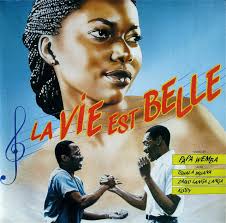
Yes… Papa Wemba was truly a genius. He was born Shungu Wembadio Pene Kikumba in June 1949 in Lubefu, in the Democratic Republic of Congo. His love of music can be attributed to his mother, who was a professional “wailing woman” at funerals. Mixing traditional African music with Western rock, he and his successive bands – Zaiko Langa Langa, Isifi Lokole, Yoka Lokole, and Viva la Musica – enjoyed hit after hit, including L’Esclave, Maria Valencia, Analengo, and Le Voyageur. He shaped Congolese music in the 1970s -90s, he made Soukous the most popular sound across Africa, and attracted international music figures like Peter Gabriel. I am not sure if there is a great African star he had not sung or collaborated with: from Brenda Fassie, Tabu Ley Rochereau, Pepe Kalle, Lokua Kanza, Barbara Kanam, Manu Dibango, Koffi Olomidé, Bisso Na Bisso, JB Mpiana, Angélique Kidjo, Salif Keïta, Alpha Blondy, Singuila, to Youssou N’dour, and countless others. He also collaborated with the great diva Aretha Franklin. He was a talented man, and he also sought to reveal young talents. He loved to share his gift, his voice, with all.
So I was sad… But then I realized that Papa Wemba had trained generations of musicians, had inspired numerous people, sang his lungs out for so many of us… then I realized that his flamboyant spirit lives on. His music keeps on… The dress style he created, la SAPE, still goes on. And yes, I will keep playing Yolele. So is Papa Wemba really gone? Is this great African baobab really gone? No, he has just changed his postal address. However, his music stays with us, and will lead some of us to school or work… always.


 African Heritage