USAID and a Few Examples in Africa

I went through the DOGE website to look at the US Agency for International Development (USAID) payments in Africa. No matter what people may say, or what the MSM says, we, Africans, who for the longest times have said that there was something fishy with that organization in our countries, feel vindicated. Can you imagine that some of the payments were made on ‘blank checks,’ without descriptions, receipts, or invoices? Can you, simple individual X, ask money from the government without a justification?

USAID previously allocated $12.3 billion to Sub-Saharan Africa, but much of this funding has now been eliminated. Now, I am not saying that all USAID programs were wrong, but I am saying that some of it was downright suspicious. African governments need to step up to provide for the needs of their own populations, rather than wait for others, and the predators need to let go of Africans. 

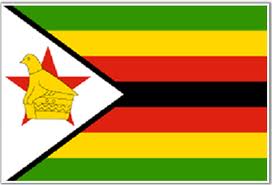
Flag of Zimbabwe
Flag of Zimbabwe

Just to give you an example, since Robert Mugabe re-distributed the stolen ancestral lands back to their rightful owners in Zimbabwe, the country has been under rigid embargo since the 2000s from the United States, the United Kingdom, and others. How come then, that the USAID totaled over $375,000 for just the month of March 2025 to mitigate the effects of El Niño? Overall, USAID cuts total $522 million in Zimbabwe, which funded a few things including some questionable ones such as, a) $8 million for “New Narratives for accountability” funding musicians and other art creatives to take part in civil society campaigns for accountability; b) $5 million to promote the independence of institutions in Zimbabwe’s justice sector; c) $7 million for media organizations; d) $3 million for election observers. Say WHAT? What does accountability for musicians to take part in civil society campaign mean? Why finance the justice sector in a foreign country? I thought there was embargo???

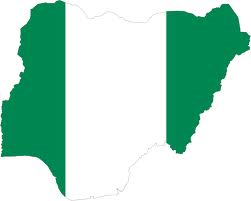
Flag and map of Nigeria

In Nigeria, among other areas, USAID previously allocated $603 million for governance, security, and economic development among other things, but this funding is now uncertain under the 90-day freeze which stemmed from President Donald Trump executive order. What kind of ‘governance’ funding could the USAID give to a supposedly ‘independent’ country like Nigeria? According to PUNCH, USAID previously allocated approximately $2.8 billion to Nigeria between 2022 and 2024. What did they, USAID, get in return?

USAID’s funding in Africa has historically been allocated across various sectors, including health (why are our countries still in bad shape after years of this aid, if there was no corruption on both sides? By now, with the amount of money, some of these countries should have amazing and robust health sectors), agriculture (in some of these countries, this favored the introduction of GMO crops that have been killing African indigenous cultures among other things), education (show us a country whose education has benefited?), and humanitarian aid. In 2024, the largest recipients of USAID funding in Sub-Saharan Africa included (Top 10 African countries that have received the most aid from the U.S. in 2025 despite USAID ban | Business Insider Africa):

  • Ethiopia: $1.22 billion
  • Democratic Republic of Congo (DRC): $1.27 billion
  • Somalia: $826 million
  • South Sudan: $816 million
  • Nigeria: $762 million
  • Sudan: $671 million
  • Kenya: $647 million

USAID in Africa – Corruption and more


For the past couple of months, the world has awaken to the high evidence that the United States Agency for International Development (USAID) was all a lie, a facade, used under the guise of aid to development, to launder money, influence, and in some cases destabilize countries. Thanks to the work done by the Department of Government Efficiency (DOGE) in the US government, we have all seen that this tool, called USAID, was actually a corruption tool. All we are hearing from the main stream media is how cutting USAID funds has plunged Africans into dire times, how this or that AIDS clinic is closing. However, like Former African Union Ambassador Dr. Arikana Chihombori-Quao asked, can you “Show me one country that USAID was in and education improved? Show me one country where USAID was in and healthcare improved?” The articles, At USAID, Waste and abuse runs deep, and illegal payments at USAID Nigeria, are just a few examples. This is nothing new, as seen in an article published back in 2013 about corruption and fraud at USAID.

I watched the interview below of the Former African Union Ambassador to the United States, Dr. Arikana Chihombori-Quao discussing USAID. 

=====

She said, “They are using that open access, sounding humanitarian, to constantly destabilize governments.

We need to understand the real reason why USAID is in Africa, and not just USAID, but other NGOs. They are coming in claiming that they’re introducing grassroots initiatives that are going to help the people, and so they use that as a way to go into the most remote parts of Africa. When you look at it on paper, it all looks really good, but they are actually wolf in sheep’s clothing.”

“The American taxpayer needs to know the billions of dollars that are being given to USAID. A fraction is making it to the people.

They’re using that open access sounding humanitarian to constantly destabilize governments. I can tell you right now, the majority of African leaders, and not just African leaders, but leaders in the developing world are celebrating the exit of USAID.

If you think about it, their sole purpose, for example, filling in the gaps in healthcare and education, where is the change? Show me one country that USAID was in and education improved. Show me one country where USAID was in and healthcare improved?

“Katanga, La Danse des Scorpions” by Dani Kouyaté

The poster for “Katanga, la danse des scorpions” by Dani Kouyate

On March 1, 2025, Burkinabè filmmaker Dani Kouyaté was awarded the prestigious Étalon d’or de Yennenga (Golden Stallion of Yennenga). His film, Katanga, la danse des scorpions, is a cinematic adaptation of William Shakespeare’s Macbeth set in an African (Burkinabe) context and told in the Mooré language of Burkina Faso. His movie focuses on the power play in Africa. His win marked Burkina Faso’s first Étalon d’or in 28 years after Buud Yam of Gaston Kaboré, and the third win of Burkina Faso 34 years after the first Tilai of Idrissa Ouedraogo. Beyond the Étalon d’or, Katanga, la danse des scorpions garnered several other accolades, including the Public Prize with an average score of 9.18/10, the Sembène Ousmane Prize from the Ecobank Foundation, the Special Prize from the Cultural and Tourism Development Fund (FDCT), the Special UEMOA Prize for feature fiction, and the Paulin Soumanou Vieyra African Critics’ Prize.

Enjoy the trailer below.


FESPACO 2025: Burkina Faso Wins its First Golden Stallion in 28 years!

FESPACO2025 (Fespaco.bf)

The 29th edition of the FESPACO took place from February 22 to March 1, 2025, in Ouagadougou, the capital of Burkina Faso.

The host country, Burkina Faso was represented by two films: Katanga, la danse des scorpions by Dani Kouyaté and Les Invertueuses by Chloé Aïcha Boro. The guest country of honor, Chad, was represented by Diya by Achille Ronaimou. There were several entries from diverse countries including Egypt, Algeria, Tunisia, Democratic Republic of Congo (DRC), Côte d’Ivoire, Zambia, Somalia and many more.

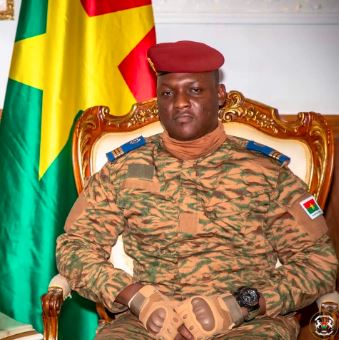
Dani Kouyate receives his Golden Stallion from President Ibrahim Traore (Source: DNE Africa)

On March 1, 2025, Burkinabè filmmaker Dani Kouyaté was awarded the prestigious Étalon d’or de Yennenga (Golden Stallion of Yennenga). His film, Katanga, la danse des scorpions, is a cinematic adaptation of William Shakespeare’s Macbeth set in an African (Burkinabe) context and told in the Mooré language of Burkina Faso. His win marked Burkina Faso’s first Étalon d’or in 28 years after Buud Yam of Gaston Kaboré, and the third win of Burkina Faso 34 years after the first Tilai of Idrissa Ouedraogo. Beyond the Étalon d’or, Katanga, la danse des scorpions garnered several other accolades, including the Public Prize with an average score of 9.18/10, the Sembène Ousmane Prize from the Ecobank Foundation, the Special Prize from the Cultural and Tourism Development Fund (FDCT), the Special UEMOA Prize for feature fiction, and the Paulin Soumanou Vieyra African Critics’ Prize.

Golden Stallion of Yennenga
The Golden Stallion of Yennenga

The Somali movie The Village next to Paradise by Mo Harawe won the Silver Stallion of Yennenga. The Bronze Stallion (Étalon de bronze) was awarded to On Becoming a Guinea Fowl by Rungano Nyoni (Zambia).

L’Homme-Vertige by Guadeloupean Malaury Eloi-Paisley won the Golden Stallion in the documentary section, as well as the Paul Robeson Prize for best diaspora film.

During the award ceremony, a special tribute was paid to Malian filmmaker Souleymane Cissé, who had been slated as jury president but passed away shortly before the festival. Dani Kouyaté, upon receiving his award, honored Cissé by saying, “Souleymane Cissé has been a model for me… he lives on in our hearts and minds.

Malian filmmaker Souleymane Cisse at the Silicon Valley African Film Festival (SVAFF) in 2024

Burkina Faso’s President, Ibrahim Traoré, presented Kouyaté the award and praised film enthusiasts for the “resounding success of this celebration of African cinema.”

The director [Dani Kouyaté] shows legitimate recognition for the courage and self-sacrifice of our worthy daughters and sons committed to victory over the forces of evil,” Traoré said on social media after the event.

The 30th edition of FESPACO is set for 2027. To read more about FESPACO 2025, please check out TRT Global – FESPACO Festival 2025 shines with cinematic triumphs in Burkina Faso

Bone Tools found in Tanzania dated 1.5 million years ago

Ishango Bones
Ishango Bones

We have previously talked about the Ishango bone, or rather the first evidence of a calculator in the world.  Named after the place where it was found in the Democratic Republic of Congo (DRC), the Ishango bone is what is called a bone tool or the craddle of mathematics, and dates as far back as 22,000 years ago, in the Upper Paleolitic era;  It is the oldest attestation of the practice of arithmetic in human history. 

Map of Tanzania

This month, archaeologists have published in the journal Nature their discovery of the earliest known bone tools, showing evidence of their use 1.5 million years ago. These bone tools were found in the Olduvai Gorge, in Tanzania. The tools were carved from elephant and hippopotamus bones.  The article, Systematic bone tool production at 1.5 million years ago by de la Torre et al., was published on March 5, 2025, and provides new insights into the intelligence and innovation of East African hominins who showed “a transfer and adaptation of knapping skills from stone to bone,” which until now were thought to be restricted only to European sites dating back 500,000 years. 

Excerpts below are from AfricaNews. To read in depth, please check out the original article of de la Torre, I., Doyon, L., Benito-Calvo, A. et al. Systematic bone tool production at 1.5 million years ago. Nature (2025). https://doi.org/10.1038/s41586-025-08652-5 and the Nature Podcast by N.P. Howe & S. Bundell .

As the authors say in the Nature article, “… East African hominins developed an original cultural innovation that entailed a transfer and adaptation of knapping skills from stone to bone. By producing technologically and morphologically standardized bone tools, early Acheulean toolmakers unravelled technological repertoires that were previously thought to have appeared routinely more than 1 million years later.”

=====

Flag of Tanzania

Archaeologists have discovered the earliest known bone tools, pushing back evidence of their use by around a million years.

The find suggests early humans had more advanced tool-making skills than previously thought. These 27 fossilised bones, shaped into tools 1.5 million years ago, are rewriting the history of early human technology.

The collection, found in Tanzania’s Olduvai Gorge, provides the earliest evidence of deliberate bone tool-making by ancient hominins. Carved from the thick leg bones of elephants and hippos, the implements reveal that early humans were using more complex toolkits than previously thought.

Researchers know that simple stone tools were being made as far back as 3.3 million years ago. But until now, bone tools were believed to be a much later innovation. The well-preserved artifacts, some measuring up to 40 centimetres, show clear signs of intentional shaping. At the time they were created, our ancestors lived a precarious hunter-gatherer existence on the plans of the Serengeti region, a landscape teeming with wildlife. They made them using a technique similar to how stone tools are made, by chipping off small flakes to form sharp edges, revealing skilled craftsmanship.

… The tools were likely used as handheld axes for butchering animal carcasses, particularly scavenged remains of elephants and hippos. Unlike later tools, they were not mounted on handles or used as spears. Researchers say the uniform selection of bones, primarily large leg bones from specific animals, suggests early humans deliberately sought out the best raw materials for making tools.

… The discovery dates back more than a million years before Homo sapiens emerged. At the time, at least three different hominin species lived in the region, including Homo erectus, Homo habilis, and Paranthropus boisei.

UN Calls for Ceasefire in the Democratic Republic of Congo (DRC)

Flag of the Democratic Republic of Congo

For once the United Nations has decided to intervene in the situation in the Democratic Republic of Congo (DRC). Please remember that this is an organization that is two-faced, saying one thing from one side of the mouth and another from the other. History has told us never to trust the UN because it is an organization that only serves the “strong” nations of this world, helping them exploit the “weaker” ones. Anyways, this past Friday, the UN has called for a ceasefire in the DRC after Goma and Bukavu, two of the largest cities in the eastern part of Congo, in regions rich in minerals that could power the entire earth, were captured by the M23 rebel group backed by Rwanda and its Western masters.

Excerpts below are from Africanews.

=====

“Holocauste au Congo, L’Omerta de la Communaute Internationale” by Charles Onana

The United Nations Security Council unanimously adopted a resolution on Friday calling for an immediate and unconditional ceasefire in the Democratic Republic of the Congo (DRC).

Rwanda-backed rebels have taken control of two key cities in Congo’s mineral-rich eastern region in less than a month, following a major escalation in their long-standing conflict with Congolese forces.

Nicolas de Rivière is the Representative to the United Nations in France: “There is no military solution to the conflict. The M23 offensive, supported by Rwanda, must end. The priority now is to reach an effective, unconditional, and immediate ceasefire agreement.”

… “While it took the Council some time to reach a consensus, its resilience is evident. On behalf of the Government and all citizens of the Democratic Republic of the Congo, especially those from Bunagana to Kamanyola, Goma, Sake, Minova, Nyabibwe, Kalehe, Kavumu, and Bukavu, I sincerely thank all members of the Council,” said Zénon Mukongo Ngay, the Representative to the United Nations in the Democratic Republic of the Congo.

The rebels are supported by roughly 4,000 troops from neighbouring Rwanda, according to U.N. experts [UN experts, always present on the ground while atrocities are ongoing]. At times, they have threatened to march as far as Congo’s capital, Kinshasa, located over 1,000 miles away.

Their Blood Waters Our Freedom

We owe a lot to those who lost their lives for us to enjoy amazing freedoms. In Windhoek, the capital of Namibia, there is a monument, The Genocide Memorial, erected to celebrate those who went before, who lost their lives for us to be free. The Genocide Memorial can be found south of the Sam Nujoma statue on Independence Museum in Windhoek, Namibia. On the monument, is written, “Their blood waters our freedom.” On the inner plaque, whether on the back or front of the statue, are found images of the Herero and Nama people of Namibia who were almost entirely exterminated by the Germans, Germany in Namibia: the First Genocide of the 20th Century. At the top of the monument, are a man and woman in an embrace who have broken their shackles of the South African military occupation. The couple stands atop a rendering of a traditional Namibian dwelling.

So wherever we are, it is important to know that our ancestors gave their blood and sweats for us to stand tall today, and it is our duty to continue to battle for the next generations. Their blood waters our freedom!!!

“Their Blood Waters Our Freedom” Monument at the Independence Museum, in Windhoek, Namibia

“Their Blood Waters Our Freedom,” back of the monument

So Long to Sam Nujoma, Namibia’s First President

Sam Nujoma (Source: newscentral.africa)
This past Saturday, February 8 2025, Sam Nujoma, Namibia’s first president and founding father passed away at the age of 95. The ancestors are greeting this illustrious brother who fought for the independence of his country. Nujoma led the long fight for independence from South Africa for many years, which culminated with independence on 21 March 1990 of South West Africa, as the country was formerly known. Nujoma helped found Namibia’s liberation movement known as the South West Africa People’s Organisation (SWAPO) in the 1960s. After independence, Nujoma became president in 1990 and led the country until 2005.
Flag of Namibia
Samuel Shafiishuna Daniel Nujoma was born at Etunda, a village in Ovamboland, on 12 May 1929, to Daniel Uutoni Nujoma and Helvi Mpingana Kondombolo, an Uukwambi princess. From his mother, he inherited his strong charismatic influence during his political career.  He was the oldest of 11 children. His childhood was spent taking care of his siblings, tending to the family’s cattle, and farming.
Statue of Sam Nujoma in front of the Independence Museum in Windhoek, Namibia
At the age of 17, Nujoma moved to the harbor town of Walvis Bay, where he slowly learned about the plight of Black people under white-minority rule; he also worked at a general store and later at a whaling station. In 1949, Nujoma moved to Windhoek where he worked as a railway sweeper for the South African Railways (SAR), while he went to night school. It was there that he was introduced to the Herero tribal chief Hosea Kutako, who was lobbying to end apartheid rule in Namibia, then known as South West Africa. Kutako took the young Nujoma under his wing, and mentored him as he became politically active among Black workers in Windhoek who were resisting a government order to move to a new township in the late 1950s. First, he joined with the Ovamboland People’s Congress (OPC) co-founder Jacob Kuhangua to start a Windhoek branch; at its first congress, he was elected president. At Kutako’s request, Nujoma began life in exile in 1960, first to Bechuanaland (now Botswana), then Bulawayo in then Southern Rhodesia (Zimbabwe), and later ending in Tanzania where he was welcomed by President Julius Nyerere. The same year, he was elected president of the South West Africa People’s Organization (SWAPO) in abstencia. The problem of South West Africa, similar to Kamerun, was that they were former German colonies, which had been placed under League of Nations mandate of South Africa in the case of South West Africa, and France and Great Britain for Kamerun; thus the country should have been independent a while back. Nujoma spent a few years asking the United Nations to ensure that the occupying power that was South Africa released control of South West Africa. After many unsuccessful tries, while shuttling from capital to capital in quest for support, he authorized the launch of armed resistance in 1966 against South African forces. The attack marked the beginning of the Namibian War of Independence, which would last more than 25 years.
Sam Nujoma on a plaque to Early Resistance Leaders inside the Independence Museum in Windhoek, Namibia
On 19 March 1989, the signing of the cease-fire agreement with South Africa took place. After 29 years in exile, Nujoma returned to Namibia in September 1989 to lead SWAPO to victory in the UN-supervised elections that paved the way for independence. Nujoma was elected first president of the new nation which became independent on 21 March 1990. He was re-elected in 1994 and 1999, and stepped down in 2005. The current president of Namibia, President Nangolo Mbumba said of Sam Nujoma, He “inspired us to rise to our feet and to become masters of this vast land of our ancestors,” … “Our founding father lived a long and consequential life during which he exceptionally served the people of his beloved country.” Namibia’s Vice-President Netumbo Nandi-Ndaitwah, who is due to be inaugurated as president in March after leading SWAPO to victory in elections, said his “visionary leadership and dedication to liberation and nation-building laid the foundation for our free, united nation“.
Bust of Sam Nujoma, inside Independence Museum, in Windhoek, Namibia
South Africa’s President Cyril Ramaphosa said the former Namibian president was an “extraordinary freedom fighter” who played a leading role in not only his country’s fight against colonialism, but also in the campaign that led to the end of the apartheid regime in South Africa in 1994. “President Nujoma’s leadership of a free Namibia laid the foundation for the solidarity and partnership our two countries share today – a partnership we will continue to deepen as neighbours and friends.” South African President Cyril Ramaphosa said Nujoma led Namibia’s independence movement “against the seemingly unshakeable might of colonial and apartheid authorities and forces” and spurred the anti-apartheid movement in South Africa on its own final steps to freedom. “Sam Nujoma inspired the Namibian people to pride and resistance that belied the size of the population,” Ramaphosa said. “Namibia’s attainment of independence from South Africa in 1990 ignited in us the inevitability of our own liberation.”

The AES Creates a Joint Military Force

Alliance des Etats du Sahel (AES) (Source: Alliance-sahel.org)

This week, the Alliance des Etats du Sahel (AES) which includes Mali, Burkina Faso, and Niger, announced the creation of a joint military force, which will deploy 5000 troops in upcoming weeks in its territory. This force’s goal is to tackle security threats jointly as one-man, as the fight intensifies against the rising extremist violence caused by the foreign forces funded by Western powers. The creation of such a force reminds us of Osagyefo’s Kwame Nkrumah dream of an African union which actually serves its people and members. In this case, we applaud the AES’ effort stemming from a need to survive against the united forces of thieves whose leader in the case at hand is the old colonial power. It is no secret that the old metropolis is not leaving its military bases in Francophone Africa as we have heard, but rather, disguising them, moving them to other neighboring countries or other Lusophone or Anglophone countries of Africa.

Excerpts below are from Reuters.

=====

Alliance des Etats du Sahel (source: linfodusahel.com)

A joint force of 5,000 troops from military-led neighbours Niger, Burkina Faso, and Mali will soon deploy in their troubled central Sahel region, Niger’s defence chief said on state television.

… Niger Defence Minister Salifou Mody said the new force would have its own air assets, equipment, and intelligence resources and operate across the territory of the three nations, which have formed a cooperation pact known as the Alliance of Sahel States (AES).

The unified AES force is nearly ready, numbering 5,000 personnel,” Mody said on Tuesday.

… The creation of the three-way alliance followed the countries’ decision to withdraw from West Africa’s main political and economic group ECOWAS, which is still pushing them to reconsider the move that reverses decades of broader regional integration.

Coincidence ? The MoU between the EU and Rwanda, and the Renewed Conflicts in Eastern DRC

Democratic Republic of Congo (DRC) mineral map (Source: Atlas du continent africain, Jeune Afrique et editions Jaguar, 2000)

Last February, the European Union (EU) agreed to discuss the price of minerals coming from the Democratic Republic of Congo (DRC) with Rwanda. Unheard of!!! Such a preposterous agreement! The EU and Rwanda signed a Memorandum of Understanding (MOU) to strengthen Rwanda’s role in fostering sustainable development and resilient value chains for critical raw materials MOU on Sustainable Raw Materials Value Chains between the EU and Rwanda. Since then, several mineral-rich Congolese cities have been captured by the M23, a rebellious movement backed by Rwanda. The town with one of the biggest coltan reservoirs in the world, Rubaya was captured by the M23 rebels in May of last year. Kanyabayonga, Kirumba, Shasha, Vuvano, Kiuli, and Mbwambaliro are other cities that were captured by the M23 this year. Rubaya is rich in coltan, tantalum, cobalt; north Kivu, gold, tin, and of course diamond. Just 2 weeks ago, the town of Masisi was captured by the M23 rebels. Coincidence or Not? Coltan-rich Town Captured.

To learn more about Coltan and the town of Masisi, please check out this great article by the Toronto Star. Excerpts below are from the BBC on the capture of Masisi

=====

 
Flag of the Democratic Republic of Congo

Rebel forces backed by Rwanda have captured the town of Masisi in the east of the Democratic Republic of Congo, according to various reports. This is the second town seized by the M23 group in as many days in the mineral-rich North Kivu province. The group has taken control of vast swathes of eastern DR Congo since 2021, forcing hundreds of thousands of people to flee their homes.

Angola has been attempting to mediate talks between President Félix Tshisekedi and his Rwandan counterpart, Paul Kagame. But these broke down last month.

It is with dismay that we learn of the capture of Masisi centre by the M23,” Alexis Bahunga, a member of North Kivu provincial assembly, told the AFP news agency.

He said this “plunges the territory into a serious humanitarian crisis” and urged the government to strengthen the capacity of the army in the region.

It is not clear how many people were killed in the fighting between the M23 and the army and pro-government militias. …

Masisi, which has a population of about 40,000, is the capital of the territory of the same name. It is about 80km (50 miles) north of the North Kivu provincial capital Goma, which the M23 briefly occupied in 2012.

On Friday, the M23 captured the nearby town of Katale. Last year, there were fears that the M23 would once again march on Goma, a city of about two million people.

… In July, Rwanda did not deny a UN report saying it had about 4,000 soldiers fighting alongside the M23 in DR Congo. …