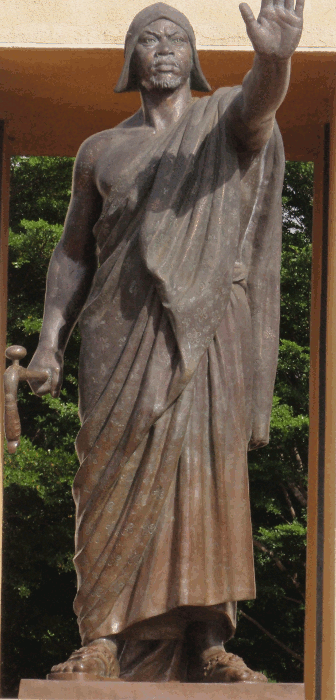
This famous speech of KingBéhanzinis the last strong message he gave onJanuary 20, 1894, in homage to his army which he always praised the courage, and bravery of the soldiers and amazons. For the original,click here.Since this is such an important piece of African history, I decided to translate his farewell speech into english. Enjoy!
“Fellow sufferers, last faithful friends, you know the circumstances under which, when the French wanted to grab the land of our ancestors, we decided to fight.
We had the certitude to lead our army to victory. When my warriors rose by the thousand to defend theDanhomèand his king, I recognized with pride the same bravery manifested by those ofAgadja, ofTégbessou, ofGhézo, and ofGlèlè. I was by their sides in all the battles.
Despite the legitimacy of our cause, and our courage, our compact troops were decimated in an instant. They could not defeat the white enemies whom I also praise the courage and discipline. And already my weeping voice arouses no more echo.
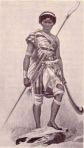
An Amazon warrior, ca 1890
Where are now myardent amazonswho were inflamed by a mighty anger?
Where are theirindomitable chiefs:Goudémè,Yéwê,Kétungan?
Where are theirrobust captains:Godogbé,Chachabloukou,Godjila?
Who will praise theirsplendid sacrifices? Who will tell about theirgenerosity?
Since they sealed the pact ofsupreme loyaltywith theirblood,how could I accept any sort of abdication without them?
How could I dare presenting myself in front of you, brave warriors, if I signed the general’s paper?
Avec la défaite de Nicolas Sarkozy battu Dimanche par Francois Hollande, j’ai trouvé bon de vous faire lire cet éditorial de Théophile Kouamouo du Nouveau Courrier. Je n’aurais pas pu mieux le formuler. Retrouvez l’intégralité de l’article sur Le blog de Théophile Kouamouo.
=========
L’Histoire retiendra que Nicolas Sarkozy aura été, après Valéry Giscard d’Estaing, le second président en exercice en France à perdre le pouvoir après un seul mandat. Comme Giscard, il laisse le pouvoir à la gauche, après avoir échoué à réunir les droites. Comme Giscard, il n’incarnait pas vraiment le gaullisme historique français, mais représentait une droite ouvertement libérale et atlantiste (alignée sur les Etats-Unis). Giscard est tombé avec en bruit de fond «l’affaire des diamants» de Jean-Bédel Bokassa, dont il avait complaisamment orchestré le sacre avant de le renverser. Sarkozy s’en va alors que s’enchaînent les révélations sur les 50 millions d’euros que Muammar Kadhafi lui aurait promis, pour financer sa campagne victorieuse de 2007… On connait la suite de l’idylle !
Nicolas Sarkozy, by Zapiro (source Grigrinews.com)
Bon débarras ! Un ennemi de l’Afrique indépendante s’en est allé, un adversaire déclaré des Africains vivant en France, Subsahariens et Maghrébins, est tombé. Ni remords, ni regrets. La carrière politique de cet homme qui aura amené la droite républicaine vers une impasse idéologique fascisante est finie. Nicolas Sarkozy est avocat, ça tombe bien pour lui. Il risque fort désormais d’avoir beaucoup de travail avec toutes les procédures judiciaires qui visent déjà ses proches – et qui l’atteindront bientôt – et qui témoignent toutes du rapport problématique à l’argent de sa coterie de profiteurs.
Dire que Nicolas Sarkozy a été un bourreau de l’Afrique n’est ni mentir ni exagérer. Cet homme a brisé tous les tabous et a fait de la souveraineté de la Côte d’Ivoire et de la Libye de simples chiffons de papier. Violent, il a lancé des milices assassines à l’assaut de ces nations. L’insécurité, les actes de génocide dans l’Ouest, l’activisme meurtrier des miliciens dozos en Côte d’Ivoire en témoignent. Le chaos libyen, la prolifération d’armes lourdes, la poussée salafiste, le Mali livré à des hordes salafistes dont certaines ont part liée avec Al-Qaida… tel est l’héritage mortifère de l’ancien maire de Neuilly dans la bande sahélo-saharienne. Nicolas Sarkozy aura été le président français le plus détesté en Afrique depuis les indépendances. Et sur le continent, on fêtera plusieurs jours sa fabuleuse débâcle. […] Lire la suite ici
Nicolas Sarkozy, by Zapiro (source Grigrinews.com)
Avec les élections présidentielles en France, et surtout après le renversement des gouvernements légitimes et légaux de la Côte d’Ivoire et de la Libye par la France sous le commandement de Sarkozy, j’ai décidé de re-poster ici le discours de Sarkozy à Dakar le 26 Juillet 2007. Il admet la faute historique de la colonisation, tout en rappelant ses “aspects positifs.” Mais la faute semble s’arrêter au lendemain des indépendances. Comme si, depuis 50 ans que les anciennes colonies françaises ont accédé à “l’indépendance”, la politique menée par la France, l’action de son armée, de ses services secrets, de ses entreprises n’avaient pas façonné l’Afrique contemporaine. Si nous savions ce que nous savons aujourd’hui à ce moment-là, peut-être aurions-nous réagit différemment face au pillage de la Côte d’Ivoire et Libye? Qu’à cela ne tienne, vous verrez dans son discours l’ampleur du cynisme, soif du pouvoir, racisme, condescendance, et mépris de l’Africain. Vous verrez aussi qu’il était déjà clair a ce moment-là, bien avant la chute financière de Wall Street, et de la zone Euro, que la recolonisation de l’Afrique avait commencé… L’ecrivain Achille Mbembe en fait une critique, et plutard aussi dans le Messager du 10 Août 2007. Pour l’intégrale du discours, cliquez ici: Discours de Sarkozy a Dakar.
=========
Le pillage de l’Afrique
“Je ne suis pas venu effacer le passé car le passé ne s’efface pas.
Je ne suis pas venu nier les fautes ni les crimes car il y a eu des fautes et il y a eu des crimes.
Il y a eu la traite négrière, il y a eu l’esclavage, les hommes, les femmes, les enfants achetés et vendus comme des marchandises. … Et l’homme noir qui éternellement « entend de la cale monter les malédictions enchaînées, les hoquettements des mourants, le bruit de l’un d’entre eux qu’on jette à la mer ». Cet homme noir qui ne peut s’empêcher de se répéter sans fin « Et ce pays cria pendant des siècles que nous sommes des bêtes brutes ».[…]
Le colonisateur est venu, il a pris, il s’est servi, il a exploité, il a pillé des ressources, des richesses qui ne lui appartenaient pas. Il a dépouillé le colonisé de sa personnalité, de sa liberté, de sa terre, du fruit de son travail. […] Continue reading “Discours de Sarkozy à Dakar: le Début de la Recolonisation?”→
Today, I would like to remind everybody that April 11th, 2011 is the day the re-colonization and balkanization of Africa started anew. On 11 April 2011, Africa was raped in broad daylight… the presidential palace of Côte d’Ivoire, the national television, the siege of parliament, were bombed, and the president of the country, Laurent Gbagbo, and his entourage, were captured like vulgar thieves by the French army, ONUCI forces, and rebel forces (Laurent Gbagbo – No to a Complicit Silence, Côte d’Ivoire- 20 ans de destabilisation mis a nu). Many Ivorians had to seek refuge in neighboring countries, Ghana and Liberia, while the genocide of the Guéré and Wê people occurred. All this was done in broad daylight, as other African heads of state clapped and saluted France and the ‘international community’ for restoring democracy (see Africans and the Trap of Democracy)… or rather tyranny in Côte d’Ivoire. One year on, Côte d’Ivoire, the beautiful, looks like a ghost of herself. I remember crying, praying, marching against the inferno that descended upon Côte d’Ivoire the beautiful. Yes… fire descended upon Côte d’Ivoire. Here is the video which Gregory Protche, of Gri-Gri International, published and which I particularly enjoyed, making a retrospect on what really happened during the post-electoral crisis in Côte d’Ivoire: how an entire country was put under siege, embargoed, no banks, no medicine… just bombs, and how Alassane Ouattara never won the elections. A few weeks later, this was also done to another country just north of Côte d’Ivoire, Libya. I still cannot believe that many Africans saw the bombing of a country by external forces as good, and still see it as such… How could anyone applaud when their neighbor’s house is on fire? Today Mali is in turmoil… who will be next (Failure of African Leadership)?
Enjoy “5 reasons not to march for the victory of Ouattara” by Gregory Protche.
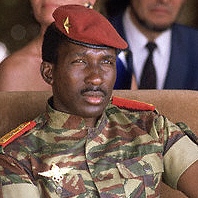
Le lion du Boulkiemdé, Boukary Kaboré raconte ses derniers jours avec le capitaine, Président du Faso, le Che Africain, Thomas Sankara, et la largesse d’esprit de ce grand homme. Proche de Thomas Sankara durant la révolution, le capitaine Boukary Kaboré dirigeait une des 4 regions militaires.
Dans les jours qui suivirent l’assassinat de Thomas Sankara, il refusa de faire allégeance à Blaise Compaoré. Il refusa d’organiser une montée sur Ouagadougou arguant du fait qu’il ne voyait pas qui pouvait diriger le pays. Ce sont finalement des militaires proches de Blaise Compaoré qui vont assaillir la ville de Koudougou procédant à un véritable massacre des militaires restés fidèles au Lion. Il réussira à s’enfuir de justesse pour se réfugier au Ghana.
Boukary Kaboré
Il revient longuement sur tous ces évènements. ll raconte aussi combien il a tenté vainement de protéger Thomas Sankara qui ne voulait pas de protection (il dit si bien en parlant de Thomas: ‘comment protéger un président qui aime se déplacer à vélo?‘), les tentatives pour le convaincre de démissionner afin d’éclaircir la situation politique, comment était organisée la sécurité de la présidence, comment on a acheté un des fidèles, etc…
Regardez, écoutez, et que ceci vous apporte un élément de clarté sur la mort de notre héros, et grand ‘Che’ africain, Thomas Sankara.
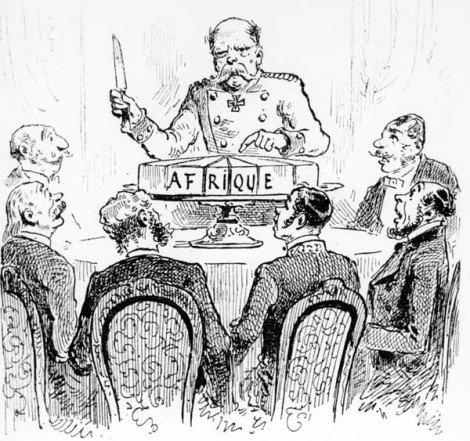
Le partage de l'Afrique à la Conférence de Berlin de 1884
As we talk about neo-colonialism, and the new conquest of Africa, I thought about sharing this poem ‘They Came‘ by the Cameroonian writer François Sengat-Kuo published in Fleurs de Latérite, Heures Rouges Éditions Clé, 1971. In the poem, he talks about colonization and how Africans were fooled by European missionaries who were always preceding European explorers and armies. I particularly like the sentence: “they came, … bible on hand, guns behind.” How true! In the days of colonization, Europeans claimed to be bringing civilization and christianity to pagans across the globe. Today, they bring development, globalization, and democracy… same ol’ thing → submission and slavery of the people. Enjoy!
I have never been as disgusted as I am with the current African leadership. As I stunningly watch Mali descend into chaos, after Cote d’Ivoire, Libya, Sudan, and so on… I wonder what kind of people are heading our countries. It doesn’t take a genius to see that we are being cheated, abused, and killed by imperialism and those hungry and bankrupt capitalists. As I pondered on all that, I read this great speech by cde Kwanisai Mafa of Zimbabwe delivered in commemoration of the Sharpeville massacre in South Africa this year on March 21st 2012. For the integral speeck, check it out on Mathaba.
=============
“Comrades and friends,
I bring you revolutionary greetings from the landed people of Zimbabwe, north of the great Limpopo River. By landed people, I mean the people who are now sovereign, who now exercise total control and ownership of their land and the vast natural resources endowed to them by God. …
Land ownership and control of mineral wealth are at the heart of Africa’s struggle for self determination. Land ownership and control of mineral wealth aptly justify the theme of today’s engagement.
LAND IS AN ECONOMIC POWER ….
Nowhere is Pan Africans being severely tested in Africa than in Zimbabwe. The current tidal wave of global pessimism and sanction against the people of Zimbabwe has made life excruciatingly challenging for the common folk. The government of Zimbabwe sought to unlock the value of its people in an exercise dubbed the Third Chimurenga.
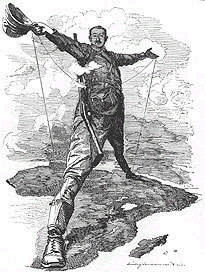
Cecil Rhodes with his transafrican railroad project from Cairo to Cape Town - Founder of de Beers diamond company, owner of Rhodesia... - the most imperialist ever
Resistance to this exercise has been fierce as both former colonial settlers (who happen to be white) and their sympathizers sought to discredit it as, illegal and not consistent with human rights. Ironically, where were these human rights watchdogs when our forefathers were butchered and dispossessed of their land. Where are these human rights watchdogs when Israel is daily making the lives of Palestinian a living hell? Where were they when NATO attacked a sovereign nation like Libya violating international law? ….
The United Nations has become a tool of US imperialism for decolonizing nations especially the United Nations Security Council. There is selective application of law. Our leaders are being dragged to Hague to the International Criminal Court of Justice, yet western nations who are killing innocent people in Iraq, Palestine, Libya and elsewhere go with impunity. This is hypocritical. …
Comrades and friends , the levels of mediocrity in African leadership has risen to sanctity. The revolution is now eating its own children. Surely this cannot continue unabated, battle lines must be drawn, be drawn clearly and conspicuously.
Our African leaders are sacrificing our continent and our founding values and aspirations on the altar of narrow, parochial, self serving, personal and selfish interests.Stooges and imperialist lapdogs in form of opposition parties and democracy are being bankrolled by western intelligence organizations to extinguish, purge and obliterate all liberation movements and replace them with their puppets that are prepared to surrender our God given Africa to global imperialism for thirty pieces of silver.
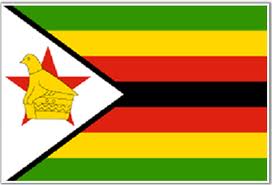
Flag of Zimbabwe
Our African leaders have become our contemporary Judas Iscariot. Colonel Muammar Gaddafi who gave sanctuary and military assistance to African liberation movements especially to South Africa was sold out by those whom he supported.
Who is Judas Iscariot? I don’t need your answer now South Africans?
The late legendary Reggae superstar Bob Marley, who I love so much (peace be upon him), in his song Redemption Song, he asked for how long should we stand aside while our prophets are being killed. No leader said a word against the bombardment of Libya by NATO not even the African Union yet the author and founder of the African Union was Gaddafi.The biggest question we should ask ourselves is who is next ?”
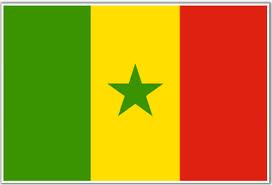
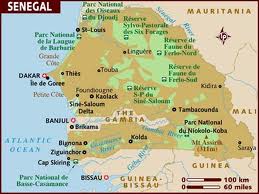
First of all, I would like to praise the victory of Macky Sallin Senegal againstAbdoulaye Wade… Apparently, and the foreign press does not want to give the real results,Wade received a real K.O.… He was apparently knocked out withless than 30% of voicesin thesecond round of the presidential elections in Senegal. Congratulations to Macky Sall and the people of Senegal who defeated the octogenarian Abdoulaye Wade. I am particularly joyous becauseAbdoulaye Wade has viciously destabilized some of the most stable countries in Africa in the past few years: Guinea, Cote d’Ivoire, Libya, and recently Mali.This man totally served the western interests of stopping the formation of a United States of Africa, or rather the FMA (Fonds monetaire Africain), and the formation of a common currency. He betrayedKadhafi, and many others. I have no pity for somebody who was ready to transform his country into a monarchy… like Togo and Gabon… he just made the mistake of thinking that Senegal was Togo or Gabon. He should pay for his crimes and should also be prosecuted for crimes against humanity in Cote d’Ivoire and Libya. So long Gorgui… You will not be missed!
Map of Senegal
As I said,this is a people’s win… however, history (on the continent) has shown that simple alternance of power does not mean a true system change.Macky Sall may be good willing, full of good intentions, but how can he act if he does not even control his country’s currency? how can he act when the true power resides elsewhere, in the hexagon?Well we wish Macky Sall the best, and all children of Africa rejoice for his victory and that of the Senegalese people.We also hope that there could be light at the end of the tunnel, and give Macky Sall our entire support in leading his country.
African Venus, a sculpture by Charles-Henri Joseph Cordier 1851 (Source: Walters Art Museum, Baltimore, MD)
In honor of our mothers, sisters, daughters, and wives, and to celebrate this great day, I thought about this great poem I once read. I dedicate it to the women of Côte d’Ivoire and Libya … of all of Africa, and to all women out there who are making a change, however small it may be. This poem is entitled “WOMAN” by Gold Touch International. Enjoy!
I was not planning on writing anything, but then I remembered the blood of Ivorians, and all the big cocoa’s sellers scheme in that country, and their influence in the current bloody atmosphere inCôte d’Ivoire, the world number one producer of cocoa… then I cringed… I had to write. As Hallmark and the media try to make us celebrate a day when Cupidon supposedly hit us with his arrow of love, and we all then run to the store to buy chocolates, and everything lovey-dovey… I remembered that over 3000 miles away some children were dying in some cocoa plantations for people in the developed world to show love to their loved ones.
A box of Valentine's day chocolate
Is it really necessary? do people need all that chocolate to feel loved? do they need the heart-shaped box full of heart-shaped chocolates to feel loved? and why not any other day? could people not renew their love for each other any other day of the year? or fall in love any other day? does it have to happen at the expense of some kid and poor family in another hemisphere? Well…after the event of April 11, 2011in Côte d’Ivoire, I have decided to refrain myself from my love of chocolate… and we all should. We can all refrain from it… there will be less wars!… and less caries!













 African Heritage