Final African Tally at the Rio 2016 Olympics

Rio2016_145 medals for Africa this year. A record. Wayde Van Niekerk, the South African, being the first African to win a gold medal in sprint, and also broke the world record established by Michael Johnson in 1999 on 400 m. Ethiopian Almaz Ayana also broke the 1993 record in 10000m.  Here are the remaining medals from the tally I published before the end of the games.

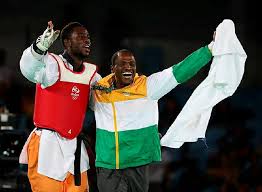
Cheikh Salla Cisse gave Côte d’Ivoire its very first Gold medal (in less than 80 kg Taekwondo men)


Cisse1
Cheikh Salla Cisse

Caster Semenya – 800 m women (South Africa) – Gold


Ruth Gbagbi – Taekwondo less than 67 kg women (Côte d’Ivoire) – Bronze

Francine Niyonsaba – 800 m women (Burundi) – Silver

Margaret Nyairera Wambui – 800 m women (Kenya) – Bronze

Nigeria men Soccer team – Bronze

Semenya
Caster Semenya

Eliud Kipchoge – Men Marathon (Kenya) – Gold

Julius Yego – Men Javelin (Kenya) – Silver

Almaz Ayana – 5000 m women (Ethiopia) – Bronze

Hagos Gebrhiwet – 5000 m men (Ethiopia)- Bronze

Feyisa Lilesa – Men Marathon (Ethiopia) – Silver

Taoufik Makhloufi – 1500 m Men (Algeria) – Silver

Abdoulrazak Issoufou Alfaga – over 80kg Taekwondo men (Niger) – Silver

Oussama Oueslati – less than 80 kg Taekwondo men (Tunisia) – Bronze

Hellen Obiri – 5000 m women (Kenya) – Silver

Vivian Cheruiyot – 5000 m women (Kenya) – Gold


African Colors at the Rio 2016 Olympics

Rio2016_1Thus far, African colors have been flying high at the Rio 2016 olympics, with 31 medals. Here are the names and the medals by country. Congratulations to all the athletes. They make us proud!

Chad LeClos – 200 m freestyle (South Africa) – Silver

LeClos
Chad LeClos

Chad LeClos – 100 m butterfly (South Africa) – Silver

Shaun Keeling – Rowing (South Africa) – Silver   

Cameron van Der Burgh – 100 m breaststroke ( South Africa) – Silver

Dylan Sage – Rugby (South Africa) – Bronze

Seabelo Senatla – Rugby (South Africa) – Bronze

Lawrence Brittain – Rowing (South Africa) – Silver

Rudisha
David Rudisha

David Rudisha – 800 m men (Kenya) – Gold

Taoufik Makhloufi – 800 m men (Algeria) – Silver

Sara Ahmed – weightlifting women (Egypt) – Bronze

Mohamed Mahmoud – weightlifting men (Egypt) – Bronze

Hedaya Malak – Taekwondo women (Egypt) – Bronze

Marwa Amri – Wrestling – less than 58 kg (Tunisia) – Bronze

Ines Boubakri – Fencing (Tunisia) – Bronze  

Ayana1
Almaz Ayana

Almaz Ayana – 10000 m women (Ethiopia) – Gold

Vivian Cheruiyot – 10000 m women (Kenya) – Silver

Tirunesh Dibaba – 10000 m women (Ethiopia) – Bronze

Jemima Sumgong – Women Marathon (Kenya) – Gold

Mare Dibaba – Women Marathon (Ethiopia) – Bronze

Niekerk
Wayde van Niekerk

Wayde van Niekerk – 400 m men (South Africa) – Gold

Hyvin Jepkemoi – 3000 m steeplechase (Kenya) – Silver

Mohamed Rabii – Weight Welters men 69 kg (Morocco) – Silver

Faith Kipyegon – 1500 m women (Kenya) – Gold

Gensebe Dibaba – 1500 m women (Ethiopia) – Silver

Conseslus Kipruto – 3000 m men steeplechase (Kenya) – Gold

Paul Tanui – 10000 m men (Kenya) – Silver

Kipyegon1
Faith Kipyegon

Tamirat Tola – 10000 m men (Ethiopia) – Bronze

Luvo Manyonga – Long jump men (South Africa) – Silver

Sunette Viljoen – Women javelin (South Africa) – Silver

Henri Schoeman – Triathlon men (South Africa) – Bronze

Boniface Mucheru – 400 m hurdles men (Kenya) – Silver

Reclaiming African History: Gorée and the Slave Trade in Senegal

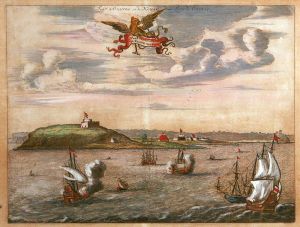
Goree_Le_fort_d'Orange_et_de_Nassau_à_l'île_de_Gorée_17th century
Goree Island: Fort of Nassau and Orange, 17th century (Wikipedia)

Today I will be talking about the island of Gorée, in Senegal. Located less than 4 km from the city of Dakar, Gorée island offers a sure route for ships. Since the 15th century, it has been the center of rivalries between diverse European nations which used it for slave trading. Locally known as “Beer” or “Ber” or “Bir” in Wolof, it was first named “La Palma” by Portuguese in 1444, with some ancient maps also showing the name “Beseguiche” for it. The Dutch navy named it “Goede Reede” or “Good Harbor” in 1588. In 1677, the island was occupied by the French.

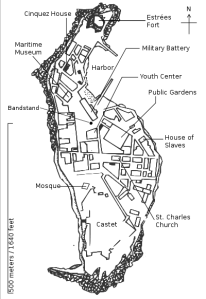
Goree_Map_of_Goree
Map of Goree (Wikipedia)

Before I dive further into the atrocities of human trading on the island, I would like to address ideas circulated by some stating that the island of Gorée was never really used for slave trading and that slave trading had been done in Saint Louis in the north or south in Gambia. These claims were so outrageous that the Senegalese government sponsored an international conference on the history of the island, and researched and found original archives from the French Port of Nantes showing that between 1763 and 1775 alone, one port had traded more than 103,000 slaves from Gorée; this thus shows that Gorée was indeed at the epicenter of slave trading, and stating otherwise is an attempt at falsifying history. The first slaves were taken from Gorée in 1536, and the trade continued at least until 1848.

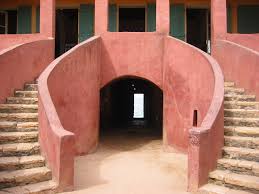
Goree1w
House of Slaves (Wikipedia)

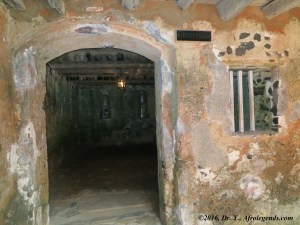
Now back to the island itself. One of the most important if not the main stop on the island is the house of slaves. Of Reddish/pinkish color, this house was first built by the Dutch in 1776, and is the last standing slave house on the island. At the end of the 18th century, the island was a prosperous crossroad of merchants, soldiers, and administrators, with at its center slave trade. Today, it serves as a museum and a memorial to humanity. The upper part of the building like most slave houses was used by the Europeans who lived there; while the bottom part was used to house slaves packed on top of each other in humid, sordid, and disgusting rooms built for 15-20 people but housing sometimes over 100 people, while waiting to be taken to the Americas. On the bottom floor, there is a room used to pack young women among which the slave traders would come every night and choose those who will be used for their sexual pleasures; if any of these women were found pregnant from these traders’ visits, they were freed on the island or sent to Saint Louis. There were also rooms to house strong men, children, and women. There was also a dark tiny room where the most defiant ones were stacked on top of each other, and salty water was seeped through the walls to force dehydration and later death. The value of a man depended on his weight and muscles; the minimum weight was 60 kg. The value of a child depended on his/her denture, while that of a woman on her breasts.

Goree_Jeunes filles
Cell for young girls in the House of Slaves

The small size of the island made it easy for merchants to control their captives. The surrounding waters are so deep that any attempt at escaping would mean sure drowning. With a 5kg metal ball permanently attached to their feet or necks, a captured African who ever tried running away would surely drown in deep sea.

From the door of no return, the slaves were loaded onto ships which took them across the Atlantic. This was their last time on African soil.

Entire families were captured and brought to Gorée, but their destinations were seldom the same: the father could be shipped to America, while the Mother to Brazil, and the child to Haiti or the West indies. Separation was irrevocable.

Goree_Cellule
Cell in the House of Slaves

Not too far from the house of slaves is the castle which was used as a warehouse for millions of captured slaves.

After the abolition of slavery in 1848, the island’s population declined, with many moving to Dakar. Since 1978, the island is a UNESCO World Heritage Site.

Today the island of Gorée is a memorial to all those who were separated from their loved ones, their lands, their society, their culture, uprooted and sold like cattle across the globe. It serves as a reminder of humanity’s ugly past, and what it is capable of for capital gain, hatred, and greed. Gorée is and should remain all of that, but also a true reminder to future generations that mankind should be loved, and a man’s life is precious, not to be sold like cattle. Attempts by some to absolve themselves from their ugly pasts should not stop those who were hurt from remembering, for celebrating the lives of those who perished, who were uprooted, and those who survived. Truth is truth whether beautiful or not, it is truth, and remembering is acknowledging all the good those who lost their lives, those who survived, gave to the world, because America will not be America without the Slaves’s lives and hard labor; Brazil will not be Brazil without the blood of those slaves; France will not be France, or Great Britain will not be Great Britain without the sweat and blood of African slaves. So Gorée is a reminder of all of that, and should be cherished for it.

Have Germans finally acknowledged the Namibian Genocide?

Namibia
Flag of Namibia

Here is an excerpt of an article by Kwame Opoku from Pambazuka about Germany’s recognition (?) of the Namibian genocide. For the full article, go to Pambazuka.

========

[…] For a long time, successive German governments have sought to avoid taking responsibility for the genocide of the Herero and Nama of South-West Africa, now Namibia, in 1904-1908. …

_55970031_namacc
Herero people being enslaved in Namibia by Germans (Source: AFP/Namibia National Archives)

The attempt to deny historical evidence of German genocide was bound to fail in so far as all the elements of German responsibility have been fully documented in German official papers and writings of German scholars. The extermination order of the German General in South West Africa, General von Lothar should have been sufficient evidence of the declared intention to exterminate Herero and Nama: ” I say to the people: anyone who hands over one of the chiefs to one of our stations as prisoner shall receive 1,000 marks and whoever delivers Samuel Maharero will receive 5,000 marks. The Herero people must however leave the land. If the people refuse to do so, I shall force them with the Great Rohr [cannon”>. Any Herero found within the German borders, with or without a gun, with or without cattle, will be shot. I no longer receive women or children. I will drive them back to their people or order them to be shot. These are my words to the Herero people. ‘The great General of the mighty German Kaiser.” Vernichtungsbefehl (Extermination Order) by the German commander, General Lothar von Trotha.

Nambia2[…] After what has been written above, Lammert concludes that: “According to present day international law, the suppression of the Herero uprising was genocide. International law stipulates that if acts are committed with intent “to destroy, in whole or in part, a national, ethnical, racial or religious group, as such ”the criminal act of genocide has occurred Such is the interpretation of many, also German historians.”

At a Government press conference on 10 July, 2015, the question was raised as to whether, in view of the various pressures on the German government to define the massacres of the Herero and Nama as genocide, there was a chance the government might modify its position. Dr Schafer, Spokesperson of the Foreign Ministry, defined the Governments position as follows: “Firstly, the basis of all actions and for our political motivation is the guiding principle that the Federal Government-against the background of the brutal colonial war of Imperial Germany in South West Africa acknowledges Germany’s special historical responsibility towards Namibia and its citizens and especially towards the Herero, Nama, San and Damara. … “We Germans accept our historical-political and moral-ethical responsibility and the guilt incurred by Germans at that time. The atrocities committed at that time would today be termed genocide”.

Herero
Survivors of the herero genocide (Wikimedia)

[…] Frankly, I was surprised and worried by the various statements indicating that the Germans and the Namibians have been having negotiations and discussions aimed at finding “a common position and common language in dealing with the cruel colonial war of 1904-1908”. This is a remarkable statement. Does anybody really believe Germans and Namibians can find a common position and a common language regarding the cruel and inhuman atrocities of the Germans in South –West Africa? Is this really serious or is this intended to persuade the Namibians to get involved in a dangerous rewriting of history that would present the Germany in a less inhuman light? There are probably fewer aspects of recent African history that are as well documented as the German presence and atrocities in Namibia. What is there more for non-historians and politicians to discover and present as a common position and common language of the colonized and the colonizer, of the oppressor and the oppressed?

This can only be an attempt to modify the role of the perpetrator of atrocities and to make the victims partially responsible for the heinous crimes committed against them. The victim becomes involved in the criminal acts against him. Colonized victims cannot evaluate the events of which they were victims in the same way as the oppressive colonizers. …

Herero_chained
Chained Herero men (Wikimedia)

Could it be that the Germans, supported by the French, British, and Belgians and other former colonial powers are frightened about the effect of German recognition of genocide in Namibia? They would all like to avoid having to pay adequate compensation to their African victims and so urge the Germans to avoid setting a precedent; they are probably trying to find a formula, short of admitting genocide in Namibia that allows them to pay some compensation, less than what they would have to pay under the application of normal rules.

[…] Given what the Herero, Nama, San, Damara and all the Namibian peoples have gone through in their encounter with German colonial rule, it is amazing that these issues still remain unsolved. There is no way the Government of Germany can continue to evade assuming openly and fully the consequences of the 1904-1908 exterminations wars.

Germany in Namibia: the First Genocide of the 20th Century

Herero
Survivors of the Herero genocide (Wikimedia)

How many think that the first big genocide of the 20th century happened during world war II, and was the holocaust? If you thought so, then think again. The Holocaust was not Germany’s first genocide. The very first genocide of the 20th century occurred in Namibia, on the African continent. It was perpetrated by Germans on the Herero and Nama people of Namibia. It was extremely brutal and almost wiped out all Herero people. It was a campaign of racial extermination and collective punishment that the German Empire undertook in German South-West Africa (modern-day Namibia) against the Herero and Nama people. It took place between 1904 and 1907 during the Herero Wars. Today it is known as the Namibian genocide or the Herero and Namaqua genocide. For the longest time, the German government denied it until 2004 when they finally acknowledged and recognized for the atrocities they perpetrated to wipe out an entire race. However, they ruled out financial compensation for the victims’ descendants. They still refuse to officially name these actions as “genocide”.

Herero_chained
Chained Herero men

In total, between 24,000 and 100,000 Herero and 10,000 Nama died. The genocide was characterized by widespread death from starvation and dehydration due to the prevention of the retreating Herero from leaving the Namib Desert by German forces. Some sources also state that the German colonial army systematically poisoned desert water wells. Moreover, the Germans also tested the very first use of concentration camps on the Herero and Nama people.

Before the genocide, the tribe numbered 80,000; after it, only 15,000 remained. Enjoy the video below which tells it all.

When Benin Stuns All!

Statue of Behanzin in Abomey, Benin

The presidential election last week in Benin stunned all. Most thought that the candidate of the hexagon Lionel Zinsou, the candidate of colonialism, was going to win. We all thought that, France, was going to crush the people’s will and have its man be handed the country. But the people of Benin said NO! The people of Benin resoundly said NO! The country of Béhanzin said NO! The country of the beloved Mathieu Kérékou said NO to France and its puppet and elected Patrice Talon. Vive la Démocratie! In some other African countries (I will not name them), France’s will would have been almighty… but in the land of the fierce Amazons said NO! We, the people has spoken!

I live you here with an excerpt of this victory, and its meaning to all Africans. We have a lot to learn from the people of Benin who have taken a hold of their destiny. Check out these articles by the Brookings Institute, AlJazeera and the BBC on this historic win. And of course, when ‘We the people’ wins, the imperialistic forces are bitter and unhappy, and want to brush it aside in the press.

Happy Easter 2016!

To all around the world, I would like to wish a Happy Easter or happy renewal day. This is celebration of renewal, restoration, and re-birth. I love this idea, particularly when spring comes or when the new harvest comes. The flower below shows all of it: it is slightly drooping on the sides, but still budding; it shows promises and life with its vibrant colors. This is the same for each one of us: a new day has arrived, a new dawn, a new chance at life; and this day is a gift, an opportunity to do right, to live life to its fullest, a new page. Enjoy! Happy Easter! Happy renewal!

20160325_Fleur1

Happy International Woman’s Day!

March8th_2For today, in celebration of millions, and billions of women out there, I choose to re-post this poem which always stood on the door to my Mother’s office for many years. This poem, “WOMAN” is from Gold Touch International, and was originally posted on March 8th, 2012 on Afrolegends. Enjoy, and yes salute all the strong women in your lives.

WOMAN

Be tough, woman.

Be brave

Go out fearlessly and do the things

That your heart desires to do.

You will be counted in the world.

Don’t allow fear to paralyze you.

Stand up and face the challenges of life,

Squarely in the face, however great

They may be.

Forge ahead and conquer.

March on to the victory that awaits you.

No one will toss victory onto you.

You have to win it yourself.

Carve out a place for yourself in the sun, woman.

Let not fear destroy that great dream of yours.

Don’t fear to be laughed at;

Don’t fear to be criticized;

Don’t fear to fail;

Don’t fear to be thought crazy when you dare

To do the things that others fear to do.

Be tough and march on.

You will conquer, woman.

You have what it takes to

To win all the victories

That your heart desires to win.

Be tough and win.

This is a message from Gold Touch International.

‘To My Homeland’ by Huda Sha’arawi

HudaShaarawi1
Huda Sha’arawi

The poem below ‘To My Homeland’ by Huda Sha’arawi shows her love for her country and the extent to which she is willing to fight for her country’s well-being, for her country’s dignity. Her poem was written at the time when Egypt was under British rule, or had just gained independence. In the poem, one senses Huda’s love for her homeland which she refers to as if it were a woman, a mother. Enjoy! The original in French was published in L’Egyptienne, Number 69 of May 1931. The translation to English is brought to you by Dr. Y. on Afrolegends.com


A ma Patrie


J’ai fait voeu de t’offrir tout ce qui m’appartient

O ma belle Patrie,

mon bras, mon Coeur, mon âme ainsi que tous mes biens

sans excepter ma vie.

J’ai fait voeu de peiner, de lutter, de souffrir,

de braver l’infamie.

Sans froncer le sourcil, sans poser au martyre,

sans même une aide amie.

J’ai juré de franchir les frontières des mers

si ton honneur l’exige,

afin de rehausser, aux yeux de l’univers,

ton nom et ton prestige.

J’ai juré d’oublier les affronts des déments

Et la haine et l’insulte

que l’envie incita, contre mon dévouement

à ta cause et ton culte.

Peu m’importe l’exil, leur courroux, la prison,

j’accepte la mort même.

Puisque leurs vils exploits n’auront jamais raison

de l’humble coeur qui t’aime.


To my Homeland


I vowed to offer you all that is mine

O my beautiful homeland,

my arm, my heart, my soul, as well as all my belongings

not excepting my life.

I vowed to struggle, to fight, to suffer,

to brave infamy.

Without frowning, without asking for martyrdom,

without even using a friend.

I have sworn to cross the borders of the seas

if your honor depends on it,

to enhance, in the eyes of the universe,

your name and your prestige.

I have sworn to forget the offenses of the demented

and the hatred and insult

Which prompted envy, against my dedication

To your cause and your worship.

I do not care about exile, their anger, the prison,

I will accept even death.

Because their vile deeds will never win over

the humble heart that loves you.


Huda Sha’arawi: Egypt’s Great Feminist

Huda Sha'arawi
Huda Sha’arawi

Today, we will be talking about Huda Sha’arawi (also Hoda Shaarawi, or Hoda Charaaoui), one of Egypt’s top feminists. She was a pioneering Egyptian feminist leader, nationalist, and founder of the Egyptian Feminist Union. Sha’arawi’s work was immense in redefining the place of the woman in Egyptian society, and led to a new dawn for Egyptian women.

Huda Sha'arawi (Wikipedia)
Huda Sha’arawi (Wikipedia)

Sha’arawi was born in a wealthy family in Minya on 23 June 1879. Her father was Muhammad Sultan, the first president of the Egyptian Representative Council, and the first Egyptian to rise through all the ranks of government at the time. Her father passed away when she was 4 years old. She was married at the tender age of 13 (very common in those days) to Ali Sha’arawi, a widower, cousin, and tutor with 4 children. The independent teen could not stand the austere life with her spouse and ran back to her mother where she stayed for the next 7 years. During those years of separation, she got further education and grew more independent. At the end of the 7 years, she returned to her husband with whom she later had 2 children. Her husband, Ali Sha’arawi was a political figure, and he associated his wife to his fight against British rule.

Hatshepsut (Wikipedia - MET Museum)
Hatshepsut (Wikipedia – MET Museum)

At the end of the 19th and beginning of the 20th centuries, women in Egypt were confined to houses or harems, and wore veils… This, in an Egypt which had seen Hatshepsut the female Pharaoh, Queen Cleopatra and Sultana Shajar al-Durr. As seen in all her pictures, Huda is wearing a Hijab. Sha’arawi resented such restrictions on women’s movements, and started organizing lectures for women on topics of interest to them. This brought many women out of their homes and into public places for the first time. Sha’arawi even convinced them to help her establish a women’s welfare society to raise money for the poor women of Egypt. In 1910, Sha’arawi opened a school for girls where she focused on teaching academic subjects rather than practical skills such as midwifery.

After World War I, as Egyptian men started to rise loudly for their rights, many women took part in political actions against the British rule as well. In 1919, Sha’arawi helped organize the largest women’s anti-British demonstration. In defiance of British orders to disperse, the women remained still for three hours in the hot sun. Such a thing had never been heard of in the history of Egypt and even of Islam.

The first 3 Egyptian Ladies to abandon the veil: Nabaireya Moussa, Hoda Chaaraoui, and Ceza Nabaroui

Sha’arawi made a decision to stop wearing her veil in public after her husband’s death in 1922. In March 1923, Sha’arawi founded and became the first president of the Egyptian Feminist Union, after returning from the International Woman Suffrage Alliance Congress in Rome she removed her face veil in public for the first time, a signal event in the history of Egyptian feminism.

She fought for the suppression of precocious marriage for young girls, giving them access to all levels of education. She led Egyptian women pickets at the opening of Parliament in January 1924 and submitted a list of nationalist and feminist demands, which were ignored by the Wafdist government, whereupon she resigned from the Wafdist Women’s Central Committee. The Egyptian Feminist Union campaigned for various reforms to improve women’s lives. Among them were raising the minimum age of marriage for girls to sixteen, increasing women’s educational opportunities and improving health care. Egypt’s first secondary school for girls was founded in 1927 as a result of this pressure. In 1933, a new law is agreed in parliament (through her push) regulating the work of women in industry: making sure a woman could not be made to work more than 9 hours per day, giving her a rest day, one month of maternity leave, and 15 days of leave at half-salary after delivery of a child. This was a victory for the Union.

'Harem Years ...' by Huda Sha'arawi
‘Harem Years: The Memoirs of an Egyptian Feminist’ by Huda Sha’arawi

She continued to lead the Egyptian Feminist Union until her death, publishing the feminist magazine L’Égyptienne (and el-Masreyya), and representing Egypt at women’s congresses in Graz, Paris, Amsterdam, Berlin, Marseilles, Istanbul, Brussels, Budapest, Copenhagen, Interlaken, and Geneva. She advocated peace and disarmament. Even if only some of her demands were met during her lifetime, she laid the groundwork for later gains by Egyptian women and remains the symbolic standard-bearer for their liberation movement. In 1943, King Farouk decorated Huda Sha’arawi with the Order of  Kamal. Sha’arawi wrote poetry in both Arabic and French. In 1944, she founded the All-Arab Federation of Women. Huda Sha’arawi died in 1947.  Sha’arawi later recounted her early life in her memoir Harem Years: The Memoirs of an Egyptian Feminist, 1879-1924. To learn more about her, check out her memoir, read Casting Off the Veil: The Life of Huda Shaarawi, Egypt’s First Feminist by Sania Sharawi Lanfranchi, this article on Forbes, and this amazing chapter dedicated to her in Les Africains, Tome 10, ed. J.A. 1978, P. 107-141. With her strong personality, unique blend of western-style feminism with her own country’s customs, culture, and Egyptian nationalism, Huda Sha’arawi influenced millions of Egyptian and Arab women and people all around the world.