Selection from the 1885 Berlin Conference Final Act

Le partage de l'Afrique a la Conference de Berlin de 1884
Le partage de l’Afrique a la Conference de Berlin de 1884

Today I would like to talk about the atrocity which divided Africa in 10,000 pieces… you know, the one known as the Berlin Conference. How the livelihood of millions of lives could be decided by some foreigners at some tables thousands of kilometers away is beyond me! In reality, the Berlin Conference drafted from 1884 to 1885 is still in action today, over 132 years later, and that is why it is important to talk about it today. This conference regulated European colonization and trade in Africa during the New Imperialism period. Organized by Otto von Bismarck, first Chancellor of Germany, its outcome, the General Act of the Berlin Conference, is seen as the formalization of the Scramble for Africa. This conference officialized European colonization, and eliminated or overrode existing forms of African autonomy and self-governance. I print here a selection from the final 1885 Berlin Act from Chapter 1-3, and I will print the rest later.

========

Selections from the 1885 Berlin Act

Conference de Berlin 1884

Her Majesty the Queen of the United Kingdom of Great Britain and Ireland, Empress of India; His Majesty the German Emperor, King of Prussia; His Majesty the Emperor of Austria, King of Bohemia, etc, and Apostolic King of Hungary; His Majesty the King of the Belgians; His Majesty the King of Denmark; His Majesty the King of Spain; the President of the United States of America; the President of the French Republic; His Majesty the King of Italy; His Majesty the King of the Netherlands, Grand Duke of Luxemburg, etc; His Majesty the King of Portugal and the Algarves, etc; His Majesty the Emperor of all the Russias; His Majesty the King of Sweden and Norway, etc; and His Majesty the Emperor of the Ottomans,

WISHING, in a spirit of good and mutual accord, to regulate the conditions most favourable to the development of trade and civilization in certain regions of Africa, and to assure to all nations the advantages of free navigation on the two chief rivers of Africa flowing into the Atlantic Ocean;
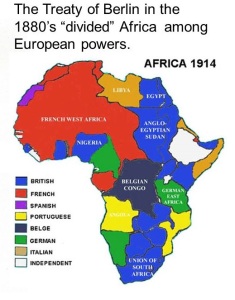
Berlin Conference_1
Division of Africa between European powers resulting from the Berlin Conference

BEING DESIROUS, on the other hand, to obviate the misunderstanding and disputes which might in future arise from new acts of occupation…on the coast of Africa; and concerned, at the same time, as to the means of furthering the moral and material well-being of the native populations;

HAVE RESOLVED, on the invitation addressed to them by the Imperial Government of Germany, in agreement with the Government of the French Republic, to meet for those purposes in Conference at Berlin, and have appointed as their Plenipotentiaries, to wit:

Who, being provided with full powers, which have been found in good and due form, have successively discussed and adopted:

  1. A Declaration relative to freedom of trade in the basin of the Congo, its embouchures and circumjacent regions, with other provisions connected therewith.
  2. A Declaration relative to the slave trade, and the operations by sea or land which furnish slaves to that trade.
  3. A Declaration relative to the neutrality of the territories comprised in the Conventional basin of the Congo.
  4. An Act of Navigation for the Congo, which, while having regard to local circumstances, extends to this river, its affluents, and the waters in its system…, the general principles enunciated in Articles CVIII and CXVI of the Final Act of the Congress of Vienna, and intended to regulate, as between the Signatory Powers of that Act, the free navigation of the waterways separating or traversing several States—these said principles having since then been applied by agreement to certain rivers of Europe and America, but especially to the Danube, with the modifications stipulated by the Treaties of Paris (1856), of Berlin (1878), and of London (1871 and 1883).
  5. An Act of Navigation for the Niger, which, while likewise having regard to local circumstances, extends to this river and its affluents the same principles as set forth in Articles CVIII and CXVI of the Final Act of the Congress of Vienna.
  6. A Declaration introducing into international relations certain uniform rules with reference to future occupations on the coast of the African Continent.

And deeming it expedient that all these several documents should be combined in one single instrument, they (the Signatory Powers) have collected them into one General Act, composed of the following Articles:

CHAPTER I

DECLARATION RELATIVE TO FREEDOM OF TRADE IN THE BASIN OF THE CONGO, ITS MOUTHS AND CIRCUMJACENT REGIONS, WITH OTHER PROVISIONS CONNECTED THEREWITH

Article I

The trade of all nations shall enjoy complete freedom….

Article II
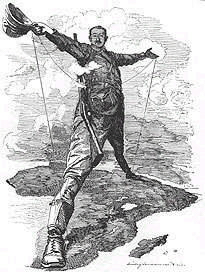
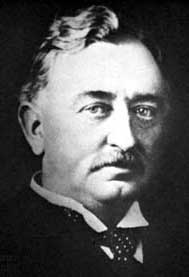
Cecil Rhodes with his transafrican train project from Cairo to Cape Town - the most imperialist ever
Cecil Rhodes with his transafrican train project from Cairo to Cape Town – the most imperialist ever

All flags, without distinction of nationality, shall have free access to the whole of the coastline of the territories above enumerated, to the rivers there running into the sea, to all the waters of the Congo and its effluents, including the lakes, and to all the ports situated on the banks of these waters, as well as to all canals which may in future be constructed with intent to unite the watercourses or lakes within the entire area of the territories described in Article I. Those trading under such flags may engage in all sorts of transport, and carry on the coasting trade by sea and river, as well as boat traffic, on the same footing as if they were subjects.

Article III

Wares, of whatever origin, imported into these regions, under whatsoever flag, by sea or river, or overland, shall be subject to no other taxes than such as may be levied as fair compensation for expenditure in the interests of trade, and which for this reason must be equally borne by the subjects themselves and by foreigners of all nationalities.

All differential dues on vessels, as well as on merchandise, are forbidden.

Article IV

Merchandise imported into these regions shall remain free from import and transit dues….

Article V

No Power which exercises or shall exercise sovereign rights in the abovementioned regions shall be allowed to grant therein a monopoly or favour of any kind in matters of trade.

PROVISIONS RELATIVE TO PROTECTION OF THE NATIVES, OF MISSIONARIES AND TRAVELLERS, AS WELL AS RELATIVE TO RELIGIOUS LIBERTY

Article VI

All the Powers exercising sovereign rights or influence in the aforesaid territories bind themselves to watch over the preservation of the native tribes, and to care for the improvement of the conditions of their moral and material well-being, and to help in suppressing slavery, and especially the slave trade. They shall, without distinction of creed or nation, protect and favour all religious, scientific or charitable institutions and undertakings created and organized for the above ends, or which aim at instructing the natives and bringing home to them the blessings of civilization.

Christian missionaries, scientists and explorers, with their followers, property and collections, shall likewise be the objects of especial protection.

Freedom of conscience and religious toleration are expressly guaranteed to the natives, no less than to subjects and to foreigners. The free and public exercise of all forms of divine worship, and the right to build edifices for religious purposes, and to organize religious missions belonging to all creeds, shall not be limited or fettered in any way whatsoever….

Slavery_capture
Slave capture

CHAPTER II

DECLARATION RELATIVE TO THE SLAVE TRADE

Article IX

Seeing that trading in slaves is forbidden in conformity with the principles of international law as recognized by the Signatory Powers, and seeing also that the operations, which, by sea or land, furnish slaves to trade, ought likewise to be regarded as forbidden, the Powers which do or shall exercise sovereign rights or influence in the territories forming the Conventional basin of the Congo declare that these territories may not serve as a market or means of transit for the trade in slaves, of whatever race they may be. Each of the Powers binds itself to employ all the means at its disposal for putting an end to this trade and for punishing those who engage in it.
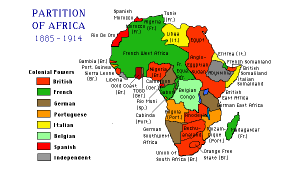
berlin-conference
Africa’s partition 1885-1914 among European powers

CHAPTER III

DECLARATION RELATIVE TO THE NEUTRALITY OF THE TERRITORIES COMPRISED IN THE CONVENTIONAL BASIN OF THE CONGO

Article XII

In case a serious disagreement originating on the subject of, or in the limits of, the territories mentioned in Article I, and placed under the free trade system, shall arise between any Signatory Powers of the present Act, or the Powers which may become parties to it, these Powers bind themselves, before appealing to arms, to have recourse to the mediation of one or more of the friendly Powers.

In a similar case the same Powers reserve to themselves the option of having recourse to arbitration….

IN TESTIMONY WHEREOF the several plenipotentiaries have signed the present General Act and have affixed thereto their seals.

DONE at Berlin, the 26th day of February, 1885

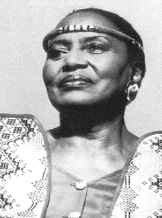
Great Quote by Miriam Makeba

Makeba-Miriam
True African Beauty: Miriam Makeba

The conqueror writes history; they came, they conquered, and they write. You don’t expect people who come to invade us to write the truth about us…” Miriam Makeba

Le vainqueur écrit l’histoire, ils sont venus, ils ont vaincu et ils ont écrit. On ne peut pas attendre de ceux qui nous ont envahi qu’ils écrivent la vérité sur nous…” Miriam Makeba

Great Quote by Miriam Makeba on Equality

miriam-makeba
Miriam Makeba, True African Beauty (sahistory.org.za)

I ask you and all the leaders of the world: Would you act differently, would you keep silent and do nothing if you were in our place? Would you not resist if you were allowed no rights in your own country because the color of your skin is different to that of the rulers, and if you were punished for even asking for equality? I appeal to you, and through you to all the countries of the world, to do everything you can to stop the coming tragedy. I appeal to you to save the lives of our leaders, to empty the prisons of all those who should never have been there.” Miriam Makeba

The Rudd Concession – How the British Stole Zimbabwe!

I had to share this video which talks about the Rudd Concession and how the British stole Zimbabwe, by tricking King Lobengula, and other local chiefs. Enjoy!

Africa is funding Europe!

MBW
Mallence Bart-Williams

I had to share this snippet of Mallence Bart-Williams’ TEDx talk. It is so good. It says it all! We, Africans, are made to think that we are poor, when in reality, like Jacques Chirac, previous French president, said “without Africa, France will be relegated to a third world power.”

Mallence says it so well…”why is it that, 5000 units of our currency is worth 1 unit of your currency, when we are the ones with the actual gold reserves! It is quite evident that the aid is in fact not coming from the west to Africa, but from Africa to the Western world, the Western world depends on Africa in every possible way!“…  “So sweet of you to come with your colored paper for our gold and diamond.” “we want to share with you our wealth and invite you to share with us.” And “…in nature, any species that is over hunting, over exploiting the resources they depend on for nourishment, natural selection will sooner or later take the predator out because it offsets the balance!” This is to all Africans, stop thinking yourself poor, and rise!

The Rudd Concession – 30 October 1888

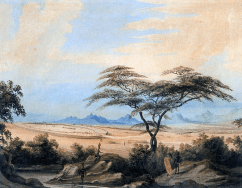
Zimbabwe_Matabele kraal 1836_Ndebele people
A Kraal in Matabeleland in 1836

Below is the text for the Treacherous Rudd Concession which granted exclusive mining rights in Matabeleland, Mashonaland, and surrounding areas between King Lobengula of the Matabeleland, and James Rudd (representing Cecil Rhodes). This eventually paved the way for the colonization of then-Rhodesia (Zimbabwe). As you can see, the concession: (1) forbade Lobengula from signing further concessions with other European powers without the consent of Cecil Rhodes/ BSAC; (2) No more than ten Europeans were to enter Lobengula’s territory at any given time; (3) Gave Cecil Rhodes and the BSAC mining monopoly in Matabeleland; (4) In return, Lobengula would get (i) A monthly payment of $ 100, (ii) 1000 rifles and ammunition, (iii) A gun boat to patrol the Zambezi... which he mostly did not get, and the terms were never respected by the British (what else is new)!!!


===========

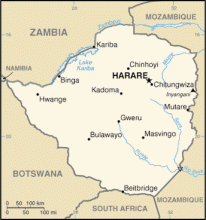
zimbabwe_map
Map of Zimbabwe

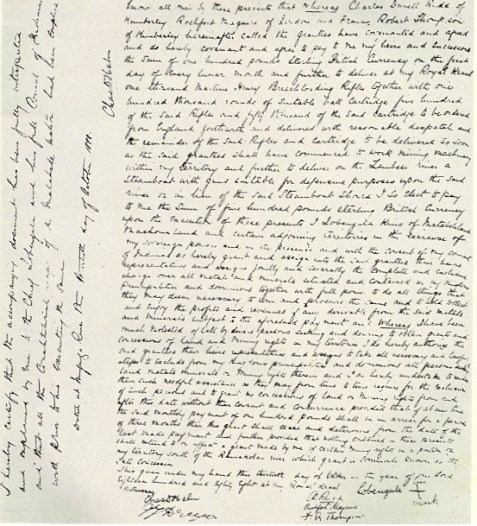
Know all men by these presents, that whereas Charles Dunell Rudd, of Kimberley; Rochfort Maguire, of London; and Francis Robert Thompson, of Kimberley, hereinafter called the grantees, have covenanted and agreed, and do hereby covenant and agree, to pay to me, my heirs and successors, the sum of one hundred pounds sterling, British currency, on the first day of every lunar month; and further, to deliver at my royal kraal one thousand Martini-Henry breech-loading rifles, together with one hundred thousand rounds of suitable ball cartridge, five hundred of the said rifles and fifty thousand of the said cartridges to be ordered from England forthwith and delivered with reasonable despatch, and the remainder of the said rifles and cartridges to be delivered as soon as the said grantees shall have commenced to work mining machinery within my territory; and further, to deliver on the Zambesi River a steamboat with guns suitable for defensive purposes upon the said river, or in lieu of the said steamboat, should I so elect, to pay to me the sum of five hundred pounds sterling, British currency. On the execution of these presents, I, Lobengula, King of Matabeleland, Mashonaland, and other adjoining territories, in exercise of my sovereign powers, and in the presence and with the consent of my council of indunas, do hereby grant and assign unto the said grantees, their heirs, representatives, and assigns, jointly and severally, the complete and exclusive charge over all metals and minerals situated and contained in my kingdoms, principalities, and dominions, together with full power to do all things that they may deem necessary to win and procure the same, and to hold, collect, and enjoy the profits and revenues, if any, derivable from the said metals and minerals, subject to the aforesaid payment; and whereas I have been much molested of late by divers persons seeking and desiring to obtain grants and concessions of land and mining rights in my territories, I do hereby authorise the said grantees, their heirs, representatives and assigns, to take all necessary and lawful steps to exclude from my kingdom, principalities, and dominions all persons seeking land, metals, minerals, or mining rights therein, and I do hereby undertake to render them all such needful assistance as they may from time to time require for the exclusion of such persons, and to grant no concessions of land or mining rights from and after this date without their consent and concurrence; provided that, if at any time the said monthy payment of one hundred pounds shall be in arrear for a period of three months, then this grant shall cease and determine from the date of the last-made payment; and further provided that nothing contained in these presents shall extend to or affect a grant made by me of certain mining rights in a portion of my territory south of the Ramaquaban River, which grant is commonly known as the Tati Concession.


(signed by Lobengula, Rudd, Maguire, Thompson, Helm and Dreyer)

I hereby certify that the accompanying document has been fully interpreted and explained by me to the Chief Lobengula and his full Council of Indunas and that all the Constitutional usages of the Matabele Nation had been complied with prior to his executing the same.

(signed by Helm)

Zimbabwe_Rudd_Concession between Cecil Rhodes and Lobengula 1880s
The Rudd Concession of 30 October 1888

British Colonial Treaties in Africa: The Ruud Concession in Zimbabwe 30 Oct 1888

Zimbabwe_Rudd_Concession between Cecil Rhodes and Lobengula 1880s
The Rudd Concession

One treacherous treaty signed by the British in Africa is the Rudd Concession, a written concession for exclusive mining rights in Matabeleland, Mashonaland and other adjoining territories in what is today Zimbabwe, signed between King Lobengula of Matabeleland and Charles Rudd, James Rochfort Maguire and Francis Thompson, three agents acting on behalf of the British imperialist South African-based politician and businessman Cecil Rhodes, on 30 October 1888. Despite Lobengula’s retrospective attempts to disavow it, it proved the foundation for the royal charter granted by the United Kingdom to Rhodes’s British South Africa Company in October 1889, and thereafter for the Pioneer Column‘s occupation of Mashonaland in 1890, which marked the beginning of white settlement, administration and development in the country that eventually became Rhodesia, named after Rhodes, in 1895.

Lobengula1
King Lobengula of Matabeleland

In reality, the Rudd Concession was a deceitful perfidious trick played by the British on King Lobengula to: 1) take his lands, and 2) appropriate the entire country then Rhodesia (now Zimbabwe) from local chiefs who of course knew no English (or very little of it), with translators who very often were also cheating the kings of their lands.

The fact that Lobengula was a force to reckon with is not to be ignored. Cecil Rhodes himself confided to Rothschild saying, “I have always been afraid of the difficulty of dealing with the Matabele King. He is the only block to central Africa, as, once we have his territory, the rest is easy … the rest is simply a village system with separate headmen …” So trickery was the only way to go for Rhodes in order to get Lobengula.

Zimbabwe_charles_rudd
Charles Rudd

Moreover, when you read the concession itself, it’s written on a piece of common paper, as in a 6th grader homework sheet, not legible even by those days’ standards, let alone by a non-native speaker such as Lobengula. It was not a colonial treaty of sovereignty, but a written concession awarding exclusive mining rights in Matabeleland, Mashonaland, and surrounding areas between King Lobengula of the Matabeleland, and James Rudd (representing Cecil Rhodes). For example, King Lobengula never ever discussed nor negotiated a single term in the fraudulent Rudd Concession with the British. Typical of European colonization in Africa!

Zimbabwe_Cecil Rhodes
Cecil Rhodes

This was signed on 30 October 1880. As early as 1889, King Lobengula tried to disavow the treaty, after realizing that he had been tricked. Once King Lobengula grasped the extent of this treachery (I mean, who would think that by talking to some people, ‘putting an X’ – signing some documents you don’t even understand, you are giving your entire land, sovereignty, humanity, inheritance, burial grounds, and people?), he sent a delegation to talk to the ‘White’ queen, Queen Victoria (similar to delegations sent by other African Kings, Prempeh, Behanzin to France, Duala Kings in Kamerun to Germany, etc) about the misappropriation, but his delegation was made to linger in London and was eventually never received, all while the British occupied the lands.

Cecil Rhodes was so happy about the Rudd Concession that he said, it is “so gigantic it is like giving a man, the whole of Australia”… OUTRAGEOUS!!!

For more information, please do check out the website of the late Jenny Bennett who did outstanding work detailing the story of , Lobengula and the concession hunters, and Lobengula’s betrayal, and the , or read  Arthur Keppel-Jones, Rhodes Rhodesia Conquest book.


Happy Mother’s Day 2017: “L’Amour d’Une Mère (A Mother’s Love)” by Patience Dabany

HappyMotherDayTo celebrate this upcoming Mother’s day, I wanted to share Patience Dabany‘s “L’Amour d’Une Mère” (A Mother’s Love) which is a classic. Patience Dabany is a baronness of African music with a career which has spun over several decades. She also served as the First Lady of Gabon from 1967 to 1988, at which time she boldly divorced her husband, the late Gabonese President Omar Bongo Ondimba. This song, “L’Amour d’Une Mère” is quite special and I dedicate it to all the mothers out there! I have translated the words to English here: Translation Dr. Y., Afrolegends.com.  Happy Mother’s Day 2017!


A Mother’s Love (by Patience Dabany)

The first time you opened your eyes

at that moment, God granted my wish

Holding you against me was my only comfort

oh yes my baby, it was you my gold

when the time came for you to take off

I prayed a long time for you to never fall

and if you ever, hesitate to re-open my door

remember that Mommy will always love you

Yes

Even if you went to other loves

you always have a place in my yard

we will find the strength to overcome obstacles

and if you ever stumble, I will work miracles

and since that time, when you took off

I prayed for a long time that you never fall

and if you have hairs, do not hesitate to re-open my door

You know very well, that my heart will always be open to you

A Mother’s love, never goes out

A Mommy’s love, never goes out, never, never

A Mother’s love, never goes out

A Mommy’s love, never goes out, never, never

I raised you with love, from the day you were born

And I will always give you love, love you only as mother can love

A Mother’s love, never goes out

A Mommy’s love, never goes out

even if you fly on your own wings

even if obligations call you

your place will always be in my heart, because Mommy will always love you

A Mother’s love, never goes out

A Mommy’s love, never goes out

and if life teaches you things, and that you can’t take her blows

you have to know to go back, open Mommy’s door

A Mother’s love, never goes out

A Mommy’s love, never goes out

A Mother’s love, never goes out

A Mommy’s love, never goes out

Even in the afterlife.

The 11 Components of the French Colonial Tax in Africa

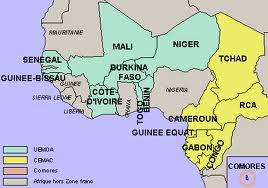
Carte des pays de la zone CFA

African countries continue to pay colonial tax to France 50 years after their independence. This system is an abomination destined to keep African countries poor forever! Here are some excerpts from the article by Mawuna R. Koutonin. For the full article, go to France Colonial Tax , and do not forget to check out the article I wrote a while back on the Franc CFA: slave currency! Also, please read the book by Pr. Nicolas Agbohou on the subject:  ‘Le Franc CFA et l’Euro contre l’Afrique.’

===========

Did you know that many African countries continue to pay colonial tax to France since their independence till today?

sekou-toure-time-cover-021959-600
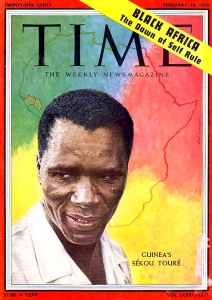
Sekou Toure, Cover Time Magazine, Feb. 16, 1959

Sékou Touré of Guinea decided in 1958 to get out of french colonial empire, and opted for the country’s independence, the french colonial elite in Paris got so furious, and in a historic act of fury the french administration in Guinea destroyed everything in the country which represented what they called the benefits from french colonization. …

Slowly fear spread through the African elite, and none after the Guinea events ever found the courage to follow the example of Sékou Touré, whose slogan was “We prefer freedom in poverty to opulence in slavery.”

[…] In March 2008, former French President Jacques Chirac said: Without Africa, France will slide down into the rank of a third [world] power.

Chirac’s predecessor François Mitterand already prophesied in 1957 that:  “Without Africa, France will have no history in the 21st century”

At this very moment I’m writing this article, 14 african countries are obliged by France, trough a colonial pact, to put 85% of their foreign reserve into France central bank under French minister of Finance control. Until now, [2017], Togo and about 13 other african countries still have to pay colonial debt to France. African leaders who refuse are killed or victim of a coup. Those who obey are supported and rewarded by France with lavish lifestyle while their people endure extreme poverty, and desperation.

capitalism2It’s such an evil system even denounced by the European Union, but France is not ready to move from that colonial system which puts about 500 billions dollars from Africa to its treasury year in year out.
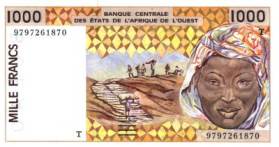
[…] Below are the 11 main components of the Colonisation continuation pact since 1950s:

#1.  Colonial Debt for the benefits of France colonization

The newly “independent” countries  should pay for the infrastructure built by France in the country during colonization. …

500 Fcfa_BEAO
1000 Fcfa_BEAO

#2. Automatic confiscation of national reserves

The African countries should deposit their national monetary reserves into France Central bank.

France has been holding the national reserves of fourteen African countries since 1961: Benin, Burkina Faso, Guinea-Bissau, Ivory Coast, Mali, Niger, Senegal, Togo, Cameroon, Central African Republic, Chad, Congo-Brazzaville, Equatorial Guinea and Gabon.

“The monetary policy governing such a diverse aggregation of countries is … operated by the French Treasury, without reference to the central fiscal authorities of any of the WAEMU or the CEMAC. Under the terms of the agreement which set up these banks and the CFA the Central Bank of each African country is obliged to keep at least 65% of its foreign exchange reserves in an “operations account” held at the French Treasury, as well as another 20% to cover financial liabilities.

The CFA central banks also impose a cap on credit extended to each member country equivalent to 20% of that country’s public revenue in the preceding year. Even though the BEAC and the BCEAO have an overdraft facility with the French Treasury, the drawdowns on those overdraft facilities are subject to the consent of the French Treasury. The final say is that of the French Treasury which has invested the foreign reserves of the African countries in its own name on the Paris Bourse.

In short, more than 80% of the foreign reserves of these African countries are deposited in the “operations accounts” controlled by the French Treasury. …” Wrote Dr. Gary K. Busch.

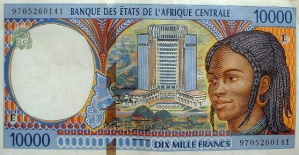
10,000FCFA (BEAC-1992)

It’s now estimated that France is holding close to $500 billions African countries money in its treasury, and would do anything to fight anyone who want to shed a light on this dark side of the old empire. 

The African countries don’t have access to that money. 

France allows them to access only 15% of the money in any given year. If they need more than that, they have to borrow the extra money from their own 65% from the French Treasury at commercial rates.

To make things more tragic, France impose a cap on the amount of money the countries could borrow from the reserve. The cap is fixed at 20% of their public revenue in the preceding year. If the countries need to borrow more than 20% of their own money, France has a veto.

#3.  Right of first refusal on any raw or natural resource discovered in the country

France has the first right to buy any natural resources found in the land of its ex-colonies. It’s only after France would say, “I’m not interested”, that the African countries are allowed to seek other partners.

#4. Priority to French interests and companies in public procurement and public biding

In the award of government contracts, French companies must be considered first, and only after that these countries could look elsewhere. It doesn’t matter if the african countries can obtain better value for money elsewhere. …

As a consequence, in many of the french ex-colonies, all the majors economical assets of the countries are in the hand of french expatriates. …

french-military-bases-in-africa
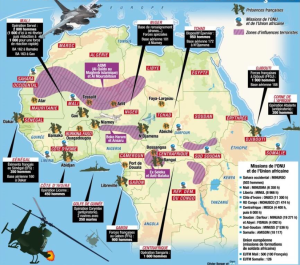
French military bases in Africa (Source: Olivier Berger, SiliconAfrica.com)

#5. Exclusive right to supply military equipment and Train the country military officers

Through a sophisticated scheme of scholarships, grants, and “Defense Agreements” attached to the Colonial Pact, the Africans should send their senior military officers for training in France or French ran-training facilities. …

… France has trained hundreds, even thousands of traitors and nourish them. They are dormant when they are not needed, and activated when needed for a coup or any other purpose!

#6. Right for France to pre-deploy troops and  intervene military in the country to defend its interests

Under something called “Defense Agreements” attached to the Colonial Pact, France had the legal right to intervene militarily in the African countries, and also to station troops permanently in bases and military facilities in those countries, run entirely by the French….

#7. Obligation to make French the official language of the country and the language for education

Oui, Monsieur. Vous devez parlez français, la langue de Molière! …

1000 FCFA (BCEAO)
1000 FCFA (BCEAO)

#8. Obligation to use France colonial money FCFA

That’s the real milk cow for France, but it’s such an evil system even denounced by the European Union, but France is not ready to move from that colonial system which puts about 500 billions dollars from Africa to its treasury.

#9.  Obligation to send France annual balance and reserve report.

Without the report, no money. …

#10. Renunciation to enter into military alliance with any other country unless authorized by France

… In the case France ex-colonies, France forbid them to seek other military alliance except the one it offered them.

#11. Obligation to ally with France in situation of war or global crisis

Over one million africans soldiers fought for the defeat of nazism and fascism during the second world war.

Their contribution is often ignored or minimized, but when you think that it took only 6 weeks for Germany to defeat France in 1940, France knows that Africans could be useful for fighting for la “Grandeur de la France” in the future.

Map of Haiti
Map of Haiti

There is something almost psychopathic in the relation of France with Africa.

France is severely addicted to looting and exploitation of Africa  since the time of slavery. …

It’s up to us as African to free ourselves, without asking for permission, …

For historical comparison, France made Haiti to pay the modern equivalent of $21 billion from 1804 till 1947 (almost one century and half) for the losses caused to french slave traders by the abolition of slavery and the liberation of the Haitian slaves.

Let your Greatness Blossom!

Sometimes it falls upon a generation to be great. You be that great generation. Let your greatness blossom. Of course the task will not be easy. But not to do this would be a crime against humanity, against which I ask all humanity now to rise up.” Nelson Mandela, Message to the Live 8 Concert in Edinburgh, July 2005

Here is your call to greatness! Whatever you do, do it well, be great, let your greatness blossom! The flower below looks like the stems are coming out, just like a generation blossoming! Just like this flower, let your stems come out, and be the very best you can be!

Fleur2