“On Adapting the Fight to One’s Realities” by Amilcar Cabral

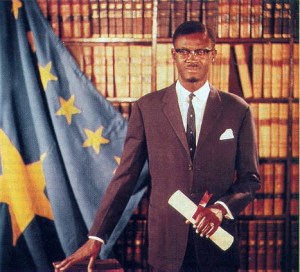
Amilcar Cabral on a stamp with the flag of Guinea Bissau

It so happens that in our country the Portuguese colonialists did not expropriate the land; they allowed us to cultivate the land. They did not create agricultural companies of the European type as they did, for instance, in Angola, displacing masses of Africans in order to settle Europeans. We maintained a basic structure under colonialism – the land as co-operative property of the village, of the community. This is a very important characteristic of our peasantry, which was not directly exploited by the colonisers but was exploited through trade, through the differences between the prices and the real value of products. This is where the exploitation occurs, not in work, as happens in Angola with the hired workers and company employees. This created a special difficulty in our struggle – that of showing the peasant that he was being exploited in his own country.

Map of Guinea Bissau

Telling the people that “the land belongs to those who work on it” was not enough to mobilise them, because we have more than enough land, there is all the land we need. We had to find appropriate formulae for mobilising our peasants, instead of using terms that our people could not yet understand. We could never mobilise our people simply on the basis of the struggle against colonialism-that has no effect. To speak of the fight against imperialism is not convincing enough. Instead we use a direct language that all can understand:

Flag of Cape Verde
Flag of Cape Verde

Why are you going to fight? What are you? What is your father? What has happened to your father up to now? What is the situation? Did you pay taxes? Did your father pay taxes? What have you seen from those taxes? How much do you get for your groundnuts? Have you thought about how much you will earn with your groundnuts? How much sweat has it cost your family? Which of you have been imprisoned? You are going to work on road-building: who gives you the tools? You bring the tools. Who provides your meals? You provide your meals. But who walks on the road? Who has a car? And your daughter who was raped-are you happy about that?”

Amilcar Cabral on the need to personalize, and adapt the fight to his country’s realities.

Mariam Sankara’s Declaration

Thomas Sankara and Mariam
Thomas and Mariam Sankara on their wedding day

Today, I have translated Mariam Sankara‘s declaration on the day of the 30th-year anniversary of the death of her husband, the president of the Faso, the great revolutionary Thomas Sankara.

Very often we forget women’s contributions to revolutions, history acts as if these men had been all alone. If Mariam Sankara had not been home to take care of their two children, to take care of Thomas when he got home after a hard day, do you think we would have had a revolution? If Winnie Mandela had not carried on the battle, do you think the world would have known about Nelson Mandela? Maybe not… because during those 27 years while Nelson was living a ‘somewhat’ cozy life in prison, Winnie was being jailed, attacked, harassed, beaten to death, had to run to exile several times, but she kept his name high up. Now, today, history chooses to only count his contributions, forgetting hers!

So here is the declaration from Mariam Sankara, that she made last year on 15 Oct 2017. The original on ThomasSankara.net; the text has been translated to English by Dr. Y., Afrolegends.com

========

Thomas Sankara
Thomas Sankara a Ouagadougou

Ladies and gentlemen, dear friends,

The assassination of President Sankara and his companions on October 15, 1987, interrupted an original and promising development experience in the history of contemporary Africa.

I would like to thank you for your support to the whole Sankara family and to me as well as for your loyalty to the memory of President Thomas Sankara.

Through his policy, Thomas defended, by giving the example himself, essential values such as integrity, honesty, humility, courage, will, respect and justice. By mobilizing the various components of society, he fought hard against the debt, for the well-being of all Burkinabé, the promotion of Burkinabé cultural heritage and the emancipation of women. He urged his fellow citizens to take care of themselves to live with dignity. In short, he refused submission to the diktat of the most powerful in this world, took the defense of the weakest and most disadvantaged. Impregnated with these values and ideas, you have, through the popular uprising of October 30 and 31, 2014, put an end to the dictatorial regime of Compaoré. This insurrection has allowed the people to take back the floor to demand, among other things, the end of impunity, the reopening of the justice file on the assassination of Thomas Sankara and his companions, that of Norbert Zongo and many others.

BurkinaFaso6
Flag of Burkina Faso

The decision taken in Burkina Faso by the transitional authorities to finally bring justice to Thomas Sankara has generated immense hope in Burkina, in Africa in general and in the world. But we are still waiting for justice.

The request of the civil society and families is clear. We want to know as soon as possible the sponsors and the executors of this assassination and those of the other crimes.

To delay the quest for truth is to play the game of the assassins of Thomas Sankara and his companions. To do no justice is to refuse a dignified burial for Thomas Sankara and his companions, it is to prevent families from mourning.

That is why the people of Burkina Faso and their friends must remain mobilized and relaunch the campaign so that thirty years later, justice is finally done for Thomas Sankara and his companions.

Dear compatriots, our family welcomes your initiative to erect a memorial to Thomas Sankara.

Thomas Sankara family
Mariam and Thomas Sankara with their children

Like many of our compatriots, we are committed to the defense and safeguarding of Thomas Sankara’s memory. I would like to salute this initiative of the civil society, led by the association CIMTS (International Committee for the Thomas Sankara Memorial). This Memorial project enjoys popular support. A consensual and inclusive approach should allow to realize a quality work which will testify to the vitality of the ideas of Thomas and his faithful companions of the revolution of August 4, 1983. However, the family wants this memorial not to be built in the enclosure of the Council of the Entente which brings back painful memories because of the assassinations and the tortures which have marked this place.

With all these wishes for the valorization of the memory of Thomas observed around the world, one realizes with the time that Thomas Sankara was a visionary. Aware of the actions of the critics of the revolution, he knew he was misunderstood because he was ahead of his time. He said back then: “kill Sankara, thousands of Sankara will be born”. This has become a reality. Today, we see that the youth is immersed in its progressive ideas to transform society.

Thirty years after his death, Thomas’s thought remains alive and of actuality.

Once again, I congratulate you on your commitment and your loyalty to the memory of President Thomas Sankara.

30 years of resistance!

30 years of impunity!

Finally bring justice to Thomas Sankara and his companions and to all the victims of unpunished crimes!

Homeland or death, we will overcome!

I thank you.

Mariam Sankara

Montpellier, 15th October 2017

Fossi Jacob and the French Genocide in Cameroon: Testimony

Cameroun_Chutes de la Metche_1Below is the testimony of one of Fossi Jacob ‘s daughters. If you ever get a chance, you should read “My Dad was Fossi Jacob: Itinerary of a martyr of the Cameroonian Independence” written by Fossi Jacob’s first son, Abraham Sighoko Fossi (“Papa s’appelait Fossi Jacob: Itinéraire d’un martyr de l’indépendance du Cameroun“). To learn more about France’s genocide in Cameroon, the books ‘Kamerun. La guerre cachee de la France en Afrique noire‘ (Kamerun. France’s Hidden War in Black Africa) and Mongo Beti ‘s ‘Main Basse sur le Cameroun, autopsie d’une décolonisation (Cruel hand on Cameroon, autopsy of a decolonization).

12 September should be commemorated in Cameroon in memory of Fossi Jacob, a man who, by his selfless act, saved countless lives, and in memory of all the victims of the French genocide.

Fossi Jacob: A Cameroonian Hero and France’s Genocide in Cameroon

Cameroun_Chutes de la Metche_1
Chutes de la Metche (Metche Waterfalls)

I have to talk about Fossi Jacob, the Chutes de la Métché (The Metché Waterfalls), and the Bamiléké genocide perpetrated by France in Cameroon (French President Acknowledges French Genocide in Cameroon). Fossi Jacob is a hero, and should be celebrated throughout Cameroon. A monument should be erected at the Chutes de la Metché to celebrate his memory and those of countless others who lost their lives there, just outside Bafoussam on the way to Mbouda, in the Western province of Cameroon.

Cameroun_Chutes de la Metche_4.jpg
The top of the Chutes de la Metche

When I visited the Chutes de la Metché, I finally understood the magnitude of the entire thing. Picture this: you are forcefully pushed from a 20 m tall waterfalls, with giant sharp-edged volcanic boulders at its bottom; there is no way anybody thrown down those waterfalls can come out alive; either you die from the fall, or your head hits one of those giants sharp boulders. This is what French officials did to so-called ‘rebels’ between 1950 and 1970 in Cameroon; in reality, most of these ‘rebels’ were simple peasants. During my visit, I was speechless! It was like visiting Gorée island, or Elmina Castle, it felt so sinister, yet so beautiful! Sinister, because it was as if I could feel the souls of all those who had been pushed there. It was as if I could hear their screams, feel their pain! Beautiful because the paths were covered with salt and palm oil, and you could tell that this was a place of pilgrimage, a place where people came to commune with their ancestors, who disappeared there, without sepulchers.

Cameroun_Chutes de la Metche_3.jpg
Chutes de la Metche, view from the top

Why should we celebrate Fossi Jacob? Jacob Fossi had been imprisoned like countless others in the prison of Bafoussam during the dark days of Cameroon; he was a member of the UPC. Every night, the French officers would fill trucks with ‘rebels’ (from accounts, at least 350 every night), and drive them to the edge of the Chutes de la Metché, where, with a gun in hand, they would push the ‘rebels’ one by one down the waterfalls. Those who did not die from the falls were shot!

Cameroun_Chutes de la Metche_5
Chutes de la Metche, at the bottom

On that fateful day of 12 September 1959, when it was Jacob Fossi‘s turn (he was second to last), he called for the French official and told him to get close and that he would tell him where all the other ‘rebels’ were hiding. He promised to tell him everything. When the French official came close, Fossi Jacob held onto him, and jumped with him into the waterfalls. They were killed instantly. This caused the French colonial government to stop taking people to the Chutes de la Metché to be killed. The story of Fossi Jacob is known because on that fateful day, Fo Sokoudjou, the actual King of Bamendjou, who was going to be the last one to be pushed down the fall was not pushed in because of Fossi’s courageous act. Lucky one! Imagine the many lives saved because of one man’s selfless act!

Chutes de la Metche_1
Salt and palm oil offerings to commemorate the ancestors at the Chutes de la Metche waterfalls

Today, the Chutes de la Metché has become a place of pilgrimage for countless people, particularly Bamiléké people. During that dark era of the history of Cameroon, many lost their sons, husbands, fathers, relatives, and this is the only place where they can come and pray to their ancestors. Salt and palm oil strew the path as people come to make offerings to commemorate their long-gone loved ones. A monument should be erected there to celebrate the courage of Fossi Jacob who, thanks to his actions, stopped the horrendous actions of the French colonial government in those waterfalls. The Chutes de la Metché should be a place of pilgrimage for all Cameroonians, and beyond!

Cameroun_Chutes de la Metche_1.jpg


Bob Marley and Emperor Haile Selassie I: “WAR”

Haile_Selassie_in_full_dress
Emperor Haile Selassie I in full regalia, 31 December 1969

I recently heard about a speech of Emperor Haile Selassie I incorporated into a song by none other than the great Sir Bob Marley. I was astonished as, somehow in my ‘young’ mind, I had thought it a new occurrence with the likes of Beyoncé who incorporated author Chimamanda Ngozi Adichie‘s speech into her song. In this song, WAR, Bob Marley adapted the speech given by Emperor Haile Selassie I at the United Nations. It is deep, and it is revolutionary. So today when you see other singers doing it, know that Sir Marley had done it before them.

Here is the part of Haile Selassie’s speech put to music by Marley in his original song “War” (Bob Marley slightly modified the original words, changing each “that until” to “until” and added the word “war” several times):

That until the philosophy which holds one race superior and another inferior is finally and permanently discredited and abandoned; That until there are no longer first-class and second-class citizens of any nation; That until the color of a man’s skin is of no more significance than the color of his eyes; That until the basic human rights are equally guaranteed to all without regard to race; That until that day, the dream of lasting peace and world citizenship and the rule of international morality will remain but a fleeting illusion, to be pursued but never attained; And until the ignoble and unhappy regimes that hold our brothers in Angola, in Mozambique and in South Africa in subhuman bondage have been toppled and destroyed; Until bigotry and prejudice and malicious and inhuman self-interest have been replaced by understanding and tolerance and good-will; Until all Africans stand and speak as free beings, equal in the eyes of all men, as they are in the eyes of Heaven; Until that day, the African continent will not know peace. We Africans will fight, if necessary, and we know that we shall win, as we are confident in the victory of good over evil. – Haile Selassie I

Bob Marley
Bob Marley

Here are the lyrics from the Bob Marley and the Wailers on the album Rastaman Vibration:

Until the philosophy which hold one race superior / And another / Inferior / Is finally / And permanently / Discredited / And abandoned / -Everywhere is war – / Me say war.

That until there no longer / First class and second class citizens of any nation / Until the colour of a man’s skin / Is of no more significance / than the colour of his eyes / – Me say war.

That until the basic human rights / Are equally guaranteed to all, / Without regard to race / – Dis a war.

That until that day / The dream of lasting peace, / World citizenship / Rule of international morality / Will remain in but a fleeting illusion to be pursued, / But never attained / – Now everywhere is war – / War.

And until the ignoble and unhappy regimes / that hold our brothers in Angola, / In Mozambique, / South Africa / Sub-human bondage / Have been toppled, / Utterly destroyed / – Well, everywhere is war – / Me say war.

War in the east, / War in the west, / War up north, / War down south – / War – war – / Rumours of war. / And until that day, / The African continent / Will not know peace, / We Africans will fight – we find it necessary / – And we know we shall win / As we are confident / In the victory

Of good over evil -/ Good over evil, yeah! / Good over evil – / Good over evil, yeah! / Good over evil – / Good over evil, yeah!

Celebrating the birth of the OAU

Emperor Selassie I  gave the “War” speech on October 4, 1963, calling for world peace at the 1963 U.N. Conference in New York City. This historical speech was spoken a few weeks after the Organization of African Unity (OAU) was founded in the Ethiopian capital city Addis Ababa where Selassie chaired a summit meeting gathering almost every African head of state (The King of Morocco had declined the invitation).

This U.N. speech resounded even louder as Haile Selassie I had made a name for himself on the international scene in 1936, when he spoke at The League of Nations in Geneva. It was there that Selassie warned the world that if member state Ethiopia was not militarily supported by other member states to fight the fascist Italian invasion of his country then taking place, as the League of Nations statute guaranteed, the League would then cease to exist as a matter of fact and the rest of the member states were to suffer the same fate as his country. Three years later World War II broke out. This visionary speech granted Selassie much respect around the world, eventually leading to British military support, which helped freeing his country in 1941. Addressing the world again in 1963, Selassie’s words bore full weight. In picking this utterance for lyrics, Bob Marley thus projected two dimensions of the Ethiopian Emperor: the head of state as well as the Living God Rastafarians see with him.

Sadly today many developing countries feel that the UN, the descendant of the League of Nations, is a puppet organization, an instrument used by developed countries to bully, and plunder developing countries. So Selassie’s speech and Marley’s song still ring true today!

French Colonial Treaties in Africa: 24 February 1852 in Piquini-Bassam, Côte d’Ivoire

La ville d'Abidjan
La ville d’Abidjan (source RFI)

Today I will share with you another treaty signed in Piquini-Bassam (modern-day Côte d’Ivoire), this time between Charles Martin des Pallières, a French colonial officer, and the King of Piquini-Bassam. It is good to note that Piquini-Bassam or Petit-Bassam was also known as Picaniny-Bassam or Picanimy-Bassam, and became Port-Bouët after the French naval Captain Édouard Bouët-Willaumez in 1904. What hurts is to see what the French ‘paid’ for all that land: 10 pieces of cloth? 5 rifles? Seriously? Sadly this was a common play by European colonizers in those days: trade nothing for everything, all your land! Not much has changed today, at least not in Francophone Africa!

The English translation of the treaty is by Dr. Y., Afrolegends.com. For the French original click here: Cote dIvoire_Traite relatif a la souverainete de la France sur le territoire de Piquini Bassam 24 Fevrier 1852.

======

Cote dIvoire_Louis_Édouard_Bouët-Willaumez
Edouard Bouet-Willaumez

Fortified Trading post of Grand-Bassam

Treaty between M. MARTIN DES PALLIÈRES, lieutenant of the 3rd regiment of navy infantry, knight of the Legion of Honor, acting on behalf of Mr. the Governor of Senegal and its dependencies, and the king of Piquini-Bassam.

Article 1

Considering that it is in their interest to align under the protection of France and to start with her useful commercial relations, the king, the chiefs, and inhabitants of Piquini-Bassam, in exchange for protection, recognize the full and entire sovereignty of the French Republic on their territory.

Article 2

The King and his chiefs adopt the French colors to the exclusion of all others, and undertake to expel from their territory whoever will present himself with another flag or intentions hostile to the interests of France.

Article 3

The king and his chiefs cede in all property to the French lands which will be necessary to them [the French] to build such fortification or commercial establishment that they [the French] will judge necessary, upon payment, according to an estimate of the value of said lands.

Article 4

All foreign ships will be able to anchor in Piquini-Bassam.

Cote dIvoire_E._Bouët-Willaumez_et_les_chefs_indigènes de la cote de Krou 1890
Bouet-Willaumez with the Kru chiefs (Cote d’Ivoire)

Article 5

In case of shipwreck, they [the king and chiefs and inhabitants] should lend a hand to the rescue; a third of the cargo will be granted to the rescuers.

Article 6

If some difficulties shall arise between the French traders and the natives, it would be decided by the Trade post commander of Grand-Bassam, who would promptly render justice to the guilty persons, no matter what side they were from.

Article 7

The king and chiefs of Piquini-Bassam undertake (agree) to always receive the french well who would come to his house, whether for trading or for any other reason; They will give them help and assistance and will, as much as they can, promote the trading of palm oil and other products of the country with the french traders.

Article 8

In exchange for these concessions, the king and his people will be granted protection of the outpost and french warships. The king will be, after his signing the treaty, paid five barrels of juniper, five rifles, five barrels of powder and ten pieces of cloth.

The said treaty, read and re-read in the French language and the local language was made double and in good faith between us in the village of Piquini-Bassam, the twenty fourth of February one thousand eight hundred and fifty two.

The Commander of the fortified trading post of Grand-Bassam,

DES PALLIERES.

The Sergent of the trading post of Grand-Bassam,

       BOUNILLEAU.


Signature of PETER, King of Grand-Bassam.

Signature of GADJI, King of Piquini-Bassam.

Signature of MOBA (chief).

Signature of AKA (chief).

Signature of ASSAKOU (chief).

Signature of DIAVAU (chief).


Identical copy,

The Governor

Signed: PROTET


French Colonial Treaties in Africa: 7 February 1869 in Petit Bassam in Cote d’Ivoire

Map of Cote d'Ivoire
Map of Cote d’Ivoire

Since we were talking about Côte d’Ivoire, I thought about taking us down memory lane with this 1869 treaty between France and the King of Petit Bassam in modern-day Côte d’Ivoire. Today, on the island of Petit Bassam are neighborhoods such as TreichvilleKoumassi, and Marcory; these are all parts of the city of Abidjan, Côte d’Ivoire‘s most populous city. The treaty below was signed between the French navy lieutenant Vernet and King Bogny of Petit Bassam.

The English translation of the treaty is by Dr. Y., Afrolegends.com. For the French original click here: Cote d’Ivoire_Traite relatif a la souverainete de la France sur le territoire de Petit Bassam 7 Fev 1869.

======

Cote dIvoire_Abidjan map
The city of Abidjan and its neighborhoods, from colonial times to now

Treaty between M. VERNET, navy lieutenant, Knight of the Legion of Honor, Senior Commander of the Gold Coast trading posts, on behalf of the M. the Counter-Admiral, Commander in Chief of the navy of the western coast of Africa, Gabon, Gold Coast and BOGNY, King of the country of Petit-Bassam.

Article 1

The king and chiefs of Petit-Bassam, desiring to place their country under the protection of France, concede the full and entire sovereignty of their territory to H.E. Napoleon III, Emperor of the French.

Article 2

The French flag will be on all points where the Admiral Commander-in-Chief will deem necessary as a mark of sovereignty.

Article 3

The king and chiefs give up in full ownership to the French the lands which will be necessary to  them [the French] to build a fortification or commercial establishment that they [the French] will judge suitable.

Article 4

In the event of the sinking of a ship, to whatever nation it belongs, they must lend their hands to the rescue; one-third of the cargo will be conceded to the rescuers.

La ville d'Abidjan
La ville d’Abidjan (source RFI)

Article 5

In the event that disputes arise between the locals and Frenchmen or foreigners, if the matter cannot be arranged amicably, it will be brought to the court of the Senior Commander of Grand-Bassam who will judge in the last resort, unless approved by the admiral commander chief.

Article 6

Any ship, from whatever nation it belongs to, may deal with the villages of Petit-Bassam, in accordance with the orders of the admiral commander-in-chief and subject to a customs duty of 4% on exported goods, fixed by the decree of September 12th 1868. This right will be levied by the French agents from May 1st 1869.

Article 7

In exchange for these concessions, it will be granted to the king, chiefs, and inhabitants of the villages of Petit-Bassam protection of the colonial outpost and French warships.


The said treaty, read and re-read in the French language and the language of the country, will start its course today.

Cote dIvoire_Port Bouet le phare de Petit Bassam_2
The lighthouse of Petit Bassam, Port Bouet

It was made double and in good faith between us, and a copy was issued to each of the parties.

In the village of Petit-Bassam, the seven of February one thousand eight hundred and sixty nine.

The Senior Commander of the Outposts of the Gold Coast

            Signed: VERNET.

Signature of BOGNY.

Mark made by the King

+

Certified True:

            Signed: VERNET

                        Signature of DÉDÉ, translator.

                        The doctor of 2nd class of Grand-Bassam

                                    Signed: Le BUNETEL


Approved:

The Counter-Admiral, Commander-in-chief of the naval division of the Western coasts of Africa and Senior Commander of the trading posts of the Gold Coast and Gabon.

Signed: A. Dauriac


Yaa Asantewaa, the Great Ashanti Queen fighting for Freedom

asantewaa
Queen Yaa Asantewaa in Batakarikese (Ceremonial war dress)

With the liberation of Simone Gbagbo last week, it is good to explore other strong women in African history. I would like to talk about the great queen Yaa Asantewaa who was a queen in the neighboring country of Ghana, when it was still called Gold Coast, and fought against the European colonizers. I explored her story amply in the article: Yaa Asantewaa or the Ashanti Cry for Freedom.

ashanti_golden_stool_31_january_1935
The golden stool in 1935

At a time when the British exiled many of the Ashanti leaders to the Seychelles, including the King of AsantePrempeh I, and other members of the Asante government, Yaa Asantewaa became regent of the Ejisu-Juaben District. After the deportation of Prempeh I, the British governor-general of the Gold CoastFrederick Hodgson, demanded the Golden Stool. This request led to a secret meeting of the remaining members of the Asante government at Kumasi, to discuss how to secure the return of their king. Many of the men were afraid, undecided, and unwilling to take any action. Yaa Asantewaa said these strong words to them: “Now, I see that some of you fear to go forward to fight for our king. If it was in the brave days of Osei TutuOkomfo Anokyeand Opoku Ware Ichiefs would not sit down to see their king to be taken away without firing a shot. No European could have dared speak to chiefs of Asante in the way the governor spoke to you this morning. Is it true that the bravery of Asante is no more? I cannot believe it. It cannot be! I must say this: if you, the men of Asante, will not go forward, then we will. We, the women, will. I shall call upon my fellow women. We will fight! We will fight till the last of us falls in the battlefields.

The BBC recently made a very short cartoon of the story of the great Queen Yaa Asantewaa. Although I applaud the effort, it is at best a very flimsy take on such a great historical moment in Ghanaian history, and I await the day when Ghanaians and Africans will undertake to tell her story properly for all Ashanti, Ghanaian, and African children around the globe. As you watch the cartoon, remember that before the BBC, you first read her story here on Afrolegends.com! Enjoy!

Free at Last: Simone Gbagbo Liberated

Simone Gbagbo
Simone Gbagbo, after her liberation

Yesterday, on 08/08/2018, the former first lady of Côte d’Ivoire, Simone Ehivet Gbagbo, was freed from imprisonment. It has taken 7 years for Simone Gbagbo to be free! 7 years of humiliation, 7 years of pain, 7 years of Lord knows what, for Simone Gbagbo to finally be free! And why was she imprisoned? For her deep love for her country, a country she believed needed to be respected, and whose people needed their dignity restored. She did not fit in the world’s agenda to let her country be pillaged, and so she paid the price when Ouattara, the infamous, made its way to the presidency of Côte d’Ivoire via the war planes and military forces of France and the UN led by the infamous Sarkozy and Ban-Ki Moon. Well, 7 years later, Ouattara the infamous, has granted amnesty to 800 people in the country, 800 political prisoners, 800 who were a ‘threat’ to his system. The amnesty comes as a way to reconcile the country, but it probably comes because of the political climate which makes it so that Ouattara needs some sort of an opposition to break the rank of his current opponent Konan Bedié: this is the politic of ‘divide and conquer’. Whatever the political scheme, we are grateful for it. We salute this step toward reconciliation, and we do hope that more will follow, and that Laurent Gbagbo and Charles Blé Goudé will be free at last. We thank all the people around the globe for their tireless prayers, and wish the land of Côte d’Ivoire peace in dignity and harmony forever. A luta continua e la vitoria e certa.

African Ancient Medicine: The Kahun Gynecological Papyrus

Kahun gynaecological papyrus_1
Kahun Gynecological Papyrus: Page 1 and part of Page 2

Today, we will be talking about the Kahun Papyrus, which is among the oldest and most important medical papyri of Ancient Egypt and of the world. This is a papyrus dealing with women’s health – gynecological diseases, fertility, pregnancy, and contraception; it dates back to the Twelfth Dynasty of Egyptc. 1800 BCE. It is a three page document, 1 m long and about 33 cm wide. The name Amenemhet III was written in the right upper corner behind third page name. The document was torn in places and patched with gum and papyrus.

Sobekneferu_1
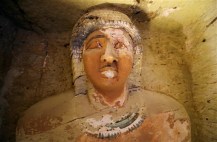
Head of Pharaoh Sobekneferu. British Museum

It was found at El-Lahun (FaiyumEgypt) by Flinders Petrie in 1889 and first translated by F. Ll. Griffith in 1893 and published in The Petrie Papyri: Hieratic Papyri from Kahun and Gurob. The later Berlin Papyrus and the Ramesseum Papyrus IV cover much of the same ground, often giving identical prescriptions.  ‘Kahun’ is the name Petrie gave to the Lehun town site, which in 1825 BC had been a thriving, prosperous town; the name was probably a misspelling from this European in contact with a foreign language (see Abidjan). The papyrus had been so heavily used that its ancient owner had to repair it, with a patch bearing an administrative fragment visible at one point on the back. This gynecological papyrus originates from the Middle Kingdom (Twelfth Dynasty of Egypt) to the reign of the childless female-king Sobekneferu, whose interest in gynecology might have been sparked by her elder sister dying at an early age.

The text is divided into thirty-four sections, each section dealing with a specific problem and containing diagnosis and treatment; no prognosis is suggested. Treatments are non-surgical, comprising of the application of medicines to the affected body part or swallowing them. The womb is at times seen as the source of complaints manifesting themselves in other body parts.

Kahun gynaecological papyrus_2
Kahun Gynecological Papyrus, part of page 2 and Page 3

The first seventeen parts have a common format starting with a title and are followed by a brief description of the symptoms, usually, though not always, having to do with the reproductive organs. The second section begins on the third page, and comprises eight paragraphs which, because of both the state of the extant copy and the language, are almost unintelligible. Despite this, there are several paragraphs that have a sufficiently clear level of language as well as being intact which can be understood.

Paragraph 19 is concerned with the recognition of who will give birth; paragraph 20 is concerned with the fumigation procedure which causes conception to occur; and paragraphs 20-22 are concerned with contraception. Among those materials prescribed for contraception are crocodile dung, 45 ml of honey, and sour milk.

The third section (paragraphs 26-32) is concerned with the testing for pregnancy. Other methods include the placing of an onion bulb deep in the patients flesh, with the positive outcome being determined by the odor appearing to the patients nose.

isis-horus1
Isis and Horus: Mother and child

The fourth and final section contains two paragraphs which do not fall into any of the previous categories. The first prescribes treatment for toothaches during pregnancy. The second describes what appears to be a fistula between bladder and vagina with incontinence of urine “in an irksome place.”

To learn more about it, check out “The Kahun Gynaecological Papyrus: Ancient Egyptican Medicine” by L. Smith, J Fam Plann Reprod Health Care 37 (2011) 54. University College London also has an extensive page on the manuscript with its translation, as the manuscript for the health of mother and child.