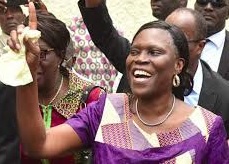
Yesterday, on 08/08/2018, the former first lady of Côte d’Ivoire, Simone Ehivet Gbagbo, was freed from imprisonment. It has taken 7 years for Simone Gbagbo to be free! 7 years of humiliation, 7 years of pain, 7 years of Lord knows what, for Simone Gbagbo to finally be free! And why was she imprisoned? For her deep love for her country, a country she believed needed to be respected, and whose people needed their dignity restored. She did not fit in the world’s agenda to let her country be pillaged, and so she paid the price when Ouattara, the infamous, made its way to the presidency of Côte d’Ivoire via the war planes and military forces of France and the UN led by the infamous Sarkozy and Ban-Ki Moon. Well, 7 years later, Ouattara the infamous, has granted amnesty to 800 people in the country, 800 political prisoners, 800 who were a ‘threat’ to his system. The amnesty comes as a way to reconcile the country, but it probably comes because of the political climate which makes it so that Ouattara needs some sort of an opposition to break the rank of his current opponent Konan Bedié: this is the politic of ‘divide and conquer’. Whatever the political scheme, we are grateful for it. We salute this step toward reconciliation, and we do hope that more will follow, and that Laurent Gbagbo and Charles Blé Goudé will be free at last. We thank all the people around the globe for their tireless prayers, and wish the land of Côte d’Ivoire peace in dignity and harmony forever. A luta continua e la vitoria e certa.
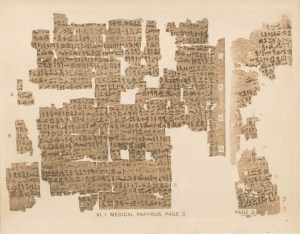
Kahun Gynecological Papyrus: Page 1 and part of Page 2
Today, we will be talking about the Kahun Papyrus, which is among the oldest and most important medical papyri of Ancient Egypt and of the world. This is a papyrus dealing with women’s health – gynecological diseases, fertility, pregnancy, and contraception; it dates back to the Twelfth Dynasty of Egypt, c. 1800 BCE. It is a three page document, 1 m long and about 33 cm wide. The name Amenemhet III was written in the right upper corner behind third page name. The document was torn in places and patched with gum and papyrus.
Head of Pharaoh Sobekneferu. British Museum
It was found at El-Lahun (Faiyum, Egypt) by Flinders Petrie in 1889 and first translated by F. Ll. Griffith in 1893 and published in The Petrie Papyri: Hieratic Papyri from Kahun and Gurob. The later Berlin Papyrus and the Ramesseum Papyrus IV cover much of the same ground, often giving identical prescriptions. ‘Kahun’ is the name Petrie gave to the Lehun town site, which in 1825 BC had been a thriving, prosperous town; the name was probably a misspelling from this European in contact with a foreign language (see Abidjan). The papyrus had been so heavily used that its ancient owner had to repair it, with a patch bearing an administrative fragment visible at one point on the back. This gynecological papyrus originates from the Middle Kingdom (Twelfth Dynasty of Egypt) to the reign of the childless female-king Sobekneferu, whose interest in gynecology might have been sparked by her elder sister dying at an early age.
The text is divided into thirty-four sections, each section dealing with a specific problem and containing diagnosis and treatment; no prognosis is suggested. Treatments are non-surgical, comprising of the application of medicines to the affected body part or swallowing them. The womb is at times seen as the source of complaints manifesting themselves in other body parts.
Kahun Gynecological Papyrus, part of page 2 and Page 3
The first seventeen parts have a common format starting with a title and are followed by a brief description of the symptoms, usually, though not always, having to do with the reproductive organs. The second section begins on the third page, and comprises eight paragraphs which, because of both the state of the extant copy and the language, are almost unintelligible. Despite this, there are several paragraphs that have a sufficiently clear level of language as well as being intact which can be understood.
Paragraph 19 is concerned with the recognition of who will give birth; paragraph 20 is concerned with the fumigation procedure which causes conception to occur; and paragraphs 20-22 are concerned with contraception. Among those materials prescribed for contraception are crocodile dung, 45 ml of honey, and sour milk.
The third section (paragraphs 26-32) is concerned with the testing for pregnancy. Other methods include the placing of an onion bulb deep in the patients flesh, with the positive outcome being determined by the odor appearing to the patients nose.
Isis and Horus: Mother and child
The fourth and final section contains two paragraphs which do not fall into any of the previous categories. The first prescribes treatment for toothaches during pregnancy. The second describes what appears to be a fistula between bladder and vagina with incontinence of urine “in an irksome place.”
To learn more about it, check out “The Kahun Gynaecological Papyrus: Ancient Egyptican Medicine” by L. Smith, J Fam Plann Reprod Health Care 37 (2011) 54. University College London also has an extensive page on the manuscript with its translation, as the manuscript for the health of mother and child.
Here is a poem by Patrice Lumumba (1925–1961), published on Pambazuka News. Patrice Lumumba was elected the first prime minister of the Democratic Republic of the Congo (DRC). Assassinated by Belgian colonialists and the CIA, Lumumba was a founder member of the Movement National Congolais (MNC), which led the Congo to independence. Patrice Lumumba is the symbol of aspirations of an entire continent, and he continues to serve as an inspiration to contemporary Congolese and African politicians. His spirit lives on, and his pride is ours!
=======
Dawn in the Heart of Africa
For a thousand years, you, African, suffered like beast, Your ashes strewn to the wind that roams the desert. Your tyrants built the lustrous, magic temples To preserve your soul, reserve your suffering. Barbaric right of fist and the white right to a whip, You had the right to die, you also could weep. On your totem they carved endless hunger, endless bonds, And even in the cover of the woods a ghastly cruel death Was watching, snaky, crawling to you Like branches from the holes and heads of trees Embraced your body and your ailing soul. Then they put a treacherous big viper on your chest: On your neck they laid the yoke of fire-water, They took your sweet wife for glitter of cheap pearls, Your incredible riches that nobody could measure. From your hut, the tom-toms sounded into dark of night Carrying cruel laments up mighty black rivers About abused girls, streams of tears and blood, About ships that sailed to countries where the little man Wallows in an ant hill and the dollar is king, To that damned land which they called a motherland. There your child, your wife were ground, day and night In a frightful, merciless mill, crushing them in dreadful pain. You are a man like others. They preach you to believe That good white God will reconcile all men at last. By fire you grieved and sang the moaning songs Of a homeless beggar that sinks at strangers’ doors. And when a craze possessed you And your blood boiled through he night You danced, you moaned, obsessed by father’s passion. Like furry of a storm to lyrics of a manly tune From a thousand years of misery a strength burst out of you In metallic voice of jazz, in uncovered outcry That thunders through the continent like gigantic surf. The whole world surprised , wakes up in panic To the violent rhythm of blood, to the violent rhythm of jazz, The white man turning pallid over this new song That carries torch of purple through the dark of night.
The dawn is here, my brother! Dawn! Look in our faces, A new morning breaks in our old Africa. Ours alone will now be the land, the water, mighty rivers Poor African surrendered for a thousand years. Hard torches of the sun will shine for us again They’ll dry the tears in eyes and spittle on your face. The moment when you break the chains, the heavy fetters, The evil cruel times will go never to come again. A free and gallant Congo will rise from black soil, A free and gallant Congo-black blossom from black seed!
In order to remember the 16 June 1976 Soweto uprising, I decided to share with you these images and song from the movie Sarafina! which focused on the 1976 Soweto riots. It is simply beautiful! The character says: “They fear you because you are young, they fear you because you are the future; How fearful they must be that they shoot you children? How powerful you must be that they fear you so much. You are powerful because you are the generation that will be free. The violence, the beatings, the torture, the killings, all this is the bad pain of our free nation. … Freedom is coming tomorrow!” In essence, this is a message for all the youth around the world: You are the future, you are strong, take hold of it, and do the best!
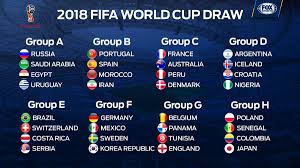
Today, the whole world will be transported to the land of the Matryoshka dolls, and the entire globe will vibrate at the start of the biggest planetary sport event … Yes today, the 2018 FIFA World Cup will start in Russia, and 32 of the best soccer nations will compete at this great event. This will be one month of soccer, pure joy, fun, and above all talent. Zabivaka, the mascot’s name means “the one who scores” in Russian, and we are looking forward to great goals and top scorers. This month, legends will be made, new talents discovered, and dreams will take off.
Five African teams will grace the tournament: Egypt, Nigeria, Morocco, Senegal, and Tunisia. We do hope that at least one African team will advance into the round of 16, and beyond. Here are some of the African stars to watch out for.
The Pharaohs of Egypt are among Africa’s best teams, being 7th time African Cup of Nations champions. This year, the big star is Mohamed Salah who, with his Premier League Golden Boot award and more prowess, has become a legend in his home country. Egypt is in a relatively easy group with the home team Russia, Saudi Arabia and Uruguay. Their goalkeeper, Essam El-Hadary, at 45 is also the oldest player at the World cup this year, and has been a favorite to watch during all the African Cup of Nations, in par due to his charisma, discipline, and sheer determination.
Morocco’s Lions of the Atlas are in group B with Spain, Portugal, and Iran. The group looks tough with Spain and Portugal, but we do wish them the very best. This is their first participation in 20 years, Medhi Benatia and his teammates do hope to have a great world cup.
Throughout the years, I have placed high hopes on African teams and have been often disappointed. I might once again be disappointed. However, this is a planetary tournament, and the fun of it makes one root for any good team. To make for a fun event with great home support, we hope that the host team, Russia, makes it to the second round. For the world cup winner, Germany, the previous winner has as strong squad, as well as a pool of great talents, and they will be eyeing their 5th world cup. We hope the Mannschaft is very well-oiled, because there are 31 good teams to contend with! Overall, let the world cup start, with all the fun, and may the best team win!!!
For this year’s Mother’s Day celebration, I introduce you to another African classic: Elvis Kemayo – Mama. Elvis Kemayo hails from Cameroon, and is particularly well-known for this song, and ‘Cameroun, berceau de mon enfance (Cameroon, craddle of my childhood)’ Enjoy ‘MAMA’, and do remember to cherish your mother!
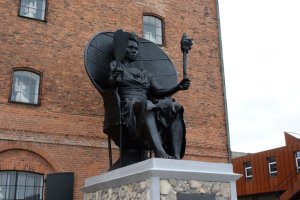
Sculpture of Queen Mary in Copenhagen (Source: NY Times – Nick Furbo)
If you are like me, you probably did not know that Denmark (and Norway) was involved in slavery in Africa, and that Denmark had several colonies, and forts in Africa, and exported slaves to its colonies in the Americas. Just last week, Denmark erected its first public statue of a Black woman, a rebel Queen, in Copenhagen; this was the statue of Queen Mary, a Black slave who led the slave uprising in the Virgin islands. The sculpture was inspired by Mary Thomas, known as one of “the three queens.” Thomas , along with two other female leaders Agnes and Matilda, unleashed an uprising in 1878 called the “Fireburn.” Fifty plantations and most of the town of Frederiksted in St. Croix were burned, in what has been called the largest labor revolt in Danish colonial history.
Fort Christiansborg (now Osu Castle in Ghana)
Denmark was one of the Signatory Powers to the Berlin Act of26th February, 1885 (No. 17), as well as to the Brussels Act of 2nd July, 1890 (No. 18); she has also entered into Treaty Arrangements with the Congo Free State (No. 45).
By a Convention dated 17th August, 1850, ‘the Danish forts and Possessions on the Gold Coast were ceded to Her Britannic Majesty for the sum of £10,000.
The following are extracts from that Convention:—
Preamble.
“ HIS Majesty the King of Denmark having offered to cede to Her Majesty the Queen of the United Kingdom of Great Britain and Ireland all the forts and Possessions belonging to the Crown of Denmark, situated on that part of the coast of Africa which is called the Gold Coast, or the Coast of Guinea, and Her Britannic Majesty having resolved to accept that offer, their said Majesties have named as their Plenipotentiaries to conclude a Convention for carrying such cession into effect, that is to say :”
[Here follow the names of the Plenipotentiaries.]
Cession of Danish Forts and Territorial Rights on the Gold Coast, or Coast of Guinea.
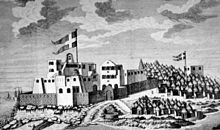
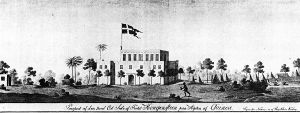
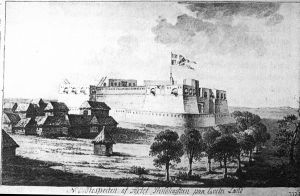
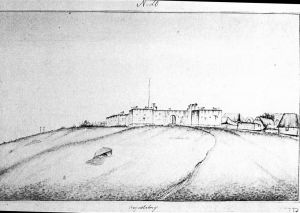
Fort Kongensteeen
“ART. I. In consideration of the sum of£10,000sterling, to be paid by Her Majesty the Queen of the United Kingdom of Great Britain and Ireland to His Majesty the King of Denmark, on the exchange of the Ratifications of the present Convention,+‘
Fort Prindsensteen
His Danish Majesty cedes to Her Britannic Majesty, to be possessed by Her Britannic Majesty, her heirs and successors, in full property and Sovereignty, all the forts belonging to the Crown of Denmark, which are situated on that part of the Coast of Africa called the Gold Coast or the Coast of Guinea, and which comprise Fort Christiansborg,1Fort Augustaborg,2Fort Fredensborg,3 Fort Kongensteen,4 and Fort Prindsensteen,5 with their appurtenances and all the guns and stores contained therein, together with all other Possessions, property, and territorial rights whatever belonging to His Danish Majesty on the said coast.” The exact extent of the Possessions thus ceded was not at that time clearly defined; but, on the9th May, l887, the Kings and Chiefs of the country of Aquamoo signed a Declaration acknowledging that they and their country formed part of the Protectorate of Her Majesty the Queen of Great Britain and Ireland on the Gold Coast, and that they were subject to the jurisdiction and authority of Her Majesty, and declaring that they had that belief inasmuch as their country of old enjoyed similar protection from His Majesty the King of Denmark, who, they said, they understood had ceded his right and title to their country to the British Crown in1850.
Fort Augustaborg
On the1st July, 1890, an Agreement was entered into between Great Britain and Germany, for defining their respective spheres of influence on the Gold Coast and in other parts of Africa (No. 129); and on the14th April, l893, a further agreement was entered into between the two countries for defining the limits of their respective spheres from the Gulf of Guinea into the Interior (No. 131).
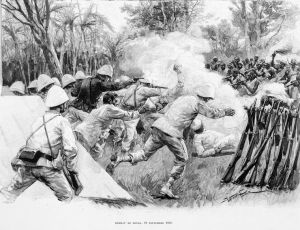
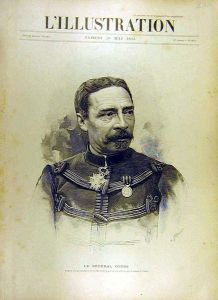
Below is the notification by Alfred-Amédée Dodds from the French Republic stating that the Kingdom of Dahomey is now under the Protectorate of the French Republic, with the exception of Whydah and certain other territories, which were declared by a French Notification issued on the 3rd December, 1892, to be annexed to France.
The following is a Translation of that Notification :—
(Translation)
le general Alfred-Amedee Dodds
“In the name of the French Republic:
“We, Brigadier-General, Commander-in-Chief of the French Settlements of Benin, Knight Commander of the Legion of Honour.
“In virtue of the powers conferred upon us,
“We declare :
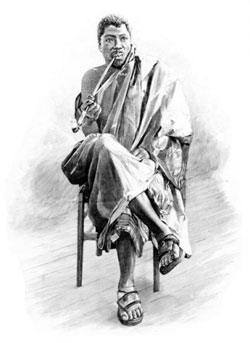
“That KingBéhanzinAhy-Djerehas been deposed from the throne ofDahomey, and has been banished for ever from this country.
Behanzin, the Last King of independent Dahomey
“That the Kingdom ofDahomeyis, and remains, placed under the exclusive Protectorate of France, with the exception of the Territories of Whydah, Savi, Avlékété, Godomey, and Abomey-Kalavy, which constituted the ancient Kingdoms of Ajuda and Jacquin, which are annexed to the Possessions of the French Republic. The limits of the annexed Territories are: to the west, the River Aheme; to the north and to the east, the River Savi and the north-east frontiers of the Territory of Abomey-Kalavy; to the south, the AtlanticOcean.”
The world celebrates men. Men can be ambitious, they can work to liberate their countries, they can be revolutionaries, and lead people. No one is against that. The world applauds these men. But when women fight for the liberation of their countries, they are vilified; they are called all sorts of names. It’s as if the world suffers from selective amnesia. We have a woman who is at the same level as all the world revolutionaries, Winnie Madikizela-Mandela.
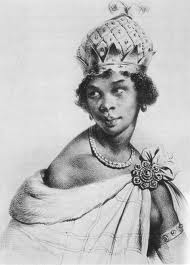
Just taking a look back at history, men, white supremacy, and patriarchy do not like strong women, and particularly strong black women. For instance, in the 1660s, white men described (and it can still be read in history books) the great Angolan warrior Queen Nzingha who fought for her people’s freedom and fought the Portuguese against slavery, as an angry, power-hungry, and over-sexed woman who would sleep with one new soldier every night, and have him killed the next morning. Such absurdity! Wouldn’t that diminish her troops, troops strongly needed to fight against the Portuguese?
Queen Nzingha of Angola
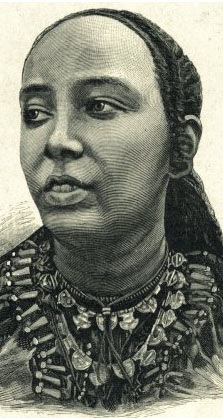
Next, we have the great queen Taytu Betul, the queen without whom there would have been no Battle of Adwa, where Ethiopia defeated Italy, the first victory of an African nation on a European one. There again, European historians describe Queen Taytu Betul as a man-eater, a woman with a black heart, manipulative, hateful, and conniving.
Empress Taytu Betul of Ethiopia
In both cases, the truth is that they are afraid of the power of the Black woman; these historians vilify Black women. The patriarchal and white supremacy system hatesWinnie Madikizela-Mandela because she fought like no other, like no man would have. She was strong, and brave, and a woman of principle. To them, she was a woman, she should have stayed home, and not joined and fought tirelessly for freedom.Even though she was cleared of the murder of Stompi, she is hated while Nelson Mandela is sanctified, but everybody forgets that Nelson Mandela was once the leader of Umkhonto we Sizwe the armed branch of the ANC. We do not hate that fact, because we know that, that was what was needed at the time for the apartheid regime to fall. So why do people applaud Nelson Mandela, and honor him, while they hate Winnie Madikizela-Mandela who kept his name alive while he was in jail 27 years, and fought like not many human beings (not even him) would have fought? The world applauds him, because he is a man. The world should also celebrate her, Winnie Madikizela-Mandela.
Stop the sexist history, the patriarchist history, the racist history. Winnie Madikizela-Mandelais a world revolutionary, and should be applauded for her stance all those years, for her hard work, her determination, her principle, and her love of her people. She should be celebrated. Please do watch what EFF leader Julius Malema has to say about it.
Here is Winnie Madikizela-Mandela’s last interview. She goes over parts of her life, the apartheid era, the transition, and the difference between political vs economical power. She also talks about the current leadership, and the need for a re-evaluation of the ANC, and the need for a new vision. A note: the leadership of Ghana had a delegation there with EFF leader Julius Malema to send their last goodbyes to Mama Winnie. Also the light has been shed on the truth about the fact that Winnie never killed Stompi! Enjoy!





 Throughout the years, I have placed high hopes on African teams and have been often disappointed. I might once again be disappointed. However, this is a planetary tournament, and the fun of it makes one root for any good team. To make for a fun event with great home support, we hope that the host team,





 African Heritage