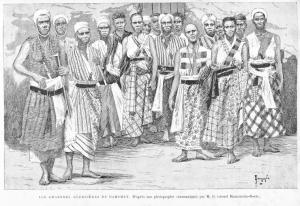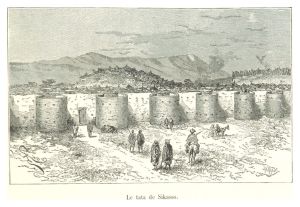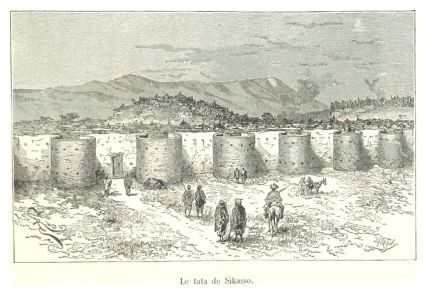
The tata of Sikasso, illustration by Édouard Riou published in Du Niger au golfe de Guinée, Hachette, 1892, by L.G Binger, p. 95
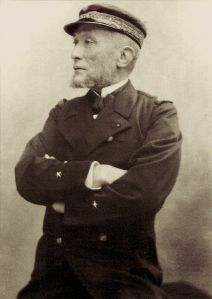
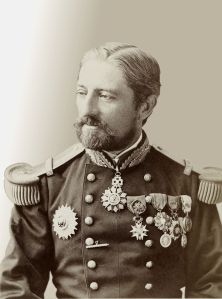
In 1898, the French colonial forces attacked the Tata of Sikasso which had resisted the tireless assaults of Samori Touré and his army for 15 months a decade earlier. Despite strong resistance from Babemba Traoré and his people, they could barely resist the French canons and barbary, and succumbed on May 1, 1898. As always, the French used treachery: the French colonel Marie Michel Alexandre René Audéoud wanted to install a garrison at Sikasso; but Babemba Traoré flatly refused. This resulted in a war between the French colonial forces and the people of Sikasso, which lasted 2 days. In the end, Babemba Traoré, the king, ended his life, abiding by the famous Bamanankan saying “Saya ka fisa ni maloya ye” (literally: death is preferable to shame). The city was then ransacked and plundered.
Below is an account of the barbary of the French colonel Audéoud and his men after their victory in Sikasso. The original in French can be found here on Jacques Morel’s page; the translation to English is brought to you by Dr. Y., Afrolegends.com .
====
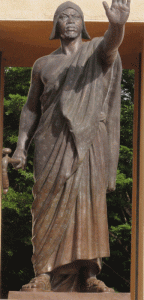
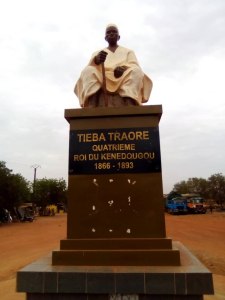
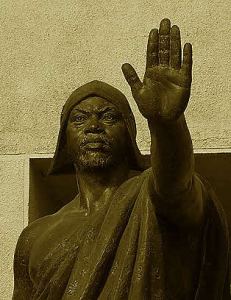
Monument of Tieba Traoréin Sikasso (Source: Wikipedia)
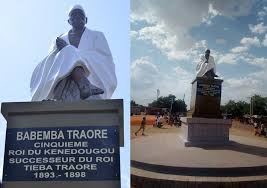
In April 1898, the colonel Audéoudwho is looking for a boost for his promotion, sends captain Morisson demand from Babemba, Tieba’s successor, the “Fama” of Sikasso (in modern-day Mali), and ally – imprudent – of the French in their war against Samori, the establishment of a French garrison in his capital. Babemba refuses. It is war, and the siege of Sikasso where violent counter-attacks of the besieged repeatedly endanger the French troops. But with only three remaining enclosures still standing after resisting for fifteen months to Samori, “the fortress does not last two days when faced with modern artillery,” says Gilbert Comte.
Sikasso resists street by street. A French officer, taking part in the capture of Sikasso, describes the city as such:
“After the siege, the assault. Babemba kills himself. We give the order to plunder. Everything is taken or killed. All the captives, roughly 4000, are herded together.
The colonel [Audéoud] starts the distribution. He himself used to write in a notebook, then gave it up saying, “Share this among yourselves!”. The sharing took place with arguments and blows. Then back on our way! Each European is given a wife of his choice… On our way back we did intervals of forty kilometers with these captives. Children and all those who are tired are killed with the butt of the gun and the bayonet…
Monument of Babemba Traoré in Sikasso (Source: Face2FaceAfrica.com)
The corpses were left by the roadsides. A woman is found crouching. She is pregnant. We push her with the butt of the gun. She gives birth standing while walking. Has cut the umbilical cord and abandoned the child without looking back to see whether it’s a boy or a girl.
During those intervals, the men requisitioned on the way to carry millet stay five days without rations; receive fifty strokes of rope if they take a handful of the millet they are carrying.
The sharpshooters got so many captives that it was impossible to house and feed them.”
Sources: P. Vigné d’Octon, La Gloire du sabre, Paris, Flammarion, 1900; cité par Jean Suret-Canale, Afrique Noire, Occidentale et Centrale, Éditions sociales, 1968, page 274-275; Gilbert Comte, L’empire triomphant, Denoël, 1988, page 85-86.
The tata of Sikasso, illustration by Édouard Riou published in Du Niger au golfe de Guinée, Hachette, 1892, by L.G Binger, p. 95
Have you ever heard about the Tata of Sikasso or Sikasso Tata, a fortifying wall built in Mali which sustained attacks by some of the greatest conquerors of its time, including none other than the great Samori Touré ? and which was destroyed by the French colonial army ? This structure was probably stronger than some forts found in Europe. This defensive wall is quite reminiscent of the Great Wall of China.
Monument of Tieba Traore in Sikasso (Source: Wikipedia)
The Tata of Sikasso, locally known as Tarakoko, is a fortress built during the reign of King Tieba Traoré between 1877 and 1897, in modern Mali. Tieba Traoré, whose mother came from Sikasso, became King of the Kénédougou Empire and moved its capital to the city of Sikasso. He established his palace on the sacred Mamelon hill and constructed a tataor fortifying wall to defend against the attacks of both the Malinke conqueror Samori Touré and the Frenchcolonial army. The city withstood a long siege from 1887 to 1888 but fell to the French in 1898. This fortified wall was reinforced by Babemba Traoré, Tieba Traoré’s brother, who had succeeded him as king.
The Tata of Sikasso was built for the protection of the city, in a military style. It used to extend through an area of 41 hectares, with its walls reinforced with the addition of earthen walls, bars, and alternate stone beds; the intervals of which were filled with ferrous gravel, earth, and stones. At the time of Samori Touré’s unsuccessful siege, which lasted 15 months from March 1887 to June 1888, the tatahad three concentric enclosures.
The exterior of the tatawas 9 km long, 6 m (∼20 ft) wide at the base and 2 m (∼7 ft) high at the summit. Its height varies between 4 to 6 m.
Samori Touré
The intermediary tatawalls were not as big, and also not as wide. Those were meant for merchants, soldiers and nobles.
The inner enclosure encircled the Dionfoutou, which was the part of the city inhabited by the king and his family.
The fortress is still visible today in the actual landscape of the city of Sikasso in neighborhoods such as Mancourani, Medina, Wayerma, Bougoula city and Fulasso. Seven monuments, in the shape of doors, have been built with modern materials on the site of the passages of yesteryear to preserve their memory.
The Tata of Sikasso has been inscribed in the UNESCO World Heritage Tentative list: « Le Tata de Sikasso ».
Given that we talked about Ladysmith Black Mambazo and Joseph Shabalala, I thought it befitting to celebrate this year’s valentine’s day, by introducing you to “Hello My Baby” by Ladysmith Black Mambazo. I particularly love the beginning of the song, the harmony, and the message. When the singer says ‘come along, come along, come along, to kiss me,‘ one can clearly hear the sound of the kisses… amazing! Impressive when you think that this is all done a cappella! So for this Valentine’s day, ring up your baby… and send them those kisses you can hear so loudly in the song … and if there are no Valentine one… send kisses out to the world, plenty of them!
Even though I love the original version better, which I have included here, I have also added the recent re-make Ladysmith Black Mambazo did with the late giant Oliver Mtukudzi which is also outstanding.
Pollution, overpopulation of some areas, as well as over-fishing have wreaked all sorts of havoc for the ecosystem of our planet. One such ecosystem being destroyed is the coral reef along the coasts of Africa. Below are excerpts from an article from the Guardian about Kenyan efforts to reclaim their coral reefs, and bring back the lobsters and octopuses. As the marine life is re-established, let’s hope the industrial fishermen stay away!
====
African Lobsters (From South Africa – Source: WildOceans.com.au)
Three years ago, coral reef along the Kenyan coastline was almost totally destroyed in some areas. Rising surface sea temperatures had triggered devastating bleaching episodes for the fourth time in less than two decades, and with the whitening of coral came a dwindling of marine life. Overfishing only exacerbated the problem.
For coastal communities dependent on the sea for their livelihoods, the degradation of the coral reef and its effect on the marine ecosystem threatened to overturn an entire way of life. In some areas surveyed by theKenyaMarine and Fisheries Research Institute (KMFRI), as much as 60-90% of coral was destroyed.
A fightback was needed and so the institute began working with local communities to rehabilitate degraded coral reefs along the country’s coastline. Among the areas targeted was Wasini Island, a tiny strip of land off Kenya’s south-east coast. The results have been startling.
Women on the island have led an initiative to restore degraded coral that has shown how coral restoration techniques can revive marine ecosystems and create sustainable livelihoods for communities that depend on fishing and eco-tourism.
Octopus (Source: Wikipedia)
“The fish have started coming back since the restoration activities began,” says Nasura Ali, of the Wasini Beach Management Unit, which has about 250 members, of whom roughly 150 are women. More than 40 people have been trained in restoration techniques.
A year-long study by the KMFRI had tested the viability of raising coral fragments from areas affected by bleaching events, explains Jelvas Mwaura at the KMFRI’s department of marine environment and ecology. Many of the corals transplanted from coral gardens to degraded reef areas for the study survived, providing new habitats for fish species including jacks, groupers, emperors and sweetlips.
This success led to funding from the Kenya Coastal Development project (KCDP). Locals on Wasini Island have since grown more than 3,000 corals.
Coral reefs provide shelter and breeding grounds for hundreds of species of marine life. Fish populations in waters around the island have increased three times as much as in other areas, says the KMFRI.
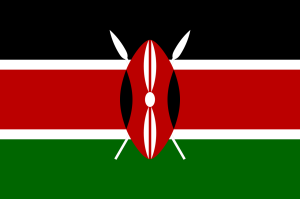
Kenyan flag
… The women of Wasini Island have also been restoring fish populations by cultivating seagrass. Overfishing of certain species, such as trigger fish, had led to the disappearance of seagrass because trigger fish fed on the sea urchins that devoured it. Using gunny bags made of sisal to protect the seedlings and prevent them from getting washed away, the women replanted seagrass seedlings on the ocean floor.
In addition to providing food, seagrass plays a key role in the overall coral reef ecosystem, providing shelter to juvenile fish after they hatch by shielding them from strong waves until they mature and move into the coral reefs.
Oh yes… the Oxford English Dictionary has just selected 29 new Nigerian words to be part of its new edition. Allright people, make place for Chop (eat) Okada (Bend-Skin), Mama Put (eatery), Rub Minds(consult and work together), and Next tomorrow (the day after tomorrow), into the Queen’s English Dictionary…. Isn’t it marvelous how each culture adds to another? Even the conqueror at some points gets conquered (just jesting) by finding himself speaking words from the conquered. We, Africans, or those who have been colonized around the world, who have had to learn the language of the oppressor, should consider that language as part of our war trophies, because our ancestors had it pushed down their throats, and today we can speak the oppressor’s language and even understand them better than they do us, or ever wanted to, given their ‘superiority’ complex! Enjoy from the OED website.
====
My English-speaking is rooted in a Nigerian experience and not in a British or American or Australian one. I have taken ownership of English.
‘Bend Skin’ in Cameroon = ‘Okada’ in Nigeria
This is how acclaimed Nigerian writer Chimamanda Ngozi Adichie describes her relationship with English, the language which she uses in her writing, and which millions of her fellow Nigerians use in their daily communication. By taking ownership of English and using it as their own medium of expression, Nigerians have made, and are continuing to make, a unique and distinctive contribution to English as a global language. We highlight their contributions in this month’s update of the Oxford English Dictionary, as a number of Nigerian English words make it into the dictionary for the first time.
… One particularly interesting set of such loanwords and coinages has to do with Nigerian street food. The word buka, borrowed from Hausa and Yoruba and first attested in 1972, refers to a roadside restaurant or street stall that sells local fare at low prices. Another term for such eating places first evidenced in 1980 is bukateria, which adds to buka the –teria ending from the word cafeteria. An even more creative synonym is mama put, from 1979, which comes from the way that customers usually order food in a buka: they say ‘Mama, put…’ to the woman running the stall, and indicate the dish they want.
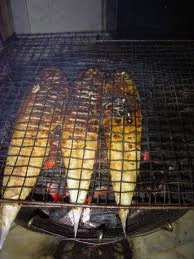
Grilled fish on a charcoal stove / du poisson braise sur un rechaud a charbon
… Okada, on the other hand, is first attested twenty years later, and is the term for a motorcycle that passengers can use as a taxi service. It is a reference to Okada Air, an airline that operated in Nigeria from 1983 to 1997, and its reputation as a fast yet potentially dangerous form of transport, just like the motorcycle taxi.
… The oldest of our new additions that are originally from Nigeria is next tomorrow, which is the Nigerian way of saying ‘the day after tomorrow’. It was first used in written English as a noun in 1953, and as an adverb in 1964. The youngest of the words in this batch is Kannywood, first used in 2002, which is the name for the Hausa-language film industry based in the city of Kano. It is a play on Hollywood, following the model of Nollywood, the more general term for the Nigerian film industry that was added to the OED in 2018.
Nigerian Pidgin is another rich source of new words for Nigerian English. Sef, first evidenced in Nigerian author Ben Okri’s novel Flowers and Shadows, published in 1980, is an adverb borrowed from Pidgin, which itself could have been an adverbial use of either the English adjective safe or the pronoun self.
… A few other expressions in this update would require some explanation for non-Nigerians: a barbing salon (earliest quotation dated 1979) is a barber’s shop; a gist (1990) is a rumour, and to gist (1992) is to gossip; when a woman is said to have put to bed (1973), it means that she has given birth; something described as qualitative (1976) is excellent or of high quality.
Yes… I am the generation of the Black Mamba. It is with sadness that I learnt of his passing yesterday. I became an amateur basketball lover and player thanks to the ‘Black Mamba’. As an African, I always liked his nickname ‘The Black Mamba‘ because his speed on the court was so similar to that of the animal itself which I was familiar with, and he was especially lethal to his adversaries who never saw him coming. His aura and awesomeness seemed to pervade his life, especially with that big grin of his… always ready to smile and seemingly make others comfortable. Moreover, I was sold when I learnt that he was an American who was tri-lingual, and loved soccer, and just like me was a huge fan of Barcelona and A.C. Milan. Could I ask for more? I was hooked on Basketball then! To me Kobe Bryant was one of the greatest Basketball players the game ever saw!
Kobe Bryant handling a ball on court in 2014 (Source: Wikipedia)
Being on the world stage like Kobe, you become somewhat super-human and everyone gets an opinion of you; it is tough not to fall under the pressure. What I liked the most about Kobe Bryant, was his determination, and his drive for perfection. To me, that epitomizes what all of us should strive for: awesome work ethics, tenacity, perfection, and desire to be great. Once you have found a passion in life, you should strive to be a Black Mamba, be like Kobe Bryant: perfect your craft, and go all the way out. Arrivederci Kobe… You have inspired so many of us, given us great memories,… You have made us all ‘Black Mambas’!
I had to share with you the image of the magnificent bird whose presence graced my mother’s backyard recently. It is beautiful, colorful, and just amazing. Very often in urban settings we often forget to look at nature, and in many African metropolises, we pass birds everyday without a second thought. I was recently introduced to the kingfisher bird. Not being a ‘bird’ person, I had to search for this colorful bird’s name. Did you know that there are 87 species of kingfishers in the world, and about 17 are found in Africa? I believe my mother’s visitor to be a woodland kingfisher or Halcyon senegalensis. However, it would seem to also look like a mangrove kingfisher. I know that it is definitely not the blue-breasted kingfisher. A question for you all is: If you didn’t know where in Africa this bird was coming from, which species do you think it is?
Lastly, this is a call to preserve our biodiversity, and be mindful of our environment; this calls for the necessity to build parks in African cities, not just pour concrete and cement over everything… I know that land is supposedly scarce, but parks will beautify the cities!
Did you know about the 999-year land lease granted to Europeans in Kenya? Did you even know that there was such a thing as a 999-year lease (a.k.a. 1000-year lease)? It’s like “Hello? who will remember such a thing by the time a millenium has gone by? who will be there to fight for the land?” I knew about the 99-year lease of Macau and Hong Kong (by the British) which were returned to China (thanks to the hard work of the Chinese to recover what was rightfully theirs)… but the treachery of this 999-year lease is particularly outrageous! Well, the 999-year lease was granted in the Rift valley region of Kenya by the British colonial administration to their fellow brothers, ‘early’ British settlers in Kenya. This paved the way for the violent seizure of thousands of acres of land from the local communities whose anger and discontent led to the armed struggle (The British Government apologizes for Mau Mau atrocities) which later led to the independence of Kenya from Great Britain. There are probably other countries like that across the continent with such outrageous leases; I am sure that there are such things in Francophone Africa, but with the well-known perfidy of the French government (FCFA), such contracts are probably hidden from the masses (If you uncover any, please share with us).
Luckily, the Kenyan government has recently, in 2010, re-written its constitution to cut down these leases from 999 years to 99 years, retroactive from those dates in 2010. That retroactive date is a pity in my opinion… for it will mean that some lands would have been leased for almost 200 years by the time the date runs up! However, it is a step forward, reducing 1000-year lease down to 200-year! (Question for readers: couldn’t these have been annulled all-together?)
To learn more, I have compiled excerpts from different articles. As you read these, you will remember that Robert Mugabe did indeed say that most of the lands where the Safaris happen in Zimbabwe (probably the same in South Africa, and as you will read below in Kenya as well), do not belong to Africans. Enjoy!
One of the most contentious clauses in the new land policy is a proposal to scrap 999-year leases. The draft proposes to cap leasehold terms at 99 years.
This proposal has drawn protests from landowners, mostly of them of European origin, who hold titles to large farms under leases of 999 years granted in 1915 after sustained pressure from white settlers on the British colonial administration.
The seizure of thousands of acres of land from local communities created discontent among the African population. This anger would later boil over into the armed struggle for independence.
Early settlers, who were initially granted 99-year leases beginning 1902, applied pressure on the British government to extend the leasehold terms to 999 years.
The move succeeded, and the Britain allowed the passage of the Crown Lands Ordinance of 1915, which extended the leases. If the draft policy is adopted, all the existing 999-year leases will be shortened to 99-year holdings.
In Kenya, those with registered private land hold either freehold or leasehold interests. A freehold interest is for an unlimited period and is the kind held by Kenyans in most rural areas. They are easily managed and inherited.
A leasehold interest is held for a defined period after which the land reverts to the person who granted the lease. Most leasehold interests are found in urban areas. But many leases were granted by the colonial government to promote Kenya’s agriculture and for religious purposes in various counties. Many of these have since been passed on to local people and companies.
Leases in Kenya have been routinely issued for 33, 66, 99, 999 and 9,999 years. All leases of terms greater than 99 years held by non-citizens were, however, automatically converted to 99 years on the promulgation of the 2010 Constitution.
Draft land regulations from the Ministry of Lands state that the effective starting date for the new 99 year leases is 27 August 2010. Therefore freehold titles formerly held by foreigners and now converted to leasehold titles will not expire until 2109.
Most of the ranches in Northern Kenya are owned by Kenyan citizens, including those of European extraction, and they are therefore unaffected by the 2010 Land Registration Act. If they hold Freehold title deeds or 999 year leases, those were both preserved by the Constitution. Therefore no freehold title or lease will expire on most of the ranches in Laikipia or northern Kenya in the foreseeable future..
The conservancies in Laikipia formerly held 999 year leases but these are now being reduced to 99 year leases, if they are not Kenyan owned, and they will expire in 2109.
There is another small batch of 99-year leases issues by the colonial government in the 1950s called Temporary Occupation Licences (TOLS), a government system that applied in remote parts of Kenya. These 99 year leases will only expire after 2050. If Kenyans own those leases, they will be automatically renewed by government.
THE NEW LAND ACTS Pursuant to the Constitution of Kenya, three Acts of Parliament have been enacted and came into force on 2nd May, 2012: Land Act, 2012 Land Registration Act, 2012 National Land Commission Act, 2012 THE REPEALED ACTS The following Acts have been repealed: The Indian Transfer of Property Act, 1882 The Government Lands Act The Registration of Titles Act The Land Titles Act The Registered Land Act The Wayleaves Act; and The Land Acquisition Act
Flag of Kenya
OWNERSHIP OF LAND BY NON-KENYAN CITIZENS A significant change under the new laws is that: freehold land cannot be owned by a non-Kenyan citizen; and a leasehold interest of over 99 years cannot be held by a non-Kenyan citizen. Therefore any freehold land owned by a non-Kenyan citizen is deemed to have been converted into a 99 year leasehold interest commencing from 27/8/2010 and any leasehold interest with an unexpired term of over 99 years is deemed to be converted into a 99 year leasehold interest commencing from 27/8/2010. As yet there is no procedure in place for conversion of freehold title to leasehold so, for example, if prior to the coming into effect of the new Constitution a non-Kenyan citizen owned freehold land and you conduct a land registry search today the result will still show the non-Kenyan citizen as owning the land on freehold tenure. The Constitution states that a body corporate/company is deemed to be a Kenyan citizen only if it is 100% owned by Kenyan citizens. Therefore a company with even one shareholder who is a non-Kenyan citizen would only be entitled to own a leasehold interest of 99 years or less. It is unclear whether a freehold title or title with an unexpired term of over 99 years that is owned jointly by a Kenyan citizen and a non-Kenyan citizen would be converted to a lease of 99 years or whether the tenure would remain intact.
Dear readers, wishing you all an AMAZING HAPPY new year. May the year 2020 mark the beginning of a decade of joy, the fulfillment of old and new dreams that will last a lifetime, and the completion of past endeavors. We, at Afrolegends, would like to express our profound gratitude for your constant support, as your readership has carried us forward. Thank you to all those who visited the blog, reblogged articles, commented, and to all future visitors. 2019 was a full year: Afrolegends.com had lots of views, subscribers, and many articles reblogged on multiple sites. In August, we celebrated 2 Million Views and 10-years Anniversary on the African Heritage Blog !!! We most importantly celebrated your continued presence on our blog, and as always African achievements.
Happy 2020
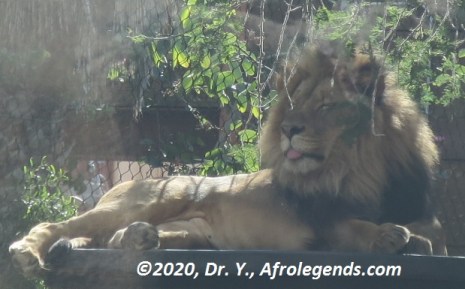
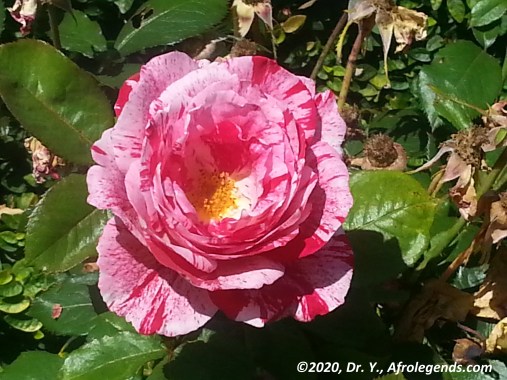
The top 6 posts of 2019 are listed below. For this new year, 2020, we will bring you even more amazing, fun, enlightening, and rich articles. We will also take you on a journey to new places. Keep trusting, reading, sharing, reblogging, and liking. We wish you a beautiful, full, and amazing new year, rich in blessings, and rich in greatness. May 2020 be the year of greatness!Keep your heads up, and may your year be as beautiful as the petals of this flower! As you can see, everything about this flower marks the beginning of something beautiful: a new start, a new life, and a new joy! As always, like Agostinho Neto said, “A luta continua … a vitória é certa!”
1. The liberation of President Laurent Gbagbo and Charles Blé Goudé (How long shall they kill our prophets…?) from the Hague after 8 years unjustly accused of crimes against humanity. All charges were dropped, Laurent Gbagbo, Former President of Cote d’Ivoire, was acquitted of War Crimes, yet Blé Goudé and him are still persecuted by the prosecutor, and Blé Goudé is still stuck in the Hague unjustly, while Gbagbo is in Belgium; both are unable to return home to Côte d’Ivoire. This is another case of Deportation of African Heads of States. Our prayers have been answered, and we will continue until they can both return home, and until Côte d’Ivoire is rid of all the nonsense brought by France there. As Agostinho Neto Neto said: “La luta continua e la victoria e certa!”
5. Cameroon’s opposition leader Maurice Kamto was freed after almost 10 months of unjust arrest. This has helped us all uncover yet another scandal: Cameroon and the Double Standard of the ‘International Community’. Kamto had been locked up with over 200 of his supporters at the capital’s maximum security prison for a peaceful march. He has now been freed, and all charges dropped, while the situation in Cameroon keeps disintegrating under the leadership of France’s puppet Paul Biya and his croonies.
6. Rwanda announced the opening of the first mobile phone manufacturing plant in Africa. The mobile phones will be entirely made in Rwanda… for Rwandans. Rwanda opens first entirely homemade smartphone factory. The Mara Group, a pan-African business headquartered in Dubai, says the factory will deliver “high quality smartphones at an affordable price.” Volkswagen will also open its first ever car assembly factory in Africa in Rwanda.
Eliud Kipchoge after crossing the sub-2hour marathon line (Source: Standard.co.uk)
7. Eliud Kipchoge of Kenya ran a sub-2 hour marathon to become the first person in recorded history to run a marathon in such times.
The Fennecs of Algeria celebrating their title at the CAN 2019 (Source: The Guardian)
8. The Fennecs of Algeria won the African Cup of Nations 2019 in Cairo, Egypt. The Fennecs of Algeria defeated the Lions of the Teranga of Senegal1-0 to become Africa’s new champions. This was their second title since 1990. They were clearly the tournament’s best team. The revelation of CAN 2019 tournament was the Barea of Madagascar which for their first participation ever to the African Cup of Nations, performed extremely well, and went as far as the quarter finals.
Alvin Zhakata in Khartoum, Sudan (Source: Alvin Zhakata)
9. This year also saw several fans attempt the journey from Cape to Cairo: Trekking 10,000 km for the African Cup of Nations. One of them finished: Alvin Zhakata, of Zimbabwe, trekked 10,000 km to cheer for the Zimbabwean warriors at the 2019 Africa Cup of Nations in Cairo. Even though he arrived late, after his team had been eliminated, he was offered a VIP ticket to the final. What Zhakata did was no easy feat: he traveled from Cape Town to Cairo by foot enduring visa delays, internet blackouts and revolutionary protests all for the love of football. This was also a bold political statement to all African leaders: we need roads to connect each other; we need better visa system for Africans, safer travel, and increased trade among each other: we need a united Africa. Zhakata’s statement is one of Unity, … African Unity