France Speeds up Access to Algeria War Secret Archives

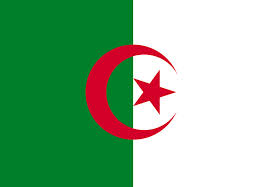
Flag of Algeria

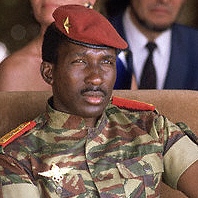
Well now France is speeding up the access to secret Algeria war archives… but there is a caveat… a lot will depend on whether the French government wants it or not. … I wonder if these declassified documents will encompass all Algerians killed during that time and not just high profile figures like independence fighter Ali Boumendjel; hopefully, by opening these, more light will be shed on the countless Algerians who perished at the hand of the French… I also wonder if France will do it for other African countries, because we would all like to know about the genocide in Cameroon [French President Acknowledges French Genocide in Cameroon], in Madagascar, the Napalm bombing in Cameroon, the death of Sylvanus Olympio in Togo, the assassination of Thomas Sankara in Burkina Faso (his widow is still asking for those), the death of Mehdi Ben Barka, Barthelemy Boganda, and countless others. Well, while we wait, please read excerpts below from an article on RFI‘s website. Lastly, is this a ploy to distract Algerians from protesting against their government and leftover croonies from the previous government which have been backed up by France for years?

====

France is to make it easier for researchers to access classified government files that date back more than 50 years, especially those relating to the Algerian War – still a highly controversial chapter in French history which authorities have struggled to face.

French flag

A statement from the Elysée Palace said, as from Wednesday, a new procedure would “significantly reduce the delay” [I thought it was plain OPEN… why reduce the delay?] for declassifying documents in order to “encourage respect for historical truth”. It specifically mentioned documents relating to the Algerian War of independence (1954-62) [what about prior events? We all know that some periods before then were just as gruesome].

The measure comes after a series of steps taken by Macron to reconcile France with its colonial past and address its history with Algeria, which was under French rule for 132 years until its independence in 1962.

Under French heritage laws, official documents, including on defence and security issues, should be made available to researchers and the public after 50 years.

But historians and archivists have complained about difficulties in getting access to files because the process is not automatic. Every single document must be formally declassified and stamped before it becomes accessible, a slow process that has effectively kept much information under wraps.

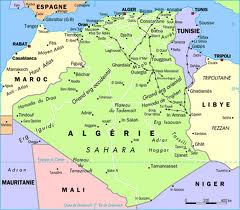
Carte de l’Algerie (Map of Algeria)

Under the changes, archivists will be able to declassify archive boxes all at once rather than document by document, which will, in theory, [there it is: it a theory… knowing the French government, this is just nice words] speed up the process.

… Even once the files are technically declassified, they can still be meticulously checked page by page for sensitive military secrets before being handed over … Despite the latest announcement, “if the authorities don’t want to declassify, they won’t”. …

France Admits Murder of Algerians … A Step Forward?

French flag

Last week, France admitted the abduction and murder of Algerians during the war of independence. The events that happened during those times have been described as a genocide committed by France in Algeria. Is Macron’s admission enough to patch the Franco-Algerian relationship? I don’t know why, but it sounds more like France wants to keep Algerian natural gas (largest natural gas producer in the world), and oil flowing while they have closed their economy due to pandemic, to keep getting those free billions from Africa. I know, I am a skeptic, but would you blame me when France conveniently waits for all survivors to die to admit the abduction and murder of Algerians? I acknowledge that it is a step, but does Macron expects us to clap? to hug him for it? I don’t know why these European presidents and kings think that admission of murder means apology [French President Acknowledges French Genocide in Cameroon, Belgian King Expresses ‘Deepest Regrets’ for Colonial Past in Congo, Namibia Rightfully Rejects 10 million Euros Compensation for Genocide]. Like I have said before, it’s like France just woke up and said, “Yes… I killed your fathers, mothers, brothers, sisters, children… I tortured them… I murdered your freedom fighters… Idisplaced your families… it is all true… so what? what would you do about it?” The arrogance! Where is the apology? Where is the compensation for years of trauma? Where is the reparation? Until there is a clear “I am sorry”, until there is a clear “here is what we will do to right the wrongs,” until there is a clear “correction and inclusion in the history textbooks, opening of all classified documents”…. until there is a clear “respect for those killed, and for those living today” until then, there will be no respect for arrogant presidents! Excerpts below are from the BBC. Please also check what was written about the event on RFI.

====

Flag of Algeria

France’s admission about the abduction and murder of Algerians during the war of independence is a big step but it is not enough, according to French historian Fabrice Riceputi.

It is a huge moment for the grandchildren of lawyer Ali Boumendjel, who were received by French President Emmanuel Macron to hear the truth about the assassination of their grandfather.

His widow Malika Boumendjel, who fought for decades for the truth about her husband’s disappearance rejecting the French official account of suicide, passed away last year aged 101 without hearing the acknowledgement she waited for all her life [isn’t it so convenient that France waits for survivors to die to “admit”?].

For Riceputi a rexamination of the French colonial rule in Algeria should not be restricted to “emblematic figures” such as Maurice Audin and Ali Boumendjel.

The French army in Algeria adopted since 1957 the technique of “forced disappearance” as a systematic method to crush the nationalists, according to Mr Riceputi.

It consisted of abducting, murdering and disposing of the body of any Algerian they suspect of having links with the FLN which led the war for independence.

There were tens of thousands in the capital city, Algiers and many more throughout the country, he says.

It was a “system designed to terrify the population” and silence dissidents and supporters of independence, the historian says.

It has also left dozens of thousands of families and generations of their descendants suffering decades of emotional and psychological trauma.

Mr Riceputi believes that the French authorities are avoiding the essence of the truth through these “selected” and “high-profile” admissions. …

The routine torture and murder of Algerian civilians by the French army during the seven-year war that some say claimed 1.5 million Algerian lives has been hushed up for decades.

Indeed, France has never even recognized the existence of a “war” in Algeria. Until 1999 they have always called it the “events” or “troubles” of Algiers. The atrocities committed by their army were described as “operations to maintain order”.

International Women’s Day: Equal Pay

I saw this video which I thought was so good, about equal pay. It captures the wages’ discrepancy so well… The children do it so well…! Enjoy!

When the Kongo King wrote to the King of Portugal against Slavery

Mbanza Kongo, capital of the Kingdom of Kongo, in 1745

King Mvemba a Nzinga, most commonly known as Afonso I of Kongo, or Nzinga Mbemba, was a Kongo king who ruled over the Kongo Empire from 1509 to late 1542 or 1543. He wrote a letter in 1526 to the Portuguese king decrying the capture of his subjects to be taken as slaves in the transatlantic slave trade. The Portuguese were also assisting brigands in Kongo and illegally purchasing free people as slaves. This letter contradicts the story that African kings sold their own into slavery, as has been re-told countless times in history books; moreover, this is also similar to Queen Nzingha‘s stance against slavery a century later; she fought almost 40 years against the Portuguese for the freedom of her people.  Afonso I of Kongo wrote:

=====

“Each day the traders are kidnapping our people – children of this country, sons of our nobles and vassals, even people of our own family. This corruption and depravity are so widespread that our land is entirely depopulated. We need in this kingdom only priests and schoolteachers, and no merchandise, unless it is wine and flour for Mass. It is our wish that this Kingdom not be a place for the trade or transport of slaves.”
Many of our subjects eagerly lust after Portuguese merchandise that your subjects have brought into our domains. To satisfy this inordinate appetite, they seize many of our black free subjects…. They sell them. After having taken these prisoners [to the coast] secretly or at night….. As soon as the captives are in the hands of white men they are branded with a red-hot iron.

Afonso was also concerned about the depopulation of his kingdom through the exportation of his own citizens into slavery. The king of Portugal responded to Afonso’s concerns, writing that because the Kongo purchased their slaves from outside of the kingdom and converted them to Christianity and then intermarried with them, the kingdom probably maintained a high population and probably was not affected by the missing subjects. To lessen Afonso’s concerns, the king [of Portugal] suggested sending two men to a designated point in the city to monitor who was being traded and who could object to any sale involving a subject of Afonso’s kingdom. The king of Portugal then wrote that if he were to cease the slave trade from the inside of the Kongo, he would still require provisions from Afonso, such as wheat and wine.

Celebrating Kenyan Rhinos’ Safety

Rhinoceroses

This year, Kenya is celebrating the fact that no new rhinos were killed by poachers in 2020, this is a first in 20 years. I know, this is an odd thing to celebrate, and it is a pity to be in a world were we have to celebrate another species not being killed by our own. Isn’t it weird…? We celebrate the fact that rhinos were not killed by poachers, as if we were powerless against their killing by members of our species. Are we powerless? When we can send men to space, build satellites, self-driving cars, nanobots, artificial intelligence, and so many technological innovations, yet… protecting another species (from us) is a challenge! I guess we take wins where we can… Enjoy… Excerpts below are from an article on the BBC.

====

Kenya celebrates rhino safety success

Conservationists in Kenya are marking some good news: for the first time in more than 20 years there have been no rhino deaths due to poaching.

Director General of Kenya Wildlife Service Brigadier John Waweru told BBC Newsday they intend to enforce the same tactics applied last year to end poaching.

Through my teams, I have enhanced anti-poaching and intelligence led operations as well as strengthening cooperation and intelligence with stakeholders, law enforcement agencies and local communities,” he said.

….

Rare Footage from Queen Ranavalona III’s Time

Queen Ranavalona III of Madagascar

I found this really good video on the story of the last monarch of the Kingdom of Madagascar, Queen Ranavalona III. It is a short documentary, very well done with footage from those years… As you can see the queen had a gentle nature, and calm resolve around her. She was also beautiful and fashionable. A tiny note, in the video, it is said that Princess  Marie-Louise Razafinkeriefo, heiress to the queen, was the daughter of Ranavalona III’s sister. In reality, Marie-Louise was the grand-daughter of the Queen’s sister Princess Rasendranoro, and was born in exile. Her mother was Princess Razafinandriamanitra, a daughter of Princess Rasendranoro and a niece of Ranavalona III. Please enjoy!

Queen Ranavalona III’s Belongings Returning Home to Madagascar

Queen Ranavalona III in full regalia, standing beside a throne table on which are the Royal crown and sceptre, ca 1890 – 1895

Last December, there was an auction in England of Queen Ranavalona III, the Last Monarch of the Kingdom of Madagascar photographs, letters, and fashion belongings. These were collected by Clara Herbert, who worked for the Madagascan royal family from the late 1890s to the 1920s, and were passed down through her family, and ended up in the attic of a house in Surrey. Auctioneer Kerry Taylor pieced together Ranavalona’s story from the box of photographs, postcards, souvenirs, receipts and diaries and sold them on auction. The government of Madagascar was able to purchase a lot of it. I was quite moved because this is part of the history and pride of Madagascar, and I am glad the government of Madagascar worked to have it returned. Enjoy! Excerpts below are from an article from The Guardian.

======

An archive of fashion, photographs and letters telling the remarkable story of the last queen of Madagascar will return home after it was bought at auction by the island’s government.

The jumble of ephemera, along with an ornate 19th-century dress, all relates to the life of Queen Ranavalona III, who was dethroned by the French and exiled to Algiers.

Queen Ranavalona III of Madagascar

… The president of Madagascar, Andry Rajoelina, said: “Madagascar attaches great importance to the acquisition of these royal items as part of the reappropriation of Malagasy national history and cultural heritage. They will be installed in the newly reopened, restored Queen’s palace, where they will be displayed to the general public.

… Taylor [the auctioneer] said she was delighted the archive was heading to Madagascar. … “The queen and princess were separated during their lifetimes from their people and it gives me enormous satisfaction to know that this collection will soon be on its way home where it will be fully appreciated, admired and cared for in perpetuity.”

Queen Ranavalona III, the Last Monarch of the Kingdom of Madagascar

Queen Ranavalona III of Madagascar

Today we will talk about the last queen of the Kingdom of Madagascar, Queen Ranavalona III. She reigned from July 30, 1883 to February 28, 1897. Like many African kings and queens of the late 1800s and early 1900, she was deposed by the European colonizer, in this case the French, and sent into exile first on the island of Reunion, and then later in Algeria (just like the King of Dahomey, Béhanzin) where she died, never to see her native Madagascar again.

Map of modern-day Madagascar

Who was Ranavalona III? Well, as her name goes, she was the third Malagasy queen with the name Ranavalona. She became queen after the death of her grand-aunt, queen Ranavalona II. Ranavalona III was born Princess Razafindrahety in 1861. She was raised as a protestant, and taught by instructors from the London Missionary Society. Upon completion of her education, she married nobleman Ratrimo, but he died under suspicious circumstances in May 1883, just 2 months after Queen Ranavalona II’s passing. Rumor had it that the prime minister Rainilaiarivony had poisoned her husband, Ratrimo so as not to relinquish power. The young princess then ascended the throne of Madagascar at the tender age of 22, on July 13, 1883. It is said that she was chosen over her older sister, Rasendranoro, because of her conciliatory nature which the prime minister and other members of the Andriana looked for.

Prime Minister Rainilaiarivony of Madagascar

At the time of Ranavalona III’s ascension, Madagascar was navigating a shift from absolute rule (power in the hands of the king/queen) to constitutional monarchy. Under the new system, true authority was vested in the prime minister: in this case, Rainilaiarivony, who secured his grasp on power by marrying the newly crowned—and recently widowed—queen. In accordance with tradition, Rainilaiarivony had previously wed both of Ranavalona III’s predecessors, Ranavalona II and Rasoherina. Lucky man, wouldn’t you think? One man married to 3 successive queens! Probably the only one in history (this will be the story for another day)! Rainilaiarivony largely oversaw the day-to-day governance of the kingdom and managed its foreign affairs.

Illustration of France implanting its protectorate on Madagascar

As a queen, Ranavalona III inherited a kingdom which was assaulted by the French who wanted her country to be part of their protectorate. Throughout her reign, she tried to strengthen trade and diplomatic relations with the United States and Great Britain, in an effort to keep the French at bay. In 1886, the queen solicited U.S. intervention to help protect Madagascar from the French but was ignored. She, like many kings and queens of Africa back then, was probably not aware of the scramble for Africa, and the Berlin Conference (Selection from the 1885 Berlin Conference Final Act, The Berlin Conference 1884 – 1885 – Final Act (Continuation)), where Europeans allocated areas of the continent to themselves. She was forced to sign a treaty that gave France a certain control of Madagascar in order to prevent war, but the French wanted full control over Madagascar and did not back down. Ranavalona III successfully kept the French at bay until 1896 when the French declared Madagascar as their colony. Repeat French attacks on coastal port towns and an assault on the capital city of Antananarivo ultimately led to the capture of the royal palace in 1895, ending the sovereignty and political autonomy of the century-old kingdom (French Colonial Treaty in Madagascar : 18 January 1896).

Queen Ranavalona III

The newly installed French colonial government promptly exiled prime minister Rainilaiarivony to Algiers, Algeria. Ranavalona and her court were initially permitted to remain in Madagascar as symbolic figureheads, but the outbreak of a popular resistance movement – the menalamba rebellion – and discovery of anti-French political intrigues at court led the French to exile the queen to the island of Réunion on February 27, 1897.

Queen Ranavalona III with her grandniece Marie-Louise ca 1905 in exile in Algiers, Algeria

Rainilaiarivony died that same year in Algiers, and shortly thereafter Ranavalona was relocated to a villa in Algiers, along with several members of her family. Despite Ranavalona’s repeated requests, she was never permitted to return home to Madagascar. Like many African kings and queens, she was deported (Deportation of African Heads of States). She died of an embolism at her villa in Algiers on May 3, 1917 at the age of 55. Her remains were buried in Algiers but were disinterred 21 years later and shipped to Madagascar, where they were placed within the tomb of Queen Rasoherina on the grounds of the Rova of Antananarivo (Rova de Manjakamiadana). you remember Queen Ranavalona III, remember that she was a queen who fought against the foreign invasion to the best of her ability, but above all remember that all she wanted was the independence of her people and culture.

African Bird: The Bronzy Sunbird (Souimanga Bronzé)

I just found another species of birds in my mother’s garden. It is called the Souimanga in Malagasy which has been adopted as its name in French, or simply sunbird in English. In the case at hand, it is the Souimanga bronzé or bronzy sunbird known by its scientific name as Nectarinia kilimensis; it is very close to the Souimanga de Mariqua or Marico sunbird. It is native of Sub-Saharan Africa. Its coat is quite shiny and irridescent. Its flight is quick, similar to the American hummingbird. As you can see, this pretty visitor has a shiny green coat sparsed with black, and a red underbelly; it feeds on flower nectar. The shiny metallic color indicates that our visitor is a male. Enjoy!

HAPPY 2021!

Fireworks
Fireworks

Precious readers, wishing you all a HAPPY 2021! May this new year mark the beginning of new endeavors, the continuation of current ones, and/or the end of old ones. May it be filled with greatness, success, joy, love, happiness, abundance, harmony, and peace!  I know 2020 was quite a year, and that many are hoping for something better. Let us leave behind the baggage, and be prepared to take off for this new year, never losing altitude during this flight, and trusting for better.

The top 5 posts of the year 2020 are listed below. We, at Afrolegends.com, would like to express our profound gratitude for your constant support, as your readership has carried us forward. Keep on visiting, sharing, and commenting.  I wish you all wonders without borders, grace, and peace for 2021! Keep your heads up, and may your year be as beautiful as the petals of this flower! As you can see, everything about this flower marks the beginning of something beautiful: a new start, a new life, and a new joy! As always, like Agostinho Neto said, “A luta continua … a vitória é certa!

Happy 2021

1. Adinkra Symbols and the Rich Akan Culture

2. Kente Cloth: An Ashanti Tradition dating Centuries back

3. ‘Love Poem for my Country’ by Sandile Dikeni

4. Scarification: an ‘Ancient’ African Tattoo Culture

5. Samori Touré: African Leader and Resistant to French Imperialism!