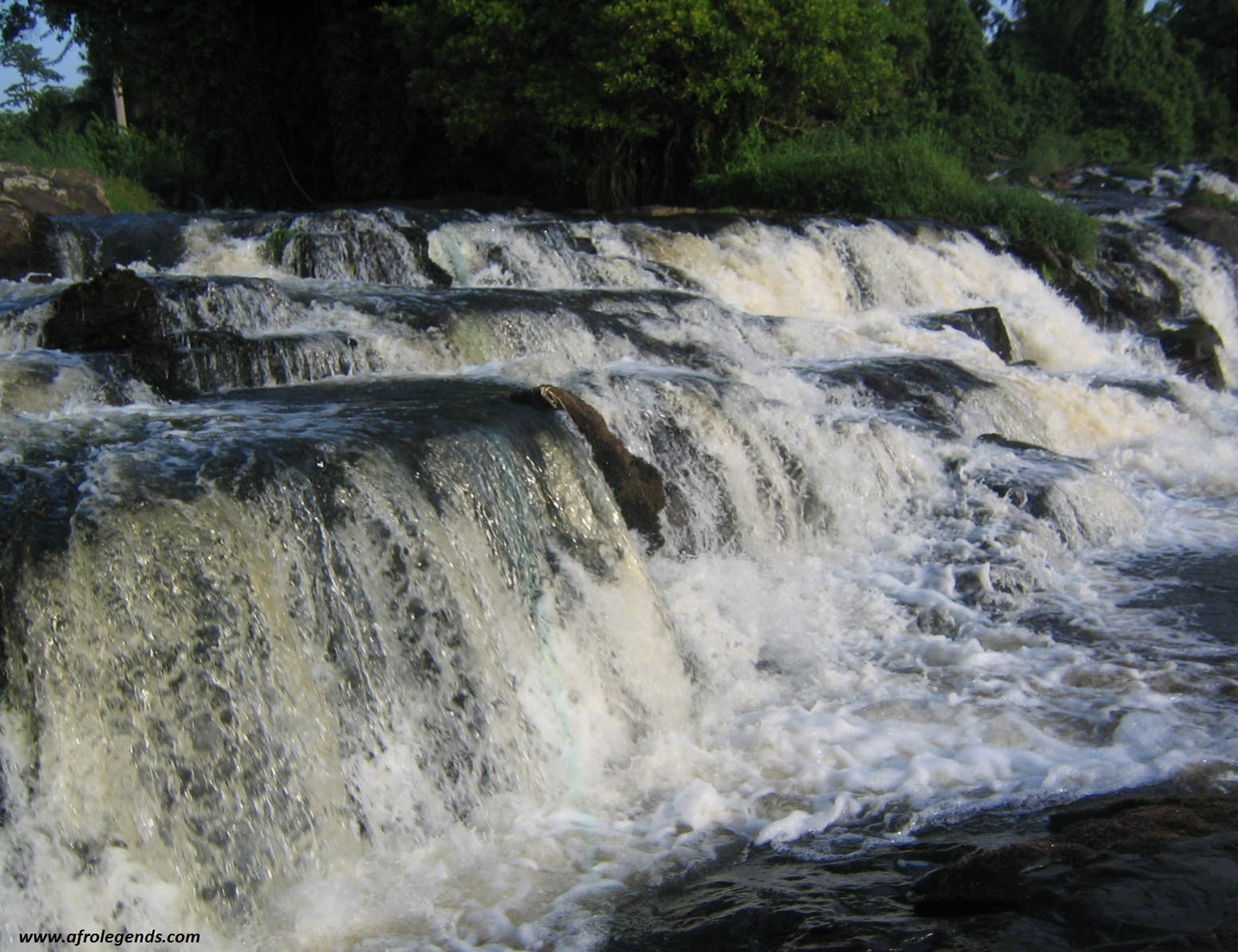
Chutes de la Lobe (Cameroun) / Lobe Falls (Cameroon) – afrolegends.com
THERE was a frightful drought. The rivers after a while dried tip and even the springs gave no water. The animals wandered around seeking drink, but to no avail. Nowhere was water to be found. A great gathering of animals was held: Lion, Tiger, Wolf, Jackal, Elephant, all of them came together. What was to be done? That was the question. One had this plan, and another had that; but no plan seemed of value.
Finally one of them suggested: “Come, let all of us go to the dry river bed and dance; in that way we can tread out the water.”
Good! Everyone was satisfied and ready to begin instantly, excepting Rabbit, who said, “I will not go and dance. All of you are mad to attempt to get water from the ground by dancing.”
Rabbit
The other animals danced and danced, and ultimately danced the water to the surface. How glad they were. Everyone drank as much as he could, but Rabbit did not dance with them. So it was decided that Rabbit should have no water.
He laughed at them: “I will nevertheless drink some of your water.”
That evening he proceeded leisurely to the river bed where the dance had been, and drank as much as he wanted. The following morning the animals saw the footprints of Rabbit in the ground, and Rabbit shouted to them: “Aha! I did have some of the water, and it was most refreshing and tasted fine.” Continue reading “The Dance for Water or Rabbit’s Triumph”→
ONCE there was a man who had an old dog, so old that the man desired to put him aside. The dog had served him very faithfully when he was still young, but ingratitude is the world’s reward, and the man now wanted to dispose of him. The old dumb creature, however, ferreted out the plan of his master, and so at once resolved to go away of his own accord. After he had walked quite a way he met an old bull in the veldt.
“Don’t you want to go with me?” asked the dog.
“Where?” was the reply.
“To the land of the aged,” said the dog, “where troubles don’t disturb you and thanklessness does not deface the deeds of man.”
Bull
“Good,” said the bull, “I am your companion.”
The two now walked on and found a ram. The dog laid the plan before him, and all moved off together, until they afterwards came successively upon a donkey, a cat, a cock, and a goose. These joined their company, and the seven set out on their journey.
Ram
Late one night they came to a house and through the open door they saw a table spread with all kinds of nice food, of which some robbers were having their fill. It would help nothing to ask for admittance, and seeing that they were hungry, they must think of something else. Therefore the donkey climbed up on the bull, the ram. On the donkey, the dog on the ram, the cat on the dog, the goose on the cat, and the cock on the goose, and with one accord they all let out terrible (threatening) noises (crying). Continue reading “The World’s Reward”→
Here is a story from: Ethiopian Folktales. You can read the full story there.
===============
Afar Girl
Once there was a very beautiful Afar girl and one young man fell madly in love with her. So he sent people to her father’s house to ask for her hand in marriage.
But her father said, “I’ll only bestow my daughter if he gives me all his wealth, his camels, his cows, everything.”
So they went back and said, “Look, her father’s asking for the impossible. He wants all your wealth.”
The young man said, “That’s OK. She’s everything in this world. You can take all my animals.”
And he married the girl.
But he had nothing to feed her and therefore he had to become a hunter and he fed her.
San (Basarwa/Bushmen) hunters
Then one day her father decided to go and visit his son-in-law and daughter and he came over to their house. Of course a guest has to eat, so she brought in her father and made him sit down and she started boiling water hoping her husband would soon come in with the kill, but all the water in the pot boiled away. So she put in more water, but it too boiled away. She filled it again and it boiled away. By this time she was desperate and she looked out of their hut and saw another man walk by with a bush buck he had just killed.
So she went to him and said, “Look mister, I have an unexpected guest and my husband, who is a hunter, has gone out, so please give me one of the legs of the bush buck so I can feed my guest. When my husband comes back, I’ll repay you in kind.”
And he said, “No way. I’ve got enough meat for myself, therefore I don’t want the leg of meat that your husband is going to bring. But since you are so beautiful, I want to make love to you.”
She said, “OK, but the guest is in my house right now, so go and come back after dark.”
So she took the leg of meat and went in and started cooking it. Then her husband came, having killed a zebra, so there was plenty of meat and he gave it to her and he sat down and started eating with his father-in-law.
Zebras
When it became dark the other hunter came and he threw a pebble on to the roof so that she would come out. But she just sat down and went on cooking the zebra meat. He threw a second pebble, but she pretended not to notice. Then he threw a third pebble and she burst out laughing.
Her father turned round and said, “What are you laughing at?”
She said, “I’m laughing at three fools.”
Her father said, “What do you mean?”
She said, “I’m laughing at three fools. The first fool is my husband, who gave away all his wealth for the sake of a woman. The second fool is my father, who took away all the wealth of his child, his son-in-law, then comes to have a meal and where does he expect the meat to come from? And the third fool is the man outside who gave me a leg of his bush buck and expects me to make love with him.”
So the moral is: (i) men are foolish over women and wealth; (ii) wealth is necessary for people to live well besides love.
There was a very tired woman living alone. One day she slept without closing the door, in the daytime, and night fell. During the night the hyena came and took the woman with her cow skin mat wrapped up. He left her in a corner and went to call his friends. The woman woke up and when she realized she wasn’t at home she was frightened. She rolled the cow skin as if there was someone in it and ran away.
When she got home she closed the door and fell asleep again. When the hyena came with his friends, he found the skin, and thought the woman was there. When he touched the skin the woman had gone. He was upset and went back to her home, but it was closed. So he went back to his friends.
IT is said that once Sun was on earth, and caught Horse to ride it. But it was unable to bear his weight, and therefore Ox took the place of Horse, and carried Sun on its back. Since that time Horse is cursed in these words, because it could not carry Sun’s weight:
Le soleil / The sun
“From to-day thou shalt have a (certain) time of dying. This is thy curse, that thou hast a (certain) time of dying. And day and night shalt thou eat, But the desire of thy heart shall not be at rest, Though thou grazest till morning and again until sunset. Behold, this is the judgment which I pass upon thee,” said Sun.
Since that day Horse’s (certain) time of dying commenced.
South African Folk Tales, by James A. Honey, 1910, Baker & Taylor Company.
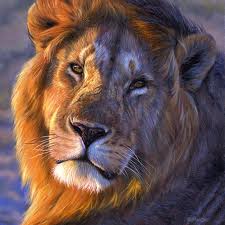
BABOON, it is said, once worked bamboos, sitting on the edge of a precipice, and Lion stole upon him. Baboon, however, had fixed some round, glistening, eyelike plates on the back of his head. When, therefore, Lion crept upon him, he thought, when Baboon was looking at him, that he sat with his back towards him, and crept with all his might upon him. When, however, Baboon turned his back towards him, Lion thought that he was seen, and bid himself. Thus, when Baboon looked at him, he crept upon him.* When he was near him Baboon looked up, and Lion continued to creep upon him. Baboon said (aside), “Whilst I am looking at him he steals upon me, whilst my hollow eyes are on him.”
When at last Lion sprung at him, he lay (quickly) down upon his face, and Lion jumped over him, falling down the precipice, and was dashed to pieces.
*Whilst Baboon did this, Lion came close upon him.
South African Folk Tales, by James A. Honey, 1910, Baker & Taylor Company.
The wild animals, it is said, were once asembled at Lion’s. When Lion was asleep, Jackal persuaded Little Fox to twist a rope of ostrich sinews, in order to play Lion a trick. They took ostrich sinews, twisted them, and fastened the rope to Lion’s tail, and the other end of the rope they tied to a shrub. When Lion awoke, and saw that he was tied up, he became angry, and called the animals together. When they had assembled, Lion said (using this form of conjuration)–
“What child of his mother and father’s love, Whose mother and father’s love has tied me? ”
Then answered the animal to whom the question was first put– I, child of my mother and father’s love, I, mother and father’s love, I have not done it.
Renard / Fox
All answered the same; but when he asked Little Fox, Little Fox said– I, child of my mother and father’s love, I, mother and father’s love, have tied thee!
Then Lion tore the rope made of sinews, and ran after Little Fox. But Jackal said: “My boy, thou son of lean Mrs. Fox, thou wilt never be caught.” Truly Lion was thus beaten in running by Little Fox.
South African Folk Tales, by James A. Honey, 1910, Baker & Taylor Company.
Jadis, les animaux n’avaient pas de queue. Le cheval ne pouvait pas chasser les mouches, l’écureuil sans queue avait du mal à sauter de branche en branche, le renard était bien moins beau et ne parlons pas du lion!
Le sage roi des animaux, le lion, prit la décision de remédier à cette situation. Il réfléchit pendant longtemps à la façon dont il allait s’y prendre et à la fin, il fit appeler le renard pour lui demander conseil.
« Tous les animaux ne peuvent pas avoir la même queue », estima le renard.
« Je sais cela, moi aussi », répondit le lion. « Mais comment départager les animaux sans se montrer injuste ? »
Le renard réfléchit un instant, puis déclara :
« C’est simple. Ceux qui arriveront les premiers recevront les plus belles queues. »
Le lion acquiesça :
Renard
« C’est une excellente idée. Cours vite dans la forêt et préviens tous les animaux qu’ils doivent se présenter à midi, au bord du ruisseau, pour la distribution des queues. »
Le renard transmit le message et courut vite vers le ruisseau pour arriver le premier. Il fut suivi de près par le cheval, l’écureuil, le chat et le chien qui arrivent toujours les premiers quand on distribue quelque chose. Vinrent ensuite les autres animaux : l’éléphant, le cochon et le lièvre se présentèrent les derniers.
Lievre
Lorsque tous les animaux furent réunis dans la clairière, le lion se mit à distribuer les queues. Il se servit d’abord lui-même : ce fut une superbe queue, longue et dorée, terminée par un plumeau. Ensuite, le lion attribua de très belles queues bien touffues au renard et à l’écureuil. Le cheval opta pour une magnifique queue en crin. Le chien et le chat reçurent encore des queues fort présentables, mais les animaux qui arrivèrent les derniers, se trouvèrent bien démunis. L’éléphant eut une maigre cordelette avec quelques soies au bout. Il en fut si navré qu’il en porte aujourd’hui encore la trompe basse. La queue du cochon était fine comme un ver de terre. Il la fit boucler pour la rendre plus jolie. Le pauvre lièvre resta sans queue. Le chien et le chat commencèrent à se disputer pour savoir lequel d’entre eux avait la plus belle queue. À la fin, le chien attrapa le chat et lui arracha d’un coup de dents l’extrémité de la queue. Le chat s’enfuit dans l’arbre et depuis ce jour, il préfère se sauver devant le chien. Le lièvre ramassa le bout de la queue du chat et le colla sur son derrière. Ceci explique pourquoi la queue des lièvres est si petite.
HERE was a great drought in the land; and Lion called together a number of animals so that they might devise a plan for retaining water when the rains fell.
The animals which attended at Lion’s summons were Baboon, Leopard, Hyena, Jackal, Hare, and Mountain Tortoise. It was agreed that they should scratch a large hole in some suitable place to hold water; and the next day they all began to work, with the exception of Jackal, who continually hovered about in that locality, and was overheard to mutter that he was not going to scratch his nails off in making water holes.
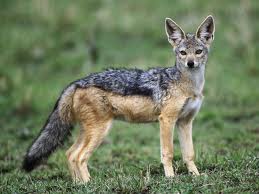
Jackal
When the dam was finished the rains fell, and it was soon filled with water, to the great delight of those who had worked so bard at it. The first one, however, to come and drink there, was Jackal, who not only drank, but filled his clay pot with water, and then proceeded to swim in the rest of the water, making it as muddy and dirty as he could. This was brought to the knowledge of Lion, who was very angry and ordered Baboon to guard the water the next day, armed with a huge knobkerrie. Baboon was concealed in a bush close to the water; but Jackal soon became aware of his presence there, and guessed its cause. Knowing the fondness of baboons for honey, Jackal at once hit upon a plan, and marching to and fro, every now and then dipped his fingers into his clay pot, and licked them with an expression of intense relish, saying, in a low voice to himself, “I don’t want any of their dirty water when I have a pot full of delicious honey.” This was too much for poor Baboon, whose mouth began to water. He soon began to beg Jackal to give him a little honey, as he had been watching for several hours, and was very hungry and tired. After taking no notice of Baboon at first, Jackal looked round, and said, in a patronizing manner, that he pitied such an unfortunate creature, and would give him some honey on certain conditions, viz., that Baboon should give up his knobkerrie and allow himself to be bound by Jackal. He foolishly agreed; and was soon tied in such a manner that he could not move hand or foot. Continue reading “The Story of a Dam”→
COCK, it is said, was once overtaken by Jackal, and caught. Cock said to Jackal, “Please, pray first (before you kill me), as the man does.”
Jackal asked, “In what manner does he pray? Tell me.”
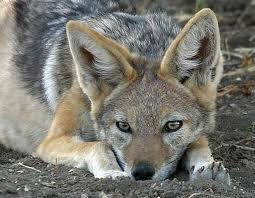
Jackal
“He folds his hands in praying,” said Cock. Jackal folded his hands and prayed. Then Cock spoke again: “You ought not to look about you as you do. You had better shut your eyes.” He did so; and Cock flew away, upbraiding at the same time Jackal with these words, “You rogue! do you also pray? ”
There sat Jackal, speechless, because he had been outdone.
South African Folk Tales, by James A. Honey, 1910, Baker & Taylor Company.













 African Heritage