Treaty of Wuchale: The Treaty which led to European Colonialism’s Defeat in Africa

Battle_of_adwa2
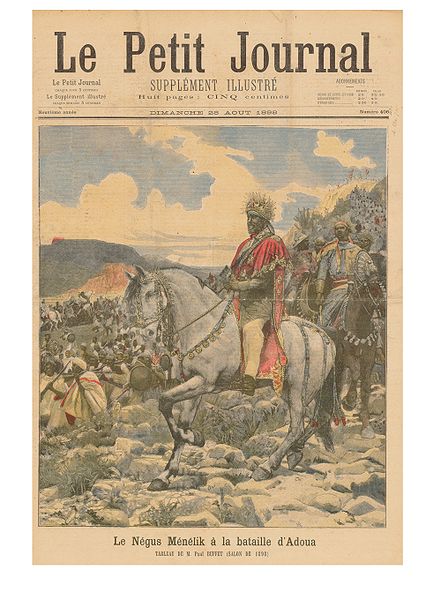
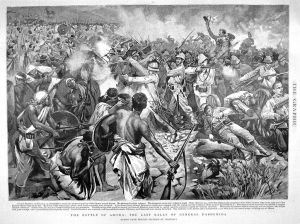
Edition of the Petit Journal of August 1896 titled: “Negus Menelik II at the Battle of Adwa”

In Africa, Ethiopia is the only country which was never colonized by a European power. This was the result of the famous Battle of Adwa on March 1, 1896, which marked the Ethiopian victory against Italian colonialism. The Battle of Adwa against Italy arose from the deceitful 1889 Treaty of Wuchale between the Ethiopian Empire and Italy, a treaty whose article 17 had two different meanings in Amharic and Italian versions: The Amharic version recognized the sovereignty of Ethiopia and its relationship with Italy as just a diplomatic partnership, while the Italian version made Ethiopia Italy’s protectorate The moment that discrepancy/trickery was uncovered, Empress Taytu Betul was the first to agitate Emperor Menelik II and other men to stand up for liberty, and dignity against Italian aggression. I am publishing here the Treaty of Wuchale. Special thanks to the Horn Affairs website for publishing the English version in its entirety. Some claim that Article 3 actually paved the way for Italians to claim Ethiopian lands (Eritrea). Well, here is the document of one of those treacherous treaties signed or rather forced upon Africans by European powers. Thank goodness for Taytu Betul, Menelik II, and their team of loyal and intelligent ministers and interpreters. I have attached the pdf version too.

===============

Treaty of friendship and trade between the kingdom of Italy and the Empire of Ethiopia (Treaty of Wuchale)

ethiopia
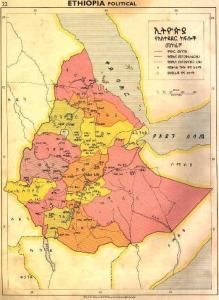
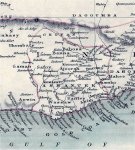
Map of Ethiopia before 1911

His Majesty King Umberto I of Italy and Menelik His Majesty The King of Kings of Ethiopia, in order to make meaningful and lasting peace between the two Kingdoms of Italy and Ethiopia have agreed to conclude a treaty of friendship and commerce .

And His Majesty the King of Italy having delegated as his representative, Count Pietro Antonelli, Commander of the Crown of Italy, Knight SS. Maurice and Lazarus, his extraordinary posted by His Majesty the King Menelik, whose full powers were found in good and due form, and His Majesty the King Menelik concluded in his name as King of Kings of Ethiopia, agreed and concludes the following Articles:

Article 1. There will be perpetual peace and friendship between His Majesty the King of Italy and His Majesty the King of Kings of Ethiopia and between their respective heirs, successors, servants and protected populations.

Article 2. Each Contracting Party shall be represented by a diplomatic agent accredited to I’altra and may appoint consuls, agents and consular officers in the other.
Such officials shall enjoy all the privileges and immunities according to the customs of the European governments.

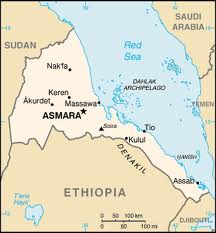
Map of Eritrea
Map of Eritrea

Article 3. To remove any ambiguity about the limits of the territories over which the two Contracting Parties shall exercise sovereign rights, a special commission composed of two delegates and two Ethiopians will draw on Italian soil with special signals a permanent boundary line whose strongholds are established as below:
a) the line of the plateau will mark the Ethiopian-Italian border;
b) from the region Arafali Hala, Sagan and Asmara are villages in the Italian border;
c) Adi and Adi Nefas Joannes Bogos will be on the side of the Italian border;
d) by Adi Joannes a straight line extended from east to west will mark the border between Italy and Ethiopia.

Article 4. The monastery of Debra Bizen with all their possessions will remain the property of the Ethiopian government but will never use it for military purposes.

Article 5. The caravans from or to Massawa to Ethiopian territory pay on one single law of the customs entry of 8 per cent on the value of the goods.

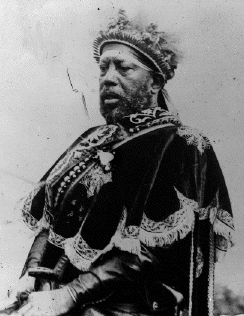
Menelik_II_ethiopia
Emperor Menelik II, of Ethiopia

Article 6. The trade of arms and ammunition from or through Massawa to Ethiopia will be free for the only King of Kings of Ethiopia.
Whenever they want to get the passage of such kinds will make regular application to the Italian authorities, bearing the royal seal.
The wagons with load of weapons and ammunition will travel under the protection and cover of Italian soldiers until alconfine Ethiopia.

Article 7. The subjects of each of the two Contracting Parties will be free to enter, travel, go out with their merchandise and effects in the other country and will enjoy greater protection of the Government and its employees.
And, therefore, strictly forbidden to people on both sides armed contractors to meet many or few and pass their borders in order to impose itself on people and groped by force to provide food and livestock.

Article 8. The Italians in Ethiopia and Ethiopians in Italy or Italian possessions can buy or sell, take or lease and in any other manner dispose of their property no less than the natives.

Article 9. And fully guaranteed in both states the option for other subjects to practice their religion.

Article 10. Any disputes or quarrels between the Italians in Ethiopia will be defined by the Italian in Massawa or his delegate.
The fights between Italians and Ethiopians will be defined by the Italian in Massawa or his delegate and a delegate of the Ethiopian.

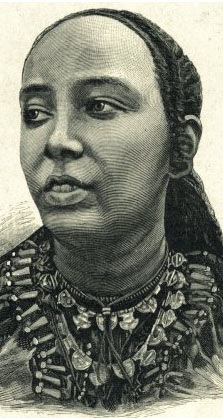
Taytu_Betul5
Empress Taytu Betul of Ethiopia

Article 11. Dying in an Italian in Ethiopia or an Ethiopian in Italian territory, the local authorities were carefully kept all his property and held at the disposal of government to which the deceased belonged.

Article 12. In any event, circumstance or for any Italians accused of a crime will be judged by the Italian.
That is why the Ethiopian authorities shall immediately deliver to the  Italians in Massawa accused of having committed a crime.
They also accused the Ethiopians of crime committed on Italian soil will be judged by the Ethiopian.

Article 13. His Majesty the King of Italy and His Majesty the King of Kings of Ethiopia is obliged to deliver criminals who may have become refugees, to escape punishment by the rulers of one on the other domains.

Article 14. The slave trade was against the principles of the Christian religion, His Majesty the King of Kings of Ethiopia is committed to prevent it with all his power, so that no caravan of slaves can cross its member.

Article 15. This Treaty shall be valid throughout the Ethiopian Empire.

Article 16. While in the present Treaty, after five years from the date of signature, one of two High Contracting Parties may wish to introduce some modifications to do so, but he must prevent the other a year earlier, while remaining firm and every single concession on territory.

Battle_of_adwa6
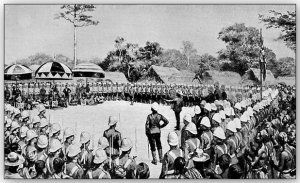
The Battle of Adwa, 1896

Article 17. His Majesty the King of Kings of Ethiopia can [1] use the Government of His Majesty the King of Italy for all treatments that did business with other powers or governments.

Article 18. If His Majesty the King of Kings of Ethiopia intends to grant special privileges to nationals of third state to establish businesses and industries in Ethiopia, will always be given, under equal conditions, preference to the Italians.

Article 19. This treaty being drafted in Italian and Amharic and the two versions agree with each other perfectly, both texts shall be deemed official, and will in every respect equal faith.

Article 20. This Treaty shall be ratified.

In witness whereof, Count Pietro Antonelli on behalf of His Majesty the King of Italy, His Majesty the King of King Menelik of Ethiopia, in his own name, signed and affixed their seal to this Treaty, at the camp Uccialli of 25 miazia 1881 corresponding to May 2, 1889.

Imperial Seal of Ethiopia
For His Majesty the King of Italy Pietro Antonelli

Ratification of MS, Monza, September 29, 1889

****************

[1] Article 17 has an obligatory sense in the Italian language version of the Treaty.

St Mary of Zion: Africa’s Oldest Church

africa-oldest-churst-st-mary-of-zion
St Mary of Zion church (sacred-destinations.com)

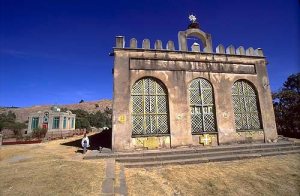
The Church of St Mary of Zion with the Treasury containing the Ark of the Covenant in the background (left) is the oldest church (Christian church) on the African continent. First built in the 4th century AD in Aksum, Ethiopia. It is the most important church in Ethiopia.

In the 4th century AD, the Axumite prince Ezana, the first Christian ruler of the Kingdom of Axum (Present-day Eritrea and Ethiopia), was instructed in Christianity by two Syrian monks shipwrecked on the Red Sea coast. The prince promoted Christianity when he became King Ezana, and he is regarded as a saint in both the Ethiopian Orthodox and Catholic churches. The original church is believed to have been built during the reign of Ezana, and has been rebuilt several times since then, including during the reign of Fasilides in the 17th century. St. Mary of Zion was the traditional place where Ethiopian Emperors came to be crowned. And indeed, if an Emperor was not crowned at Axum, or did not at least have his coronation ratified by a special service at St. Mary of Zion, he could not be referred to by the title of “Atse” or Emperor of Ethiopia.

African Hair Styling: The Mathematics of Cornrows

Nok9a
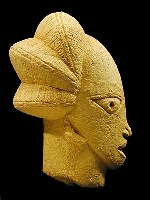
Nok sculpture of a woman

Today, we will be talking about hair, African hair, and hairstyles. One of the very common hairstyles used for Afro hair is cornrows. These were worn by women and men of centuries past as seen on Nok sculptures dating back 3rd century AD, Mende masks, Benin Kingdom masks, and are still worn today with great pride. Kings and queens adorned those like crowns. The great Emperor Tewodros II of Ethiopia wore them proudly! Imagine my surprise when I found a website where they had computed the way cornrows are made. Cornrows use about 4 geometrical concepts: translation, rotation, reflection and dilation. The styles are numerous ranging from simple linear compositions to complex curves and spirals. Check out this website and learn about the mathematics behind cornrows! Enjoy!

screenshot-of-cornrow-curves-simulation-software
Screenshot from CSDT.rpi.edu

Yaa Asantewaa or the Ashanti Cry for Freedom

asantewaa
Queen Yaa Asantewaa in Batakarikese (Ceremonial war dress)

On 17 October 1921, the great Ashanti warrior queen Yaa Asantewaa passed away. Her story is that of a queen who rallied masses to fight for their independence; hers is a story of courage, determination, and stamina. Yaa Asantewaa led a rebellion against the British at a time when the men surrounding her were low in spirit, afraid, and discouraged. She arose them to fight for their independence, and for their nation.  Her fight against British colonialists is a story woven throughout the history of Ghana.

asante_map-1800s
Ashanti Kingdom ca 1800s

Yaa Asantewaa was born in 1840 in the Gold Coast in the Kingdom of Ashanti. She was a successful farmer, mother, intellectual, politician, human right activist, Queen and leader. Yaa Asantewaa became famous for leading the Ashanti rebellion against British colonialism to defend the Golden Stool, symbol and soul of the Ashanti nation (19001901). She promoted women emancipation as well as gender equality. She was the sister of the Ruler of Ejisu (Ejisuhene) Nana Akwasi Afrane Okpase, an ethnic group in present-day Ghana.

ashanti_prempeh-124-palaver-and-submission_1896
January 1896: British formally annexing the Ashanti Kingdom – depiction of governor’s discussions with Prempeh I

During her brother’s reign, Yaa Asantewaa saw the Asante Confederacy go through a series of events that threatened its future, including civil war from 1883 to 1888. When her brother died in 1894, Yaa Asantewaa used her right as Queen Mother to nominate her own grandson as Ejisuhene. When the British exiled him in the Seychelles in 1896, along with the King of Asante Prempeh I and other members of the Asante government, Yaa Asantewaa became regent of the Ejisu-Juaben District. As seen earlier, this was the European’s way of dealing with African kings, as in Benin Kingdom. Sending a king to exile was usually followed by the looting of their land. This has led to the discovery of lots of Africa’s valued arts and crafts in Europe, which to this date have not been returned to their rightful owners.

ashanteewarcaptain_1834
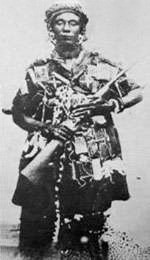
Ashanti captain 1819

After the deportation of Prempeh I, the British governor-general of the Gold Coast, Frederick Hodgson, demanded the Golden Stool. This request led to a secret meeting of the remaining members of the Asante government at Kumasi, to discuss how to secure the return of their king. There was a disagreement among those present on how to go about this. Yaa Asantewaa the Queen Mother of Ejisu, was at the meeting. The chiefs were discussing how they should make war on the white men and force them to bring back the Asantehene. She saw that some of the chiefs were afraid. Some said that there should be no war. They should rather go to beg the Governor to bring back the Asantehene King(Nana) Prempeh.

Disgusted by the men’s behavior, Yaa Asantewaa stood up and addressed the members of the council with these now-famous words:

Now, I see that some of you fear to go forward to fight for our king. If it was in the brave days of Osei Tutu, Okomfo Anokye, and Opoku Ware I, chiefs would not sit down to see their king to be taken away without firing a shot. No European could have dared speak to chiefs of Asante in the way the governor spoke to you this morning. Is it true that the bravery of Asante is no more? I cannot believe it. It cannot be! I must say this: if you, the men of Asante, will not go forward, then we will. We, the women, will. I shall call upon my fellow women. We will fight! We will fight till the last of us falls in the battlefields.

ashanti_golden_stool_31_january_1935
The Golden Stool in 1935

With this, she took on leadership of the Asante Uprising of 1900, gaining the support of some of the other Asante nobility. She led the famous war knows as the War of the Golden Stool against the British. After several months, the British Gold Coast governor eventually sent a force of 1,400 to quell the rebellion. During the course of this, Queen Yaa Asantewaa and 15 of her closest advisers were captured, and they too were sent into exile to the Seychelles. She died there on 17th of October 1921. Three years later, on 27 December 1924, Prempeh I and the other remaining members of the exiled Asante court were allowed to return to Asante Kingdom. Prempeh I made sure that the remains of Yaa Asantewaa and the other exiled Asantes were returned home for a proper royal burial. She was buried with all the honors due a queen like her.

Yaa Asantewa’s War was the last major war led by an African woman. She embodied courage and strength when faced with the injustice of the European invader. She is honored with a school named after her, ‘Yaa Asantewaa Girl’s Secondary School’ In Kumasi in 1960. Many young girls in Ghana are proudly named after her.

ashanti-king-palace-being-burned-and-ransacked-by-british-in-1874-after-3rd-angloashanti-war
Ashanti King Palace being ransacked and burnt by the British in 1874 after the 3rd Anglo-Ashanti war

She is immortalized in the song:

Koo koo hin koo

Yaa Asantewaa ee!

Obaa basia

Ogyina apremo ano ee!

Waye be egyae

Na Wabo mmode

(“Yaa Asantewaa

The woman who fights before cannons

You have accomplished great things

You have done well”)

Reclaiming African History: Gorée and the Slave Trade in Senegal

Goree_Le_fort_d'Orange_et_de_Nassau_à_l'île_de_Gorée_17th century
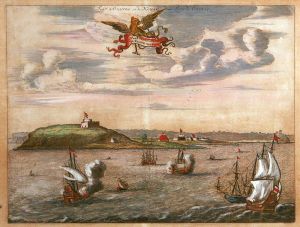
Goree Island: Fort of Nassau and Orange, 17th century (Wikipedia)

Today I will be talking about the island of Gorée, in Senegal. Located less than 4 km from the city of Dakar, Gorée island offers a sure route for ships. Since the 15th century, it has been the center of rivalries between diverse European nations which used it for slave trading. Locally known as “Beer” or “Ber” or “Bir” in Wolof, it was first named “La Palma” by Portuguese in 1444, with some ancient maps also showing the name “Beseguiche” for it. The Dutch navy named it “Goede Reede” or “Good Harbor” in 1588. In 1677, the island was occupied by the French.

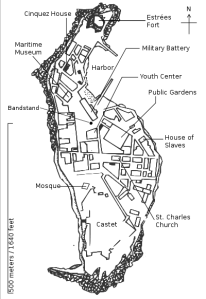
Goree_Map_of_Goree
Map of Goree (Wikipedia)

Before I dive further into the atrocities of human trading on the island, I would like to address ideas circulated by some stating that the island of Gorée was never really used for slave trading and that slave trading had been done in Saint Louis in the north or south in Gambia. These claims were so outrageous that the Senegalese government sponsored an international conference on the history of the island, and researched and found original archives from the French Port of Nantes showing that between 1763 and 1775 alone, one port had traded more than 103,000 slaves from Gorée; this thus shows that Gorée was indeed at the epicenter of slave trading, and stating otherwise is an attempt at falsifying history. The first slaves were taken from Gorée in 1536, and the trade continued at least until 1848.

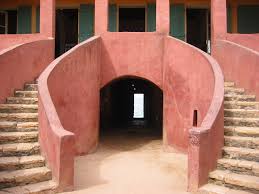
Goree1w
House of Slaves (Wikipedia)

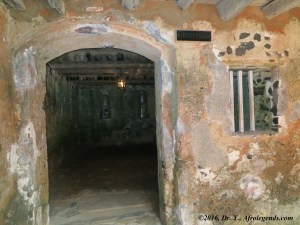
Now back to the island itself. One of the most important if not the main stop on the island is the house of slaves. Of Reddish/pinkish color, this house was first built by the Dutch in 1776, and is the last standing slave house on the island. At the end of the 18th century, the island was a prosperous crossroad of merchants, soldiers, and administrators, with at its center slave trade. Today, it serves as a museum and a memorial to humanity. The upper part of the building like most slave houses was used by the Europeans who lived there; while the bottom part was used to house slaves packed on top of each other in humid, sordid, and disgusting rooms built for 15-20 people but housing sometimes over 100 people, while waiting to be taken to the Americas. On the bottom floor, there is a room used to pack young women among which the slave traders would come every night and choose those who will be used for their sexual pleasures; if any of these women were found pregnant from these traders’ visits, they were freed on the island or sent to Saint Louis. There were also rooms to house strong men, children, and women. There was also a dark tiny room where the most defiant ones were stacked on top of each other, and salty water was seeped through the walls to force dehydration and later death. The value of a man depended on his weight and muscles; the minimum weight was 60 kg. The value of a child depended on his/her denture, while that of a woman on her breasts.

Goree_Jeunes filles
Cell for young girls in the House of Slaves

The small size of the island made it easy for merchants to control their captives. The surrounding waters are so deep that any attempt at escaping would mean sure drowning. With a 5kg metal ball permanently attached to their feet or necks, a captured African who ever tried running away would surely drown in deep sea.

From the door of no return, the slaves were loaded onto ships which took them across the Atlantic. This was their last time on African soil.

Entire families were captured and brought to Gorée, but their destinations were seldom the same: the father could be shipped to America, while the Mother to Brazil, and the child to Haiti or the West indies. Separation was irrevocable.

Goree_Cellule
Cell in the House of Slaves

Not too far from the house of slaves is the castle which was used as a warehouse for millions of captured slaves.

After the abolition of slavery in 1848, the island’s population declined, with many moving to Dakar. Since 1978, the island is a UNESCO World Heritage Site.

Today the island of Gorée is a memorial to all those who were separated from their loved ones, their lands, their society, their culture, uprooted and sold like cattle across the globe. It serves as a reminder of humanity’s ugly past, and what it is capable of for capital gain, hatred, and greed. Gorée is and should remain all of that, but also a true reminder to future generations that mankind should be loved, and a man’s life is precious, not to be sold like cattle. Attempts by some to absolve themselves from their ugly pasts should not stop those who were hurt from remembering, for celebrating the lives of those who perished, who were uprooted, and those who survived. Truth is truth whether beautiful or not, it is truth, and remembering is acknowledging all the good those who lost their lives, those who survived, gave to the world, because America will not be America without the Slaves’s lives and hard labor; Brazil will not be Brazil without the blood of those slaves; France will not be France, or Great Britain will not be Great Britain without the sweat and blood of African slaves. So Gorée is a reminder of all of that, and should be cherished for it.

Queen Abla Pokou

Pokou1Just to add a bit more to the story of Queen Abla Pokou, the outstanding queen who led a group of the Ashanti people who later became the Baoule people of Cote d’Ivoire, I leave you here with a snipet of the 3D movie: POKOU Princesse Ashanti.
Queen Abla Pokou and the Origin of the Baoule People

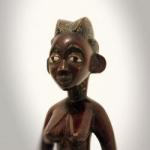
Abla Pokou
Baoule mask representing Queen Abla Pokou

The story of Queen Abla Pokou (Abla Poku in English) is the story of the creation of the Baoule people of Côte d’Ivoire. She was a strong and loving queen who made a profound sacrifice for the well-being of her people, and thus was granted their deep love.

In the 17th century, King Osei Kofi Tutu I founds the Ashanti Empîre of Ghana. Given that in the Ashanti culture the law is matrilineal, when King Oseï Tutu dies, his nephew succeeds him. However, when his nephew dies shortly after, a war for the throne starts in Kumasi, the capital of the kingdom; this war opposes an old uncle of the royal family named Itsa, and Dakon, the second brother of the future queen Abla Pokou (born at the beginning of the 18th century). Dakon will also die in this fratricide war. Quickly, Abla Pokou, understanding that she and her followers will be next to die, decides to flee. Led by her, they walk for several days and nights, fleeing from those threatening to kill them. They soon arrive on the shores of the Comoé River, located on the frontier between Ghana and Côte d’Ivoire. But the river is unsurmountable, its waters are dangerous, and their enemies are getting closer. After having overcome so many obstacles, and walked for days, it is impossible to stop there.

AblaPokou2Queen Pokou looks to her court wizard for advice, saying, “wizard, tell us what the genie of the river wants from us in order to cross its treacherous waters!” The wizard replies, “Queen, the river is quite irritated, and would only stop once an offering of what is most dear to us is made to it.” Thus, the women of the court start taking off their gold and ivory jewelry, and the men bring their cattle for offering. But the wizard, shaking his head sadly, states “What is most dear to us is our sons!
Looking upon her people, the queen decides to make the most difficult sacrifice ever: that of her toddler son wrapped on her back. After untying him, she says to him, “Kouakou(‘Kwaku’ in English), my only child, forgive me, but I have understood that I need to offer you to the river for the survival of our people. More than a woman or mother, a queen is first a queen!” She then stoically, without shedding a tear, offers her son as a sacrifice to the Comoé River.

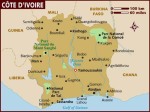
Map of Cote d'Ivoire

Once the offering made, a path quickly appears within the waters of the Comoé river allowing the queen and her people to cross it. Once the river crossed, the queen finally cries, “BA OULI!” meaning “the child is dead.” This will become the name of the people “Baoulé”. Once they arrived in a good place, the tribe holds a funeral for the sacrificed child. In memory of this, the place will be called Sakassou, meaning “place of funerals.” Queen Abla Pokou will rule over her people for many years, and news of her good reign will travel very far. She will die around 1760.

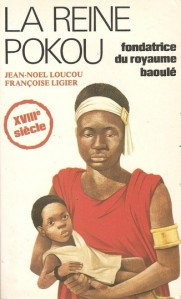
Pokou1
Poster for the 3D movie: Pokou Ashanti Princess

Some historians claim that a big tree bent over to let the Queen and her people cross, while others maintain that a group of hippopotamuses lined up a path across the river for the queen. Either way, the story of the queen’s great courage remains the same. Queen Abla Pokou, the founder of the Baoulé people of Côte d’Ivoire, was a great queen and woman who sacrificed what she held most dear for the well-being of her people. Many African presidents would learn a lot from Queen Abla Pokou’s courage, determination, and love of her people. Today in Côte d’Ivoire, her story has just been made into a 3D movie: POKOU Princesse Ashanti. The Ivorian author Véronique Tadjo has also published a book Reine Pokou: concerto pour un sacrifice in 2005. The story of Queen Pokou and the Baoule was retold by Maximilien Quenum in his Légendes africaines. Check out the websites Naforo-Ba and Matricien.org to learn more about it.

Why Behanzin should stay in Blida

Statue of Behanzin in Abomey, Benin

The article below is from 1906 giving reasons why the French government refused to return Béhanzin to his country. The English translation is brought to you by Dr. Y., Afrolegends.com .

===========

Under this title, La Petite République published an article from which we extract the following conclusions:

What will be the effect of Béhanzin’s return in his country?

The Dahomeans, who in the old days, used to raid their neighbors have been transformed under 10 years, into a population of peaceful docile peasants and easy to be led. No troops are stationed in the ancient kingdom of Behanzin and the administration is working amazingly.

Do not for one instant believe that the negroes have forgotten their old master and here is what M. Francois, ancient chief of cabinet of the governor of Dahomey, says about this in the volume he published three months ago on this colony.

Behanzin_18 Juillet 1906
The original article from La Petite Republique, in French

The people of Dahomey have kept the memory of Kondo (Béhanzin). The name of our courageous adversary still exerts a magical power on his old subjects. The population remains certain of his return. They say, Kondo was defeated by the whites, Kondo is imprisoned on an island by his enemies and this despite the ancient law which guards the Kings of Abomey from seeing the sea, but anyhow, Kondo will transform himself into a small bird and will come back to his capital.

As for the chiefs, here is, from the same author, an anecdote which shows their state of mind:

“The old Alloan who used to command the Dahomean army when Béhanzin was not here, and who today is a worker on the Sudan railroad, was telling one of the engineers, “We know well that we could easily make you disappear, you and the other white people who are in the Dahomey. It would not even be necessary to kill you, it will suffice not to bring you any food for a few days. But what will be the point of this? You will come back, by the thousand, with guns which fire all at once and traverse palm trees. Moreover, if it wasn’t you, it will be the British or the Germans.” And he politely added, “better if it is the French.”

One can see that the loyalty of the chiefs holds onto a fine thread, an occasion, a possibility, to rid their land of the whites.

It is undeniable that the return of Béhanzin will provide this anticipated occasion.

The Black People of Mexico

Afro_mexican_3_Black Cowboy
Afro-Mexican cowboy (Source: BBC)

I found this article on the BBC this week about the Afro-Mexican people, or Black people of Mexico, and thought of reposting parts of it. For the full article, go to: the BBC .

===========

More than a million people in Mexico are descended from African slaves and identify as “black“, “dark” or “Afro-Mexican” even if they don’t look black. But beyond the southern state of Oaxaca they are little-known and the community’s leaders are now warning of possible radical steps to achieve official recognition.

[…] Black Mexicans have been living in the Costa Chica area, on the Pacific coast of Oaxaca, since their ancestors were brought from Africa as slaves in the 16th Century.

Colonial Spanish cattle ranchers often used them as foremen, in charge of indigenous Mexican workers who were not used to animals the size of cows or horses.

Afro_mexican_2
The state of Oaxaca (Source: BBC)

But outside the Costa Chica area there is little awareness of their existence.  

An interim census in 2015 indicated a black population of 1.4 million, or 1.2% of the Mexican population. Even in Oaxaca state they only account for 5% of the total. By comparison, indigenous peoples made up nearly 10% of Mexico’s population, as measured in the 2010 census. The appearance of those who identify as black Mexicans varies considerably. Some are hard to distinguish from indigenous Mexicans.

[…] But there is frustration here that the Afro-Mexicans are not more widely known in Mexico and are not officially recognised as a minority by the Mexican government.

According to Humberto Hebert Silva Silva, head of the Bureau for Afro-Mexican Affairs in Oaxaca, this is because Afro-Mexicans speak Spanish, like most other Mexicans – they do not have their own language.

Afro_mexican_1
Afro-Mexican musical instruments: quijada and bote (BBC)

When we go and ask [for recognition as a minority], they come up with excuses, or say that we don’t have an indigenous mother tongue. Language is the real criterion,” he says.We are being discriminated against.”

If Afro-Mexicans were classified as a minority they would receive extra funding for promotion of their culture and public health programs.

But activists including Israel Reyes, a teacher, want more than money, it’s also important to them that the existence of Afro-Mexicans is recognized at the level of the Mexican state.

[…] “The story of the black population has been ignored and erased from history.”

Idris Alooma: Warrior King of the Bornu Empire

Idris Alooma
Idris Alooma

Today, I will be talking about Idris Alooma (also Idris Alaoma, or Idris Alauma), the only Bornu King whose name has survived the test of time. This article is long overdue, as it focuses on the Bornu and Kanem-Bornu empires.

Idris Alooma’s reign belonged to the great Sayfawa or Sefuwa dynasty which ruled the Bornu empire from the 16th and 17th centuries. According to the Diwan al-salatin Bornu, Idris Alaoma was the 54th King of the Sefawa dynasty, and ruled the Kanem-Bornu empire located in modern-day Chad, Cameroon and Nigeria. In many works, he is known by his mother’s name, Idris Amsami, i.e. Idris, son of Amsa. The name Alooma is a posthumous qualificative, named after a place, Alo or Alao, where he was buried. He was crowned king at the age of 25-26. According to the Diwan, he ruled from 1564 to 1596. He died during a battle in the Baguirmi where he was mortally wounded; he was later buried in Lake Alo, south of the actual Maiduguri, thus the name Alooma.

Group of Kanem-Bu warriors in the 1800s

Idris was an outstanding statesman, and under his rule, the Kanem-Bornu touched the zenith of its power. He is remembered for his military skills, administrative reforms and Islamic piety. His feats are mainly known through his chronicler Ahmad bin Fartuwa. During his reign, Idris avoided the capital Ngazargamu, preferring to set his palace 5 km away, near the Yo river (Komadugu Yobe), in a place named Gambaru. The walls of the city were red, leading to a new architecture using red bricks characteristic of his reign. To this day, some murals still exist in Gambaru and are over 3m tall. These are vestiges of a flourishing empire. Idris Alooma was known by the Kanuri title of Mai for king.

Kanem-Bornu court in the 1700s

His main adversaries were the Hausa to the west, the Tuareg and Toubou to the north, the Bulala to the east, and the Sao who were strongly implanted in the Bornu region (and will be decimated by Alooma’s military campaigns). One epic poem extols his victories in 330 wars and more than 1,000 battles. His innovations included the employment of fixed military camps with walls, permanent sieges and scorched earth tactics where soldiers burned everything in their path, armored horses and riders as well as the use of Berber camels, Kotoko boatmen, and iron-helmeted musketeers trained by Ottoman military advisers. His active diplomacy featured relations with Tripoli, Egypt, and the Ottoman Empire, which sent a 200-member ambassadorial party across the desert to Alooma’s court at Ngazargamu. Alooma also signed what was probably the first written treaty or ceasefire in Chadian history.

Alooma introduced a number of legal and administrative reforms based on his religious beliefs and Islamic law. He sponsored the construction of numerous mosques and made a pilgrimage to Mecca, where he arranged for the establishment of a hostel to be used by pilgrims from his empire. As with other dynamic politicians, Alooma’s reformist goals led him to seek loyal and competent advisers and allies, and he frequently relied on eunuchs and slaves who had been educated in noble homes. Alooma regularly sought advice from a council composed of heads of the most important clans. He required major political figures to live at the court, and he reinforced political alliances through appropriate marriages (Alooma himself was the son of a Kanuri father and a Bulala mother).

Map of the Kanem and Kanem-Bornu empires

Kanem-Bornu under Alooma was strong and wealthy. Government revenue came from tribute (or booty if the recalcitrant people had to be conquered) and duties on and participation in trade. His kingdom was central to one of the most convenient routes across the Sahara desert. Many products were sent north, including natron (sodium carbonate), cotton, kola nuts, ivory, ostrich feathers, perfume, wax, and hides, but the most profitable trade was in slaves. Imports included salt, horses, silk, glass, muskets, and copper.

Alooma took a keen interest in trade and other economic matters. He is credited with having cleared the roads, designed better boats for Lake Chad, introduced standard units of measure for grain, and moving farmers into new lands. In addition, he improved the ease and security of transit through the empire with the goal of making it so safe that “a lone woman clad in gold might walk with none to fear but God.” To learn more, check out the books: History of the first twelve years of the reign of Mai Idris Alooma of Bornu (1571-1533) by his Imam: Ahmed ibn Fartua; together with the “Diwan of the sultans of Bornu” and “Girgam” of the Magumi; and The Africans, ed. J.A. Tome 3, 1977.