Senegal/Gambian Ancient Civilization: the Senegambian Stone Circles

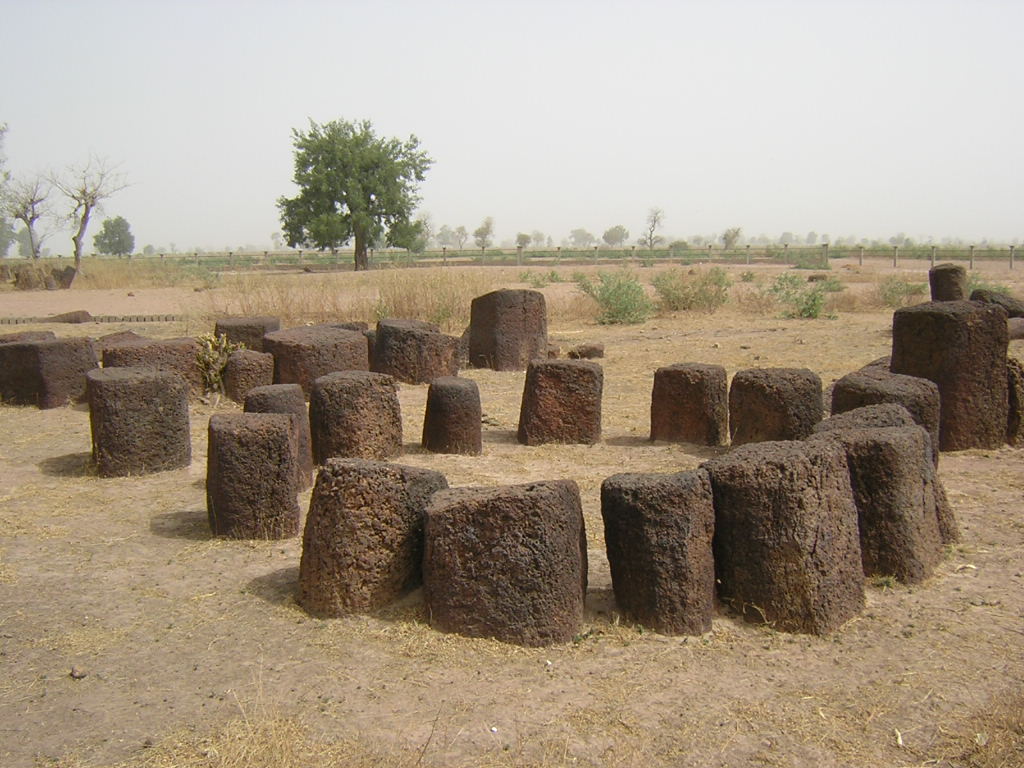
Senegambia Stone Circles at Sine Ngayene (source: Les Cercles Megalithiques)
Senegambian stone circles at Sine Ngayène - Senegal (source: Les Cercles Megalithiques)

Today I would like to talk about a national treasure of Senegal and Gambia: the Senegambian stone circles. The Stone Circles of Senegambia are the largest group of megalithic complexes yet recorded in any region of the world… yes… that’s right: forget Stonehenge (no offense to the Brits)… Senegambia has the largest!  There are 1,053 Stone circles and a total of 28,931 monoliths. Their quality suggests sophisticated stone working traditions.  These stones lie in The Gambia, north of the town of Janjanbureh (previously known as Georgetown), and central Senegal.  The site consists of four large groups of stone circles that represent an extraordinary concentration of over 1,000 monuments in a band 100 km wide along some 350 km of the River Gambia. The four groups, Sine Ngayène Kaolack (Senegal), Wanar Kaolack (Senegal), Wassu (Gambia) and Kerbatch (Gambia), cover 93 stone circles and numerous burial mounds, some of which were recently excavated to reveal material that suggest dates between 3rd century BC and 16th century AD. Together the stone circles of laterite pillars and their associated burial mounds present a vast sacred landscape created over more than 1,500 years.
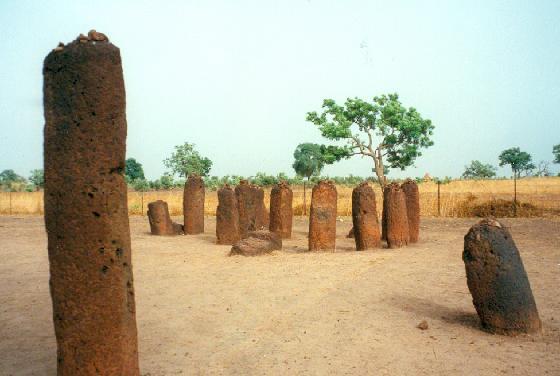
Senegambian Stone Circles at Wassu - Gambia
Senegambian stone circles at Wassu - Gambia

Each stone circle contains about 10 to 24 standing stones.  All the stones in any given circle are usually the same height, and size, varying between 60 cm and 245 cm high and weighing up to 10 tons.  The largest stones, located at N’Jai Kunda, may weigh at least 10 tons.  These stones were all made up of laterite (soil rich in iron and aluminum), whose particular property is to harden upon exposure to air, and before exposure, they are quite easy to quarry; they were fashioned with a great degree of sophistication using iron tools.  One such stone circle has a ‘V’ shape.  According to local historians, the circles were built around mounds of kings, chiefs, and later religious muslim leaders, following royal burial traditions from the ancient empire of Ghana.  In Europe, these kinds of megalithic stones served a calendrical purpose; however in Senegambia, nothing suggests an astronomical function.  The late Islamic scholar Alhaji Kemoring Jaiteh suggests that these were burial sites where the circle represents harmony, the absolute and perfection; the circle implies heaven and eternityThis reflects a prosperous, highly organized and lasting society.
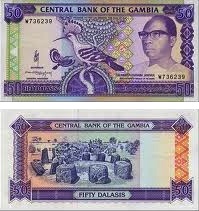
50 dalasi note, with the Senegambian stone circles on the verso
50 dalasis note, with the Senegambian stone circles on the verso

The area around Wassu and Djalloumbéré sees many visitors as it has the densest concentration of more than thousand stones erected in nearly fifty stone circles.  Check out the website Les Cercles Megalithiques which provide very good details about the stone circles of Senegambia, as well as beautiful pictures of the different sites. In 2006, the Senegambian Stone Circles were finally inscribed in the UNESCO World Heritage list.  These should be in all African history textbooks, and all African children should learn about these megalithic circles, the largest concentration in the world, and a show of their ancestors’ mastery and greatness.

African Queens of Textiles: the Nana Benz of Togo

Wax Hollandais
Wax Hollandais

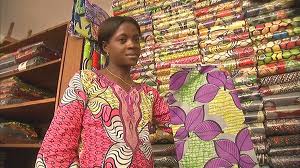
Growing up, I remember watching documentaries about the Nana Benz of Togo: these powerful ladies who ‘owned’ the country solely by selling textiles.  I also remember that my grandmother was (and still is) very fond of ‘Wax Hollandais‘, and how many women will go through hoops to have access to these pricey wax prints traveling to Togo or Ghana to acquire them.  They all loved to dress in these bright colors, with these bright and often lavish wax prints.

Well,… the Nana Benz of Togo, made their mark internationally by trading in wax printed cloth starting in the 1930’s and 1950’s, before independence.  They started from nothing to rise to be among the country’s richest.  They imported the fabric from Dutch companies based in Indonesia.  From there the material arrived on Togo’s shores and the women distributed it throughout West and Central Africa. They became known as Nana Benz because in the mid-50’s through 80’s they had made so much money that they were the only people who could afford Mercedes Benz cars, so much so that the government used to hire their Mercedes Benz for important guests and state functions. The phrase ‘Nana Benz’ came to symbolize the freedom, ingenuity, creativity, pride, achievement, success, and courage of these women. A woman did not become a Nana Benz through inheritance, or society’s choice, but through ingenuity, and struggle.

Nana Benz in the 1970s

The Nana Benz positioned Lomé, Togo’s capital, into a regional centre of textile distribution and dominated the trade in wax prints. Between 1976 and 1984, at least 40% of the commercial business in Togo which was in the informal sector, was in the hands of the Nana Benz. During the 1970’s, the scope of this trade in textile was so important that it exceeded Togo’s phosphate industry, the country’s primary source of revenue. The Nana Benz rose in wealth and power.  Although many were uneducated, they travelled abroad on business, and played a leading role in national politics under the one-party rule of the Rassemblement du Peuple Togolais (RPT). They rose in society’s echelons.  During his presidency, Gnassingbé Eyadéma, appointed them to high offices in the women’s wing of the RPT.  A leading Nana Benz, Madame A. Amedome, was appointed Minister of Social Welfare in 1977 even though she could not read or write.

A Nanette in Lome Market (Source: Arte TV)
A Nanette in Lomé Market (Source: Arte TV)

They sold the ‘wax hollandais’ made by the dutch, in particular by the dutch company VLISCO implanted in Togo since 1846 to sell textiles to Africans.  No offense, but implanted since 1846? Why are Togolese or Africans not making their own wax prints 150 years later? We love it… so we should make it too!  What were African textiles before then? was it mostly ‘bogolan‘-type of textile?  This should be the subject of another post.  In the meantime, let us celebrate the ingenuity of the Nana Benz.  Check out this photo-journal entitled The Nana Benz, An African Epopée by Bruno Zanzottera.  If you are ever in Lomé, make a stop at the market and buy the right fabric known as Vlisco that made the Nana Benz famous.  Listen to this song praising the Nana Benz by the Togolese singer King Mensah. Don’t forget to check out the documentary Reflets Sud on ‘le tissu pagne’, as well as the Togolese opera Madame Paradji ou la Reine des Nana Benz which describes to life of a powerful Nana Benz.

Zambia wins the African Cup of Nations

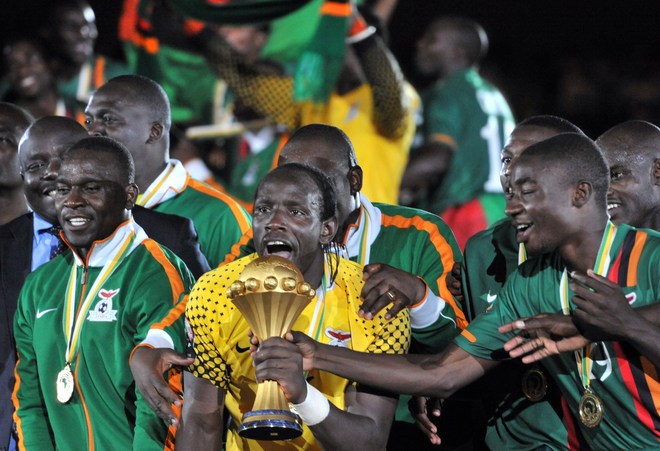
Zambia's national team celebrate their win of the African Cup of Nations (Source: AFP)
Zambia’s national team celebrate their win of the African Cup of Nations (Source: Issouf Sanogo/AFP)

Wow, I started watching the finals yesterday rooting for Zambia to win against Côte d’Ivoire… I had watched them throughout the cup, and the last one as well, and knew that they were a young strong team to reckon with.  Throughout the game, I prayed that the memory of those Zambian players who died in a plane crash in 1993 in Gabon be honored.  At the time when the crash occurred, the Zambian team was on its way to Senegal from Libreville (Gabon) to play a world-cup qualifier.  We, Africans, were all stunned, and cried as an entire country had lost their heroes.  One of the only survivors was Kalusha Bwalya who would have been on the plane during the crash, but had found his own way to Senegal (he was playing for PSV Eindhoven in the Netherlands, and had to make separate arrangements to meet the team in Dakar).  We watched and cried with Kalusha who had lost all his teammates.

Zambia's national team, the Chipolopolo
Zambia’s national team, the Chipolopolo

Imagine rebuilding an entire mature team who had just crashed? It will take a lot of years to foster the same talent and train them.  The country had just lost a generation of extremely talented football players.  Kalusha went on to become coach of Zambia (at the 2006 CAN), and is currently the president of the football association of his country. It is extremely symbolic that Zambia won last night in Libreville (Gabon) against Côte d’Ivoire (who played outstandingly well), only a few hundred metres inland from the crash site.  The Chipolopolo (the Copper Bullets) dedicated their victory to the ones who lost their lives in the 1993 tragedy.

The African Cup of Nations

The Africa Cup of Nations/ La Coupe d'Afrique des Nations

The quarter-finals to the African Cup of Nations (Coupe d’Afrique des Nations) tournament took place yesterday.  The African Cup of Nations is a highly followed soccer tournament to which all African nations participate.  In essence, all African nations play qualifiers which ensures that about 16 nations on the continent will get a chance to play at the African Cup of Nations.  Since 1968, the tournament has taken place every two years, and every even year during the month of January and ends around mid-February: one month of intense fun.  If you are an avid soccer fan, as I am, you would love watching some of the greatest African teams and stars at their best (sometimes, at their worst too).  Recently, the pressure of big money FIFA has forced a change into the schedule of the CAN, forcing the tournament to now take place every odd years, so as ‘not to clash with the soccer world cup‘ (this change was forced by European big clubs/leagues to whom many African players belong).

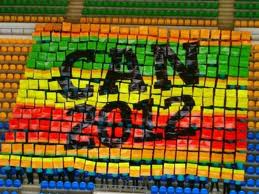
CAN 2012
CAN 2012

The African Cup of Nations (CAN) tournament was first held in 1957 in Sudan, and only three countries participated: Egypt, Sudan, and EthiopiaEgypt has won the cup seven times, making it the record holder.  In recent years, Egypt won the cup three consecutive times. Cameroon and Ghana follow behind Egypt and have both won the tournament four times.  Cameroon and Egypt are not participating at this year’s African Cup of Nations, but Ghana is… and there is a strong chance that they might win the cup this year.  This year’s tournament, the 2012 CAN, is held in two countries: Gabon and Equatorial Guinea.  I believe that the final this year will be between Ghana and Côte d’Ivoire: the Black Stars vs the Elephants.  Although my heart is with the Elephants of Didier Drogba, I have slight edge towards Ghana of Michael Essien.

My dream is to see an African cup of Nations where all the coaches of African teams would be African…  I might have to wait a long time to see this, but in the meantime enjoy!  Mali just knocked out Gabon in penalty kicks and will be facing Côte d’Ivoire in semi-finals (this promises to be a good game).  The face-off to the other semi-final will be Ghana-Zambia, as Ghana defeated Tunisia 2-1.  Let’s wait and see!

‘My Name’ by Magoleng wa Selepe

African Savanna
African Savanna

I just thought about what happened to our fathers, mothers, grandmothers, and grandfathers during colonial times: to go to school African children were forced by European missionaries to adopt a christian name such as John, Peter (Jean, Pierre), etc… as opposed to their good old African name Nomzimo, Makeba, Ndoumbe, Keïta, etc.  Thus many Africans who would have just worn the name ‘Ndoumbe Mpondo‘ or ‘Binlin Dadié‘ or ‘Um Nyobé‘ had to adopt a European name such as John + their own name, such that they became: John Ndoumbe Mpondo or Bernard Binlin Dadié or Ruben Um Nyobé.  To this day, the tradition has remained… most Africans would have three or four names: their family name, and their given name, plus the European first name and in some cases a European middle name as well.  The poem below entitled ‘My name‘ by the South African poet Magoleng wa Selepe captures this very well.

My Name

Nomgqibelo Ncamisile Mnqhibisa

Look what they have done to my name……..

the wonderful name of my great-great-grandmother

Nomgqibelo Ncamisile Mnqhibisa

The burly bureaucrat was surprised

What he heard was music to his ears

‘Wat is daai, se nou weer?’

‘I am from Chief Daluxo Velayigodle of emalu podweni

And my name is Nomgqibelo Ncamisile Mnqhibisa.’

Messia, help me !

My name is simple

And yet so meaningful

But to this man it is trash…..

He gives me a name

Convenient enough to answer his whim…..

I end up being

Maria…..

I…………..

Nomgqibelo Ncamisile Mnqhibisa

by Magoleng wa Selepe

Les Petits Métiers: la Vannerie / Small Trades: Basketry

La Vannerie
La Vannerie

Quand j’étais en classe de 4ème, mes parents m’ont envoyé passé l’été dans un camp de vacances au coeur de la forêt équatoriale.  La vannerie faisait partie du programme de classes instaurées par le camp, en plus de la sculpture du bois (ce sera un article pour un autre jour), la fanfare, la peinture, etc.  Ce qui me fascinait dans l’art de vanner c’était la vitesse avec laquelle l’instructeur pouvait faire des paniers, des chaises robustes, des chapeaux, etc. C’est comme si le raffia glissait sur ses doigts.  Les outils étaient très simples et rudimentaires: un couteau, et le raffia, le rotin, ou des feuilles de palmiers.  Les premiers jours n’avaient pas été facile, car tout semblait difficile: l’art de manier le raffia ou le palmier sans se blesser, et le couteau de vannerie sans maladresse… et je semblais prendre une éternité pour faire un panier.  La vannerie, c’est tout un art: c’est l’art de tresser les fibres végétales et de fabriquer des objets essentiels qui seront utilisés à la cuisine (paniers), au salon (chaises), dans la garde-robe (chapeaux, sacs), et pour la décoration.  Amusez-vous à regarder un vannier à l’oeuvre au Cameroun.

——————

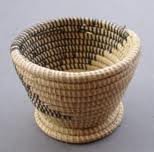
African basket
African basket

When I was in middle school, my parents sent me to a camp in the heart of the equatorial forest for the summer.  Basketry was part of the curriculum, as well as wood sculpting (the subject of another post), orchestra, painting, etc. What used to fascinate me was the art, and speed with which the instructor used to weave a basket, make robust chair, and hats. It was as if the raffia was flowing through his hands. The tools used to weave were very simple and rudimentary: a hat, and raffia, rattan, or palm tree leaves. The first days were quite tough since everything seemed super-difficult: the art of weaving raffia or palm tree leaves without hurting myself, and the knife without clumsiness… and it seemed to take me an eternity to make a basket. Basketry is an art: it is the art of weaving fibers to make essential objects that will be used in the kitchen (baskets), the living room (chairs), the wardrobe (hats, bags), and for decoration. Enjoy this video of a basket-maker in action, in Cameroon.

Cesaria Evora: the Barefoot Diva– the Love of Cape Verde

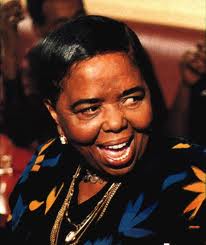
Cesaria Evora
Cesaria Evora

I was quite shocked to learn of the ‘passing’ of Cesaria Evora… It hurts… the barefoot diva, the lady who sang ‘sodade‘ and ‘Angola‘, is no longer. The lady who started singing in her later days, and gained stardomship at the age of 50+, the lady who always performed barefoot on stage is no longer. She exemplified endurance and perseverance. Someone else could have given up… someone else could have said ‘there is no point singing, if I can barely make a living’. She knew all of that, but she also knew that she had a gift for singing and bringing the morna (Cape Verde music) to the international scene. She sang, and went on worldwide tours in her late 60s… giving concerts, etc… at an age when most people would have retired. She was truly an example of strength, confidence, endurance and perseverance. Her life was really all about endurance!

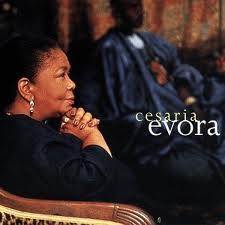
The album titled 'Cesaria Evora'

She lost her dad at the age of 7, and was placed in an orphanage at the age of 10 by her mother who could not raise all her 6 children.  She started singing at the age of 16 in a sailors’ tavern. She won international acclaim for her album ‘La Diva aux Pieds Nus‘ in 1988, and the album ‘Miss Perfumado‘ released in 1992 sealed her international aura.  In 1997, she won the Kora All African Music Awards for best Artist of West Africa, Best Album, and Merit of Jury.  In 2004, came the Grammy in the world category (such a silly category… mixing musicians from Europe, Africa, Asia, and Latin America in one pot… unthinkable) for her album ‘Voz D’Amor‘. Keep singing, and check out her website Cesaria Evora, a video biography on BBC, An article by the Guardian newspaper, USA Today, NY Times, LA Times, So long Cesaria, we will keep singing ‘sodade‘ and dancing the morna, praising ‘Angola‘ and ‘Cabo Verde.’

The Baobab: Symbol of Power, Presence, Strength, and Grace

A baobab
A baobab

The symbol of my secondary school in Douala, Cameroon, was the Baobab tree.  In the old days, there were baobab trees everywhere in the school yard… by the time I arrived, there were only two left, and by the time I graduated, only one could be seen among all the mango trees that filled the school’s playground.  Found in African savannahs, the baobab is a tree which can grow as tall as 30 m, have a diameter as large as 15 m, and live for over several thousand years. I believe the ones in my school were at least a thousand years old. It is leafless during the dry season. A common description of the baobab is that it looks like it has been pulled from the ground, and re-planted upside down. It actually looks like this for a good reason: during the rainy season (wet months), the water is stored in the thick, corky, fire-resistant trunk to last throughout the dry and harsh season. The baobab flowers are white and luminous, and bloom for only a few hours, after which they fall to the ground leaving pods which are feasted on by baboons, monkeys, antelopes, and elephants. There is a tale about the rabbit and the baobab… which is very funny.

Fruit from baobab tree (source: Wikipedia)

The baobab’s leaves, bark, fruits, and trunk, are all very useful. The bark is used for clothes (just like the obom tree) and ropes, the leaves as seasoning in food or medicine, while the fruit (also known as “monkey’s bread“) is eaten directly or in porridge, or sold in some parts of Africa in a sugary mix as a snack; It is very rich in vitamin C and its fruit pulp is used to make juice. Its trunk will provide shelter for people as well as animals.

Baobab forest in Madagascar

In parts of Zambia and Zimbabwe, local traditions state that God was so displeased with the taste of the fruit of the baobab that it turned it upside down such that its roots were on top. I am not sure if I believe this, but in Cameroon, the baobab is a symbol of strength, power, grace, and presence! No wonder the Disney’s Lion King used the baobab as the tree of life… it is what it is: the tree of life, older than Christ and maybe even older or as old as the Egyptian pyramids! I think my school really embodied just that, it was the oldest secondary public school in the city of Douala, with the strongest records!

The video below is about the alley of baobabs in Madagascar: Enjoy!!!

African Small trades: the Mobile Shoemaker/ Les Petits métiers africains: le Cordonnier Ambulant

African shoemaker
African shoemaker

As a follow up to my previous article on the static shoemaker, today I will be discussing the work of the mobile shoemaker. Have you ever found yourself with a fallen shoe sole, or heel, on your way to work or home, with no idea how to walk home since one of the heels on your shoe has fallen out? or have you ever found yourself with a torn shoe due to some sudden movement? What do you do in such cases? Well, in Africa, and particularly in Cameroon, people call a mobile shoemaker. A mobile shoemaker is a shoemaker who has a toolbox strapped to his shoulder (like a purse), and walks around the neighborhoods with his tools in a rectangular wooden box about 50 cm long, and perhaps 20 cm wide. In his toolbox can be found: needlles of different sizes, a small hammer, some shoe soles, different kinds of strong glue, threads, pieces of leather, a sharp knife, pieces of rubber, a brush, a sponge, small nails with magnet, and shoe polish of different colors (red, brown, black, neutral). His small hammer will not only be used to repair shoes, but also to knock on his toolbox hitting a particular note/rhythm making it resound such as to announce his presence to the entire neighborhood. No need to shout: this way of hitting the box announces his arrival. Any passerby could stop him; sometimes, inhabitants of neighborhoods can be seen rushing outside their homes looking for the one they just heard afar. Once stopped, he will either sew the shoe, or stitch/ glue the sole to the shoe itself. He works quite fast, and moves to the next neighborhood or house block. This is very similar to the work of a shoe shiner, where the work is well-done but in an expedited manner. The mobile shoemaker is particularly special to people’s heart because it’s like having a personal shoemaker who comes to your house to beautify your shoes. It is beautiful to watch them at work. It is really an art! Enjoy this video about the mobile shoemaker dealing with a customer in the streets of Douala, the economic capital of Cameroon.

Douala
Douala

En suite à mon article antécédent sur le cordonnier statique, aujourd’hui je vais vous parler du travail du cordonnier ambulant. Avez-vous jamais perdu la semelle de votre chaussure, ou un talon, quand vous rentriez du travail ou alliez au travail ? Vous êtes-vous jamais retrouvés avec une chaussure déchirée à cause d’une course folle ou d’un mouvement brusque ? Que faites-vous dans ces cas ? En Afrique, et en particulier au Cameroun, on appelle un cordonnier ambulant. Un cordonnier ambulant est un cordonnier qui possède une boîte à outil accrochée en bandoulière à son épaule, et se déplace  à travers les quartiers de la ville avec tous ses outils contenus dans une boîte rectangulaire en bois d’environ 50 cm de longueur et à peu près 20 cm de largeur. Dans sa boîte à outils, on peut y trouver : des aiguilles de différentes tailles, un petit marteau, quelques semelles, différentes qualités de colle forte, du fil, des morceaux de cuir, un couteau très tranchant, quelques pièces de caoutchouc, une brosse, une éponge, des petits clous armés d’aimant, et du cirage de différentes couleurs (rouge, marron, noir, neutre). Son marteau ne lui sert pas seulement à arranger les chaussures, mais aussi à battre en cadence sa boîte à outil, la faisant résonner  de manière à annoncer son arrivée dans tout le voisinage. Nul besoin de crier, cette façon de frapper sa boîte  annonce son arrivée. N’importe quel passant peut l’appeler ; il arrive de voir des habitants du quartier ouvrir leur portail et se ruer vers l’extérieur à la recherche du cordonnier qu’ils ont entendu au loin. Une fois arrêté, il coudra la semelle ou la collera à la chaussure ; dans certains cas, il devra raccommoder la chaussure. Il travaille très vite, et ainsi peut aller chercher sa clientèle ailleurs. C’est très similaire au travail du cireur, dont le travail est bien fait, et exécuté rapidement. Le cordonnier ambulant occupe une place très spéciale dans le coeur des gens, car c’est comme si on avait son cordonnier personnel appelé à faire resplendir nos chaussures. C’est vraiment beau de les voir travailler. C’est tout un art ! Amusez-vous à regarder cette vidéo sur un cordonnier ambulant et son client dans les rues de Douala, la capitale économique du Cameroun.

“Regresso” or “Mamãi Velha” by Amilcar Cabral

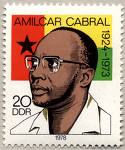
Amilcar Cabral
Amilcar Cabral

Amilcar Cabral was not only an agronomic engineer, or a freedom fighter, or the father of Bissau and Cape-Verde independence, but he was also a poet… like Che Guevarra or Sankara… he was a visionary with a poetic mind.  In the following lines, you will read the poem ‘Regresso‘ also known as ‘Mamãi Velha‘ which was sung by the Cape-Verde singers Cesaria Evora (appeared in album Sao Vicente di Longe (2001)), and Isa Pereira.

Regresso

Old mama, come and let’s listen
To the beat of the rain against the door
It’s a friendly beat
That pounds in my heart

The rain, our friend, old mama
The rain that hasn’t been falling this way
In a long time I heard that Cidade Velha
The entire island becomes a garden
In just a few days

I heard that the country is covered in green
The most beautiful colour
The colour of hope
That now, the soil really looks like Cape Verde
Peace has now replaced the storm

Come old mama, come
Regain your strengths and come to the door
The rain, our friend, sends its salvation
And can beat in my heart

—-

Regresso
Mamãi Velha, venha ouvir comigo
o bater da chuva lá no seu portão.
É um bater de amigo
que vibra dentro do meu coração.

A chuva amiga, Mamãi Velha, a chuva
que há tanto tempo não batia assim…
Ouvi dizer que a Cidade Velha,
– a Ilha toda –
em poucos dias já virou jardim…

Dizem que o campo se cobriu de verde,
da côr mais bela, porque é a côr da esp’rança.
Que a terra, agora, é mesmo Cabo Verde,
– É tempestade que virou bonança…

Venha comigo, Mamãi Velha, venha
recobre a força e chegue-se ao portão.
A chuva amiga já falou mantenha
e bate dentro de meu coração.