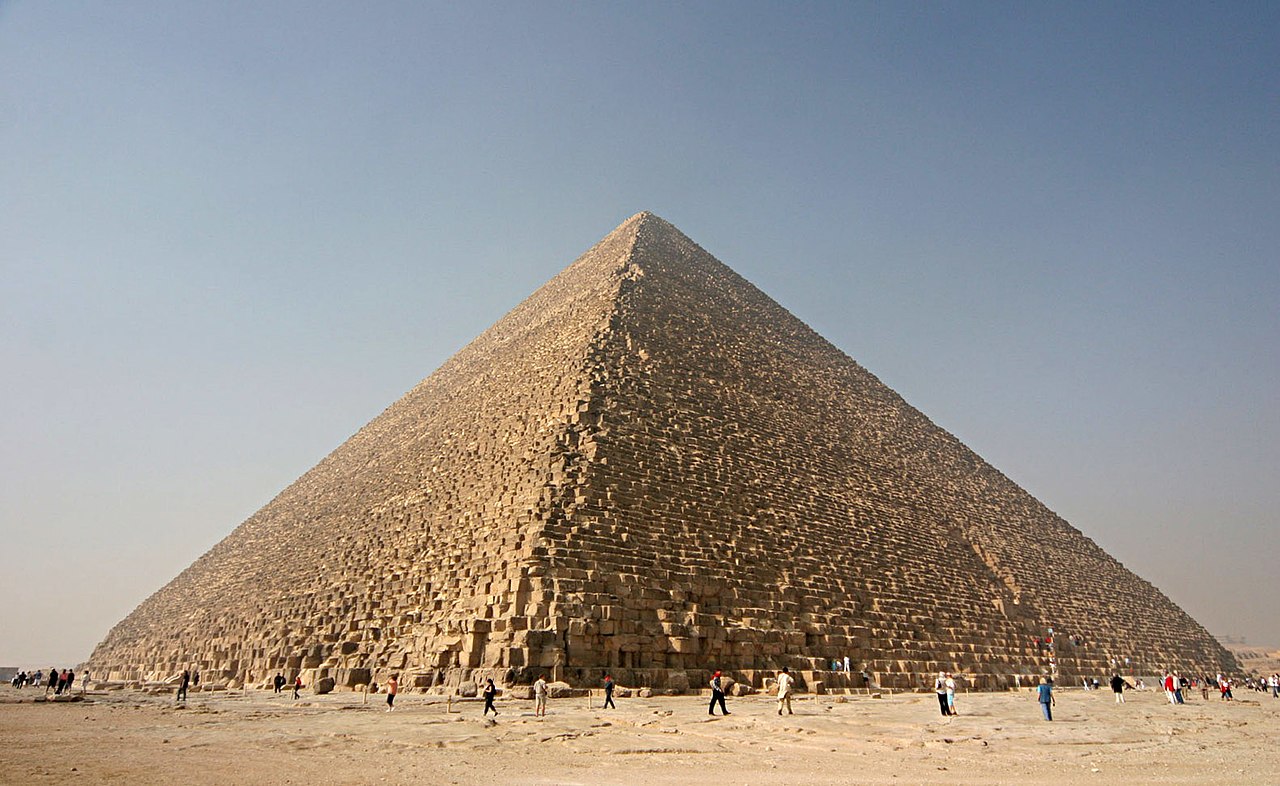
L’experience vous montrera, un maître ne peut que vous montrer la voie (Proverbe de l’Egypte Ancienne).
Experience will show you, a Master can only point the way (Proverb from Ancient Egypt).

L’experience vous montrera, un maître ne peut que vous montrer la voie (Proverbe de l’Egypte Ancienne).
Experience will show you, a Master can only point the way (Proverb from Ancient Egypt).
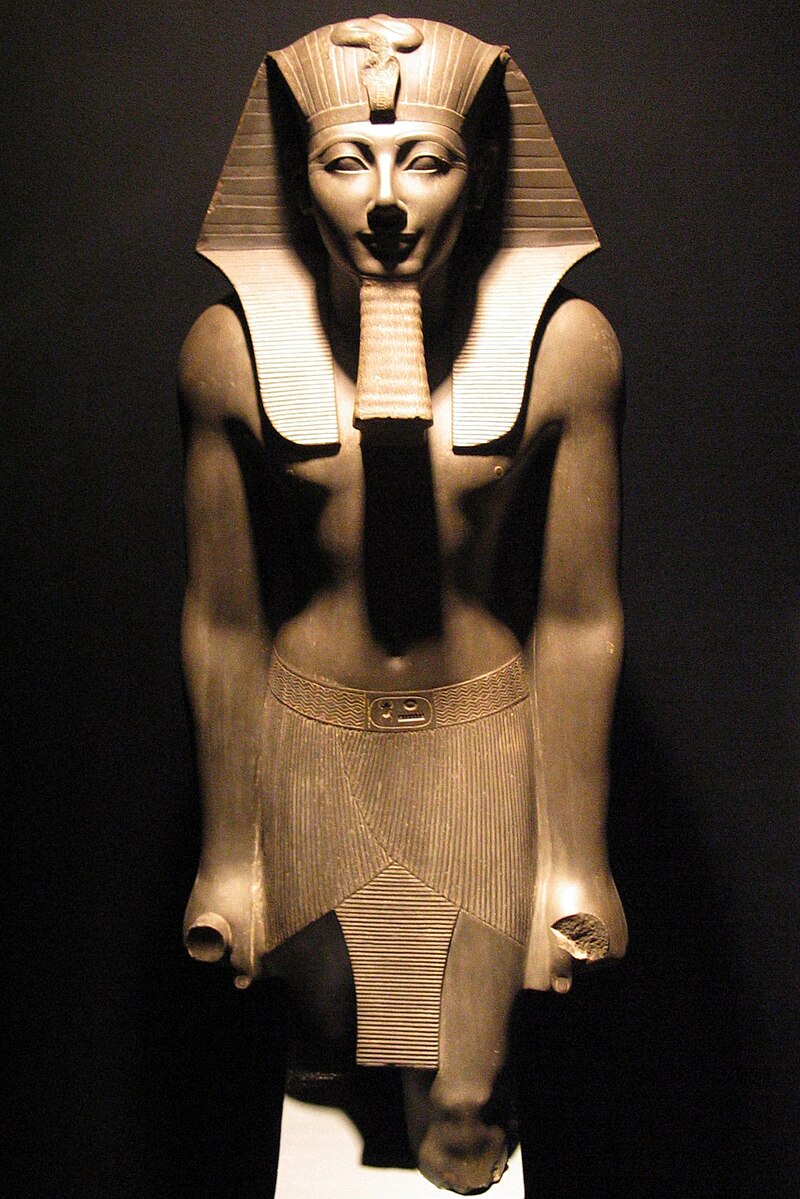
Last May, an Egyptian mission unearthed the remains of a 3,500-year-old fortified royal retreat at Tel Habwa archaelogical site in the Northern Sinai Archaelogical Area. This ancient fortified area is believed to have belonged to Pharaoh Thutmose III (Thutmosis III) and to be one of his vacation homes or rest palaces. The structure dates back to the reign of Pharaoh Thutmose III, the sixth pharaoh of ancient Egypt’s 18th dynasty in the New Kingdom period. Thutmose III is thought to have ruled Egypt from 1479 to 1425 B.C.. He is regarded as one of the greatest military commanders in history, leading successive victorious campaigns that expanded Egypt’s empire to its greatest extent. This is the pharaoh’s whose Lateran obelisk still stands today in Rome. Everyday more treasures of Ancient Egypt are getting unearthed.
The Egyptian Ministry of Tourism and Antiquities (MTA) announced that the building is made of mud-brick and the site includes the presence of a royal palace to house the king. The building consists of two consecutive rectangular halls, accompanied by a number of rooms. It appears to have been fortified with a perimeter wall. The royal rest home features a grand main hall with three limestone columns, a secondary hall, and several adjoining rooms, all adorned with prominent pillars.

“It is likely that this building had been used as a royal respite due to the architectural planning of the building and the scarcity of pottery fractures [broken pottery] inside,” the Egyptian Ministry of Tourism and Antiquities said in a translated statement shared on their Facebook page. The Egyptian Archaeological Mission, operating at the Tel Habwa (Tharo) Archaeological Site, made this discovery during excavations as part of the Sinai Development Project.
“This discovery is pivotal as it illuminates crucial aspects of Egypt’s military history, particularly in the Sinai region, during the New Kingdom era,” said Mohamed Ismail Khaled, Secretary-General of the Supreme Council of Antiquities, as reported by Ahram Online.
To learn more, check out the ancienthistory, smithsonianmag, and popularmechanics.
Foriti foriti lomu ki ori Agba pa (Owe Yoruba – Nigeria).
La tête d’un vieillard est chauve parce qu’il a pris beaucoup de problèmes sur sa tête tout au long de sa vie (proverbe Yoruba – Nigeria) – L’endurance prolongée est ce qui donne la maturité des personnes âgées.
The head of an old man is bald because he has taken on so much trouble on his head in his lifetime (Yoruba proverb – Nigeria) – prolonged endurance is what yields elderly maturity.

Africa is a very rich continent, and one of its most important wealth is its youth… Africa is young, and the West, as seen by many of its generals and politicians, trembles. As Africans, it is our duty to free our continent. We can no longer stay behind while others get fat over our resources. As young Africans, it is our destiny to rise and conquer our freedom; we can no longer live it to others, or think future generations will do it for us… the future is now, if we cannot impact today, we will never change tomorrow.
I saw this speech by Nathanael Minoungou, alias Nael Melerd, a Burkinabe who shared a call to action to all Burkinabe and to all Africans. Time is of the essence. Africa, Rise! Enjoy! I have translated a few lines… For the whole speech, watch his video!

“…
The biggest scam of time, the biggest scam of the century, is not to rob a country, but to make a young person believe that he has time ahead of him. A young person does not have time, time is for the old … I hear, “Enjoy your youth because we only live once,” lies and scams, we only die once, we live every day.
… Africa is invincible because of its youth, as long as this youth remains awake and takes its responsibilities … if we cannot defeat you, we must by all means make you waste time, time that you do not even have …
How do you manage to have time, while people call your country poor?
How do you manage to have time while your land is exploited, while Africa is assisted at almost all levels?
How do you manage to have time in the midst of reconquering food sovereignty while the fields are idle in the village due to a lack of able-bodied workers?
How do you manage to have time in the midst of the fight against terrorism when even the elderly are enlisting to defend the homeland?
How do you manage to have time when people work during the day, and at night become watchmen that are called wayiha? … how do you manage to have time?
How do you manage to have time in the middle of rebuilding while you have “made in China” on your t-shirt and underwear?
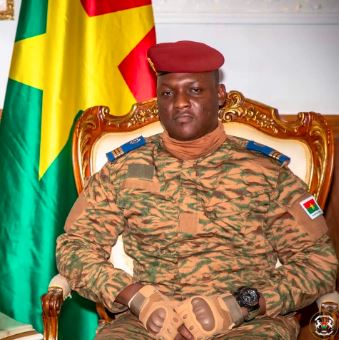
… African youth has not suffered from poverty, … illiteracy, … African youth has rather suffered from a lack of reference points and worthy leaders … until today when these youth can finally turn to you, Comrade President Captain Ibrahim Traore … From now on, everything has changed, because everything has become urgent, because everything has happened quickly, and because Africa is proud!
That is why, if you are the Captain, know that from now on, all the young people in this room, in uniform or not, are now soldiers engaged at the front for the sovereignty of Africa! … If you accept the sacrifice, stand on your feet ! ATTENTION!“

Every September we celebrate the lives of some of Africa’s great leaders who were either born or assassinated during that month, Ruben Um Nyobe, Agostinho Neto, Amilcar Cabral, Kwame Nkrumah, Gamal Abdel Nasser, and Steve Biko. I found this quote in Steve Biko’s book I Write What I Like p.32, by Sekou Touré, the Guinean leader who said NO to the France of General De Gaulle (Guinea: the country who dared say ‘NO’ to France). This quote by Sekou Touré is so on point, as it matches the revolutionary spirit that should be found in each African who fights to free his land. Each one of us is needed for the revolution, but we cannot just be bystanders, but need to add our hands to the fight. African leaders need to fashion the revolution with the people, if they want to free their lands.
“To take part in the African revolution, it is not enough to write a revolutionary song; you must fashion the revolution with the people. And if you fashion it with the people, the songs will come by themselves and of themselves.
In order to achieve real action you must yourself be a living part of Africa and of her thought; you must be an element of that popular energy which is entirely called forth for the freeing, the progress and the happiness of Africa. There is no place outside that fight for the artist or for the intellectual who is not himself concerned with, and completely at one with the people in the great battle of Africa and of suffering humanity.”

Today, we will talk about another African textile, the Kanvô of Benin. The Kanvô, which means “woven cloth” in the Fon language of modern-day Benin, is a prestigious cloth once worn only by kings from the Dahomey Kingdom, including the great King Behanzin. It is said to have been introduced to Benin by King Agonglo, one of the kings of the Dahomey who reigned at the end of the 18th century. Legend has it that, during one of his conquests in Yoruba lands in modern-day Nigeria, King Agonglo came across a young weaver whose work impressed him; he was so astounded that he asked the young man to follow him to his kingdom to become his personal tailor, and thus was born the Kanvô. Later, King Ghezo popularized it by giving rise to large families of weavers throughout the kingdom. The Kanvô used to be worn by kings on great occasions, and is woven from threads of cotton, linen, or hemp fabric. The origin story of the Kanvo is also different whether you are in the south or the north of the country; as we saw in the south, the cloth was introduced by King Agonglo, while in the north, legend has it that the Gurma people of Burkina Faso brought it into the country, that is why there is some resemblance to the Faso Dan Fani of Burkina Faso.
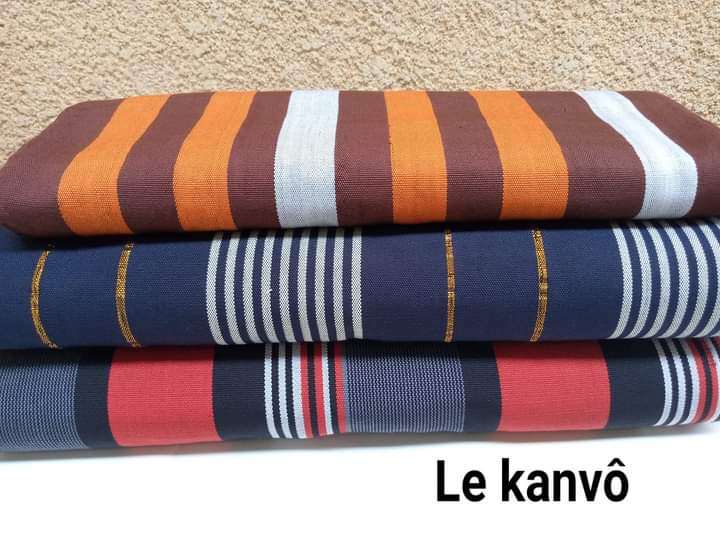
In its original form, the Kanvô is very heavy and not so easy to work with as a tailor. Thus, today, a new generation of tailors has worked to make the woven cloth more malleable and lighter for general consumption, mixing it with other fabrics such as silk, cotton, etc to appeal to the modern palate.
Check out UniversCulturelEtArtistique who wrote a really good article on the Kanvô, or RFI which interviewed some young generations of Beninese fashion designers who are modernizing the Kanvô.
This is the first year that I have watched the Paralympics long enough. I was particularly moved by the Brazilian Gabriel Araujo who won 3 gold medals in swimming; Araujo was born with short legs and no arms, yet he made swimming backstroke seem like a second nature. Watching the Paralympics was a real exercise of humility. Why humility? We are sometimes so busy with our lives, our problems, and our problems seem so insurmountable that we crumble under their weight. Watching the Paralympics and the joy on the faces of these athletes who for some don’t even have hands or legs, make one realize that, 1) there is no mountain so high that we cannot climb it; 2) appreciate every little thing; 3) life might be hard, but make the best of it; 4) we might be going through a storm now, but like palm trees during a storm, we should choose to bend and not fall; 5) there are always worse problems out there, just make the best of today. I love this quote by Nigeria’s para-powerlifting silver medalist Esther Nworgu who issued a rallying cry for people with disabilities, which applies to all of us, “Sports will build you mentally, emotionally, spiritually, and physically, … Sports is like an X-ray. It brings you out and shows you what you are inside. Where there is disability, there is ability. I see it as strength.”
Africa shone at the Paralympics, winning 64 medals, with Morocco getting the most medals with 15 medals, but Algeria topped the continent’s medal table thanks to its 6 gold medals vs. 3 gold for Morocco. Most medals were won in para-athletics and para-powerlifting disciplines.
Below are some highlights:
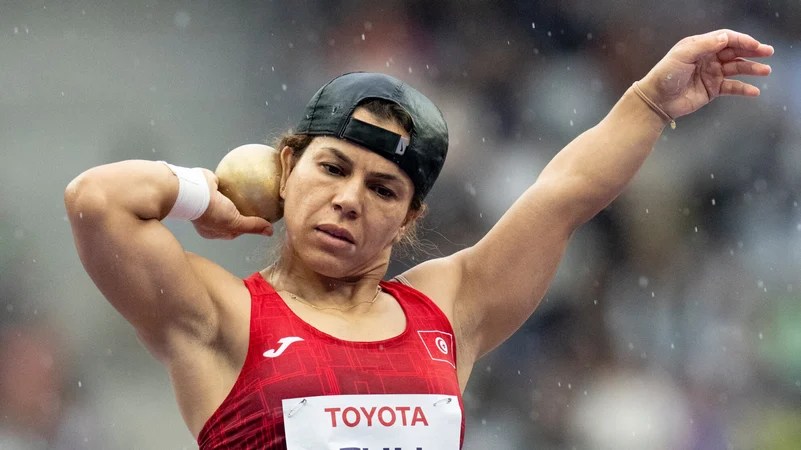
Raoua Tlili of Tunisia cemented her place as a legend in the F41 discus throw and shot put, winning 2 gold medals this year. With 8 gold medals under her belt, she holds the national records for the most Paralympic gold and total medals at the games. She started at the 2008 Beijing Paralympics where she won gold in Discus Throw F40. Since then, she has been ever-present at the Paralympics, winning gold in London 2012, Rio 2016, Tokyo 2020, and now Paris 2024. At these games, she opened the winning streak by offering the very first African medal of the games. She is a true legend!
Yovanni Philippe gave Mauritius its first medal ever by securing a bronze medal in the men’s T20 400m.
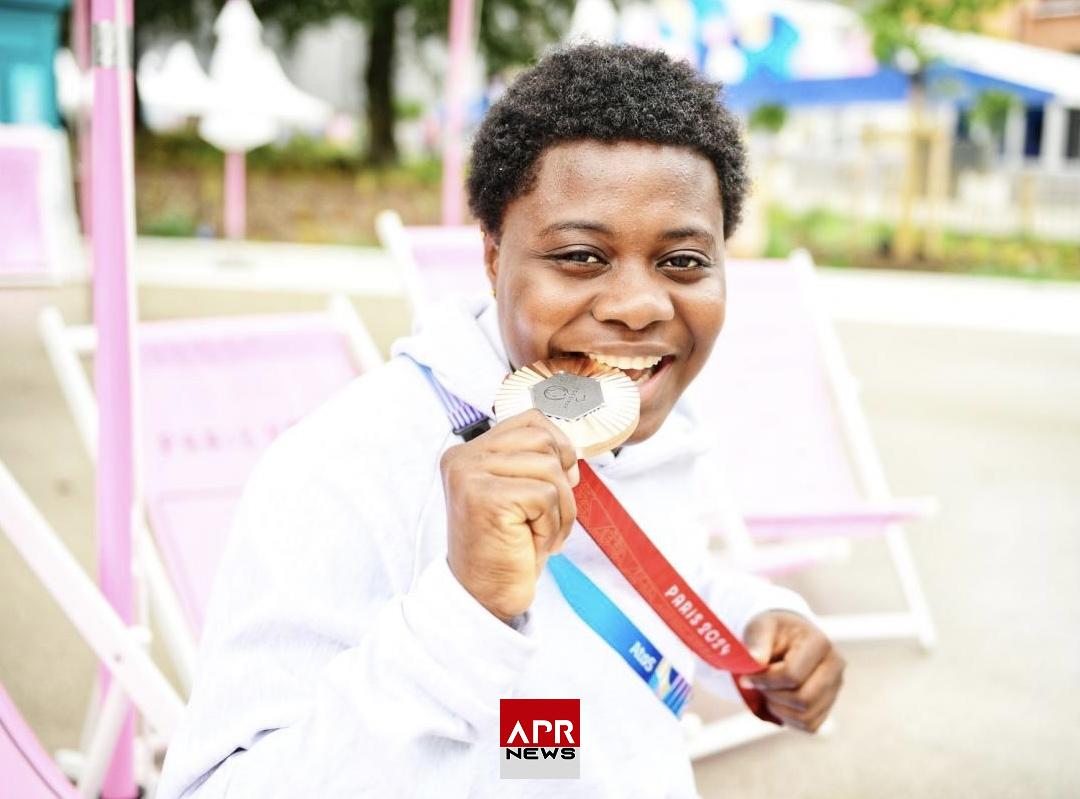
Nigeria’s Mariam Eniola Bolaji became the first African to win an Olympic or Paralympic medal in Badminton with her golden victory in the women’s SL3 singles category.
Annaba native of Algeria, Brahim Guendouz won gold in para-canoeing’s KL3 class over 200m, giving Algeria its first ever medal in a discipline outside of para-athletics, para-judo, and para-powerlifting.
Algerian runner Skander Djamil Athmani also won 2 gold medals in the T13 class over 100m and 400m.
Below is the list of the medals per country at the Paralympics 2024

Algeria : 6 Gold and 5 Bronze
Tunisia: 5 Gold and 3 silver, and 3 Bronze
Morocco: 3 Gold, 6 silver, 6 bronze
Nigeria: 2 Gold, 3 silver, 2 bronze
Egypt: 2 gold, 2 silver, 3 bronze
Ethiopia: 2 gold, 1 silver
South Africa: 2 Gold, 4 bronze
Namibia: 1 gold, 1 silver
Kenya: 1 silver
Mauritius: 1 bronze
The motto is simple, let Africans and Africa prepare to shine at the next Paralympics in LA, by investing now building on today’s victories, to make tomorrow even sweeter.
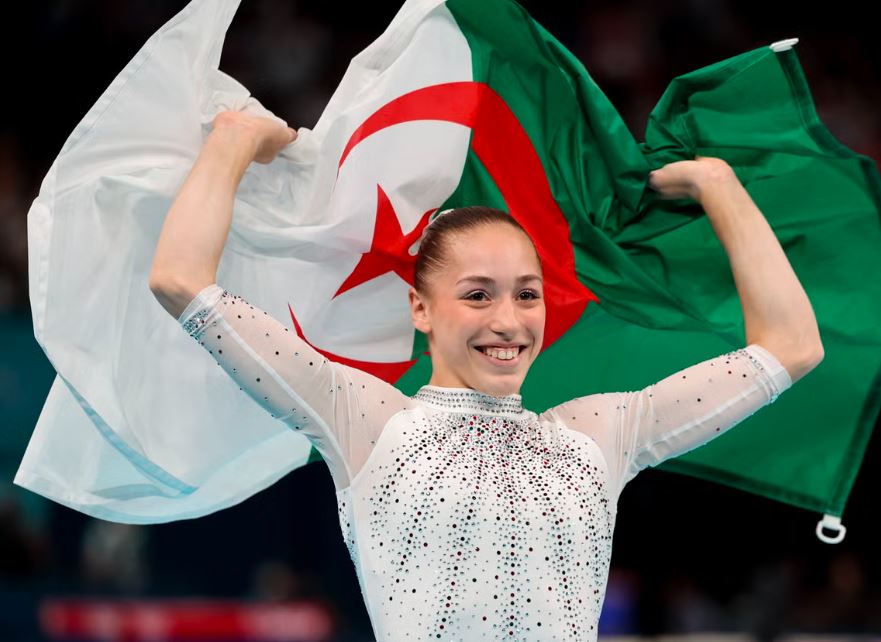
As the Paralympics 2024 are currently under way in Paris, and as paralympians show us that there is so much beauty in life, today, we will focus on yet another African athlete who gave her country the highest honors at the Paris 2024 Olympics. The athlete of our focus today is Algerian Kaylia Nemour, the gold medalist in gymnastics in Women’s uneven bars. Born in France of an Algerian father and a French mother, Nemour was representing France until last year when she switched her country to represent that of her father, Algeria. The switch came as a result of a rift between her and the French Gymnastics Federation which did not clear her to resume training after a knee surgery despite the fact that she had been cleared by her surgeon, and which also wanted Nemour to leave her club and train in Paris under their supervision instead, but she did not want to, and opted instead to switch to representing Algeria. She still lives and trains in France, at her club Avoine Beaumont Gymnastique whose director is her mother.
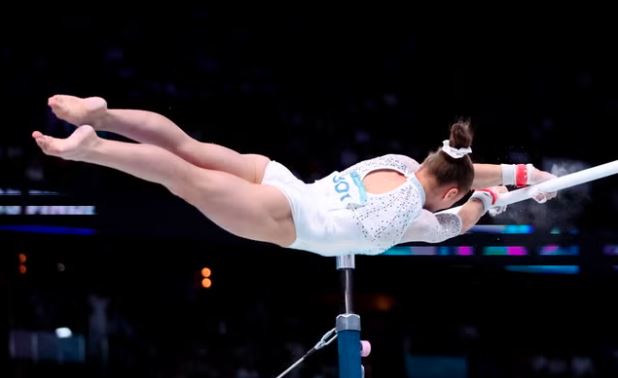
Since Nemour opted to represent Algeria, she has been on fire. At last year’s world championships, she won a silver medal on uneven bars, the first World medal ever by a gymnast representing an African nation. She is also an African all-around champion and has an element named after her in the Code of Points (The Nemour). This year at the Paris 2024 Olympics, she handed Algeria and Africa as a whole, its very first gold medal in gymnastics. She also got the best score of her life in the event, with a score of 15.700. Her victory is reminiscent of the victory of the great Algerian Hassiba Boulmerka who won the gold medal at the Barcelona 1992 Olympics in the Women’s 1500m, thus handing her country its very first Olympic gold medal ever.
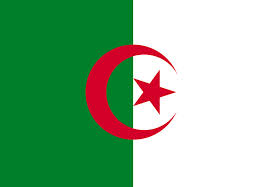
We are proud of Kaylia’s choice to represent Algeria, it must not have been an easy choice, and we are also happy that the Algerian federation has been supportive of her. Her coach, Marc Tcherlinko, said, “It [representing Algeria] was not in the plan, but life serves you some curves, some rivers you must cross. For two years she stayed focused on her goal – the Olympics. What she’s achieved is amazing.” Nemour is considered by many as one of the best gymnasts of her generation on uneven bars. As a result of her Olympic victory, she has been decorated with the Ahid National Order of Merit of Algeria presented by the nation’s president. Just after her win, she said: “I am very, very, very happy with what I was able to do today. … It was my ultimate dream, years of work and hard work, details. … I am really honored to have been able to win this medal, first for me and for Algeria too.” I am sure Nemour has set an example for countless Algerian and African little girls. The future is bright for Nemour and promising for Algeria and the continent as a whole in gymnastics.
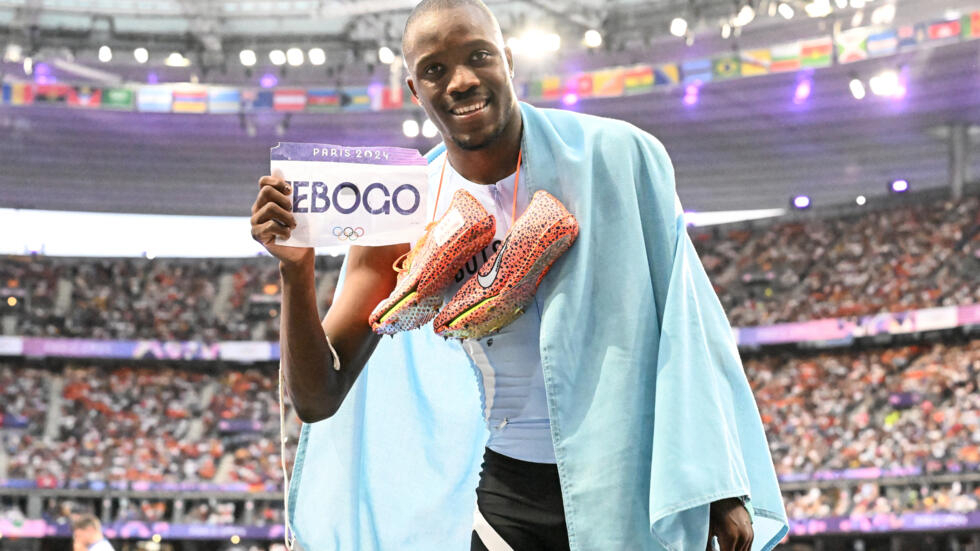
Since Frankie Fredericks of Namibia, who used to always win silver at the Olympics in the 1990s, no African has gotten close to the gold medal in the 100-200 m distances until Letsile Tebogo of Botswana who won the first African gold in the Men’s 200 m discipline ever, at the Paris 2024 Olympics. He also helped Botswana and an African country land silver in 4 x 400 m Men’s relay. By winning the gold medal at the Paris 2024 Olympics, Tebogo became the first Olympic gold medal winner from Botswana and the first runner from Africa to win the 200m final at the Olympic Games. He set a new African record by shaving off 0.04 seconds off his previous best to clock 19.46 s. “Africans can be sprinters, too,” he said in an interview to NBC Sports.
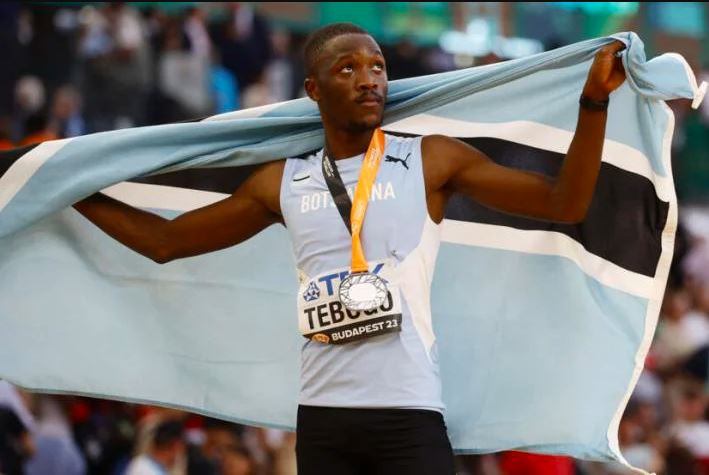
Tebogo started with a strong love for football (soccer). At the age of six, Tebogo was already a well-rounded footballer and sprinter. His teachers encouraged him to practice both sports, but injuries hampered his football career so he opted to focus solely on track. As he explained in an interview with Runblogrun.com., “I used to run past people and won medals. I also played football. Every time though I went to play football I was being benched.” “[This] made me frustrated…and prompted my decision to go back to athletics as I saw [that] I am able to put food on the table for my family from that,” added the runner whose single mother Seratiwa Tebogo struggled to raise him and his younger sibling. His mother, who was his pillar, passed away this past May and did not get to see her son achieve this great accomplishment, but there is no doubt that she would be very proud of her son. Tebogo dedicated his 200m gold medal win to her, and held up his shoe to the camera after the race, which featured his mother’s birthdate on it. He also painted her initials on his nails. … ” I’ve had such a huge blow that affected me deeply so I’m still trying to get the confidence back into the body. It’s not about injuries, it is all about my mum.” Reflecting on his Paris Olympic victory, Tebogo shared, “It was a truly memorable race. Heading into the final, my coach told me his job was done and the rest was up to me—to finish the race healthy, medal or not. I’m glad I could finish stronger than before, carrying the memory of my mother with every stride. She’s watching from above, and I know she’s proud. I chose not to mark the date of her death on my shoe because it’s too emotional.”
He “didn’t take sprints seriously until 2019” when he raced his first major 100m in 10.68s and clocked 21.12s in the 200m. “For a while, I didn’t pay more attention to athletics until about 2018-2019 when I realized I could go professional with it,” Tebogo said. “The motivation to get into athletics was from watching the big guys like Isaac Makwala, Karabo Sibanda and Nijel Amos,” explained Tebogo. “However, I just really wanted some change in the country, so I had to do something different from the big guys, that’s why I opted to compete in the 100m and 200m.”
Like so many track and field athletes in the sprint distances, he looks up to Usain Bolt, the fastest man in the world and 8-times Olympic champion, and dreams of running faster and faster. “It’s time for Africa to take charge over the sprints and every event,” he said in the interview with Runblogrun.com.
Since his Olympic triumphant victory in Paris, he has been taking charge by winning 2 other games so far. Keep an eye out for Tebogo tonight at the Diamond League event in Rome, Italy.

Thomas Kanza was a Congolese diplomat who served as Congo (now Democratic Republic of Congo (DRC))’s first ambassador to the United Nations from 1960 to 1962. He also served as a minister of foreign affairs at some point. He wrote a memoir entitled, The Rise and Fall of Patrice Lumumba: Conflict in the Congo, which covered his own personal experiences as the Congo became independent, and his interactions with Patrice Emery Lumumba. He said, about Lumumba in an interview to Jeune Afrique:
“Patrice Lumumba represents for Congo what Fidel Castro represents for Cuba, Nasser for Egypt, N’krumah for Ghana, Mao Zedong for China, and Lenin for the Soviet Union.
Despite his short political life and his tragic end, perhaps because of them, Patrice-Emery Lumumba has entered history through the front door : that of heroism and martyrdom.
He is at once the flag and the symbol. He is all. He embodies everything : the struggle, the courage, even temerity, the suffering, the action and the perseverance. He lived as a free man, as an independent thinker : his writings, his words, his acts were those of the responsible man, conscious of his vocation as a liberator.”
(Lumumba et le lumumbisme, Jeune Afrique, nº 268, 13 Février 1966) Translated to English by Dr. Y., Afrolegends.com


